Loading themes...
Explore the best books about African American theme.

We live, according to Eddie S. Glaude Jr., in a moment when the struggles of Black Lives Matter and the attempt to achieve a new America have been challenged by the election of Donald Trump, a president whose victory represents yet another failure of America to face the lies it tells itself about race. From Charlottesville to the policies of child separation at the border, his administration turned its back on the promise of Obama's presidency and refused to embrace a vision of the country shorn of the insidious belief that white people matter more than others.We have been here before: For James Baldwin, these after times came in the wake of the civil rights movement, when a similar attempt to compel a national confrontation with the truth was answered with the murders of Medgar Evers, Malcolm X, and Martin Luther King, Jr. In these years, spanning from the publication of The Fire Next Time in 1963 to that of No Name in the Street in 1972, Baldwin transformed into a more overtly political writer, a change that came at great professional and personal cost. But from that journey, Baldwin emerged with a sense of renewed purpose about the necessity of pushing forward in the face of disillusionment and despair.In the story of Baldwin's crucible, Glaude suggests, we can find hope and guidance through our own after times, this Trumpian era of shattered promises and white retrenchment. Mixing biography--drawn partially from newly uncovered interviews--with history, memoir, and trenchant analysis of our current moment, Begin Again is Glaude's endeavor, following Baldwin, to bear witness to the difficult truth of race in America today. It is at once a searing exploration that lays bare the tangled web of race, trauma, and memory, and a powerful interrogation of what we all must ask of ourselves in order to call forth a new America.

Winner of the 1963 Caldecott Medal!No book has captured the magic and sense of possibility of the first snowfall better than The Snowy Day. Universal in its appeal, the story has become a favorite of millions, as it reveals a child's wonder at a new world, and the hope of capturing and keeping that wonder forever.The adventures of a little boy in the city on a very snowy day."Keats's sparse collage illustrations capture the wonder and beauty a snowy day can bring to a small child."—Barnes & Noble"Ezra Jack Keats's classic The Snowy Day, winner of the 1963 Caldecott Medal, pays homage to the wonder and pure pleasure a child experiences when the world is blanketed in snow."—Publisher's Weekly"The book is notable not only for its lovely artwork and tone, but also for its importance as a trailblazer. According to Horn Book magazine, The Snowy Day was "the very first full-color picture book to feature a small black hero"—yet another reason to add this classic to your shelves. It's as unique and special as a snowflake."—Amazon.com

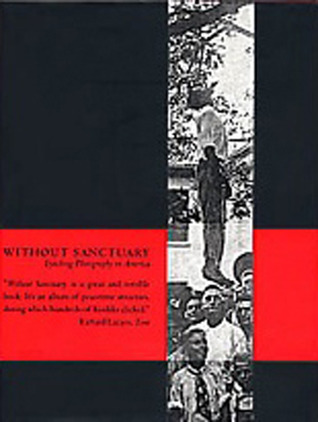
The Tuskegee Institute records the lynching of 3,436 blacks between 1882 and 1950. This is probably a small percentage of these murders, which were seldom reported, and led to the creation of the NAACP in 1909, an organization dedicated to passing federal anti-lynching laws. Through all this terror and carnage someone -- many times a professional photographer -- carried a camera and took pictures of the events. These lynching photographs were often made into postcards and sold as souvenirs to the crowds in attendance. These images are some of photography's most brutal, surviving to this day so that we may now look back on the terrorism unleashed on America's African-American community and perhaps know our history and ourselves better. The almost one hundred images reproduced here are a testament to the camera's ability to make us remember what we often choose to forget.

"First published in 1963, James Baldwin's The fire next time stabbed at the heart of America's so-called "Negro problem." As remarkable for its masterful prose as it is for its frank and personal account of the black experience in the United States, it is considered one of the most passionate and influential explorations of 1960s race relations, weaving thematic threads of love, faith, and family into a candid assault on the hypocrisy of the "land of the free." Now, James Baldwin's rich, raw, and ever relevant prose is reprinted in a letterpress edition with more than 100 photographs from Steve Schapiro, who traveled the American South with Baldwin for Life magazine. The encounter thrust Schapiro into the thick of the movement, allowing for vital, often iconic, images both of civil rights leaders--including Dr. Martin Luther King Jr., Rosa Parks, Fred Shuttlesworth, and Jerome Smith--and such landmark events as the March on Washington and the Selma March. Rounding out the edition are Schapiro's stories from the field, a new introduction by civil rights legend and U.S. Congressman John Lewis, captions by Marcia Davis of The Washington post, and an essay by Gloria Baldwin Karefa-Smart, who was with her brother James in Sierra Leone when he started to work on the story. The result is a remarkable visual and textual record of one of the most important and enduring struggles of the American experience"--Publisher's WWW site

From Pulitzer Prize-winning author Taylor Branch, the second part of his epic trilogy on the American Civil Rights Movement.In the second volume of his three-part history, a monumental trilogy that began with Parting the Waters, winner of the Pulitzer Prize and the National Book Critics Circle Award, Taylor Branch portrays the Civil Rights Movement at its zenith, recounting the climactic struggles as they commanded the national stage.

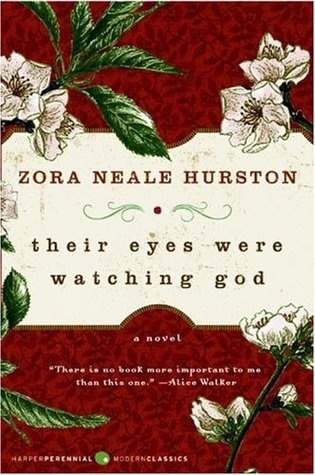
Fair and long-legged, independent and articulate, Janie Crawford sets out to be her own person—no mean feat for a black woman in the '30s. Janie's quest for identity takes her through three marriages and into a journey back to her roots.

The Bluest Eye is Toni Morrison's first novel, a book heralded for its richness of language and boldness of vision. Set in the author's girlhood hometown of Lorain, Ohio, it tells the story of black, eleven-year-old Pecola Breedlove. Pecola prays for her eyes to turn blue so that she will be as beautiful and beloved as all the blond, blue-eyed children in America. In the autumn of 1941, the year the marigolds in the Breedloves' garden do not bloom. Pecola's life does change—in painful, devastating ways. With its vivid evocation of the fear and loneliness at the heart of a child's yearning, and the tragedy of its fulfillment. The Bluest Eye remains one of Toni Morrison's most powerful, unforgettable novels- and a significant work of American fiction.

Robert (Iceberg Slim) Beck's first book is told without bitterness and with no pretense at moralizing. It is the smells, the sounds, the fears and the petty triumphs in the world of the street pimp.

Sula and Nel are born in the Bottom—a small town at the top of a hill. Sula is wild, and daring; she does what she wants, while Nel is well-mannered, a mamma’s girl with a questioning heart. Growing up they forge a bond stronger than anything, stronger even than the dark secret they have to bear. Strong enough, it seems, to last a lifetime—until, decades later, as the girls become women, Sula’s anarchy leads to a betrayal that may be beyond forgiveness. One of The Atlantic’s Great American Novels of the Past 100 Years Masterful, richly textured, bittersweet, and vital, Sula is a modern masterpiece about love and kinship, about living in an America birthed from slavery. Nobel Prize laureate Toni Morrison gives life to characters who struggle with what society tells them to be, and the love they long for and crave as Black women. Most of all, they ask: When can we let go? What must we hold back? And just how much can be shared in a friendship?

A biting satire about a young man's isolated upbringing and the race trial that sends him to the Supreme Court, Paul Beatty's The Sellout showcases a comic genius at the top of his game. It challenges the sacred tenets of the United States Constitution, urban life, the civil rights movement, the father-son relationship, and the holy grail of racial equality―the black Chinese restaurant.Born in the "agrarian ghetto" of Dickens―on the southern outskirts of Los Angeles―the narrator of The Sellout resigns himself to the fate of lower-middle-class Californians: "I'd die in the same bedroom I'd grown up in, looking up at the cracks in the stucco ceiling that've been there since '68 quake." Raised by a single father, a controversial sociologist, he spent his childhood as the subject in racially charged psychological studies. He is led to believe that his father's pioneering work will result in a memoir that will solve his family's financial woes. But when his father is killed in a police shoot-out, he realizes there never was a memoir. All that's left is the bill for a drive-thru funeral.Fueled by this deceit and the general disrepair of his hometown, the narrator sets out to right another wrong: Dickens has literally been removed from the map to save California from further embarrassment. Enlisting the help of the town's most famous resident―the last surviving Little Rascal, Hominy Jenkins―he initiates the most outrageous action conceivable: reinstating slavery and segregating the local high school, which lands him in the Supreme Court.

Recalling pivotal moments from her dynamic career on the front lines of American diplomacy and foreign policy, Susan E. Rice--National Security Advisor to President Barack Obama and U.S. Ambassador to the United Nations--delivers an inspiring account of a life in service to family and country.Although you may think you know Susan Rice--whose name became synonymous with Benghazi following her Sunday news show appearances after the deadly 2012 terrorist attacks in Libya--in Tough Love, the author reveals the truth of her surprising story with unflinching honesty. Often mischaracterized by political opponents, Rice emerges as neither a villain nor victim, but a strong, compassionate leader.Mother, wife, scholar, diplomat, and fierce champion of American interests and values, Rice connects the personal and the professional. Taught early, with tough love, how to compete and excel as an African American woman in settings where people of color are few, Susan shares wisdom learned along the way.Laying bare the family struggles that shaped her early life in Washington, D.C., she also examines the ancestral legacies that influenced her. Rice's elders--immigrants on one side and descendants of slaves on the other--had high expectations that each generation would rise. And rise they did, but not without paying it forward--in uniform and in the pulpit, as educators, community leaders, and public servants.Susan too rose rapidly. She served throughout the Clinton administration, becoming one of the nation's youngest assistant secretaries of state and, later, one of President Obama's most trusted advisors.Rice provides an insider's account of some of the most complex issues confronting the United States over three decades, ranging from "Black Hawk Down" in Somalia to the genocide in Rwanda and the East Africa embassy bombings in the late 1990s, to Libya, Syria, a secret channel to Iran, the Ebola epidemic, and the opening to Cuba during the Obama years. With unmatched insight and characteristic bluntness, she reveals previously untold stories behind recent national security challenges, including confrontations with Russia and China, the war against ISIS, the struggle to contain the fallout from Edward Snowden's leaks, the U.S. response to Russian interference in the 2016 election, and the surreal transition to the Trump administration.Intimate, sometimes humorous, but always candid, Tough Love culminates with an appeal to the American public to bridge our dangerous domestic divides in order to preserve our democracy and sustain our global leadership.

The moving true story of a group of young men growing up on Chicago's West side who form the first all-black high school rowing team in the nation, and in doing so not only transform a sport, but their lives. Growing up on Chicago’s Westside in the 90’s, Arshay Cooper knows the harder side of life. The street corners are full of gangs, the hallways of his apartment complex are haunted by junkies he calls “zombies” with strung out arms, clutching at him as he passes by. His mother is a recovering addict, and his three siblings all sleep in a one room apartment, a small infantry against the war zone on the street below.Arshay keeps to himself, preferring to write poetry about the girl he has a crush on, and spends his school days in the home-ec kitchen dreaming of becoming a chef. And then one day as he’s walking out of school he notices a boats in the school lunchroom, and a poster that reads “Join the Crew Team”.Having no idea what the sport of crew is, Arshay decides to take a chance. This decision to join is one that will forever change his life, and those of his fellow teammates. As Arshay and his teammates begin to come together to learn how to row--many never having been in water before--the sport takes them from the mean streets of Chicago, to the hallowed halls of the Ivy League. But Arshay and his teammates face adversity at every turn, from racism, gang violence, and a sport that has never seen anyone like them before.A Most Beautiful Thing is the inspiring true story about the most unlikely band of brothers that form a family, and forever change a sport and their lives for the better.

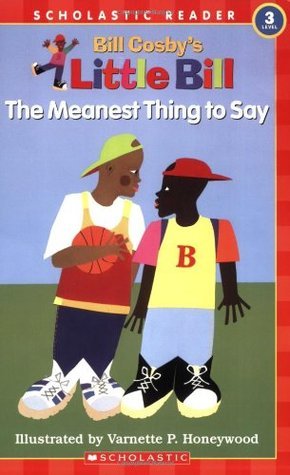
This easy-to-read story about peer pressure by comedian and storyteller Bill Cosby is now a Scholastic Reader!Michael Reilly has introduced a new game to Little Bill and his friends. You get twelve chances to say something mean to another kid--and whoever comes up with the biggest insult is the winner.Insults start "Jose hops with the frogs in science lab!" "Andrew eats frogs for dinner!" "Little Bill shoots baskets like a girl!"Little Bill tries to think of really mean things to say in retaliation. But Dad teaches him a strategy that enables Little Bill to save face while remaining the nice kid that he really is!

[Scholastic Readers Level 3]This easy-to-read story about friendship by comedian and storyteller Bill Cosby is now a Scholastic Reader! Little Bill and his friends LOVE the TV show Space Explorers. And so when the new Space Explorers video game comes out, they each want a copy. But when Little Bill asks his parents to buy him the game, they say no. So Little Bill and his friends go to their friend Andrew's house to play the game. What they discover, though, is that the video game isn't nearly as much fun nor as challenging as what their imaginations can dream up!

In this essay collection, many of which have previously appeared in journals, West, the director of Afro-American studies at Princeton & author of several books, addresses a number of issues of concern to black Americans: the LA riots after the Rodney King verdict; Malcolm X; Clarence Thomas & Anita Hill; & black street life. These topics are all timely yet timeless in that they represent the continuing struggle to include African Americans in mainstream American political, economic & social life without destroying their unique culture. The essays have the feel of a fine sermon, with thought-provoking ideas & new ways of looking at the same old problems. They can be quickly read yet take a long time to digest because of West's unique slant on life. Already well known in scholarly circles, he's increasingly becoming more visible to the general public. This book should make his essays more accessible to a greater number of people.--Library JournalPrefaceIntroduction: Race mattersNihilism in Black America The pitfalls of racial reasoningThe crisis of Black leadership Demystifying the new Black conservatismBeyond affirmative action: equality and identityOn Black-Jewish relations Black sexuality: the taboo subjectMalcolm X and Black rage Epilogue to the Vintage edition

James Baldwin was a uniquely prophetic voice in American letters. His brilliant and provocative essays made him the literary voice of the Civil Rights Era, and they continue to speak with powerful urgency to us today, whether in the swirling debate over the Black Lives Matter movement or in the words of Raoul Peck’s documentary “I Am Not Your Negro.” Edited by Nobel laureate Toni Morrison, the Library of America’s Collected Essays is the most comprehensive gathering of Baldwin’s nonfiction ever published.With burning passion and jabbing, epigrammatic wit, Baldwin fearlessly articulated issues of race and democracy and American identity in such famous essays as “The Harlem Ghetto,” “Everybody’s Protest Novel,” “Many Thousands Gone,” and “Stranger in the Village.”Here are the complete texts of his early landmark collections, Notes of a Native Son (1955) and Nobody Knows My Name (1961), which established him as an essential intellectual voice of his time, fusing in unique fashion the personal, the literary, and the political. “One writes,” he stated, “out of one thing only—one’s own experience. Everything depends on how relentlessly one forces from this experience the last drop, sweet or bitter, it can possibly give.” With singular eloquence and unblinking sharpness of observation he lived up to his credo: “I want to be an honest man and a good writer.”The classic The Fire Next Time (1963), perhaps the most influential of his writings, is his most penetrating analysis of America’s racial divide and an impassioned call to “end the racial nightmare…and change the history of the world.” The later volumes No Name in the Street (1972) and The Devil Finds Work (1976) chart his continuing response to the social and political turbulence of his era and include his remarkable works of film criticism. A further 36 essays—nine of them previously uncollected—include some of Baldwin’s earliest published writings, as well as revealing later insights into the language of Shakespeare, the poetry of Langston Hughes, and the music of Earl Hines.

In his major bestseller, Race Matters, philosopher Cornel West burst onto the national scene with his searing analysis of the scars of racism in American democracy. In Democracy Matters, West returns to the analysis of the arrested development of democracy, both in America and in the crisis-ridden Middle East.In a strikingly original diagnosis, he argues that if America is to become a better steward of democratization around the world, we must first wake up to the long history of imperialist corruption that has plagued our own democracy. Both our failure to foster peace in the Israeli-Palestinian conflict and the crisis of Islamist anti-Americanism stem largely from hypocrisies in our dealings with the world.Racism and imperial expansionism have gone hand in hand in our country's inexorable drive toward hegemony, and our current militarism is only the latest expression of that drive. Even as we are shocked by Islamic fundamentalism, our own brand of fundamentalism, which West dubs Constantinian Christianity, has joined forces with imperialist corporate and political elites in an unholy alliance, and four decades after the murder of Dr. Martin Luther King, Jr., insidious racism still inflicts debilitating psychic pain on so many of our citizens.But there is a deep democratic tradition in America of impassioned commitment to the fight against imperialist corruptions---the last great expression of which was the civil rights movement led by Dr. King---and West brings forth the powerful voices of that great democratizing tradition in a brilliant and deeply moving call for the revival of our better democratic nature. His impassioned and provocative argument for the revitalization of America's democracy will reshape the terms of the raging national debate about America's role in today's troubled world.

This definitive box set includes all the landmark speeches of the great orator and American leader Martin Luther King, Jr., from his inspirational "I Have a Dream" to his firey "Give Us the Ballot." Comprised of recordings previously included in A Call to Conscience and A Knock at Midnight, THE ESSENTIAL BOX SET is a must-have for any home, library, or school collection.

"These are poems which blaze and pulse on the page."—Adrienne Rich "The first declaration of a black, lesbian feminist identity took place in these poems, and set the terms—beautifully, forcefully—for contemporary multicultural and pluralist debate."—Publishers Weekly "This is an amazing collection of poetry by . . . one of our best contemporary poets. . . . Her poems are powerful, often political, always lyrical and profoundly moving."—Chuckanut Reader Magazine "What a deep pleasure to encounter Audre Lorde's most potent genius . . . you will welcome the sheer accessibility and the force and beauty of this volume."—Out Magazine

"The rich, complex story White tells . . . is never less than fascinating." ― New York Times Book Review Alice Walker's life is remarkable not only because she was the first black woman to win the Pulitzer Prize in fiction (the book that won her that award, The Color Purple , has been translated into nearly thirty languages and made into an Academy Award–nominated film), but also because these accomplishments are merely highlights of a luminous and varied career made from inauspicious beginnings in rural Georgia. Drawing on extensive interviews and exhaustive research, Evelyn C. White brings this life to light. 16 pages of illustrations

An award-winning poet's testimony of the war in Vietnam.

At Canaan's Edge concludes America in the King Years, a three-volume history that will endure as a masterpiece of storytelling on American race, violence, and democracy. Pulitzer Prize-winner and bestselling author Taylor Branch makes clear in this magisterial account of the civil rights movement that Martin Luther King, Jr., earned a place next to James Madison and Abraham Lincoln in the pantheon of American history.

"Good evening, ladies and gentlemen. I understand there are a good many Southerners in the room tonight. I know the South very well. I spent twenty years there one night..."

Sam Smith’s seminal, New York Times bestselling “eye-opener” ( The San Diego Union-Tribune ) on Michael Jordan and the 1990-1991 Chicago Bulls team—perfect for fans of ESPN’s hit documentary series The Last Dance.This is the book that changed the way the world viewed Michael Jordan, while delivering nonstop excitement, tension, and thrills.The Jordan Rules chronicles the season that changed everything for Michael Jordan and the Chicago Bulls. After losing in the playoffs to the “Bad Boys” Detroit Pistons for three consecutive years, the Bulls finally broke through and swept the Pistons in the 1991 Eastern Conference Finals, on the way to their first NBA championship.Celebrated sportswriter Sam Smith was there for the entire ride. He reveals a candid and provocative picture of Michael Jordan during the season in which his legacy began to be defined, and seeks to figure out what drove him. The Jordan Rules covers everything from his stormy relationships with his coaches and teammates and power struggles with management—including verbal attacks on general manager Jerry Krause and tantrums against coach Phil Jackson—to Jordan’s obsessions with becoming the leading scorer, and his refusal to pass the ball in the crucial minutes of big games. Jordan’s teammates also tell their side of the story, from Scottie Pippen, to Horace Grant, to Bill Cartwright. And Phil Jackson—the former flower child who blossomed into one of the NBA’s top motivators and finally found a way to coax Jordan and the Bulls to their first title—is studied up close.“Smith takes us into the locker room, aboard the team plane and team bus, and seats us on the bench during games. Sometimes, books reflecting on a team’s success don’t reach the personal level with the people who made it The Jordan Rules does” (Associated Press).Discover the team behind the man, and the man behind the living legend, in this intense, fascinating inside story of the incomparable Michael Jordan.

Winner of a Newbery Honor!Soonie's great-grandma was just seven years old when she was sold to a big plantation without her ma and pa, and with only some fabric and needles to call her own. She pieced together bright patches with names like North Star and Crossroads, patches with secret meanings made into quilts called Show Ways -- maps for slaves to follow to freedom. When she grew up and had a little girl, she passed on this knowledge. And generations later, Soonie -- who was born free -- taught her own daughter how to sew beautiful quilts to be sold at market and how to read.From slavery to freedom, through segregation, freedom marches and the fight for literacy, the tradition they called Show Way has been passed down by the women in Jacqueline Woodson's family as a way to remember the past and celebrate the possibilities of the future. Beautifully rendered in Hudson Talbott's luminous art, this moving, lyrical account pays tribute to women whose strength and knowledge illuminate their daughters' lives.

This new "most complete" edition of the collected poems of Paul Laurence Dunbar, the virtual father of black American poetry, includes sixty poems not included in the previous―and now out of print―Complete Poems. Sixteen of these were found in manuscript form. Paul Laurence Dunbar's work achieved wide recognition in the first part of the twentieth century. The author of six volumes of poetry, as well as novels, librettos, songs, and essays, he was nationally known and accepted by black and white readers alike. As Joanne M. Braxton points out in her substantive introduction to this edition, a reconsideration of Dunbar's work and influence is long "We reclaim, in Paul Laurence Dunbar, a significant American author whose career transcends race and locality even while he makes use of racialized and regional cultural materials to create an African-American aesthetic and a unique black poetic diction."

Booker T. Washington, the most recognized national leader, orator and educator, emerged from slavery in the deep south, to work for the betterment of African Americans in the post Reconstruction period. "Up From Slavery" is an autobiography of Booker T. Washington's life and work, which has been the source of inspiration for all Americans. Washington reveals his inner most thoughts as he transitions from ex-slave to teacher and founder of one of the most important schools for African Americans in the south, The Tuskegee Industrial Institute.

PowerNomics: The National Plan to Empower Black America is a five-year plan to make Black America a prosperous and empowered race that is self-sufficient and competitive as a group by the year 2005. In this book, Dr. Anderson obliterates the myths and illusions of black progress and brings together data and information from many different sources to construct a framework for solutions to the dilemma of Black America. In PowerNomics: The National Plan, Dr. Anderson proposes new principles, strategies and concepts that show blacks a new way to see, think, and behave in race matters. The new mind set prepares blacks to take strategic steps to create a new reality for their race. It offers guidance to others who support blacks self-sufficiency. In this book, Dr. Anderson offers insightful analysis and action steps blacks can take to redesign core areas of life - Education, Economics, Politics and Religion - to better benefit their race. The action steps in each area require new empowerment tools that Dr. Anderson presents - a new group vision and a new culture of empowerment - tools designed to counter, if not break many of the racial monopolies in society. Vertical integration and Industrializing black communities are other major concepts and strategies that he presents in the book. He places a great deal of importance on building industries in black communities that are constructed upon group competitive advantages. A the same time he announced the release of PowerNomics: The National Plan, he also announced that he has established several models of the strategies he proposes in the book. PowerNomics: The Plan, is infused with Dr. Anderson's trademark creative thinking and answers questions such as: - Why are blacks the only group that equates success with working in a White corporation, government or the entertainment industry? - How did power and wealth - businesses, resources, privileges, income and control of all levels of government get so disproportionately distributed into the hands of White society?

At the age of twelve, Sophie Caco is sent from her impoverished village of Croix-des-Rosets to New York, to be reunited with a mother she barely remembers. There she discovers secrets that no child should ever know, and a legacy of shame that can be healed only when she returns to Haiti--to the women who first reared her. What ensues is a passionate journey through a landscape charged with the supernatural and scarred by political violence, in a novel that bears witness to the traditions, suffering, and wisdom of an entire people.At an astonishingly young age, Edwidge Danticat has become one of our most celebrated new novelists, a writer who evokes the wonder, terror, and heartache of her native Haiti--and the enduring strength of Haiti's women--with a vibrant imagery and narrative grace that bear witness to her people's suffering and courage.

In 1970 James Baldwin & Margaret Mead met for an extraordinary seven-&-a-half-hour discussion about race & society. Mead brought her knowledge of racism as practiced in remote societies around the world. Baldwin brought his personal experience with the legacy of black American history. They talked with candor, passion, rage & brilliance, & their discussion became this unique volume. Here is Baldwin's creativity & fire. Here is Mead's scholarship & reason. Here, for all to see, are their prejudices, their pain, & finally, their shared desire to find the thread that binds us all. "This book...traces a curve beginning in formal statements, moving thru wary affection & intellectual intimacy, ending with a raw confrontation."--�Newsweek. "Margaret Mead and James Baldwin are no ordinary people...their conversation...takes us along to places to which we could not otherwise go."--�Times Literary Supplement (London)

There were mythic sports figures before him--Jack Johnson, Babe Ruth, Joe Louis, Joe DiMaggio--but when Cassius Clay burst onto the sports scene from his native Louisville in the 1950s, he broke the mold. He changed the world of sports and went on to change the world itself. As Muhammad Ali, he would become the most recognized face on the planet. Ali was a transcendent athlete and entertainer, a heavyweight Fred Astaire, a rapper before rap was born. He was a mirror of his era, a dynamic figure in the racial and cultural battles of his time. This unforgettable story of his rise and self-creation, told by a Pulitzer Prize-winning writer, places Ali in a heritage of great American originals. Cassius Clay grew up in the Jim Crow South and came of athletic age when boxers were at the mercy of the mob. From the start, Clay rebelled against everything and everyone who would keep him and his people down. He refused the old stereotypes and refused the glad hand of the mob. And, to the confusion and fury of white sportswriters, who were far more comfortable with the self-effacing Joe Louis, Clay came forward as a rebel, insistent on his political views, on his new religion, and, eventually, on a new name. His rebellion nearly cost him the chance to fight for the heavyweight championship of the world. King of the World features some of the pivotal figures of the 1960s--Malcolm X, Elijah Muhammad, John F. Kennedy--and its pivotal events: the civil rights movement, political assassinations, the war in Vietnam. Muhammad Ali is a great hero and a beloved figure in American life. King of the World takes us back to the days when his life was a series of battles, inside the ring and out. A master storyteller at the height of his powers, David Remnick has written a book worthy of America's most dynamic modern hero.

When Muhammad Ali met Joe Frazier in Manila for their third fight, their rivalry had spun out of control. The Ali-Frazier matchup had become a madness, inflamed by the media and the politics of race. When the "Thrilla in Manila" was over, one man was left with a ruin of a life; the other was battered to his soul. Mark Kram covered that fight for Sports Illustrated in an award-winning article. Now his riveting book reappraises the boxers -- who they are and who they were. And in a voice as powerful as a heavyweight punch, Kram explodes the myths surrounding each fighter, particularly Ali. A controversial, no-holds-barred account, Ghosts of Manila ranks with the finest boxing books ever written.

This award-winning poetry collection includes sixteen poems that tell of love and the simple joys of everyday life seen through the eyes of a child, by legendary author Eloise Greenfield with illustrations by Caldecott Medal-winning illustrators Diane and Leo Dillon. Each of these sixteen poems is spoken straight from the perspective of a child. Riding on a train, listening to music, playing with a friend...each poem elicits a new appreciation of the rich content of everyday life. The poems are accompanied by both portrait and panorama drawings that deepen the insights contained in the words. This beloved book of poetry is a Reading Rainbow Selection, an ALA Notable Children's Book, and the winner of George C. Stone Center for Children's Books' Recognition of Merit Award.

It sounds like a fairy tale. He is a boy dressed in silks and white wigs and given the finest of classical educations. Raised by a group of rational philosophers known only by numbers, the boy and his mother -- a princess in exile from a faraway land -- are the only persons in their household assigned names. As the boy's regal mother, Cassiopeia, entertains the house scholars with her beauty and wit, young Octavian begins to question the purpose behind his guardians' fanatical studies. Only after he dares to open a forbidden door does he learn the hideous nature of their experiments -- and his own chilling role in them. Set against the disquiet of Revolutionary Boston, M. T. Anderson's extraordinary novel takes place at a time when American Patriots rioted and battled to win liberty while African slaves were entreated to risk their lives for a freedom they would never claim. The first of two parts, this deeply provocative novel reimagines the past as an eerie place that has startling resonance for readers today.

Aria Jackson lived through the car crash that killed her father and baby sister when she was nine. At 25 she begins to unearth secrets about family, friends, her past, and her altered reality in this journey through truth and forgiveness.

Dr. Martin Luther King’s classic exploration of the events and forces behind the Civil Rights Movement—including his Letter from Birmingham Jail, April 16, 1963.“There comes a time when the cup of endurance runs over, and men are no longer willing to be plunged into the abyss of despair.”In 1963, Birmingham, Alabama, was perhaps the most racially segregated city in the United States. The campaign launched by Dr. Martin Luther King, Jr., and the Civil Rights movement on the segregated streets of Birmingham demonstrated to the world the power of nonviolent direct action.In this remarkable book—winner of the Nobel Peace Prize—Dr. King recounts the story of Birmingham in vivid detail, tracing the history of the struggle for civil rights back to its beginnings three centuries ago and looking to the future, assessing the work to be done beyond Birmingham to bring about full equality for African Americans. Above all, Dr. King offers an eloquent and penetrating analysis of the events and pressures that propelled the Civil Rights movement from lunch counter sit-ins and prayer marches to the forefront of American consciousness.Since its publication in the 1960s, Why We Can’t Wait has become an indisputable classic. Now, more than ever, it is an enduring testament to the wise and courageous vision of Martin Luther King, Jr.Includes photographs and an afterword by Reverend Jesse L. Jackson, Sr.

A Lesson Before Dying is set in a small Cajun community in the late 1940s. Jefferson, a young black man, is an unwitting party to a liquor store shoot out in which three men are killed; the only survivor, he is convicted of murder and sentenced to death. Grant Wiggins, who left his hometown for the university, has returned to the plantation school to teach. As he struggles with his decision whether to stay or escape to another state, his aunt and Jefferson's godmother persuade him to visit Jefferson in his cell and impart his learning and his pride to Jefferson before his death. In the end, the two men forge a bond as they both come to understand the simple heroism of resisting and defying the expected. Ernest J. Gaines brings to this novel the same rich sense of place, the same deep understanding of the human psyche, and the same compassion for a people and their struggle that have informed his previous, highly praised works of fiction.

An award-winning author makes her fiction debut with this coming-of-age story of three young black children set against the backdrop of the Atlanta child murders of 1979.

Go Tell It On The Mountain, first published in 1953, is Baldwin's first major work, a semi-autobiographical novel that has established itself as an American classic. With lyrical precision, psychological directness, resonating symbolic power, and a rage that is at once unrelenting and compassionate, Baldwin chronicles a fourteen-year-old boy's discovery of the terms of his identity as the stepson of the minister of a storefront Pentecostal church in Harlem one Saturday in March of 1935. Baldwin's rendering of his protagonist's spiritual, sexual, and moral struggle of self-invention opened new possibilities in the American language and in the way Americans understand themselves.

White Boy Shuffle is Man Booker-winner Paul Beatty’s electrifying debut novel about teenage-surf-bum Gunnar Kaufman who is forced to wise up when his mother moves from suburban Santa Monica to urban West Los Angeles. There, he begins to undergo a startling transformation from neighbourhood outcast to basketball superstar, and eventually to reluctant messiah of a ‘divided, downtrodden people’. A bombastic coming-of-age novel that has the uncanny ability to make readers want to laugh and cry at the same time,Beatty mingles horrific reality with wild fancy in this outlandish, laugh-out-loud funny and poignant vision of contemporary America.

This landmark book is a founding work in the literature of black protest. W. E. B. Du Bois (1868–1963) played a key role in developing the strategy and program that dominated early 20th-century black protest in America. In this collection of essays, first published together in 1903, he eloquently affirms that it is beneath the dignity of a human being to beg for those rights that belong inherently to all mankind. He also charges that the strategy of accommodation to white supremacy advanced by Booker T. Washington, then the most influential black leader in America, would only serve to perpetuate black oppression.Publication of The Souls of Black Folk was a dramatic event that helped to polarize black leaders into two groups: the more conservative followers of Washington and the more radical supporters of aggressive protest. Its influence cannot be overstated. It is essential reading for everyone interested in African-American history and the struggle for civil rights in America.

Born into slavery in 1818, Frederick Douglass escaped to freedom and became a passionate advocate for abolition and social change and the foremost spokesperson for the nation’s enslaved African American population in the years preceding the Civil War. My Bondage and My Freedom is Douglass’s masterful recounting of his remarkable life and a fiery condemnation of a political and social system that would reduce people to property and keep an entire race in chains.This classic is revisited with a new introduction and annotations by celebrated Douglass scholar David W. Blight. Blight situates the book within the politics of the 1850s and illuminates how My Bondage represents Douglass as a mature, confident, powerful writer who crafted some of the most unforgettable metaphors of slavery and freedom—indeed of basic human universal aspirations for freedom—anywhere in the English language.

NATIONAL BESTSELLER • One of our most visceral and important memoirs on race in America, this is the story of Nathan McCall, who began life as a smart kid in a close, protective family in a black working-class neighborhood.Yet by the age of fifteen, McCall was packing a gun and embarking on a criminal career that five years later would land him in prison for armed robbery. In these pages, McCall chronicles his passage from the street to the prison yard—and, later, to the newsrooms of The Washington Post and ultimately to the faculty of Emory University. His story is at once devastating and inspiring, at once an indictment and an elegy. Makes Me Wanna Holler became an instant classic when it was first published in 1994 and it continues to bear witness to the great troubles—and the great hopes—of our nation. With a new afterword by the author

James Baldwin used to tell Nina Simone, “This is the world you have made for yourself, now you have to live in it.” Simone has created for herself a world of magnificent peaks. Often compared to Billie Holiday and Edith Piaf, Simone is known as one of the greatest singers of her generation. She has recorded forty-three albums, ranging from blues to jazz to folk, and her hits like “I Loves You, Porgy,” “My Baby Just Cares for Me,” “I Put a Spell on You,” and “Mississippi Goddam” have confirmed her as an enduring force in popular music. Her song “Young, Gifted, and Black” became the anthem for the Civil Rights Movement and thrust her beyond international stardom into the center of activism. But such worlds as Simone’s are not without their grim valleys: disastrous marriages, arrest and the threat of imprisonment, mental breakdown, poverty, and attempted suicide. She has survived these trials and continues to perform throughout Europe and the United States. With undiminished passion and in her unconquerable voice, this is Nina Simone’s powerful memoir of her tempestuous life.

As a child Hester Wyatt escaped slavery, but now the dark skinned beauty is a dedicated member of Michigan's Underground railroad, offering other runaways a chance at the freedom she has learned to love. When one of her fellow conductors brings her an injured man to hide, Hester doesn't hesitate even after she is told about the price on his head. The man in question is the great conductor known as the "Black Daniel" a vital member of the north's Underground railroad network, but Hester finds him so rude and arrogant, she begins to question her vow to hide him.When the injured and beaten Galen Vachon, aka, the Black Daniel awakens in Hester's cellar, he is unprepared for the feisty young conductor providing his care. As a member of one of the wealthiest free Black families in New Orleans, Galen has turned his back on the lavish living he is accustomed to in order to provide freedom to those enslaved in the south. However, as he heals he cannot turn his back on Hester Wyatt. Her innocence fills him like a breath of fresh air and he is determined to make her his, but traitors have to be found, slave catchers have to be routed and Hester's refusal to trust her own heart have to be overcome before she and Galen can find the freedom only love can bring.(back cover)

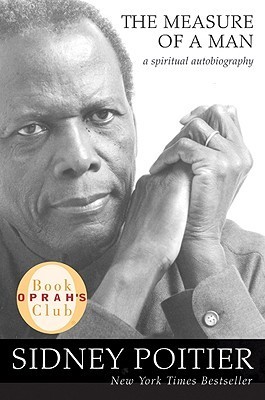
In this luminous memoir, a true American icon looks back on his celebrated life and career. His body of work is arguable the most morally significant in cinematic history, and the power and influence of that work are indicative of the character of the man behind the many storied roles. Here, Sidney Poitier explores these elements of character and personal values to take his own measure - as a man, as a husband, and father, and as an actor.Poitier was uncompromising as he pursued a personal and public life that would honor his upbringing and the invaluable legacy of his parents. Committed to the notion that what one does for a living articulates who one is, Poitier played only forceful and affecting characters who said something positive, useful, and lasting about the human condition.Here, finally, is Poitier's own introspective look at what has informed his performances and his life. Poitier explores the nature of sacrifice and commitment, pride and humility, rage and forgiveness, and paying the price for artistic integrity. What emerges is a picture of a man seeking truth, passion, and balance in the face of limits his own and the world's. A triumph of the spirit, The Measure of a Man captures the essential Poitier.Author Biography: Sidney Poitier was the first and remains the only African American actor to win the Academy Award for Best Actor for his outstanding performance in Lilies of the Field in 1963, but he believes that will soon change, given the excellence of African-American talent in the industry today. He has starred in over forty films, directed nine, and written four. His landmark films include TheDefiant Ones, A Patch of Blue, Guess Who's Coming to Dinner, and To Sir, With Love. Among his many accolades, he has recently been selected as the thirty-sixth recipient of the Screen Actors Guild's highest honor, the Life Achievement Award for an outstanding career and humanitarian accomplishment.

The works of James Baldwin constitute one of the major contributions to American literature in the twentieth century, and nowhere is this more evident than in The Price of the Ticket, a compendium of nearly fifty years of Baldwin's powerful nonfiction writing. With truth and insight, these personal, prophetic works speak to the heart of the experience of race and identity in the United States. Here are the full texts of Notes of a Native Son, Nobody Knows My Name, The Fire Next Time, No Name in the Street and The Devil Finds Work, along with dozens of other pieces, ranging from a 1948 review of Raintree Country to a magnificent introduction to this book that, as so many of Mr. Baldwin's works do, combines his intensely private experience with the deepest examination of social interaction between the races. In a way, The Price of the Ticket is an intellectual history of the twentieth-century American experience; in another, it is autobiography of the highest order.

An astonishing new voice in teen literature, writing what is sure to be one of the most talked-about debuts of the year.Tyrell is a young, African American teen who can't get a break. He's living (for now) with his spaced-out mother and little brother in a homeless shelter. His father's in jail. His girlfriend supports him, but he doesn't feel good enough for her - and seems to be always on the verge of doing the wrong thing around her. There's another girl at the homeless shelter who is also after him, although the desires there are complicated. Tyrell feels he needs to score some money to make things better. Will he end up following in his father's footsteps?

Born a slave circa 1818 (slaves weren't told when they were born) on a plantation in Maryland, Douglass taught himself to read and write. In 1845, seven years after escaping to the North, he published Narrative, the first of three autobiographies. This book calmly but dramatically recounts the horrors and the accomplishments of his early years—the daily, casual brutality of the white masters; his painful efforts to educate himself; his decision to find freedom or die; and his harrowing but successful escape.An astonishing orator and a skillful writer, Douglass became a newspaper editor, a political activist, and an eloquent spokesperson for the civil rights of African Americans. He lived through the Civil War, the end of slavery, and the beginning of segregation. He was celebrated internationally as the leading black intellectual of his day, and his story still resonates in ours.

[Reader Level 3]Little Bill reaches his room for his treasure. What he finds is a great surprise as he learns to value his own talents and treasure the people he loves.

Newbery Medalist Virginia Hamilton tells 24 stories that kept her ancestors' culture alive during slavery, from spirited animal trickster tales and robust tall tales to spine-chilling tales of the supernatural and moving narratives of slaves in search of freedom. Twelve of these tales are on the 78-minute CD, including the hauntingly beautiful title story, "The People Could Fly." Booklist praised the recording as "an outstanding and most welcome production that both complements and extends the original work."

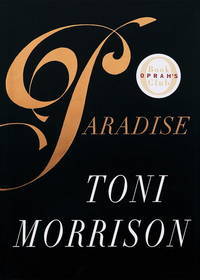
"They shoot the white girl first. With the rest they can take their time." So begins this visionary work from a storyteller. Toni Morrison's first novel since she was awarded the Nobel Prize for Literature, Paradise opens with a horrifying scene of mass violence and chronicles its genesis in an all-black small town in rural Oklahoma. Founded by the descendants of freed slaves and survivors in exodus from a hostile world, the patriarchal community of Ruby is built on righteousness, rigidly enforced moral law, and fear. But seventeen miles away, another group of exiles has gathered in a promised land of their own. And it is upon these women in flight from death and despair that nine male citizens of Ruby will lay their pain, their terror, and their murderous rage.In prose that soars with the rhythms, grandeur, and tragic arc of an epic poem, Toni Morrison challenges our most fiercely held beliefs as she weaves folklore and history, memory and myth into an unforgettable meditation of race, religion, gender, and a far-off past that is ever present.

When he was a boy in Henning, Tennessee, Alex Haley's grandmother used to tell him stories about their family—stories that went back to her grandparents, and their grandparents, down through the generations all the way to a man she called "the African." She said he had lived across the ocean near what he called the "Kamby Bolongo" and had been out in the forest one day chopping wood to make a drum when he was set upon by four men, beaten, chained and dragged aboard a slave ship bound for Colonial America.Still vividly remembering the stories after he grew up and became a writer, Haley began to search for documentation that might authenticate the narrative. It took ten years and a half a million miles of travel across three continents to find it, but finally, in an astonishing feat of genealogical detective work, he discovered not only the name of "the African"—Kunta Kinte—but the precise location of Juffure, the very village in The Gambia, West Africa, from which he was abducted in 1767 at the age of sixteen and taken on the Lord Ligonier to Maryland and sold to a Virginia planter.Haley has talked in Juffure with his own African sixth cousins. On September 29, 1967, he stood on the dock in Annapolis where his great-great-great-great-grandfather was taken ashore on September 29, 1767. Now he has written the monumental two-century drama of Kunta Kinte and the six generations who came after him—slaves and freedmen, farmers and blacksmiths, lumber mill workers and Pullman porters, lawyers and architects—and one author.But Haley has done more than recapture the history of his own family. As the first black American writer to trace his origins back to their roots, he has told the story of 25,000,000 Americans of African descent. He has rediscovered for an entire people a rich cultural heritage that slavery took away from them, along with their names and their identities. But Roots speaks, finally, not just to blacks, or to whites, but to all people and all races everywhere, for the story it tells is one of the most eloquent testimonials ever written to the indomitability of the human spirit.

An exploration of race and heritage, For My People is the first book by poet and novelist Margaret Walker (1915–1998) and the 41st volume of the Yale Series of Younger Poets Considered among the most important collections of poetry written by a participant in the Black Chicago Renaissance, For My People is a series of ballad poems with memorable characters, including the New Orleans sorceress Molly Means; Kissie Lee, a tough young woman who dies “with her boots on switching blades”; Poppa Chicken, an urban drug dealer and pimp; John Henry, killed by a ten-pound hammer; and Stagolee, who kills a white officer but eludes a lynch mob. The memorable title poem evokes the power of resilience not only for black people, but for all people.

Maya Angelou has fascinated, moved, and inspired countless readers with the first three volumes of her autobiography, one of the most remarkable personal narratives of our age. Now, in her fourth volume, The Heart of a Woman, her turbulent life breaks wide open with joy as the singer-dancer enters the razzle-dazzle of fabulous New York City. There, at the Harlem Writers Guild, her love for writing blazes anew. Her compassion and commitment lead her to respond to the fiery times by becoming the northern coordinator of Martin Luther King's history-making quest. A tempestuous, earthy woman, she promises her heart to one man only to have it stolen, virtually on her wedding day, by a passionate African freedom fighter. Filled with unforgettable vignettes of famous characters, from Billie Holiday to Malcolm X, The Heart of a Woman sings with Maya Angelou's eloquent prose her fondest dreams, deepest disappointments, and her dramatically tender relationship with her rebellious teenage son. Vulnerable, humorous, tough, Maya speaks with an intimate awareness of the heart within all of us.

The acclaimed author of TYRELL returns to PUSH with a striking novel about a mother and daughter who are only fourteen years apart, but need to learn to understand each other before it's too late.Kendra's mom, Renee, had her when she was only 14 years old. Renee and her mom made a deal -- Renee could get an education, and Kendra would live with her grandmother. But now Renee's out of grad school and Kendra's in high school ... and getting into some trouble herself. Kendra's grandmother lays down the It's time for Renee to take care of her daughter. Kendra wants this badly -- even though Renee keeps disappointing her. Being a mother isn't easy, but being a daughter can be just as hard. Now it's up to Kendra and Renee to make it work.

The missing link in the chain of American slavery For three centuries slave ships carted millions of people from the coasts of Africa across the Atlantic to the Americas. Much is known of the slave trade and the American plantation system, but little of the ships that made it all possible.In The Slave Ship, award-winning historian Marcus Rediker draws on thirty years of research in maritime archives to create an unprecedented history of these vessels and the human drama acted out on their rolling decks. He reconstructs in chilling detail the lives, deaths, and terrors of captains, sailors, and the enslaved aboard a “floating dungeon” trailed by sharks.From the young African kidnapped from his village and sold into slavery by a neighboring tribe to the would-be priest who takes a job as a sailor on a slave ship only to be horrified at the evil he sees to the captain who relishes having “a hell of my own,” Rediker illuminates the lives of people who were thought to have left no trace.This is a tale of tragedy and terror, but also an epic of resilience, survival, and the creation of something entirely new. Marcus Rediker restores the slave ship to its rightful place alongside the plantation as a formative institution of slavery, a place where a profound and still haunting history of race, class, and modern economy was made.

Read the original inspiration for the new, boldly reimagined film from producers Oprah Winfrey and Steven Spielberg, starring Taraji P. Henson, Danielle Brooks, and Fantasia Barrino.Winner of the Pulitzer Prize and the National Book AwardA powerful cultural touchstone of modern American literature, The Color Purple depicts the lives of African American women in early twentieth-century rural Georgia. Separated as girls, sisters Celie and Nettie sustain their loyalty to and hope in each other across time, distance and silence. Through a series of letters spanning twenty years, first from Celie to God, then the sisters to each other despite the unknown, the novel draws readers into its rich and memorable portrayals of Celie, Nettie, Shug Avery and Sofia and their experience. The Color Purple broke the silence around domestic and sexual abuse, narrating the lives of women through their pain and struggle, companionship and growth, resilience and bravery. Deeply compassionate and beautifully imagined, Alice Walker's epic carries readers on a spirit-affirming journey towards redemption and love.“Reading The Color Purple was the first time I had seen Southern, Black women’s literature as world literature. In writing us into the world—bravely, unapologetically, and honestly—Alice Walker has given us a gift we will never be able to repay.” —Tayari Jones“The Color Purple was what church should have been, what honest familial reckoning could have been, and it is still the only art object in the world by which all three generations of Black artists in my family judge American art.” —Kiese Laymon

The Book of Night Women is a sweeping, startling novel, a true tour de force of both voice and storytelling. It is the story of Lilith, born into slavery on a Jamaican sugar plantation at the end of the eighteenth century. Even at her birth, the slave women around her recognize a dark power that they and she will come to both revere and fear. The Night Women, as they call themselves, have long been plotting a slave revolt, and as Lilith comes of age and reveals the extent of her power, they see her as the key to their plans. But when she begins to understand her own feelings and desires and identity, Lilith starts to push at the edges of what is imaginable for the life of a slave woman in Jamaica, and risks becoming the conspiracy's weak link. Lilith's story overflows with high drama and heartbreak, and life on the plantation is rife with dangerous secrets, unspoken jealousies, inhuman violence, and very human emotion between slave and master, between slave and overseer, and among the slaves themselves. Lilith finds herself at the heart of it all. And all of it told in one of the boldest literary voices to grace the page recently--and the secret of that voice is one of the book's most intriguing mysteries.

In The Breakthrough, veteran journalist Gwen Ifill surveys the American political landscape, shedding new light on the impact of Barack Obama’s stunning presidential victory and introducing the emerging young African American politicians forging a bold new path to political power. Ifill argues that the Black political structure formed during the Civil Rights movement is giving way to a generation of men and women who are the direct beneficiaries of the struggles of the 1960s. She offers incisive, detailed profiles of such prominent leaders as Newark Mayor Cory Booker, Massachusetts Governor Deval Patrick, and U.S. Congressman Artur Davis of Alabama (all interviewed for this book), and also covers numerous up-and-coming figures from across the nation. Drawing on exclusive interviews with power brokers such as President Obama, former Secretary of State Colin Powell, Vernon Jordan, the Reverend Jesse Jackson, his son Congressman Jesse Jackson Jr., and many others, as well as her own razor-sharp observations and analysis of such issues as generational conflict, the race/ gender clash, and the "black enough" conundrum, Ifill shows why this is a pivotal moment in American history. The Breakthrough is a remarkable look at contemporary politics and an essential foundation for understanding the future of American democracy in the age of Obama.

OTHER COMEDIANS TELL JOKES. PAUL MOONEY TELLS THE TRUTH. For more than forty years, whether writing for Richard Pryor and Saturday Night Live or performing stand-up to sold-out crowds around the country, Paul Mooney has been provocative, incisive... and absolutely hilarious. His comedy has always been indisputably real and raw, reflecting race issues in America, and this fascinating, fearless new memoir continues that unapologetically candid tradition. While other stars soared only to crash and burn, Paul Mooney has stayed chiefly behind the scenes, and he's got a lifetime of stories to show for it. As head writer for The Richard Pryor Show, he helped tear down racial barriers and change the course of comedy. He helped Robin Williams and Sarah Bernhard break into show business. He paved the way for superstars like Eddie Murphy. Few have witnessed as much comedy history as Mooney; even fewer could recount it with such riotous honesty and depth of insight. He reveals the truth about his celebrated partnership with the brilliant, self-destructive Richard Pryor, from their first meeting to the very last joke, and reflects on some of his most notorious moments. Decades ago, Paul Mooney set out not just make audiences laugh but to make them think. Black Is the New White is his blisteringly funny, no-holds-barred memoir of how he continues to succeed wildly at both.

As seen on TikTok, Daniel Black’s Perfect Peace is the heartbreaking portrait of a large, rural southern family’s attempt to grapple with their mother’s desperate decision to make her newborn son into the daughter she will never have—“a complex, imaginative story of one unforgettable black family in mid-twentieth century Arkansas” (Atlanta Magazine).When the seventh child of the Peace family, named Perfect, turns eight, her mother Emma Jean tells her bewildered daughter, “You was born a boy. I made you a girl. But that ain’t what you was supposed to be. So, from now on, you gon’ be a boy. It’ll be a little strange at first, but you’ll get used to it, and this’ll be over after while.”From this point forward, Perfect’s life becomes a bizarre kaleidoscope of events—while the rest of his family is forced to question everything they thought they knew about gender, sexuality, unconditional love, and fulfillment.

Gia is tired of hearing about the new baby. It hasn't even been born yet, but everyone, even her friends, seem fixated on it. Gia thinks things are fine just the way they are! And she's worried: if the baby's such a big deal now, what's going to happen to Gia's nice, cozy life with Mama once it's born? Beloved author Jacqueline Woodson and Sophie Blackall have created a heartwarming story for kids adjusting to the idea of a new family member. Young readers will be reassured by Gia's eventual understanding that the baby won't ruin the special bond she has with her mom, and might even be a sweet addition to the family.

African American historian Gerald Early refers to Jack Johnson (1878 1946), the first African American heavyweight champion of the world, as the first African-American pop culture icon. Johnson is a seminal and iconic figure in the history of race and sport in America. "My Life and Battles" is the translation of a memoir by Johnson that was published in French, has never before been translated, and is virtually unknown. It covers Johnson s colorful life, both inside and outside the ring, up to and including his famous defeat of Jim Jeffries in Reno, Nevada, on July 4, 1910, in one of the iconic ring battles of the early twentieth century. In addition to the fights themselves the memoir recounts, among many other things, Johnson s brief and amusing career as a local politician and provides portraits of some of the most famous boxers of the 1900 1915 era.Johnson comments explicitly on race and the color line in boxing and in American society at large in ways that he probably would not have in a publication destined for an American reading public. The text constitutes genuinely new, previously unavailable material and will be of great interest for the many readers intrigued by Jack Johnson. In addition to providing information about Johnson s life, it is a fascinating exercise in self-mythologizing that provides substantial insights into how Johnson perceived himself and wished to be perceived by others. Johnson s personal voice comes through clearly brash, clever, theatrical, and invariably charming. The memoir makes it easy to see how and why Johnson served as an important role model for Muhammad Ali and why so many have compared the two. With a foreword by Geoffrey C. Ward.
Condoleezza Rice has excelled as a diplomat, political scientist, and concert pianist. Her achievements run the gamut from helping to oversee the collapse of communism in Europe and the decline of the Soviet Union, to working to protect the country in the aftermath of 9-11, to becoming only the second woman - and the first black woman ever -- to serve as Secretary of State. But until she was 25 she never learned to swim. Not because she wouldn't have loved to, but because when she was a little girl in Birmingham, Alabama, Commissioner of Public Safety Bull Connor decided he'd rather shut down the city's pools than give black citizens access. Throughout the 1950's, Birmingham's black middle class largely succeeded in insulating their children from the most corrosive effects of racism, providing multiple support systems to ensure the next generation would live better than the last. But by 1963, when Rice was applying herself to her fourth grader's lessons, the situation had grown intolerable. Birmingham was an environment where blacks were expected to keep their head down and do what they were told -- or face violent consequences. That spring two bombs exploded in Rice’s neighborhood amid a series of chilling Klu Klux Klan attacks. Months later, four young girls lost their lives in a particularly vicious bombing. So how was Rice able to achieve what she ultimately did? Her father, John, a minister and educator, instilled a love of sports and politics. Her mother, a teacher, developed Condoleezza’s passion for piano and exposed her to the fine arts. From both, Rice learned the value of faith in the face of hardship and the importance of giving back to the community. Her parents’ fierce unwillingness to set limits propelled her to the venerable halls of Stanford University, where she quickly rose through the ranks to become the university’s second-in-command. An expert in Soviet and Eastern European Affairs, she played a leading role in U.S. policy as the Iron Curtain fell and the Soviet Union disintegrated. Less than a decade later, at the apex of the hotly contested 2000 presidential election, she received the exciting news – just shortly before her father’s death – that she would go on to the White House as the first female National Security Advisor. As comfortable describing lighthearted family moments as she is recalling the poignancy of her mother’s cancer battle and the heady challenge of going toe-to-toe with Soviet leaders, Rice holds nothing back in this remarkably candid telling. This is the story of Condoleezza Rice that has never been told, not that of an ultra-accomplished world leader, but of a little girl – and a young woman -- trying to find her place in a sometimes hostile world and of two exceptional parents, and an extended family and community, that made all the difference.

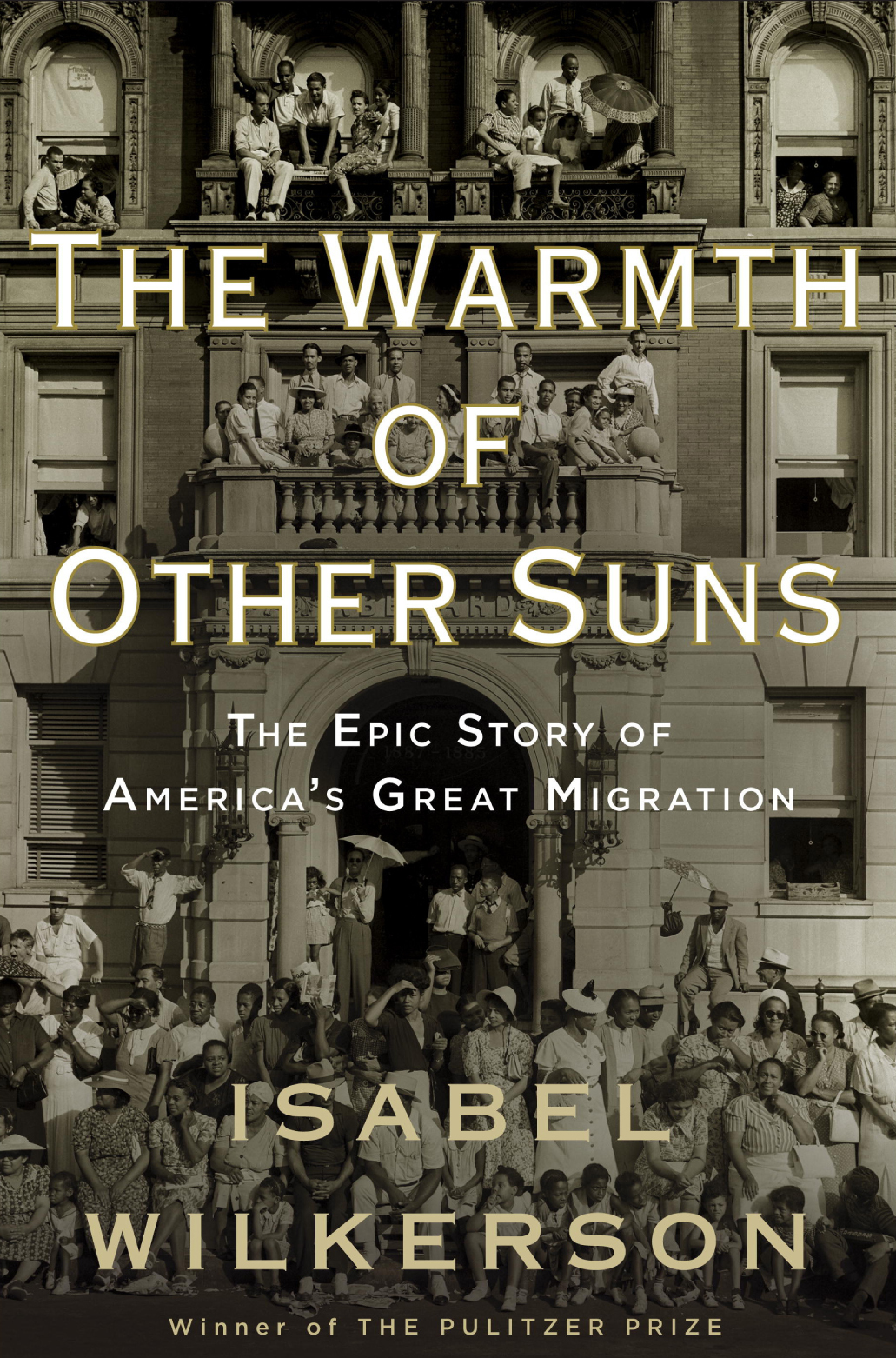
In this beautifully written masterwork, Pulitzer Prize–winning author Isabel Wilkerson presents a definitive and dramatic account of one of the great untold stories of American history: the Great Migration of six million Black citizens who fled the South for the North and West in search of a better life, from World War I to 1970. Wilkerson tells this interwoven story through the lives of three unforgettable protagonists: Ida Mae Gladney, a sharecropper’s wife, who in 1937 fled Mississippi for Chicago; sharp and quick-tempered George Starling, who in 1945 fled Florida for Harlem, and Robert Foster, a surgeon who left Louisiana in 1953 in hopes of making it in California. Wilkerson brilliantly captures their first treacherous cross-country journeys by car and train and their new lives in colonies in the New World. The Warmth of Other Suns is a bold, remarkable, and riveting work, a superb account of an “unrecognized immigration” within our own land. Through the breadth of its narrative, the beauty of the writing, the depth of its research, and the fullness of the people and lives portrayed herein, this book is a modern classic.

In the wake of talk of a “postracial” America upon Barack Obama’s ascension as president of the United States, Michele Norris, cohost of National Public Radio’s flagship program All Things Considered, set out to write, through original reporting, a book about “the hidden conversation” on race that is unfolding nationwide. She would, she thought, base her book on the frank disclosures of others on the subject, but she was soon disabused of her presumption when forced to confront the fact that “the conversation” in her own family had not been forthright. Norris unearthed painful family secrets that compelled her to question her own from her father’s shooting by a Birmingham police officer weeks after his discharge from the navy at the conclusion of World War II to her maternal grandmother’s peddling pancake mix as an itinerant Aunt Jemima to white farm women in the Midwest. In what became a profoundly personal and bracing journey into her family’s past, Norris traveled from her childhood home in Minneapolis to her ancestral roots in the Deep South to explore the reasons for the “things left unsaid” by her father and mother when she was growing up, the better to come to terms with her own identity. Along the way she discovered how her character was forged by both revelation and silence. Extraordinary for Norris’s candor in examining her own racial legacy and what it means to be an American, The Grace of Silence is also informed by rigorous research in its evocation of time and place, scores of interviews with ordinary folk, and wise observations about evolving attitudes, at once encouraging and disturbing, toward race in America today. For its particularity and universality, it is powerfully moving, a tour de force.

Kaleidoscopic, fast-paced, and filled with McMillan’s inimitable humor, Who Asked You? opens as Trinetta leaves her two young sons with her mother, Betty Jean, and promptly disappears. BJ, a trademark McMillan heroine, already has her hands full dealing with her other adult children, two opinionated sisters, an ill husband, and her own postponed dreams—all while holding down a job delivering room service at a hotel. Her son Dexter is about to be paroled from prison; Quentin, the family success, can’t be bothered to lend a hand; and taking care of two lively grandsons is the last thing BJ thinks she needs. The drama unfolds through the perspectives of a rotating cast of characters, pitch-perfect, each playing a part, and full of surprises.Who Asked You? casts an intimate look at the burdens and blessings of family and speaks to trusting your own judgment even when others don’t agree. McMillan’s signature voice and unforgettable characters bring universal issues to brilliant, vivid life

The epic, unforgettable story of a man determined to protect the woman he loves from the town desperate to destroy her—this beautiful and devastating debut heralds the arrival of a major new voice in fiction. Ephram Jennings has never forgotten the beautiful girl with the long braids running through the piney woods of Liberty, their small East Texas town. Young Ruby, "the kind of pretty it hurt to look at," has suffered beyond imagining, so as soon as she can, she flees suffocating Liberty for the bright pull of 1950s New York. Ruby quickly winds her way into the ripe center of the city--the darkened piano bars and hidden alleyways of the Village--all the while hoping for a glimpse of the red hair and green eyes of her mother. When a telegram from her cousin forces her to return home, thirty-year-old Ruby Bell finds herself reliving the devastating violence of her girlhood. With the terrifying realization that she might not be strong enough to fight her way back out again, Ruby struggles to survive her memories of the town's dark past. Meanwhile, Ephram must choose between loyalty to the sister who raised him and the chance for a life with the woman he has loved since he was a boy.Full of life, exquisitely written, and suffused with the pastoral beauty of the rural South, Ruby is a transcendent novel of passion and courage. This wondrous page-turner rushes through the red dust and gossip of Main Street, to the pit fire where men swill bootleg outside Bloom's Juke, to Celia Jennings's kitchen where a cake is being made, yolk by yolk, that Ephram will use to try to begin again with Ruby. Utterly transfixing, with unforgettable characters, riveting suspense, and breathtaking, luminous prose, Ruby offers an unflinching portrait of man's dark acts and the promise of the redemptive power of love.

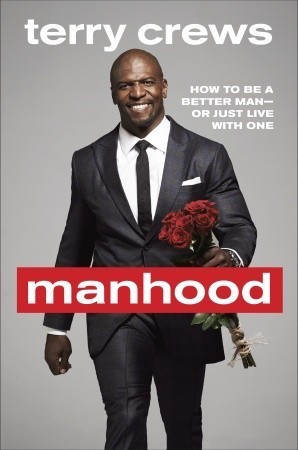
From NFL player turned film and TV star Terry Crews comes a wise and warmhearted memoir chronicling his lifelong quest to become a good man, loving husband, and responsible father. What does it mean to be a man? Terry Crews, TV’s iconic “Old Spice Guy” and co-star of the hit Golden Globe Award–winning series Brooklyn Nine-Nine, has spent decades seeking the answer to that question. In Manhood, he shares what he’s learned, telling the amazing story of his rise to fame and offering straight-talking advice for men and the women who love them. A self-described “super-driven superstar alpha male,” Terry Crews embodies the manly ideal for millions worldwide. But as he looks back on his difficult childhood and shares hard-learned lessons from the many humbling experiences he endured to get where he is today, he shows how his own conception of manhood is constantly evolving. Crews offers up a lively, clear-eyed account of the ups and downs of his twenty-five-year marriage, revealing the relationship secrets that have kept it going—and the one dark secret that nearly tore it apart. Along the way, he shares his evolving appreciation for looking good, staying fit, and getting it done for the people you love. Being a man is about more than keeping your core strong. It’s about keeping your core values stronger. With insightful observations on spirituality, work, and family, Terry Crews shows men how to face their inner demons, seek forgiveness from those they’ve wronged, and tear down the walls that prevent them from forging meaningful relationships with others. From the NFL gridiron to the Hollywood backlot, Terry Crews has survived it all with his sense of humor—and his marriage—intact. In Manhood he shows men everywhere that real strength is not measured in muscle mass—unless that muscle is the heart.From the Hardcover edition.

A gorgeous, moving memoir of how one of America's most innovative and respected journalists found his voice by coming to terms with a painful pastNew York Times columnist Charles M. Blow mines the compelling poetry of the out-of-time African-American Louisiana town where he grew up — a place where slavery's legacy felt astonishingly close, reverberating in the elders' stories and in the near-constant wash of violence.Blow's attachment to his mother — a fiercely driven woman with five sons, brass knuckles in her glove box, a job plucking poultry at a nearby factory, a soon-to-be-ex husband, and a love of newspapers and learning — cannot protect him from secret abuse at the hands of an older cousin. It's damage that triggers years of anger and searing self-questioning.Finally, Blow escapes to a nearby state university, where he joins a black fraternity after a passage of brutal hazing, and then enters a world of racial and sexual privilege that feels like everything he's ever needed and wanted, until he's called upon, himself, to become the one perpetuating the shocking abuse.A powerfully redemptive memoir that both fits the tradition of African-American storytelling from the South, and gives it an indelible new slant.

When sixteen-year-old Tariq Johnson dies from two gunshot wounds, his community is thrown into an uproar. Tariq was black. The shooter, Jack Franklin, is white.In the aftermath of Tariq's death, everyone has something to say, but no two accounts of the events line up. Day by day, new twists further obscure the truth.Tariq's friends, family, and community struggle to make sense of the tragedy, and to cope with the hole left behind when a life is cut short. In their own words, they grapple for a way to say with certainty: This is how it went down.

A provocative meditation on race, Claudia Rankine's long-awaited follow up to her groundbreaking book Don't Let Me Be Lonely: An American Lyric.Claudia Rankine's bold new book recounts mounting racial aggressions in ongoing encounters in twenty-first-century daily life and in the media. Some of these encounters are slights, seeming slips of the tongue, and some are intentional offensives in the classroom, at the supermarket, at home, on the tennis court with Serena Williams and the soccer field with Zinedine Zidane, online, on TV-everywhere, all the time. The accumulative stresses come to bear on a person's ability to speak, perform, and stay alive. Our addressability is tied to the state of our belonging, Rankine argues, as are our assumptions and expectations of citizenship. In essay, image, and poetry, Citizen is a powerful testament to the individual and collective effects of racism in our contemporary, often named "post-race" society.

This "comprehensive and illuminating" biography of the Queen of Soul ( USA Today ) was hailed by Rolling Stone as "a remarkably complex portrait of Aretha Franklin's music and her tumultuous life." Aretha Franklin began life as the golden daughter of a progressive and promiscuous Baptist preacher. Raised without her mother, she was a gospel prodigy who gave birth to two sons in her teens and left them and her native Detroit for New York, where she struggled to find her true voice. It was not until 1967, when a white Jewish producer insisted she return to her gospel-soul roots, that fame and fortune finally came via "Respect" and a rapidfire string of hits. She continued to evolve for decades, amidst personal tragedy, surprise Grammy performances, and career reinventions.Again and again, Aretha stubbornly found a way to triumph over troubles, even as they continued to build. Her hold on the crown was tenacious, and in Respect , David Ritz gives us the definitive life of one of the greatest talents in all American culture.

From the author of the critically beloved Pym comes a ruthlessly comic and moving tale of a man discovering a lost daughter, confronting an elusive ghost, and stumbling onto the possibility of utopia."In the ghetto there is a mansion, and it is my father's house." Warren Duffy has returned to America for all the worst reasons: His marriage to a beautiful Welsh woman has come apart; his comics shop in Cardiff has failed; and his Irish American father has died, bequeathing to Warren his last possession, a roofless, half-renovated mansion in the heart of black Philadelphia. On his first night in his new home, Warren spies two figures outside in the grass. When he screws up the nerve to confront them, they disappear. The next day he encounters ghosts of a different kind: In the face of a teenage girl he meets at a comics convention he sees the mingled features of his white father and his black mother, both now dead. The girl, Tal, is his daughter, and she’s been raised to think she’s white. Spinning from these revelations, Warren sets off to remake his life with a reluctant daughter he’s never known, in a haunted house with a history he knows too well. In their search for a new life, he and Tal struggle with ghosts, fall in with a utopian mixed-race cult, and ignite a riot on Loving Day, the unsung holiday for interracial lovers.A frequently hilarious, surprisingly moving story about blacks and whites, fathers and daughters, the living and the dead, Loving Day celebrates the wonders of opposites bound in love.

A timely and powerful story about a teen girl from a poor neighborhood striving for success, from acclaimed author Renée Watson.Jade believes she must get out of her neighborhood if she’s ever going to succeed. Her mother says she has to take every opportunity. She has. She accepted a scholarship to a mostly-white private school and even Saturday morning test prep opportunities. But some opportunities feel more demeaning than helpful. Like an invitation to join Women to Women, a mentorship program for “at-risk” girls. Except really, it’s for black girls. From “bad” neighborhoods.But Jade doesn’t need support. And just because her mentor is black doesn’t mean she understands Jade. And maybe there are some things Jade could show these successful women about the real world and finding ways to make a real difference.Friendships, race, privilege, identity—this compelling and thoughtful story explores the issues young women face.

Daniel Black is at the top of his literary game with The Coming, a novel that National Book Award-winning author CharlesJohnson (Middle Passage) calls "powerful and beautiful" and "a work to be proud of."Lyrical, poetic, and hypnotizing, The Coming tells the story of a people's capture and sojourn from their homeland across the Middle Passage--a traumatic trip that exposed the strength andresolve of the African spirit. Extreme conditions produce extraordinary insight, and only after being stripped of everything do they discover the unspeakablebeauty they once took for granted. This powerful, haunting novel will shake readers to their very souls.

In 1961, Sarah M. Broom's mother Ivory Mae bought a shotgun house in the then-promising neighborhood of New Orleans East and built her world inside of it. It was the height of the Space Race and the neighborhood was home to a major NASA plant--the postwar optimism seemed assured. Widowed, Ivory Mae remarried Sarah's father Simon Broom; their combined family would eventually number twelve children. But after Simon died, six months after Sarah's birth, the Yellow House would become Ivory Mae's thirteenth and most unruly child.A book of great ambition, Sarah M. Broom's The Yellow House tells a hundred years of her family and their relationship to home in a neglected area of one of America's most mythologized cities. This is the story of a mother's struggle against a house's entropy, and that of a prodigal daughter who left home only to reckon with the pull that home exerts, even after the Yellow House was wiped off the map after Hurricane Katrina. The Yellow House expands the map of New Orleans to include the stories of its lesser known natives, guided deftly by one of its native daughters, to demonstrate how enduring drives of clan, pride, and familial love resist and defy erasure. Located in the gap between the "Big Easy" of tourist guides and the New Orleans in which Broom was raised, The Yellow House is a brilliant memoir of place, class, race, the seeping rot of inequality, and the internalized shame that often follows. It is a transformative, deeply moving story from an unparalleled new voice of startling clarity, authority, and power.

Cora is a slave on a cotton plantation in Georgia. Life is hell for all the slaves, but especially bad for Cora; an outcast even among her fellow Africans, she is coming into womanhood--where even greater pain awaits. When Caesar, a recent arrival from Virginia, tells her about the Underground Railroad, they decide to take a terrifying risk and escape. Matters do not go as planned--Cora kills a young white boy who tries to capture her. Though they manage to find a station and head north, they are being hunted.In Whitehead's ingenious conception, the Underground Railroad is no mere metaphor--engineers and conductors operate a secret network of tracks and tunnels beneath the Southern soil. Cora and Caesar's first stop is South Carolina, in a city that initially seems like a haven. But the city's placid surface masks an insidious scheme designed for its black denizens. And even worse: Ridgeway, the relentless slave catcher, is close on their heels. Forced to flee again, Cora embarks on a harrowing flight, state by state, seeking true freedom.Like the protagonist of Gulliver's Travels, Cora encounters different worlds at each stage of her journey--hers is an odyssey through time as well as space. As Whitehead brilliantly re-creates the unique terrors for black people in the pre-Civil War era, his narrative seamlessly weaves the saga of America from the brutal importation of Africans to the unfulfilled promises of the present day. The Underground Railroad is at once a kinetic adventure tale of one woman's ferocious will to escape the horrors of bondage and a shattering, powerful meditation on the history we all share.

National Book Award winner Jesmyn Ward takes James Baldwin’s 1963 examination of race in America, The Fire Next Time, as a jumping off point for this groundbreaking collection of essays and poems about race from the most important voices of her generation and our time.In light of recent tragedies and widespread protests across the nation, The Progressive magazine republished one of its most famous pieces: James Baldwin’s 1962 “Letter to My Nephew,” which was later published in his landmark book, The Fire Next Time. Addressing his fifteen-year-old namesake on the one hundredth anniversary of the Emancipation Proclamation, Baldwin wrote: “You know and I know, that the country is celebrating one hundred years of freedom one hundred years too soon.”Award-winning author Jesmyn Ward knows that Baldwin’s words ring as true as ever today. In response, she has gathered short essays, memoir, and a few essential poems to engage the question of race in the United States. And she has turned to some of her generation’s most original thinkers and writers to give voice to their concerns.The Fire This Time is divided into three parts that shine a light on the darkest corners of our history, wrestle with our current predicament, and envision a better future. Of the eighteen pieces, ten were written specifically for this volume.In the fifty-odd years since Baldwin’s essay was published, entire generations have dared everything and made significant progress. But the idea that we are living in the post-Civil Rights era, that we are a “postracial” society, is an inaccurate and harmful reflection of a truth the country must confront. Baldwin’s “fire next time” is now upon us, and it needs to be talked about.

From Academy Award nominee, Golden Globe winner, and star of the new motion picture Hidden Figures, Taraji P. Henson, comes an inspiring and funny book about family, friends, the hustle required to make it from DC to Hollywood, and the joy of living in your own truth.With a sensibility that recalls her beloved screen characters, including NASA physicist mathematician Katherine G. Johnson, Yvette, Queenie, Shug, and the iconic Cookie from Empire, yet is all Taraji, the screen actress writes of her family, the one she was born into and the one she created. She shares stories of her father, a Vietnam vet who was bowed but never broken by life's challenges, and of her mother who survived violence both in the home and on DC's volatile streets. Here too she opens up about her experiences as a single mother, a journey some saw as a burden but which she saw as a gift.Around the Way Girl is also a classic actor’s memoir in which Taraji reflects on the world-class instruction she received at Howard University and the pitfalls that come with being a black actress. With laugh-out-loud humor and candor, she shares the challenges and disappointments of the actor’s journey and shows us that behind the red carpet moments, she is ever authentic. She is at heart just a girl in pursuit of her dreams.

In Heavy, Laymon writes eloquently and honestly about growing up a hard-headed black son to a complicated and brilliant black mother in Jackson, Mississippi. From his early experiences of sexual violence, to his suspension from college, to time in New York as a college professor, Laymon charts his complex relationship with his mother, grandmother, anorexia, obesity, sex, writing, and ultimately gambling. Heavy is a “gorgeous, gutting…generous” (The New York Times) memoir that combines personal stories with piercing intellect to reflect both on the strife of American society and on Laymon’s experiences with abuse. By attempting to name secrets and lies he and his mother spent a lifetime avoiding, he asks us to confront the terrifying possibility that few in this nation actually know how to responsibly love, and even fewer want to live under the weight of actually becoming free.Defiant yet vulnerable, an insightful, often comical exploration of weight, identity, art, friendship, and family through years of haunting implosions and long reverberations.

A collection of newly discovered and never-before-published stories by the late Kathleen Collins, a brilliant yet little-known African American writer, artist, and filmmaker.Exuberant, poignant, perceptive, and full of grace, these sixteen stories by Kathleen Collins explore deep, far-reaching issues—relating to race, gender, family, and sexuality—that shape the ordinary moments in our lives. Collins’s work masterfully blends the quotidian and the profound in a personal, intimate way, seamlessly integrating the African American experience into her characters’ lives and creating rich and devastatingly familiar characters who transcend symbolism.In “The Uncle,” a young girl who idolizes her handsome uncle and his beautiful wife makes a haunting discovery about their lives. In “Only Once,” a woman reminisces about her charming daredevil of a lover and his ultimate—and final—act of foolishness. And in the title story, a recent college graduate realizes the limits of the civil rights movement—and the personal and romantic consequences it holds for her.Both contemporary and timeless, Whatever Happened to Interracial Love? is a major and long- overdue addition to our literary canon.

Clint Smith's debut poetry collection, Counting Descent, is a coming of age story that seeks to complicate our conception of lineage and tradition. Smith explores the cognitive dissonance that results from belonging to a community that unapologetically celebrates black humanity while living in a world that often renders blackness a caricature of fear. His poems move fluidly across personal and political histories, all the while reflecting on the social construction of our lived experiences. Smith brings the reader on a powerful journey forcing us to reflect on all that we learn growing up, and all that we seek to unlearn moving forward.

The Great Gatsby brilliantly recast in the contemporary South: a powerful first novel about an extended African-American family and their colliding visions of the American Dream.JJ Ferguson has returned home to Pinewood, North Carolina to build his dream home and to woo his high school sweetheart, Ava. But he finds that the people he once knew and loved have changed, just as he has. Ava is now married, and wants a baby more than anything. The decline of the town’s once-thriving furniture industry has made Ava’s husband Henry grow distant and frustrated. Ava’s mother Sylvia has put her own life on hold as she caters to and meddles with those around her, trying to fill the void left by her absent son. And Don, Sylvia’s undeserving but charming husband, just won’t stop hanging around.JJ’s newfound wealth forces everyone to consider what more they want and deserve from life than what they already have—and how they might go about getting it. Can they shape their lives to align with their wishes rather than their realities? Or are they resigned to the rhythms of the particular lives they lead? No One Is Coming to Save Us is a revelatory debut from an insightful voice that combines a universally resonant story with an intimate glimpse into the hearts of one family.

One woman’s remarkable odyssey from tragedy to prison to recovery—and recognition as a leading figure in the national justice reform movementSusan Burton’s world changed in an instant when her five-year-old son was killed by a van on their street in South Los Angeles. Consumed by grief and without access to professional help, Susan self-medicated, becoming addicted first to cocaine, then crack. As a resident of South L.A., an impoverished black community under siege by the War on Drugs, it was but a matter of time before Susan was arrested. She cycled in and out of prison for fifteen years; never was she offered therapy or treatment for addiction. On her own, she eventually found a private drug rehabilitation facility.Once clean, Susan dedicated her life to supporting women facing similar struggles. She began by greeting women as they took their first steps of freedom, welcoming them into her home, providing a space of safety and community. Her organization, A New Way of Life, now operates five safe homes in Los Angeles that supply a lifeline to hundreds of formerly incarcerated women and their children—setting them on the track to education and employment rather than returns to prison. Susan is now nationally known as an advocate for restoring basic civil and human rights to those who have served time. Ms. Burton not only humanizes the deleterious impact of mass incarceration, it also points the way to the kind of structural and policy changes that will offer formerly incarcerated people the possibility of a life of meaning and dignity.

Alternate cover edition of ISBN 9781501126062In Jesmyn Ward’s first novel since her National Book Award–winning Salvage the Bones, this singular American writer brings the archetypal road novel into rural twenty-first-century America. Drawing on Morrison and Faulkner, The Odyssey and the Old Testament, Ward gives us an epochal story, a journey through Mississippi’s past and present that is both an intimate portrait of a family and an epic tale of hope and struggle. Ward is a major American writer, multiply awarded and universally lauded, and in Sing, Unburied, Sing she is at the height of her powers.Jojo and his toddler sister, Kayla, live with their grandparents, Mam and Pop, and the occasional presence of their drug-addicted mother, Leonie, on a farm on the Gulf Coast of Mississippi. Leonie is simultaneously tormented and comforted by visions of her dead brother, which only come to her when she’s high; Mam is dying of cancer; and quiet, steady Pop tries to run the household and teach Jojo how to be a man. When the white father of Leonie’s children is released from prison, she packs her kids and a friend into her car and sets out across the state for Parchman farm, the Mississippi State Penitentiary, on a journey rife with danger and promise.Sing, Unburied, Sing grapples with the ugly truths at the heart of the American story and the power, and limitations, of the bonds of family. Rich with Ward’s distinctive, musical language, Sing, Unburied, Sing is a majestic new work and an essential contribution to American literature.

A striking, full-length debut collection from Virgin Islands-born poet Nicole SealeyThe existential magnitude, deep intellect, and playful subversion of St. Thomas-born, Florida-raised poet Nicole Sealey’s work is restless in its empathic, succinct examination and lucid awareness of what it means to be human.The ranging scope of inquiry undertaken in Ordinary Beast—at times philosophical, emotional, and experiential—is evident in each thrilling twist of image by the poet. In brilliant, often ironic lines that move from meditation to matter of fact in a single beat, Sealey’s voice is always awake to the natural world, to the pain and punishment of existence, to the origins and demises of humanity. Exploring notions of race, sexuality, gender, myth, history, and embodiment with profound understanding, Sealey’s is a poetry that refuses to turn a blind eye or deny. It is a poetry of daunting knowledge.

Named one of the Best Books of the Year by the Washington Post , San Francisco Chronicle , Booklist , and Shelf AwarenessA School Library Journal "In the Margins" Recommendation “An elegiac memoir and social jeremiad,” Cuz is “a literary and political event like Toni Morrison’s Playing in the Dark ” (Henry Louis Gates Jr.). First appearing in The New Yorker , Danielle Allen’s Cuz announced the arrival of one of our most gifted literary memoirists. In this “compassionate retelling of an abjectly tragic story” ( New York Times ), Danielle Allen―a prize-winning scholar―recounts her heroic efforts to rescue Michael Alexander Allen, her beloved baby cousin, who was arrested at fifteen for an attempted carjacking. Tried as an adult and sentenced to thirteen years, Michael served eleven. Three years later, he was dead. Why did this gifted young man, who dreamed of being a firefighter and a writer, end up murdered? Why did he languish in prison? And why at fifteen was he in an alley in South Central Los Angeles, holding a gun while trying to steal someone’s car? Hailed as a “literary miracle” ( Washington Post ), this fierce family memoir makes mass incarceration nothing less than a new American tragedy. 30 illlustrations

The stories in Five-Carat Soul--none of them ever published before--spring from the place where identity, humanity, and history converge. McBride explores the ways we learn from the world and the people around us. An antiques dealer discovers that a legendary toy commissioned by Civil War General Robert E. Lee now sits in the home of a black minister in Queens. Five strangers find themselves thrown together and face unexpected judgment. An American president draws inspiration from a conversation he overhears in a stable. And members of The Five-Carat Soul Bottom Bone Band recount stories from their own messy and hilarious lives.The under Graham railroad box car set --Buck boy --Ray-Ray's picture box --Blub --Goat --Father Abe --The moaning bench --The Christmas dance --The fish man angel --Mr. P & the wind

An original and consequential argument about race, crime, and the lawToday, Americans are debating our criminal justice system with new urgency. Mass incarceration and aggressive police tactics—and their impact on people of color—are feeding outrage and a consensus that something must be done.But what if we only know half the story? In Locking Up Our Own, the Yale legal scholar and former public defender James Forman Jr. weighs the tragic role that some African Americans themselves played in escalating the war on crime. As Forman shows, the first substantial cohort of black mayors, judges, and police chiefs took office around the country amid a surge in crime. Many came to believe that tough measures—such as stringent drug and gun laws and “pretext traffic stops” in poor African American neighborhoods—were needed to secure a stable future for black communities. Some politicians and activists saw criminals as a “cancer” that had to be cut away from the rest of black America. Others supported harsh measures more reluctantly, believing they had no other choice in the face of a public safety emergency.Drawing on his experience as a public defender and focusing on Washington, D.C., Forman writes with compassion for individuals trapped in terrible dilemmas—from the young men and women he defended to officials struggling to cope with an impossible situation. The result is an original view of our justice system as well as a moving portrait of the human beings caught in its coils.

Featuring forty trailblazing black women in American history, Little Leaders educates and inspires as it relates true stories of breaking boundaries and achieving beyond expectations.Illuminating text paired with irresistible illustrations bring to life both iconic and lesser-known female figures of Black history such as abolitionist Sojourner Truth, pilot Bessie Coleman, chemist Alice Ball, politician Shirley Chisholm, mathematician Katherine Johnson, poet Maya Angelou, and filmmaker Julie Dash. Among these biographies, readers will find heroes, role models, and everyday women who did extraordinary things - bold women whose actions and beliefs contributed to making the world better for generations of girls and women to come.Whether they were putting pen to paper, soaring through the air or speaking up for the rights of others, the women profiled in these pages were all taking a stand against a world that didn't always accept them. The leaders in this book may be little, but they all did something big and amazing, inspiring generations to come.

Chronicles the last 31 hours of Martin Luther King Jr.'s life as he seeks to revive the non-violent civil rights movement and push to end poverty in America.This is a close up and intimate book about the last fateful hours of Martin Luther King, Jr.'s life. It draws on dozens of interviews by the author with people who were immersed in the Memphis events, as well as on recently released documents from archives in Atlanta. The fresh material yields a wealth of illuminating detail, including a lapse, never before reported, by the Memphis Police Department to provide security for King. It unveils the financial and logistical predicament presented by the Poor People's Campaign. It recounts the emotional and marital pressures that were bedeviling King in the spring of 1968. Juxtaposed next to the narrative describing King's hours in Memphis is an account of what his assassin, James Earl Ray, was doing in Memphis during the same time. The book discloses how a series of uncannily lucky breaks enabled Ray, a bumbling convict on the lam, to construct a sniper's nest and shoot King.

From Donna Brazile, former DNC chair and legendary political operative, an explosive and revealing new look at the 2016 election: the first insider account of the Russian hacking of the DNC and the missteps by the Clinton campaign and Obama administration that enabled a Trump victory.In the fallout of the Russian hacking of the Democratic National Committee--and as chaos threatened to consume the party's convention--Democrats turned to a familiar figure to right the ship: Donna Brazile. Known to millions from her frequent TV appearances, she was no stranger to high stakes and dirty opponents, and the longtime Democratic strategist had a reputation in Washington as a one-stop shop for fixing sticky problems. What Brazile found at the DNC was unlike anything she had experienced before--and much worse than is commonly known. The party was beset by infighting, scandal, and hubris, while reeling from a brazen and wholly unprecedented attempt by a foreign power to influence the presidential election. Plus, its candidate, Hillary Clinton, faced an opponent who broke every rule in the political playbook. Packed with never-before-reported revelations about what went down in 2016, Hacks is equal parts campaign thriller, memoir, and roadmap for the future. With Democrats now in the wilderness after this historic defeat, Hacks argues that staying silent about what went wrong helps no one. Only by laying bare the missteps, miscalculations, and crimes of 2016, Brazile contends, will Americans be able to salvage their democracy.

A NEW YORK TIMES NOTABLE BOOKThe first comprehensive, authoritative biography of American icon Arthur Ashe—the Jackie Robinson of men’s tennis—a pioneering athlete who, after breaking the color barrier, went on to become an influential civil rights activist and public intellectual.Born in Richmond, Virginia, in 1943, by the age of eleven, Arthur Ashe was one of the state's most talented black tennis players. Jim Crow restrictions barred Ashe from competing with whites. Still, in 1960 he won the National Junior Indoor singles title, which led to a tennis scholarship at UCLA. He became the first African American to play for the US Davis Cup team in 1963, and two years later he won the NCAA singles championship. In 1968, he won both the US Amateur title and the first US Open title, rising to a number one national ranking. Turning professional in 1969, he soon became one of the world’s most successful tennis stars, winning the Australian Open in 1970 and Wimbledon in 1975. After retiring in 1980, he served four years as the US Davis Cup captain and was inducted into the International Tennis Hall of Fame in 1985.In this revelatory biography, Raymond Arsenault chronicles Ashe’s rise to stardom on the court. But much of the book explores his off-court career as a human rights activist, philanthropist, broadcaster, writer, businessman, and celebrity. In the 1970s and 1980s, Ashe gained renown as an advocate for sportsmanship, education, racial equality, and the elimination of apartheid in South Africa. But from 1979 on, he was forced to deal with a serious heart condition that led to multiple surgeries and blood transfusions, one of which left him HIV-positive. In 1988, after completing a three-volume history of African-American athletes, he was diagnosed with AIDS, a condition he revealed only four years later. After devoting the last ten months of his life to AIDS activism, he died in February 1993 at the age of forty-nine, leaving an inspiring legacy of dignity, integrity, and active citizenship.Based on prodigious research, including more than one hundred interviews, Raymond Arsenault’s insightful and compelling biography puts Ashe in the context of both his time and the long struggle of African-American athletes seeking equal opportunity and respect.