
Margaret Walker
Dr. Margaret Abigail Walker Alexander was an African-American poet and author. She wrote as Margaret Walker. One of her most known poems is "For My People". Her father Sigismund C. Walker was a Methodist minister and her mother was Marion Dozier Walker. They helped get her started in literature by teaching a lot of philosophy and poetry to her as a child. In 1935, Walker received her Bachelors of Arts Degree from Northwestern University and in 1936 she began work with the Federal Writers' Project under the Works Progress Administration. In 1942 she received her master's degree in creative writing from the University of Iowa. In 1965 she returned to that school to earn her Ph.D. She also for a time served as a professor at what is today Jackson State University. Her literature generally contained African American themes. Among her more popular works were her poem For My People, which won the Yale Series of Younger Poets Competition and her 1966 novel Jubilee, which received critical acclaim. Margaret Walker died of breast cancer in Chicago in 1998.
29 Books Written

An exploration of race and heritage, For My People is the first book by poet and novelist Margaret Walker (1915–1998) and the 41st volume of the Yale Series of Younger Poets Considered among the most important collections of poetry written by a participant in the Black Chicago Renaissance, For My People is a series of ballad poems with memorable characters, including the New Orleans sorceress Molly Means; Kissie Lee, a tough young woman who dies “with her boots on switching blades”; Poppa Chicken, an urban drug dealer and pimp; John Henry, killed by a ten-pound hammer; and Stagolee, who kills a white officer but eludes a lynch mob. The memorable title poem evokes the power of resilience not only for black people, but for all people.

A 50th anniversary edition of Margaret Walker's best-selling classic with a foreword by Nikki Giovanni Jubilee tells the true story of Vyry, the child of a white plantation owner and one of his black slaves. Vyry bears witness to the South’s antebellum opulence and to its brutality, its wartime ruin, and the promises of Reconstruction. Weaving her own family’s oral history with thirty years of research, Margaret Walker’s novel brings the everyday experiences of slaves to light. Jubilee churns with the hunger, the hymns, the struggles, and the very breath of American history.

Margaret Walker became the first African American to win a national literary award when her collection For My People was chosen for the Yale Series of Younger Poets in 1942. Over the next fifty years she enriched American literature in endless ways through her writings and, in 1993, she received the National Book Award for Lifetime Achievement. This Is My Century is Walker's own defining summation of her career. Selected by the author herself, the one hundred poems include thirty-seven previously uncollected pieces and the entire contents of three hard-to-find the award-winning For My People (1942), Prophets for a New Day (1970), and October Journey (1975).

The Core Vocabulary is the starting point for everyone learning Makaton. This A4 book contains line drawings of all the signs used with the Makaton Core Vocabulary (Stages 1 to 8 Additional). It contains vocabulary essential to everyday life. It is organised in Stages with early Stages containing signs and symbols for immediate needs like drink, eat and home. Later Stages contain vocabulary for more abstract concepts like time and emotions.Being able to communicate is one of the most important skills we need in life. Almost everything we do involves communication; everyday tasks such as learning at school, asking for food and drink, sorting out problems, making friends and having fun. These all rely on our ability to communicate with each other.For those who have experienced the frustration of being unable to communicate meaningfully or effectively, Makaton really can help. Makaton takes away that frustration and enables individuals to connect with other people and the world around them. This opens up all kinds of possibilities.Makaton is a language programme using signs and symbols to help people to communicate. It is designed to support spoken language and the signs and symbols are used with speech, in spoken word order. This helps provide extra clues about what someone is saying. Using signs can help people who have no speech or whose speech is unclear. Using symbols can help people who have limited speech and those who cannot, or prefer not to sign.Makaton is extremely flexible as it can be personalised to an individual's needs and used at a level suitable for them. It can be used •share thoughts, choices and emotions•label real objects, pictures, photos and places•take part in games and songs•listen to, read and tell stories•create recipes, menus and shopping lists•write letters and messages•help people find their way around public buildingsToday over 100,000 children and adults, use Makaton symbols and signs. Most people start using Makaton as children then naturally stop using the signs and symbols as they no longer need them. However, some people will need to use Makaton for their whole lives.Makaton is designed to help hearing people with learning or communication difficulties. It uses signs and symbols, with speech, in spoken word order.BSL is the language of the deaf community in the UK. It is a naturally evolving language, with its own grammar, word order and has regional variations.Wherever Makaton is used in the world, the signs from the sign language of that country are used. Our sign advisors select signs that look like a word and are easy to make. Once a sign is selected to be used with Makaton this becomes the sign that is used across the whole country. This means that if a Makaton user needs to move to another school or town, the signs used there will be the same as they use in their current location.The other book in the series is Core Symbols

The hardcover publication of this work resulted in a landmark case, Ellen Wright v. Warner Books Inc. and Margaret Walker. The court ruled in favor of Walker and Warner Books Inc. in a precedent setting opinion. The court's decision, as well as the opinion of the presiding judges is included in this volume.

A distinguished black woman writer brings together autobiographical and literary essays, speeches, and other writings that include reminiscences of the young Richard Wright, Walker's battle against racism and sexism, and the creative process

This book contains Makaton line drawings of signs for a large variety of domestic and wild animals, birds, insects, reptiles and even a few imaginary ones! This selection also includes Makaton line drawings of signs for animal sounds, actions and body parts; their homes and habitats; and related items such as saddle, brush, dish, etc. This resource is designed to be used to build on the vocabulary learned in the Makaton Core Vocabulary. Being able to communicate is one of the most important skills we need in life. Almost everything we do involves communication; everyday tasks such as learning at school, asking for food and drink, sorting out problems, making friends and having fun. These all rely on our ability to communicate with each other. For those who have experienced the frustration of being unable to communicate meaningfully or effectively, Makaton really can help. Makaton takes away that frustration and enables individuals to connect with other people and the world around them. This opens up all kinds of possibilities. Makaton is a language programme using signs and symbols to help people to communicate. It is designed to support spoken language and the signs and symbols are used with speech, in spoken word order. This helps provide extra clues about what someone is saying. Using signs can help people who have no speech or whose speech is unclear. Using symbols can help people who have limited speech and those who cannot, or prefer not to sign. Makaton is extremely flexible as it can be personalised to an individual's needs and used at a level suitable for them. It can be used to: • share thoughts, choices and emotions • label real objects, pictures, photos and places • take part in games and songs • listen to, read and tell stories • create recipes, menus and shopping lists • write letters and messages • help people find their way around public buildings Today over 100,000 children and adults, use Makaton symbols and signs. Most people start using Makaton as children then naturally stop using the signs and symbols as they no longer need them. However, some people will need to use Makaton for their whole lives. Makaton is designed to help hearing people with learning or communication difficulties. It uses signs and symbols, with speech, in spoken word order. BSL is the language of the deaf community in the UK. It is a naturally evolving language, with its own grammar, word order and has regional variations. Wherever Makaton is used in the world, the signs from the sign language of that country are used. Our sign advisors select signs that look like a word and are easy to make. Once a sign is selected to be used with Makaton this becomes the sign that is used across the whole country. This means that if a Makaton user needs to move to another school or town, the signs used there will be the same as they use in their current location. The other book in the series is Animals: Symbols

On Being Female, Black, and Free: Essays by Margaret Walker, 1932-1992
by Margaret Walker
Rating: 4.3 ⭐
These highly personal essays, written over the course of six decades, reveal the woman as well as the artist, capturing the independent creative spirit of this literary icon. In accessible and stirring prose, Walker speaks directly about her own experiences - such as growing up in a deeply religious home, living in the Jim Crow South, marrying and raising a family, and becoming a civil rights activist. These essays also offer Walker's critical perspectives on a wide range of topics, from the role of the black woman artist to the distinctiveness of African American cultural life and to the importance of education in the fight for political change.Maryemma Graham's introduction provides a historical context for the essays, placing Walker's work within the African American literary canon. Walker reflects on the numerous poets and writers she has known over the years, including Zora Neale Hurston, Eudora Welty, Carson McCullers, and Richard Wright. A work of broad general appeal, On Being Female, Black, and Free offers a powerful introduction to the work of an essential American literary figure.

This book contains Makaton line drawings of signs for many different types of transport and vehicles. There are also Makaton line drawings of signs for important accessories related to travel such as car sear, helmet, bus pass, etc. This resource is designed to be used to build on the vocabulary learned in the Makaton Core Vocabulary. Being able to communicate is one of the most important skills we need in life. Almost everything we do involves communication; everyday tasks such as learning at school, asking for food and drink, sorting out problems, making friends and having fun. These all rely on our ability to communicate with each other. For those who have experienced the frustration of being unable to communicate meaningfully or effectively, Makaton really can help. Makaton takes away that frustration and enables individuals to connect with other people and the world around them. This opens up all kinds of possibilities. Makaton is a language programme using signs and symbols to help people to communicate. It is designed to support spoken language and the signs and symbols are used with speech, in spoken word order. This helps provide extra clues about what someone is saying. Using signs can help people who have no speech or whose speech is unclear. Using symbols can help people who have limited speech and those who cannot, or prefer not to sign. Makaton is extremely flexible as it can be personalised to an individual's needs and used at a level suitable for them. It can be used to: • share thoughts, choices and emotions • label real objects, pictures, photos and places • take part in games and songs • listen to, read and tell stories • create recipes, menus and shopping lists • write letters and messages • help people find their way around public buildings Today over 100,000 children and adults, use Makaton symbols and signs. Most people start using Makaton as children then naturally stop using the signs and symbols as they no longer need them. However, some people will need to use Makaton for their whole lives. Makaton is designed to help hearing people with learning or communication difficulties. It uses signs and symbols, with speech, in spoken word order. BSL is the language of the deaf community in the UK. It is a naturally evolving language, with its own grammar, word order and has regional variations. Wherever Makaton is used in the world, the signs from the sign language of that country are used. Our sign advisors select signs that look like a word and are easy to make. Once a sign is selected to be used with Makaton this becomes the sign that is used across the whole country. This means that if a Makaton user needs to move to another school or town, the signs used there will be the same as they use in their current location. The other book in the series is Transport and Vehicles: Symbols

The Core Vocabulary is the starting point for everyone learning Makaton. This A4 book contains all the symbols used with the Makaton Core Vocabulary (Stages 1 to 8 Additional). It contains vocabulary essential to everyday life. It is organised in Stages with early Stages containing signs and symbols for immediate needs like drink, eat and home. Later Stages contain vocabulary for more abstract concepts like time and emotions.Being able to communicate is one of the most important skills we need in life. Almost everything we do involves communication; everyday tasks such as learning at school, asking for food and drink, sorting out problems, making friends and having fun. These all rely on our ability to communicate with each other.For those who have experienced the frustration of being unable to communicate meaningfully or effectively, Makaton really can help. Makaton takes away that frustration and enables individuals to connect with other people and the world around them. This opens up all kinds of possibilities.Makaton is a language programme using signs and symbols to help people to communicate. It is designed to support spoken language and the signs and symbols are used with speech, in spoken word order. This helps provide extra clues about what someone is saying. Using signs can help people who have no speech or whose speech is unclear. Using symbols can help people who have limited speech and those who cannot, or prefer not to sign.Makaton is extremely flexible as it can be personalised to an individual's needs and used at a level suitable for them. It can be used •share thoughts, choices and emotions•label real objects, pictures, photos and places•take part in games and songs•listen to, read and tell stories•create recipes, menus and shopping lists•write letters and messages•help people find their way around public buildingsToday over 100,000 children and adults, use Makaton symbols and signs. Most people start using Makaton as children then naturally stop using the signs and symbols as they no longer need them. However, some people will need to use Makaton for their whole lives.Makaton is designed to help hearing people with learning or communication difficulties. It uses signs and symbols, with speech, in spoken word order.Symbols are a fundamental part of Makaton. Signing and speech are both transitory. Once you have made the sign or spoken the word, the sound or the picture has gone. Symbols, on the other hand, provide a permanent and concrete reference point. Symbols can be combined with signs and speech or just used with speech on their own. Like the signs, symbols give a pictographic representation of the concept. Makaton symbols are created by a working party of experienced Makaton Tutors, linguists, teachers and therapists who are also practising professionals working in the field of Special Needs. The symbols are researched, designed according to strict design themes and evaluated before they are published. The other book in the series is Core Signs


Nat Turner, Civil Rights demonstrations, and Malcolm X are considered in this collection of poems dealing with the struggle for racial equality in America
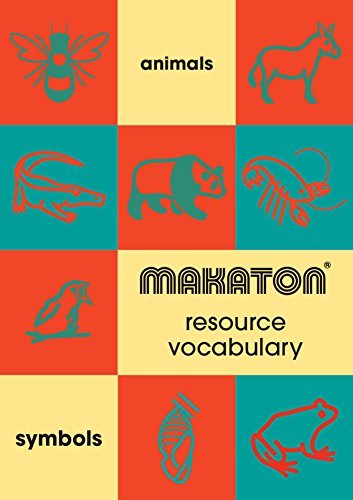
This book contains Makaton symbols for a large variety of domestic and wild animals, birds, insects, reptiles and even a few imaginary ones! This selection also includes Makaton symbols for animal sounds, actions and body parts; their homes and habitats; and related items such as saddle, brush, dish, etc. This resource is designed to be used to build on the vocabulary learned in the Makaton Core Vocabulary.Being able to communicate is one of the most important skills we need in life. Almost everything we do involves communication; everyday tasks such as learning at school, asking for food and drink, sorting out problems, making friends and having fun. These all rely on our ability to communicate with each other.For those who have experienced the frustration of being unable to communicate meaningfully or effectively, Makaton really can help. Makaton takes away that frustration and enables individuals to connect with other people and the world around them. This opens up all kinds of possibilities.Makaton is a language programme using signs and symbols to help people to communicate. It is designed to support spoken language and the signs and symbols are used with speech, in spoken word order. This helps provide extra clues about what someone is saying. Using signs can help people who have no speech or whose speech is unclear. Using symbols can help people who have limited speech and those who cannot, or prefer not to sign.Makaton is extremely flexible as it can be personalised to an individual's needs and used at a level suitable for them. It can be used to:•share thoughts, choices and emotions•label real objects, pictures, photos and places•take part in games and songs•listen to, read and tell stories•create recipes, menus and shopping lists•write letters and messages•help people find their way around public buildingsToday over 100,000 children and adults, use Makaton symbols and signs. Most people start using Makaton as children then naturally stop using the signs and symbols as they no longer need them. However, some people will need to use Makaton for their whole lives.Makaton is designed to help hearing people with learning or communication difficulties. It uses signs and symbols, with speech, in spoken word order.Symbols are a fundamental part of Makaton. Signing and speech are both transitory. Once you have made the sign or spoken the word, the sound or the picture has gone. Symbols, on the other hand, provide a permanent and concrete reference point. Symbols can be combined with signs and speech or just used with speech on their own. Like the signs, symbols give a pictographic representation of the concept. Makaton symbols are created by a working party of experienced Makaton Tutors, linguists, teachers and therapists who are also practising professionals working in the field of Special Needs. The symbols are researched, designed according to strict design themes and evaluated before they are published. The other book in the series is Animals: Signs

First published in 1998. Routledge is an imprint of Taylor & Francis, an informa company.

Half a century ago a young woman published a poem that was destined to reverberate through American life.Here that poem is reprinted with thirty-eight stunning photographs that celebrate it."For My People" is a resounding catalog of black history, a clarion that refutes the affliction of humiliation, an indelible record of noble accomplishments. Since 1942 this enduring paean to black America has remained an everlasting appeal against racial oppression."I wrote most of that poem," Margaret Walker says, "in fifteen minutes on a typewriter. I think it was just after my twenty-second birthday, and I felt it was my whole life gushing out - as I had felt about my people all my life."Since that time the astonishing young poet whose voice rose in cadences that praise and honor black America has never ceased to stir minds and hearts to action with her credos. She became indeed the renowned poet, novelist, lecturer, teacher, and sage Margaret Walker Alexander.In commemoration of "For My People," her first publication, and in tribute to her richly productive life, the acclaimed photographer Roland L. Freeman has joined a photo essay to Margaret Walker's poem."I selected photographs that call to mind the special human elements evoked by Walker, so basic to everyday life, and yet not often celebrated, elements which unravel the real beauty and the tenacity for life of African-American people."With this marvelous collaboration both Walker and Freeman stimulate rejoicing for the spirit of the artist who perceives and depicts the rich and vital culture of black America.In this jubilee year of a momentous poem, "For My People" continues to resound in the hearts of African-Americans and for all who love human freedom.

This text covers the AS specifications from the major examining boards and provides key information, hints, tips and guidance. Progress check questions test recall and understanding, and end of unit sample questions and model answers provide essential practice to improve students exam technique.

Food
by Margaret Walker
This is one of a series of eight photocopiable resources that provide comprehensive materials for students studying technology and related subjects. It enables students to develop their own solutions to design and technology problems, and teachers to tailor materials to the needs of the individual.

Interview With Margaret Walker
by Margaret Walker

Szabadulás
by Margaret Walker

Scruffy and Trixie at the Ranch
by Margaret Walker
Join Meg and her puppies, Scruffy and Trixie, on their hike and adventures in the Tonto National Forest, Summer 2016. This delightful nonfiction story is filled with wonderful photos that children and adults will enjoy.


My Loving Heavenly Father Knows Best
by Margaret Walker
It's been almost 30 years since Michael's untimely death. But his mother, Margaret, has learned how to carry on and thrive—with the help of her Heavenly Father. This is her story of trusting God through losing a child."There are many wonderful characteristics of God, but this book is about His character of love. God loves us so much and has a plan for our lives. He is my Heavenly Father—and my Loving Father always knows best, even when I don’t understand." -Margaret Walker
margaret walker
by Margaret Walker

What is the truth
by Margaret Walker
My attention turned once again to the computer screen. I only had two new messages. My friend Samantha (I call her Sam) had sent me a link to a funny video and my friend TaylorTonks (who was called Tonks because she hated he first name) had sent me a picture.
Literature Connections Sourcebook Jubilee
by Margaret Walker