
Jesmyn Ward
Jesmyn Ward is the author of Where the Line Bleeds, Salvage the Bones, and Men We Reaped. She is a former Stegner Fellow (Stanford University) and Grisham Writer in Residence at the University of Mississippi. She is an associate professor of Creative Writing at Tulane University. Her work has appeared in BOMB, A Public Space and The Oxford American.
14 Books Written

A searing and profound Southern odyssey by National Book Award–winner Jesmyn Ward.In Jesmyn Ward’s first novel since her National Book Award–winning Salvage the Bones, this singular American writer brings the archetypal road novel into rural twenty-first-century America. Drawing on Morrison and Faulkner, The Odyssey and the Old Testament, Ward gives us an epochal story, a journey through Mississippi’s past and present that is both an intimate portrait of a family and an epic tale of hope and struggle. Ward is a major American writer, multiply awarded and universally lauded, and in Sing, Unburied, Sing she is at the height of her powers. Jojo and his toddler sister, Kayla, live with their grandparents, Mam and Pop, and the occasional presence of their drug-addicted mother, Leonie, on a farm on the Gulf Coast of Mississippi. Leonie is simultaneously tormented and comforted by visions of her dead brother, which only come to her when she’s high; Mam is dying of cancer; and quiet, steady Pop tries to run the household and teach Jojo how to be a man. When the white father of Leonie’s children is released from prison, she packs her kids and a friend into her car and sets out across the state for Parchman farm, the Mississippi State Penitentiary, on a journey rife with danger and promise. Sing, Unburied, Sing grapples with the ugly truths at the heart of the American story and the power, and limitations, of the bonds of family. Rich with Ward’s distinctive, musical language, Sing, Unburied, Sing is a majestic new work and an essential contribution to American literature.

The Fire This Time: A New Generation Speaks about Race
by Jesmyn Ward
Rating: 4.4 ⭐
• 2 recommendations ❤️
The New York Times bestseller, these groundbreaking essays and poems about race—collected by National Book Award winner Jesmyn Ward and written by the most important voices of her generation—are “thoughtful, searing, and at times, hopeful. The Fire This Time is vivid proof that words are important, because of their power to both cleanse and to clarify” (USA TODAY).In this bestselling, widely lauded collection, Jesmyn Ward gathers our most original thinkers and writers to speak on contemporary racism and race, including Carol Anderson, Jericho Brown, Edwidge Danticat, Kevin Young, Claudia Rankine, and Honoree Jeffers. “An absolutely indispensable anthology” (Booklist, starred review), The Fire This Time shines a light on the darkest corners of our history, wrestles with our current predicament, and imagines a better future. Envisioned as a response to The Fire Next Time, James Baldwin’s groundbreaking 1963 essay collection, these contemporary writers reflect on the past, present, and future of race in America. We’ve made significant progress in the fifty-odd years since Baldwin’s essays were published, but America is a long and painful distance away from a “post-racial society”—a truth we must confront if we are to continue to work towards change. Baldwin’s “fire next time” is now upon us, and it needs to be talked about; The Fire This Time “seeks to place the shock of our own times into historical context and, most importantly, to move these times forward” (Vogue).
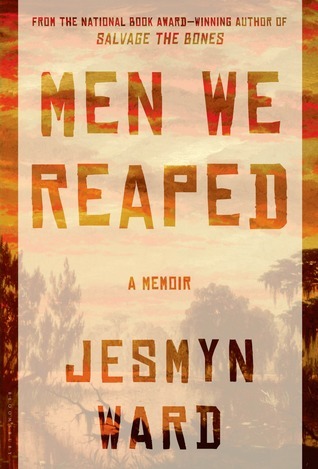
'...And then we heard the rain falling, and that was the drops of blood falling; and when we came to get the crops, it was dead men that we reaped.' Harriet TubmanIn five years, Jesmyn Ward lost five men in her life, to drugs, accidents, suicide, and the bad luck that can follow people who live in poverty, particularly black men. Dealing with these losses, one after another, made Jesmyn ask the question: why? And as she began to write about the experience of living through all the dying, she realized the truth--and it took her breath away. Her brother and her friends all died because of who they were and where they were from, because they lived with a history of racism and economic struggle that fostered drug addiction and the dissolution of family and relationships. Jesmyn says the answer was so obvious she felt stupid for not seeing it. But it nagged at her until she knew she had to write about her community, to write their stories and her own. Jesmyn grew up in poverty in rural Mississippi. She writes powerfully about the pressures this brings, on the men who can do no right and the women who stand in for family in a society where the men are often absent. She bravely tells her story, revisiting the agonizing losses of her only brother and her friends. As the sole member of her family to leave home and pursue high education, she writes about this parallel American universe with the objectivity distance provides and the intimacy of utter familiarity.

Winner of the 2011 National Book Award for Fiction A hurricane is building over the Gulf of Mexico, threatening the coastal town of Bois Sauvage, Mississippi, and Esch's father is growing concerned. A hard drinker, largely absent, he doesn't show concern for much else. Esch and her three brothers are stocking food, but there isn't much to save. Lately, Esch can't keep down what food she gets; she's fourteen and pregnant. Her brother Skeetah is sneaking scraps for his prized pitbull's new litter, dying one by one in the dirt, while brothers Randall and Junior try to stake their claim in a family long on child's play and short on parenting. As the twelve days that comprise the novel's framework yield to the final day and Hurricane Katrina, the unforgettable family at the novel's heart—motherless children sacrificing for each other as they can, protecting and nurturing where love is scarce—pulls itself up to struggle for another day. A wrenching look at the lonesome, brutal, and restrictive realities of rural poverty, "Salvage the Bones" is muscled with poetry, revelatory, and real.

From Jesmyn Ward—the two-time National Book Award winner, youngest winner of the Library of Congress Prize for Fiction, and MacArthur Fellow—comes a haunting masterpiece, sure to be an instant classic, about an enslaved girl in the years before the Civil War.“‘Let us descend,’ the poet now began, ‘and enter this blind world.’” — Inferno, Dante AlighieriLet Us Descend is a reimagining of American slavery, as beautifully rendered as it is heart-wrenching. Searching, harrowing, replete with transcendent love, the novel is a journey from the rice fields of the Carolinas to the slave markets of New Orleans and into the fearsome heart of a Louisiana sugar plantation.Annis, sold south by the white enslaver who fathered her, is the reader’s guide through this hellscape. As she struggles through the miles-long march, Annis turns inward, seeking comfort from memories of her mother and stories of her African warrior grandmother. Throughout, she opens herself to a world beyond this world, one teeming with of earth and water, of myth and history; spirits who nurture and give, and those who manipulate and take. While Ward leads readers through the descent, this, her fourth novel, is ultimately a story of rebirth and reclamation.From one of the most singularly brilliant and beloved writers of her generation, this miracle of a novel inscribes Black American grief and joy into the very land—the rich but unforgiving forests, swamps, and rivers of the American South. Let Us Descend is Jesmyn Ward’s most magnificent novel yet, a masterwork for the ages.
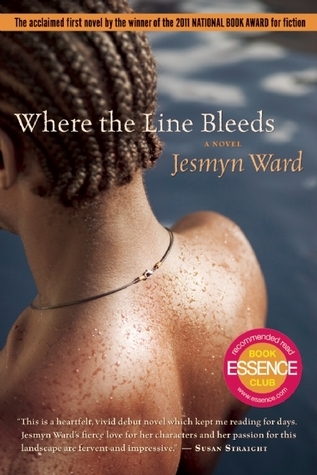
Set in a rural town on the Mississippi Gulf Coast, Where the Line Bleeds tells the story of fraternal twins Joshua and Christophe, who are graduating high school as the novel begins. The two boys both anticipate and dread their lives as adults. Joshua finds a job working as a dock laborer on the Gulf of Mexico, but Christophe has less luck: Unable to find a job, and desperate to alleviate his family’s poverty, he starts to sell drugs. Joshua does not approve, but his clumsy concern fractures the twins’ relationship. When their long-missing addict father reappears, he provokes a shocking confrontation between himself and the brothers—one that will ultimately damn or save them.Where the Line Bleeds is unforgettable for the intense clarity of how the main relationships are rendered: the love but growing tension between the twins; their devotion to the slowly failing grandmother to raised them, and the sense of obligation they feel toward her; and most of all, the alternating pain, bewilderment, anger, and yearning they feel for the parents who abandoned them—their mother for a new life in the big city of Atlanta, and their father for drugs, prison, and even harsher debasements.Jesmyn Ward herself grew up in a small Mississippi town near New Orleans, and this book makes palpable her deep knowledge and love of this world: black, Creole, poor, drug-riddled, yet shored by strong family ties and a sense of community that balances hope and fatalism, grief and triumph. Hers is an important new voice in American fiction, distinguished by its simple, patient, and utterly focused attentiveness to the physical details of her characters and their lives.

A revelatory, uplifting, and gorgeously illustrated meditation on dedication, hard work, and the power of perseverance from the beloved, New York Times bestselling, and two-time National Book Award–winning Jesmyn Ward.For Tulane University’s 2018 commencement, Jesmyn Ward delivered a stirring speech about the value of hard work and the importance of respect for oneself and others. Speaking about the challenges she and her family overcame, Ward inspired everyone in the audience with her meditation on tenacity in the face of hardship. Now, in book form, Ward’s moving words will inspire readers as they prepare for the next chapter in their lives, whether, like Ward, they are the first in their families to graduate from college or are preceded by generations, or whether they are embarking on a different kind of journey later in life.Beautifully illustrated in full color by Gina Triplett, this gorgeous and profound book will charm a generation of students—and their parents. Ward’s inimitable voice shines through as she shares her experience as a Southern black woman and addresses the themes of grit, adversity, and the importance of family bonds. Navigate Your Stars is a perfect gift for anyone in need of inspiration from the author of Salvage the Bones, Men We Reaped, and Sing, Unburied, Sing.

A fever dream of the past that ripples outward to the modern world, this powerful short story by two-time National Book Award winner Jesmyn Ward draws inspiration from the hidden communities built by people escaping slavery.Afice is the last of nine generations of women who have survived enslavement, sickness, and hunger. Alone at age seventeen, she sets out through the Louisiana swamps to follow the trail of her ancestors and hear their songs anew. On this journey, Afice must decide how to honor her ancestors while embracing her own future.Jesmyn Ward’s Mother Swamp is part of A Point in Time, a transporting collection of stories about the pivotal moments, past and present, that change lives. Read or listen to each immersive story in a single sitting.

"I tried not to think about what I a daddy slipping me crystal because he thought it was helping me make money, a asshole redneck boss, and a girl I hadn’t seen in almost a month, when I felt the sickness coming on."In her editor's note, Brigid Hughes writes that this "glorious story," which was National Book Award winner Jesmyn Ward's first publication, has been unavailable to readers ever since A Public Space 5 sold out. "We’re so thrilled that Recommended Reading will give this story a new readership, and a new life."Author Jesmyn Ward grew up in DeLisle, Mississippi. She received her MFA from the University of Michigan, where she won five Hopwood awards for essays, drama, and fiction. A Stegner Fellow at Stanford from 2008 to 2010, she is currently the Grisham Writer in Residence at the University of Mississippi. Her debut novel, Where the Line Bleeds, was an Essence Book Club selection, a Black Caucus of the ALA Honor Award recipient, and a finalist for both the Virginia Commonwealth University Cabell First Novelist Award and the Hurston/ Wright Legacy Award. Her second novel, Salvage The Bones, was a finalist for the 2012 Young Lions Fiction Award and the 2012 Indie Choice Award, and is the winner of the 2012 Alex Award and the 2011 National Book Award in Fiction.About Recommended Great authors inspire us. But what about the stories that inspire them? Recommended Reading, the latest project from Electric Literature, publishes one story every week, each chosen by a great author or editor. In this age of distraction, we uncover writing that's worth slowing down and spending some time with. And in doing so, we help give great writers, literary magazines, and independent presses the recognition (and readership) they deserve.About this week's guest A Public Space, an independent print magazine of literature and culture, was founded in 2006 to present innovative and meaningful new work for the twenty-first century. In her essay in our debut issue, Marilynne Robinson asks, "Why write fiction? ... and why read it? What does it mean? Why does it matter?" These questions continue to invigorate the magazine. For more information, and to subscribe, visit www.apublicspace.org.

Après six ans d'attente, Jesmyn Ward, seule femme double lauréate du National Book Award, est de retour avec un roman puissant et lyrique qui nous plonge au cœur de la tragédie de l'esclavage. La toute première arme que j'ai tenue a été la main de ma mère. Annis est encore une enfant quand sa mère est vendue à un autre propriétaire. Et n'est guère plus âgée quand son maître, qui est aussi l'homme qui a violé sa mère, se débarrasse d'elle avec d'autres esclaves. Lors de leur terrible marche vers les plantations de La Nouvelle-Orléans, Annis tente de se raccrocher à la vie et aux enseignements de sa mère : se battre, toujours, avec les armes et les sagesses qu'elle lui a transmises. Avec la mémoire aussi, celle de ces femmes qui, avant d'être arrachées à leur terre, ont été les guerrières des rois du Dahomey. Et avec la seule force qui lui reste, sa connaissance des plantes, des abeilles, de cette nature qui semble si hostile aux yeux des Blancs et qui pourtant est nourricière pour qui l'honore. Et puis, quand Annis se sent sombrer, elle peut encore implorer Aza, l'esprit de sa grand-mère, capable de faire gronder l'orage et tomber la pluie. Celle qui, quand la faim et la douleur se font trop fortes, lui murmure qu'un jour, elle et ses frères et sœurs de malheur seront tempête...

Annis é filha de uma mulher escravizada e de seu senhor branco. Arrancada dos braços da mãe, é lançada em uma jornada devastadora, cruzando, acorrentada, o sul dos Estados Unidos. Mas sua travessia é também guiada por vozes ancestrais e forças invisíveis, ela resiste, sonha e luta por liberdade. Este romance, marcado pela força da memória e da ancestralidade africana, representa a estreia da escritora Jesmyn Ward no Brasil. Única autora a ganhar duas vezes o National Book Award nos Estados Unidos, vem sendo aclamada como sucessora de Toni Morrison e William Faulkner. Com ecos de Dante e das religiões afro-americanas, A descida transforma o inferno da escravidão em matéria literária, com lirismo, fúria e beleza – e consagra Jesmyn Ward como uma das grandes autoras de nosso tempo.


On Witness and Respair: Essays
by Jesmyn Ward
The collected creative nonfiction of a singular American writer, Jesmyn Ward, including widely shared classics, three never-before-published speeches, and an introductory essay. Respair (noun, obsolete), fresh hope after despair. From the two-time National Book Award winner and New York Times bestselling author Jesmyn Ward, this collection of essays documents more than a decade of work in the life of a singular writer often lauded as “the heir apparent to Toni Morrison” (LitHub). Beginning with her upbringing in a multigenerational household in rural Mississippi, the cradle of both her youth and her gift for storytelling, Ward brings her keen wisdom and hauntingly lyrical prose to a range of topics, following in her grandmother Dorothy’s footsteps when she promises always to “Tell it straight. Tell it all.” True to her word, in these pages Ward contemplates the writers and novels of her youth and adulthood—the transformative power of discovering Octavia Butler as a twenty-something, the mirror that Richard Wright’s novels held up to her own childhood, and of course, her lifelong love for Toni Morrison. Ward ruminates on her approach to both fiction and life, reflecting on the power of the novel, how to raise a Black son in an era of rising divisiveness and cruelty, as well as her own personal tragedies—including the titular essay of the collection, which tells the story of her partner’s sudden death on the eve of the COVID-19 epidemic. Every bit as piercing and moving as her fiction, On Witness and Respair is a testament to Ward’s powers as “one of America’s finest living writers” (San Francisco Chronicle) and is a monument to hope, beauty, and personal and collective resilience.
![[Jesmyn Ward] Salvage The Bones: A Novel (Author)【2012】Paperback](/placeholder.svg?height=400&width=300)