Loading genres...
Explore the best books about Textbooks genre.

The latest edition of this classic is updated with new problem sets and material The Second Edition of this fundamental textbook maintains the book's tradition of clear, thought-provoking instruction. Readers are provided once again with an instructive mix of mathematics, physics, statistics, and information theory.All the essential topics in information theory are covered in detail, including entropy, data compression, channel capacity, rate distortion, network information theory, and hypothesis testing. The authors provide readers with a solid understanding of the underlying theory and applications. Problem sets and a telegraphic summary at the end of each chapter further assist readers. The historical notes that follow each chapter recap the main points.The Second Edition features: * Chapters reorganized to improve teaching * 200 new problems * New material on source coding, portfolio theory, and feedback capacity * Updated referencesNow current and enhanced, the Second Edition of Elements of Information Theory remains the ideal textbook for upper-level undergraduate and graduate courses in electrical engineering, statistics, and telecommunications.

McKinsey & Company's #1 best-selling guide to corporate valuation--the fully updated seventh editionValuation has been the foremost resource for measuring company value for nearly three decades. Now in its seventh edition, this acclaimed volume continues to help financial professionals around the world gain a deep understanding of valuation and help their companies create, manage, and maximize economic value for their shareholders.This latest edition has been carefully revised and updated throughout, and includes new insights on topics such as digital, ESG (environmental, social and governance), and long-term investing, as well as fresh case studies.Clear, accessible chapters cover the fundamental principles of value creation, analyzing and forecasting performance, capital structure and dividends, valuing high-growth companies, and much more. The Financial Times calls the book "one of the practitioners' best guides to valuation."This book:Provides complete, detailed guidance on every crucial aspect of corporate valuation Explains the strategies, techniques, and nuances of valuation every manager needs to know Covers both core and advanced valuation techniques and management strategies Features/Includes a companion website that covers key issues in valuation, including videos, discussions of trending topics, and real-world valuation examples from the capital markets For over 90 years, McKinsey & Company has helped corporations and organizations make substantial and lasting improvements in their performance. Through seven editions and 30 years, Valuation: Measuring and Managing the Value of Companies, has served as the definitive reference for finance professionals, including investment bankers, financial analysts, CFOs and corporate managers, venture capitalists, and students and instructors in all areas of finance.

This is a one-of-a-kind reference for anyone with a serious interest in mathematics. Edited by Timothy Gowers, a recipient of the Fields Medal, it presents nearly two hundred entries, written especially for this book by some of the world's leading mathematicians, that introduce basic mathematical tools and vocabulary; trace the development of modern mathematics; explain essential terms and concepts; examine core ideas in major areas of mathematics; describe the achievements of scores of famous mathematicians; explore the impact of mathematics on other disciplines such as biology, finance, and musi—and much, much more.Unparalleled in its depth of coverage, The Princeton Companion to Mathematics surveys the most active and exciting branches of pure mathematics. Accessible in style, this is an indispensable resource for undergraduate and graduate students in mathematics as well as for researchers and scholars seeking to understand areas outside their specialties.- Features nearly 200 entries, organized thematically and written by an international team of distinguished contributors- Presents major ideas and branches of pure mathematics in a clear, accessible style- Defines and explains important mathematical concepts, methods, theorems, and open problems- Introduces the language of mathematics and the goals of mathematical research- Covers number theory, algebra, analysis, geometry, logic, probability, and more- Traces the history and development of modern mathematics- Profiles more than ninety-five mathematicians who influenced those working today- Explores the influence of mathematics on other disciplines- Includes bibliographies, cross-references, and a comprehensive indexContributors include:Graham Allan, Noga Alon, George Andrews, Tom Archibald, Sir Michael Atiyah, David Aubin, Joan Bagaria, Keith Ball, June Barrow-Green, Alan Beardon, David D. Ben-Zvi, Vitaly Bergelson, Nicholas Bingham, Béla Bollobás, Henk Bos, Bodil Branner, Martin R. Bridson, John P. Burgess, Kevin Buzzard, Peter J. Cameron, Jean-Luc Chabert, Eugenia Cheng, Clifford C. Cocks, Alain Connes, Leo Corry, Wolfgang Coy, Tony Crilly, Serafina Cuomo, Mihalis Dafermos, Partha Dasgupta, Ingrid Daubechies, Joseph W. Dauben, John W. Dawson Jr., Francois de Gandt, Persi Diaconis, Jordan S. Ellenberg, Lawrence C. Evans, Florence Fasanelli, Anita Burdman Feferman, Solomon Feferman, Charles Fefferman, Della Fenster, José Ferreirós, David Fisher, Terry Gannon, A. Gardiner, Charles C. Gillispie, Oded Goldreich, Catherine Goldstein, Fernando Q. Gouvêa, Timothy Gowers, Andrew Granville, Ivor Grattan-Guinness, Jeremy Gray, Ben Green, Ian Grojnowski, Niccolò Guicciardini, Michael Harris, Ulf Hashagen, Nigel Higson, Andrew Hodges, F. E. A. Johnson, Mark Joshi, Kiran S. Kedlaya, Frank Kelly, Sergiu Klainerman, Jon Kleinberg, Israel Kleiner, Jacek Klinowski, Eberhard Knobloch, János Kollár, T. W. Körner, Michael Krivelevich, Peter D. Lax, Imre Leader, Jean-François Le Gall, W. B. R. Lickorish, Martin W. Liebeck, Jesper Lützen, Des MacHale, Alan L. Mackay, Shahn Majid, Lech Maligranda, David Marker, Jean Mawhin, Barry Mazur, Dusa McDuff, Colin McLarty, Bojan Mohar, Peter M. Neumann, Catherine Nolan, James Norris, Brian Osserman, Richard S. Palais, Marco Panza, Karen Hunger Parshall, Gabriel P. Paternain, Jeanne Peiffer, Carl Pomerance, Helmut Pulte, Bruce Reed, Michael C. Reed, Adrian Rice, Eleanor Robson, Igor Rodnianski, John Roe, Mark Ronan, Edward Sandifer, Tilman Sauer, Norbert Schappacher, Andrzej Schinzel, Erhard Scholz, Reinhard Siegmund-Schultze, Gordon Slade, David J. Spiegelhalter, Jacqueline Stedall, Arild Stubhaug, Madhu Sudan, Terence Tao, Jamie Tappenden, C. H. Taubes, Rüdiger Thiele, Burt Totaro, Lloyd N. Trefethen, Dirk van Dalen, Richard Weber, Dominic Welsh, Avi Wigderson, Herbert Wilf, David Wilkins, B. Yandell, Eric Zaslow, Doron Zeilberger

This book is meant to help the reader learn how to program in C. It is the definitive reference guide, now in a second edition. Although the first edition was written in 1978, it continues to be a worldwide best-seller. This second edition brings the classic original up to date to include the ANSI standard. From the Preface: We have tried to retain the brevity of the first edition. C is not a big language, and it is not well served by a big book. We have improved the exposition of critical features, such as pointers, that are central to C programming. We have refined the original examples, and have added new examples in several chapters. For instance, the treatment of complicated declarations is augmented by programs that convert declarations into words and vice versa. As before, all examples have been tested directly from the text, which is in machine-readable form. As we said in the first preface to the first edition, C "wears well as one's experience with it grows." With a decade more experience, we still feel that way. We hope that this book will help you to learn C and use it well.

Famous the world over for the creative brilliance of his insights into the physical world, Nobel Prize-winning physicist Richard Feynman also possessed an extraordinary talent for explaining difficult concepts to the nonscientist. QED--the edited version of four lectures on quantum electrodynamics that Feynman gave to the general public at UCLA as part of the Alix G. Mautner Memorial Lecture series--is perhaps the best example of his ability to communicate both the substance and the spirit of science to the layperson.The focus, as the title suggests, is quantum electrodynamics (QED), the part of the quantum theory of fields that describes the interactions of the quanta of the electromagnetic field-light, X rays, gamma rays--with matter and those of charged particles with one another. By extending the formalism developed by Dirac in 1933, which related quantum and classical descriptions of the motion of particles, Feynman revolutionized the quantum mechanical understanding of the nature of particles and waves. And, by incorporating his own readily visualizable formulation of quantum mechanics, Feynman created a diagrammatic version of QED that made calculations much simpler and also provided visual insights into the mechanisms of quantum electrodynamic processes.In this book, using everyday language, spatial concepts, visualizations, and his renowned "Feynman diagrams" instead of advanced mathematics, Feynman successfully provides a definitive introduction to QED for a lay readership without any distortion of the basic science. Characterized by Feynman's famously original clarity and humor, this popular book on QED has not been equaled since its publication.

The aim of this groundbreaking new book is to bring general relativity into the undergraduate curriculum and make this fundamental theory accessible to all physics majors. Using a "physics first" approach to the subject, renowned relativist James B. Hartle provides a fluent and accessible introduction that uses a minimum of new mathematics and is illustrated with a wealth of exciting applications. The emphasis is on the exciting phenomena of gravitational physics and the growing connection between theory and observation. The Global Positioning System, black holes, X-ray sources, pulsars, quasars, gravitational waves, the Big Bang, and the large scale structure of the universe are used to illustrate the widespread role of how general relativity describes a wealth of everyday and exotic phenomena.

Drawing on more than 40 years of experience with policy analysis, best-selling authors Eugene Bardach and Eric M. Patashnik use real-world examples to teach you how to be effective, accurate, and persuasive policy analysts. The Sixth Edition of A Practical Guide for Policy Analysis presents dozens of concrete tips, new case studies, and step-by-step strategies for the budding analyst as well as the seasoned professional.

At last, this is your story. You'll recognize yourself, your friends, and your loves. You'll see how to use each life crisis as an opportunity for creative change -- to grow to your full potential. Gail Sheehy's brilliant road map of adult life shows the inevitable personality and sexual changes we go through in our 20s, 30s, 40s, and beyond. The Trying 20s -- The safety of home left behind, we begin trying on life's uniforms and possible partners in search of the perfect fit. The Catch 30s -- illusions shaken, it's time to make, break, or deepen life commitments. The Forlorn 40s -- Dangerous years when the dreams of youth demand reassessment, men and women switch characteristics, sexual panic is common, but the greatest opportunity for self-discovery awaits. The Refreshed (or Resigned) 50s -- Best of life for those who let go old roles and find a renewal of purpose.

For over 100 years, the world's leading chess players and teachers have told their students to study the endgame. This book teaches the students what they need to know at their current rating level, and builds on that knowledge for each subsequent phase of the player's development.

A Modern Classic - Third Edition!When it first appeared, Dvoretsky's Endgame Manual was immediately recognized by novice and master alike as one of the best books ever published on the endgame. The third edition, revised and enlarged - now over 400 pages - covers all the most important concepts required for endgame mastery."I am sure that those who study this work carefully will not only play the endgame better, but overall, their play will improve. One of the secrets of the Russian chess school is now before you, dear reader! - From the Foreword to the First Edition by Grandmaster Artur Yusupov"Going through this book will certainly improve your endgame knowledge, but just as important, it will also greatly improve your ability to calculate variations, What really impresses me is the deep level of analysis in the book, All I can say is: This is a great book. I hope it will bring you as much pleasure as it has me. - From the Preface to the First Edition by International Grandmaster Jacob Aagaard Here's what they had to say about the First Edition: "Dvoretsky's Endgame Manual ... may well be the chess book of the year... [It] comes close to an ultimate one-volume manual on the endgame. - Lubomir Kavalek in his chess column of December 1, 2003 in the Washington Post."Dvoretsky's Endgame Manual is quite simply a masterpiece of research and insight. It is a tremendous contribution to endgame literature, certainly the most important one in many years, and destined to be a classic of the literature (if it isn't already one). The famous trainer Mark Dvoretsky has put together a vast number of examples that he has not only collected, but analysed and tested with some of the world's strongest players. This is a particularly important book from the standpoint of clarifying, correcting, and extending the theory of endings. Most of all, Dvoretsky's analysis is staggering in its depth and accuracy. - John Watson, reviewing DEM at The Week In Chess2003 Book of the Year - JeremySilman.com2003 Book of the Year - Seagaard Chess Reviews: "This is an extraordinary good chess book. To call this the best book on endgames ever written seems to be an opinion shared by almost all reviewers and commentators. And I must say that I am not to disagree." - Erik Sobjerg

The first edition, published in 1973, has become a classic reference in the field. Now with the second edition, readers will find information on key new topics such as neural networks and statistical pattern recognition, the theory of machine learning, and the theory of invariances. Also included are worked examples, comparisons between different methods, extensive graphics, expanded exercises and computer project topics.An Instructor's Manual presenting detailed solutions to all the problems in the book is available from the Wiley editorial department.

Is your judgment influenced by personal biases?In situations requiring careful judgment, we're all influenced by our own biases to some extent. But, with Max Bazerman's Judgment in Managerial Decision Making, Sixth Edition, you can learn how to overcome those biases to make better managerial decisions.The text examines judgment in a variety of organizational contexts, and provides practical strategies for changing your decision-making processes and improving these processes so that they become part of your permanent behavior. Throughout, you'll findnumerous hands-on decision exercises and examples from the author's extensive executive training experience that will help you enhance the quality of your managerial judgment.Past editions have been used in top universities, in business schools, and in public policy, psychology, and economics classes. In addition, the text has been widely recognized by practitioners in the world of behavioral finance.Revised with two new chaptersThis Sixth Edition now adds chapters on bounded ethicality (Chapter 8) and bounded awareness (Chapter 11). Both of these chapters are based on Bazerman's recent writing with Dolly Chugh and Mahzarin Banaji.Max H. Bazerman is the Jesse Isidor Straus Professor of Business Administration at the Harvard Business School. In addition, Max is also formally affiliated with the Kennedy School of Government, the Psychology Department, and the Program on Negotiation at Harvard. He is the author or co-author of over 150 research articles and chapters, and the author of numerous other books. Max was named one of the top 30 authors, speakers, and teachers of management by Executive Excellence in each of their two most recent rankings.

An exploration of musical harmony from its ancient fundamentals to its most complex modern progressions, addressing how and why it resonates emotionally and spiritually in the individual.W. A. Mathieu, an accomplished author and recording artist, presents a way of learning music that reconnects modern-day musicians with the source from which music was originally generated. As the author states, "The rules of music--including counterpoint and harmony--were not formed in our brains but in the resonance chambers of our bodies." His theory of music reconciles the ancient harmonic system of just intonation with the modern system of twelve-tone temperament. Saying that the way we think music is far from the way we do music, Mathieu explains why certain combinations of sounds are experienced by the listener as harmonious. His prose often resembles the rhythms and cadences of music itself, and his many musical examples allow readers to discover their own musical responses.

The thirty-five chapters in this book describe various judgmental heuristics and the biases they produce, not only in laboratory experiments but in important social, medical, and political situations as well. Individual chapters discuss the representativeness and availability heuristics, problems in judging covariation and control, overconfidence, multistage inference, social perception, medical diagnosis, risk perception, and methods for correcting and improving judgments under uncertainty. About half of the chapters are edited versions of classic articles; the remaining chapters are newly written for this book. Most review multiple studies or entire subareas of research and application rather than describing single experimental studies. This book will be useful to a wide range of students and researchers, as well as to decision makers seeking to gain insight into their judgments and to improve them.

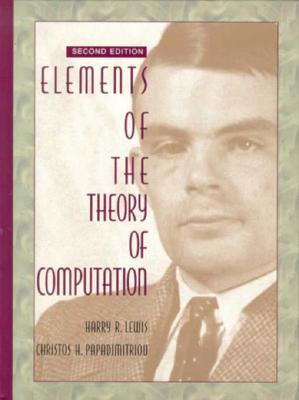
Appropriate for senior and graduate level courses in Computer Science Theory, Automata, and Theory of Computation. This is the long awaited Second Edition of Lewis and Papadimitriou's best-selling theory of computation text. In this substantially modified edition, the authors have enhanced the clarity of their presentation by making the material more accessible to a broader undergraduate audience with no special mathematical experience.

During the past decade there has been an explosion in computation and information technology. With it has come vast amounts of data in a variety of fields such as medicine, biology, finance, and marketing. The challenge of understanding these data has led to the development of new tools in the field of statistics, and spawned new areas such as data mining, machine learning, and bioinformatics. Many of these tools have common underpinnings but are often expressed with different terminology. This book describes the important ideas in these areas in a common conceptual framework. While the approach is statistical, the emphasis is on concepts rather than mathematics. Many examples are given, with a liberal use of color graphics. It should be a valuable resource for statisticians and anyone interested in data mining in science or industry. The book's coverage is broad, from supervised learning (prediction) to unsupervised learning. The many topics include neural networks, support vector machines, classification trees and boosting—the first comprehensive treatment of this topic in any book. Trevor Hastie, Robert Tibshirani, and Jerome Friedman are professors of statistics at Stanford University. They are prominent researchers in this area: Hastie and Tibshirani developed generalized additive models and wrote a popular book of that title. Hastie wrote much of the statistical modeling software in S-PLUS and invented principal curves and surfaces. Tibshirani proposed the Lasso and is co-author of the very successful An Introduction to the Bootstrap. Friedman is the co-inventor of many data-mining tools including CART, MARS, and projection pursuit.

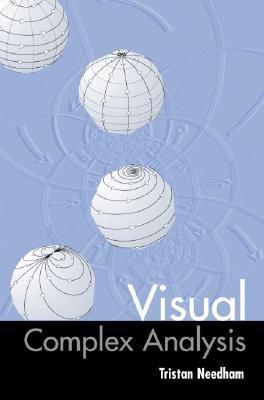
FROM THE Please do NOT buy this original 1997 edition! I have created a new, greatly improved (and cheaper!) edition, which was published on February 28th, 2023:Visual Complex 25th Anniversary Edition (with a new Foreword by Roger Penrose)**************************************************************************************************This radical first course on complex analysis brings a beautiful and powerful subject to life by consistently using geometry (not calculation) as the means of explanation. Aimed at undergraduate students in mathematics, physics, and engineering, the book's intuitive explanations, lack of advanced prerequisites, and consciously user-friendly prose style will help students to master the subject more readily than was previously possible. The key to this is the book's use of new geometric arguments in place of the standard calculational ones. These geometric arguments are communicated with the aid of hundreds of diagrams of a standard seldom encountered in mathematical works. A new approach to a classical topic, this work will be of interest to students in mathematics, physics, and engineering, as well as to professionals in these fields.

A leading physicist delves into relativity and experimental applicationsGravitation and Cosmology: Principles and Applications of the General Theory of Relativity offers a Nobel laureate's perspectives on the wealth of data technological developments have brought to expand upon Einstein's theory. Unique in basing relativity on the Principle of Equivalence of Gravitation and Inertia over Riemannian geometry, this book explores relativity experiments and observational cosmology to provide a sound foundation upon which analyses can be made. Covering special and general relativity, tensor analysis, gravitation, curvature, and more, this book provides an engaging, insightful introduction to the forces that shape the universe.

A Guide to Econometrics has established itself as the first-choice text for teachers and students throughout the world who require an intuitive introduction to the subject without the notation and technical detail that characterize most textbooks. This overview has enabled students to make sense more easily of what instruct

Modern Operating Systems, Fourth Edition, is intended for introductory courses in Operating Systems in Computer Science, Computer Engineering, and Electrical Engineering programs.The widely anticipated revision of this worldwide best-seller incorporates the latest developments in operating systems (OS) technologies. The Fourth Edition includes up-to-date materials on relevant OS. Tanenbaum also provides information on current research based on his experience as an operating systems researcher.Modern Operating Systems, Third Edition was the recipient of the 2010 McGuffey Longevity Award. The McGuffey Longevity Award recognizes textbooks whose excellence has been demonstrated over time. http://taaonline.net/index.htmlTeaching and Learning ExperienceThis program will provide a better teaching and learning experience–for you and your students. It will help:* Provide Practical Detail on the Big Picture Concepts: A clear and entertaining writing style outlines the concepts every OS designer needs to master.* Keep Your Course Current: This edition includes information on the latest OS technologies and developments* Enhance Learning with Student and Instructor Resources: Students will gain hands-on experience using the simulation exercises and lab experiments.

This informally written text provides students with a clear introduction into the subject of linear algebra. Topics covered include matrix multiplication, row reduction, matrix inverse, orthogonality and computation. The self-teaching book is loaded with examples and graphics and provides a wide array of probing problems, accompanying solutions, and a glossary. Chapter 1: Introduction to Vectors; Chapter 2: Solving Linear Equations; Chapter 3: Vector Spaces and Subspaces; Chapter 4: Orthogonality; Chapter 5: Determinants; Chapter 6: Eigenvalues and Eigenvectors; Chapter 7: Linear Transformations; Chapter 8: Applications; Chapter 9: Numerical Linear Algebra; Chapter 10: Complex Vectors and Matrices; Solutions to Selected Exercises; Final Exam. Matrix Factorizations. Conceptual Questions for Review. Glossary: A Dictionary for Linear Algebra Index Teaching Codes Linear Algebra in a Nutshell.

John J. Murphy has updated his landmark bestseller Technical Analysis of the Futures Markets , to include all of the financial markets. This outstanding reference has already taught thousands of traders the concepts of technical analysis and their application in the futures and stock markets. Covering the latest developments in computer technology, technical tools, and indicators, the second edition features new material on candlestick charting, intermarket relationships, stocks and stock rotation, plus state-of-the-art examples and figures. From how to read charts to understanding indicators and the crucial role technical analysis plays in investing, readers gain a thorough and accessible overview of the field of technical analysis, with a special emphasis on futures markets. Revised and expanded for the demands of today's financial world, this book is essential reading for anyone interested in tracking and analyzing market behavior.

This textbook takes an innovative approach to the teaching of classical mechanics, emphasizing the development of general but practical intellectual tools to support the analysis of nonlinear Hamiltonian systems. The development is organized around a progressively more sophisticated analysis of particular natural systems and weaves examples throughout the presentation. Explorations of phenomena such as transitions to chaos, nonlinear resonances, and resonance overlap to help the student to develop appropriate analytic tools for understanding. Computational algorithms communicate methods used in the analysis of dynamical phenomena. Expressing the methods of mechanics in a computer language forces them to be unambiguous and computationally effective. Once formalized as a procedure, a mathematical idea also becomes a tool that can be used directly to compute results.The student actively explores the motion of systems through computer simulation and experiment. This active exploration is extended to the mathematics. The requirement that the computer be able to interpret any expression provides strict and immediate feedback as to whether an expression is correctly formulated. The interaction with the computer uncovers and corrects many deficiencies in understanding.

Reviews from the First Edition:"An excellent text ... The postulates of quantum mechanics and the mathematical underpinnings are discussed in a clear, succinct manner." (American Scientist)"No matter how gently one introduces students to the concept of Dirac's bras and kets, many are turned off. Shankar attacks the problem head-on in the first chapter, and in a very informal style suggests that there is nothing to be frightened of." (Physics Bulletin)Reviews of the Second Edition:"This massive text of 700 and odd pages has indeed an excellent get-up, is very verbal and expressive, and has extensively worked out calculational details---all just right for a first course. The style is conversational, more like a corridor talk or lecture notes, though arranged as a text. ... It would be particularly useful to beginning students and those in allied areas like quantum chemistry." (Mathematical Reviews)R. Shankar has introduced major additions and updated key presentations in this second edition of Principles of Quantum Mechanics. New features of this innovative text include an entirely rewritten mathematical introduction, a discussion of Time-reversal invariance, and extensive coverage of a variety of path integrals and their applications. Additional highlights include:- Clear, accessible treatment of underlying mathematics- A review of Newtonian, Lagrangian, and Hamiltonian mechanics- Student understanding of quantum theory is enhanced by separate treatment of mathematical theorems and physical postulates- Unsurpassed coverage of path integrals and their relevance in contemporary physicsThe requisite text for advanced undergraduate- and graduate-level students, Principles of Quantum Mechanics, Second Edition is fully referenced and is supported by many exercises and solutions. The book's self-contained chapters also make it suitable for independent study as well as for courses in applied disciplines.

This little book is especially concerned with those portions of ”advanced calculus” in which the subtlety of the concepts and methods makes rigor difficult to attain at an elementary level. The approach taken here uses elementary versions of modern methods found in sophisticated mathematics. The formal prerequisites include only a term of linear algebra, a nodding acquaintance with the notation of set theory, and a respectable first-year calculus course (one which at least mentions the least upper bound (sup) and greatest lower bound (inf) of a set of real numbers). Beyond this a certain (perhaps latent) rapport with abstract mathematics will be found almost essential.

When Coca-Cola entered the French market with a hard-core bottom-line management style, they were met with boycotts in cafes and supermarkets. At the launch of Euro Disney in Paris, Mickey Mouse was greeted by angry protestors hurling tomatoes and eggs. As a culture, the French are fiercely independent yet romantic, conservative yet avant-garde, rational yet emotional.Written for anyone interested in or interacting with the French, Au Contraire!: Figuring Out the French unearths the often-invisible cultural forces that govern behavior. Gilles Asselin and Ruth Mastron draw upon their own experiences as consultants and trainers, as well as that of expatriate students and professionals, to offer the best and most useful analysis and advice on French-American intercultural relations. Going beyond the obvious, this bilingual and bicultural author team explores what lies behind what we the assumptions, attitudes, patterns of thought and beliefs that make the French so.French.In a global world filled with multinational mergers and international partnerships, Au Contraire! provides context and perspective on what happens when Americans and the French come together at work, at home, and in any social setting, touching on issues like education, play, friendship, romance and politics. They highlight the dynamics of working and managing across the French and American cultural divide with an in-depth case study of how pharmaceutical giant Rhone-Poulenc Rorer overcame challenges by fostering cross-cultural teamwork. With a quick and useful guide to social etiquette and professional guidelines for managers working in the United States and in France, Au Contraire! provides critical tools to develop creative and appropriate responses to any situation, based on a deep understanding of the unique dynamics of these two cultures.

The modern approach of this text recognizes that econometrics has moved from a specialized mathematical description of economics to an applied interpretation based on empirical research techniques. It bridges the gap between the mechanics of econometrics and modern applications of econometrics by employing a systematic approach motivated by the major problems facing applied researchers today. Throughout the text, the emphasis on examples gives a concrete reality to economic relationships and allows treatment of interesting policy questions in a realistic and accessible framework.

". . . Nothing less than a major contribution to the scientific culture of this world." — The New York Times Book ReviewThis major survey of mathematics, featuring the work of 18 outstanding Russian mathematicians and including material on both elementary and advanced levels, encompasses 20 prime subject areas in mathematics in terms of their simple origins and their subsequent sophisticated developement. As Professor Morris Kline of New York University noted, "This unique work presents the amazing panorama of mathematics proper. It is the best answer in print to what mathematics contains both on the elementary and advanced levels."Beginning with an overview and analysis of mathematics, the first of three major divisions of the book progresses to an exploration of analytic geometry, algebra, and ordinary differential equations. The second part introduces partial differential equations, along with theories of curves and surfaces, the calculus of variations, and functions of a complex variable. It furthur examines prime numbers, the theory of probability, approximations, and the role of computers in mathematics. The theory of functions of a real variable opens the final section, followed by discussions of linear algebra and nonEuclidian geometry, topology, functional analysis, and groups and other algebraic systems.Thorough, coherent explanations of each topic are further augumented by numerous illustrative figures, and every chapter concludes with a suggested reading list. Formerly issued as a three-volume set, this mathematical masterpiece is now available in a convenient and modestly priced one-volume edition, perfect for study or reference."This is a masterful English translation of a stupendous and formidable mathematical masterpiece . . ." — Social Science

The Seventh Edition of Intermediate Microeconomics: A Modern Approach is distinguished by its remarkably up-to-date and rigorous yet accessible analytical approach. Professor Varian’s lucid prose guides students through the fundamentals of microeconomic analysis while emphasizing real-world economic problems and incorporating coverage of the most innovative subjects in the discipline. The Seventh Edition has been carefully updated and revised, adding a wealth of new applications and examples that analyze the important lessons offered by eBay, Google, Verizon, IBM, Microsoft, Bank of America, drug companies, the Yellow Pages, and more.

Brand New International Paper-back Edition Same as per description, **Economy edition, May have been printed in Asia with cover stating Not for sale in US. Legal to use despite any disclaimer on cover. Save Money. Contact us for any queries. Best Customer Support! All Orders shipped with Tracking Number

“An indispensable volume...published for the first time in paperback....More than 200 illustrations of hands and hundreds of images of arms, shoulders, heads, torsos, legs, knees, and feet.” — Library Journal. “It will...meet a deeply felt need to draw the human figure from a vantage point of understanding and visual acuity.”— Arts & Activities.

This landmark text offers a rigorous full-year graduate level course on gravitation physics, teaching students • Grasp the laws of physics in flat spacetime• Predict orders of magnitude• Calculate using the principal tools of modern geometry• Predict all levels of precision• Understand Einstein's geometric framework for physics• Explore applications, including pulsars and neutron stars, cosmology, the Schwarzschild geometry and gravitational collapse, and gravitational waves• Probe experimental tests of Einstein's theory• Tackle advanced topics such as superspace and quantum geometrodynamicsThe book offers a unique, alternating two-track pathway through the • In many chapters, material focusing on basic physical ideas is designated asTrack 1 . These sections together make an appropriate one-term advanced/graduate level course (mathematical vector analysis and simple partial-differential equations). The book is printed to make it easy for readers to identify these sections.• The remaining Track 2 material provides a wealth of advanced topics instructors can draw from to flesh out a two-term course, with Track 1 sections serving as prerequisites.

Intended for graduate students & upper level undergraduates, this textbook describes the interaction of hormones and behavior from diverse perspectives. It draws on a historical perspective, presenting current hypotheses and theories in context of their historical origins, and gives detailed information about the scientists who laid the foundation for modern studies. While the subject involves genetic, molecular, and cellular levels of analysis, Nelson (psychology & neuroscience, Ohio State U.) has kept discussion of endocrine physiology & biochemistry down to a minimum to make the text more accessible to a wider range of readers. Each chapter ends with a summary, questions for discussion, and a short list of suggested readings. Updates in this third edition include discussion of body mass regulation & circadian rhythm research. A student CD-ROM with tutorials & videos is included. Annotation ©2005 Book News, Inc., Portland, OR

From the component design, to the subsystem design, to the engine systems design, engine development and flight-vehicle application, this how-to text bridges the gap between basic physical and design principles and actual rocket-engine design as it's done in industry.

In this superbly illustrated volume, Athens and Rome, the two greatest cities of antiquity, spring to life under the masterful pen of Peter Connolly. All the historical and archaelogical evidence has been seamlessly pieced together to reconstruct the architectural wonders of these mightycivilizations. Re creating public buildings, religious temples, shops, and houses, Connolly reveals every aspect of life in glorious detail, from religion and food to drama, games, and the baths. In addition to the great monuments and moments of classical Greece and Rome, readers learn about atypical day in the life of an Athenian and a Roman. They read about and see the houses people inhabited; attend 5 day festivals and go to the theater; fight great battles and witness the birth of Rome's navy; visit temples and spend a day at the chariot races. The spectacular artwork and vividdescriptions provide a window into the fascinating history of these two extraordinary cities and civilizations. The Ancient City is the crowning achievement of Peter Connolly's distinguished career.

Calculus Made Easy by Silvanus P. Thompson and Martin Gardner has long been the most popular calculus primer.This major revision of the classic math text makes the subject at hand still more comprehensible to readers of all levels. With a new introduction, three new chapters, modernized language and methods throughout, and an appendix of challenging and enjoyable practice problems, Calculus Made Easy has been thoroughly updated for the modern reader.

One of the most important books on contemporary music in the twentieth century. Here for the first time is an orderly presentation of the harmonic procedures to be found in music of the first half of the twentieth-century. The author examines the nature of intervals in various contexts, discusses the modes and other scales employed in modern music, describes the formation and uses of chords by thirds, by fourths, and by seconds, of added-note chords and polychords; he deals with different types of harmonic motion, with harmonic rhythm and dynamic sand ornamentation, with harmonic behavior in tonality, polytonality, atonality and serial composition.

In this book, the author convinces that Sir Arthur Stanley Eddington had things a little bit wrong, as least as far as physics is concerned. He explores the theory of groups and Lie algebras and their representations to use group representations as labor-saving tools.

For nearly 25 years, Tipler’s standard-setting textbook has been a favorite for the calculus-based introductory physics course. With this edition, the book makes a dramatic re-emergence, adding innovative pedagogy that eases the learning process without compromising the integrity of Tipler’s presentation of the science. For instructor and student convenience, the Fourth Edition of Physics for Scientists and Engineers. Vol. 1: Mechanics, Oscillations and Waves, Thermodynamics, 768 pages, 1-57259-491-8

Developed from a first-year graduate course in algebraic topology, this text is an informal introduction to some of the main ideas of contemporary homotopy and cohomology theory. The materials are structured around four core areas: de Rham theory, the Cech-de Rham complex, spectral sequences, and characteristic classes. By using the de Rham theory of differential forms as a prototype of cohomology, the machineries of algebraic topology are made easier to assimilate. With its stress on concreteness, motivation, and readability, this book is equally suitable for self-study and as a one-semester course in topology.

This volume presents topics in probability theory covered during a first-year graduate course given at the Courant Institute of Mathematical Sciences, USA. The necessary background material in measure theory is developed, including the standard topics, such as extension theorem, construction of measures, integration, product spaces, Radon-Nikodym theorem, and conditional expectation.

Conceptual Physics, Tenth Edition helps readers connect physics to their everyday experiences and the world around them with additional help on solving more mathematical problems. Hewitt's text is famous for engaging readers with analogies and imagery from real-world situations that build a strong conceptual understanding of physical principles ranging from classical mechanics to modern physics. With this strong foundation, readers are better equipped to understand the equations and formulas of physics, and motivated to explore the thought-provoking exercises and fun projects in each chapter. Included in the package is the workbook. Mechanics, Properties of Matter, Heat, Sound, Electricity and Magnetism, Light, Atomic and Nuclear Physics, Relativity. For all readers interested in conceptual physics.

This acclaimed book is a master teacher's tested program for turning clumsy prose into clear, powerful, and effective writing. A logical, expert, easy-to-use plan for achieving excellence in expression, Style offers neither simplistic rules nor endless lists of dos and don'ts. Rather, Joseph Williams explains how to be concise, how to be focused, how to be organized. Filled with realistic examples of good, bad, and better writing, and step-by-step strategies for crafting a sentence or organizing a paragraph, Style does much more than teach it helps anyone who must write clearly and persuasively transform even the roughest of drafts into a polished work of clarity, coherence, impact, and personality."Buy Williams's book. And dig out from storage your dog-eared old copy of The Elements of Style. Set them side by side on your reference shelf."—Barbara Walraff, Atlantic"Let newcoming writers discover this, and let their teachers and readers rejoice. It is a practical, disciplined text that is also a pleasure to read."— Christian Century"An excellent book....It provides a sensible, well-balanced approach, featuring prescriptions that work."—Donald Karzenski, Journal of Business Communication"Intensive fitness training for the expressive mind."— Booklist(The college textbook version, Ten Lessons in Clarity and Grace , 9th edition, is available from Longman. ISBN 9780321479358.)

Contains graphs and diagrams, used to illustrate shapes of distributions. This book shows real data examples in various ways.

It is at the same time a history of language, a guide to foreign tongues, and a method for learning them. It shows, through basic vocabularies, family resemblances of languages—Teutonic, Romance, Greek—helpful tricks of translation, key combinations of roots and phonetic patterns. It presents by common-sense methods the most helpful approach to the mastery of many languages; it condenses vocabulary to a minimum of essential words; it simplifies grammar in an entirely new way; and it teaches a languages as it is actually used in everyday life.But this book is more than a guide to foreign languages; it goes deep into the roots of all knowledge as it explores the history of speech. It lights up the dim pathways of prehistory and unfolds the story of the slow growth of human expression from the most primitive signs and sounds to the elaborate variations of the highest cultures. Without language no knowledge would be possible; here we see how language is at once the source and the reservoir of all we know.

Beginning with its first edition and through subsequent editions, Thinking and Deciding has established itself as the required text and important reference work for students and scholars of human cognition and rationality. In this, the fourth edition, Jonathan Baron retains the comprehensive attention to the key questions addressed in the previous editions - How should we think? What, if anything, keeps us from thinking that way? How can we improve our thinking and decision making? - and his expanded treatment of topics such as risk, utilitarianism, Baye's theorem, and moral thinking. With the student in mind, the fourth edition emphasizes the development of an understanding of the fundamental concepts in judgment and decision making. This book is essential reading for students and scholars in judgment and decision making and related fields, including psychology, economics, law, medicine, and business.

There are, contrary to what most amateurs believe, relatively few chess endgames one must know. Jesus de la Villa, an international grandmaster and former champion of Spain, presents the endgames that show up most frequently in practice, are easy to learn and contain ideas and concepts that are useful in more difficult positions. He brings you simple rules, guiding ideas at the beginning of each chapter, detailed and lively explanations, many diagrams, clear summaries of the most important themes, recommended exercises that will help you understand the material, and tests, divided in two parts: basic and final. The main thing De la Villa asks of you is to always understand WHY you play a move.

The first edition of Jim Watson's classic textbook Molecular Biology of the Gene appeared in 1965. This new edition, written with five new authors, has been brought fully up to date, and incorporates insights very recently derived from genome sequencing in a variety of organisms. The book isan authoritative and comprehensive survey of the fundamentals of molecular biology, from basic mechanisms to the elaborate role of gene regulation in embryonic development and evolution. Although updated, the twentyDSone chapters of the new edition retain the distinctive and celebrated features ofthe original work, including introductory chapters on the history of genetics and molecular biology and an emphasis throughout on the chemical underpinnings of molecular biology. The new team of authors brings to this edition awardDSwinning teaching experience and outstanding research achievements.By revealing the intellectual framework and experimental approaches that made new discoveries in the field possible, the new edition highlights the significance of the molecular approach for all of biology.

It is widely held that Bayesian decision theory is the final word on how a rational person should make decisions. However, Leonard Savage--the inventor of Bayesian decision theory--argued that it would be ridiculous to use his theory outside the kind of small world in which it is always possible to "look before you leap." If taken seriously, this view makes Bayesian decision theory inappropriate for the large worlds of scientific discovery and macroeconomic enterprise. When is it correct to use Bayesian decision theory--and when does it need to be modified? Using a minimum of mathematics, Rational Decisions clearly explains the foundations of Bayesian decision theory and shows why Savage restricted the theory's application to small worlds.The book is a wide-ranging exploration of standard theories of choice and belief under risk and uncertainty. Ken Binmore discusses the various philosophical attitudes related to the nature of probability and offers resolutions to paradoxes believed to hinder further progress. In arguing that the Bayesian approach to knowledge is inadequate in a large world, Binmore proposes an extension to Bayesian decision theory--allowing the idea of a mixed strategy in game theory to be expanded to a larger set of what Binmore refers to as "muddled" strategies.Written by one of the world's leading game theorists, Rational Decisions is the touchstone for anyone needing a concise, accessible, and expert view on Bayesian decision making.

Used extensively as a reference source for the FAA Knowledge Exams, this resource includes basic knowledge that is essential for all pilots, from beginning students to those pursuing advanced pilot certificates. This updated guide covers a wide array of fundamental subjects, including principles of flight, aircraft and engine structures, charts and graphs, performance calculations, weather theory, reports, forecasts, and flight manuals. Required reading for pilots for more than 25 years and formerly published as an Advisory Circular (AC 61-23C), this new edition is now listed as an official FAA Handbook.

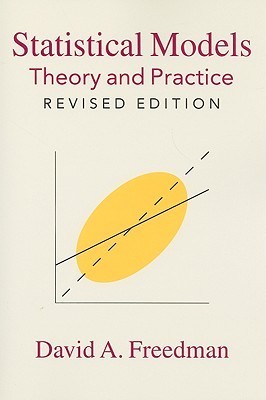
This lively and engaging textbook explains the things you have to know in order to read empirical papers in the social and health sciences, as well as the techniques you need to build statistical models of your own. The author, David A. Freedman, explains the basic ideas of association and regression, and takes you through the current models that link these ideas to causality. The focus is on applications of linear models, including generalized least squares and two-stage least squares, with probits and logits for binary variables. The bootstrap is developed as a technique for estimating bias and computing standard errors. Careful attention is paid to the principles of statistical inference. There is background material on study design, bivariate regression, and matrix algebra. To develop technique, there are computer labs with sample computer programs. The book is rich in exercises, most with answers. Target audiences include advanced undergraduates and beginning graduate students in statistics, as well as students and professionals in the social and health sciences. The discussion in the book is organized around published studies, as are many of the exercises. Relevant journal articles are reprinted at the back of the book. Freedman makes a thorough appraisal of the statistical methods in these papers and in a variety of other examples. He illustrates the principles of modeling, and the pitfalls. The discussion shows you how to think about the critical issues including the connection (or lack of it) between the statistical models and the real phenomena. Features of the book: authoritative guidance from a well-known author with wide experience in teaching, research, and consulting careful analysis of statistical issues in substantive applications no-nonsense, direct style versatile structure, enabling the text to be used as a text in a course, or read on its own text that has been thoroughly class-tested at Berkeley background material on regression and matrix algebra plenty of exercises, most with solutions extra material for instructors, including data sets and code for lab projects (available from Cambridge University Press) many new exercises and examples reorganized, restructured, and revised chapters to aid teaching and understanding"

An Unabridged, Digitally Enlarged Printing Of Volume I of III: Part I - MATHEMATICAL LOGIC - The Theory Of Deduction - Theory Of Apparent Variables - Classes And Relations - Logic And Relations - Products And Sums Of Classes - Part II - PROLEGOMENA TO CARDIANL ARITHMITIC - Unit Classes And Couples - Sub-Classes, Sub-Relations, And Relative Types - One-Many, Many-One, And One-One Relations - Selections - Inductive Relations

A Wall Street Journal Best Book of 2013A world-class physicist and a citizen scientist combine forces to teach Physics 101—the DIY wayThe Theoretical Minimum is a book for anyone who has ever regretted not taking physics in college—or who simply wants to know how to think like a physicist. In this unconventional introduction, physicist Leonard Susskind and hacker-scientist George Hrabovsky offer a first course in physics and associated math for the ardent amateur. Unlike most popular physics books—which give readers a taste of what physicists know but shy away from equations or math—Susskind and Hrabovsky actually teach the skills you need to do physics, beginning with classical mechanics, yourself. Based on Susskind's enormously popular Stanford University-based (and YouTube-featured) continuing-education course, the authors cover the minimum—the theoretical minimum of the title—that readers need to master to study more advanced topics.An alternative to the conventional go-to-college method, The Theoretical Minimum provides a tool kit for amateur scientists to learn physics at their own pace.

The Emergent Multiverse presents a striking new account of the "many worlds" approach to quantum theory. The point of science, it is generally accepted, is to tell us how the world works and what it is like. But quantum theory seems to fail to do this: taken literally as a theory of the world, it seems to make crazy claims: particles are in two places at once; cats are alive and dead at the same time. So physicists and philosophers have often been led either to give up on the idea that quantum theory describes reality, or to modify or augment the theory. The Everett interpretation of quantum mechanics takes the apparent craziness seriously, and asks, "what would it be like if particles really were in two places at once, if cats really were alive and dead at the same time?" The answer, it turns out, is that if the world were like that--if it were as quantum theory claims--it would be a world that, at the macroscopic level, was constantly branching into copies--hence the more sensationalist name for the Everett interpretation, the "many worlds theory." But really, the interpretation is not sensationalist at all: it simply takes quantum theory seriously, literally, as a description of the world. Once dismissed as absurd, it is now accepted by many physicists as the best way to make coherent sense of quantum theory. David Wallace offers a clear and up-to-date survey of work on the Everett interpretation in physics and in philosophy of science, and at the same time provides a self-contained and thoroughly modern account of it--an account which is accessible to readers who have previously studied quantum theory at undergraduate level, and which will shape the future direction of research by leading experts in the field.

Often calculus and mechanics are taught as separate subjects. It shouldn't be like that. Learning calculus without mechanics is incredibly boring. Learning mechanics without calculus is missing the point. This textbook integrates both subjects and highlights the profound connections between them.This is the deal. Give me 350 pages of your attention, and I'll teach you everything you need to know about functions, limits, derivatives, integrals, vectors, forces, and accelerations. This book is the only math book you'll need for the first semester of undergraduate studies in science.With concise, jargon-free lessons on topics in math and physics, each section covers one concept at the level required for a first-year university course. Anyone can pick up this book and become proficient in calculus and mechanics, regardless of their mathematical background.Visit http://minireference.com for more details.

This is the most authoritative and accessible single-volume reference book on applied mathematics. Featuring numerous entries by leading experts and organized thematically, it introduces readers to applied mathematics and its uses; explains key concepts; describes important equations, laws, and functions; looks at exciting areas of research; covers modeling and simulation; explores areas of application; and more.Modeled on the popular Princeton Companion to Mathematics, this volume is an indispensable resource for undergraduate and graduate students, researchers, and practitioners in other disciplines seeking a user-friendly reference book on applied mathematics.Features nearly 200 entries organized thematically and written by an international team of distinguished contributorsPresents the major ideas and branches of applied mathematics in a clear and accessible wayExplains important mathematical concepts, methods, equations, and applicationsIntroduces the language of applied mathematics and the goals of applied mathematical researchGives a wide range of examples of mathematical modelingCovers continuum mechanics, dynamical systems, numerical analysis, discrete and combinatorial mathematics, mathematical physics, and much moreExplores the connections between applied mathematics and other disciplinesIncludes suggestions for further reading, cross-references, and a comprehensive index

Bitcoin and Cryptocurrency Technologies provides a comprehensive introduction to the revolutionary yet often misunderstood new technologies of digital currency. Whether you are a student, software developer, tech entrepreneur, or researcher in computer science, this authoritative and self-contained book tells you everything you need to know about the new global money for the Internet age.How do Bitcoin and its block chain actually work? How secure are your bitcoins? How anonymous are their users? Can cryptocurrencies be regulated? These are some of the many questions this book answers. It begins by tracing the history and development of Bitcoin and cryptocurrencies, and then gives the conceptual and practical foundations you need to engineer secure software that interacts with the Bitcoin network as well as to integrate ideas from Bitcoin into your own projects. Topics include decentralization, mining, the politics of Bitcoin, altcoins and the cryptocurrency ecosystem, the future of Bitcoin, and more.An essential introduction to the new technologies of digital currencyCovers the history and mechanics of Bitcoin and the block chain, security, decentralization, anonymity, politics and regulation, altcoins, and much moreFeatures an accompanying website that includes instructional videos for each chapter, homework problems, programming assignments, and lecture slidesAlso suitable for use with the authors' Coursera online courseElectronic solutions manual (available only to professors)

This book is written for students and scientists wanting to learn about the Standard Model of particle physics. Only an introductory course knowledge about quantum theory is needed. The text provides a pedagogical description of the theory, and incorporates the recent Higgs boson and top quark discoveries. With its clear and engaging style, this new edition retains its essential simplicity. Long and detailed calculations are replaced by simple approximate ones. It includes introductions to accelerators, colliders, and detectors, and several main experimental tests of the Standard Model are explained. Descriptions of some well-motivated extensions of the Standard Model prepare the reader for new developments. It emphasizes the concepts of gauge theories and Higgs physics, electroweak unification and symmetry breaking, and how force strengths vary with energy, providing a solid foundation for those working in the field, and for those who simply want to learn about the Standard Model.