
Alfred North Whitehead
Alfred North Whitehead, OM FRS (15 February 1861 – 30 December 1947) was an English mathematician and philosopher. He is best known as the defining figure of the philosophical school known as process philosophy, which today has found application to a wide variety of disciplines, including ecology, theology, education, physics, biology, economics, and psychology, among other areas. In his early career Whitehead wrote primarily on mathematics, logic, and physics. His most notable work in these fields is the three-volume Principia Mathematica (1910–13), which he co-wrote with former student Bertrand Russell. Principia Mathematica is considered one of the twentieth century's most important works in mathematical logic, and placed 23rd in a list of the top 100 English-language nonfiction books of the twentieth century by Modern Library. Beginning in the late 1910s and early 1920s, Whitehead gradually turned his attention from mathematics to philosophy of science, and finally to metaphysics. He developed a comprehensive metaphysical system which radically departed from most of western philosophy. Whitehead argued that reality was fundamentally constructed by events rather than substances, and that these events cannot be defined apart from their relations to other events, thus rejecting the theory of independently existing substances. Today Whitehead's philosophical works – particularly Process and Reality – are regarded as the foundational texts of process philosophy. Whitehead's process philosophy argues that "there is urgency in coming to see the world as a web of interrelated processes of which we are integral parts, so that all of our choices and actions have consequences for the world around us." For this reason, one of the most promising applications of Whitehead's thought in recent years has been in the area of ecological civilization and environmental ethics pioneered by John B. Cobb, Jr. Isabelle Stengers wrote that "Whiteheadians are recruited among both philosophers and theologians, and the palette has been enriched by practitioners from the most diverse horizons, from ecology to feminism, practices that unite political struggle and spirituality with the sciences of education." Indeed, in recent decades attention to Whitehead's work has become more widespread, with interest extending to intellectuals in Europe and China, and coming from such diverse fields as ecology, physics, biology, education, economics, and psychology. However, it was not until the 1970s and 1980s that Whitehead's thought drew much attention outside of a small group of American philosophers and theologians, and even today he is not considered especially influential outside of relatively specialized circles. In recent years, Whiteheadian thought has become a stimulating influence in scientific research. In physics particularly, Whitehead's thought has been influential, articulating a rival doctrine to Albert Einstein's general relativity. Whitehead's theory of gravitation continues to be controversial. Even Yutaka Tanaka, who suggests that the gravitational constant disagrees with experimental findings, admits that Einstein's work does not actually refute Whitehead's formulation. Also, although Whitehead himself gave only secondary consideration to quantum theory, his metaphysics of events has proved attractive to physicists in that field. Henry Stapp and David Bohm are among those whose work has been influenced by Whitehead. Whitehead is widely known for his influence in education theory. His philosophy inspired the formation of the Association for Process Philosophy of Education (APPE), which published eleven volumes of a journal titled Process Papers on process philosophy and education from 1996 to 2008. Whitehead's theories on education also led to the formation of new modes of learning and new models of teaching.
30 Books Written
An Unabridged, Digitally Enlarged Printing Of Volume I of III: Part I - MATHEMATICAL LOGIC - The Theory Of Deduction - Theory Of Apparent Variables - Classes And Relations - Logic And Relations - Products And Sums Of Classes - Part II - PROLEGOMENA TO CARDIANL ARITHMITIC - Unit Classes And Couples - Sub-Classes, Sub-Relations, And Relative Types - One-Many, Many-One, And One-One Relations - Selections - Inductive Relations
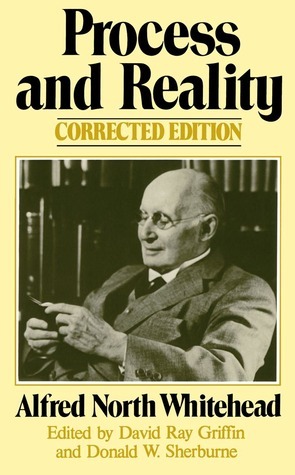
One of the major philosophical texts of the 20th century, Process and Reality is based on Alfred North Whitehead’s influential lectures that he delivered at the University of Edinburgh in the 1920s on process philosophy.Whitehead’s master work in philsophy, Process and Reality propounds a system of speculative philosophy, known as process philosophy, in which the various elements of reality into a consistent relation to each other. It is also an exploration of some of the preeminent thinkers of the seventeenth and eighteenth centuries, such as Descartes, Newton, Locke, and Kant.The ultimate edition of Whitehead’s magnum opus, Process and Reality is a standard reference for scholars of all backgrounds.

Alfred North Whitehead's SCIENCE AND THE MODERN WORLD, originally published in 1925, redefines the concept of modern science. Presaging by more than half a century most of today's cutting-edge thought on the cultural ramifications of science and technology, Whitehead demands that readers understand and celebrate the contemporary, historical, and cultural context of scientific discovery. Taking readers through the history of modern science, Whitehead shows how cultural history has affected science over the ages in relation to such major intellectual themes as romanticism, relativity, quantum theory, religion, and movements for social progress.

The title of this book, Adventures of Ideas, bears two meanings, both applicable to the subject-matter. One meaning is the effect of certain ideas in promoting the slow drift of mankind towards civilization. This is the Adventure of Ideas in the history of mankind. The other meaning is the author's adventure in framing a speculative scheme of ideas which shall be explanatory of the historical adventure.

Six lectures delivered at Wellesley College, Massachusetts, & two at the University of ChicagoPrefaceImportance Expression UnderstandingPerspective Forms of process Civilized universeNature lifelessNature aliveThe aim of philosophyIndex

Presents the texts of a series of lectures delivered between 1912 & 1928 on the purposes & practice of education.PrefaceThe aims of educationThe rhythm of educationThe rhythmic claims of freedom & disciplineTechnical education & its relation to science & literature The place of classics in educationThe mathematical curriculumUniversities & their functionThe organisation of thoughtThe anatomy of some scientific ideasSpace, time & relativity
The great three-volume Principia Mathematica (CUP 1927) is deservedly the most famous work ever written on the foundations of mathematics. Its aim is to deduce all the fundamental propositions of logic and mathematics from a small number of logical premises and primitive ideas, establishing that mathematics is a development of logic. This abridged text of Volume I contains the material that is most relevant to an introductory study of logic and the philosophy of mathematics (more advanced students will of course wish to refer to the complete edition). It contains the whole of the preliminary sections (which present the authors' justification of the philosophical standpoint adopted at the outset of their work); the whole of Part I (in which the logical properties of propositions, propositional functions, classes and relations are established); section A of Part II (dealing with unit classes and couples); and Appendices A and C (which give further developments of the argument on the theory of deduction and truth functions).
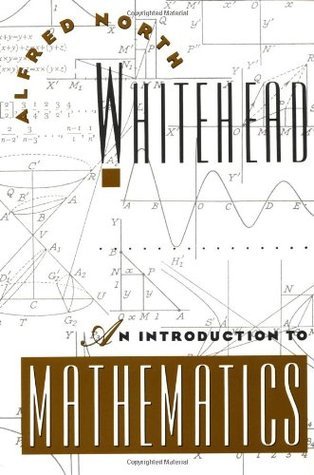
This distinguished little book is a brisk introduction to a series of mathematical concepts, a history of their development, and a concise summary of how today's reader may use them.
This work has been selected by scholars as being culturally important, and is part of the knowledge base of civilization as we know it. This work was reproduced from the original artifact, and remains as true to the original work as possible. Therefore, you will see the original copyright references, library stamps (as most of these works have been housed in our most important libraries around the world), and other notations in the work. This work is in the public domain in the United States of America, and possibly other nations. Within the United States, you may freely copy and distribute this work, as no entity (individual or corporate) has a copyright on the body of the work.As a reproduction of a historical artifact, this work may contain missing or blurred pages, poor pictures, errant marks, etc. Scholars believe, and we concur, that this work is important enough to be preserved, reproduced, and made generally available to the public. We appreciate your support of the preservation process, and thank you for being an important part of keeping this knowledge alive and relevant.

This classic text in American Philosophy by one of the foremost figures in American philosophy offers a concise analysis of the various factors in human nature which go toward forming a religion, to exhibit the inevitable transformation of religion with the transformation of knowledge and to direct attention to the foundation of religion on our apprehension of those permanent elements by reason of which there is a stable order in the world, permanent elements apart from which there could be no changing world.

The Concept of Nature: The Tarner Lectures Delivered in Trinity College, 11/1919
by Alfred North Whitehead
Rating: 3.7 ⭐
""The Concept of Nature"" is a philosophical book written by Alfred North Whitehead and first published in 1920. The book is based on the Tarner Lectures that Whitehead delivered in Trinity College, Cambridge in November 1919. In the book, Whitehead explores the concept of nature and its relationship with the universe. He argues that nature is not simply a collection of natural objects, but rather a complex system of interrelated processes and events. Whitehead also discusses the role of perception in our understanding of nature, and how our experiences shape our perception of the world. The book is considered a major contribution to the philosophy of science and has had a significant impact on the development of process philosophy. It is a must-read for anyone interested in the philosophy of nature and the relationship between science and philosophy.This scarce antiquarian book is a facsimile reprint of the old original and may contain some imperfections such as library marks and notations. Because we believe this work is culturally important, we have made it available as part of our commitment for protecting, preserving, and promoting the world's literature in affordable, high quality, modern editions, that are true to their original work.
Symbolism, its Meaning and Effect: Barbour-Page Lectures, University of Virginia 1927
by Alfred North Whitehead
Rating: 4.0 ⭐
Facsimile of the ed.: New York, Macmillan, 1927.Whitehead's response to the epistemological challenges of Hume and Kant in its most vivid and direct form.

Philospher, mathematician & general man of science, Whitehead was a polymath whose interests & sympathies encompassed entire worlds. Here, modelled on Eckermann's conversations with Goethe & recorded in Whitehead's own home, are some of the landmarks, signposts, milestones & scenery of that extraordinary mind. His approach to life & science provides a compass for the modern world. In these pages the reaches of his thought--in philosophy, religion, science, statesmanship, education, literature, art & conduct of life--are gathered & edited by the writer Lucien Price, a journalist whose own interests were as eclectic as Whitehead's & whose memory for verbatim conversation was nothing short of miraculous. The scene, the Cambridge of Harvard from 1932-47 (with flashbacks to London, Cambridge, England & his native Ramsgate in Kent); the cast, often eminent men & women, who join him for these penetrating, audacious & exhilarating verbal forays. The subjects range from the homeliest details of living to the greatest ideas that have animated minds over the past 30 centuries. Featuring a new preface & an introduction--previously unavailable in this country--this book stands alongside Boswell's as a model of biography, shaped jointly by the acuity of the biographer & the genius of the subject. It also stands as an accessible monument to a mind that never stopped working, a man whose life & career no writer could have invented & no serious reader can afford to overlook.

An Unabridged, Digitally Enlarged Printing Of Volume III Of III With Additional Errata To Volumes I And II: Part V - SERIES (Continued) - Well Ordered Series - Finite And Infinite Series And Ordinals - Compact Series, Rational Series, And Continuous Series - Part VI - QUANTITY - Generalization Of Number - Vector-Families - Measurement - Cyclic Families

This is a collection of many of Whitehead’s papers that are scattered elsewhere. It was the penultimate book he published, and represents his mature thoughts on many topics. Philosophical Library has done a great service by publishing a representative collection of his writings on the subjects of Philosophy, Education and Science. The portion on Philosophy includes five papers: “Immortality”, “Mathematics and the Good”, “Process and Reality”, “John Dewey and His Influence” and the “Analysis of Meaning.” The first three chapters consist of Whitehead’s personal reflections illumined by flashes of his lively humor. They are picturesque and amusing. The remainder of the book consists of chapters on Philosophy, Education, and Science. They cover in depth his positions on many scientific and philosophical matters in an extraordinarily unified way. The final section of the book is devoted to excellent surveys of Geometry and Mathematics as well as a paper on Einstein’s theories.

Considered the "high water mark of his philosophical achievement," Whitehead's book is a rigorous inquiry into the data of science and will be enjoyed by students of philosophy and physics alike. English mathematician and philosopher ALFRED NORTH WHITEHEAD (1861-1947) contributed significantly to 20th-century logic and metaphysics. With Bertrand Russell he cowrote the landmark Principia Mathematica, and also authored The Concept of Nature, The Function of Reason, and Process and Reality.

First published as part of the Cambridge Miscellany series in 1934, this book presents the content of two lectures delivered by Alfred North Whitehead at the University of Chicago in October 1933. The volume concerns itself chiefly with the complex relationship between nature, philosophy and science.

Following up on his two previous works, The Principles of Natural Knowledge and The Concept of Nature, Whitehead explains his alternative theory of relativity, which "cuts away the casual heterogeneity" of Einstein's later theory. Dividing his book into three parts--General Principles, Physical Applications, and Elementary Theory of Tensors--the author's arguments and observations utilize his own unique mix of nature, philosophy, and "the old division between physics and geometry." This work, first published in 1922, is essential reading for students, teachers, scientists, or anyone interested in the relationship of physics to philosophy. English mathematician and philosopher ALFRED NORTH WHITEHEAD (1861-1947) contributed significantly to 20th-century logic and metaphysics. With Bertrand Russell he cowrote the landmark Principia Mathematica, and also authored The Concept of Nature, The Function of Reason, and Process and Reality.
The first three chapters are personal history, highly picturesque and amusing, illumined by flashes of his lively humor....From here the chapters go on into Philosophy, Education, and Science. covering a span of thrity years though these writings do, they are surprizingly unified. Atlantic

Alfred North Whitehead (1861-1947) has made an enormous impact upon philosophical thinking. His work continues to fascinate, and occasionally to exasperate, Whitehead's 'Principia Mathematica' (jointly offered with Russell) is crucial to an understanding of recent philosophy of logic and of mathematics. Whitehead's metaphysics has proved formidably difficult yet stimulating. With his ideas on God he fathered a major school of modern theology.

This work has been selected by scholars as being culturally important, and is part of the knowledge base of civilization as we know it. This work was reproduced from the original artifact, and remains as true to the original work as possible. Therefore, you will see the original copyright references, library stamps (as most of these works have been housed in our most important libraries around the world), and other notations in the work. This work is in the public domain in the United States of America, and possibly other nations. Within the United States, you may freely copy and distribute this work, as no entity (individual or corporate) has a copyright on the body of the work.As a reproduction of a historical artifact, this work may contain missing or blurred pages, poor pictures, errant marks, etc. Scholars believe, and we concur, that this work is important enough to be preserved, reproduced, and made generally available to the public. We appreciate your support of the preservation process, and thank you for being an important part of keeping this knowledge alive and relevant.

The rhythm of education: an address delivered to the Training college association
by Alfred North Whitehead
Rating: 4.0 ⭐
The rhythm of education an address delivered to the Training college association. 44 Pages


An Unabridged Printing, With Text And All Figures Digitally The Formulations Of The Axioms - The Associated Projective Space - Ideal Points - General Theory Of Correspondence - Axioms Of Congruence - Infinitesimal Rotations - The Absolute - Metrical Geometry

Very RARE edition!! UNIQUE offer!! Don’t wait to be OWNER of this special piece of HISTORY!!!

Principia Mathematica was first published in 1910 13; this is the ninth impression of the second edition of 1925 7. The Principia has long been recognised as one of the intellectual landmarks of the century. It was the first book to show clearly the close relationship between mathematics and formal logic. Starting from a minimal number of axioms, Whitehead and Russell display the structure of both kinds of thought. No other book has had such an influence on the subsequent history of mathematical philosophy.

World Perspectives V27.

Library Of Liberal Arts, No. 117.

This volume is produced from digital images from the Cornell University Library Historical Mathematics Monographs collection.

Colonial Architecture in New England. Architectural Treasures of Early America
by Alfred North Whitehead
Rating: 4.0 ⭐