Loading themes...
Explore the best books about China theme.

How Asia Works( Success and Failure in the World's Most Dynamic Region) Hardcover JoeStudwell GrovePress

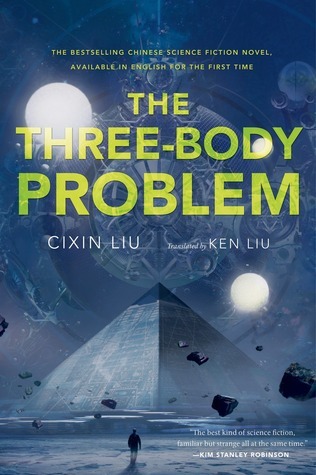
Set against the backdrop of China's Cultural Revolution, a secret military project sends signals into space to establish contact with aliens. An alien civilization on the brink of destruction captures the signal and plans to invade Earth. Meanwhile, on Earth, different camps start forming, planning to either welcome the superior beings and help them take over a world seen as corrupt, or to fight against the invasion.

In December 1937, the Japanese army invaded the ancient city of Nanking, systematically raping, torturing, and murdering more than 300,000 Chinese civilians. This book tells the story from three perspectives: of the Japanese soldiers who performed it, of the Chinese civilians who endured it, and of a group of Europeans and Americans who refused to abandon the city and were able to create a safety zone that saved many.

A revised edition of the definitive translation of the world's most important book of divination • More than 64,000 copies sold of the first edition • The first English translation from within the tradition by a Chinese Taoist Master • Includes translations of the Ten Wings--the commentaries by Confucius essential to the I Ching’s insights Translated by the eminent Taoist Master Alfred Huang, The Complete I Ching has been praised by scholars and new students of the I Ching since its first edition. A native Chinese speaker, Master Huang first translated the original ideograms of the I Ching into contemporary Chinese and then into English, bringing forth the intuitive meanings embodied in the images of the I Ching and imbuing his translation with an accuracy and authenticity not possible in other English translations. However, what makes his translation truly definitive is his return to prominence of the Ten Wings, the commentaries by Confucius that are essential to the I Ching’s insights. This 10th anniversary edition offers a thorough introduction to the history of the I Ching, how to use it, and several new divination methods; in-depth and easy-to-reference translations of each hexagram name, description, and pictogram; and discussions of the interrelations between the hexagrams and the spiritual meaning of their sequence.

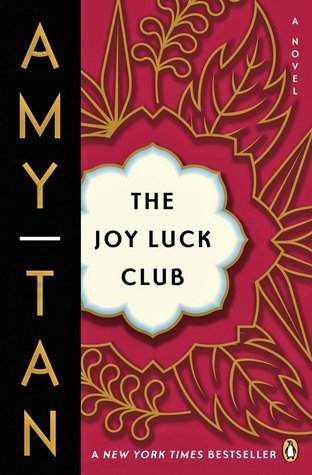
Alternate cover editions of ISBN 9780143038092 can be found here.Four mothers, four daughters, four families, whose histories shift with the four winds depending on who's telling the stories. In 1949, four Chinese women, recent immigrants to San Francisco, meet weekly to play mahjong and tell stories of what they left behind in China. United in loss and new hope for their daughters' futures, they call themselves the Joy Luck Club. Their daughters, who have never heard these stories, think their mothers' advice is irrelevant to their modern American lives – until their own inner crises reveal how much they've unknowingly inherited of their mothers' pasts. With wit and sensitivity, Amy Tan examines the sometimes painful, often tender, and always deep connection between mothers and daughters. As each woman reveals her secrets, trying to unravel the truth about her life, the strings become more tangled, more entwined. Mothers boast or despair over daughters, and daughters roll their eyes even as they feel the inextricable tightening of their matriarchal ties. Tan is an astute storyteller, enticing readers to immerse themselves into these lives of complexity and mystery.

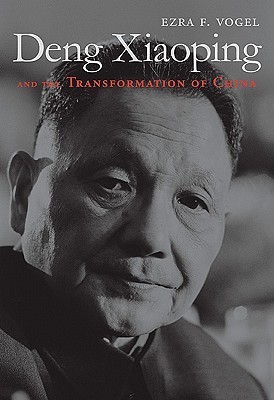
Perhaps no one in the twentieth century had a greater long-term impact on world history than Deng Xiaoping. And no scholar of contemporary East Asian history and culture is better qualified than Ezra Vogel to disentangle the many contradictions embodied in the life and legacy of China’s boldest strategist.Once described by Mao Zedong as a “needle inside a ball of cotton,” Deng was the pragmatic yet disciplined driving force behind China’s radical transformation in the late twentieth century. He confronted the damage wrought by the Cultural Revolution, dissolved Mao’s cult of personality, and loosened the economic and social policies that had stunted China’s growth. Obsessed with modernization and technology, Deng opened trade relations with the West, which lifted hundreds of millions of his countrymen out of poverty. Yet at the same time he answered to his authoritarian roots, most notably when he ordered the crackdown in June 1989 at Tiananmen Square.Deng’s youthful commitment to the Communist Party was cemented in Paris in the early 1920s, among a group of Chinese student-workers that also included Zhou Enlai. Deng returned home in 1927 to join the Chinese Revolution on the ground floor. In the fifty years of his tumultuous rise to power, he endured accusations, purges, and even exile before becoming China’s preeminent leader from 1978 to 1989 and again in 1992. When he reached the top, Deng saw an opportunity to creatively destroy much of the economic system he had helped build for five decades as a loyal follower of Mao—and he did not hesitate.

DEALING WITH CHINA takes the reader behind closed doors to witness the creation and evolution of China's state-controlled capitalism. Written in the same anecdote-rich, page-turning style as Paulson's bestselling memoir, On the Brink , DEALING WITH CHINA is certain to become the classic and definitive examination of engaging an economic superpower. Hank Paulson has dealt with China unlike any other foreigner. As head of Goldman Sachs, Paulson had a pivotal role in opening up China to private enterprise. Then, as Treasury secretary, he created the Strategic Economic Dialogue with what is now the world's second-largest economy. While negotiating with China on economic reforms, he safeguarded the teetering U.S. financial system. Paulson has worked with scores of top Chinese leaders, including Xi Jinping, China's most powerful man in decades. Now, in DEALING WITH CHINA, he takes readers behind closed doors to witness the future of China's state-controlled capitalism.

Grand strategist and founder of modern Singapore offers key insights and controversial opinions on globalization, geopolitics, economic growth, and democracy.When Lee Kuan Yew speaks, presidents, prime ministers, diplomats, and CEOs listen. Lee, the founding father of modern Singapore and its prime minister from 1959 to 1990, has honed his wisdom during more than fifty years on the world stage. Almost single-handedly responsible for transforming Singapore into a Western-style economic success, he offers a unique perspective on the geopolitics of East and West. American presidents from Richard Nixon to Barack Obama have welcomed him to the White House; British prime ministers from Margaret Thatcher to Tony Blair have recognized his wisdom; and business leaders from Rupert Murdoch to Rex Tillerson, CEO of Exxon Mobil, have praised his accomplishments. This book gathers key insights from interviews, speeches, and Lee's voluminous published writings and presents them in an engaging question and answer format.Lee offers his assessment of China's future, asserting, among other things, that "China will want to share this century as co-equals with the U.S." He affirms the United States' position as the world's sole superpower but expresses dismay at the vagaries of its political system. He offers strategic advice for dealing with China and goes on to discuss India's future, Islamic terrorism, economic growth, geopolitics and globalization, and democracy. Lee does not pull his punches, offering his unvarnished opinions on multiculturalism, the welfare state, education, and the free market. This little book belongs on the reading list of every world leader--including the one who takes the oath of office on January 20, 2013.

When you drop your Diet Coke can or yesterday’s newspaper in the recycling bin, where does it go? Probably halfway around the world, to people and places that clean up what you don’t want and turn it into something you can’t wait to buy. In Junkyard Planet, Adam Minter—veteran journalist and son of an American junkyard owner—travels deeply into a vast, often hidden, multibillion-dollar industry that’s transforming our economy and environment.Minter takes us from back-alley Chinese computer recycling operations to high-tech facilities capable of processing a jumbo jet’s worth of recyclable trash every day. Along the way, we meet an unforgettable cast of characters who've figured out how to build fortunes from what we throw away: Leonard Fritz, a young boy "grubbing" in Detroit's city dumps in the 1930s; Johnson Zeng, a former plastics engineer roaming America in search of scrap; and Homer Lai, an unassuming barber turned scrap titan in Qingyuan, China. Junkyard Planet reveals how “going green” usually means making money—and why that’s often the most sustainable choice, even when the recycling methods aren’t pretty.With unmatched access to and insight on the junk trade, and the explanatory gifts and an eye for detail worthy of a John McPhee or William Langewiesche, Minter traces the export of America’s recyclables and the massive profits that China and other rising nations earn from it. What emerges is an engaging, colorful, and sometimes troubling tale of consumption, innovation, and the ascent of a developing world that recognizes value where Americans don’t. Junkyard Planet reveals that we might need to learn a smarter way to take out the trash.

One of the U.S. government's leading China experts reveals the hidden strategy fueling that country's rise – and how Americans have been seduced into helping China overtake us as the world's leading superpower.For more than forty years, the United States has played an indispensable role helping the Chinese government build a booming economy, develop its scientific and military capabilities, and take its place on the world stage, in the belief that China's rise will bring us cooperation, diplomacy, and free trade. But what if the "China Dream" is to replace us, just as America replaced the British Empire, without firing a shot?Based on interviews with Chinese defectors and newly declassified, previously undisclosed national security documents, The Hundred-Year Marathon reveals China's secret strategy to supplant the United States as the world's dominant power, and to do so by 2049, the one-hundredth anniversary of the founding of the People's Republic. Michael Pillsbury, a fluent Mandarin speaker who has served in senior national security positions in the U.S. government since the days of Richard Nixon and Henry Kissinger, draws on his decades of contact with the "hawks" in China's military and intelligence agencies and translates their documents, speeches, and books to show how the teachings of traditional Chinese statecraft underpin their actions. He offers an inside look at how the Chinese really view America and its leaders – as barbarians who will be the architects of their own demise.Pillsbury also explains how the U.S. government has helped – sometimes unwittingly and sometimes deliberately – to make this "China Dream" come true, and he calls for the United States to implement a new, more competitive strategy toward China as it really is, and not as we might wish it to be. The Hundred-Year Marathon is a wake-up call as we face the greatest national security challenge of the twenty-first century.

CHINA AND THE UNITED STATES ARE HEADING TOWARD A WAR NEITHER WANTS. The reason is Thucydides’s Trap, a deadly pattern of structural stress that results when a rising power challenges a ruling one. This phenomenon is as old as history itself. About the Peloponnesian War that devastated ancient Greece, the historian Thucydides explained: “It was the rise of Athens and the fear that this instilled in Sparta that made war inevitable.” Over the past 500 years, these conditions have occurred sixteen times. War broke out in twelve of them. Today, as an unstoppable China approaches an immovable America and both Xi Jinping and Donald Trump promise to make their countries “great again,” the seventeenth case looks grim. Unless China is willing to scale back its ambitions or Washington can accept becoming number two in the Pacific, a trade conflict, cyberattack, or accident at sea could soon escalate into all-out war. In Destined for War, the eminent Harvard scholar Graham Allison explains why Thucydides’s Trap is the best lens for understanding U.S.-China relations in the twenty-first century. Through uncanny historical parallels and war scenarios, he shows how close we are to the unthinkable. Yet, stressing that war is not inevitable, Allison also reveals how clashing powers have kept the peace in the past — and what painful steps the United States and China must take to avoid disaster today.

The defining geopolitical contest of the twenty-first century is between China and the US. But is it avoidable? And if it happens, is the outcome already inevitable?China and America are world powers without serious rivals. They eye each other warily across the Pacific; they communicate poorly; there seems little natural empathy. A massive geopolitical contest has begun.America prizes freedom; China values freedom from chaos.America values strategic decisiveness; China values patience.America is becoming society of lasting inequality; China a meritocracy.America has abandoned multilateralism; China welcomes it.Kishore Mahbubani, a diplomat and scholar with unrivalled access to policymakers in Beijing and Washington, has written the definitive guide to the deep fault lines in the relationship, a clear-eyed assessment of the risk of any confrontation, and a bracingly honest appraisal of the strengths and weaknesses, and superpower eccentricities, of the US and China.

On March 12, 2034, US Navy Commodore Sarah Hunt is on the bridge of her flagship, the guided missile destroyer USS John Paul Jones, conducting a routine freedom of navigation patrol in the South China Sea when her ship detects an unflagged trawler in clear distress, smoke billowing from its bridge. On that same day, US Marine aviator Major Chris "Wedge" Mitchell is flying an F35E Lightning over the Strait of Hormuz, testing a new stealth technology as he flirts with Iranian airspace.By the end of that day, Wedge will be an Iranian prisoner, and Sarah Hunt's destroyer will lie at the bottom of the sea, sunk by the Chinese Navy. Iran and China have clearly coordinated their moves, which involve the use of powerful new forms of cyber weaponry that render US ships and planes defenseless. In a single day, America's faith in its military's strategic pre-eminence is in tatters. A new, terrifying era is at hand.So begins a disturbingly plausible work of speculative fiction, co-authored by an award-winning novelist and decorated Marine veteran and the former commander of NATO, a legendary admiral who has spent much of his career strategically out maneuvering America's most tenacious adversaries.Written with a powerful blend of geopolitical sophistication and literary, human empathy, 2034 takes us inside the minds of a global cast of characters--Americans, Chinese, Iranians, Russians, Indians--as a series of arrogant miscalculations on all sides leads the world into an intensifying international storm. In the end, China and the United States will have paid a staggering cost, one that forever alters the global balance of power.Everything in 2034 is an imaginative extrapolation from present-day facts on the ground combined with the authors' years working at the highest and most classified levels of national security. Sometimes it takes a brilliant work of fiction to illuminate the most dire of warnings: 2034 is all too close at hand, and this cautionary tale presents the reader a dark yet possible future that we must do all we can to avoid.

Winner of the E.M. Forster Award and shortlisted for the Booker Prize, this brutal and beautiful narration of the guerrilla war against the Indonesians in Timor, praised by Fretilin Foreign Minister and Nobel prize-winner Jose Ramos-Hortafor its 'perfect authenticity', reappears now in this handsome edition at a topical moment in history as Timor fully joins the UN at last.

Mr. China tells the rollicking story of a young man who goes to China with the misguided notion that he will help bring the Chinese into the modern world, only to be schooled by the most resourceful and creative operators he would ever meet. Part memoir, part parable, Mr. China is one man's coming-of-age story where he learns to respect and admire the nation he sought to conquer.

Salzman captures post-cultural revolution China through his adventures as a young American English teacher in China and his shifu-tudi (master-student) relationship with China's foremost martial arts teacher.In 1982, Salzman flew off to teach English in Changsha, China. He writes of bureaucrats, students and Cultural Revolution survivors, stripping none of their complexity and humanity. He's gentle with their idiocies, saving his sharpest barbs for himself (it's his pants that split from zipper to waist whilst demonstrating martial arts in Canton). Though dribs of history and drabs of classical lore seep through, this is mostly a personal tale, noted by the Los Angeles Times for "the charmingly unpretentious manner in which it penetrates a China inaccessible to other foreigners."

The Poons, according to gossip in post-war Hong Kong, have plenty of money. But when Wallace Nolasco marries May Ling, daughter of the house of Poon, he finds he has been sold short. Wallace is relegated to the bottom of the household pecking order. By the author of "Sour Sweet".

The first Westerner to meet Mao Tse-tung and the Chinese Communist leaders in 1936, Edgar Snow came away with the first authorized account of Mao’s life, as well as a history of the famous Long March and the men and women who were responsible for the Chinese revolution. Out of that experience came Red Star Over China, a classic work that remains one of the most important books ever written about the birth of the Communist movement in China. This edition includes extensive notes on military and political developments in China, further interviews with Mao Tse-tung, a chronology covering 125 years of Chinese revolution, and nearly a hundred detailed biographies of the men and women who were instrumental in making China what it is today.

The Blue Cliff Record is a translation of the Pi Yen Lu , a collection of one hundred famous Zen koans accompanied by commentaries and verses from the teachings of Chinese Zen masters. Compiled in the twelfth century, it is considered one of the great treasures of Zen literature and an essential study manual for students of Zen.

Born Red is an artistically wrought personal account, written very much from inside the experience, of the years 1966-1969, when the author was a young teenager at middle school. It was in the middle schools that much of the fury of the Cultural Revolution and Red Guard movement was spent, and Gao was caught up in very dramatic events, which he recounts as he understood them at the time. Gao's father was a county political official who was in and out of trouble during those years, and the intense interplay between father and son and the differing perceptions and impact of the Cultural Revolution for the two generations provide both an unusual perspective and some extraordinary moving moments. He also makes deft use of traditional mythology and proverbial wisdom to link, sometimes ironically, past and present. Gao relates in vivid fashion how students-turned-Red Guards held mass rallies against 'capitalist roader' teachers and administrators, marching them through the streets to the accompaniment of chants and jeers and driving some of them to suicide. Eventually the students divided into two factions, and school and town became armed camps. Gao tells of the exhilaration that he and his comrades experienced at their initial victories, of their deepening disillusionment as they utter defeat as the tumultuous first phase of the Cultural Revolution came to a close. The portraits of the persons to whom Gao introduces us - classmates, teachers, family members - gain weight and density as the story unfolds, so that in the end we see how they all became victims of the dynamics of a mass movement out of control.

The author of the acclaimed Sour Sweet presents a sweeping historical novel about corruption and greed, class, race, love and treachery set in Macao and Canton before and during the Opium Wars of the 19th century. Nominated for England's prestigious Booker Prize.

In The Gateless Gate, one of modern Zen Buddhism's uniquely influential masters offers classic commentaries on the Mumonkan, one of Zen's greatest collections of teaching stories. This translation was compiled with the Western reader in mind, and includes Koan Yamada's clear and penetrating comments on each case. Yamada played a seminal role in bringing Zen Buddhism to the West from Japan, going on to be the head of the Sanbo Kyodan Zen Community.The Gateless Gate would be invaluable if only for the translation and commentary alone, yet it's loaded with extra material and is a fantastic resource to keep close by:An in-depth Introduction to the History of Zen PracticeLineage chartsJapanese-to-Chinese and Chinese-to-Japanese conversion charts for personal names, place names, and names of writingsPlus front- and back-matter from ancient and modern figures: Mumon, Shuan, Kubota Ji'un, Taizan Maezumi, Hugo Enomiya-Lasalle, and Yamada Roshi's son, Masamichi Yamada.A wonderful inspiration for the koan practitioner, and for those with a general interest in Zen Buddhism.

Sex and World Peace unsettles a variety of assumptions in political and security discourse, demonstrating that the security of women is a vital factor in the security of the state and its incidence of conflict and war.The authors compare micro-level gender violence and macro-level state peacefulness in global settings, supporting their findings with detailed analyses and color maps. Harnessing an immense amount of data, they call attention to discrepancies between national laws protecting women and the enforcement of those laws, and they note the adverse effects on state security of abnormal sex ratios favoring males, the practice of polygamy, and inequitable realities in family law, among other gendered aggressions.The authors find that the treatment of women informs human interaction at all levels of society. Their research challenges conventional definitions of security and democracy and shows that the treatment of gender, played out on the world stage, informs the true clash of civilizations. In terms of resolving these injustices, the authors examine top-down and bottom-up approaches to healing wounds of violence against women, as well as ways to rectify inequalities in family law and the lack of parity in decision-making councils. Emphasizing the importance of an R2PW, or state responsibility to protect women, they mount a solid campaign against women's systemic insecurity, which effectively unravels the security of all.

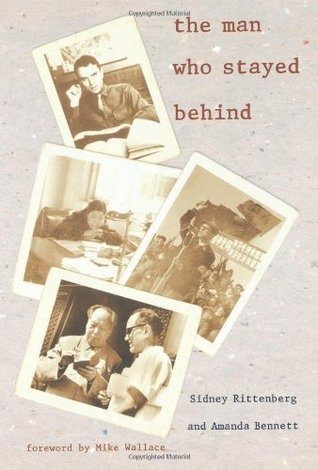
The Man Who Stayed Behind is the remarkable account of Sidney Rittenberg, an American who was sent to China by the U.S. military in the 1940s. A student activist and labor organizer who was fluent in Chinese, Rittenberg became caught up in the turbulence that engulfed China and remained there until the late 1970s. Even with access to China’s highest leaders as an American communist, however, he was twice imprisoned for a total of sixteen years. Both a memoir and a documentary history of the Chinese revolution from 1949 through the Cultural Revolution, The Man Who Stayed Behind provides a human perspective on China’s efforts to build a new society. Critical of both his own mistakes and those of the Communist leadership, Rittenberg nevertheless gives an even-handed account of a country that is now free of internal war for the first time in a hundred years.

Shortlisted for the 1982 Booker Prize, this novel explores the clans and conflicts of Soho's Chinatown, where the Chen family arrive and want to succeed as restaurateurs in the 1960s. No family can survive for long without encountering the Triads. By the author of "The Redundancy of Courage".

The history of the clock opens a window on how different cultures have viewed time and on Europe's path to industrialization. How did a time-keeping device affect the growth of crafts guilds and the scientific research that led to the Industrial Revolution? Clocks and Culture is a brief history of the changes wrought by and on Europe over four hundred years due to technological advances in timekeeping and the rise of a time-aware culture. In his introduction, Anthony Grafton, Henry Putnam University Professor of History at Princeton University, puts this classic book in perspective. 14 b/w illustrations

One of the most influential documents of our time, Mao Tse-tung's pamphlet on guerrilla warfare has become the basic textbook for waging revolution in underdeveloped and emergent areas throughout the world.Recognizing the fundamental disparity between agrarian and urban societies, Mao advocated unorthodox strategies that converted deficits into using intelligence provided by the sympathetic peasant population; substituting deception, mobility, and surprise for superior firepower; using retreat as an offensive move; and educating the inhabitants on the ideological basis of the struggle. This radical new approach to warfare, waged in jungles and mountains by mobile guerrilla bands closely supported by local inhabitants, has been adopted by other revolutionary leaders from Ho Chi Minh to Che Guevara.Mao wrote On Guerrilla Warfare in 1937 while in retreat after ten years of battling the Nationalist army of Chiang Kai-shek. Twelve years later, the Nationalist Chinese were rousted from the mainland, and Mao consolidated his control of a new nation, having put his theories of revolutionary guerrilla warfare to the test.Established governments have slowly come to recognize the need to understand and devise means to counter this new method of warfare. Samuel B. Griffith's classic translation makes Mao's treatise widely available and includes a comprehensive introduction that profiles Mao, analyzes the nature and conduct of guerrilla warfare, and considers its implications for American policy.

The leading textbook by the leading scholar.This text, the classic introduction to modern China for students and general readers, emerged from Spence’s highly successful introductory course at Yale, in which he traced the beginnings of modern China to internal developments beginning in the early 17th century. Strong on social and political history, as well as Chinese culture and its intersections with politics, this paperback is a longstanding leader in the survey course on modern China.

The Diamond Sutra, composed in India in the 4th century CE, is one of the most treasured works of Buddhist literature & is the oldest existing printed book in the world. It's known as the Diamond Sutra because its teachings are said to be like diamonds that cut away all dualistic thought, releasing one from the attachment to objects & bringing one to the further shore of enlightenment. The format of this important sutra is presented as a conversation between the Buddha & one of his disciples. The Sutra of Hui-neng, also known as the Platform Sutra, contains the autobiography of a pivotal figure in Zen history & some of the most profound passages of Zen literature. Hui-neng was the 6th patriarch of Zen in China, but is often regarded as the true father of the Zen tradition. He was a poor, illiterate woodcutter who is said to have attained enlightenment upon hearing a recitation of the Diamond Sutra. Together, these two scriptures present the central teaching of the Zen Buddhist tradition & are essential reading for all students of Buddhism.

In the heart of China's Sichuan province lies the small city of Fuling. Surrounded by the terraced hills of the Yangtze River valley, Fuling has long been a place of continuity, far from the bustling political centers of Beijing and Shanghai. But now Fuling is heading down a new path, and gradually, along with scores of other towns in this vast and ever-evolving country, it is becoming a place of change and vitality, tension and reform, disruption and growth. As the people of Fuling hold on to the China they know, they are also opening up and struggling to adapt to a world in which their fate is uncertain.Fuling's position at the crossroads came into remarkably sharp focus when Peter Hessler arrived as a Peace Corps volunteer in 1996, marking the first time in more than half a century that the city had an American resident. He found himself teaching English and American literature at the local college, discovering how Shakespeare and other classics look when seen through the eyes of students who have been raised in the Sichuan countryside and educated in Communist Party doctrine. His students, though, are the ones who taught him about the ways of Fuling — and about the complex process of understanding that takes place when one is immersed in a radically different society.As he learns the language and comes to know the people, Hessler begins to see that it is indeed a unique moment for Fuling. In its past is Communist China's troubled history — the struggles of land reform, the decades of misguided economic policies, and the unthinkable damage of the Cultural Revolution — and in the future is the Three Gorges Dam, which upon completion will partly flood thecity and force the resettlement of more than a million people. Making his way in the city and traveling by boat and train throughout Sichuan province and beyond, Hessler offers vivid descriptions of the people he meets, from priests to prostitutes and peasants to professors, and gives voice to their views. This is both an intimate personal story of his life in Fuling and a colorful, beautifully written account of the surrounding landscape and its history. Imaginative, poignant, funny, and utterly compelling, River Town is an unforgettable portrait of a city that, much like China itself, is seeking to understand both what it was and what it someday will be.

On 3/8/1421, the largest fleet the world had ever seen set sail from China. Its mission was "to proceed all the way to the ends of the earth to collect tribute from the barbarians beyond the seas" & unite the whole world in Confucian harmony. When it returned in 10/1423, the emperor had fallen, leaving China in political & economic chaos. The great ships were left to rot at their moorings. Most records of their journeys were destroyed. Lost in China's long, self-imposed isolation that followed was the knowledge that Chinese ships had reached America 70 years before Columbus & had circumnavigated the globe a century before Magellan. Also concealed was how the Chinese colonized America before the Europeans & transplanted in America & other countries the principal economic crops that have fed & clothed the world.Unveiling incontrovertible evidence of these astonishing voyages, "1421" rewrites our understanding of history. Our knowledge of world exploration as it's been commonly accepted for centuries must now be reconceived due to this landmark work of historical investigation.

Marco Polo (1254-1329) has achieved an almost archetypal status as a traveller, and his Travels is one of the first great travel books of Western literature, outside the ancient world. The Travels recounts Polo's journey to the eastern court of Kublai Khan, the chieftain of the Mongol empire which covered the Asian continent, but which was almost unknown to Polo's contemporaries. Encompassing a twenty-four year period from 1271, Polo's account details his travels in the service of the empire, from Beijing to northern India and ends with the remarkable story of Polo's return voyage from the Chinese port of Amoy to the Persian Gulf. Alternately factual and fantastic, Polo's prose at once reveals the medieval imagination's limits, and captures the wonder of subsequent travel writers when faced with the unfamiliar, the exotic or the unknown.

An inside analysis of modern cultural and political upheavals in China by a fluent Beijing correspondent describes the power struggles currently taking place between the party elite and supporters of democracy, the outcome of which the author predicts will significantly affect China's rise to a world super-power. 125,000 first printing.

An IRA-CBC Children's Choice.An American Bookseller "Pick of the Lists."When Ping admits that he is the only child in China unable to grow a flower from the seeds distributed by the Emperor, he is rewarded for his honesty.

Drawing on local Chinese histories, the memoirs of scholars, and other contemporary writings, Chinese historian Jonathan Spence reconstructs an extraordinary tale of rural tragedy in a remote corner of Shantung province in 17th-century China. Life in the county of T'an-ch'eng emerges as an endless cycle of floods, plagues, crop failures, banditry, and heavy taxation. Against this turbulent background a tenacious tax collector, an irascible farmer, and an unhappy wife act out a poignant drama at whose climax the wife, having run away from her husband, returns to him, only to die at his hands.

‘The Master said, “If a man sets his heart on benevolence, he will be free from evil”’The Analects are a collection of Confucius’s sayings brought together by his pupils shortly after his death in 497 BC. Together they express a philosophy, or a moral code, by which Confucius, one of the most humane thinkers of all time, believed everyone should live. Upholding the ideals of wisdom, self-knowledge, courage and love of one’s fellow man, he argued that the pursuit of virtue should be every individual’s supreme goal. And, while following the Way, or the truth, might not result in immediate or material gain, Confucius showed that it could nevertheless bring its own powerful and lasting spiritual rewards.This edition contains a detailed introduction exploring the concepts of the original work, a bibliography and glossary and appendices on Confucius himself, The Analects and the disciples who compiled them. For more than seventy years, Penguin has been the leading publisher of classic literature in the English-speaking world. With more than 1,700 titles, Penguin Classics represents a global bookshelf of the best works throughout history and across genres and disciplines. Readers trust the series to provide authoritative texts enhanced by introductions and notes by distinguished scholars and contemporary authors, as well as up-to-date translations by award-winning translators.

“Americans need not be hostile toward China's rise, but they should be wary about its eventual effects. The United States is the only nation with the scale and power to try to set the terms of its interaction with China rather than just succumb. So starting now, Americans need to consider the economic, environmental, political, and social goals they care about defending as Chinese influence grows.” —from “China Makes, the World Takes”Since December 2006, The Atlantic Magazine's James Fallows has been writing some of the most discerning accounts of the economic and political transformation occurring in China. The ten essays collected here cover a wide-range of topics: from visionary tycoons and TV-battling entrepreneurs, to environmental pollution and how China subsidizes our economy. Fallows expertly and lucidly explains the economic, political, social, and cultural forces at work turning China into a world superpower at breakneck speed. This eye-opening and cautionary account is essential reading for all concerned not only with China's but America's future role in the world.

On the world maps common in America, the Indian Ocean all but disappears. The Western Hemisphere lies front and center, while the Indian Ocean region is relegated to the edges, split up along the maps’ outer reaches. This convention reveals the geopolitical focus of the now-departed twentieth century, for it was in the Atlantic and Pacific theaters that the great wars of that era were lost and won. Thus, many Americans are barely aware of the Indian Ocean at all.But in the twenty-first century this will fundamentally change. In Monsoon, a pivotal examination of the Indian Ocean region and the countries known as “Monsoon Asia,” bestselling author Robert D. Kaplan deftly shows how crucial this dynamic area has become to American power in the twenty-first century. Like the monsoon itself, a cyclical weather system that is both destructive and essential for growth and prosperity, the rise of these countries (including India, Pakistan, China, Indonesia, Burma, Oman, Sri Lanka, Bangladesh, and Tanzania) represents a shift in the global balance that cannot be ignored. The Indian Ocean area will be the true nexus of world power and conflict in the coming years. It is here that the fight for democracy, energy independence, and religious freedom will be lost or won, and it is here that American foreign policy must concentrate if America is to remain dominant in an ever-changing world. From the Horn of Africa to the Indonesian archipelago and beyond, Monsoon explores the multilayered world behind the headlines. Kaplan offers riveting insights into the economic and naval strategies of China and India and how they will affect U.S. interests. He provides an on-the-ground perspective on the more volatile countries in the region, plagued by weak infrastructures and young populations tempted by extremism. This, in one of the most nuclearized areas of the world, is a dangerous mix.The map of this fascinating region contains Here lies the entire arc of Islam, from the Sahara Desert to the Indonesian archipelago, and it is here that the political future of Islam will most likely be determined. Here is where the five-hundred-year reign of Western power is slowly being replaced by the influence of indigenous nations, especially India and China, and where a tense dialogue is taking place between Islam and the United States. With Kaplan’s incisive mix of policy analysis, travel reportage, sharp historical perspective, and fluid writing, Monsoon offers a thought-provoking exploration of the Indian Ocean as a strategic and demographic hub and an in-depth look at the issues that are most pressing for American interests both at home and abroad. Exposing the effects of explosive population growth, climate change, and extremist politics on this unstable region—and how they will affect our own interests—Monsoon is a brilliant, important work about an area of the world Americans can no longer afford to ignore.

Combining a close knowledge of Asia and an ability to tap Chinese-language sources with naval combat experience and expertise in sea-power theory, the authors assess how the rise of Chinese sea power will affect U.S. maritime strategy in Asia. They argue that China is laying the groundwork for a sustained challenge to American primacy in maritime Asia, and to defend this hypothesis they look back to Alfred Thayer Mahan s sea-power theories, now popular with the Chinese. The book considers how strategic thought about the sea shapes Beijing s deliberations and compares China s geostrategic predicament to that of the Kaiser s Germany a century ago. It examines the Chinese navy s operational concepts, tactics, and capabilities and appraises China s ballistic-missile submarine fleet. The authors conclude that unless Washington adapts, China will present a challenge to America s strategic position.

From the earliest days of his thirty-four-year military career, Victor "Brute" Krulak displayed a remarkable facility for applying creative ways of fighting to the Marine Corps. He went on daring spy missions, was badly wounded, pioneered the use of amphibious vehicles, and masterminded the invasion of Okinawa. In Korea, he was a combat hero and invented the use of helicopters in warfare. In Vietnam, he developed a holistic strategy in stark contrast to the Army's "Search and Destroy" methods-but when he stood up to LBJ to protest, he was punished. And yet it can be argued that all of his these accomplishments pale in comparison to what he did after World War II and again after Korea: Krulak almost single-handedly stopped the U.S. government from abolishing the Marine Corps.

In this sweeping and insightful history, Henry Kissinger turns for the first time at book-length to a country he has known intimately for decades, and whose modern relations with the West he helped shape. Drawing on historical records as well as his conversations with Chinese leaders over the past forty years, Kissinger examines how China has approached diplomacy, strategy, and negotiation throughout its history, and reflects on the consequences for the global balance of power in the 21st century. Since no other country can claim a more powerful link to its ancient past and classical principles, any attempt to understand China's future world role must begin with an appreciation of its long history. For centuries, China rarely encountered other societies of comparable size and sophistication; it was the "Middle Kingdom," treating the peoples on its periphery as vassal states. At the same time, Chinese statesmen-facing threats of invasion from without, and the contests of competing factions within-developed a canon of strategic thought that prized the virtues of subtlety, patience, and indirection over feats of martial prowess. In On China, Kissinger examines key episodes in Chinese foreign policy from the classical era to the present day, with a particular emphasis on the decades since the rise of Mao Zedong. He illuminates the inner workings of Chinese diplomacy during such pivotal events as the initial encounters between China and modern European powers, the formation and breakdown of the Sino-Soviet alliance, the Korean War, Richard Nixon's historic trip to Beijing, and three crises in the Taiwan Straits. Drawing on his extensive personal experience with four generation of Chinese leaders, he brings to life towering figures such as Mao, Zhou Enlai, and Deng Xiaoping, revealing how their different visions have shaped China's modern destiny. With his singular vantage on U.S.-China relations, Kissinger traces the evolution of this fraught but crucial relationship over the past 60 years, following its dramatic course from estrangement to strategic partnership to economic interdependence, and toward an uncertain future. With a final chapter on the emerging superpower's 21st-century world role, On China provides an intimate historical perspective on Chinese foreign affairs from one of the premier statesmen of the 20th century.

The poignant story of the life and death of world-famous author and historian Iris Chang, as told by her mother. Iris Chang's best-selling book The Rape of Nanking forever changed the way we view the Second World War in Asia. It all began with a photo of a river choked with the bodies of hundreds of Chinese civilians that shook Iris to her core. Who were these people? Why had this happened and how could their story have been lost to history? She could not shake that image from her head. She could not forget what she had seen.A few short years later, Chang revealed this "second Holocaust" to the world. The Japanese atrocities against the people of Nanking were so extreme that a Nazi party leader based in China actually petitioned Hitler to ask the Japanese government to stop the massacre. But who was this woman that single-handedly swept away years of silence, secrecy and shame?Her mother, Ying-Ying, provides an enlightened and nuanced look at her daughter, from Iris' home-made childhood newspaper, to her early years as a journalist and later, as a promising young historian, her struggles with her son's autism and her tragic suicide.The Woman Who Could Not Forget cements Iris' legacy as one of the most extraordinary minds of her generation and reveals the depth and beauty of the bond between a mother and daughter.16 pages of black & white photographs

More than two-thirds of the new airports under construction today are being built in China. Chinese airlines expect to triple their fleet size over the next decade and will account for the fastest-growing market for Boeing and Airbus. But the Chinese are determined to be more than customers. In 2011, China announced its Twelfth Five-Year Plan, which included the commitment to spend a quarter of a trillion dollars to jump-start its aerospace industry. Its goal is to produce the Boeings and Airbuses of the future. Toward that end, it acquired two American companies: Cirrus Aviation, maker of the world’s most popular small propeller plane, and Teledyne Continental, which produces the engines for Cirrus and other small aircraft. In China Airborne, James Fallows documents, for the first time, the extraordinary scale of this project and explains why it is a crucial test case for China’s hopes for modernization and innovation in other industries. He makes clear how it stands to catalyze the nation’s hyper-growth and hyper- urbanization, revolutionizing China in ways analogous to the building of America’s transcontinental railroad in the nineteenth century. Fallows chronicles life in the city of Xi’an, home to more than 250,000 aerospace engineers and assembly workers, and introduces us to some of the hucksters, visionaries, entrepreneurs, and dreamers who seek to benefit from China’s pursuit of aerospace supremacy. He concludes by examining what this latest demonstration of Chinese ambition means for the United States and the rest of the world—and the right ways to understand it.

“Bamboo is flexible, bending with the wind but never breaking, capable of adapting to any circumstance. It suggests resilience, meaning that we have the ability to bounce back even from the most difficult times. . . . Your ability to thrive depends, in the end, on your attitude to your life circumstances. Take everything in stride with grace, putting forth energy when it is needed, yet always staying calm inwardly.” —Ping Fu’s “Shanghai Papa”Ping Fu knows what it’s like to be a child soldier, a factory worker, and a political prisoner. To be beaten and raped for the crime of being born into a well-educated family. To be deported with barely enough money for a plane ticket to a bewildering new land. To start all over, without family or friends, as a maid, waitress, and student.Ping Fu also knows what it’s like to be a pioneering software programmer, an innovator, a CEO, and Inc. magazine’s Entrepreneur of the Year. To be a friend and mentor to some of the best-known names in technology. To build some of the coolest new products in the world. To give speeches that inspire huge crowds. To meet and advise the president of the United States.It sounds too unbelievable for fiction, but this is the true story of a life in two worlds. Born on the eve of China’s Cultural Revolution, Ping was separated from her family at the age of eight. She grew up fighting hunger and humiliation and shielding her younger sister from the teenagers in Mao’s Red Guard. At twenty-five, she found her way to the United States; her only resources were $80 in traveler’s checks and three phrases of English: thank you, hello, and help. Yet Ping persevered, and the hard-won lessons of her childhood guided her to success in her new homeland.Aided by her well-honed survival instincts, a few good friends, and the kindness of strangers, she grew into someone she never thought she’d be: a strong, independent, entrepreneurial leader. A love of problem solving led her to computer science, and Ping became part of the team that created NCSA Mosaic, which became Netscape, the Web browser that forever changed how we access information. She then started a company, Geomagic, that has literally reshaped the world, from personalizing prosthetic limbs to repairing NASA spaceships. Bend, Not Break depicts a journey from imprisonment to freedom, and from the dogmatic anticapitalism of Mao’s China to the high-stakes, take-no-prisoners world of technology start-ups in the United States. It is a tribute to one woman’s courage in the face of cruelty and a valuable lesson on the enduring power of resilience.
A bold and thought-provoking look at the future of U.S.-China relations, and how their coming power struggle will reshape the competitive playing field for nations around the world The Cold War seemingly ended in a decisive victory for the West. But now, Noah Feldman argues, we are entering an era of renewed global struggle: the era of Cool War. Just as the Cold War matched the planet’s reigning superpowers in a contest for geopolitical supremacy, so this new age will pit the United States against a rising China in a contest for dominance, alliances, and resources. Already visible in Asia, the conflict will extend to the Middle East (U.S.-backed Israel versus Chinese-backed Iran), Africa, and beyond. Yet this Cool War differs fundamentally from the zero-sum showdowns of the past: The world’s major power and its leading challenger are economically interdependent to an unprecedented degree. Exports to the U.S. account for nearly a quarter of Chinese trade, while the Chinese government holds 8 percent of America’s outstanding debt. This positive-sum interdependence has profound implications for nations, corporations, and international institutions. It makes what looked to be a classic contest between two great powers into something much more complex, contradictory, and badly in need of the shrewd and carefully reasoned analysis that Feldman provides. To understand the looming competition with China, we must understand the incentives that drive Chinese policy. Feldman offers an arresting take on that country’s secretive hierarchy, proposing that the hereditary “princelings” who reap the benefits of the complicated Chinese political system are actually in partnership with the meritocrats who keep the system full of fresh talent and the reformers who are trying to root out corruption and foster government accountability. He provides a clear-eyed analysis of the years ahead, showing how China’s rise presents opportunities as well as risks. Robust competition could make the U.S. leaner, smarter, and more pragmatic, and could drive China to greater respect for human rights. Alternatively, disputes over trade, territory, or human rights could jeopardize the global economic equilibrium—or provoke a catastrophic “hot war” that neither country wants. The U.S. and China may be divided by political culture and belief, but they are also bound together by mutual self-interest. Cool War makes the case for competitive cooperation as the only way forward that can preserve the peace and make winners out of both sides.Praise for Cool War “A timely book . . . sharp, logical and cool.” — The Economist “Noah Feldman’s dissection of the United States–China relationship is smart, balanced, and wise.” —Robert D. Kaplan, New York Times bestselling author of The Revenge of Geography “Compelling . . . Feldman’s book carries enough insight to warrant serious attention from anyone interested in what may well be the defining relationship in global affairs for decades to come.” — Kirkus Reviews “A worthwhile and intriguing read.” —The Washington Post “Masterfully elucidates China’s non-democratic/non-communist new form of government.” — Publishers Weekly

From abroad, we often see China as a caricature: a nation of pragmatic plutocrats and ruthlessly dedicated students destined to rule the global economy-or an addled Goliath, riddled with corruption and on the edge of stagnation. What we don't see is how both powerful and ordinary people are remaking their lives as their country dramatically changes. As the Beijing correspondent for The New Yorker, Evan Osnos was on the ground in China for years, witness to profound political, economic, and cultural upheaval. In Age of Ambition, he describes the greatest collision taking place in that country: the clash between the rise of the individual and the Communist Party's struggle to retain control. He asks probing questions: Why does a government with more success lifting people from poverty than any civilization in history choose to put strict restraints on freedom of expression? Why do millions of young Chinese professionals-fluent in English and devoted to Western pop culture-consider themselves "angry youth," dedicated to resisting the West's influence? How are Chinese from all strata finding meaning after two decades of the relentless pursuit of wealth? Writing with great narrative verve and a keen sense of irony, Osnos follows the moving stories of everyday people and reveals life in the new China to be a battleground between aspiration and authoritarianism, in which only one can prevail.

What will the next global conflict look like? Find out in this ripping, near-futuristic thriller. The United States, China, and Russia eye each other across a twenty-first century version of the Cold War, which suddenly heats up at sea, on land, in the air, in outer space, and in cyberspace. The fighting involves everything from stealthy robotic–drone strikes to old warships from the navy’s “ghost fleet.” Fighter pilots unleash a Pearl Harbor–style attack; American veterans become low-tech insurgents; teenage hackers battle in digital playgrounds; Silicon Valley billionaires mobilize for cyber-war; and a serial killer carries out her own vendetta. Ultimately, victory will depend on blending the lessons of the past with the weapons of the future.Ghost Fleet is a page-turning speculative thriller in the spirit of The Hunt for Red October. The debut novel by two leading experts on the cutting edge of national security, it is unique in that every trend and technology featured in the novel — no matter how sci-fi it may seem — is real, or could be soon.

A harrowing account of a scholar’s imprisonment during China's Cultural Revolution, this monumental memoir is one of the few surviving recordings of the movement’s oppositionThe Chinese Cultural Revolution began in 1966 and led to a ten-year-long reign of Maoist terror throughout China, in which millions died or were sent to labor camps in the country or subjected to other forms of extreme discipline and humiliation. Ji Xianlin was one of them. The Cowshed is Ji’s harrowing account of his imprisonment in 1968 on the campus of Peking University and his subsequent disillusionment with the cult of Mao. As the campus spirals into a political frenzy, Ji, a professor of Eastern languages, is persecuted by lecturers and students from his own department. His home is raided, his most treasured possessions are destroyed, and Ji himself must endure hours of humiliation at brutal “struggle sessions.” He is forced to construct a cowshed (a makeshift prison for intellectuals who were labeled class enemies) in which he is then housed with other former colleagues. His eyewitness account of this excruciating experience is full of sharp irony, empathy, and remarkable insights into a central event in Chinese history.In contemporary China, the Cultural Revolution remains a delicate topic, little discussed, but if a Chinese citizen has read one book on the subject, it is likely to be Ji’s memoir. When The Cowshed was published in China in 1998, it quickly became a bestseller. The Cultural Revolution had nearly disappeared from the collective memory. Prominent intellectuals rarely spoke openly about the revolution, and books on the subject were almost nonexistent. By the time of Ji’s death in 2009, little had changed, and despite its popularity, The Cowshed remains one of the only testimonies of its kind. As Zha Jianying writes in the introduction, “The book has sold well and stayed in print. But authorities also quietly took steps to restrict public discussion of the memoir, as its subject continues to be treated as sensitive. The present English edition, skillfully translated by Chenxin Jiang, is hence a welcome, valuable addition to the small body of work in this genre. It makes an important contribution to our understanding of that period.”

Far more than a history of the Silk Roads, this book is truly a revelatory new history of the world, promising to destabilize notions of where we come from and where we are headed next. From the Middle East and its political instability to China and its economic rise, the vast region stretching eastward from the Balkans across the steppe and South Asia has been thrust into the global spotlight in recent years. Frankopan teaches us that to understand what is at stake for the cities and nations built on these intricate trade routes, we must first understand their astounding pasts.Frankopan realigns our understanding of the world, pointing us eastward. It was on the Silk Roads that East and West first encountered each other through trade and conquest, leading to the spread of ideas, cultures and religions. From the rise and fall of empires to the spread of Buddhism and the advent of Christianity and Islam, right up to the great wars of the twentieth century--this book shows how the fate of the West has always been inextricably linked to the East.Also available: The New Silk Roads, a timely exploration of the dramatic and profound changes our world is undergoing right now--as seen from the perspective of the rising powers of the East.

China is going to shake the world. Will you be ready?The world’s second largest economy is on the edge of a great transformation… or an epic disaster. It has enormous implications for the global economy either way.This e-book from best-selling author John Mauldin and Worth Wray features an all-star cast of China watchers. Whether you’ve watched from afar or seen the China miracle firsthand, this book will help you consider China’s future from a variety of perspectives. Most important, you’ll learn what China’s changes means for your portfolio.About the Many economists and historians credit Beijing’s central planners for the nation’s transformation from a poor agrarian economy in the 1970s to a space-age industrial dynamo today. Some think an even greater leap forward is coming.John Mauldin and Worth Wray say that either way, China will shake the world.Decades of command & control governance have left China’s “old” smokestack economy overbuilt and awash in debt, with a banking system that may be seriously underwater. Beijing hopes rising retail consumption and productivity will usher in a new era of growth—but the devil is in the details.China’s reformers face high & rising debt, zombie industries, a “deliquified” banking system, widespread risks to employment, and even threats to the Communist Party itself.The People’s Republic needs a new plan. We will all learn in the next five years what it will look like… and whether or not it will work.In A Great Leap Forward?, John and Worth continue the Mauldin Economics tradition of making the complex simple. Their handpicked experts will take you on a fascinating journey through China’s past, present, and future.China’s future is the entire world’s future. What will it look like? Read A Great Leap Forward? to find out.Nouriel RoubiniIan BremmerMichael PettisLouis-Vincent GaveRaoul PalGillem TullochAmbrose Evans-PritchardNeil HoweJack RivkinDavid GoldmanJawad MianGeorge MagnusLeland MillerMark HartLogan WrightErnan Cui,Andrew BatsonSimon HuntSamuel RinesJason Daw and Wei Yao

An engrossing, insider’s account of how a teacher built one of the world’s most valuable companies—rivaling Walmart & Amazon—and forever reshaped the global economy. In just a decade and half Jack Ma, a man from modest beginnings who started out as an English teacher, founded and built Alibaba into one of the world’s largest companies, an e-commerce empire on which hundreds of millions of Chinese consumers depend. Alibaba’s $25 billion IPO in 2014 was the largest global IPO ever. A Rockefeller of his age who is courted by CEOs and Presidents around the world, Jack is an icon for China’s booming private sector and the gatekeeper to hundreds of millions of middle class consumers. Duncan Clark first met Jack in 1999 in the small apartment where Jack founded Alibaba. Granted unprecedented access to a wealth of new material including exclusive interviews, Clark draws on his own experience as an early advisor to Alibaba and two decades in China chronicling the Internet’s impact on the country to create an authoritative, compelling narrative account of Alibaba’s rise. How did Jack overcome his humble origins and early failures to achieve massive success with Alibaba? How did he outsmart rival entrepreneurs from China and Silicon Valley? Can Alibaba maintain its 80% market share? As it forges ahead into finance and entertainment, are there limits to Alibaba’s ambitions? How does the Chinese government view its rise? Will Alibaba expand further overseas, including in the U.S.? Clark tells Alibaba’s tale in the context of China’s momentous economic and social changes, illuminating an unlikely corporate titan as never before.

“By turns alarming and encouraging…Manuel delineates with clarity [why] the US must attend closely to…harmonious future relations with China and India” ( Kirkus Reviews ) and why our obsession with China (as once with Japan) is shortsighted.In the next decade and a half, China and India will become two of the world’s indispensable powers—whether they rise peacefully or not. During that time, Asia will surpass the combined strength of North America and Europe in economic might, population size, and military spending. Both India and China will have vetoes over many international decisions, from climate change to global trade, human rights, and business standards.From her front row view of this colossal shift, first at the State Department and now as an advisor to American business leaders, Anja Manuel escorts the reader on an intimate tour of the corridors of power in Delhi and Beijing. Her encounters with political and business leaders reveal how each country’s history and politics influences their conduct today. Through vibrant stories, she reveals how each country is working to surmount enormous challenges—from the crushing poverty of Indian slum dwellers and Chinese factory workers, to outrageous corruption scandals, rotting rivers, unbreathable air, and managing their citizens’ discontent. “Incisive…lively and accessible…Manual shows us that an optimistic path is we can bring China and India along as partners“ ( San Francisco Chronicle ).We wring our hands about China, Manuel writes, while we underestimate India, which will be the most important country outside the West to shape China’s rise. Manuel shows us that a different path is possible—we can bring China and India along as partners rather than alienating one or both, and thus extend our own leadership in the world. This Brave New World offers “a thoughtful analysis…and a strategy for keeping it from turning violent” ( The Wall Street Journal ).

A controversial look at the end of globalization and what it means for prosperity, peace, and the global economic orderGlobalization, long considered the best route to economic prosperity, is not inevitable. An approach built on the principles of free trade and, since the 1980s, open capital markets, is beginning to fracture. With disappointing growth rates across the Western world, nations are no longer willing to sacrifice national interests for global growth; nor are their leaders able—or willing—to sell the idea of pursuing a global agenda of prosperity to their citizens. Combining historical analysis with current affairs, economist Stephen D. King provides a provocative and engaging account of why globalization is being rejected, what a world ruled by rival states with conflicting aims might look like, and how the pursuit of nationalist agendas could result in a race to the bottom. King argues that a rejection of globalization and a return to “autarky” will risk economic and political conflict, and he uses lessons from history to gauge how best to avoid the worst possible outcomes.

Yang Jisheng’s The World Turned Upside Down is the definitive history of the Cultural Revolution, in withering and heartbreaking detail.As a major political event and a crucial turning point in the history of the People’s Republic of China, the Great Proletarian Cultural Revolution (1966–1976) marked the zenith as well as the nadir of Mao Zedong’s ultra-leftist politics. Reacting in part to the Soviet Union’s "revisionism" that he regarded as a threat to the future of socialism, Mao mobilized the masses in a battle against what he called "bourgeois" forces within the Chinese Communist Party (CCP). This ten-year-long class struggle on a massive scale devastated traditional Chinese culture as well as the nation’s economy.Following his groundbreaking and award-winning history of the Great Famine, Tombstone, Yang Jisheng here presents the only history of the Cultural Revolution by an independent scholar based in mainland China, and makes a crucial contribution to understanding those years' lasting influence today.The World Turned Upside Down puts every political incident, major and minor, of those ten years under extraordinary and withering scrutiny, and arrives in English at a moment when contemporary Chinese governance is leaning once more toward a highly centralized power structure and Mao-style cult of personality.

From the New York Times bestselling author of Ghost Soldiers and In the Kingdom of Ice, a chronicle of the extraordinary feats of heroism by Marines called on to do the impossible during the greatest battle of the Korean WarOn October 15, 1950, the vainglorious General Douglas MacArthur, Supreme Commander of U.N. troops in Korea, convinced President Harry Truman that the communist forces would be utterly defeated by Thanksgiving. The Chinese, he said with near certainty, would not intervene in the war. As he was speaking, 300,000 Chinese soldiers began crossing the border. Led by the 13,000 men of the 1st Marine Division, the Americans moved far north into the trap Mao had set for the arrogant MacArthur at the Chosin Reservoir. What followed was one of the most heroic - and harrowing - operations in American military history. Faced with annihilation, and temperatures plunging to 20 degrees below zero, the surrounded Marines fought through the enemy forces with ferocity, ingenuity and nearly unimaginable courage. Hampton Sides's superb account of the battle relies on years of archival research and interviews with scores of Marines and Koreans who survived the siege. While expertly chronicling the follies of the American leaders, this is an immediate, grunt's-eye view of history, enthralling in its narrative pace and powerful in its portrayal of what ordinary men are capable of in the most extreme circumstances.

Dr. Kai-Fu Lee—one of the world’s most respected experts on AI and China—reveals that China has suddenly caught up to the US at an astonishingly rapid and unexpected pace. In AI Superpowers, Kai-fu Lee argues powerfully that because of these unprecedented developments in AI, dramatic changes will be happening much sooner than many of us expected. Indeed, as the US-Sino AI competition begins to heat up, Lee urges the US and China to both accept and to embrace the great responsibilities that come with significant technological power. Most experts already say that AI will have a devastating impact on blue-collar jobs. But Lee predicts that Chinese and American AI will have a strong impact on white-collar jobs as well. Is universal basic income the solution? In Lee’s opinion, probably not. But he provides a clear description of which jobs will be affected and how soon, which jobs can be enhanced with AI, and most importantly, how we can provide solutions to some of the most profound changes in human history that are coming soon.

In the 19th century, the world was Europeanized. In the 20th century, it was Americanized. Now, in the 21st century, the world is being Asianized.The “Asian Century” is even bigger than you think. Far greater than just China, the new Asian system taking shape is a multi-civilizational order spanning Saudi Arabia to Japan, Russia to Australia, Turkey to Indonesia—linking five billion people through trade, finance, infrastructure, and diplomatic networks that together represent 40 percent of global GDP. China has taken a lead in building the new Silk Roads across Asia, but it will not lead it alone. Rather, Asia is rapidly returning to the centuries-old patterns of commerce, conflict, and cultural exchange that thrived long before European colonialism and American dominance. Asians will determine their own future—and as they collectively assert their interests around the world, they will determine ours as well.There is no more important region of the world for us to better understand than Asia – and thus we cannot afford to keep getting Asia so wrong. Asia’s complexity has led to common Western thinking on Asia conflates the entire region with China, predicts imminent World War III around every corner, and regularly forecasts debt-driven collapse for the region’s major economies. But in reality, the region is experiencing a confident new wave of growth led by younger societies from India to the Philippines, nationalist leaders have put aside territorial disputes in favor of integration, and today’s infrastructure investments are the platform for the next generation of digital innovation.If the nineteenth century featured the Europeanization of the world, and the twentieth century its Americanization, then the twenty-first century is the time of Asianization. From investment portfolios and trade wars to Hollywood movies and university admissions, no aspect of life is immune from Asianization. With America’s tech sector dependent on Asian talent and politicians praising Asia’s glittering cities and efficient governments, Asia is permanently in our nation’s consciousness. We know this will be the Asian century. Now we finally have an accurate picture of what it will look like.

A panoramic survey of China’s rise and resilience through war and rebellion, disease and famine, that rewrites China’s history for a new generation.It is tempting to attribute China’s recent ascendance to changes in political leadership and economic policy. Making China Modern teaches otherwise. Moving beyond the standard framework of Cold War competition and national resurgence, Klaus Mühlhahn situates twenty-first-century China in the nation’s long history of creative adaptation.In the mid-eighteenth century, when the Qing Empire reached the height of its power, China dominated a third of the world’s population and managed its largest economy. But as the Opium Wars threatened the nation’s sovereignty from without and the Taiping Rebellion ripped apart its social fabric from within, China found itself verging on free fall. A network of family relations, economic interdependence, institutional innovation, and structures of governance allowed citizens to regain their footing in a convulsing world. In China’s drive to reclaim regional centrality, its leaders looked outward as well as inward, at industrial developments and international markets offering new ways to thrive.This dynamic legacy of overcoming adversity and weakness is apparent today in China’s triumphs—but also in its most worrisome trends. Telling a story of crisis and recovery, Making China Modern explores the versatility and resourcefulness that matters most to China’s survival, and to its future possibilities.

America needs better options for resolving potential crises In recent years, the Pentagon has elevated its concerns about Russia and China as potential military threats to the United States and its allies. But what issues could provoke actual conflict between the United States and either country? And how could such a conflict be contained before it took the world to the brink of thermonuclear catastrophe, as was feared during the cold war? Defense expert Michael O'Hanlon wrestles with these questions in this insightful book, setting them within the broader context of hegemonic change and today's version of great-power competition. The book examines how a local crisis could escalate into a broader and much more dangerous threat to peace. What if, for example, Russia's “little green men” seized control of a community, like Narva or an even smaller town in Estonia, now a NATO ally? Or, what if China seized one of the uninhabited Senkaku islands now claimed and administered by Japan, or imposed a partial blockade of Taiwan? Such threats are not necessarily imminent, but they are far from inconceivable. Washington could be forced to choose, in these and similar cases, between risking major war to reverse the aggression, and appeasing China or Russia in ways that could jeopardize the broader global order. O'Hanlon argues that the United States needs a better range of options for dealing with such risks to peace. He advocates “integrated deterrence,” which combines military elements with economic warfare. The military components would feature strengthened forward defenses as well as, possibly, limited military options against Russian or Chinese assets in other theaters. Economic warfare would include offensive elements, notably sanctions, as well as measures to ensure the resilience of the United States and allies against possible enemy reprisal. The goal is to deter war through a credible set of responses that are more commensurate than existing policy with the stakes involved in such scenarios.

This is a riveting and disturbing account of the medical atrocities performed in China during WWII.Some of the cruelest deeds of Japan's war in Asia did not occur on the battlefield, but in quiet, antiseptic medical wards in obscure parts of China. Far from front lines and prying eyes, Japanese doctors and their assistants subjected human guinea pigs to gruesome medical experiments in the name of science and Japan's wartime chemical and biological warfare research.Author Hal Gold draws upon a wealth of sources to construct a portrait of the Imperial Japanese Army's most notorious medical unit, giving an overview of its history and detailing its most shocking activities. The book presents the words of former unit members themselves, taken from remarks they made at a traveling Unit 731 exhibition held in Japan in 1994-95. They recount vivid first-hand memories of what it was like to take part in horrific experiments on men, women and children, their motivations and reasons why they chose to speak about their actions all these years later.A new foreword by historian Yuma Totani examines the actions of Unit 731, the post-war response by the Allies and the lasting importance of the book. Japan's Infamous Unit 731 represents an essential addition to the growing body of literature on the still unfolding story of some of the most infamous war crimes in modem military history. By showing how the ethics of normal men and women, and even an entire profession, can be warped by the fire of war, this important book offers a window on a time of human madness and the hope that history will not be repeated.

From a former senior advisor to Senator John McCain comes an urgent wake-up call about how new technologies are threatening America's military might.For generations of Americans, our country has been the world's dominant military power. How the US military fights, and the systems and weapons that it fights with, have been uncontested. That old reality, however, is rapidly deteriorating. America's traditional sources of power are eroding amid the emergence of new technologies and the growing military threat posed by rivals such as China. America is at grave risk of losing a future war. As Christian Brose reveals in this urgent wake-up call, the future will be defined by artificial intelligence, autonomous systems, and other emerging technologies that are revolutionizing global industries and are now poised to overturn the model of American defense. This fascinating, if disturbing, book confronts the existential risks on the horizon, charting a way for America's military to adapt and succeed with new thinking as well as new technology. America must build a battle network of systems that enables people to rapidly understand threats, make decisions, and take military actions, the process known as "the kill chain." Examining threats from China, Russia, and elsewhere, The Kill Chain offers hope and, ultimately, insights on how America can apply advanced technologies to prevent war, deter aggression, and maintain peace

This discounted ebundle includes: The Three-Body Problem, The Dark Forest, Death’s End "Wildly imaginative, really interesting." —President Barack Obama The Three-Body trilogy by New York Times bestseller Cixin Liu keeps you riveted with high-octane action, political intrigue, and unexpected twists in this saga of first contact with the extraterrestrial Trisolaris. The Three-Body Problem — An alien civilization on the brink of destruction captures the signal and plans to invade Earth. Meanwhile, on Earth, different camps start forming, planning to either welcome the superior beings and help them take over a world seen as corrupt, or to fight against the invasion.The Dark Forest — In The Dark Forest, the aliens' human collaborators may have been defeated, but the presence of the sophons, the subatomic particles that allow Trisolaris instant access to all human information remains. Humanity responds with the Wallfacer Project, a daring plan that grants four men enormous resources to design secret strategies, hidden through deceit and misdirection from Earth and Trisolaris alike. Three of the Wallfacers are influential statesmen and scientists, but the fourth is a total unknown. Luo Ji, an unambitious Chinese astronomer and sociologist, is baffled by his new status. All he knows is that he's the one Wallfacer that Trisolaris wants dead.Death’s End — Half a century after the Doomsday Battle, Cheng Xin, an aerospace engineer from the early 21st century, awakens from hibernation in this new age. She brings with her knowledge of a long-forgotten program dating from the beginning of the Trisolar Crisis, and her very presence may upset the delicate balance between two worlds. Will humanity reach for the stars or die in its cradle? Other Books by Cixin Liu (Translated to English) The Remembrance of Earth's Past The Three-Body Problem The Dark Forest Death's End Other Books Ball Lightning At the Publisher's request, this title is being sold without Digital Rights Management Software (DRM) applied.

Book/Author CBS This Morning , New York Times , Washington Post , BBC , NPR , Wall Street Journal , Tucker Carlson Tonight, Fox News, CNN / Smerconish, Bloomberg, Fox Sports, Maria Bartiromo, Fast Company, Los Angeles Times, South China Morning Post, SALT Talks, Sky News, VOA, Greta Van Susteren, War Room, Adam Carolla Show, Keiser Report, CNBC, VOA, Outkick, The Bulwark, Fox Business, & more....A deeply revealing memoir of big wins and hard lessons from a seasoned executive caught smack in the middle of the trillion-dollar soft power struggle pitting China against Hollywood, the NBA, and American business.

New York Times Bestseller Now with new text from McMaster addressing the January 2021 assault on the U.S. Capitol and recommending how citizens across the free world can work together to restore confidence in democratic institutions and processes From Lt. General H.R. McMaster, U.S. Army, ret., the former National Security Advisor and author of the bestselling classic Dereliction of Duty , comes a bold and provocative re-examination of the most critical foreign policy and national security challenges that face the United States, and an urgent call to compete to preserve America’s standing and security. Across multiple administrations since the end of the Cold War, American foreign policy has been misconceived, inconsistent, and poorly implemented. As a result, America and the free world have fallen behind rivals in power and influence. Meanwhile threats to security, freedom, and prosperity, such as nuclear proliferation and jihadist terrorism have grown. In BATTLEGROUNDS, H.R. McMaster describes efforts to reassess and fundamentally shift policies while he was National Security Advisor. And he provides a clear pathway forward to improve strategic competence and prevail in complex competitions against our adversaries. Battlegrounds is a groundbreaking reassessment of America’s place in the world, drawing from McMaster’s long engagement with these issues, including 34 years of service in the U.S. Army with multiple tours of duty in battlegrounds overseas and his 13 months as National Security Advisor in the Trump White House. It is also a powerful call for Americans and citizens of the free world to transcend the vitriol of partisan political discourse, better educate themselves about the most significant challenges to national and international security and work together to secure peace and prosperity for future generations.

The first published work by a sitting Chinese President, Xi Jinping: The Governance of China offers a unique look inside the Communist Party of China and its vision for the future. The book presents excerpts and summaries of 79 speeches, talks, interviews, instructions and correspondences in 18 chapters. Each item is accompanied by relevant notes about China's social system, history and culture. The book includes 45 photos taken at various stages of Xi's life, which provide readers with more information about his career and personal life.Topics include:The Chinese DreamEconomic DevelopmentThe Rule of LawEcological ProgressNational Defense"One Country, Two Systems"New Model of Major-Country RelationsCombating CorruptionThe CPC Leadership Under the leadership of Xi Jinping the Communist Party of China has set off in a new direction of reform and modernization. The Governance of China It will contribute greatly to the concepts and principles of governance within the CPC leadership, China's future path of development, and the nations domestic and foreign policies as well as responses to international concerns about China. It is essential reading for anyone interested in knowing how China, and more specifically, how it's President views the world and China's place within it.

The explosive, behind-the-scenes story of Donald Trump’s high-stakes confrontation with Beijing, from an award-winning Washington Post columnist and peerless observer of the U.S.–China relationshipThere was no calm before the storm. Donald Trump’s surprise electoral victory shattered the fragile understanding between Washington and Beijing, putting the most important relationship of the twenty-first century in the hands of a novice who had bitterly attacked China from the campaign trail. Almost as soon as he entered office, Trump brought to a boil the long-simmering rivalry between the two countries, while also striking up a “friendship” with Chinese president Xi Jinping — whose manipulations of his American counterpart would undermine the White House’s already disjointed response to the historic challenge of a rising China. All the while, Trump’s own officials fought to steer U.S. policy from within.By the time the COVID-19 pandemic erupted in Wuhan, Trump’s love-hate relationship with Xi had sparked a trade war, while Xi’s aggression had pushed the world to the brink of a new Cold War. But their quarrel had also forced a long-overdue reckoning within the United States over China’s audacious foreign-influence operations, horrific human rights abuses, and creeping digital despotism. Ironically, this awakening was one of the biggest foreign-policy victories of Trump’s fractious term in office.Filled with shocking revelations drawn from Josh Rogin’s unparalleled access to top U.S. officials from the White House and deep within the country’s foreign policy machine, Chaos Under Heaven reveals an administration at war with itself during perhaps our most urgent hour.

An expert’s take on how a coup in China could launch a transition to democracy.This short book predicts—contrary to the prevailing consensus—that China’s leader Xi Jinping will very soon be removed from office in a coup d’état mounted by rivals in the top leadership. The leaders of the coup will then end China’s one-party dictatorship and launch a transition to democracy and the rule of law. Long-time diplomat and development banker Roger Garside draws on his deep knowledge of Chinese politics and economics first to develop a detailed scenario of how these events may unfold, and then—in the main body of the book—to explain why . His gripping, persuasive account of how Chinese leaders plot and plan away from the public eye is unique in published literature. Garside argues that under Xi’s overconfident leadership, China is on a collision course with an America that is newly awakened out of complacency. As Xi’s rivals look abroad, they are alarmed that he is blind to the reactions that China’s actions have provoked from the world’s strongest power and its allies. In domestic affairs, Xi’s rivals recognize that economic and social change without political reform have created problems that require not just new leaders but a new system of government. Security abroad and stability at home demand a revolution to which Xi is implacably opposed. To save China—and themselves—from catastrophe, they must remove him and end the dictatorship he is determined to defend. But their will and capacity to do so depend crucially on how liberal democracies act. Garside’s scenario shows America leading its allies in creating the conditions in which Xi’s rivals move against him.

Can China's remarkable, rapid emergence as a large economy and technological power be attributed to specific policies, and more generally to a Chinese program of industrial policy? More simply What is it that China has done right? This is the fundamental question that Barry Naughton addresses in his extended essay. Disentangling the threads of China's industrial policies since 1978, Naughton argues that a distinctive, "government-steered market economy," a term articulated by the country's policymakers, is indeed taking shape and warrants serious consideration as a new type of economic system―one that has ramifications far beyond China's borders.

"Chan and Ridley write with an urgency...that inspires gripping depictions of what viruses are, how infectious-disease laboratories work and wonderfully lucid descriptions of bats. . . . They powerfully recount how dangerous pathogens can both leak from a lab and emerge in nature." (New York Times Book Review)Understanding how Covid-19 started is crucial for the future of humankind. Viral is the most incisive and authoritative book about the search for the source of the virus.A new virus descended on the human species in 2019 wreaking unprecedented havoc. Finding out where it came from and how it first jumped into people is an urgent priority, but early expectations that this would prove an easy question to answer have been dashed. Nearly two years into the pandemic, the crucial mystery of the origin of SARS-CoV-2 is not only unresolved but has deepened.In this uniquely insightful book, a scientist and a writer join forces to try to get to the bottom of how a virus whose closest relations live in bats in subtropical southern China somehow managed to begin spreading among people more than 1,500 kilometres away in the city of Wuhan. They grapple with the baffling fact that the virus left none of the expected traces that such outbreaks usually create: no infected market animals or wildlife, no chains of early cases in travellers to the city, no smouldering epidemic in a rural area, no rapid adaptation of the virus to its new host--human beings.To try to solve this pressing mystery, Viral delves deep into the events of 2019 leading up to 2021, the details of what went on in animal markets and virology laboratories, the records and data hidden from sight within archived Chinese theses and websites, and the clues that can be coaxed from the very text of the virus's own genetic code.The result is a gripping detective story that takes the reader deeper and deeper into a metaphorical cave of mystery. One by one the authors explore promising tunnels only to show that they are blind alleys, until, miles beneath the surface, they find themselves tantalisingly close to a shaft that leads to the light.

An epic account of the decades-long battle to control what has emerged as the world's most critical resource—microchip technology—with the United States and China increasingly in conflict.You may be surprised to learn that microchips are the new oil—the scarce resource on which the modern world depends. Today, military, economic, and geopolitical power are built on a foundation of computer chips. Virtually everything— from missiles to microwaves, smartphones to the stock market — runs on chips. Until recently, America designed and built the fastest chips and maintained its lead as the #1 superpower. Now, America's edge is slipping, undermined by competitors in Taiwan, Korea, Europe, and, above all, China. Today, as Chip War reveals, China, which spends more money each year importing chips than it spends importing oil, is pouring billions into a chip-building initiative to catch up to the US. At stake is America's military superiority and economic prosperity.Economic historian Chris Miller explains how the semiconductor came to play a critical role in modern life and how the U.S. become dominant in chip design and manufacturing and applied this technology to military systems. America's victory in the Cold War and its global military dominance stems from its ability to harness computing power more effectively than any other power. But here, too, China is catching up, with its chip-building ambitions and military modernization going hand in hand. America has let key components of the chip-building process slip out of its grasp, contributing not only to a worldwide chip shortage but also a new Cold War with a superpower adversary that is desperate to bridge the gap.Illuminating, timely, and fascinating, Chip War shows that, to make sense of the current state of politics, economics, and technology, we must first understand the vital role played by chips.

A sweeping narrative history of the Chinese Exclusion Act through an intimate portrayal of one family’s epic journey to lay down roots in America* A Good Morning America , TIME , Book Riot, and Kirkus Most-Anticipated Book * As the only child of a single mother in Queens, Ava Chin found her family’s origins to be shrouded in mystery. She had never met her father, and her grandparents’ stories didn’t match the history she read at school. Mott Street traces Chin’s quest to understand her Chinese American family’s story. Over decades of painstaking research, she finds not only her father but also the building that provided a refuge for them all.Breaking the silence surrounding her family’s past meant confronting the Chinese Exclusion Act of 1882—the first federal law to restrict immigration by race and nationality, barring Chinese immigrants from citizenship for six decades. Chin traces the story of the pioneering family members who emigrated from the Pearl River Delta, crossing an ocean to make their way in the American West of the mid-nineteenth century. She tells of their backbreaking work on the transcontinental railroad and of the brutal racism of frontier towns, then follows their paths to New York City.In New York’s Chinatown she discovers a single building on Mott Street where so many of her ancestors would live, begin families, and craft new identities. She follows the men and women who became merchants, “paper son” refugees, activists, and heads of the Chinese tong, piecing together how they bore and resisted the weight of the Exclusion laws. She soon realizes that exclusion is not simply a political condition but also a personal one.Gorgeously written, deeply researched, and tremendously resonant, Mott Street uncovers a legacy of exclusion and resilience that speaks to the American experience, past and present.

As the defining conflict of the twenty-first century approaches, Breakneck offers a riveting, firsthand investigation of China’s seismic progress—and what it means for America.Technology analyst Dan Wang—“an indispensable voice on China” (Evan Osnos) for close to a decade—has been living through the country’s astonishing, messy progress. In this time, building big has fueled China’s economic ascent. But social engineering has led to unbearable costs, including the traumas of zero-COVID and the cruel legacies of the one-child policy. In Breakneck, Wang traverses dazzling metropolises and factory complexes, blending political, economic, and philosophical analysis with reportage to reveal how the Communist Party’s darkening ambitions have shaken its people.Wang unveils a new framework for understanding China, one that sheds new light on its competition with America. While China is an engineering state, relentlessly pursuing megaprojects, the US has stalled. America has transformed into a lawyerly society, reflexively blocking everything, good and bad. As Breakneck reveals, only by understanding the remarkable strengths and the appalling weaknesses of the engineering state can America reignite its sense of restless ambition.