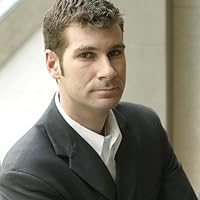
P.W. Singer
Peter Warren Singer is Strategist and Senior Fellow at the New America Foundation. He previously was Director of the Center for 21st Century Security and Intelligence at the Brookings Institution and the youngest scholar named Senior Fellow in Brookings's 101-year history. Described in the Wall Street Journal as “the premier futurist in the national- security environment," has been named by the Smithsonian as one of the nation’s 100 leading innovators, by Defense News as one of the 100 most influential people in defense issues, by Foreign Policy to their Top 100 Global Thinkers List, and as an official “Mad Scientist” for the U.S. Army’s Training and Doctrine Command. He has consulted for the US Military, Defense Intelligence Agency, and FBI, as well as advised a range of entertainment programs, including for Warner Brothers, Dreamworks, Universal, HBO, Discovery, History Channel, and the video game series Call of Duty, the best-selling entertainment project in history. Peter’s award winning books have been endorsed by people who range from the Chairman of the Joint Chiefs to the co-inventor of the Internet to the writer of HBO Game of Thrones.
14 Books Written

What will the next global conflict look like? Find out in this ripping, near-futuristic thriller. The United States, China, and Russia eye each other across a twenty-first century version of the Cold War, which suddenly heats up at sea, on land, in the air, in outer space, and in cyberspace. The fighting involves everything from stealthy robotic–drone strikes to old warships from the navy’s “ghost fleet.” Fighter pilots unleash a Pearl Harbor–style attack; American veterans become low-tech insurgents; teenage hackers battle in digital playgrounds; Silicon Valley billionaires mobilize for cyber-war; and a serial killer carries out her own vendetta. Ultimately, victory will depend on blending the lessons of the past with the weapons of the future.Ghost Fleet is a page-turning speculative thriller in the spirit of The Hunt for Red October. The debut novel by two leading experts on the cutting edge of national security, it is unique in that every trend and technology featured in the novel — no matter how sci-fi it may seem — is real, or could be soon.

An FBI agent hunts a new kind of terrorist through a Washington, DC, of the future in this groundbreaking book - at once a gripping technothriller and a fact-based tour of tomorrow America is on the brink of a revolution, one both technological and political. The science fiction of AI and robotics has finally come true, but millions are angry and fearful that the future has left them behind. After narrowly stopping a bombing at Washington’s Union Station, FBI Special Agent Lara Keegan receives a new assignment: to field-test an advanced police robot. As a series of shocking catastrophes unfolds, the two find themselves investigating a conspiracy whose mastermind is using cutting-edge tech to rip the nation apart. To stop this new breed of terrorist, their only hope is to forge a new type of partnership.Burn-In is especially chilling because it is something more than a pulse-pounding read: every tech, trend, and scene is drawn from real world research on the ways that our politics, our economy, and even our family lives will soon be transformed. Blending a techno-thriller’s excitement with nonfiction’s insight, Singer and Cole illuminate the darkest corners of the world soon to come.

Social media has been weaponized, as state hackers and rogue terrorists have seized upon Twitter and Facebook to create chaos and destruction. This urgent report is required reading, from defense expert P.W. Singer and Council on Foreign Relations fellow Emerson Brooking.

We are just beginning to see a massive shift in military technology that threatens to make the stuff of I, Robot and the Terminator all too real. More then seven thousand robotic systems are now in Iraq. Pilots in Nevada are remotely killing terrorists in Afghanistan. Scientists are debating just how smart - and how lethal - to make their current robotic prototypes. And many of the most renowned science fiction authors are secretly consulting for the Pentagon on the next generation.Blending historic evidence with interviews from the field, Singer vividly shows that as these technologies multiply, they will have profound effects on the front lines as well as on the politics back home. Moving humans off the battlefield makes wars easier to start, but more complex to fight. Replacing men with machines may save some lives, but will lower the morale and psychological barriers to killing. The "warrior ethos", which has long defined soldiers' identity, will erode, as will the laws of war that have governed military conflict for generations.While his analysis is unnerving, there's an irresistible gee-whiz quality to the innovations Singer uncovers. Wired for War travels from Iraq to see these robots in combat to the latter-day "skunk works" in America's suburbia, where tomorrow's technologies of war are quietly being designed. In Singer's hands, the future of war is as fascinating as it is frightening.
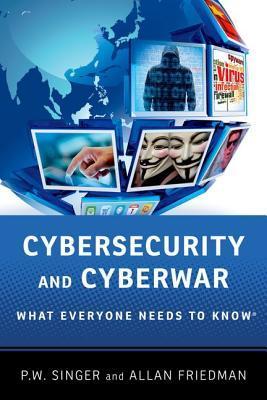
A generation ago, "cyberspace" was just a term from science fiction, used to describe the nascent network of computers linking a few university labs. Today, our entire modern way of life, from communication to commerce to conflict, fundamentally depends on the Internet. And the cybersecurity issues that result challenge literally politicians wrestling with everything from cybercrime to online freedom; generals protecting the nation from new forms of attack, while planning new cyberwars; business executives defending firms from once unimaginable threats, and looking to make money off of them; lawyers and ethicists building new frameworks for right and wrong. Most of all, cybersecurity issues affect us as individuals. We face new questions in everything from our rights and responsibilities as citizens of both the online and real world to simply how to protect ourselves and our families from a new type of danger. And yet, there is perhaps no issue that has grown soimportant, so quickly, and that touches so many, that remains so poorly understood.In Cybersecurity and What Everyone Needs to Know® , New York Times best-selling author P. W. Singer and noted cyber expert Allan Friedman team up to provide the kind of easy-to-read, yet deeply informative resource book that has been missing on this crucial issue of 21st century life. Written in a lively, accessible style, filled with engaging stories and illustrative anecdotes, the book is structured around the key question areas of cyberspace and its how it all works, why it all matters, and what can we do? Along the way, they take readers on a tour of the important (and entertaining) issues and characters of cybersecurity, from the "Anonymous" hacker group and the Stuxnet computer virus to the new cyber units of the Chinese and U.S. militaries. Cybersecurity and What Everyone Needs to Know® is the definitive account on the subject for us all, which comes not a moment too soon.What Everyone Needs to Know® is a registered trademark of Oxford University Press.

Some have claimed that'War is too important to be left to the generals,'but P. W. Singer asks'What about the business executives?'Breaking out of the guns-for-hire mold of traditional mercenaries, corporations now sell skills and services that until recently only state militaries possessed. Their products range from trained commando teams to strategic advice from generals. This new'Privatized Military Industry'encompasses hundreds of companies, thousands of employees, and billions of dollars in revenue. Whether as proxies or suppliers, such firms have participated in wars in Africa, Asia, the Balkans, and Latin America. More recently, they have become a key element in U.S. military operations. Private corporations working for profit now sway the course of national and international conflict, but the consequences have been little explored. In this book, Singer provides the first account of the military services industry and its broader implications. Corporate Warriors includes a description of how the business works, as well as portraits of each of the basic types of military providers that offer troops for tactical operations; military consultants that supply expert advice and training; and military support companies that sell logistics, intelligence, and engineering. The privatization of warfare allows startling new capabilities and efficiencies in the ways that war is carried out. At the same time, however, Singer finds that the entrance of the profit motive onto the battlefield raises a series of troubling questions'for democracy, for ethics, for management, for human rights, and for national security.

From U.S. soldiers having to fight children in Afghanistan and Iraq to juvenile terrorists in Sri Lanka to Palestine, the new, younger face of battle is a terrible reality of 21st century warfare. Indeed, the very first American soldier killed by hostile fire in the “War on Terrorism” was shot by a fourteen-year-old Afghan boy. Children at War is the first comprehensive examination of a disturbing and escalating phenomenon: the use of children as soldiers around the globe. Interweaving explanatory narrative with the voices of child soldiers themselves, P.W. Singer, an internationally recognized expert in modern warfare, introduces the brutal reality of conflict, where children are sent off to fight in war-torn hotspots from Colombia and the Sudan to Kashmir and Sierra Leone. He explores the evolution of this phenomenon, how and why children are recruited, indoctrinated, trained, and converted to soldiers and then lays out the consequences for global security, with a special case study on terrorism. With this established, he lays out the responses that can end this horrible practice. What emerges is not only a compelling and clarifying read on the darker reality of modern warfare, but also a clear and urgent call for action.

La Flotte fantôme, paru en juin 2021, nous plongeait au cur des enjeux technologiques dune future guerre entre les États-Unis et la Chine. Au cur des défis de la société dhypersurveillance à venir, Control, le nouveau roman de P. W. Singer et A. Cole, nous fait découvrir comment lI. A, lautomatisation, le big data et la robotique ont encore une chance de cohabiterintelligemment avec lhomme. LAmérique est au bord de leffondrement : chômeurs, victimes de lautomatisation et des groupuscules radicaux, errent dans les rues de Washington. Lara Keegan, agent du FBI, doit urgemment mettre fin à un complot qui menace le pays. Elle est accompagnée dans cette mission par un nouveau robot, TAMS, qui combine des capacités physiques exceptionnelles à une puissance de calcul époustouflante, capable, à partir dun visage, daccéder à lhistoire dun individu. Lara Keegan doit le tester et déceler si, dans des situations limites, il est capable de lappuyer intelligemment et humainement dans sa mission. Ce techno thriller « thriller utile », comme le nomment les auteurs illustre comment une collaboration homme/machine renouvelée pourrait se substituer aux avatars de lI. A, dont on se méfie. Comme dans La Flotte fantôme, toutes les données techniques, les références politiques et sociologiques appartiennent au monde réel ou sont lobjet détudes précises sur le monde à venir. De multiples notes, en fin douvrage, nous donnent des références passionnantes.

forthcoming
by P.W. Singer

Robotik Savaş
by P.W. Singer
Müthiş bir kitap. Robotik Savaş'ı okursanız yarattığımız karmaşayla yüzleşeceksiniz..."- General James Mattis, ABD Deniz Piyade Kolordusu ve NATO Müttefik Dönüşüm Komutanı, ABD Müşterek Kuvvetler Komutan-ı"P. W. Singer robotlar ve geleceğin savaş ortamı hakkında kusursuz bir kitap yazmıştır. Daha önce okuduğum hiçbir kitaptan askeri gelecekle ilgili bu denli gerçekçi bir duygu edinmedim."- Robert D. Kaplan, ImperialGrunts: TheAmericanMilitary on theGround Kitabının Yazarı"Sadece savunma topluluğu tarafından değil, bizim ve diğer toplumların savaşa nasıl bakacağını merak eden herkes tarafından okunmalı."- Anthony Lake, ABD Ulusal Güvenlik Eski Danışmanı ve Georgetown Üniversitesi Dışişleri Okulu Diplomasi Profesörü"Popüler kültür ve pozitif bilimleri kapsayan kaynaklardan elde edilen verilerle Singer, robotlar ile insan arasındaki ilişkinin savaşın doğasını nasıl değiştirdiğini ortaya koyuyor. Bu zamana kadar bilim kurgunun konusu olmuş yeni teknolojiler hakkında detaylı bilgi veriyor: Suyun üstünde yürüyebilen ya da penceremizin önünde havada sabit kalan ölümcül makineler, ağlara sızan ya da kendi kendine düşünebilen makineler. Bu kitabı büyüleyici, derin, eğlendirici ve korkutucu buldum."- Howard Gordon, 24, The X-Files ve Buffythe Vampire Slayer'inYazarı ve Yapımcısı"Canlı, içe işleyen ve bilge… Olması gereken yere yani bize odaklanan, robotlar ve askeri teknolojiler üzerine hazırlanmış sıcakkanlı bir çalışma."- Richard Danzig, Deniz Kuvvetleri Eski Bakanı ve NationalSemiconductor Şirketi Yöneticisi"Terminatör bir gün gerçek olacak mı? Bu kışkırtıcı ve eğlenceli kitapta önde gelen strateji düşünürlerimizden biri cevabın "evet" olabileceğini söylüyor. Singer'in eğlenceli robotik yolculuğu okuyucuyu savaş alanları ve son teknolojinin üretildiği laboratuvarlardan alıp bilim kurgu yazarlarının hayal dünyasına götürüyor..."- MaxBoot, Dış İlişkiler Konseyi Ulusal Güvenlik Çalışmaları'nda Kıdemli Akademisyen; TheSavageWarsof Peaceve WarMadeNew'in Yazarı"Lanet bir şekilde kendimden geçtim. Bu kitap harika…"- John Stewart, The Daily Show

Kiralik Ordular
by P.W. Singer
OUTSOURCING WAR [MERCENARIES]
by P.W. Singer
Peacekeepers, Inc.: An article from: Policy Review
by P.W. Singer