Loading genres...
Explore the best books about Personal Finance genre.

The Richest Man in Babylon is an early twentieth century classic about financial investment and monetary success. Through a series of enlightening parables set in the heart of ancient Babylon, Clason provided his readers with economic tips and tools for financial success. Here his text is interpreted for today and offers you 52 simple, powerful and proven techniques to manage your finances. Karen McCreadies interpretation of Clason's work illustrates the timeless nature of his insights by bringing them to life through modern case studies.
At last, for a generation that's materially ambitious yet financially clueless comes I Will Teach You To Be Rich, Ramit Sethi's 6-week personal finance program for 20-to-35-year-olds. A completely practical approach delivered with a nonjudgmental style that makes readers want to do what Sethi says, it is based around the four pillars of personal finance— banking, saving, budgeting, and investing—and the wealth-building ideas of personal entrepreneurship.Sethi covers how to save time by not wasting it managing money; the guns and cars myth of credit cards; how to negotiate like an Indian—the conversation begins with "no"; why "Budgeting Doesn't Have to Suck!"; how to get things rolling—for real—with only $20; what most people don't understand about taxes; how to get a CEO to take you out to lunch; how to avoid the Super Mario Brothers trap by making your savings work harder than you do; the difference between cheap and frugal; the hidden relationship between money and food. Not to mention his first key lesson: Getting started is more important than being the smartest person in the room. Integrated with his website, where readers can use interactive charts, follow up on the latest information, and join the community, it is a hip blueprint to building wealth and financial security.Every month, 175,000 unique visitors come to Ramit Sethi's website, Iwillteachyoutoberich.com, to discover the path to financial freedom. They praise him thoughtfully ("Your site summarizes everything I want with my life—to be rich in finances, rich in experience, rich in family blessings," --Dan Esparza) and effusively ("Dude, you rock. I love this site!" --Richard Wu). The press has caught on, too: "Ramit Sethi is a rising star in the world of personal finance writing . . . one singularly attuned to the sensibilities of his generation. his style is part frat boy and part silicon Valley geek, with a little bit of San Francisco hipster thrown in" (San Francisco Chronicle). His writing is smart, his voice is full of attitude, and his ideas are uncommonly sound and refreshingly hype-free.

Howard Marks's "The Most Important Thing" distilled the investing insight of his celebrated client memos into a single volume and, for the first time, made his time-tested philosophy available to general readers. In this edition, Marks's wisdom is joined by the comments, insights, and counterpoints of four renowned investors and investment educators: Christopher C. Davis (Davis Funds), Joel Greenblatt (Gotham Capital), Paul Johnson (Nicusa Capital), and Seth A. Klarman (Baupost Group).These experts lend insight into such concepts as "second-level thinking," the price/value relationship, patient opportunism, and defensive investing. Marks also adds his own annotations, expanding on his book's original themes and issues. A new chapter addresses the importance of reasonable expectations, and a foreword by Bruce C. Greenwald, called "a guru to Wall Street's gurus" by the "New York Times," speaks on value investing, productivity, and the economics of information.***Howard Marks, the chairman and cofounder of Oaktree Capital Management, is renowned for his insightful assessments of market opportunity and risk. After four decades spent ascending to the top of the investment management profession, he is today sought out by the world's leading value investors, and his client memos brim with insightful commentary and a time-tested, fundamental philosophy. Now for the first time, all readers can benefit from Marks's wisdom, concentrated into a single volume that speaks to both the amateur and seasoned investor.Informed by a lifetime of experience and study, "The Most Important Thing" explains the keys to successful investment and the pitfalls that can destroy capital or ruin a career. Utilizing passages from his memos to illustrate his ideas, Marks teaches by example, detailing the development of an investment philosophy that fully acknowledges the complexities of investing and the perils of the financial world. Brilliantly applying insight to today's volatile markets, Marks offers a volume that is part memoir, part creed, with a number of broad takeaways.Marks expounds on such concepts as "second-level thinking," the price/value relationship, patient opportunism, and defensive investing. Frankly and honestly assessing his own decisions--and occasional missteps--he provides valuable lessons for critical thinking, risk assessment, and investment strategy. Encouraging investors to be "contrarian," Marks wisely judges market cycles and achieves returns through aggressive yet measured action. Which element is the most essential? Successful investing requires thoughtful attention to many separate aspects, and each of Marks's subjects proves to be the most important thing."This is that rarity, a useful book."--Warren Buffett

As today's preeminent doomsday investor Mark Spitznagel describes his Daoist and roundabout investment approach, "one gains by losing and loses by gaining." This is Austrian Investing, an archetypal, counterintuitive, and proven approach, gleaned from the 150-year-old Austrian School of economics, that is both timeless and exceedingly timely.In The Dao of Capital, hedge fund manager and tail-hedging pioneer Mark Spitznagel--with one of the top returns on capital of the financial crisis, as well as over a career--takes us on a gripping, circuitous journey from the Chicago trading pits, over the coniferous boreal forests and canonical strategists from Warring States China to Napoleonic Europe to burgeoning industrial America, to the great economic thinkers of late 19th century Austria. We arrive at his central investment methodology of Austrian Investing, where victory comes not from waging the immediate decisive battle, but rather from the roundabout approach of seeking the intermediate positional advantage (what he calls shi), of aiming at the indirect means rather than directly at the ends. The monumental challenge is in seeing time differently, in a whole new intertemporal dimension, one that is so contrary to our wiring.Spitznagel is the first to condense the theories of Ludwig von Mises and his Austrian School of economics into a cohesive and--as Spitznagel has shown--highly effective investment methodology. From identifying the monetary distortions and non-randomness of stock market routs (Spitznagel's bread and butter) to scorned highly-productive assets, in Ron Paul's words from the foreword, Spitznagel "brings Austrian economics from the ivory tower to the investment portfolio."The Dao of Capital provides a rare and accessible look through the lens of one of today's great investors to discover a profound harmony with the market process--a harmony that is so essential today.

A Common-Sense Guide to Living Rich….Instead of Dying Rich Imagine if by the time you died, you did everything you were told to. You worked hard, saved your money, and looked forward to financial freedom when you retired. The only thing you wasted along the way was…your life. Die with Zero presents a startling new and provocative philosophy as well as practical guide on how to get the most out of your money—and out of your life. It’s intended for those who place lifelong memorable experiences far ahead of simply making and accumulating money for one’s so-called Golden Years. In short, Bill Perkins wants to rescue you from over-saving and under-living. Regardless of your age, Die with Zero will teach you Perkins’ plan for optimizing your life, stage by stage, so you’re fully engaged and enjoying what you’ve worked and saved for. You’ll discover how to maximize your lifetime memorable moments with “experience bucketing,” how to convert your earnings into priceless memories by following your “net worth curve,” and find out how to navigate whether to invest in, or delay, a meaningful adventure based on your “spend curve” and “personal interest rate.” Using his own life experiences as well as the inspiring stories and cautionary tales of others—and drawing on eye-opening insights about time, money, and happiness from psychological science and behavioral finance —Perkins makes a timely, convincing, and contrarian case for living large.

Since its hardcover publication in August of 1995, Buffett has appeared on the Wall Street Journal, New York Times, San Francisco Chronicle, Los Angeles Times, Seattle Times, Newsday and Business Week bestseller lists.Starting from scratch, simply by picking stocks and companies for investment, Warren Buffett amassed one of the epochal fortunes of the twentieth century—an astounding net worth of $10 billion, and counting. His awesome investment record has made him a cult figure popularly known for his seeming a billionaire who has a modest lifestyle, a phenomenally successful investor who eschews the revolving-door trading of modern Wall Street, a brilliant dealmaker who cultivates a homespun aura.Journalist Roger Lowenstein draws on three years of unprecedented access to Buffett’s family, friends, and colleagues to provide the first definitive, inside account of the life and career of this American original. Buffett explains Buffett’s investment strategy—a long-term philosophy grounded in buying stock in companies that are undervalued on the market and hanging on until their worth invariably surfaces—and shows how it is a reflection of his inner self.

With nearly a million copies sold, Security Analysis has been continuously in print for more than sixty years. No investment book in history had either the immediate impact, or the long-term relevance and value, of its first edition in 1934. By 1951, seventeen years past its original publication and more than a decade beyond its revised and acclaimed 1940 second edition, authors Benjamin Graham and David Dodd had seen business and investment markets travel from the depths of Depression to the heights of recovery, and had observed investor behavior during both the calm of peacetime and the chaos of World War II. The prescient thinking and insight displayed by Graham and Dodd in the first two editions of Security Analysis reached new heights in the third edition. In words that could just as easily have been written today as fifty years ago, they detail techniques and strategies for attaining success as individual investors, as well as the responsibilities of corporate decision makers to build shareholder value and transparency for those investors. The focus of the book, however, remains its timeless guidance and advice--that careful analysis of balance sheets is the primary road to investment success, with all other considerations little more than distractions. The authors had seen and survived the Great Depression as well as the political and financial instabilities of World War II and were now better able to outline a program for sensible and profitable investing in the latter half of the century. Security The Classic 1951 Edition marks the return of this long-out-of-print work to the investment canon. It will reacquaint you with the foundations of value investing--more relevant than ever in tumultuous twenty-first century markets--and allow you to own the third installment in what has come to be regarded as the most accessible and usable title in the history of investment publishing.

Tony Robbins has coached and inspired more than 50 million people from over 100 countries. More than 4 million people have attended his live events. Oprah Winfrey calls him “super-human.” Now for the first time—in his first book in two decades—he’s turned to the topic that vexes us all: How to secure financial freedom for ourselves and our families. Based on extensive research and one-on-one interviews with more than 50 of the most legendary financial experts in the world—from Carl Icahn and Warren Buffett, to Ray Dalio and Steve Forbes—Tony Robbins has created a simple 7-step blueprint that anyone can use for financial freedom.Robbins has a brilliant way of using metaphor and story to illustrate even the most complex financial concepts—making them simple and actionable. With expert advice on our most important financial decisions, Robbins is an advocate for the reader, dispelling the myths that often rob people of their financial dreams. Tony Robbins walks readers of every income level through the steps to become financially free by creating a lifetime income plan. This book delivers invaluable information and essential practices for getting your financial house in order. MONEY Master the Game is the book millions of people have been waiting for.

Please Note That The Following Individual Books As Per Original ISBN and Cover Image In this Listing shall be Dispatched The Almanack of Naval Ravikant, Hyperfocus, 24 Assets, The Profits Principles 4 Books Collection The Almanack of Naval Naval Ravikant is an entrepreneur, philosopher, and investor who has captivated the world with his principles for building wealth and creating long-term happiness. The Almanack of Naval Ravikant is a collection of Naval’s wisdom and experience from the last ten years, shared as a curation of his most insightful interviews and poignant reflections. This isn’t a how-to book, or a step-by-step gimmick.24 In every industry, there are companies that take off. They effortlessly hire talented people, attract loyal customers, create cool products and make lots of money. These companies seem to stand out and scale up quickly with support from investors, partners and the media. Sadly, most companies don’t perform this way. Most entrepreneurs aren’t building anything of value. They work hard, make sacrifices, struggle, dream, plan and strive, but in the end.The Profits Too many business owners work too many hours for not enough pay. They don't have time or the energy for family, friends, hobbies and relaxing. If they don't work, they don't get paid. You may think you own a business but, if these points ring true for you, chances are you actually own a job. In The Profits Principles Steven Briginshaw draws on his vast experience as a chartered accountant and business mentor to show exactly what you need to do to.

The incredible national bestseller that is changing people's lives -- and increasing their net worth! CAN YOU SPOT THE MILLIONAIRE NEXT DOOR? Who are the rich in this country? What do they do? Where do they shop? What do they drive? How do they invest? Where did their ancestors come from? How did they get rich? Can I ever become one of them? Get the answers in The Millionaire Next Door, the never-before-told story about wealth in America. You'll be surprised at what you find out....

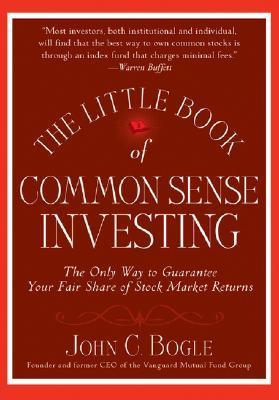
“There are a few investment managers, of course, who are very good – though in the short run, it’s difficult to determine whether a great record is due to luck or talent. Most advisors, however, are far better at generating high fees than they are at generating high returns. In truth, their core competence is salesmanship. Rather than listen to their siren songs, investors – large and small – should instead read Jack Bogle’s The Little Book of Common Sense Investing .” – Warren Buffett, Chairman of Berkshire Hathaway, 2014 Annual Shareholder Letter. Investing is all about common sense. Owning a diversified portfolio of stocks and holding it for the long term is a winner’s game. Trying to beat the stock market is theoretically a zero-sum game (for every winner, there must be a loser), but after the substantial costs of investing are deducted, it becomes a loser’s game. Common sense tells us—and history confirms—that the simplest and most efficient investment strategy is to buy and hold all of the nation’s publicly held businesses at very low cost. The classic index fund that owns this market portfolio is the only investment that guarantees you with your fair share of stock market returns. To learn how to make index investing work for you, there’s no better mentor than legendary mutual fund industry veteran John C. Bogle. Over the course of his long career, Bogle—founder of the Vanguard Group and creator of the world’s first index mutual fund—has relied primarily on index investing to help Vanguard’s clients build substantial wealth. Now, with The Little Book of Common Sense Investing, he wants to help you do the same. Filled with in-depth insights and practical advice, The Little Book of Common Sense Investing will show you how to incorporate this proven investment strategy into your portfolio. It will also change the very way you think about investing. Successful investing is not easy. (It requires discipline and patience.) But it is simple. For it’s all about common sense. With The Little Book of Common Sense Investing as your guide, you’ll discover how to make investing a winner’s game: You’ll also find warnings about investment fads and fashions, including the recent stampede into exchange traded funds and the rise of indexing gimmickry. The real formula for investment success is to own the entire market, while significantly minimizing the costs of financial intermediation. That’s what index investing is all about. And that’s what this book is all about.

"Simply the most important new stock book of the 1990s, to date. Buy it and read it." -Kenneth L. Fisher ForbesThe runaway bestseller-updated with new material included for the first time!"The Warren Buffett Way outlines his career and presents examples of how his investment techniques and methods evolved and the important individuals in that process. It also details the key investment decisions that produced his unmatched record of performance." -from the Foreword by Peter S. Lynch Bestselling author, One Up on Wall Street and Beating the Street". . . an extraordinarily useful account of the methods of an investor held by many to be the world's greatest." -The Wall Street Journal"Robert Hagstrom presents an in-depth examination of Warren Buffett's strategies, and the 'how and why' behind his selection of each of the major securities that have contributed to his remarkable record of success. His 'homespun' wisdom and philosophy are also part of this comprehensive, interesting, and readable book." -John C. Bogle Chairman, The Vanguard Group"It's first rate. Buffett gets a lot of attention for what he preaches, but nobody has described what he practices better than Hagstrom. Here is the lowdown on every major stock he ever bought and why he bought it. Fascinating. You could even try this at home." -John Rothchild Financial columnist Time magazine

IMPORTANT UPDATE: This audio is the new recording by D.J. Holte, which replaced the original inferior recording and also contains text that was added in the 2012 revised edition of 'MARKET WIZARDS'.What separates the world's top traders from the vast majority of unsuccessful investors? Jack Schwager sets out to answer tis question in his interviews with superstar money-makers including Bruce Kovner, Richard Dennis, Paul Tudor Jones, Michel Steinhardt, Ed Seykota, Marty Schwartz, Tom Baldwin.This classic interview-style investment text from a financial expert is a must-read for traders and professional financiers alike, as well as anyone interested in gaining insight into how the world of finance really works.Filled with anecdotes about market experiences, including the story of a trader who after wiping out several times, turned $30,000 into $80 million and an electrical engineer from MIT whose computerized trading has earned returns of 250,000 percent over sixteen years identifies the factors that define a successful trader.One of the most insightful, bestselling trading books of all time.RUNNING TIME ⇰ 14hrs. and 41mins.©2012 Jack D. Schwager (P)2012 Jack D. Schwager

In times like these, it's more important than ever to know the difference between making a living and making a life. Your Money or Your Life is even more relevant today than it was when the book first hit the stands, and a great publicity campaign will bring this already strong-selling book to a whole new audience.

The legendary investor shows how to identify and master the cycles that govern the markets.We all know markets rise and fall, but when should you pull out, and when should you stay in? The answer is never black or white, but is best reached through a keen understanding of the reasons behind the rhythm of cycles. Confidence about where we are in a cycle comes when you learn the patterns of ups and downs that influence not just economics, markets and companies, but also human psychology and the investing behaviors that result. If you study past cycles, understand their origins and remain alert for the next one, you will become keenly attuned to the investment environment as it changes. You’ll be aware and prepared while others get blindsided by unexpected events or fall victim to emotions like fear and greed. By following Marks’s insights — drawn in part from his iconic memos over the years to Oaktree’s clients — you can master these recurring patterns to have the opportunity to improve your results.

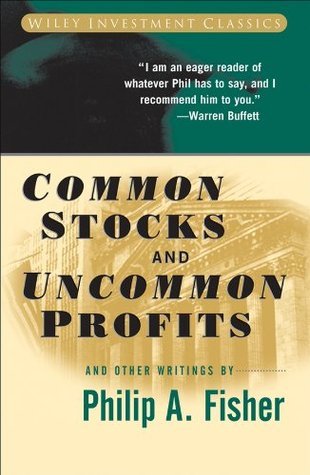
Widely respected and admired, Philip Fisher is among the most influential investors of all time. His investment philosophies, introduced almost forty years ago, are not only studied and applied by today's financiers and investors, but are also regarded by many as gospel. This book is invaluable reading and has been since it was first published in 1958. The updated paperback retains the investment wisdom of the original edition and includes the perspectives of the author's son Ken Fisher, an investment guru in his own right in an expanded preface and introduction "I sought out Phil Fisher after reading his Common Stocks and Uncommon Profits ...A thorough understanding of the business, obtained by using Phil's techniques...enables one to make intelligent investment commitments."― Warren Buffet

In 1982, the Dow hovered below 1000. Then, the market rose and rapidly gained speed until it peaked above 11,000. Noted journalist and financial reporter Maggie Mahar has written the first book on the remarkable bull market that began in 1982 and ended just in the early 2000s. For almost two decades, a colorful cast of characters such as Abby Joseph Cohen, Mary Meeker, Henry Blodget, and Alan Greenspan came to dominate the market news.This inside look at that 17-year cycle of growth, built upon interviews and unparalleled access to the most important analysts, market observers, and fund managers who eagerly tell the tales of excesses, presents the period with a historical perspective and explains what really happened and why.

The definitive work concerning Warren Buffett and intelligent investment philosophy, this is a collection of Buffett's letters to the shareholders of Berkshire Hathaway written over the past few decades that together furnish an enormously valuable informal education. The letters distill in plain words all the basic principles of sound business practices. They are arranged and introduced by a leading apostle of the "value" school and noted author, Lawrence Cunningham. Here in one place are the priceless pearls of business and investment wisdom, woven into a delightful narrative on the major topics concerning both managers and investors. These timeless lessons are ever-more important in the current environment.

This unique and fundamentally liberating book shows us that examining our attitudes toward money—earning it, spending it, and giving it away—can offer surprising insight into our lives, our values, and the essence of prosperity.Lynne Twist, a global activist and fundraiser, has raised more than $150 million for charitable causes. Through personal stories and practical advice, she demonstrates how we can replace feelings of scarcity, guilt, and burden with experiences of sufficiency, freedom, and purpose. In this Nautilus Award-winning book, Twist shares from her own life, a journey illuminated by remarkable encounters with the richest and poorest, from the famous (Mother Teresa and the Dalai Lama) to the anonymous but unforgettable heroes of everyday life.

"Once I picked it up I did not put it down until I finished. . . . What Schwed has done is capture fully-in deceptively clean language-the lunacy at the heart of the investment business."-- From the Foreword by Michael Lewis, Bestselling author of Liar's Poker ". . . one of the funniest books ever written about Wall Street."-- Jane Bryant Quinn, The Washington Post "How great to have a reissue of a hilarious classic that proves the more things change the more they stay the same. Only the names have been changed to protect the innocent."-- Michael Bloomberg "It's amazing how well Schwed's book is holding up after fifty-five years. About the only thing that's changed on Wall Street is that computers have replaced pencils and graph paper. Otherwise, the basics are the same. The investor's need to believe somebody is matched by the financial advisor's need to make a nice living. If one of them has to be disappointed, it's bound to be the former."-- John Rothchild, Author, A Fool and His Money , Financial Columnist, Time magazine Humorous and entertaining, this book exposes the folly and hypocrisy of Wall Street. The title refers to a story about a visitor to New York who admired the yachts of the bankers and brokers. Naively, he asked where all the customers' yachts were? Of course, none of the customers could afford yachts, even though they dutifully followed the advice of their bankers and brokers. Full of wise contrarian advice and offering a true look at the world of investing, in which brokers get rich while their customers go broke, this book continues to open the eyes of investors to the reality of Wall Street.

New chapter by Soros on the secrets to his success along with a new Preface and Introduction. New Foreword by renowned economist Paul Volcker "An extraordinary . . . inside look into the decision-making process of the most successful money manager of our time. Fantastic."― The Wall Street Journal George Soros is unquestionably one of the most powerful and profitable investors in the world today. Dubbed by BusinessWeek as "the Man who Moves Markets," Soros made a fortune competing with the British pound and remains active today in the global financial community. Now, in this special edition of the classic investment book, The Alchemy of Finance, Soros presents a theoretical and practical account of current financial trends and a new paradigm by which to understand the financial market today. This edition's expanded and revised Introduction details Soros's innovative investment practices along with his views of the world and world order. He also describes a new paradigm for the "theory of reflexivity" which underlies his unique investment strategies. Filled with expert advice and valuable business lessons, The Alchemy of Finance reveals the timeless principles of an investing legend. This special edition will feature a new chapter by Soros on the secrets of his success and a new Foreword by the Honorable Paul Volcker, former Chairman of the Federal Reserve. George Soros (New York, NY) is President of Soros Fund Management and Chief Investment Advisor to Quantum Fund N.V., a $12 billion international investment fund. Besides his numerous ventures in finance, Soros is also extremely active in the worlds of education, culture, and economic aid and development through his Open Society Fund and the Soros Foundation.

N'allez pas croire que pourGagner en Bourse, il faut maîtriser des techniques incroyablement complexes ou avoirpercé les mystères des martingales les plus astucieuses.Peter Lynch , qui manie l'humour avec un rare à-propos, est fermementconvaincu que l'amateur a plus de chances de gagner qu'un expert des marchés. Il suffitde regarder autour de vous et d'appliquer à la Bourse les mêmes règles de bon sens quedans la vie de tous les jours pour choisir les actions qui vont voir leurs coursdécupler. Écrit "à l'américaine", dans un style simple et imagé, le livrede Peter Lynch va vous faire découvrir la Bourse comme vous ne l'avezjamais imaginée.

#1 New York Times , Wall Street Journal , and USA Today Bestseller! Secrets of the Millionaire Mind reveals the missing link between wanting success and achieving it! Have you ever wondered why some people seem to get rich easily, while others are destined for a life of financial struggle? Is the difference found in their education, intelligence, skills, timing, work habits, contacts, luck, or their choice of jobs, businesses, or investments? The shocking answer is: None of the above! In his groundbreaking Secrets of the Millionaire Mind , T. Harv Eker states: "Give me five minutes, and I can predict your financial future for the rest of your life!" Eker does this by identifying your "money and success blueprint." We all have a personal money blueprint ingrained in our subconscious minds, and it is this blueprint, more than anything, that will determine our financial lives. You can know everything about marketing, sales, negotiations, stocks, real estate, and the world of finance, but if your money blueprint is not set for a high level of success, you will never have a lot of money—and if somehow you do, you will most likely lose it! The good news is that now you can actually reset your money blueprint to create natural and automatic success. Secrets of the Millionaire Mind is two books in one. Part I explains how your money blueprint works. Through Eker's rare combination of street smarts, humor, and heart, you will learn how your childhood influences have shaped your financial destiny. You will also learn how to identify your own money blueprint and "revise" it to not only create success but, more important, to keep and continually grow it. In Part II you will be introduced to seventeen "Wealth Files," which describe exactly how rich people think and act differently than most poor and middle-class people. Each Wealth File includes action steps for you to practice in the real world in order to dramatically increase your income and accumulate wealth. If you are not doing as well financially as you would like, you will have to change your money blueprint. Unfortunately your current money blueprint will tend to stay with you for the rest of your life, unless you identify and revise it, and that's exactly what you will do with the help of this extraordinary book. According to T. Harv Eker, it's simple. If you think like rich people think and do what rich people do, chances are you'll get rich too!

A Best Book For Investors Pick by the Wall Street Journal ’s “Weekend Investor” Whether you’re considering your first 401k contribution, contemplating retirement, or anywhere in between, A Random Walk Down Wall Street is the best investment guide money can buy. In this new edition, Burton G. Malkiel shares authoritative insights spanning the full range of investment opportunities―including valuable new material on cryptocurrencies like bitcoin, and “tax-loss harvesting”―to help you chart a calm course through the turbulent waters of today’s financial markets.

Praise for THOU SHALL PROSPER"Rabbi Daniel Lapin's wisdom has helped untold numbers of people, including me, grow in our business, family, and spiritual lives. In Thou Shall Prosper, Rabbi Lapin has done it again. This book tells it like it is in a helpful, honest, hopeful, informative way. He offers valid, useful information based on ancient wisdom and modern experience."-Zig Ziglar, author and motivational teacher"Is it practical to apply spiritual lessons to the hardheaded world of business? In this potentially life-changing book, Rabbi Daniel Lapin proves that it's impractical not to use those lessons-and to bring ancient, timeless wisdom to contemporary problems. This unique approach provides an organized, supremely useful view of the world, combining common sense and unexpected, even startling insight. No matter how successful or sophisticated you may be, this remarkable work will enrich your understanding of the important, exciting process of building wealth."-Michael Medved, nationally syndicated radio host and author of Hollywood vs. America"Rabbi Daniel Lapin is a light unto the nations. A risk-taking rabbi of immense wisdom, his books have already influenced countless Jews and non-Jews with the eternal truths of the Hebrew Bible. Now, in this highly insightful and controversial new book, Rabbi Lapin unearths the golden nuggets of Jewish business genius. By emphasizing the unique talents of the Jewish way of life, Rabbi Lapin demonstrates how Judaism's spiritual regimen can be translated into tangible material rewards, with the bottom line being directly affected. A thoroughly engaging, enriching, and thought-provoking book."-Rabbi Shmuley Boteach, author of Kosher Sex and Judaism for Everyone"Rabbi Lapin is an unorthodox Orthodox rabbi. He understands the Biblical nature of economic freedom as well as he understands the Bible: uniquely well. Prosperity must have a purpose and Rabbi Lapin explores the wellsprings of the Judeo-Christian heritage to elucidate those purposes. In so doing, he also illuminates the road to greater prosperity for all. I really enjoyed this book and I heartily recommend it to people of all faiths."-The Honorable Jack Kemp

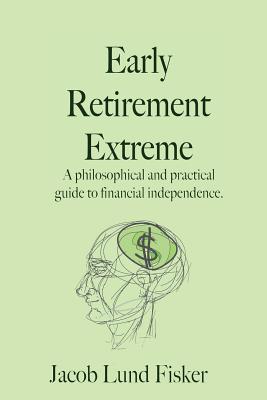
A strategic combination of smart financial choices, simple living, and increased self-reliance brought me financial independence at 30 and allowed me to retire from my profession at 33. Early Retirement Extreme shows how I did it and how anyone can formulate their own plan for financial independence. The book provides the principles and framework for a systems theoretical strategy for attaining that independence in 5-10 years. It teaches how a shift in focus from consuming to producing can help people out of the consumer trap, and offers a path to achieving the freedom necessary to pursue interests other than working for a living. The principles in Early Retirement Extreme show how to break the financial chains that hold people back from doing what they truly want to do. The framework has been used by many people over the last few years to accomplish a variety of goals. It provides people a means to achieve almost any goal, whether it’s debt-free living, extended travel, a sabbatical, a career change, time off to raise a child, a traditional retirement, or simply a desire for a more resilient and self-sufficient lifestyle. The book was initially written for people in their 20s and 30s, but its ideas aren’t limited to early retirees. Middle-aged people in the grips of consumerism can use the principles to take back control of their lives. People closer to retirement age who don’t feel adequately prepared can use it to set themselves up for a comfortable retirement in a relatively short period of time. Anyone worried about their financial future can use the principles in Early Retirement Extreme to make their future more secure.

Recommended Reading by Warren Buffet in his March 2013 Letter to Shareholders How speculation has come to dominate investment—a hard-hitting look from the creator of the first index fund.Over the course of his sixty-year career in the mutual fund industry, Vanguard Group founder John C. Bogle has witnessed a massive shift in the culture of the financial sector. The prudent, value-adding culture of long-term investment has been crowded out by an aggressive, value-destroying culture of short-term speculation. Mr. Bogle has not been merely an eye-witness to these changes, but one of the financial sector’s most active participants. In The Clash of the Cultures, he urges a return to the common sense principles of long-term investing.Provocative and refreshingly candid, this book discusses Mr. Bogle's views on the changing culture in the mutual fund industry, how speculation has invaded our national retirement system, the failure of our institutional money managers to effectively participate in corporate governance, and the need for a federal standard of fiduciary duty.Mr. Bogle recounts the history of the index mutual fund, how he created it, and how exchange-traded index funds have altered its original concept of long-term investing. He also presents a first-hand history of Wellington Fund, a real-world case study on the success of investment and the failure of speculation. The book concludes with ten simple rules that will help investors meet their financial goals. Here, he presents a common sense strategy that "may not be the best strategy ever devised. But the number of strategies that are worse is infinite."The Clash of the Investment vs. Speculation completes the trilogy of best-selling books, beginning with Bogle on The First 50 Years (2001) and Don't Count on It! (2011)

Warren Buffett built Berkshire Hathaway into something remarkable— and Fortune journalist Carol Loomis had a front-row seat for it all. When Carol Loomis first mentioned a little-known Omaha hedge fund manager in a 1966 Fortune article, she didn’t dream that Warren Buffett would one day be considered the world’s greatest investor—nor that she and Buffett would quickly become close personal friends. As Buffett’s fortune and reputation grew over time, Loomis used her unique insight into Buffett’s thinking to chronicle his work for Fortune, writing and proposing scores of stories that tracked his many accomplishments—and also his occasional mistakes. Now Loomis has collected and updated the best Buffett articles Fortune published between 1966 and 2012, including thirteen cover stories and a dozen pieces authored by Buffett himself. Loomis has provided commentary about each major article that supplies context and her own informed point of view. Readers will gain fresh insights into Buffett’s investment strategies and his thinking on management, philanthropy, public policy, and even parenting. Some of the highlights include:The 1966 A. W. Jones story in which Fortune first mentioned Buffett. The first piece Buffett wrote for the magazine, 1977’s “How Inf lation Swindles the Equity Investor.” Andrew Tobias’s 1983 article “Letters from Chairman Buffett,” the first review of his Berkshire Hathaway shareholder letters. Buffett’s stunningly prescient 2003 piece about derivatives, “Avoiding a Mega-Catastrophe.” His unconventional thoughts on inheritance and philanthropy, including his intention to leave his kids “enough money so they would feel they could do anything, but not so much that they could do nothing.” Bill Gates’s 1996 article describing his early impressions of Buffett as they struck up their close friendship. Scores of Buffett books have been written, but none can claim this work’s combination of trust between two friends, the writer’s deep understanding of Buffett’s world, and a very long-term perspective.

Peter Bevelin begins A Few Lessons for Investors and Managers with Warren Buffett's wisdom, "I am a better investor because I am a businessman and a better businessman because I am an investor." This book is about how managers and investors can increase their chance of success and reduce the chance of harm if managers think more like investors and investors more like businessmen.There are a lot of books about Warren Buffett, but A Few Lessons for Investors and Managers is different. It tells in a short-easy-to-read way about what managers and investors can learn from Buffett. This is a selection of useful and timeless wisdom where Warren Buffett in his own words tells us how to think about business valuation, what is a good and bad business, acquisitions and their traps, yardsticks, compensation issues, how to reduce risk, corporate governance, the importance of trust and the right culture, learning from mistakes, and more.

Two professors combine their fascinating and cutting-edge research in behavioral science to explain how money can buy happiness—if you follow five core principles of smart spending.Most people recognize that they need professional advice on how to earn, save, and invest their money. When it comes to spending that money, most people just follow their intuitions. But scientific research shows that those intuitions are often wrong.Happy Money offers a tour of research on the science of spending, explaining how you can get more happiness for your money. Authors Elizabeth Dunn and Michael Norton have outlined five principles—from choosing experiences over stuff to spending money on others—to guide not only individuals looking for financial security, but also companies seeking to create happier employees and provide “happier products” to their customers. Dunn and Norton show how companies from Google to Pepsi to Charmin have put these ideas into action.Along the way, Dunn and Norton explore fascinating research that reveals that luxury cars often provide no more pleasure than economy models, that commercials can actually enhance the enjoyment of watching television, and that residents of many cities frequently miss out on inexpensive pleasures in their hometowns. By the end of this “lively and engaging book” (Dan Gilbert, author of Stumbling on Happiness ), you’ll be asking yourself one simple question every time you reach for your Am I getting the biggest happiness bang for my buck?

The Chief Investment Officer of Merrill Lynch Wealth Management explains why goals, not markets, should be the primary focus of your investment strategy—and offers a practical, innovative framework for making smarter choices about aligning your goals to your investment strategy. Today all of us bear the burden of investing wisely, but too many of us are preoccupied with the wrong priorities—increasing returns at all costs, finding the next star fund manager, or beating “the market.” Unfortunately conventional portfolio theory and the grand debates in finance have offered investors only incomplete solutions. What is needed, argues Ashvin B. Chhabra, is a framework that shifts the focus of investment strategy from portfolios and markets to individuals and the objectives that really things like protecting against unexpected financial crises, paying for education or retirement, and financing philanthropy and entrepreneurship. The Aspirational Investor is a practical, innovative approach to managing wealth based on key goals and the careful allocation of risks rather than responding to the whims of the financial markets. Chhabra introduces his “Wealth Allocation Framework,” which accommodates the three seemingly incompatible objectives that must underpin every sound wealth management the need for financial security in the face of known and unknowable risks; the need to maintain current living standards over time despite inflation; and the need to pursue aspirational goals for wealth creation. Chhabra reveals some surprising facts about wealth creation, reinterprets the success formulas of investing greats like Warren Buffett, and closes the gap between theory and practice by simplifying our understanding of key asset classes and laying out a concise roadmap for identifying, prioritizing, and quantifying financial goals. Raising the bar for what we should expect from our investment portfolios—and our financial advisors— The Aspirational Investor sets us on a path to more confident and fulfilling financial lives.

Words of wisdom from Charlie Munger—Warren Buffett’s longtime business partner and the visionary Vice Chairman of Berkshire Hathaway—collected and interpreted with an eye towards investing by David Clark, coauthor of the bestselling Buffettology series.Born in Omaha, Nebraska in 1924, Charlie Munger studied mathematics at the University of Michigan, trained as a meteorologist at Cal Tech Pasadena while in the Army, and graduated magna cum laude from Harvard Law School without ever earning an undergraduate degree. Today, Munger is one of America’s most successful investors, the Vice Chairman of Berkshire Hathaway, and Warren Buffett’s business partner for almost forty years. Buffett says “Berkshire has been built to Charlie’s blueprint. My role has been that of general contractor.” Munger is an intelligent, opinionated businessman whose ideas can teach professional and amateur investors how to be successful in finance and life.Like The Tao of Warren Buffett and The Tao of Te Ching, The Tao of Charlie Munger is a compendium of pithy quotes including, “Knowing what you don’t know is more useful than being brilliant” and “In my whole life, I have known no wise people who didn’t read all the time—none, zero.” This collection, culled from interviews, speeches, and questions and answers at the Berkshire Hathaway and Wesco annual meetings, offers insights into Munger’s amazing financial success and life philosophies. Described by Business Insider as “sharp in his wit and investing wisdom,” Charlie Munger’s investment tips, business philosophy, and rules for living are as unique as his life story, intelligent as he clearly is, and as successful as he has been.

In 2005, Joel Greenblatt published a book that is already considered one of the classics of finance literature. In The Little Book that Beats the Market—a New York Times bestseller with 300,000 copies in print—Greenblatt explained how investors can outperform the popular market averages by simply and systematically applying a formula that seeks out good businesses when they are available at bargain prices. Now, with a new Introduction and Afterword for 2010, The Little Book that Still Beats the Market updates and expands upon the research findings from the original book. Included are data and analysis covering the recent financial crisis and model performance through the end of 2009. In a straightforward and accessible style, the book explores the basic principles of successful stock market investing and then reveals the author’s time-tested formula that makes buying above average companies at below average prices automatic. Though the formula has been extensively tested and is a breakthrough in the academic and professional world, Greenblatt explains it using 6th grade math, plain language and humor. He shows how to use his method to beat both the market and professional managers by a wide margin. You’ll also learn why success eludes almost all individual and professional investors, and why the formula will continue to work even after everyone “knows” it. While the formula may be simple, understanding why the formula works is the true key to success for investors. The book will take readers on a step-by-step journey so that they can learn the principles of value investing in a way that will provide them with a long term strategy that they can understand and stick with through both good and bad periods for the stock market. As the Wall Street Journal stated about the original edition, “Mr. Greenblatt…says his goal was to provide advice that, while sophisticated, could be understood and followed by his five children, ages 6 to 15. They are in luck. His ‘Little Book’ is one of the best, clearest guides to value investing out there.”

" Winning the Loser's Game is considered by many to be a classic analysis of investing." Financial Planning The premise of the bestselling Winning the Loser's Game that individual investors can achieve far greater success working with financial markets than against themhas grown increasingly popular in today's hard-to-predict markets. The latest edition of this concise yet comprehensive classic offers updated strategies to leverage the power of time and compounding, protect against down cycles, and more.

The truth, the whole truth, and nothing but the truth on money If you are overwhelmed by money decisions?and in today's post-crisis economy, who isn't??Terry Savage can help. In The Savage Truth, Second Edition, she takes the fear out of financial decision-making and makes sound financial decisions something that you simply do, rather than something that you stress about. Most importantly, Savage shows you how to gain control over your financial future, setting you free to truly enjoy the present. The truth is if it were easy to make, save, and grow money, everyone would be rich. It isn't easy. But, The Savage Truth on Money, Second Edition makes it a lot easier.

One of Wall Street's most creative and influential minds offers provocative new ways of thinking about the stock market, investing, and how we make decisions.

A lively, original, and challenging history of stock market speculation from the 17th century to present day.Is your investment in that new Internet stock a sign of stock market savvy or an act of peculiarly American speculative folly? How has the psychology of investing changed—and not changed—over the last five hundred years?In Devil Take the Hindmost , Edward Chancellor traces the origins of the speculative spirit back to ancient Rome and chronicles its revival in the modern world: from the tulip scandal of 1630s Holland, to “stockjobbing” in London's Exchange Alley, to the infamous South Sea Bubble of 1720, which prompted Sir Isaac Newton to comment, “I can calculate the motion of heavenly bodies, but not the madness of people.”Here are brokers underwriting risks that included highway robbery and the “assurance of female chastity”; credit notes and lottery tickets circulating as money; wise and unwise investors from Alexander Pope and Benjamin Disraeli to Ivan Boesky and Hillary Rodham Clinton.From the Gilded Age to the Roaring Twenties, from the nineteenth century railway mania to the crash of 1929, from junk bonds and the Japanese bubble economy to the day-traders of the Information Era, Devil Take the Hindmost tells a fascinating story of human dreams and folly through the ages.

What happens inside our brains when we think about money? Quite a lot, actually, and some of it isn't good for our financial health. In Your Money and Your Brain, Jason Zweig explains why smart people make stupid financial decisions -- and what they can do to avoid these mistakes. Zweig, a veteran financial journalist, draws on the latest research in neuroeconomics, a fascinating new discipline that combines psychology, neuroscience, and economics to better understand financial decision making. He shows why we often misunderstand risk and why we tend to be overconfident about our investment decisions. Your Money and Your Brain offers some radical new insights into investing and shows investors how to take control of the battlefield between reason and emotion. Your Money and Your Brain is as entertaining as it is enlightening. In the course of his research, Zweig visited leading neuroscience laboratories and subjected himself to numerous experiments. He blends anecdotes from these experiences with stories about investing mistakes, including confessions of stupidity from some highly successful people. Then he draws lessons and offers original practical steps that investors can take to make wiser decisions. Anyone who has ever looked back on a financial decision and said, "How could I have been so stupid?" will benefit from reading this book.

For more than twenty-five years, The Only Investment Guide You'll Ever Need has been America's favorite finance guide, winning the allegiance of more than a million readers across the country. Now this indispensable book has been fully revised and updated-covering all the new tax laws-and reorganized with a new user-friendly design. Concise, witty, and truly understandable, Andrew Tobias shows you how to use your money to your best advantage-no matter how much or how little you have.o How to spend smarter-and save $1,000 or moreo When to invest in stocks, and howo The ins and outs of investing on the Interneto Tax strategies, from tuition to retiremento Whom-if anyone-you can trust to manage your moneyand much, much moreHow to spend smarter--and save $1,000 or moreWhen to invest in stocks, and howThe ins and outs of investing on the InternetTax strategies, from tuition to retirementThe basics of life insuranceWho--if anyone--you can trust to manage your moneyThe inside skinny on annuities, real estate, and Social Securityand much, much more

A comprehensive and practical guide to the stock market from a successful fund manager—filled with case studies, important background information, and all the tools you’ll need to become a stock market genius.Fund manager Joel Greenblatt has been beating the Dow (with returns of 50 percent a year) for more than a decade. And now, in this highly accessible guide, he’s going to show you how to do it, too. You’re about to discover investment opportunities that portfolio managers, business-school professors, and top investment experts regularly miss—uncharted areas where the individual investor has a huge advantage over the Wall Street wizards. Here is your personal treasure map to special situations in which big profits are possible, -Spin-offs-Restructurings-Merger Securities-Rights Offerings-Recapitalizations-Bankruptcies-Risk ArbitragePrepared with the tools from this guide, it won’t be long until you’re a stock market genius!

“This book is not just a bargain, it’s a steal. It’s filled with practical, workable advice for anyone wanting to build wealth.”―Mike Summey, co-author of the bestselling The Weekend Millionaire’s Secrets to Investing in Real Estate Anyone who seeks financial wealth must first learn the fundamental truths and models that drive it. The Millionaire Real Estate Investor represents the collected wisdom and experience of over 100 millionaire investors from all walks of life who pursued financial wealth and achieved the life-changing freedom it delivers. This book--in straightforward, no nonsense, easy-to-read style--reveals their proven strategies. The Millionaire Real Estate Investor is your handbook to the tried and true financial wealth building vehicle that rewards patience and perseverance and is available to all--real estate. You'll

John C. Bogle shares his extensive insights on investing in mutual fundsSince the first edition of "Common Sense on Mutual Funds" was published in 1999, much has changed, and no one is more aware of this than mutual fund pioneer John Bogle. Now, in this completely updated "Second Edition, " Bogle returns to take another critical look at the mutual fund industry and help investors navigate their way through the staggering array of investment alternatives that are available to them.Written in a straightforward and accessible style, this reliable resource examines the fundamentals of mutual fund investing in today's turbulent market environment and offers timeless advice in building an investment portfolio. Along the way, Bogle shows you how simplicity and common sense invariably trump costly complexity, and how a low cost, broadly diversified portfolio is virtually assured of outperforming the vast majority of Wall Street professionals over the long-term.Written by respected mutual fund industry legend John C. BogleDiscusses the timeless fundamentals of investing that apply in any type of marketReflects on the structural and regulatory changes in the mutual fund industryOther titles by Bogle: "The Little Book of Common Sense Investing" and "Enough."Securing your financial future has never seemed more difficult, but you'll be a better investor for having read the "Second Edition" of "Common Sense on Mutual Funds."

What Are You Waiting For?This book will change the way you think about investing-and the results will prove it!"This is the simple hands-on, how-to and why book many readers have been looking for."-Scott Burns, syndicated columnistDaniel Solin cuts through the financial hype to show you exactly how to invest-with an easy-to-follow four-step plan that lets you create and monitor your investment portfolio in ninety minutes or less...and put your investment earnings in the top 5 percent of all professionally managed money.If you want to gamble, go to Las Vegas-or try stock picking and market timing. If you want to be a Smart Investor, follow this effortless and effective plan." The Smartest Investment Book You'll Ever Read will provide the enlightenment and gumption to free yourself from the clutches of the investment industry and the wisdom and direction necessary to get yourself back on track."-William Bernstein, author of A Splendid Exchange and The Four Pillars of InvestingEvery day you wait costs you money. Take control of your financial future now!

Bogle on Mutual Funds is a straightforward assessment of the industry written for the investor who wants a true and unflinching portrayal. Bogle not only explains the basic principles of canny mutual fund investing, but Bogle on Mutual Funds also explores its subtle nuances and exposes the hype and fads that often lure investors into making unwise decisions. This conscientious guide offers strategies for developing a diversified portfolio that will weather the markets short-term variations. Bogle warns the reader of the major pitfalls common to mutual fund investing. Ideal for investors at every level of expertise, Bogle on Mutual Funds shows how Design a portfolio of funds to meet your current financial objectives; Recognize excessive fees, minimize taxes, evaluate investment risk, and spot false advertising claims; Balance risk and return through asset allocation strategy and tactics, astute fund selection, and effective use of index funds; Understand the important role of cost, the third leg (along with risk and return) of the eternal triangleof investing; Interpret the data found in such sources as syndicated newspapers, Morningstar Mutual Funds, and other mutual fund guides, and use that information to make better investment decisions.

John Bogle on Investing is the first comprehensive review of the career and contributions of this dynamic investing icon. From Jack Bogle's never-before-published 1951 Princeton thesis to more than two dozen essays covering five decades of investing, it is a 50-year compendium of the work and wisdom of one of the world's most important financial figures. Investors at all levels will profit from insights including:

Profit through good times and bad with a resilient, diversified portfolio The Intelligent Asset Allocator has helped thousands of people like you build wealth through carefully diversified portfolios. Now, with global markets in constant flux, balancing risk and reward is more critical than ever. Self-taught investor William Bernstein offers no gimmicks, inside secrets, or magic solutions―just the facts about investing and calm, smart advice on how to build and manage a portfolio designed for the long run. This is all you need, despite claims of the advisors and pundits looking to profit from your hard-earned money. This easy-to-understand guide provides everything you need, including: * The basics of finance―historical, psychological, and institutional* Time-tested strategies for improving the risk/reward ratio* Ways to sharpen your focus to improve portfolio management Bernstein walks you through the fundamentals of important topics like multiple-asset portfolios, optimal asset allocations, market efficiency, and strategy implementation. No one knows the future of markets. Your forecast is as good as that of the last financial pundit you saw on TV. Trust your instincts, trust your research, and trust the proven-effect approach of The Intelligent Asset Allocator , and your portfolio will deliver returns through the blue skies and storms of financial markets.

John J. Murphy has updated his landmark bestseller Technical Analysis of the Futures Markets , to include all of the financial markets. This outstanding reference has already taught thousands of traders the concepts of technical analysis and their application in the futures and stock markets. Covering the latest developments in computer technology, technical tools, and indicators, the second edition features new material on candlestick charting, intermarket relationships, stocks and stock rotation, plus state-of-the-art examples and figures. From how to read charts to understanding indicators and the crucial role technical analysis plays in investing, readers gain a thorough and accessible overview of the field of technical analysis, with a special emphasis on futures markets. Revised and expanded for the demands of today's financial world, this book is essential reading for anyone interested in tracking and analyzing market behavior.

There is an updated, revised edition of this book. However, the information and processes contained in the updated edition is essentially the same as in this older edition. This book is a course in manifesting and creating abundance in your life, Section I, Creating Money, is a step-by-step guide to the art of manifesting. You will learn how to discover what you want, drawing things to you that will fulfill and satisfy you, that are even better than what you ask for. You will learn advanced techniques of manifesting and how to work with your own energy and the power of magnetism to draw things into your life in the fastest, easiest way possible.The second section of this book, Developing Mastery, will help you learn to work with and move through any blocks you may have about allowing abundance into your life. The third section, Creating Your Lifes Work, will help you learn to make money and create abundance through doing the things you love. You will learn many simple energy techniques to draw your ideal job to you, discover your life's work, and do what you love for a living. The fourth section, Having Money, is about having and increasing money and abundance in your life. You will learn how to create joy, peace, harmony, clarity, and self-love with your money, letting it flow and increase.

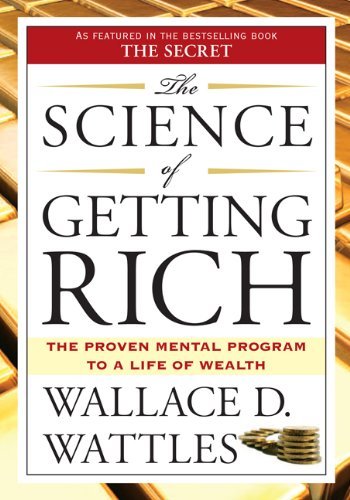
As featured in the bestselling book The Secret, here is the landmark guide to wealth creation republished with the classic essay “How to Get What You Want.” Wallace D. Wattles spent a lifetime considering the laws of success as he found them in the work of the world’s great philosophers. He then turned his life effort into this simple, slender book – a volume that he vowed could replace libraries of philosophy, spirituality, and self-help for the purpose of attaining one definite goal: a life of prosperity. Wattles describes a definite science of wealth attraction, built on the foundation of one commanding idea: “There is a thinking stuff from which all things are made…A thought, in this substance, produces the thing that is imaged by the thought.” In his seventeen short, straight-to-the-point chapters, Wattles shows how to use this idea, how to overcome barriers to its application, and how work with very direct methods that awaken it in your life. He further explains how creation and not competition is the hidden key to wealth attraction, and how your power to get rich uplifts everyone around you. The Science of Getting Rich concludes with Wattle’s rare essay “How to Get Want You Want” – a brilliant refresher of his laws of wealth creation.

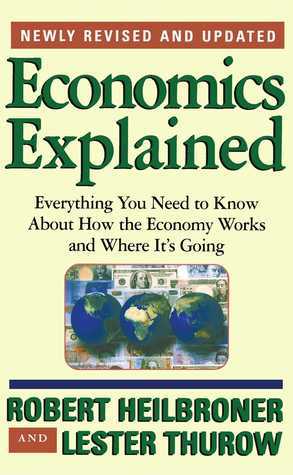
Economics Explained has an announced purpose to explain that mysterious thing called economics. But there is a new urgency to the book. It is announced in the first sentence of the introduction: "Just in case the reader-to-be hasn't noticed, disturbing things are going on in the American economy these days." This new edition is about these disturbing things: a trend toward inequality of incomes, the appearance of a new "globalized" capitalism, the "specter" of inflation. As before, Robert Heilbroner and Lester Thurow treat these problems in language that seeks to make clear their causes and treatments. In this straightforward, highly accessible reference, Heilbroner and Thurow--two of America's most respected and articulate economists--offer all the economics essential for becoming an effective investor, a savvy business decision maker, or simply an informed member of society.

Frank explores the lives and lifestyles of a new breed of millionaires and billionaires - many of them self-made and from blue-collar backgrounds - and how this new gilded age is affecting wider society.

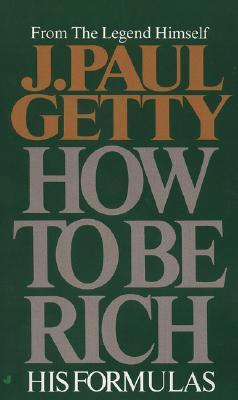
Learn J. Paul Getty’s secrets on making money and getting rich in this “excellent How To book from a $$$ and sense man” ( Kirkus Reviews ).There are plenty of books on making money by men who haven't made much. But if J. Paul Getty, who Fortune magazine called “the richest man in the world,” doesn't know how, who does? Here the billionaire businessman discloses the secrets of his success—and provides a blueprint for those who want to follow in his footsteps. And he goes beyond the matter of making money to the question of what to do with it. “Getty says ‘You can be rich.’”— New York Herald Tribune “Aimed at the rising young business executive.”— Albany Times-Union

Investors are all too often lured by the prospect of instant millions and fall prey to the many fads of Wall Street. The myriad approaches they adopt offer little or no real prospect for long-term success and invariably run the risk of considerable economic loss - they resemble speculation or outright gambling, not a coherent investment program. But value investing - the strategy of investing in securities trading at an appreciable discount from underlying value - has a long history - has a long history of delivering excellent investment results with limited downside risk. Taking its title from Benjamin Graham's often-repeated admonition to invest always with a margin of safety, Klarman's 'Margin of Safety' explains the philosophy of value investing, and perhaps more importantly, the logic behind it, demonstrating why it succeeds while other approaches fail. The blueprint that Klarman offers, if carefully followed, offers the investor the strong possibility of investment succe

Legendary money manager Peter Lynch explains his own strategies for investing and offers advice for how to pick stocks and mutual funds to assemble a successful investment portfolio.Develop a Winning Investment Strategy—with Expert Advice from “The Nation’s #1 Money Manager.” Peter Lynch’s “invest in what you know” strategy has made him a household name with investors both big and small.An important key to investing, Lynch says, is to remember that stocks are not lottery tickets. There’s a company behind every stock and a reason companies—and their stocks—perform the way they do. In this book, Peter Lynch shows you how you can become an expert in a company and how you can build a profitable investment portfolio, based on your own experience and insights and on straightforward do-it-yourself research.In Beating the Street, Lynch for the first time explains how to devise a mutual fund strategy, shows his step-by-step strategies for picking stock, and describes how the individual investor can improve his or her investment performance to rival that of the experts.There’s no reason the individual investor can’t match wits with the experts, and this book will show you how.

Discovering what you ought to do with your live; what you need to do for a living

Now, for the first time, investors can cut through the hype and see for themselves what works and what doesn't on Wall Street. James O'Shaughnessy, author of the highly-acclaimed Invest Like the Best, analyzes 30 years worth of CompuStat stock market data to show how the 15 most popular investment strategies have actually performed over time. With What Works on Wall Street, investors of all stripes-from the most conservative to the most aggressive-will finally have the facts to pick the best strategies for meeting their investment objectives.

With hundreds of thousands copies in print around the world, Smart Women Finish Rich, by renowned financial advisor David Bach, has shown women of all ages and backgrounds how to take control of their financial future and finish rich. Whether you’re working with a few dollars a week or a significant inheritance, Bach’s nine-step program gives you tools for spending wisely, establishing security, and aligning money with your values. Plus, in this completely revised and updated edition, David Bach includes critical new long-term investment advice, information on teaching your kids about money, Internet resources, and new ways to attract greater wealth–personal and financial–into your life.

The world-renowned economist offers "dourly irreverent analyses of financial debacle from the tulip craze of the seventeenth century to the recent plague of junk bonds." — The Atlantic .With incomparable wisdom, skill, and wit, world-renowned economist John Kenneth Galbraith traces the history of the major speculative episodes in our economy over the last three centuries. Exposing the ways in which normally sane people display reckless behavior in pursuit of profit, Galbraith asserts that our "notoriously short" financial memory is what creates the conditions for market collapse. By recognizing these signs and understanding what causes them we can guard against future recessions and have a better hold on our country's (and our own) financial destiny.

An indispensable guide to determining how much money a company is really making and for buying and selling stocks without making costly blunders.

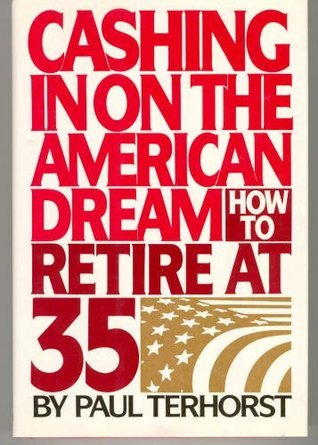
The author details how and why he retired, at age thirty-three, from a prestigious international accounting firm and presents, to those who do not want to spend the best years of their lives working, a blueprint for early retirement

The first edition of Charles Kindleberger's brilliant, panoramic history, published in 1978, summarized the pattern of market developments and the five stages in the evolution of a financial crisis. Robert Z. Aliber probes the sequence of four waves of crises that have involved more than forty countries since the early 1980s and shows that implosions of their banking systems do not follow from the decisions of 'bad actors' but instead are symptomatic of a dysfunctional international monetary arrangement. With an updated Foreword from Robert M. Solow and a new Afterword from Lord Robert Skidelsky, this seventh edition exemplifies the continued importance of Kindleberger's work and Aliber's ongoing examination of financial crises around the world.

If you will live like no one else, later you can "live" like no one else.Build up your money muscles with America's favorite finance coach.Okay, folks, do you want to turn those fat and flabby expenses into a well-toned budget? Do you want to transform your sad and skinny little bank account into a bulked-up cash machine? Then get with the program, people. There's one sure way to whip your finances into shape, and that's with "The Total Money Makeover: Classic Edition".By now, you've heard all the nutty get-rich-quick schemes, the fiscal diet fads that leave you with a lot of kooky ideas but not a penny in your pocket. Hey, if you're tired of the lies and sick of the false promises, take a look at this--it's the simplest, most straightforward game plan for completely making over your money habits. And it's based on results, not pie-in-the-sky fantasies. With "The Total Money Makeover: Classic Edition," you'll be able to:Design a sure-fire plan for paying off all debt--meaning cars, houses, everything Recognize the 10 most dangerous money myths (these will kill you) Secure a big, fat nest egg for emergencies and retirement!

"This is a modern classic." —Paul A. Samuelson, First American Nobel Prize Winner in Economics"The best book there is about the stock market and all that goes with it." — The New York Times Book Review"Anyone whose orientation is toward where the action is, where the happenings happen, should buy a copy of The Money Game and read it with due diligence." — Book World" 'Adam Smith' is a veteran observer and commentator on the events and people of Wall Street.... His thorough knowledge of financial affairs gives his observations a great degree of authenticity. But the joy of reading this book comes from his delightful sense of humor. He is a lively and ingeniously witty writer who never stoops to acerbity. None of the solemn, sacred cows of Wall Street escapes debunking." — Library Journal

John Bogle puts our obsession with financial success in perspective Throughout his legendary career, John C. Bogle-founder of the Vanguard Mutual Fund Group and creator of the first index mutual fund-has helped investors build wealth the right way and led a tireless campaign to restore common sense to the investment world. Along the way, he's seen how destructive an obsession with financial success can be. Now, with Enough., he puts this dilemma in perspective.Inspired in large measure by the hundreds of lectures Bogle has delivered to professional groups and college students in recent years, Enough. seeks, paraphrasing Kurt Vonnegut, "to poison our minds with a little humanity." Page by page, Bogle thoughtfully considers what "enough" actually means as it relates to money, business, and life.Reveals Bogle's unparalleled insights on money and what we should consider as the true treasures in our lives Details the values we should emulate in our business and professional callings Contains thought-provoking life lessons regarding our individual roles in society Written in a straightforward and accessible style, this unique book examines what it truly means to have "enough" in world increasingly focused on status and score-keeping.

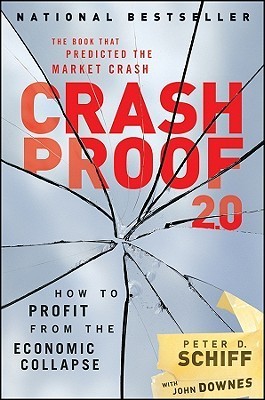
A fully updated follow-up to Peter Schiff's bestselling financial survival guide- Crash Proof , which described the economy as a house of cards on the verge of collapse, with over 80 pages of new material The economic and monetary disaster which seasoned prognosticator Peter Schiff predicted is no longer hypothetical-it is here today. And nobody understands what to do in this situation better than the man who saw it coming. For more than a decade, Schiff has not only observed the economy, but also helped his clients restructure their portfolios to reflect his outlook. What he sees today is a nation facing an economic storm brought on by growing federal, personal, and corporate debt; too little savings; and a declining dollar. Crash Proof 2.0 picks up right where the first edition-a bestselling book that predicted the current market mayhem-left off. This timely guide takes into account the dramatic economic shifts that are reshaping the world and provides you with the insights and information to navigate the dangerous terrain. Throughout the book, Schiff explains the factors that will affect your future financial stability and offers a specific three step plan to battle the current economic downturn.

In the early 1920s, Benjamin Roth was a young lawyer fresh out of the army. He settled in Youngstown, Ohio, a booming Midwestern industrial town. Times were good - until the stock market crash of 1929. After nearly two years of economic crisis, it was clear that the heady prosperity of the Roaring Twenties would not return quickly.As Roth began to grasp the magnitude of what had happened to American economic life, he set out to record his impressions in a diary - a document that would grow to span several volumes over more than a decade. Penning brief, clear-eyed notes on the crisis which unfolded around him, Roth struggled to understand the complex forces governing political and economic life. Yet he remained eager to learn from the crisis. As he wrote of what is now known as the Great Depression, "To the man past middle life it spells tragedy and disaster, but to those of us in the middle thirties it may be a great school of experience out of which some worth while lesson may be salvaged."Roth's words from that unique time seem to speak directly to readers today. His perceptions and experiences have a chilling similarity to those of our own era. Fearful of inflation and skeptical of big government, Roth yearned for signs of true recovery, and eventually formed his own theories of how a prudent person might survive hard times. The Great A Diary, edited by James Ledbetter, editor of Slate's "The Big Money," and Roth's son, Daniel B. Roth, reveals another side of the Great Depression - one lived through by ordinary, middle-class folks, who on a daily basis grappled with a swiftly changing economy coupled with anxiety about the unknown future.

"As with his weekly column, James Montier's Value Investing is a must read for all students of the financial markets. In short order, Montier shreds the 'efficient market hypothesis', elucidates the pertinence of behavioral finance, and explains the crucial difference between investment process and investment outcomes. Montier makes his arguments with clear insight and spirited good humor, and then backs them up with cold hard facts. Buy this book for yourself, and for anyone you know who cares about their capital!"―Seth Klarman , President, The Baupost Group LLC The seductive elegance of classical finance theory is powerful, yet value investing requires that we reject both the precepts of modern portfolio theory (MPT) and pretty much all of its tools and techniques. In this important new book, the highly respected and controversial value investor and behavioural analyst, James Montier explains how value investing is the only tried and tested method of delivering sustainable long-term returns. James shows you why everything you learnt at business school is wrong; how to think properly about valuation and risk; how to avoid the dangers of growth investing; how to be a contrarian; how to short stocks; how to avoid value traps; how to hedge ignorance using cheap insurance. Crucially he also gives real time examples of the principles outlined in the context of the 2008/09 financial crisis. In this book James shares his tried and tested techniques and provides the latest and most cutting edge tools you will need to deploy the value approach successfully. It provides you with the tools to start thinking in a different fashion about the way in which you invest, introducing the ways of over-riding the emotional distractions that will bedevil the pursuit of a value approach and ultimately think and act differently from the herd.

Praise for Don't Count On It! This collection of Jack Bogle's writings couldn't be more timely. The clarity of his thinking--and his insistence on the relevance of ethical standards--are totally relevant as we strive to rebuild a broken financial system. For too many years, his strong voice has been lost amid the cacophony of competing self-interests, misdirected complexity, and unbounded greed. Read, learn, and support Jack's mission to reform the industry that has been his life's work. --PAUL VOLCKER, Chairman of the President's Economic Recovery Advisory Board and former Chairman of the Federal Reserve (1979-1987)Jack Bogle has given investors throughout the world more wisdom and plain financial 'horse sense' than any person in the history of markets. This compendium of his best writings, particularly his post-crisis guidance, is absolutely essential reading for investors and those who care about the future of our society. --ARTHUR LEVITT, former Chairman, U.S. Securities and Exchange CommissionJack Bogle is one of the most lucid men in finance. --NASSIM N.TALEB, PhD, author of The Black SwanJack Bogle is one of the financial wise men whose experience spans the post-World War II years. This book, encompassing his insights on financial behavior, pitfalls, and remedies, with a special focus on mutual funds, is an essential read. We can only benefit from his observations. --HENRY KAUFMAN, President, Henry Kaufman & Company, Inc.It was not an easy sell. The joke at first was that only finance professors invested in Vanguard's original index fund. But what a triumph it has been. And what a focused and passionate drive it took: it is a zero-sum game and only costs are certain. Thank you, Jack. --JEREMY GRANTHAM, Cofounder and Chairman, GMOOn finance, Jack Bogle thinks unconventionally. So, this sound rebel turns out to be right most of the time. Meanwhile, many of us sometimes engage in self-deception. So, this book will set us straight. And in the last few pages, Jack writes, and I agree, that Peter Bernstein was a giant. So is Jack Bogle. --JEAN-MARIE EVEILLARD, Senior Adviser, First Eagle Investment ManagementInsights into investing and leadership from the founder of The Vanguard GroupThroughout his legendary career, John Bogle-founder of the Vanguard mutual fund group and creator of the first index mutual fund-has helped investors build wealth the right way, while, at the same time, leading a tireless campaign to restore common sense to the investment world.A collection of essays based on speeches delivered to professional groups and college students in recent years, in Don't Count on It is organized around eight themesIllusion versus reality in investing Indexing to market returns Failures of capitalism The flawed structure of the mutual fund industry The spirit of entrepreneurship What is enough in business, and in life Advice to America's future leaders The unforgettable characters who have shaped his career Widely acclaimed for his role as the conscience of the mutual fund industry and a relentless advocate for individual investors, in Don't Count on It, Bogle continues to inspire, while pushing the mutual fund industry to measure up to their promise.

Is the financial plan of mediocrity-a dream-stealing, soul-sucking dogma known as The Slowlane-your plan for creating wealth? You know how it goes-go to school, get a good job, save 10 percent of your paycheck, buy a used car, cancel the movie channels, quit drinking expensive Starbucks mocha lattes, save and penny-pinch your life away, trust your life-savings to the stock market, and one day you can retire rich. The mainstream financial gurus have sold you blindly down the river. For those who don't want a lifetime subscription to "settle for less," and a slight chance of elderly riches, there is an expressway to extraordinary wealth that can burn a trail to financial independence faster than any road out there. Demand the Fastlane, an alternative road to wealth that actually ignites dreams and creates millionaires young, not old. Hit the Fastlane, crack the code to wealth, and find out how to live rich for a lifetime.

Leo Tolstoy said, "Nobody knows where the human race is going. The highest wisdom, then, is to know where you are going." Yet many today chase the false rabbits of status, luxury, reputation and material possessions. In the quest to "have it all," our lives often lack real meaning and purpose. Beyond Wealth is the antidote. New York Times bestselling author Alexander Green takes things right down to brass We are here for a short time. Knowledge is limitless. Therefore, the most critical knowledge is not any particular skill but rather wisdom about "how to live." Fortunately, men and women have had several thousand years to think about what it means to live "the good life." And the answers found here, from Plato and Aristotle to Mahatma Gandhi and Stephen Hawking, will both surprise and delight you. Beyond Wealth provides insightful commentary on the most important aspects of our love, work, honor, trust, freedom, death, fear, truth, beauty and other timeless issues. The book is both a thought provoking read and the ideal gift, guaranteed to ennoble, uplift and inspire.

Why do we lose money? It's easy to blame the economy or the financial markets-but the real trouble lies in the decisions we make.As a financial planner, Carl Richards grew frustrated watching people he cared about make the same mistakes over and over. They were letting emotion get in the way of smart financial decisions. He named this phenomenon-the distance between what we should do and what we actually do-"the behavior gap." Using simple drawings to explain the gap, he found that once people understood it, they started doing much better.Richards's way with words and images has attracted a loyal following to his blog posts for The New York Times, appearances on National Public Radio, and his columns and lectures. His book will teach you how to rethink all kinds of situations where your perfectly natural instincts (for safety or success) can cost you money and peace of mind.He'll help you to:avoid the tendency to buy high and sell low; avoid the pitfalls of generic financial advice; invest all of your assets-time and energy as well as savings-more wisely; quit spending money and time on things that don't matter; identify your real financial goals; start meaningful conversations about money; simplify your financial life; stop losing money!It's never too late to make a fresh financial start. As Richards writes: "We've all made mistakes, but now it's time to give yourself permission to review those mistakes, identify your personal behavior gaps, and make a plan to avoid them in the future. The goal isn't to make the 'perfect' decision about money every time, but to do the best we can and move forward. Most of the time, that's enough."

In this lively history of consumer debt in America, economic historian Louis Hyman demonstrates that today’s problems are not as new as we think. Borrow examines how the rise of consumer borrowing—virtually unknown before the twentieth century—has altered our culture and economy. Starting in the years before the Great Depression, increased access to money raised living standards but also introduced unforeseen risks. As lending grew more and more profitable, it displaced funds available for business borrowing, setting our economy on an unsustainable course. Told through the vivid stories of individuals and institutions affected by these changes, Borrow charts the collision of commerce and culture in twentieth-century America, giving an historical perspective on what is new—and what is not—in today’s economic turmoil.A Paperback Original

Marianne Williamson is a bestselling author (Return to Love, Healing the Soul of America), a world-renowned teacher, and one of the most important inspirational thinkers of our time. In The Law of Divine Compensation, she reveals the spiritual principles that help us overcome financial stress and unleash the divine power of abundance. A guru to anyone interested in spirituality, Williamson's words ring with power and truth as she assures us that, with faith in God's promise of prosperity for all, we need never fear the future.

The Emotionally Intelligent Investor challenges several long-held assumptions and beliefs, by asserting that a good investment approach starts with introspection. Too many investment gurus tell you to emulate their techniques despite the fact that you may have very different personality traits, motivations and biases. Would Shaquille O'Neal tell a short basketball player to play like him? This book provides a unique template for self-reflection and a framework for developing an investment approach that works best with who you are.Whereas the consensus opinion is that investing success comes from blocking out emotions and making purely rational decisions, the best money managers actually use their feelings. They actively sense what others in the market are thinking, and they employ gut instincts when making decisions. Nevertheless, virtually all investing text books neglect to mention how to best cultivate and utilize empathetic and intuitive realizations.In this book you will learn a process for developing an investing advantage by putting yourself in someone else's shoes. You will also discover how a stock chart is a great tool for understanding what the current holders of a security may be feeling, and you will appreciate why technical analysis works.This book demystifies intuition with respect to investing and provides a method for building and safely harnessing helpful gut instincts. Traditional security analysis is vital, but in this book you will learn why superior returns primarily depend on self-awareness, empathy and intuition. The book is complete with examples and recommendations that illuminate a path towards reaching full investing potential.

This book compiles the full, un-edited versions of every one of Warren Buffett's letters to the shareholders of Berkshire Hathaway. In addition to providing an astounding case study on Berkshire's success, Buffett shows an incredible willingness to share his methods and act as a teacher to his many students.

In the spirit of Wendy Mogel’s The Blessing of a Skinned Knee and Po Bronson and Ashley Merryman’s Nurture Shock, New York Times “Your Money” columnist Ron Lieber delivers a taboo-shattering manifesto that explains how talking openly to children about money can help parents raise modest, patient, grounded young adults who are financially wise beyond their years.For Ron Lieber, a personal finance columnist and father, good parenting means talking about money with our kids. Children are hyper-aware of money, and they have scores of questions about its nuances. But when parents shy away from the topic, they lose a tremendous opportunity—not just to model the basic financial behaviors that are increasingly important for young adults but also to imprint lessons about what the family truly values.Written in a warm, accessible voice, grounded in real-world experience and stories from families with a range of incomes, The Opposite of Spoiled is both a practical guidebook and a values-based philosophy. The foundation of the book is a detailed blueprint for the best ways to handle the basics: the tooth fairy, allowance, chores, charity, saving, birthdays, holidays, cell phones, checking accounts, clothing, cars, part-time jobs, and college tuition. It identifies a set of traits and virtues that embody the opposite of spoiled, and shares how to embrace the topic of money to help parents raise kids who are more generous and less materialistic.But The Opposite of Spoiled is also a promise to our kids that we will make them better with money than we are. It is for all of the parents who know that honest conversations about money with their curious children can help them become more patient and prudent, but who don’t know how and when to start.

Rational Expectations is a clean sheet of paper in the wonky world of quantitatively based asset allocation aimed at small investors. Continuing the theme of the Investing for Adults series, this full-length finance title is not for beginners, but rather assumes a fair degree of quantitative ability and finance knowledge. If you think you can time the market or pick stocks and mutual fund managers, or even if you think that you can formulate an optimally efficient mean-variance asset allocation with a black box, then learn some basic finance and come back in a few years.On the other hand, if you know your way around risk premiums and standard deviations and know who Irving Fisher and Benjamin Graham were, and if you want to sharpen your asset class skills, you’ve come to the right place.

The economic climate is ripe for another golden age of shareholder activismDeep Value: How Shareholder Activist Hedge Funds Battle for Control of The World's Leading Corporations is a must-read exploration of deep value investment strategy, describing the evolution of the theories of valuation and shareholder activism from Graham to Icahn and beyond. The book combines engaging anecdotes with industry research to illustrate the principles and methods of this complex strategy, and explains the reasoning behind seemingly incomprehensible activist maneuvers. Written by an active value investor, Deep Value provides an insider's perspective on shareholder activist strategies in a format accessible to both professional investors and laypeople.The Deep Value investment philosophy as described by Graham initially identified targets by their discount to liquidation value. This approach was extremely effective, but those opportunities are few and far between in the modern market, forcing activists to adapt. Current activists assess value from a much broader palate, and exploit a much wider range of tools to achieve their goals. Deep Value enumerates and expands upon the resources and strategies available to value investors today, and describes how the economic climate is allowing value investing to re-emerge. Topics include: Target identification, and determining the most advantageous ends Strategies and tactics of effective activism Unseating management and fomenting change Eyeing conditions for the next M&A boom Activist hedge funds have been quiet since the early 2000s, but economic conditions, shareholder sentiment, and available opportunities are creating a fertile environment for another golden age of activism. Deep Value: How Shareholder Activist Hedge Funds Battle for Control of The World's Leading Corporations provides the in-depth information investors need to get up to speed before getting left behind.

Livermore went bankrupt for at least the fourth time in 1934. Despite having amassed a fortune of $100 million by1929, Livermore was back where he started at 16. He did not seem to learn from hismistakes."—Victor Niederhoffer"That was the call of a lifetime, everyone was blind and deep into the crisis and Jesse Livermoremade $100 million going short when almost everyone else was bullish and then almost everyone else lost their shirts."—John Paulson"His stories of making millions, were the financial equivalent of “sex, drugs and rock ‘n roll” to ayoung man at the advent of his financial career."—Paul Tudor Jones"It was an amazing day on 24th October 1929 when Jesse came home and hiswife thought they were ruined and instead he had the second best trading dayof anyone in history."—John TempletonWho was Jesse Livermore?Jesse Livermore, was the most successful stock and commoditiestrader that ever operated on the stock markets. He was both theman who made the most money in a single day and the man wholost the most money in a single day. In fact he made and lost threegreat fortunes between 1900 and 1940.Singlehandedly he caused the two great Wall Street crashes of1907 and 1929, making millions from both. When he speculated hespeculated big and was known on Wall Street as the Boy Plunger.For a brief period in the early 1930s he was one of the world’srichest men with a personal fortune believed to be worth over$150 million, $100 million of that earned in just a few days fromthe Wall Street crash of 1929. In the end it was too extreme achange of fortunes for any man to cope with and Livermore shothimself in a New York hotel lobby in 1940 aged just 63. His legacycontinued and his son, Jesse jr later also committed suicide asdid his grandson, Jesse III.In the summer of 1929 most people believed that the stock market wouldcontinue to rise forever. Wall Street was enjoying a eight-year winning runthat had seen the Dow Jones increase 1,000 per cent from the start ofthe decade - an unprecedented rise. The Dow peaked at 381 on 3rdSeptember and later that day the most respected economist of the day,Irving Fisher, declared that the rise was “permanent”. One man vigorouslydisagreed and sold $300 million worth of shares short. Two weeks later themarket began falling and rising again on successive days for no apparentreason. This situation endured for a month until what became famouslyknown as the three ‘black’ On Black Thursday 24th October the Dowfell 11% at the opening bell, prompting absolute chaos. The fall was stalledwhen leading financiers of the day clubbed together to buy huge quantitiesof shares. But it was short-lived succor and over that weekend blanketnegative newspaper commentary caused the second of the ‘black’ dayson Black Monday 26th October when the market dropped another 13%.The third ‘black’ day, Black Tuesday 29th October saw the market drop afurther 12%. When the dust had settled, between the 24th and 29th October,Wall Street had lost $30 billion. Only much later did it became knownthat the man who had sold short $300 million worth of shares was JesseLivermore. Livermore had made $100 million and overnight became oneof the richest men in the world. It remains, adjusted for inflation, the mostmoney ever made by any individual in a period of seven days. This is thestory of that man.

Your Survival Guide to the Hades of Wall StreetThe Devil's Financial Dictionary skewers the plutocrats and bureaucrats who gave us exploding mortgages, freakish risks, and banks too big to fail. And it distills the complexities, absurdities, and pomposities of Wall Street into plain truths and aphorisms anyone can understand.An indispensable survival guide to the hostile wilderness of today's financial markets, The Devil's Financial Dictionary delivers practical insights with a scorpion's sting. It cuts through the fads and fakery of Wall Street and clears a safe path for investors between euphoria and despair.Staying out of financial purgatory has never been this fun.

Charlie Munger, Berkshire Hathaway's visionary vice chairman and Warren Buffett's indispensable financial partner, has outperformed market indexes again and again, and he believes any investor can do the same. His notion of "elementary, worldly wisdom"―a set of interdisciplinary mental models involving economics, business, psychology, ethics, and management―allows him to keep his emotions out of his investments and avoid the common pitfalls of bad judgment.Munger's system has steered his investments for forty years and has guided generations of successful investors. This book presents the essential steps of Munger's investing strategy, condensed here for the first time from interviews, speeches, writings, and shareholder letters, and paired with commentary from fund managers, value investors, and business-case historians. Derived from Ben Graham's value-investing system, Munger's approach is straightforward enough that ordinary investors can apply it to their portfolios. This book is not simply about investing. It is about cultivating mental models for your whole life, but especially for your investments.

Using the letters Warren Buffett wrote to his partners between 1956 and 1970, a veteran financial advisor presents the renowned guru's "ground rules" for investing - guidelines that remain startlingly relevant today.In the 14 years between his time in New York with value-investing guru Benjamin Graham and his start as chairman of Berkshire Hathaway, Warren Buffett managed Buffett Partnership Limited, his first professional investing partnership. Over the course of that time - a period in which he experienced an unprecedented record of success - Buffett wrote semiannual letters to his small but growing group of partners, sharing his thoughts, approaches, and reflections.Compiled for the first time, and with Buffett's permission, the letters spotlight his contrarian diversification strategy, his almost religious celebration of compounding interest, his preference for conservative rather than conventional decision making, and his goal and tactics for bettering market results by at least 10 percent annually. Demonstrating Buffett's intellectual rigor, they provide a framework to the craft of investing that had not existed Buffett built upon the quantitative contributions made by his famous teacher, Benjamin Graham, demonstrating how they could be applied and improved.Jeremy Miller reveals how these letters offer us a rare look into Buffett's mind and offer accessible lessons in control and discipline - effective in bull and bear markets alike and in all types of investing climates - that are the bedrock of his success. Warren Buffett's Ground Rules paints a portrait of the sage as a young investor during a time when he developed the long-term value-oriented strategy that helped him build the foundation of his wealth - rules for success every investor needs today.

First published in 1936, One Thousand Ways to Make $1000 is the long out-of-print book that Warren Buffett's biographers credit with shaping the legendary investor's business acumen and giving him his trademark appreciation of compound interest. After pulling a copy of One Thousand Ways off a library shelf at age eleven and devouring F.C. Minaker's plucky and practical business advice, Buffett declared that he would be a millionaire by the time he was 35. Written in the immediate, conversational style of Dale Carnegie's How to Win Friends and Influence People, this book is full of inventive ideas on how to make money through excellent salesmanship, hard work, and resourcefulness. While some of the ideas may seem quaint today-goat dairying, manufacturing motor-driven chairs, and renting out billiard tables to local establishments are among the money-making ideas presented- the underlying fundamentals of business explained in these pages remain as solid as they were over seventy years ago. Covering a wide spectrum of topics including investing, marketing, merchandising, sales, customer relations, and raising money for charity, One Thousand Ways to Make $1000 is both a durable, classic business book and a fascinating portrait of determined entrepreneurship in Depression-era America. Every effort has been made to reproduce the content exactly as it was originally presented.

This book is about 100-baggers. These are stocks that return $100 for every $1 invested. That means a $10,000 investment turns into $1 million. Chris Mayer can help you find them.It sounds like an outrageous quest with a wildly improbable chance of success. But when Mayer studied 100-baggers of the past, definite patterns emerged.In 100-Baggers, you will -The key characteristics of 100-baggers-Why anybody can do this (It is truly an everyman's approach. You don't need an MBA or a finance degree. Some basic financial concepts are all you need.)-A number of crutches or techniques that can help you get more out of your stocks and investingThe emphasis is always on the practical, so there are many stories and anecdotes to help illustrate important points.You should read this book if you want to get more out of your stocks. Even if you never get a 100-bagger, this book will help you turn up big winners and keep you away from losers and sleepy stocks that go nowhere.After reading 100-Baggers, you will never look at investing the same way again. It will energize and excite you about what is possible.

Quality. We all make judgments about it every day. Yet articulating a clear definition of quality in an investing context is challenging. This book addresses the challenge, and distills years of practical investing experience into a definitive account of this under-explored investment philosophy. Finance theory has it that abnormal outcomes do not persist, that exceptional performance will soon enough become average performance. Quality investing involves seeking companies with the right attributes to overcome these forces of mean reversion and, crucially, owning these outstanding companies for the long term. This book pinpoints and explains the characteristics that increase the probability of a company prospering over time - as well as those that hinder such chances. Throughout, a series of fascinating real-life case studies illustrate the traits that signify quality, as well as some that flatter to deceive. The authors' firm, AKO Capital, has a strong track record of finding and investing in quality companies - helping it deliver a compound annual growth rate more than double that of the market since inception. "Quality Investing" sheds light on the investment philosophy, processes and tough lessons that have contributed to this consistent outperformance.

This book grew out of a series of letters to my daughter concerning various things - mostly about money and investing - she was not yet quite ready to hear.Since money is the single most powerful tool we have for navigating this complex world we've created, understanding it is critical."But Dad," she once said, "I know money is important. I just don't want to spend my life thinking about it." This was eye-opening. I love this stuff. But most people have better things to do with their precious time. Bridges to build, diseases to cure, treaties to negotiate, mountains to climb, technologies to create, children to teach, businesses to run.Unfortunately, benign neglect of things financial leaves you open to the charlatans of the financial world. The people who make investing endlessly complex, because if it can be made complex it becomes more profitable for them, more expensive for us, and we are forced into their waiting arms.Here's an important truth: Complex investments exist only to profit those who create and sell them. Not only are they more costly to the investor, they are less effective.The simple approach I created for her and present now to you is not only easy to understand and implement, it is more powerful than any other.Together we'll explore:•Debt: why you must avoid it and what to do if you have it•The importance of having f-you money•How to think about money, and the unique way understanding this is key to building your wealth•Where traditional investing advice goes wrong and what actually works•What the stock market really is and how it really works•Why the stock market always goes up and why most people still lose money investing in it•How to invest in a raging bull or bear marketSpecific investments to implement these strategies•The Wealth Building and Wealth Preservation phases of your investing life and why they are not always tied to your age•How your asset allocation is tied to those phases and how to choose it•How to simplify the sometimes confusing world of 401(k), 403(b), TSP, IRA, and Roth accountsTRFs (target retirement funds), HSAs (health savings accounts), and RMDs (required minimum distributions)•What investment firm to use and why the one I recommend is so far superior to the competition•Why you should be very cautious when engaging an investment advisor and whether you need to at all•Why and how you can be conned, and how to avoid becoming prey•Why I don't recommend dollar cost averaging•What financial independence looks like and how to have your money support you•What the Four Percent Rule is and how to use it to safely spend your wealth•The truth behind Social Security•A case study on how this all can be implemented in real life

** Reviewed and updated for the 2020-2021 financial year**This is the only money guide you'll ever needThat's a bold claim, given there are already thousands of finance books on the shelves.So what makes this one different?Well, you won't be overwhelmed with a bunch of 'tips' … or a strict budget (that you won't follow).You'll get a step-by-step open this account, then do this; call this person, and say this; invest money here, and not there. All with a glass of wine in your hand.This book will show you how to create an entire financial plan that is so simple you can sketch it on the back of a serviette … and you'll be able to manage your money in 10 minutes a week.You'll also get the skinny Saving up a six-figure house deposit in 20 monthsDoubling your income using the 'Trapeze Strategy'Saving $78,173 on your mortgage and wiping out 7 years of paymentsFinding a financial advisor who won't rip you offHanding your kids (or grandkids) a $140,000 cheque on their 21st birthdayWhy you don't need $1 million to retire … with the 'Donald Bradman Retirement Strategy'Sound too good to be true? It's not.This book is full of stories from everyday Aussies — single people, young families, empty nesters, retirees — who have applied the simple steps in this book and achieved amazing, life-changing results.And you're next.

Market corrections are as constant as seasons are in nature. There have been 30 such corrections in the past 30 years, yet there's never been an action plan for how not only to survive, but thrive through each change in the stock market. Building upon the principles in Money: Master the Game, Robbins offers the reader specific steps they can implement to protect their investments while maximizing their wealth. It's a detailed guide designed for investors, articulated in the common-sense, practical manner that the millions of loyal Robbins fans and students have come to expect and rely upon. Few have navigated the turbulence of the stock market as adeptly and successfully as Tony Robbins. His proven, consistent success over decades makes him singularly qualified to help investors (both seasoned and first-timers alike) preserve and add to their investments.

WHAT IF LIFE WASN'T ABOUT DECADES OF WAGE-SLAVERY, PAYING BILLS, AND THEN DYING?Today's contemporary slavery is an implied social contract whereas a gilded cage is exchanged for voluntary indebtedness and lifelong toil, a price sacrificed by a non-redeemable fifty-years of Monday through Friday, a willful servitude in which freedom is only promised by the dawn of life's fading twilight.- MJ DeMarco HAS AN INVISIBLE SCRIPT HIJACKED YOUR LIFE?UNLOCK YOUR TRUTH. UNLEASH YOUR DREAM.Tired of sleepwalking through a mediocre life bribed by mindless video-gaming, redemptive weekends, and a scant paycheck from a soul-suffocating job? Welcome to the SCRIPTED club-- where membership is neither perceived or consented.The fact is, ever since you've been old enough to sit obediently in a classroom, you have been culturally engineered for servitude, unwittingly enslaved into a Machiavellian system where illusionary rules go unchallenged, sanctified traditions go unquestioned, and lifelong dreams go unfulfilled. As a result, your life is hijacked and marginalised into debt, despair, and dependence. Life's death sentence becomes the daily curse of the trivial and mundane. Fun fades. Dreams die. Don't let life's consolation prize become a car and a weekend.Recapture what is yours and make a revolutionary repossession of life-and-liberty through the pursuit of entrepreneurship. A paradigm shift isn't needed--the damn paradigm needs to be thrown-out altogether.The truth is, if you blindly follow conventional wisdom pushed by conventional people living conventional lives, can you expect to be anything but conventional? Rewrite life's script: ditch the job, give Wall Street the bird, and escape the insanity of trading your life away for a paycheck and an elderly promise called retirement. UNSCRIPT today and start leading life-- instead of life leading you.

On the 10th anniversary of the 2008 financial crisis, one of the world's most successful investors, Ray Dalio, shares his unique template for how debt crises work and principles for dealing with them well. This template allowed his firm, Bridgewater Associates, to anticipate events and navigate them well while others struggled badly. As he explained in his #1 New York Times Bestseller, Principles: Life & Work, Dalio believes that most everything happens over and over again through time so that by studying their patterns one can understand the cause-effect relationships behind them and develop principles for dealing with them well. In this 3-part research series, he does that for big debt crises and shares his template in the hopes reducing the chances of big debt crises happening and helping them be better managed in the future. The template comes in three parts provided in three books: 1) The Archetypal Big Debt Cycle (which explains the template), 2) 3 Detailed Cases (which examines in depth the 2008 financial crisis, the 1930's Great Depression, and the 1920's inflationary depression of Germany's Weimar Republic), and 3) Compendium of 48 Cases (which is a compendium of charts and brief descriptions of the worst debt crises of the last 100 years). Whether you're an investor, a policy maker, or are simply interested, the unconventional perspective of one of the few people who navigated the crises successfully, A Template for Understanding Big Debt Crises will help you understand the economy and markets in revealing new ways.

A journey through the Index Revolution from the man who started it allStay the Course is the story the Vanguard Group as told by its founder, legendary investor John C. Bogle. This engrossing book traces the history of Vanguard—the largest mutual fund organization on earth.Offering the world’s first index mutual fund in 1976, John Bogle led Vanguard from a $1.4 billion firm with a staff of 28 to a global company of 16,000 employees and with more than $5 trillion in assets under management. An engaging blend of company history, investment perspective, and personal memoir, this book provides a fascinating look into the mind of an extraordinary man and the company he created.John Bogle continues to be an inspiring and trusted figure to millions of individual investors the world over. His creative innovation, personal integrity, and stubborn determination infuse every aspect of the company he founded. This accessible and engaging book will help Explore the history of some of Vanguard’s most important mutual funds, including First Index Investment Trust, Wellington Fund, and Windsor Fund Understand how the Vanguard Group gave rise to the Index Revolution and transformed the lives of millions of individual investors Gain insight on John Bogle’s views on values such as perseverance, caring, commitment, integrity, and fairness Investigate a wide range of investing topics through the lens of one of the most prominent figures in the history of modern finance The Vanguard Group and John Bogle are inextricably linked—it would be impossible to tell one story without the other. Stay the The Story of Vanguard and the Index Revolution weaves these stories together taking you on a journey through the history of one revolutionary company and one remarkable man. Investors, wealth managers, financial advisors, business leaders, and those who enjoy a good story, will find this book as informative and unique as its author.

A critical resource for families managing significant wealth Wealth of Wisdom offers essential guidance and tools to help high-net-worth families successfully manage significant wealth. By compiling the 50 most common questions surrounding protection and growth, this book provides a compendium of knowledge from experts around the globe and across disciplines. Deep insight and thoughtful answers put an end to uncertainty, and help lay to rest the issues you have been wrestling with for years; by divulging central lessons and explaining practical actions you can take today, this book gives you the critical information you need to make more informed decisions about your financial legacy. Vital charts, graphics, questionnaires, worksheets and other tools help you get organised, develop a strategy and take real control of your family's wealth, while case studies show how other families have handled the very dilemmas you may be facing today.Managing significant wealth is a complex affair, and navigating the financial world at that level involves making decisions that can have major ramifications — these are not decisions to make lightly. This book equips you to take positive action, be proactive and make the tough decisions to protect and grow your family's wealth.Ensure your personal and financial success and legacy Access insight and data from leading experts Adopt the most useful tools and strategies for wealth management Learn how other families have successfully navigated common dilemmas When your family's wealth is at stake, knowledge is critical — and uncertainty can be dangerous. Drawn from interactions with hundreds ofwealthy individuals and families, Wealth of Wisdom provides a definitive resource of practical solutions from the world's best financial minds.

Every parent wants the best for their child.That’s why they send them to college! But most parents struggle to pay for school and end up turning to student loans. That’s why the majority of graduates walk away with $35,000 in student loan debt and no clue what that debt will really cost them.Student loan debt doesn’t open doors for young adults—it closes them. They postpone getting married and starting a family. That debt even takes away their freedom to pursue their dreams. But there is a different way. Going to college without student loans is possible!In Debt-Free Degree, Anthony ONeal teaches parents how to get their child through school without debt, even if they haven’t saved for it. He also shows parents:-How to prepare their child for college-Which classes to take in high school-How and when to take the ACT and SAT-The right way to do college visits-How to choose a majorA college education is supposed to prepare a graduate for their future, not rob them of their paycheck and freedom for decades. Debt-Free Degree shows parents how to pay cash for college and set their child up to succeed for life.

"Your world view will transform instantly" - Salim Ismail, Best Selling Author of 'Exponential Organizations' We live in an extraordinary time. Technological advances are happening at a rate faster than our ability to understand them, and in a world that moves faster than we can imagine, we cannot afford to stand still. These advances bring efficiency and abundance—and they are profoundly deflationary. Our economic systems were built for a pre-technology era when labour and capital were inextricably linked, an era that counted on growth and inflation, an era where we made money from inefficiency. That era is over, but we keep on pretending that those economic systems still work. The only thing driving growth in the world today is easy credit, which is being created at a pace that is hard to comprehend—and with it, debt that we will never be able to pay back. As we try to artificially drive an economic system built for the past, we are creating more than just economic trouble. On our current path, our world will become profoundly more polarized and unsafe. We need to build a new framework for our local and global economies, and soon; we need to accept deflation and embrace the abundance it can bring. Otherwise, the same technology that has the power to bring abundance to us and our world will instead destroy it. In this extraordinary contrarian book, Jeff Booth, a leading mind and CEO in e-commerce and technology for 20 years, details the technological and economic realities shaping our present and our future, and the choices we face as we go forward—a potentially alarming, but deeply hopeful situation.

As you have probably noticed, there are quite a few investing books out there. Many of them were written by some of the world's greatest investors. So, why should you read our book? Stock investing is more prevalent than ever, whether directly or indirectly through brokerage accounts, exchange-traded funds, mutual funds, or retirement plans. Despite this, the vast majority of individual investors have no training on how to pick stocks. And, until now, there hasn't been a truly accessible, easy-to-understand resource available to help them. The Little Book of Investing Like the Pros was written to fill this void. We believe the simplicity and accessibility of our stock picking framework is truly unique. Using real-world examples and actual Wall Street models used by the pros, we teach you how to pick stocks in a highly accessible, step-by-step manner. Our goal is straightforward—to impart the skills necessary for finding high-quality stocks while protecting your portfolio with risk management best practices. Our practical approach is designed to help demystify the investing process, which can be intimidating. This training will help set you apart from others who are largely flying blind. Pilots require extensive training before receiving a license. Doctors must graduate medical school, followed by a multi-year residency. Even those providing professional investment advice require certification. But, anyone can buy a stock without any training whatsoever. While buying stocks on a hunch and a prayer may not endanger your life, it can certainly put your finances at risk.