
Carl Richards
Carl Richards is a CERTIFIED FINANCIAL PLANNER™ and the director of investor education for the BAM ALLIANCE, a community of over 130 independent wealth management firms throughout the United States. He is the creator of the weekly Sketch Guy column in the The New York Times, and is a columnist for Morningstar Advisor. Carl has also been featured on Marketplace Money, The Leonard Lopate Show, Oprah.com and Forbes.com. In addition, Carl has become a frequent keynote speaker at financial planning conferences and visual learning events around the world. Through his simple sketches, Carl makes complex financial concepts easy to understand. His sketches also serve as the foundation for his first book, The Behavior Gap: Simple Ways to Stop Doing Dumb Things with Money (Portfolio/Penguin). Carl's art appeared in a solo show at the Kimball Art Center, in Park City, Utah. Other showings include The Parson's Gallery in New York, The Shultz Museum, and an exhibit at the Mansion House in London. His commissioned work is on display in businesses and educational institutions across the country. He lives with his family in Park City, Utah.
3 Books Written
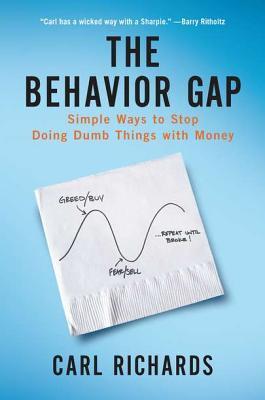
The Behavior Gap: Simple Ways to Stop Doing Dumb Things with Money
by Carl Richards
Rating: 3.7 ⭐
• 1 recommendation ❤️
Why do we lose money? It's easy to blame the economy or the financial markets-but the real trouble lies in the decisions we make.As a financial planner, Carl Richards grew frustrated watching people he cared about make the same mistakes over and over. They were letting emotion get in the way of smart financial decisions. He named this phenomenon-the distance between what we should do and what we actually do-"the behavior gap." Using simple drawings to explain the gap, he found that once people understood it, they started doing much better.Richards's way with words and images has attracted a loyal following to his blog posts for The New York Times, appearances on National Public Radio, and his columns and lectures. His book will teach you how to rethink all kinds of situations where your perfectly natural instincts (for safety or success) can cost you money and peace of mind.He'll help you to:avoid the tendency to buy high and sell low; avoid the pitfalls of generic financial advice; invest all of your assets-time and energy as well as savings-more wisely; quit spending money and time on things that don't matter; identify your real financial goals; start meaningful conversations about money; simplify your financial life; stop losing money!It's never too late to make a fresh financial start. As Richards writes: "We've all made mistakes, but now it's time to give yourself permission to review those mistakes, identify your personal behavior gaps, and make a plan to avoid them in the future. The goal isn't to make the 'perfect' decision about money every time, but to do the best we can and move forward. Most of the time, that's enough."

Whenever I tell people about my job as a financial advisor, the conversation inevitably turns to how hopeless they feel when it comes to dealing with money. More than once, they’ve begged, “Just tell me what to do.” It’s no surprise that even my most successful friends feel confused or paralyzed. Even if they have a shelfful of personal finance books, they don’t have time to make sense of all the information available. They don’t just want good advice, they want the best advice—so rather than do the “wrong thing,” they do nothing. Their 401(k) and bank statements pile up, unexamined or maybe even unopened. What they don’t realize is that bad calls about money aren’t failures; they’re just what happens when emotional creatures have to make decisions about the future with limited information. What I tell them is that we need to scrap striving for perfection and instead commit to a process of guessing and making adjustments when things go off track. Of course we’re going to make the best guesses we can—but we’re not going to obsess over getting them exactly right. The fact is, in a single page you can prioritize what you really want in life and figure out how to get there. That’s because a great financial plan has nothing to do with what the markets are doing, what your real estate agent is pitching, or the hot stock your brother-in-law told you about. It has everything to do with what’s most important to you.By now you may be wondering, “What about the details? How much do I need to invest each year, and how do I allocate it? How much life insurance do I need?” Don’t I’ll cover those topics and many more, sharing strategies that will take the complexity out of them.The most important thing is getting clarity about the big picture so you can cope with the unexpected. Maybe you’ll lose the job you thought was secure; you’ll take a financial risk that doesn’t pan out; you’ll have twins when you were only budgeting for one. In other Life will happen. But no matter what happens, this book will help you bridge the gap between where you are now and where you want to go.

Ao entender a diferença entre atitudes financeiras impulsivas e escolhas racionais, as pessoas começaram a se dar muito melhor financeiramente. O livro conta com poderosas dicas de como evitar comportamentos financeiros prejudiciais, como a tendência de comprar na alta e vender na baixa, ou não estar atento aos perigos dos conselhos financeiros genéricos. Carls Richards, além de ajudar o leitor a identificar seus objetivos financeiros, o auxilia no objetivo de investir com mais sabedoria.Carl Richards, planejador financeiro, é fundador da Prasada Capital Management, empressa de carteiras de investimentos. Escreve no blog Bucks, do The New York Times, e tem uma coluna no Morning Star Advisor.