
J. Paul Getty
30 Books Written

My Life and Fortunes, The Autobiography of one of the World's Wealthiest Men
by J. Paul Getty
Rating: 5.0 ⭐
• 2 recommendations ❤️
The autobiography of one of the world's wealthiest men -- this is the life story of one of the most extraordinary men of our times. J. Paul Getty was relatively unknown outside the pages of the Oil and Gas Journal until 1957, when Fortune published a list of the wealthiest men in America. His name led all the rest.
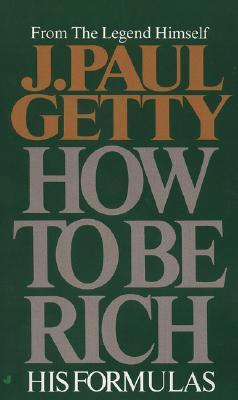
Learn J. Paul Getty’s secrets on making money and getting rich in this “excellent How To book from a $$$ and sense man” ( Kirkus Reviews ).There are plenty of books on making money by men who haven't made much. But if J. Paul Getty, who Fortune magazine called “the richest man in the world,” doesn't know how, who does? Here the billionaire businessman discloses the secrets of his success—and provides a blueprint for those who want to follow in his footsteps. And he goes beyond the matter of making money to the question of what to do with it. “Getty says ‘You can be rich.’”— New York Herald Tribune “Aimed at the rising young business executive.”— Albany Times-Union

In his candid and witty autobiography, famed tycoon J. Paul Getty invites readers to glimpse the twentieth century from the vantage point of a man who lived, as he puts it, "through the most exciting and exhilarating - and most turbulent and terrible - eight decades of human history." Whether describing how he amassed his staggering fortune, recounting conversations with intriguing personalities of the day, or frankly discussing his marriages and liaisons, J. Paul Getty sets the record straight - once and for all. He even speaks honestly about his notorious stinginess and the bizarre problems faced by the impossibly wealthy.

En Mi fórmula del éxito , J. Paul Getty revela todos los secretos que hicieron de él no solamente “el hombre más acaudalado del mundo” sino también uno de los grandes empresarios de todos los tiempos.Mi fórmula del éxito resume las experiencias de Getty como guía y maestro de un impresionante cuadro de ejecutivos de primera línea. De esta manera el autor analiza las cualidades, actividades, conocimientos y personalidad que debe tener quien desee llegar a los más altos puestos de dirección ejecutiva.No es suficiente la preparación técnica. Getty deja en claro que el complejo mundo corporativo de hoy en día demanda ejecutivos con una formación mucho más completa.

In 1965, shortly after founding his namesake museum in Malibu, California, J. Paul Getty (1892–1976) penned a reminiscence about “the romance and zest—the excitement, suspense, thrills, and triumphs—that make art collecting one of the most exhilarating and satisfying of all human endeavors.” Newly republished, this book offers a fascinating portrait of an idiosyncratic and highly personal passion for art. In the late 1920s, Getty writes, “It appeared to me that the days of collecting were just about over. The men who had made their millions . . . before I’d started in business . . . had swept up just about everything worthwhile.” The onset of the Great Depression changed the landscape dramatically; Getty recounts how his serious acquisitions began in the early 1930s and continued for more than three decades. The text, adorned with revealing anecdotes, covers paintings, antiquities, and decorative arts and furniture, with conversational asides discussing Getty’s philosophy of collecting. This personal chronicle reads like an intriguing postcard from a vastly different—and increasingly distant—era.

The Getty Museum's collection of European sculpture ranges in date from the late fifteenth century to the very early twentieth and includes a wide variety of marble, bronze, alabaster, terra-cotta, plaster, wood, ivory, and gold. The earliest sculpture is the mysterious Saint Cyricus by Francesco Laurana; the latest is a shield-like image of Medusa by the eccentric Italian sculptor Vincenzo Gemito. Among the more than forty works includes in this handsomely illustrated volume are Antico's Bust of a Young Man, a satyr designed for Fontainebleau by Cellini, Giambologna's Female Figure, Bernini's Boy with a Dragon, Apollo Crowning Himself by Canova, and the Bust of Jean-Leon Gerome by Carpeaux. The Museum's splendid collection of Mannerist and early Baroque bronzes are well represented in the volume, with the inclusion of such works as Johann Gregor van der Schardt's Mercury and Adriaen de Vries's Juggling Man and Rearing Horse. In addition, each piece presented is described in detail by members of the Getty Museum's curatorial staff.

![Cómo ser Millonario [How to be Rich]: Las fórmulas para obtener riquezas de un Multimillonario](https://m.media-amazon.com/images/S/compressed.photo.goodreads.com/books/1662556220i/62326126.jpg)
Cómo ser Millonario [How to be Rich]: Las fórmulas para obtener riquezas de un Multimillonario
by J. Paul Getty
Rating: 4.5 ⭐
Aprende los secretos para hacer dinero y enriquecerse de un auténtico Jean Paul Getty.Hay muchos libros de "cómo hacer dinero" escritos por hombres que no han ganado mucho dinero. Pero si J. Paul Getty, aquella persona que la revista Fortune llama "El hombre más rico de la historia", no sabe; ¿Quién sabe? En este libro el empresario multimillonario revela los secretos de su éxito—y provee un programa para aquellos que desean seguir sus pasos. Y también va más allá del asunto de hacer dinero, enfocándose también en la cuestión de "qué hacer con el dinero".Obtén las fórmulas de un auténtico multimillonario "Getty Afirma que usted puede ser millonario"-- New York Herald Tribune"Dirigido para aquellos jóvenes ejecutivos de negocios."-- Albany Times-Union


Uno de los acontecimientos literarios de nuestra época. 421 páginas

As I See It: the Autobiography of J. Paul Getty
by J. Paul Getty
How to Be a Successful Executive by J. Paul Getty
by J. Paul Getty
A mi manera
by J. Paul Getty
How To Be Rich - w/ Dust Jacket!
by J. Paul Getty
As I See it : The Autobiography of J. Paul Getty
by J. Paul Getty

Europe in the Eighteenth Century
by J. Paul Getty
Privately printed, 1949. Hard cover, 117 pp. No other printings. Contents GEOGRAPHY AND HISTORY, SCIENCE, LITERATURE, MUSIC, ART, A CONTEMPORARY LETTER, DAILY LIFE (Carpets, Furniture, Silverware, Tapestry), BIBLIOGRAPHY. [Excerpt from Introduction] THE eighteenth century, although historically so close to us, is nevertheless separated from the men and women of today by several generations. The last survivors of the uncounted millions who grew to maturity during the eighteenth century died some sixty years ago. We of the twentieth century have been profoundly influenced by the manners, customs, philosophies, politics and arts of the eighteenth century. I hope that this little handbook may serve to acquaint the reader with the life and accomplishments of that splendid period in the world's history. Santa Monica, California, July 1941
Rila
by J. Paul Getty
How To Become a Successful Executive
by J. Paul Getty
How to Be Rich the Welthiest Billionaire in the World Reveals the Art of Acquiring a Fortune and Making the Most of It Once It's Yours
by J. Paul Getty
How to be Rich

The Golden Age The Most Successful Man in the World Reveals His Personal Formula for Dynamic Living
by J. Paul Getty
Trident Press (1968)
How to be a successful executive
by J. Paul Getty
As I See It 27 Fl
by J. Paul Getty
A Summary of How to Be Rich by J. Paul Getty
by J. Paul Getty

The chronicle of an artistic odyssey through Europe.