Loading themes...
Explore the best books about Russian Literature theme.

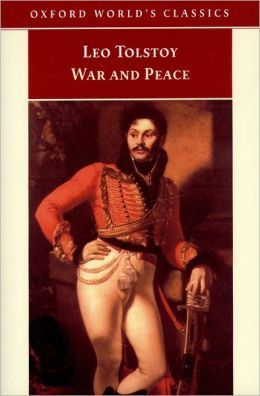
In Russia's struggle with Napoleon, Tolstoy saw a tragedy that involved all mankind. War and Peace broadly focuses on Napoleon’s invasion of Russia in 1812 and follows three of the most well-known characters in literature: Pierre Bezukhov, the illegitimate son of a count who is fighting for his inheritance and yearning for spiritual fulfillment; Prince Andrei Bolkonsky, who leaves his family behind to fight in the war against Napoleon; and Natasha Rostov, the beautiful young daughter of a nobleman who intrigues both men.As Napoleon’s army invades, Tolstoy brilliantly follows characters from diverse backgrounds—peasants and nobility, civilians and soldiers—as they struggle with the problems unique to their era, their history, and their culture. And as the novel progresses, these characters transcend their specificity, becoming some of the most moving—and human—figures in world literature.Tolstoy gave his personal approval to this translation, published here in a new single volume edition, which includes an introduction by Henry Gifford, and Tolstoy's important essay `Some Words about War and Peace'.
Alternate Cover Edition ISBN 0679734511. (ISBN13: 9780679734512)Inspired by the true story of a political murder that horrified Russians in 1869, Fyodor Dostoevsky conceived of Demons as a "novel-pamphlet" in which he would say everything about the plague of materialist ideology that he saw infecting his native land. What emerged was a prophetic and ferociously funny masterpiece of ideology and murder in pre-revolutionary Russia.

This epic tale about the effects of the Russian Revolution and its aftermath on a bourgeois family was not published in the Soviet Union until 1987. One of the results of its publication in the West was Pasternak's complete rejection by Soviet authorities; when he was awarded the Nobel Prize for Literature in 1958 he was compelled to decline it. The book quickly became an international best-seller.Dr. Yury Zhivago, Pasternak's alter ego, is a poet, philosopher, and physician whose life is disrupted by the war and by his love for Lara, the wife of a revolutionary. His artistic nature makes him vulnerable to the brutality and harshness of the Bolsheviks. The poems he writes constitute some of the most beautiful writing featured in the novel.

The only English translation authorized by Aleksandr Solzhenitsyn First published in the Soviet journal Novy Mir in 1962, One Day in the Life of Ivan Denisovich stands as a classic of contemporary literature. The story of labor-camp inmate Ivan Denisovich Shukhov, it graphically describes his struggle to maintain his dignity in the face of communist oppression. An unforgettable portrait of the entire world of Stalin's forced work camps, One Day in the Life of Ivan Denisovich is one of the most extraordinary literary documents to have emerged from the Soviet Union and confirms Solzhenitsyn's stature as "a literary genius whose talent matches that of Dosotevsky, Turgenev, Tolstoy"--Harrison SalisburyThis unexpurgated 1991 translation by H. T. Willetts is the only authorized edition available, and fully captures the power and beauty of the original Russian.

Returning to Russia from a sanitarium in Switzerland, the Christ-like epileptic Prince Myshkin finds himself enmeshed in a tangle of love, torn between two women—the notorious kept woman Nastasya and the pure Aglaia—both involved, in turn, with the corrupt, money-hungry Ganya. In the end, Myshkin’s honesty, goodness, and integrity are shown to be unequal to the moral emptiness of those around him. In her revision of the Garnett translation, Anna Brailovsky has corrected inaccuracies wrought by Garnett’s drastic anglicization of the novel, restoring as much as possible the syntactical structure of the original story.

First published in France in 1963, this is the first publication in English of the author's analysis of Dostoevsky's themes, revealing Girard's combination of mimetic-literary and religious approaches. No index. Annotation c. by Book News, Inc., Portland, Or.

Leo Tolstoy embodies the most extraordinary contradictions. He was a wealthy aristocrat who preached the virtues of poverty and the peasant life, a misogynist who wrote Anna Karenina, and a supreme writer who declared, "Literature is rubbish." From Tolstoy's famously bad marriage to his enormously successful career, Troyat presents a brilliant portrait that reads like an epic novel written by Tolstoy himself.

“. . . one of the most vivid and convincing revelations of a social rebel’s mind ever written.”—The Times“This is fearsomely good writing. And the ultimate hero of Memoirs of a Revolutionary is not the one we would normally suspect: not Lenin, not Trotsky, not the multitudes of French, German, Italian, Spanish and Russian Anarchists, Communists and radicals that Serge knew. . . Rather, the hero in this story is Serge himself.”—RALPH“I can't think of anyone else who has written about the revolutionary movement in this century with Serge's combination of moral insight and intellectual richness.”—Dwight Macdonald“An extraordinary time capsule from the darkest hours of the twentieth century. Although often compared to Orwell, Serge is a more noble and irreconcilable figure. This book—written as the GPU was exterminating the last of the Bolshevik old guard-is a fiery testament to political conscience and revolutionary hope. Through Serge, we know something of those gigantic but largely forgotten figures: the anarchist and communist opponents of Stalin.”—Mike Davis“The best account of [Serge's] life remain his “Memoirs,” and one hopes its re-publication wins Serge the wider readership he deserves. . . . An impassioned work of burning intensity, Serge's “Memoirs,” charts not only his own harrowing odyssey through the revolutionary maelstrom of interwar Europe but also the tragic fortunes of an entire generation of leftists and fellow revolutionaries . . . For the contemporary reader, “Memoirs,” still offers one of the finest—and most terrifying—accounts of the degradation of the Russian Revolution into murderous tyranny and bureaucratic strangulation . . . Serge's capacity to convey roiling human passion never dims; whether he is writing about allies or enemies, his subjects live and breathe.”—Los Angeles Times Book ReviewThe book begins in 1906, with Serge describing his impoverished, idealistic days as an activist in the left-wing movements of Europe; it ends with the years 1936 to 1941 after his release from exile to a remote city in a time of famine, expulsion from the Soviet Union, escape from Nazi agents in Paris, and flight to Mexico as a political refugee. More than a personal memoir, this insider's history of the revolution and its allied upheavals fills in the human details that add to our understanding of how mass movements take place, how governments stand and fall, how individuals survive in struggles between ideologies. It is a human memoir and, though set in an inhumane time, during a clash among powerful ideals, it is a humane memoir.

Everything in this book is fictional and everything is true,” wrote Victor Serge in the epigraph to Men in Prison . “I have attempted, through literary creation, to bring out the general meaning and human content of a personal experience.” The author of Men in Prison served five years in French penitentiaries (1912–1917) for the crime of “criminal association”—in fact for his courageous refusal to testify against his old comrades, the infamous “Tragic Bandits” of French anarchism. “While I was still in prison,” Serge later recalled, “fighting off tuberculosis, insanity, depression, the spiritual poverty of the men, the brutality of the regulations, I already saw one kind of justification of that infernal voyage in the possibility of describing it. Among the thousands who suffer and are crushed in prison—and how few men really know that prison!—I was perhaps the only one who could try one day to tell all… There is no novelist’s hero in this novel, unless that terrible machine, prison, is its real hero. It is not about ‘me,’ about a few men, but about men, all men crushed in that dark corner of society.” Ironically, Serge returned to writing upon his release from a GPU prison in Soviet Russia, where he was arrested as an anti-Stalinist subversive in 1928. He completed Men in Prison (and two other novels) in “semi-captivity” before he was rearrested and deported to the Gulag in 1933. Serge’s classic prison novel has been compared to Dostoyevsky’s House of the Dead , Koestler’s Spanish Testament , Genet’s Miracle of the Rose , and Solzhenitsyn’s One Day in the Life of Ivan Denisovitch both for its authenticity and its artistic achievement. This edition features a substantial new introduction by translator Richard Greeman, situating the work in Serge’s life and times.

Accused of political subversion as a young man, Fyodor Dostoyevsky was sentenced to four years of hard labor at a Siberian prison camp — a horrifying experience from which he developed this astounding semi-autobiographical memoir of a man condemned to ten years of servitude for murdering his wife.As with a number of the author's other works, this profoundly influential novel brilliantly explores his characters' thoughts while probing the depths of the human soul. Describing in relentless detail the physical and mental suffering of the convicts, Dostoyevsky's character never loses faith in human qualities and the goodness of man.A haunting and remarkable work filled with wonder and resignation, The House of the Dead ranks among the Russian novelist's greatest masterpieces. Of this powerful autobiographical novel, Tolstoy wrote, "I know no better book in all modern literature."

Notice: "In the First Circle" and "The First Circle": "In The First Circle" is 200pp longer; "The first circle" is a censored and abridged version.Set in Moscow during a three-day period in December 1949, 'The First Circle' is the story of the prisoner Gleb Nerzhin, a brilliant mathematician. At the age of thirty-one, Nerzhin has survived the war years on the German front and the postwar years in a succession of Russian prisons and labor camps. His story is interwoven with the stories of a dozen fellow prisoners - each an unforgettable human being - from the prison janitor to the tormented Marxist intellectual who designed the Dnieper dam; of the reigning elite and their conflicted subordinates; and of the women, wretched or privileged, bound to these men. A landmark of Soviet literature, 'The First Circle' is as powerful today as it was when it was first published, nearly thirty years ago.

Birth of Our Power is an epic novel set in Spain, France, and Russia during the heady revolutionary years 1917–1919. Serge’s tale begins in the spring of 1917, the third year of mass slaughter in the blood-and-rain-soaked trenches of World War I, when the flames of revolution suddenly erupt in Russia and Spain. Although the Spanish uprising eventually fizzles, in Russia the workers, peasants, and common soldiers are able to take power and hold it. Serge’s “tale of two cities” is constructed from the opposition between Barcelona, the city “we” could not take, and Petrograd, the starving, beleaguered capital of the Russian Revolution besieged by counter-revolutionary Whites. Between the romanticism of radicalized workers awakening to their own power in a sun-drenched Spanish metropolis to the grim reality of workers clinging to power in Russia’s dark, frozen revolutionary outpost. The novel was composed a decade after the revolution in Leningrad, where Serge was living in semicaptivity because of his declared opposition to Stalin’s dictatorship over the revolution.

A young Russian teacher is offered the chance to relive his schooldays and early manhood

From the writer who shocked and delighted the world with his novels Lolita, Pale Fire, and Ada, or Ardor, and so many others, comes a magnificent collection of stories. Written between the 1920s and 1950s, these sixty-five tales—eleven of which have been translated into English for the first time—display all the shades of Nabokov's imagination. They range from sprightly fables to bittersweet tales of loss, from claustrophobic exercises in horror to a connoisseur's samplings of the table of human folly. Read as a whole, The Stories of Vladimir Nabokov offers an intoxicating draft of the master's genius, his devious wit, and his ability to turn language into an instrument of ecstasy.The Wood-SpriteRussian Spoken HereSoundsWingstrokeGodsA Matter of ChanceThe SeaportRevengeBeneficenceDetails of A SunsetThe ThunderstormLa VenezianaBachmannThe DragonChristmasA Letter That Never Reached RussiaThe FightThe Return of ChorbA Guide to BerlinA Nursery TaleTerrorRazorThe PassengerThe DoorbellAn Affair of HonorThe Christmas StoryThe Potato ElfThe AurelianA Dashing FellowA Bad DayThe Visit to the MuseumA Busy ManTerra IncognitaThe ReunionLips to LipsOracheMusicPerfectionThe Admiralty SpireThe LeonardoIn Memory of L.I. ShigaevThe CircleA Russian BeautyBreaking the NewsTorpid SmokeRecruitingA Slice of LifeSpring in FialtaCloud, Castle, LakeTyrants DestroyedLikMademoiselle OVasiliy ShishkovUltima ThuleSolus RexThe Assistant ProducerThat in Aleppo OnceA Forgotten PoetTime and EbbConversation Piece, 1945Signs and SymbolsFirst LoveScenes From the Life of A Double MonsterThe Vane SistersLance

The American poet John Shade is dead. His last poem, 'Pale Fire', is put into a book, together with a preface, a lengthy commentary and notes by Shade's editor, Charles Kinbote. Known on campus as the 'Great Beaver', Kinbote is haughty, inquisitive, intolerant, but is he also mad, bad - and even dangerous? As his wildly eccentric annotations slide into the personal and the fantastical, Kinbote reveals perhaps more than he should be.Nabokov's darkly witty, richly inventive masterpiece is a suspenseful whodunit, a story of one-upmanship and dubious penmanship, and a glorious literary conundrum.Part of a major new series of the works of Vladimir Nabokov, author of Lolita and Pale Fire, in Penguin Classics.

Red Schuhart is a stalker, one of those young rebels who are compelled, in spite of extreme danger, to venture illegally into the Zone to collect the mysterious artifacts that the alien visitors left scattered around. His life is dominated by the place and the thriving black market in the alien products. But when he and his friend Kirill go into the Zone together to pick up a “full empty,” something goes wrong. And the news he gets from his girlfriend upon his return makes it inevitable that he’ll keep going back to the Zone, again and again, until he finds the answer to all his problems.First published in 1972, Roadside Picnic is still widely regarded as one of the greatest science fiction novels, despite the fact that it has been out of print in the United States for almost thirty years.

Bazarov—a gifted, impatient, and caustic young man—has journeyed from school to the home of his friend Arkady Kirsanov. But soon Bazarov’s outspoken rejection of authority and social conventions touches off quarrels, misunderstandings, and romantic entanglements that will utterly transform the Kirsanov household and reflect the changes taking place across all of nineteenth-century Russia. Fathers and Sons enraged the old and the young, reactionaries, romantics, and radicals alike when it was first published. At the same time, Turgenev won the acclaim of Flaubert, Maupassant, and Henry James for his craftsmanship as a writer and his psychological insight. Fathers and Sons is now considered one of the greatest novels of the nineteenth century.A timeless depiction of generational conflict during social upheaval, it vividly portrays the clash between the older Russian aristocracy and the youthful radicalism that foreshadowed the revolution to come—and offers modern-day readers much to reflect upon as they look around at their own tumultuous, ever changing world. Introduction by Jane Costlow

This is an older alternate cover edition for ISBN 0141183225/ 9780141183220. A newer edition may be found here. From one of the 20th century's great writers comes one of the finest autobiographies of our time. Speak, Memory, first published in 1951 as Conclusive Evidence and then assiduously revised in 1966, is an elegant and rich evocation of Nabokov’s life and times, even as it offers incisive insights into his major works, including Lolita, Pnin, Despair, The Gift, The Real Life of Sebastian Knight, and The Luhzin Defense. One of the 20th century's master prose stylists, Vladimir Nabokov was born in St. Petersburg in 1899. He studied French and Russian literature at Trinity College, Cambridge, then lived in Berlin and Paris, where he launched a brilliant literary career. In 1940 he moved to the United States, and achieved renown as a novelist, poet, critic, and translator. He taught literature at Wellesley, Stanford, Cornell, and Harvard. In 1961 he moved to Montreux, Switzerland, where he died in 1977.

The state has been recently taken over and is being run by the tyrannical and philistine ‘Average Man’ party. Under the slogans of equality and happiness for all, it has done away with individualism and freedom of thought. Only John Krug, a brilliant philosopher, stands up to the regime. His antagonist, the leader of the new party, is his old school enemy, Paduk – known as the ‘Toad’. Grieving over his wife’s recent death, Krug is at first dismissive of Paduk’s activities and sees no threat in them. But the sinister machine which Paduk has set in motion may prove stronger than the individual, stronger even than the grotesque ‘Toad’ himself. The first novel Nabokov wrote while living in America and the most overtly political novel he ever wrote, Bend Sinister is a modern classic. While it is filled with veiled puns and characteristically delightful wordplay, it is, first and foremost, a haunting and compelling narrative about a civilized man caught in the tyranny of a police state. Professor Adam Krug, the country's foremost philosopher, offers the only hope of resistance to Paduk, dictator and leader of the Party of the Average Man. In a folly of bureaucratic bungling and ineptitude, the government attempts to co-opt Krug's support in order to validate the new regime.

The Essential Turgenev will provide American readers with the first comprehensive, portable edition of this great Russian author's works. It offers an extensive introduction to the writings that established Turgenev as one of the preeminent literary figures of his time, and reveals the breadth of insight into changing social conditions that made Turgenev a portal to Russian intellectual life.Readers will find complete, exemplary translations of Turgenev's finest novels, Rudin, A Nest of Gentry, and Fathers and Sons, along with the lapidary novella First Love. The volume also includes selections from Sportsman's Sketches, seven of Turgenev's most compelling short stories, and fifteen prose poems. It also contains samples of the author's nonfiction drawn from autobiographical sketches, memoirs, public speeches, plus the influential essay "Hamlet and Don Quixote" and correspondence with Dostoevsky, Tolstoy, and others.

Banned in Russia, Tolstoy's The Kingdom of God Is Within You was deemed a threat to church and state. The culmination of a lifetime's thought, it espouses a commitment to Jesus's message of turning the other cheek. In a bold and original manner, Tolstoy shows his readers clearly why they must reject violence of any sort—even that sanctioned by the state or the church—and urges them to look within themselves to find the answers to questions of morality.In 1894, one of the first English translations of this book found its way into the hands of a young Gandhi. Inspired by its message of nonresistance to evil, the Mahatma declared it a source of "independent thinking, profound morality, and truthfulness." Much of this work's emotional and moral appeal lies in its emphasis on fair treatment of the poor and working class. Its view of Christianity, not as a mystic religion but as a workable philosophy originating from the words of a remarkable teacher, extends its appeal to secular and religious readers alike.

Román vypráví o osudu mukla a věčného vyhnance Olega Kostoglotova, který se v polovině padesátých let přichází léčit na taškentskou onkologickou kliniku. Je to v době, kdy Stalin je již dva roky mrtev, Berija popraven a kdy se začínají objevovat první nesmělé náznaky změn. Na onkologické klinice se setkávají členové strany i vyhnanci, národy, které sem Stalin vysídlil, i původní obyvatelé, lékaři i pacienti. Jejich společným nepřítelem je rakovina: nemoc, smrt, konec života... V blízkosti smrti padají všechny dosavadní jistoty, všechny plány, všechna privilegia. A v tomto světě rozehrává Solženicyn příběhy svých hrdinů, jejich lásek a nadějí. Nádory, sarkomy a metanoblastomy jsou nejen krutou skutečností, s níž se potýkají hrdinové románu i lékaři, ale i metaforou pro rakovinu lži, přetvářky, násilí a útlaku, která metastázuje do všech vrstev ruské společnosti.

Dostoevsky’s most revolutionary novel, Notes from Underground marks the dividing line between nineteenth- and twentieth-century fiction, and between the visions of self each century embodied. One of the most remarkable characters in literature, the unnamed narrator is a former official who has defiantly withdrawn into an underground existence. In complete retreat from society, he scrawls a passionate, obsessive, self-contradictory narrative that serves as a devastating attack on social utopianism and an assertion of man’s essentially irrational nature.Richard Pevear and Larissa Volokhonsky, whose Dostoevsky translations have become the standard, give us a brilliantly faithful edition of this classic novel, conveying all the tragedy and tormented comedy of the original.

This version has the last three volumes of the Kolyma Stories: IV - Sketches of the Criminal WorldV - The Resurrection of the LarchVI - The Glove, or, Kolyma Stories IIThe astonishing follow-up to 2018's Kolyma Stories.In 1936, Varlam Shalamov, a journalist and writer, was arrested for counterrevolutionary activities and sent to the Soviet Gulag. He survived fifteen years in the prison camps and returned from the Far North to write one of the masterpieces of twentieth-century literature, an epic array of short fictional tales reflecting the years he spent in the Gulag. Sketches of the Criminal World is the second of two volumes (the first, Kolyma Stories, was published by NYRB Classics in 2018) that together constitute the first complete English translation of Shalamov’s stories and the only one to be based on the authorized Russian text. In this second volume, Shalamov sets out to answer the fundamental moral questions that plagued him in the camps where he encountered firsthand the criminal world as a real place, far more evil than Dostoyevsky’s underground: “How does someone stop being human?” and “How are criminals made?” By 1972, when he was writing his last stories, the camps were being demolished, the guard towers and barracks razed. “Did we exist?” Shalamov asks, then answers without hesitation, “I reply, ‘We did.’”