Loading themes...
Explore the best books about Linguistics theme.
The remarkable story of a "talking" chimp, a leading scientist, and the profound insights they have uncovered about our speciesHe has been featured in cover stories in Time, Newsweek, and National Geographic, and has been the subject of a "NOVA" documentary. He is directly responsible for discoveries that have forced the scientific community to recast its thinking about the nature of the mind and the origins of language. He is Kanzi, an extraordinary bonobo chimpanzee who has overturned the idea that symbolic language is unique to our species. This is the moving story of how Kanzi learned to converse with humans and the profound lessons he has taught us about our animal cousins, and ourselves.". . . The underlying thesis is informative and well argued . . . Savage-Rumbaugh's results are impressive." — The Washington Post"This popular, absorbing, and controversial account is recommended." — Library Journal
En 1970 Michel Foucault sucedió a Jean Hyppolite en el Collége de France, donde se hizo cargo de la cátedra de historia de los sistemas de pensamiento. El orden del discurso fue su lección inaugural del curso. Preocupado siempre por las complejas relaciones entre el saber y el origen del poder, Foucault resumió en este texto el núcleo de sus investigaciones y adelantó todo un programa futuro de trabajo. A través de un minucioso análisis de las variadas formas de acceso (o de las prohibiciones y tabúes) a la palabra, de la marginalidad de determinados discursos (la locura, la delincuencia) o la controvertida voluntad de verdad de la cultura occidental, este opúsculo consigue poner de manifiesto la inquietante fragilidad de categorías filosóficas aparentemente sacrosantas, como las del sujeto, conciencia e historia.

Hofstadter's collection of quirky essays is unified by its primary concern: to examine the way people perceive and think.

A course in spoken and written Hindi includes dialogues, grammar, pronunciation, vocabulary, and cultural tips.

In this engaging book, Jerry Fodor argues against the widely held view that mental processes are largely computations, that the architecture of cognition is massively modular, and that the explanation of our innate mental structure is basically Darwinian. Although Fodor has praised the computational theory of mind as the best theory of cognition that we have got, he considers it to be only a fragment of the truth. In fact, he claims, cognitive scientists do not really know much yet about how the mind works (the book's title refers to Steve Pinker's How the Mind Works).Fodor's primary aim is to explore the relationship among computational and modular theories of mind, nativism, and evolutionary psychology. Along the way, he explains how Chomsky's version of nativism differs from that of the widely received New Synthesis approach. He concludes that although we have no grounds to suppose that most of the mind is modular, we have no idea how nonmodular cognition could work. Thus, according to Fodor, cognitive science has hardly gotten started.

This classic work explores the vast differences between oral and literate cultures offering a very clear account of the intellectual, literary and social effects of writing, print and electronic technology. In the course of his study, Walter J. Ong offers fascinating insights into oral genres across the globe and through time, and examines the rise of abstract philosophical and scientific thinking. He considers the impact of orality-literacy studies not only on literary criticism and theory but on our very understanding of what it is to be a human being, conscious of self and other. This is a book no reader, writer or speaker should be without.

More than five thousand languages are currently spoken around the globe. Learning to speak one of them is virtually effortless for most of us, so why is it commonly so difficult to learn a second language? Unraveling this mystery, two top researchers in the field explain how language acquisition can be an odyssey of self-discovery.

Examines the three facets of sound, concept, and syntactic role, and discusses the deciphering of an ancient language, generative grammar, and the lexical process in the brain

13 Secrets for Speaking Fluent Japanese presents tested shortcuts for Japanese language acquisition. Identifying two groups of people who actively and effectively study Japanese to the point of fluency-successful non-native learners and Japanese children-Giles Murray has collected from bothgroups the most rewarding and universal techniques which can be put to immediate use by both beginner and advanced students of Japanese.This book is designed for people who have tried orthodox textbooks and failed, people who know a little Japanese but don't have the necessary time or motivation to make the transition to more serious textbooks, and people seeking to increase fluency using ability already acquired. It introduces newstrategies for thinking, speaking and memorizing Japanese quickly, efficiently and independently. Used in tandem with a mainstream textbook, these strategies will enable any student to apply what they have learned in the classroom to real-life situations, and to speak without hesitation in naturaland fluent Japanese.With lively and entertaining commentaries, striking illustrations, two Japanese manga-including a six-page extract from Osamu Tezuka's famous Blackjack series-brainteasing puzzles, and genuinely useful example sentences, 13 Secrets offers a unique and exciting alternative to all students ofJapanese.Featuring- An original manga by Tezuka Osamu- All new custom-written 16-page manga- 3 mini-graphic novels- Over 100 illustrations- Dynamic quiz format- Full glossaries

When Ernest Gellner was his early thirties, he took it upon himself to challenge the prevailing philosophical orthodoxy of the day, Linguistic Philosophy. Finding a powerful ally in Bertrand Russell, who provided the foreword for this book, Gellner embarked on the project that was to put him on the intellectual map.The first determined attempt to state the premises and operational rules of the movement, Words and Things remains philosophy's most devastating attack on a conventional wisdom to this day.

People can be interested in language, writing and scripts. They may wonder how, when and where did writing evolve? Do alphabets function better than hieroglyphs? And are we today, in the computer age, moving towards a universal language of signs and symbols?

Book annotation not available for this title.

“Each of these little books is witty and dramatic and creates a sense of time, place, and character....I cannot think of a better way to introduce oneself and one's friends to Western civilization.”―Katherine A. Powers, Boston Globe . “Well-written, clear and informed, they have a breezy wit about them....I find them hard to stop reading.”―Richard Bernstein, New York Times . “Witty, illuminating, and blessedly concise.”―Jim Holt, Wall Street Journal . These brief and enlightening explorations of our greatest thinkers bring their ideas to life in entertaining and accessible fashion. Philosophical thought is deciphered and made comprehensive and interesting to almost everyone. Far from being a novelty, each book is a highly refined appraisal of the philosopher and his work, authoritative and clearly presented.

How do we know a cat is a cat? And why do we call it a cat? How much of our perception of things is based on cognitive ability, and how much on linguistic resources? Here, in six remarkable essays, Umberto Eco explores in depth questions of reality, perception, and experience. Basing his ideas on common sense, Eco shares a vast wealth of literary and historical knowledge, touching on issues that affect us every day. At once philosophical and amusing, Kant and the Platypus is a tour of the world of our senses, told by a master of knowing what is real and what is not.

It is at the same time a history of language, a guide to foreign tongues, and a method for learning them. It shows, through basic vocabularies, family resemblances of languages—Teutonic, Romance, Greek—helpful tricks of translation, key combinations of roots and phonetic patterns. It presents by common-sense methods the most helpful approach to the mastery of many languages; it condenses vocabulary to a minimum of essential words; it simplifies grammar in an entirely new way; and it teaches a languages as it is actually used in everyday life.But this book is more than a guide to foreign languages; it goes deep into the roots of all knowledge as it explores the history of speech. It lights up the dim pathways of prehistory and unfolds the story of the slow growth of human expression from the most primitive signs and sounds to the elaborate variations of the highest cultures. Without language no knowledge would be possible; here we see how language is at once the source and the reservoir of all we know.

"Its publication should be a major event for cognitive linguistics and should pose a major challenge for cognitive science. In addition, it should have repercussions in a variety of disciplines, ranging from anthropology and psychology to epistemology and the philosophy of science. . . . Lakoff asks: What do categories of language and thought reveal about the human mind? Offering both general theory and minute details, Lakoff shows that categories reveal a great deal."—David E. Leary, American Scientist

"A brilliant, witty, and altogether satisfying book." — New York Times Book Review The classic work on the development of human language by the world’s leading expert on language and the mind In The Language Instinct , the world's expert on language and mind lucidly explains everything you always wanted to know about language: how it works, how children learn it, how it changes, how the brain computes it, and how it evolved. With deft use of examples of humor and wordplay, Steven Pinker weaves our vast knowledge of language into a compelling story: language is a human instinct, wired into our brains by evolution. The Language Instinct received the William James Book Prize from the American Psychological Association and the Public Interest Award from the Linguistics Society of America. This edition includes an update on advances in the science of language since The Language Instinct was first published.

"When Steiner deals with transactions between languages . . . as in discussion of various English versions of the Bible or Robert Lowell`s translation of Racine, we see a keenly discriminating literary mind at work on what it loves."-Robert Gorham Davis, New York Times Book Review "An extraordinarily sharp, brilliant, and thoughtful discussion of the strange conditions into which modern writing has worked itself. . . . Few, very few writers today have as much that is worthwhile to say on today`s writing as does the author."-Joseph G. Harrison, Christian Science Monitor "Whoever has valued and needed this book for its insights into some one particular matter . . . will upon rereading discover the astounding breadth of attention in [it]: from Homer to Thomas Mann, from Marshall McLuhan to The Warsaw Diary of Chaim Kaplan. In each of these essays, a single sentence, and often more than one, can endlessly provoke and illuminate thought."-John Felstiner How do we evaluate the power and utility of language when it has been made to articulate falsehoods in certain totalitarian regimes or has been charged with vulgarity and imprecision in a mass-consumer democracy? How will language react to the increasingly urgent claims of more exact speech such as mathematics and symbolic notation? These are some of the questions Steiner addresses in this elegantly written book, first published in 1967 to international acclaim.

This short treatise looks at how we construct a social reality from our sense impressions; at how, for example, we construct a 'five-pound note' with all that implies in terms of value and social meaning, from the printed piece of paper we see and touch. "John Searle has a distinctive intellectual style. It combines razor-sharp analysis with a swaggering chip-on-the-shoulder impudence that many of his opponents might find intolerably abrasive were it not for the good humour that pervades all he writes. This is a man who likes a good philosophical brawl." --New Scientist

This perfect gift for readers, writers, and literature majors alike unearths the quirks of the English language. For example, do you know why a mortgage is literally a “death pledge”? Why guns have girls’ names? Why “salt” is related to “soldier”? Discover the answers to all of these etymological questions and more in this fascinating book for fans of of Eats, Shoots & Leaves.The Etymologicon is a completely unauthorized guide to the strange underpinnings of the English language. It explains how you get from “gruntled” to “disgruntled”; why you are absolutely right to believe that your meager salary barely covers “money for salt”; how the biggest chain of coffee shops in the world connects to whaling in Nantucket; and what, precisely, the Rolling Stones have to do with gardening. This witty book will awake the linguist in you and illuminate the hidden meanings behind common words and phrases, tracing their evolution through all of their surprising paths throughout history.

Alternate cover edition can be found here.Author of the bestselling Dhalgren and winner of four Nebulas and one Hugo, Samuel R. Delany is one of the most acclaimed writers of speculative fiction. Babel-17, winner of the Nebula Award for best novel of the year, is a fascinating tale of a famous poet bent on deciphering a secret language that is the key to the enemy’s deadly force, a task that requires she travel with a splendidly improbable crew to the site of the next attack. For the first time, Babel-17 is published as the author intended with the short novel Empire Star, the tale of Comet Jo, a simple-minded teen thrust into a complex galaxy when he’s entrusted to carry a vital message to a distant world. Spellbinding and smart, both novels are testimony to Delany’s vast and singular talent.

William J. Bernstein’s A Splendid How Trade Shaped the World , an Economist and Financial Times Best Book of the Year, placed him firmly among the top flight of historians like Jared Diamond and Bill Bryson, capable of distilling major trends and reams of information into insightful, globe-spanning popular narrative.Bernstein explains how new communication technologies and in particular our access to them, impacted human society. Writing was born thousands of years ago in Mesopotamia. Spreading to Sumer, and then Egypt, this revolutionary tool allowed rulers to extend their control far and wide, giving rise to the world’s first empires. When Phoenician traders took their alphabet to Greece, literacy’s first boom led to the birth of drama and democracy. In Rome, it helped spell the downfall of the Republic. Later, medieval scriptoria and vernacular bibles gave rise to religious dissent, and with the combination of cheaper paper and Gutenberg’s printing press, the fuse of Reformation was lit.The Industrial Revolution brought the telegraph and the steam driven printing press, allowing information to move faster than ever before and to reach an even larger audience. But along with radio and television, these new technologies were more easily exploited by the powerful, as seen in Germany, the Soviet Union, even Rwanda, where radio incited genocide. With the rise of carbon duplicates (Russian samizdat), photocopying (the Pentagon Papers), the internet, social media and cell phones (the recent Arab Spring) more people have access to communications, making the world more connected than ever before.In Masters of the Word , Bernstein masterfully guides the reader through the vast history of communications, illustrating each step with colorful stories and anecdotes. This is a captivating, enlightening book, one that will change the way you look at technology, history, and power.

A short and entertaining book on the modern art of writing well by New York Times bestselling author Steven PinkerWhy is so much writing so bad, and how can we make it better? Is the English language being corrupted by texting and social media? Do the kids today even care about good writing? Why should any of us care?In The Sense of Style, the bestselling linguist and cognitive scientist Steven Pinker answers these questions and more. Rethinking the usage guide for the twenty-first century, Pinker doesn’t carp about the decline of language or recycle pet peeves from the rulebooks of a century ago. Instead, he applies insights from the sciences of language and mind to the challenge of crafting clear, coherent, and stylish prose.In this short, cheerful, and eminently practical book, Pinker shows how writing depends on imagination, empathy, coherence, grammatical knowhow, and an ability to savor and reverse engineer the good prose of others. He replaces dogma about usage with reason and evidence, allowing writers and editors to apply the guidelines judiciously, rather than robotically, being mindful of what they are designed to accomplish. Filled with examples of great and gruesome prose, Pinker shows us how the art of writing can be a form of pleasurable mastery and a fascinating intellectual topic in its own right.

A presidential speechwriter for bill clinton explores the hidden power of analogy to fuel thought, connect ideas, spark innovation, and shape outcomes from the meatpacking plants that inspired henry ford’s first moving assembly line to the "domino theory" that led america into vietnam to the "bicycle for the mind" that steve jobs envisioned as the macintosh computer, analogies have played a dynamic role in shaping the world around us—and still do today.analogies are far more complex than their sat stereotype and lie at the very core of human cognition and creativity. Once we become aware of this, we start seeing them everywhere—in ads, apps, political debates, legal arguments, logos, and euphemisms, to name just a few. At their very best, analogies inspire new ways of thinking, enable invention, and motivate people to action. Unfortunately, not every analogy that rings true is true. That’s why, at their worst, analogies can deceive, manipulate, or mislead us into disaster. The

As America rapidly becomes a pluralistic, postmodern society, many of us struggle to talk about faith. We can no longer assume our friends understand words such as grace or gospel. Others, like lost and sin, have become so negative they are nearly conversation-enders.Jonathan Merritt knows this frustration well. After Jonathan moved from the Bible Belt to New York City, he discovered that whenever conversations turned to spirituality, the words he'd used for decades didn't connect with listeners anymore. In a search for answers and understanding, Jonathan uncovered a spiritual crisis affecting tens of millions. In this groundbreaking book, one of America's premier religion writers revives ancient expressions through cultural commentary, vulnerable personal narratives, and surprising biblical insights. Both provocative and liberating, Learning to Speak God from Scratch will breathe new life into your spiritual conversations and lure you into the embrace of the God who inhabits them.

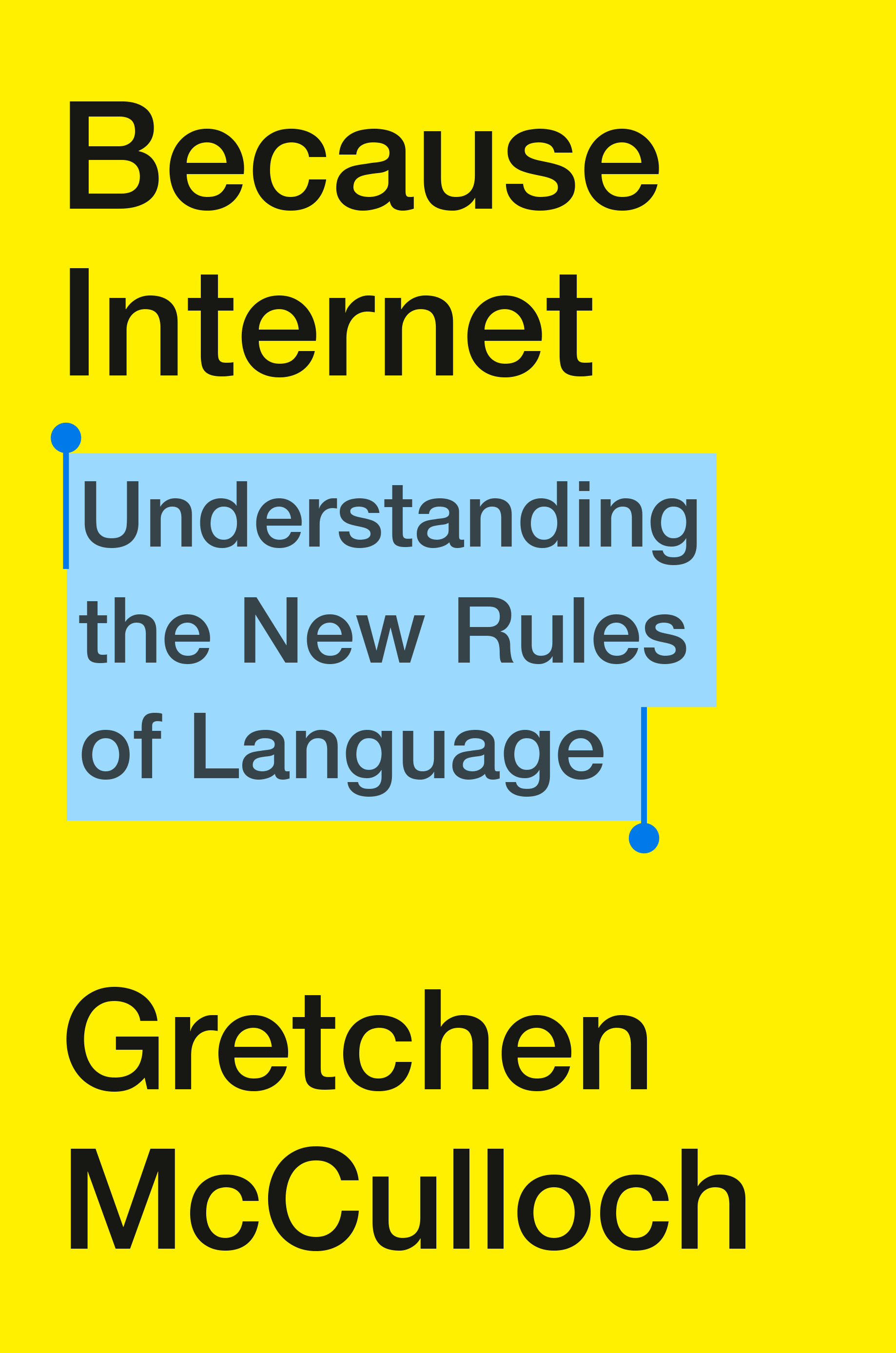
A linguistically informed look at how our digital world is transforming the English language. Language is humanity's most spectacular open-source project, and the internet is making our language change faster and in more interesting ways than ever before. Internet conversations are structured by the shape of our apps and platforms, from the grammar of status updates to the protocols of comments and @replies. Linguistically inventive online communities spread new slang and jargon with dizzying speed. What's more, social media is a vast laboratory of unedited, unfiltered words where we can watch language evolve in real time.Even the most absurd-looking slang has genuine patterns behind it. Internet linguist Gretchen McCulloch explores the deep forces that shape human language and influence the way we communicate with one another. She explains how your first social internet experience influences whether you prefer "LOL" or "lol," why ~sparkly tildes~ succeeded where centuries of proposals for irony punctuation had failed, what emoji have in common with physical gestures, and how the artfully disarrayed language of animal memes like lolcats and doggo made them more likely to spread.Because Internet is essential reading for anyone who's ever puzzled over how to punctuate a text message or wondered where memes come from. It's the perfect book for understanding how the internet is changing the English language, why that's a good thing, and what our online interactions reveal about who we are.

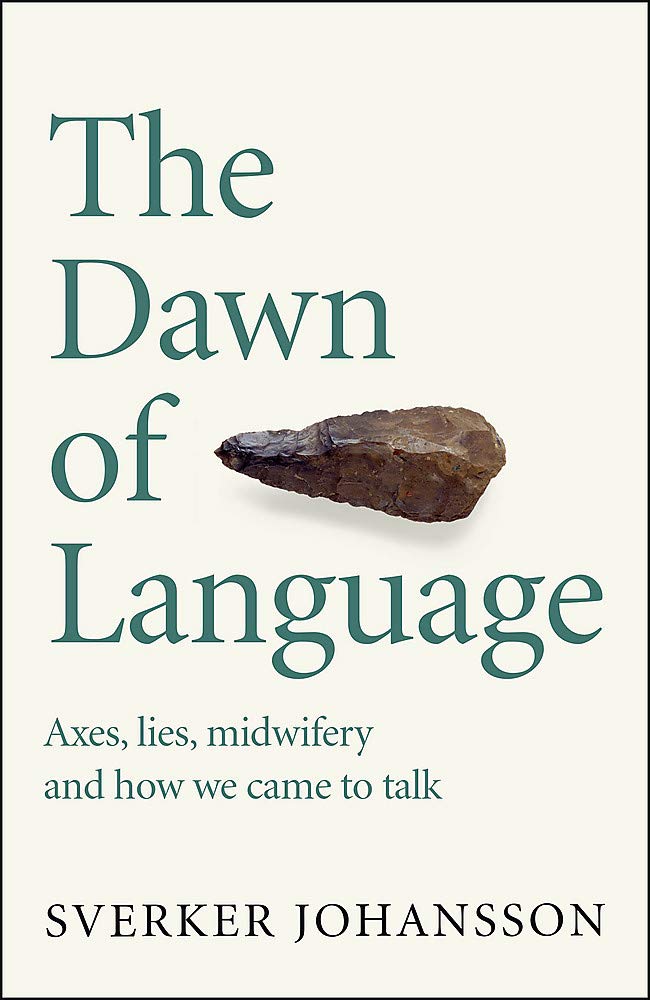
Drawing on evidence from many fields, including archaeology, anthropology, neurology and linguistics, Sverker Johansson weaves these disparate threads together to show how our human ancestors evolved into language users. The Dawn of Language provides a fascinating survey of how grammar came into being and the differences or similarities between languages spoken around the world, before exploring how language eventually emerged in the very remote human past.Our intellectual and physiological changes through the process of evolution both have a bearing on our ability to acquire language. But to what extent is the evolution of language dependent on genes, or on environment? How has language evolved further, and how is it changing now, in the process of globalisation? And which aspects of language ensure that robots are not yet intelligent enough to reconstruct how language has evolved?Johansson's far-reaching, authoritative and research-based approach to language is brought to life through dozens of astonishing examples, both human and animal, in a fascinatingly erudite and entertaining volume for anyone who has ever contemplated not just why we speak the way we do, but why we speak at all.