
Ernest Gellner
Ernest Gellner was a prominent British-Czech philosopher, social anthropologist, and writer on nationalism.
27 Books Written

Words and Things: An Examination of, and an Attack on, Linguistic Philosophy
by Ernest Gellner
Rating: 4.2 ⭐
• 2 recommendations ❤️
When Ernest Gellner was his early thirties, he took it upon himself to challenge the prevailing philosophical orthodoxy of the day, Linguistic Philosophy. Finding a powerful ally in Bertrand Russell, who provided the foreword for this book, Gellner embarked on the project that was to put him on the intellectual map.The first determined attempt to state the premises and operational rules of the movement, Words and Things remains philosophy's most devastating attack on a conventional wisdom to this day.

This thoughtful and penetrating book, addressed to political scientists, sociologists, historians, and anthropologists, interprets nationalism in terms of its social roots, which it locates in industrial social organization. Professor Gellner asserts here that a society's affluence and economic growth depend on innovation, occupational mobility, the effectiveness of the mass media, universal literacy, and an all-embracing educational system based on a shared, standard idiom. These factors, taken together, govern the relationship between culture and the state. Political units that do not conform to the principle, "one state, one culture" feel the strain in the form of nationalistic activity.

A defining force in world history, nationalism remains an inescapable feature of a modern condition. It has underpinned the emergence of many states, and the conflict it has often generated has caused enormous suffering, both directly and indirectly. Nationalism remains a powerful influence today; in the former Yugoslavia and the successor states of the Soviet Union it has instigated great violence and attrocity.In this incisive and provocative book, completed just before his death, Ernest Gellner - described as "one of the last of the great central European polymath intellectuals" by the Financial Times - explores the phenomenon of nationalism, tracing its emergence and roots in the modern industrialized nation state, its links with romanticism and its creation of national myhs. He investigates its various manifestations and reveals how in long established states such as France, it has been relatively benign, while in Eastern Europe in particular - where nationalist feeling preceded the emergence of modern states - its influence has been far more problematic, and at times disastrous. Finally, the book explores the prospects of minimizing the influence of nationalist feeling and cautiously anticipates the possibility of its decline in this decade of continuing atrocities and "ethnic cleansing."Lucid and direct, Gellner's work combines politics, history, philosophy, and anthropolgy with the multidisciplinary flair for which he was renowned. As nationalism continues to inform contemporary politics, often with vicious and tragic results, Gellner's last words on the subject are essential reading.

The main thesis of Postmodernism, Reason and Religion is that we face three ideological options at the present time. One is a return to the genuine and firm faith of religious tradition. Another is the pursuit of a form of relativism which abandons the notion of truth and resigns itself to treating truth as relative to the society or culture in question. The third upholds the view that there is a unique truth, but denies that any society can be firmly in possession of it.How can we account for the extraordinary strength of Islam in the modern world? Are the views of the Enlightenment still an acceptable basis for social order?In Postmodernism, Reason and Religion, Ernest Gellner suggests that we face three ideological options at the present time: a return to the genuine and firm faith of religious tradition; the pursuit of a form of relativism which abandons the notion of truth and resigns itself to treating truth as relative to the society or culture in question, and upholding the view that while perhaps there is a unique truth, no one society can fully possess it.The first option is especially strong in Muslim societies, and the book explores the reason why. Gellner finds the explanation in the relationship between high culture and low culture within Islam, where the high culture, previously the achievement of the minority, has now become the pervasive culture of the entire society. This high culture within Muslim societies performs a function similar to those performed by nationalism elsewhere.The second option is more fully developed in postmodernism in the West. The author is highly critical of this movement, arguing that postmodernism indulges in a kind of subjectivism as a form of expiation for the sins of colonialism. He maintains that the objectivity pursued as an ideal by social science during the colonial period was in fact a tool of domination, and that a subjectivist relativism is a way of moving beyond that mode.The book explores the strengths and weaknesses of the third option. He proposes that this option only works on assumption of inner compromise, and a separation of truth taken seriously as opposed to truth used as cultural decoration.This shrewd and penetrating book, written by one of the world's most highly respected social thinkers, digs into the heart fo the controversy between Islam and the West. It is a superb source of stimulating ideas and sound judgement that will be of particular interest to students of sociology, anthropology, philosophy and Islamic studies.

1. In the BeginningThe Need for Philosophic HistoryThe Structure of HistoryTrinitarianismsProduction, Coercion, CognitionWhich Way Will the Stone Age Vote Swing?The Suspect Witness2. Community to SocietyThe Cognitive Evolution of MankindMultiple SensitivitiesGeneric Types of StrandSocial and Logical CoherenceThe TerminusThe Overall Plot3. The Coming of the OtherPaths of Cognitive TransformationThe Disembodied Word“Platonism”The Indirect RouteThe First UnificationThe Authority of ConceptsPlato’s Sociological Mistakes4. The TensionA Divine OrderChurch and State and their SeparabilityProtestantism, Generic and Specific5. CodificationReformation to EnlightenmentThe Sovreignty of KnowledgeThe Dethronement of the ConceptConcept-Implementing and Instrumental CulturesThe Enlightened Solution and its ProblemsThe Age of Progress, or Operation Bookstrap6. The Coercive Order and Its ErosionPatterns of PowerConditions of the ExitGeneral Summary7. Production, Value and ValidityThe Economic TransformationProduction and CoercionThe Three Stages of EconomyThe Ideological Transition to the Generalized MarketThe Re-Entry ProblemThe Circularity of Enlightened ReasoningObjectivity or Not?8. The New ScienceThe Concept of Culture and the Limits of ReasonEgalitarianismWhat Next?9. Self-ImagesEconomic Power (Wealth as Lever)The New Coercive SystemThe Two Running-MatesThe Right-Wing AlternativeAcorn or GateThe New Social Contract1945 and Some Recent Clauses in the Contract10. ProspectThe Division of Labour and Back AgainThe Future of ProductionThe Future of CognitionThe Future of CoercionSummary of ArgumentNotesIndex

A distinguished scholar's provocative analysis of the political forces transforming post-Communist Eastern Europe. What is filling the void left by the fall of Communism in the ex-Soviet Union and Eastern Europe? In this groundbreaking book, one of Europe's most distinguished social anthropologists addresses this question through an examination of the idea of the civil society, which is rooted in the Enlightenment's belief that society can be organized rationally.

Of all the great world religions, Islam appears to have the most powerful political appeal in the twentieth century. It sustains some severely traditional and conservative regimes, but it is also capable of generating intense revolutionary ardour and of blending with extreme social radicalism. As an agent of political mobilisation, it seems to be overtaking Marxism, arid surpassing all other religions. The present book seeks the roots of this situation in the past. The traditional Muslim society of the arid zone has, in the past, displayed remarkable stability and homogeneity, despite great political fragmentation, and the absence of a centralised religious hierarchy. The book explores the mechanisms which have contributed to this result - a civilisation in which (in the main) weak states co-existed with a strong culture, which had a powerful hold over the populations under its sway. A literate Great Tradition, in the keeping of urban scholars, lived side by side with a more emotive, ecstatic folk tradition, ill tile keeping of holy lineages, religious brotherhoods and freelance saints. One tradition was sustained by the urban trading class and periodically swept the rest of the society in waves of revivalist enthusiasm; the other was based on the multiple functions it performed in rural tribal society and amongst the urban poor. The two traditions were intertwined, yet remained in latent tension which from time to time came to tile surface. The book traces the manner in which the impact of the modern world, acting through colonialism arid industrialisation upset the once stable balance, and helped the erstwhile urban Great Tradition to become the pervasive arid dominant one, culminating in the zealous arid radical Islam which is so prominent now. The argument is both formulated in the abstract and illustrated by a series of case studies and examinations of specific aspects, and critical examinations of rival interpretations.

These essays explore the relationship between culture and politics in the modern world. They range in space from Iran to Algeria, and the eastern marchlands of Europe to the Atlantic, and in time over the nineteenth and twentieth centuries. But they are all inspired by a cluster of linked preoccupations with the nature of the social order now emerging in the world and the kinds of moral and political legitimation it requires and permits. The essays are also linked by Ernest Gellner's distinctive, and highly arresting, intellectual temper and style. The volume will interest a wide range of readers in the social sciences and philosophy.

Since the 17th century, Western society has had a turbulent relationship with Reason. Descartes set out to reorganize all his opinions in the light of Reason, allowing, as Pascal bitterly reproached him, nothing else. In the course of the centuries which followed, the relationship with Reason became the object of a vigorous, often passionate debate. David Hume declared Reason to be impotent; Immanuel Kant observed that men suffered from 'misology' as the result of their disappointed expectations from Reason; G.W.F. Hegel declared that the main insight of philosophy consisted of the realization that Reason masterminded and guided all history. The debate has not remained restricted to philosophy. Max Weber, the most influential modern sociologist, was obsessed with the distinctive role of Reason in Western society, and the part it played in engendering industrialism. Social anthropologists have been preoccupied both with the universality and the diversity of conceptual thought. Emile Durkheim taught them to ask why all men were rational, whilst Max Weber taught sociologists to ask why some men were more rational than others.This book brings together the philosophical, historical and sociological discussions of rationality and strives to make clear the underlying issues and the continuity of the debate in the various disciplines.

The forecast demise of nationalism under the new moral orders of communism and internationalism has proved illusory. In the present century, to an extent greater perhaps than in all others, nationalism has been the dominant force in the affairs of humankind. Why should this have been? Why is it that a national identity should continue to be the aspiration of almost all peoples without one and, at the same time, the justification - in the process of obtaining, securing and expanding it- for casting aside every trace and tradition of civility? In Encounters with Nationalism Ernest Gellner seeks some answers. His approach is to consider first the ideas of the main modern thinkers on the subject, from Marx, List, Malinowski and Carr, to Masaryk, Heidegger, Patocka, Hroch, Havel and Said. He examines the origins, subjects and context of their writings, their interactions with culture and politics, and their influence - both on theory and on events. The range is wide, covering Eastern, Western and Islamic societies, and includes extensive discussions of the related themes of civil society, theocracy, communism, imperialism, capitalism and liberalism. Professor Gellner is never less than trenchant. He is concerned here not only to understand, but to criticize. He confronts several powerful and fashionable notions that fuel and/or attempt to explain contemporary nationalism - among them postcolonialism. On the one hand he exposes their incoherence and irresponsibility; on the other he places them alongside ideas of real currency. Nor does he evade the controversy surrounding the nature of judgement the reader will also find here concise and penetrating discussions of relativism, pluralism, objectivity and the possibility of universal values.

Ernest Gellner explores here the links between anthropology and politics, and shows just how central these are. The recent postmodernist turn in anthropology has been linked to the expiation of colonial guilt. Traditional, functionalist anthropology is characteristically regarded as an accessory to the crime, and anyone critical of the relativistic claims of interpretative anthropology (as Ernest Gellner is) is likely to be charged (as he sometimes is) with being an ex post imperialist. Ernest Gellner argues that cultures are crucially important in human life as constraining systems of meaning. Cultural transition means that the required characteristics are transmitted from generation to generation, leading, he shows, to both greater diversity and to far more rapid change than is possible among species where transmission is primarily by genetic means. But the relative importance of semantic and physical compulsion needs to be explored rather than pre-judged. The weakness of idealism, which at present operates under the name of hermeneutics, is that it underplays the importance of coercion, and that it presents cultures as self-justifying and morally this line of argument, the author demonstrates, is fundamentally flawed.



This volume of essays deals with the problem of relativism, in particular cultural relativism. If our society knows better than other societies, how do we know that it knows better? There is a profound irony in the fact that this self-doubt has become most acute in the one civilisation that has persuaded the rest of the world to emulate it. The claim to cognitive superiority is often restricted, of course, to the limited sphere of natural science and technology; and that immediately raises the second main theme of this volume - the differences between the human and natural sciences. These essays reach towards a new style and mode of enquiry - a mixture of philosophy, history and anthropology - that promises to prove more revealing and fruitful.
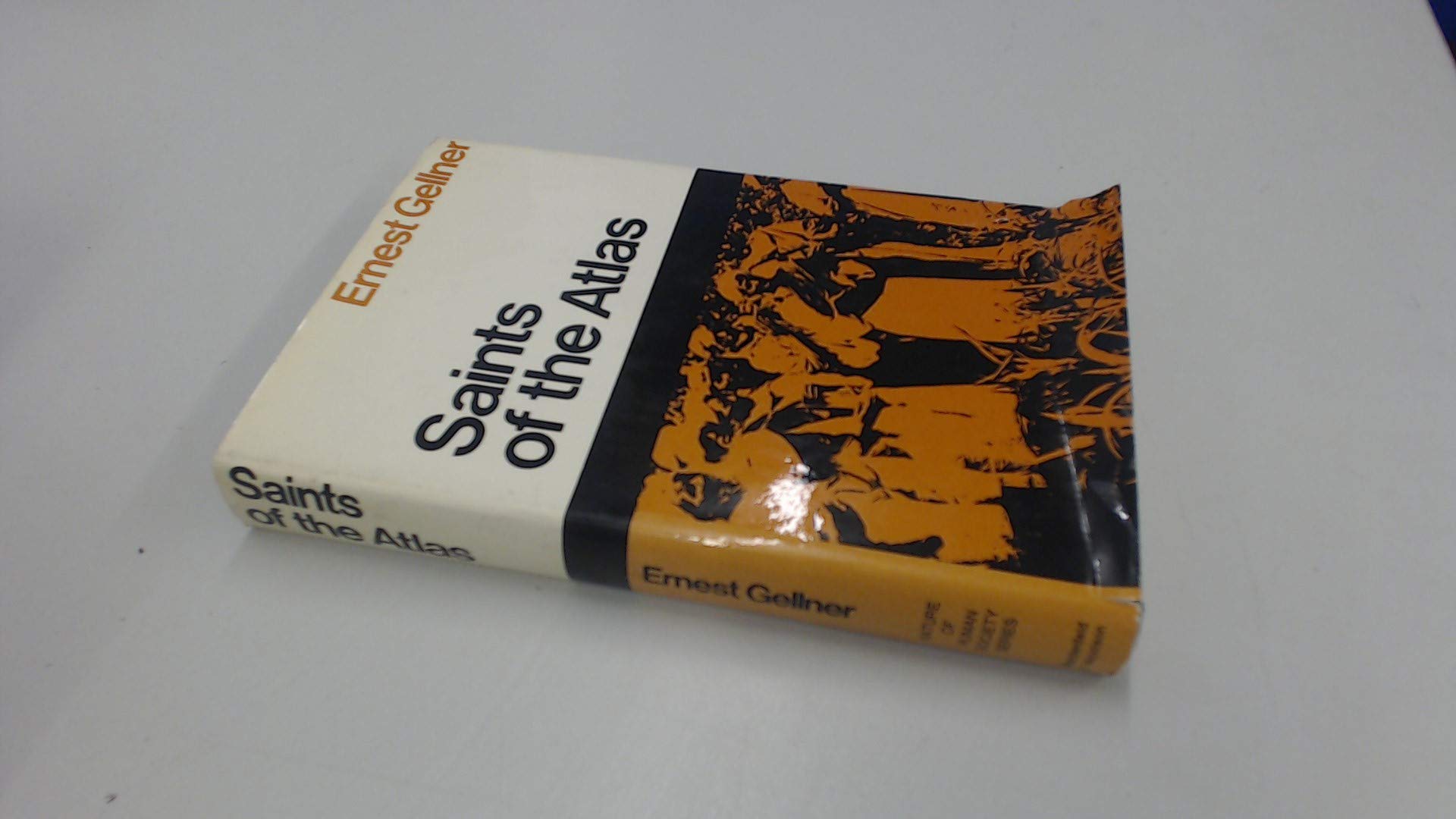
A discussion of the social and political organization of Berber tribes in the Middle East and North Africa.

These essays gather together Gellner's thinking on the connection between philosophy and life and they approach the topic from a number of directions including a discussion of individuals including Chomsky, Piaget and Eysenck.

This collection of essays is concerned with philosophy, politics and society. The first group examines what philosophers such as Hegel, Wittgenstein and Chomsky have said or implied about the nature of society in general. A second group examines the cognitive predicament, questions concerning the nature of the possibility of knowledge, as handled by a thinker such as Descartes, or the Pragmatist tradition. The third group handles the political predicament and deals specifically with problems such as nationalism, the nature of the liberalisation process, the future of the welfare and consumer state and the option facing underdeveloped societies. The essays deal not only with classical theories concerning these problems but also with various recent discussions. The volume will interest many individual philosophers and social theorists and those with a more general interest in our culture and political discussions.

This volume focuses on key conceptual issues in the social sciences, such as Winch's idea of a social science, structuralism, Malinowski and Evans-Pritchard, and the concept of kinship. In particular it deals with such problems as the relationship of nature and culture, the relevance of concepts drawn from within a given society to its understanding, and the relation of theory to time.

The Concept Of Kinship: And Other Essays On Anthropological Method And Explanation
by Ernest Gellner
Rating: 4.3 ⭐
Libro usado en buenas condiciones, por su antiguedad podria contener señales normales de uso

Gellner's political philosophy in these volumes combines the down-to-earth realism of political sociology with a rational treatment of the normative issues of traditional political thought. In these essays Gellner strives to understand the religions of nationalism, communism and democracy, returning again and again to the basic values of the liberal: social tolerance, rational criticism, human decency and justice.

Ernest Gellner made major contributions in very diverse fields, notably philosophy and social anthropology. His attacks on the orthodoxies of his time made it difficult for him to be fully accepted into either of these academic communities, but that suited him well he seemed to enjoy leading a one-man crusade for critical rationalism, defending enlightenment universalism against the rising tides of idealism and relativism. His influence spread far beyond social the fierce tone of the polemics of the 1950s against Oxford philosophers was repeated during the 1990s in tangles in the TLS with the literary critic Edward Said. For Gellner the issues were essentially the the vital need to refute the claim that ideas lead the world.

The Soviet Union has witnessed the first occasion in history in which a sociological theory, namely Marxism, has become the official ideology of a major power and a large and complex society. But as social theory and social research continue to be practised within the Soviet Union a complex relationship inevitably develops between the use of Marxist ideas as official ideology and as part of historical, anthropological and sociological sociological research. These studies explore this tangled relationship in connection with a number of special topics, such as an account of the so called "Asiatic mode of production", the problem of whether Marxism can accommodate more than one line of historical materialism and the manner in which historical materialism can function as a satisfactory scheme of sociological explanation. The work throws considerable light on the problems currently facing Soviet society.
Words and Things: A Critical Account of Linguistic Philosophy and a Study in Ideology
by Ernest Gellner
When Ernest Gellner was his early thirties, he took it upon himself to challenge the prevailing philosophical orthodoxy of the day, Linguistic Philosophy. Finding a powerful ally in Bertrand Russell, who provided the foreword for this book, Gellner embarked on the project that was to put him on the intellectual map. "Words and Things" was the first determined attempt to state the premises and operational rules of the movement. The basic charge was that Linguistic Philosophy was an aberrant, trivializing perversion of good philosophical practice, substituting, in place of honest theorizing and argument, pedantic scrutiny of intrinsically uninteresting detail. When this now-famous critique originally appeared in 1959, it created a scandal, causing a flurry of correspondence in the Times. "Words and Things" remains the most devastating attack on a conventional wisdom in philosophy to this day.


1968 Pelican 1st, spine creased, cover worn, page edges tanned, owner's inscription. Shipped from the U.K. All orders received before 3pm sent that weekday.
