
Umberto Eco
Umberto Eco was an Italian medievalist, philosopher, semiotician, novelist, cultural critic, and political and social commentator. In English, he is best known for his popular 1980 novel The Name of the Rose, a historical mystery combining semiotics in fiction with biblical analysis, medieval studies and literary theory, as well as Foucault's Pendulum, his 1988 novel which touches on similar themes. Eco wrote prolifically throughout his life, with his output including children's books, translations from French and English, in addition to a twice-monthly newspaper column "La Bustina di Minerva" (Minerva's Matchbook) in the magazine L'Espresso beginning in 1985, with his last column (a critical appraisal of the Romantic paintings of Francesco Hayez) appearing 27 January 2016. At the time of his death, he was an Emeritus professor at the University of Bologna, where he taught for much of his life. In the 21st century, he has continued to gain recognition for his 1995 essay "Ur-Fascism", where Eco lists fourteen general properties he believes comprise fascist ideologies.
31 Books Written

Bored with their work, three Milanese editors cook up "the Plan," a hoax that connects the medieval Knights Templar with other occult groups from ancient to modern times. This produces a map indicating the geographical point from which all the powers of the earth can be controlled--a point located in Paris, France, at Foucault's Pendulum. But in a fateful turn the joke becomes all too real, and when occult groups, including Satanists, get wind of the Plan, they go so far as to kill one of the editors in their quest to gain control of the earth.Orchestrating these and other diverse characters into his multilayered semiotic adventure, Eco has created a superb cerebral entertainment.
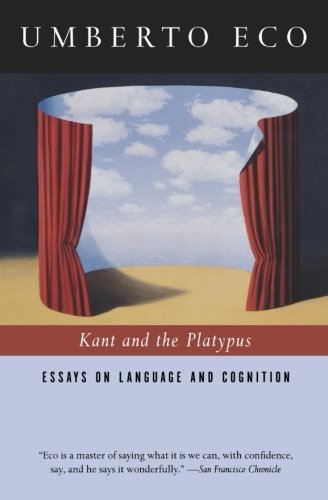
Kant and the Platypus: Essays on Language and Cognition
by Umberto Eco
Rating: 3.8 ⭐
• 2 recommendations ❤️
How do we know a cat is a cat? And why do we call it a cat? How much of our perception of things is based on cognitive ability, and how much on linguistic resources? Here, in six remarkable essays, Umberto Eco explores in depth questions of reality, perception, and experience. Basing his ideas on common sense, Eco shares a vast wealth of literary and historical knowledge, touching on issues that affect us every day. At once philosophical and amusing, Kant and the Platypus is a tour of the world of our senses, told by a master of knowing what is real and what is not.

The year is 1327. Franciscans in a wealthy Italian abbey are suspected of heresy, and Brother William of Baskerville arrives to investigate. When his delicate mission is suddenly overshadowed by seven bizarre deaths, Brother William turns to the logic of Aristotle, the theology of Aquinas, and the empirical insights of Roger Bacon to find the killer. He collects evidence, deciphers secret symbols and coded manuscripts, and digs into the eerie labyrinth of the abbey (“where the most interesting things happen at night”) armed with a wry sense of humor and a ferocious curiosity.

Umberto Eco’s groundbreaking and much-acclaimed first illustrated book has been a critical success since its first publication in 2004. What is beauty? Umberto Eco, among Italy’s finest and most important contemporary thinkers, explores the nature, the meaning, and the very history of the idea of beauty in Western culture. The profound and subtle text is lavishly illustrated with abundant examples of sublime painting and sculpture and lengthy quotations from writers and philosophers. This is the first paperback edition of History of Beauty, making this intellectual and philosophical journey with one of the world’s most acclaimed thinkers available in a more compact and affordable format.From the Trade Paperback edition

19th-century Europe—from Turin to Prague to Paris—abounds with the ghastly and the mysterious. Conspiracies rule history. Jesuits plot against Freemasons. Italian republicans strangle priests with their own intestines. French criminals plan bombings by day and celebrate Black Masses at night. Every nation has its own secret service, perpetrating forgeries, plots, and massacres. From the unification of Italy to the Paris Commune to the Dreyfus Affair to The Protocols of the Elders of Zion, Europe is in tumult and everyone needs a scapegoat. But what if, behind all of these conspiracies both real and imagined, lay one lone man? What if that evil genius created its most infamous document? Eco takes his readers here on an unforgettable journey through the underbelly of world-shattering events. This is Eco at his most exciting, a book immediately hailed as his masterpiece.

It is April 1204, and Constantinople, the splendid capital of the Byzantine Empire, is being sacked and burned by the knights of the Fourth Crusade. Amid the carnage and confusion, one Baudolino saves a historian and high court official from certain death at the hands of the crusading warriors and proceeds to tell his own fantastical story.Born a simple peasant in northern Italy, Baudolino has two major gifts-a talent for learning languages and a skill in telling lies. When still a boy he meets a foreign commander in the woods, charming him with his quick wit and lively mind. The commander-who proves to be Emperor Frederick Barbarossa-adopts Baudolino and sends him to the university in Paris, where he makes a number of fearless, adventurous friends.Spurred on by myths and their own reveries, this merry band sets out in search of Prester John, a legendary priest-king said to rule over a vast kingdom in the East-a phantasmagorical land of strange creatures with eyes on their shoulders and mouths on their stomachs, of eunuchs, unicorns, and lovely maidens. With dazzling digressions, outrageous tricks, extraordinary feeling, and vicarious reflections on our postmodern age, this is Eco the storyteller at his brilliant best.

In the mold of his acclaimed "History of Beauty," renowned cultural critic Umberto Eco's "On Ugliness" is an exploration of the monstrous and the repellant in visual culture and the arts. What is the voyeuristic impulse behind our attraction to the gruesome and the horrible? Where does the magnetic appeal of the sordid and the scandalous come from? Is ugliness also in the eye of the beholder?Eco's encyclopedic knowledge and captivating storytelling skills combine in this ingenious study of the Ugly, revealing that what we often shield ourselves from and shun in everyday life is what we're most attracted to subliminally. Topics range from Milton's Satan to Goethe's Mephistopheles; from witchcraft and medieval torture tactics to martyrs, hermits, and penitents; from lunar births and disemboweled corpses to mythic monsters and sideshow freaks; and from Decadentism and picturesque ugliness to the tacky, kitsch, and camp, and the aesthetics of excess and vice. With abundant examples of painting and sculpture ranging from ancient Greek amphorae to Bosch, Brueghel, and Goya among others, and with quotations from the most celebrated writers and philosophers of each age, this provocative discussion explores in-depth the concepts of evil, depravity, and darkness in art and literature.

After a violent storm in the South Pacific in the year 1643, Roberto della Griva finds himself shipwrecked-on a ship. Swept from the Amaryllis, he has managed to pull himself aboard the Daphne, anchored in the bay of a beautiful island. The ship is fully provisioned, he discovers, but the crew is missing.As Roberto explores the different cabinets in the hold, he remembers chapters from his Ferrante, his imaginary evil brother; the siege of Casale, that meaningless chess move in the Thirty Years' War in which he lost his father and his illusions; and the lessons given him on Reasons of State, fencing, the writing of love letters, and blasphemy.In this fascinating, lyrical tale, Umberto Eco tells of a young dreamer searching for love and meaning; and of a most amazing old Jesuit who, with his clocks and maps, has plumbed the secrets of longitudes, the four moons of Jupiter, and the Flood.
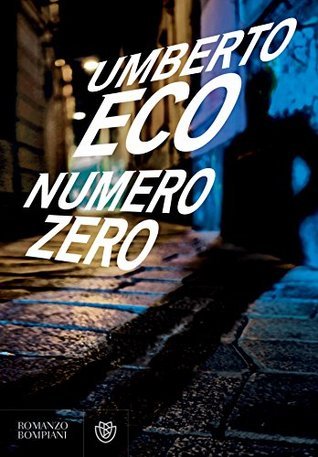
Una redazione raccogliticcia che prepara un quotidiano destinato, più che all’informazione, al ricatto, alla macchina del fango, a bassi servizi per il suo editore. Un redattore paranoico che, aggirandosi per una Milano allucinata (o allucinato per una Milano normale), ricostruisce la storia di cinquant’anni sullo sfondo di un piano sulfureo costruito intorno al cadavere putrefatto di uno pseudo Mussolini. E nell’ombra Gladio, la P2, l’assassinio di papa Luciani, il colpo di stato di Junio Valerio Borghese, la Cia, i terroristi rossi manovrati dagli uffici affari riservati, vent’ anni di stragi e di depistaggi, un insieme di fatti inspiegabili che paiono inventati sino a che una trasmissione della BBC non prova che sono veri, o almeno che sono ormai confessati dai loro autori. E poi un cadavere che entra in scena all’improvviso nella più stretta e malfamata via di Milano. Un’esile storia d’amore tra due protagonisti perdenti per natura, un ghost writer fallito e una ragazza inquietante che per aiutare la famiglia ha abbandonato l’università e si è specializzata nel gossip su affettuose amicizie, ma ancora piange sul secondo movimento della Settima di Beethoven. Un perfetto manuale per il cattivo...

International bestselling and award-winning author Umberto Eco's illustrated novel The Mysterious Flame of Queen Loana is "an insidiously witty and provocative story" (Los Angeles Times).Yambo, a sixtyish rare-book dealer who lives in Milan, has suffered a loss of memory — he can remember the plot of every book he has ever read, every line of poetry, but he no longer knows his own name, doesn't recognize his wife or his daughters, and remembers nothing about his parents or his childhood. In an effort to retrieve his past, he withdraws to the family home somewhere in the hills between Milan and Turin.There, in the sprawling attic, he searches through boxes of old newspapers, comics, records, photo albums, and adolescent diaries. And so Yambo relives the story of his Mussolini, Catholic education and guilt, Josephine Baker, Flash Gordon, Fred Astaire. His memories run wild, and the life racing before his eyes takes the form of a graphic novel. Yambo struggles through the frames to capture one simple, innocent that of his first love.A fascinating, abundant novel — wide-ranging, nostalgic, funny, full of heart — from the incomparable Eco.

“Ritengo sia possibile indicare una lista di caratteristiche tipiche di quello che vorrei chiamare l’‘Ur-Fascismo’, o il ‘fascismo eterno’. L’Ur-Fascismo è ancora intorno a noi, talvolta in abiti civili. Sarebbe così confortevole, per noi, se qualcuno si affacciasse sulla scena del mondo e ‘Voglio riaprire Auschwitz, voglio che le camicie nere sfilino ancora in parata sulle piazze italiane!’ Ahimè, la vita non è così facile. L’Ur-Fascismo può ancora tornare sotto le spoglie più innocenti. Il nostro dovere è di smascherarlo e di puntare l’indice su ognuna delle sue nuove forme – ogni giorno, in ogni parte del mondo.” - Umberto Eco
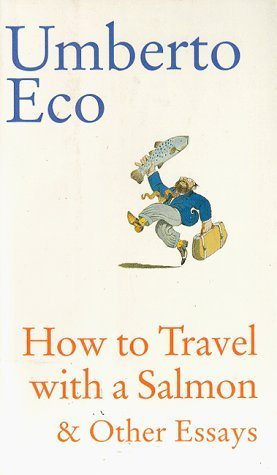
Once a columnist for an Italian literary magazine, Eco now shares his acute and highly entertaining sense of the absurd in modern life in these essays about militarism, computerese, cowboy and Indian movies, art criticism, librarians, semiotics, and much more--including himself.
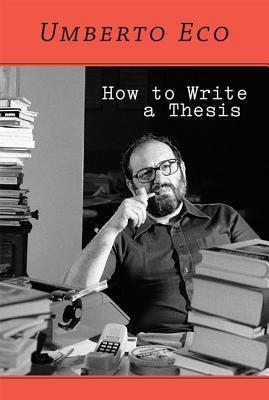
By the time Umberto Eco published his best-selling novel "The Name of the Rose," he was one of Italy's most celebrated intellectuals, a distinguished academic and the author of influential works on semiotics. Some years before that, in 1977, Eco published a little book for his students, "How to Write a Thesis," in which he offered useful advice on all the steps involved in researching and writing a thesis -- from choosing a topic to organizing a work schedule to writing the final draft. Now in its twenty-third edition in Italy and translated into seventeen languages, "How to Write a Thesis "has become a classic. Remarkably, this is its first, long overdue publication in English.Eco's approach is anything but dry and academic. He not only offers practical advice but also considers larger questions about the value of the thesis-writing exercise. "How to Write a Thesis" is unlike any other writing manual. It reads like a novel. It is opinionated. It is frequently irreverent, sometimes polemical, and often hilarious. Eco advises students how to avoid "thesis neurosis" and he answers the important question "Must You Read Books?" He reminds students "You are not Proust" and "Write everything that comes into your head, but only in the first draft." Of course, there was no Internet in 1977, but Eco's index card research system offers important lessons about critical thinking and information curating for students of today who may be burdened by Big Data."How to Write a Thesis" belongs on the bookshelves of students, teachers, writers, and Eco fans everywhere. Already a classic, it would fit nicely between two other classics: "Strunk and White" and "The Name of the Rose."This MIT Press edition will be available in three different cover colors.ContentsThe Definition and Purpose of a ThesisChoosing the TopicConducting ResearchThe Work Plan and the Index CardsWriting the ThesisThe Final Draft

In Six Walks in the Fictional Woods Umberto Eco shares with us his Secret Life as a reader―his love for MAD magazine, for Scarlett O'Hara, for the nineteenth-century French novelist Nerval's Sylvie , for Little Red Riding Hood, Agatha Christie, Agent 007 and all his ladies. We see, hear, and feel Umberto Eco, the passionate reader who has gotten lost over and over again in the woods, loved it, and come back to tell the tale, The Tale of Tales. Eco tells us how fiction works, and he also tells us why we love fiction so much. This is no deconstructionist ripping the veil off the Wizard of Oz to reveal his paltry tricks, but the Wizard of Art himself inviting us to join him up at his level, the Sorcerer inviting us to become his apprentice.

This is a collection of essays written in various times and contexts, in which Umberto Eco considers many topics: holography, wax museums, "The Return of the Middle Ages", Superman and Casablanca, Federico Fellini and Michelangelo Antonioni, the survival of ancient African religious sects and cults in contemporary Brazil, Jim Jones and his murderous temple, the Red Brigades and terrorism in general, Marchall McLuhan and Charles Manson, Woody Allen and St Thomas Aquinas, the social and personal implications of snug-fitting blue jeans and the secret meaning of spectator sports...

The perfect gift for book lovers: a beautifully designed hardcover in which two of the world's great men have a delightfully rambling conversation about the future of the book in the digital era, and decide it is here to stay.These days it is almost impossible to get away from discussions of whether the book will survive the digital revolution. Blogs, tweets and newspaper articles appear daily on the subject, many of them repetitive, most of them admitting they don't know what will happen. Amidst the twittering, the thoughts of Jean-Claude Carrière and Umberto Eco come as a breath of fresh air. There are few people better placed to discuss the past, present and future of the book. Both of them avid book collectors with a deep understanding of history, they have explored through their work, both written and visual, the many and varied ways in which ideas have been represented through the ages.This beautifully produced book, an object of desire in itself, is the transcription of a long conversation between the two men in which they discuss a vast range of subjects, from what can be defined as the first book, to the idea of the library, the burning of books both accidental and deliberate, and what will happen to knowledge and memory when infinite amounts of information are available at the click of a mouse. En route there are delightful digressions into personal anecdote about everything from Eco's first computer to the book Carrière is most sad to have sold.Readers will close this book feeling that they have had the privilege of eavesdropping on an intimate discussion between two great minds. And while, as Carrière says, the one certain thing about the future is that it is unpredictable, it is clear from this conversation that, in some form or other, the book will survive. After all, as Eco says: like the spoon, once invented, it cannot be bettered.

In this collection of essays and addresses delivered over the course of his illustrious career, Umberto Eco seeks "to understand the chemistry of [his] passion" for the word. From musings on Ptolemy and "the force of the false" to reflections on the experimental writing of Borges and Joyce, Eco's luminous intelligence and encyclopedic knowledge are on dazzling display throughout. And when he reveals his own ambitions and superstitions, his authorial anxieties and fears, one feels like a secret sharer in the garden of literature to which he so often alludes. Remarkably accessible and unfailingly stimulating, this collection exhibits the diversity of interests and the depth of knowledge that have made Eco one of the world's leading writers. On some functions of literature --A reading of the Paradiso --On the style of The communist manifesto --The mists of the Valoi --Wilde : parados and aphorism --A portrait of the artist as bachelor --Between La Mancha and Babel --Borges and my anxiety of influence --On Camporesi : blood, body, life --On symbolism --On style --Les Semaphores sous la Pluie --The flaws in the form --Intertextual irony and levels of reading --The Poetics and us --The American myth in three anti-American generations --The power of falsehood --How I write

An internationally celebrated author of The Name of the Rose and a Vatican cardinal debate issues of religion, spirituality, and philosophy, asking why belief is important, and moving on to ethics, abortion, Catholicism, women, and the apocalypse. 45,000 first printing.

Crisi delle ideologie, crisi dei partiti, individualismo sfrenato... Questo è l’ambiente – ben noto – in cui ci muoviamo: una società liquida, dove non sempre è facile trovare una stella polare (anche se è facile trovare tante stelle e stellette).Di questa società troviamo qui i volti più familiari: le maschere della politica, le ossessioni mediatiche di visibilità che tutti (o quasi) sembriamo condividere, la vita simbiotica coi nostri telefonini, la mala educazione. E naturalmente molto altro, che Umberto Eco ha raccontato regolarmente nelle sue Bustine di Minerva.È una società, la società liquida, in cui il non senso sembra talora prendere il sopravvento sulla razionalità, con irripetibili effetti comici certo, ma con conseguenze non propriamente rassicuranti. Confusione, sconnessione, profluvi di parole, spesso troppo tangenti ai luoghi comuni.“Pape Satàn, pape Satàn aleppe”, diceva Dante nell’Inferno (VII, 1), tra meraviglia, dolore, ira, minaccia, e forse ironia.
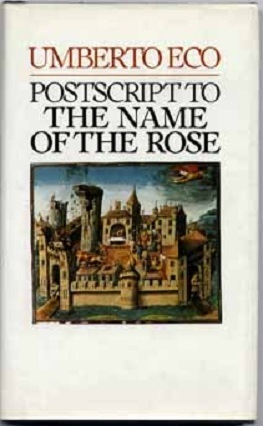
This book stems from Umberto Eco's account of the genesis of his extraordinary novel, The Name of the Rose, but, like the novel itself, it goes far beyond the particular: '...in March 1978 ... I had the urge to poison a monk.' Along the way, it touches on bad books, ideal readers, historical form, and the metaphysics of the detective story.

This is a collection of parodies by the author of The Name of the Rose and Foucault's Pendulum. Professor Anouk Ooma of Prince Joseph's Land University addresses his colleagues on recent archaeological findings that shed light on the poetry of Italy before the Explosion, Columbus' landing in the New World is covered by TV reporters and structural analysis of the art of striptease as performed by Lilly Niagara of the Crazy Horse.

Embracing the web of multiculturalism that has become a fact of contemporary life from New York to New Delhi, Eco argues that we are more connected to people of other traditions and customs than ever before, making tolerance the ultimate value in today's world. What good does war do in a world where the flow of goods, services, and information is unstoppable, and the enemy is always behind the lines? In the most personal of the essays, Eco recalls experiencing liberation from fascism in Italy as a boy, and examines the various historical forms of fascism, always with an eye toward such ugly manifestations today. And finally, in an intensely personal open letter to an Italian cardinal, Eco reflects on a question underlying all the reflections in the book--what does it mean to be moral or ethical when one doesn't believe in God?

Inventing the Enemy covers a wide range of topics on which Umberto Eco has written and lectured for the past ten years, from a disquisition on the theme that runs through his most recent novel, The Prague Cemetery —every country needs an enemy, and if it doesn’t have one, must invent it—to a discussion of ideas that have inspired his earlier novels. Along the way, he takes us on an exploration of lost islands, mythical realms, and the medieval world. Eco also sheds light on the indignant reviews of James Joyce’s Ulysses by fascist journalists of the 1920s and 1930s, and provides a lively examination of Saint Thomas Aquinas’s notions about the soul of an unborn child, censorship, violence, and WikiLeaks. These are essays full of passion, curiosity, and obsessions by one of the world’s most esteemed scholars and critically acclaimed, best-selling novelists.

A fascinating illustrated tour of the fabled places in literature and folklore that have awed, troubled, and eluded us through the ages. From the epic poets of antiquity to contemporary writers of science fiction, from the authors of the Holy Scriptures to modern raconteurs of fairy tales, writers and storytellers through the ages have invented imaginary and mythical lands, projecting onto them all of our human dreams, ideals, and fears. In the tradition of his acclaimed History of Beauty, On Ugliness, and The Infinity of Lists, renowned writer and cultural critic Umberto Eco leads us on a beautifully illustrated journey through these lands of myth and invention, showing us their inhabitants, the passions that rule them, their heroes and antagonists, and, above all, the importance they hold for us. He explores this human urge to create such places, the utopias and dystopias where our imagination can confront things that are too incredible or challenging for our limited real world. Illuminated with more than 300 color images, The Book of Legendary Lands is both erudite and thoroughly enjoyable, bringing together disparate elements of our shared literary legacy in a way only Umberto Eco can. Homer’s poems and other ancient and medieval texts are presented side by side with Gulliver’s Travels and Alice in Wonderland; Tolkien shares space with Marco Polo’s Books of the Marvels of the World; films complement poems, and comics inform novels. Together, these stories have influenced the sensibilities and worldview of all of us.

In this authoritative, lively book, the celebrated Italian novelist and philosopher Umberto Eco presents a learned summary of medieval aesthetic ideas. Juxtaposing theology and science, poetry and mysticism, Eco explores the relationship that existed between the aesthetic theories and the artistic experience and practice of medieval culture. “[A] delightful study. . . . [Eco’s] remarkably lucid and readable essay is full of contemporary relevance and informed by the energies of a man in love with his subject.” —Robert Taylor, Boston Globe“The book lays out so many exciting ideas and interesting facts that readers will find it gripping.” — Washington Post Book World “A lively introduction to the subject.” —Michael Camille, The Burlington Magazine“If you want to become acquainted with medieval aesthetics, you will not find a more scrupulously researched, better written (or better translated), intelligent and illuminating introduction than Eco’s short volume.” —D. C. Barrett, Art Monthly

Serendipities is a careful unraveling of the fabulous and the false, a brilliant exposition of how unanticipated truths often spring from false ideas. From Leibniz's belief that the I Ching illustrated the principles of calculus to Marco Polo's mistaking a rhinoceros for a unicorn, Umberto Eco offers a dazzling tour of intellectual history, illuminating the ways in which we project the familiar onto the strange to make sense of the world. Uncovering layers of mistakes that have shaped human history, Eco offers with wit and clarity such instances as Columbus's voyage to the New World, the fictions that grew around the Rosicrucians and Knights Templar, and the linguistic endeavors to recreate the language of Babel, to show how serendipities can evolve out of mistakes. With erudition, anecdotes, and scholarly rigor, this new collection of essays is sure to entertain and enlighten any reader with a passion for the curious history of languages and ideas.

Umberto Eco published his first novel, The Name of the Rose, in 1980, when he was nearly fifty. In these "confessions," the author, now in his late seventies, looks back on his long career as a theorist and his more recent work as a novelist, and explores their fruitful conjunction.He begins by exploring the boundary between fiction and nonfiction--playfully, seriously, brilliantly roaming across this frontier. Good nonfiction, he believes, is crafted like a whodunnit, and a skilled novelist builds precisely detailed worlds through observation and research. Taking us on a tour of his own creative method, Eco recalls how he designed his fictional realms. He began with specific images, made choices of period, location, and voice, composed stories that would appeal to both sophisticated and popular readers. The blending of the real and the fictive extends to the inhabitants of such invented worlds. Why are we moved to tears by a character's plight? In what sense do Anna Karenina, Gregor Samsa, and Leopold Bloom "exist"?At once a medievalist, philosopher, and scholar of modern literature, Eco astonishes above all when he considers the pleasures of enumeration. He shows that the humble list, the potentially endless series, enables us to glimpse the infinite and approach the ineffable. This "young novelist" is a master who has wise things to impart about the art of fiction and the power of words.

..". the greatest contribution to [semiotics] since the pioneering work of C. S. Peirce and Charles Morris." --Journal of Aesthetics and Art Criticism..". draws on philosophy, linguistics, sociology, anthropology and aesthetics and refers to a wide range of scholarship... raises many fascinating questions." --Language in Society..". a major contribution to the field of semiotic studies." --Robert Scholes, Journal of Aesthetics and Art Criticism..". the most significant text on the subject published in the English language that I know of." --Arthur Asa Berger, Journal of CommunicationEco's treatment demonstrates his mastery of the field of semiotics. It focuses on the twin problems of the doctrine of signs--communication and signification--and offers a highly original theory of sign production, including a carefully wrought typology of signs and modes of production.

In this book Umberto Eco argues that translation is not about comparing two languages, but about the interpretation of a text in two different languages, thus involving a shift between cultures. An author whose works have appeared in many languages, Eco is also the translator of G?rard de Nerval's Sylvie and Raymond Queneau's Exercices de style from French into Italian. In Experiences in Translation he draws on his substantial practical experience to identify and discuss some central problems of translation. As he convincingly demonstrates, a translation can express an evident deep sense of a text even when violating both lexical and referential faithfulness. Depicting translation as a semiotic task, he uses a wide range of source materials as illustration: the translations of his own and other novels, translations of the dialogue of American films into Italian, and various versions of the Bible. In the second part of his study he deals with translation theories proposed by Jakobson, Steiner, Peirce, and others.Overall, Eco identifies the different types of interpretive acts that count as translation. An enticing new typology emerges, based on his insistence on a common-sense approach and the necessity of taking a critical stance.

Come viaggiare con un salmone è un libro di istruzioni. Istruzioni sui generis, date da un maestro d'eccezione come Umberto Eco per situazioni molto particolari: come imparare a fare vacanze intelligenti, evitare malattie contagiose, mangiare in aereo, viaggiare con un salmone al seguito, e molto altro. È anche e contemporaneamente un libro di Bustine di Minerva, di riflessioni divertite, stralunate, pungenti, capaci di smascherare l'attualità come solo Eco sa fare. Un volume che affianca ai testi inediti una scelta d'autore di testi del passato, per guidarci nella selva delle nostre giornate dove affrontiamo instancabilmente problemi, ora leggeri ora serissimi.

En esta serie de ensayos magistrales sobre la cultura de masas -en los que se analiza la estructura del mal gusto, la lectura de comics, el mito de Superman, la canción de consumo, el papel de los medios audiovisuales como instrumento de información o el influjo de la televisión en el mundo de hoy-, Eco se plantea el problema central de la doble postura ante la cultura de masas : la de los apocalípticos , que ven en ella la «anticultura», el signo de una caída irrecuperable, y la de los integrados , que creen con optimismo que estamos viviendo una magnífica generalización del ámbito cultural.