Loading themes...
Explore the best books about Atheism theme.

The Age of Reason represents the results of years of study and reflection by Thomas Paine on the place of religion in society. Paine wrote: "Of all the tyrannies that affect mankind, tyranny in religion is the worst; every other species of tyranny is limited to the world we live in; but this attempts to stride beyond the grave, and seeks to pursue us into eternity." The cool rationale of Paine's The Age of Reason influenced religious thinking throughout the world; and its pervasive influence continues to the present day.
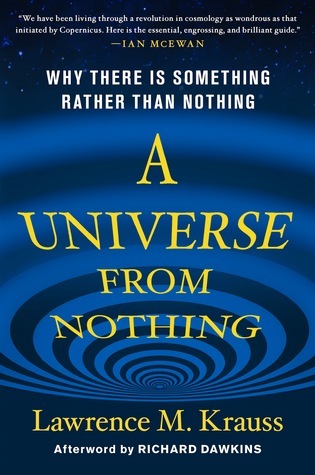
Bestselling author and acclaimed physicist Lawrence Krauss offers a paradigm-shifting view of how everything that exists came to be in the first place.“Where did the universe come from? What was there before it? What will the future bring? And finally, why is there something rather than nothing?”One of the few prominent scientists today to have crossed the chasm between science and popular culture, Krauss describes the staggeringly beautiful experimental observations and mind-bending new theories that demonstrate not only can something arise from nothing, something will always arise from nothing. With a new preface about the significance of the discovery of the Higgs particle, A Universe from Nothing uses Krauss’s characteristic wry humor and wonderfully clear explanations to take us back to the beginning of the beginning, presenting the most recent evidence for how our universe evolved—and the implications for how it’s going to end. Provocative, challenging, and delightfully readable, this is a game-changing look at the most basic underpinning of existence and a powerful antidote to outmoded philosophical, religious, and scientific thinking.

Belief in free will touches nearly everything that human beings value. It is difficult to think about law, politics, religion, public policy, intimate relationships, morality—as well as feelings of remorse or personal achievement—without first imagining that every person is the true source of his or her thoughts and actions. And yet the facts tell us that free will is an illusion.In this enlightening book, Sam Harris argues that this truth about the human mind does not undermine morality or diminish the importance of social and political freedom, but it can and should change the way we think about some of the most important questions in life.

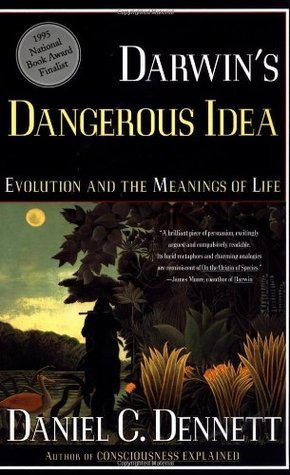
In a book that is both groundbreaking and accessible, Daniel C. Dennett, whom Chet Raymo of The Boston Globe calls "one of the most provocative thinkers on the planet," focuses his unerringly logical mind on the theory of natural selection, showing how Darwin's great idea transforms and illuminates our traditional view of humanity's place in the universe. Dennett vividly describes the theory itself and then extends Darwin's vision with impeccable arguments to their often surprising conclusions, challenging the views of some of the most famous scientists of our day.

For almost 1,500 years, the New Testament manuscripts were copied by hand––and mistakes and intentional changes abound in the competing manuscript versions. Religious and biblical scholar Bart Ehrman makes the provocative case that many of our widely held beliefs concerning the divinity of Jesus, the Trinity, and the divine origins of the Bible itself are the results of both intentional and accidental alterations by scribes.In this compelling and fascinating book, Ehrman shows where and why changes were made in our earliest surviving manuscripts, explaining for the first time how the many variations of our cherished biblical stories came to be, and why only certain versions of the stories qualify for publication in the Bibles we read today. Ehrman frames his account with personal reflections on how his study of the Greek manuscripts made him abandon his once ultra–conservative views of the Bible.

People commonly view evolution as a process of competition between individuals—known as “survival of the fittest”—with the individual representing the “unit of selection.” Richard Dawkins offers a controversial reinterpretation of that idea in The Extended Phenotype, now being reissued to coincide with the publication of the second edition of his highly-acclaimed The Selfish Gene. He proposes that we look at evolution as a battle between genes instead of between whole organisms. We can then view changes in phenotypes—the end products of genes, like eye color or leaf shape, which are usually considered to increase the fitness of an individual—as serving the evolutionary interests of genes.Dawkins makes a convincing case that considering one’s body, personality, and environment as a field of combat in a kind of “arms race” between genes fighting to express themselves on a strand of DNA can clarify and extend the idea of survival of the fittest. This influential and controversial book illuminates the complex world of genetics in an engaging, lively manner.

In this fascinating story of evolution, religion, politics, and personalities, Matthew Chapman captures the story behind the headlines in the debate over God and science in America In Kitzmiller v. Dover Board of Education , decided in late 2005, a Republican judge rendered a surprising verdict in a case that pitted the teaching of intelligent design (sometimes known as "creationism in a lab coat") against the teaching of evolution. Taking place in a small Pennsylvania school district, the case had national repercussions, all the way up to President Bush, who said he believed intelligent design should be taught as "an alternative theory" to evolution. Matthew Chapman, the great-great-grandson of Charles Darwin, spent several months covering the trial from beginning to end. Through his in-depth encounters with the participants—creationists, preachers, teachers, scientists on both sides of the issue, lawyers, theologians, the judge, and the eleven parents who resisted the fundamentalist proponents of intelligent design—Chapman tells a sometimes terrifying, often hilarious, and above all moving story of ordinary people doing battle in America over the place of religion and science in modern life. Written with a filmaker's eye for character and detail, and including insights only a descendent of Darwin could bring forth, Chapman paints an entertaining, yet disturbing picture of America today.

The reference to the Antichrist is not intended to refer to the biblical Antichrist but is rather an attack on the "slave morality" and apathy of Western Christianity. Nietzsche's basic claim is that Christianity is a poisoner of western culture and perversion of the words of and practice of Jesus. Throughout the text, Nietzsche is very critical of institutionalized religion and its priest class, from which he himself was descended. The majority of the book is a systematic attack upon the interpretations of Christ's words by St. Paul and those who followed him. Nietzsche claimed in the Foreword to have written the book for a very limited readership. In order to understand the book, he asserted that the reader "... must be honest in intellectual matters to the point of hardness to so much as endure my seriousness, my passion." The reader should be above politics and nationalism. Also, the usefulness or harmfulness of truth should not be a concern. Characteristics such as "Strength which prefers questions for which no one today is sufficiently daring; courage for the forbidden" are also needed. He disdained all other readers.

In his discussion of natural theology (arguments to prove the existence of God) and natural atheology (arguments for the falsehood of theistic belief) Plantinga focuses on two of the traditional arguments: the ontological argument as an example of natural theology, and the problem of evil as the most important representative of natural atheology. Accessible to serious general readers.

In the bestselling tradition of The Death of Common Sense and On Bullshit, Harris offers a concise and clear articulation of an ideological position that many relate to but few dare say, in an impassioned presentation that will stand as a benchmark in an ongoing cultural debate for years to come.

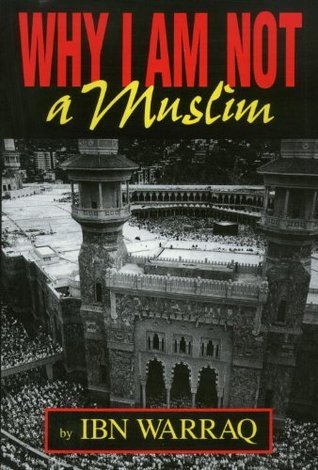
Those who practice the Muslim faith have resisted examinations of their religion. They are extremely guarded about their religion, and what they consider blasphemous acts by skeptical Muslims and non-Muslims alike has only served to pique the world's curiosity. This critical examination reveals an unflattering picture of the faith and its practitioners. Nevertheless, it is the truth, something that has either been deliberately concealed by modern scholars or buried in obscure journals accessible only to a select few.

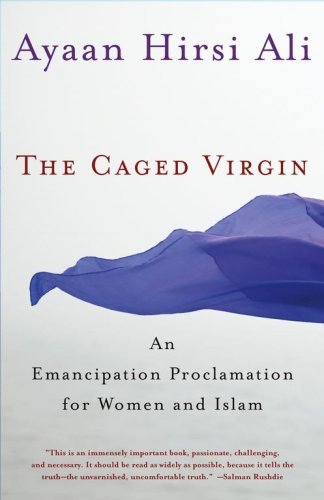
Muslims who explore sources of morality other than Islam are threatened with death, and Muslim women who escape the virgins' cage are branded whores. So asserts Ayaan Hirsi Ali's profound meditation on Islam and the role of women, the rights of the individual, the roots of fanaticism, and Western policies toward Islamic countries and immigrant communities. Hard-hitting, outspoken, and controversial, "The Caged Virgin" is a call to arms for the emancipation of women from a brutal religious and cultural oppression and from an outdated cult of virginity. It is a defiant call for clear thinking and for an Islamic Enlightenment. But it is also the courageous story of how Hirsi Ali herself fought back against everyone who tried to force her to submit to a traditional Muslim woman's life and how she became a voice of reform. Born in Somalia and raised Muslim, but outraged by her religion's hostility toward women, Hirsi Ali escaped an arranged marriage to a distant relative and fled to the Netherlands. There, she learned Dutch, worked as an interpreter in abortion clinics and shelters for battered women, earned a college degree, and started a career in politics as a Dutch parliamentarian. In November 2004, the violent murder on an Amsterdam street of Dutch filmmaker Theo van Gogh, with whom Hirsi Ali had written a film about women and Islam called "Submission," changed her life. Threatened by the same group that slew van Gogh, Hirsi Ali now has round-the-clock protection, but has not allowed these circumstances to compromise her fierce criticism of the treatment of Muslim women, of Islamic governments' attempts to silence any questioning of their traditions, and of Western governments' blind tolerance of practices such as genital mutilation and forced marriages of female minors occurring in their countries.Hirsi Ali relates her experiences as a Muslim woman so that oppressed Muslim women can take heart and seek their own liberation. Drawing on her love of reason and the Enlightenment philosophers on whose principles democracy was founded, she presents her firsthand knowledge of the Islamic worldview and advises Westerners how best to address the great divide that currently exists between the West and Islamic nations and between Muslim immigrants and their adopted countries.An international bestseller -- with updated information for American readers and two new essays added for this edition -- "The Caged Virgin" is a compelling, courageous, eye-opening work.

In the tradition of grand sweeping histories such as From Dawn To Decadence, The Structure of Scientific Revolutions, and A History of God, Hecht champions doubt and questioning as one of the great and noble, if unheralded, intellectual traditions that distinguish the Western mind especially-from Socrates to Galileo and Darwin to Wittgenstein and Hawking. This is an account of the world's greatest ‘intellectual virtuosos,' who are also humanity's greatest doubters and disbelievers, from the ancient Greek philosophers, Jesus, and the Eastern religions, to modern secular equivalents Marx, Freud and Darwin—and their attempts to reconcile the seeming meaninglessness of the universe with the human need for meaning,This remarkable book ranges from the early Greeks, Hebrew figures such as Job and Ecclesiastes, Eastern critical wisdom, Roman stoicism, Jesus as a man of doubt, Gnosticism and Christian mystics, medieval Islamic, Jewish and Christian skeptics, secularism, the rise of science, modern and contemporary critical thinkers such as Schopenhauer, Darwin, Marx, Freud, Nietzsche, the existentialists.

While its tone is playful and frivolous, this book poses tough questions over the nature of religion and belief.Religion provides comfortable responses to the questions that have always beset humankind - why are we here, what is the point of being alive, how ought we to behave? Russell snatches that comfort away, leaving us instead with other, more troublesome alternatives: responsibility, autonomy, self-awareness. He tells us that the time to live is now, the place to live is here, and the way to be happy is to ensure others are happy.

How did the replication bomb we call ”life” begin and where in the world, or rather, in the universe, is it heading? Writing with characteristic wit and an ability to clarify complex phenomena (the New York Times described his style as ”the sort of science writing that makes the reader feel like a genius”), Richard Dawkins confronts this ancient mystery.

«Οι οπαδοί των νεράιδων δεν χτυπάνε την πόρτα σου για να σε προσηλυτίσουν. Δεν απαιτούν να διδάσκεται η ψευτοεπιστήμη τους στα σχολεία. Δεν καταδικάζουν σε θάνατο οπαδούς άλλων νεράιδων. Δεν ισχυρίζονται ότι οι ηθικοί κανόνες βγαίνουν από τις τελετές των νεράιδων και ότι χωρίς νεράιδες θα είχαμε συνουσίες στους δρόμους και την κατάργηση της ατομικής ιδιοκτησίας. Δεν λένε ότι οι νεράιδες έφτιαξαν τον κόσμο και ως εκ τούτου πρέπει να κλείνουμε το γόνυ στον Μεγάλο Αδελφό των νεράιδων. Δεν λένε ότι η νεράιδα θα σε διατάξει να σκοτώσεις την αδελφή σου αν κυκλοφορεί στο δρόμο με κάποιον που δεν είναι ο αδελφός της.Νομίζω λοιπόν ότι ισχύει αυτό που ο ποιητής Σέλεϋ αποκαλούσε αναγκαιότητα του αθεϊσμού. Αργά ή γρήγορα θα πρέπει να πάρεις θέση. Είτε αποδίδεις την παρουσία σου εδώ στους νόμους της βιολογίας και της φυσικής είτε την αποδίδεις σε ένα θείο σχέδιο. (Μπορείς να διακρίνεις τον φίλο από τον εχθρό από το πώς απαντούν σε αυτό το αναπόδραστο ερώτημα και από το πώς αντιμετωπίζουν τις επιπτώσεις του.) Κι ωστόσο, όπως και οι πιστοί, άπαξ και αποφασίσουμε, έχουμε ακόμη πολλή δουλειά μπροστά μας.»Ο Κρίστοφερ Χίτσενς, που πέθανε τον Δεκέμβρη του 2011, μας οδηγεί μες από την αγνωστικιστική και αντιθρησκευτική σκέψη πολλών αιώνων. Ο τόμος περιλαμβάνει 45 κείμενα που συνιστούν τον κανόνα του αθεϊσμού. Από τον Λουκρήτιο στον Ντέιβιντ Χιουμ, από τον Τόμας Χομπς και τον Σπινόζα ως τον Σέλλεϋ και τον Καρλ Μαρξ, και από τον Δαρβίνο και τον Φρόυντ ως τους νεότερους και σύγχρονους μαχητικούς συνήγορους του αθεϊσμού, τον Ρίτσαρντ Ντώκινς, τον Ντάνιελ Ντένετ, τον Μάικλ Σέρμερ, τον Σαμ Χάρις, τον Ίαν Μακιούαν, και πολλούς άλλους. Τα διαφωτιστικά όσο και απολαυστικά κείμενα της ανθολογίας, εμπλουτισμένα με τα εξαιρετικά σχόλια του Κρίστοφερ Χίτσενς, ενδιαφέρουν όχι μόνο τον άθεο, τον αγνωστικιστή και τον πανθεϊστή, αλλά διεγείρουν την περιέργεια ακόμη και του μονοθεϊστή αναγνώστη.

God Is Not Great makes the ultimate case against religion. In a series of acute readings of the major religious texts, Christopher Hitchens demonstrates the ways in which religion is man-made, dangerously sexually repressive, and distorts the very origins of the cosmos. Above all, Hitchens argues that the concept of an omniscient God has profoundly damaged humanity, and proposes that the world might be a great deal better off without "him."

The first new book of essays by Christopher Hitchens since 2004, Arguably offers an indispensable key to understanding the passionate and skeptical spirit of one of our most dazzling writers, widely admired for the clarity of his style, a result of his disciplined and candid thinking. Topics range from ruminations on why Charles Dickens was among the best of writers and the worst of men to the haunting science fiction of J.G. Ballard; from the enduring legacies of Thomas Jefferson and George Orwell to the persistent agonies of anti-Semitism and jihad. Hitchens even looks at the recent financial crisis and argues for the enduring relevance of Karl Marx. The book forms a bridge between the two parallel enterprises of culture and politics. It reveals how politics justifies itself by culture, and how the latter prompts the former. In this fashion, Arguably burnishes Christopher Hitchens' credentials as (to quote Christopher Buckley) our "greatest living essayist in the English language."

Magic takes many forms. Supernatural magic is what our ancestors used in order to explain the world before they developed the scientific method. The ancient Egyptians explained the night by suggesting the goddess Nut swallowed the sun. The Vikings believed a rainbow was the gods’ bridge to earth. The Japanese used to explain earthquakes by conjuring a gigantic catfish that carried the world on its back—earthquakes occurred each time it flipped its tail. These are magical, extraordinary tales. But there is another kind of magic, and it lies in the exhilaration of discovering the real answers to these questions. It is the magic of reality—science.Packed with clever thought experiments, dazzling illustrations and jaw-dropping facts, The Magic of Reality explains a stunningly wide range of natural phenomena. What is stuff made of? How old is the universe? Why do the continents look like disconnected pieces of a puzzle? What causes tsunamis? Why are there so many kinds of plants and animals? Who was the first man, or woman? This is a page-turning, graphic detective story that not only mines all the sciences for its clues but primes the reader to think like a scientist as well.Richard Dawkins, the world’s most famous evolutionary biologist and one of science education’s most passionate advocates, has spent his career elucidating the wonders of science for adult readers. But now, in a dramatic departure, he has teamed up with acclaimed artist Dave McKean and used his unrivaled explanatory powers to share the magic of science with readers of all ages. This is a treasure trove for anyone who has ever wondered how the world works. Dawkins and McKean have created an illustrated guide to the secrets of our world—and the universe beyond—that will entertain and inform for years to come.

In 2009, the Good News Club came to the public elementary school where journalist Katherine Stewart sent her children. The Club, which is sponsored by the Child Evangelism Fellowship, bills itself as an after-school program of "Bible study." But Stewart soon discovered that the Club's real mission is to convert children to fundamentalist Christianity and encourage them to proselytize to their "unchurched" peers, all the while promoting the natural but false impression among the children that its activities are endorsed by the school.Astonished to discover that the U.S. Supreme Court has deemed this -- and other forms of religious activity in public schools -- legal, Stewart set off on an investigative journey to dozens of cities and towns across the nation to document the impact. In this book she demonstrates that there is more religion in America's public schools today than there has been for the past 100 years. The movement driving this agenda is stealthy. It is aggressive. It has our children in its sights. And its ultimate aim is to destroy the system of public education as we know it.

العقل والنظام الكوني : يُخرجه (مركز تبصير مترجما إلى العربية تعاونا مع مطبعة جامعة أكسفورد، وهو من تأليف الفيلسوف الأمريكي توماس ناجل، لما سيأتي بيانه، وما قدمنا على هذه الخطوة مع علمنا بتوجهات وأيدلوجية المؤلف إلا من بابة وشهد شاهد من أهلها ففي الكتاب كلام واضح من كاتب وصف نفسه بين طيات الكتاب بأنه (ملحد) صراحة ودون موازية، ومع ذلك تجد في الكتاب نقدا للمادية الداروينية وخرافة نشأة الحياة والكائنات الحية المعقدة ذات الوعي والإرادة والتفكير العلمي النقدي، والتي تدرك بدورها وجود القيمة والأخلاق، من خلال محض التطور الدارويني. وذلك دون وجود تفسيرات واضحة من المادية الداروينية الحديثة توضح كيف نشأت كل هذه الصفات للكائن الحي من محض تفاعلات كيميائية صدقية في ظل وسط علمي يعلم جيدا أنها - أي : الداروينية الحديثة لم تجب أصلا عن سؤال نشأة الحياة المحضة في الكائنات أحادية الخلية !! في هذا الكتاب ترى الخيرة بادية في جميع صفحاته، نقدًا شديد اللهجة للمادية وبيان عوارها، ومع ذلك تجد أيضا من المؤلف رفضا للمنهج الألوهي بحجة أنه يبحث فقط عن منهج علمي تجربي فتجد المؤلف يصرح قائلا: حيث إنه من غير المعقول للوهلة الأولى أن تكون الحياة كما نعرفها - نتيجة سلسلة من الحوادث المادية مصحوبة بالية الانتخاب الطبيعي. ليعلم المسلم حقيقة الأمر من أفواه معتنقيه لا من مرتزقة الداروينية ومروجها.

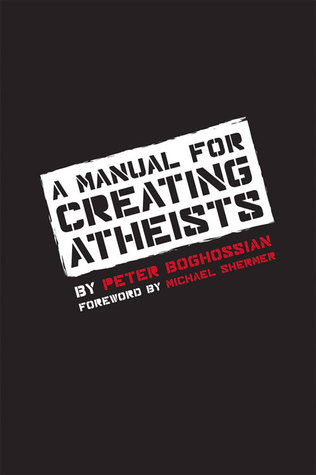
For thousands of years, the faithful have honed proselytizing strategies and talked people into believing the truth of one holy book or another. Indeed, the faithful often view converting others as an obligation of their faith—and are trained from an early age to spread their unique brand of religion. The result is a world broken in large part by unquestioned faith. As an urgently needed counter to this tried-and-true tradition of religious evangelism, A Manual for Creating Atheists offers the first-ever guide not for talking people into faith—but for talking them out of it. Peter Boghossian draws on the tools he has developed and used for more than twenty years as a philosopher and educator to teach how to engage the faithful in conversations that will help them value reason and rationality, cast doubt on their religious beliefs, mistrust their faith, abandon superstition, and irrationality, and ultimately embrace reason.

This book uses evolutionary psychology as a lens to explain religious violence and oppression. The author, a clinical psychologist, examines religious scriptures, rituals, and canon law, highlighting the many ways in which our evolutionary legacy has shaped the development of religion and continues to profoundly influence its expression. The book focuses on the image of God as the dominant male in Judaism, Christianity, and Islam. This traditional God concept is seen as a reflection of the "dominant ape" paradigm so evident in the hierarchical social structures of primates, with whom we have a strong genetic connection.The author describes the main features of male-dominated primate social hierarchies- specifically, the role of the alpha male as the protector of the group; his sexual dominance and use of violence and oppression to attain food, females, and territory; in-group altruism vs. out-group hostility (us vs. them); and displays of dominance and submission to establish roles within the social hierarchy. The parallels between these features of primate society and human religious rituals and concepts make it clear that religion, especially its oppressive and violent tendencies, is rooted in the deep evolutionary past.This incisive analysis goes a long way toward explaining the historic and ongoing violence committed in the name of religion.

“A civil but honest dialogue…As illuminating as it is fascinating.”—Ayaan Hirsi AliIs Islam a religion of peace or war? Is it amenable to reform? Why do so many Muslims seem to be drawn to extremism? And what do words like jihadism and fundamentalism really mean? In a world riven by misunderstanding and violence, Sam Harris—a famous atheist—and Maajid Nawaz—a former radical—demonstrate how two people with very different religious views can find common ground and invite you to join in an urgently needed conversation.“How refreshing to read an honest yet affectionate exchange between the Islamist-turned-liberal-Muslim Maajid Nawaz and the neuroscientist who advocates mindful atheism, Sam Harris…Their back-and-forth clarifies multiple confusions that plague the public conversation about Islam.”—Irshad Manji, New York Times Book Review“It is sadly uncommon, in any era, to find dialogue based on facts and reason—but even more rarely are Muslim and non-Muslim intellectuals able to maintain critical distance on broad questions about Islam. Which makes Islam and the Future of Tolerance something of a unicorn…Most conversations about religion are marked by the inability of either side to listen, but here, at last, is a proper debate.”—New Statesman

In recent years atheism has become ever more visible, acceptable, and influential. Atheist apologists have become increasingly vociferous and confident in their that a morality requiring benevolence towards all and universal human rights need not be grounded in religion; that modern science disproves the existence of God; and that there is nothing innately religious about human beings.In Atheist Overreach , Christian Smith takes a look at the evidence and arguments, and explains why we ought to be skeptical of these atheists' claims about morality, science, and human nature. He does not argue that atheism is necessarily wrong, but rather that its advocates are advancing crucial claims that are neither rationally defensible nor realistic. Their committed worldview feeds unhelpful arguments and contributes to the increasing polarization of today's political landscape. Everyone involved in the theism-atheism debates, in shared moral reflection, and in the public consumption of the findings of science should be committed to careful reasoning and rigorous criticism. This book provides readers with the information they need to participate more knowledgably in debates about atheism and what it means for our society.

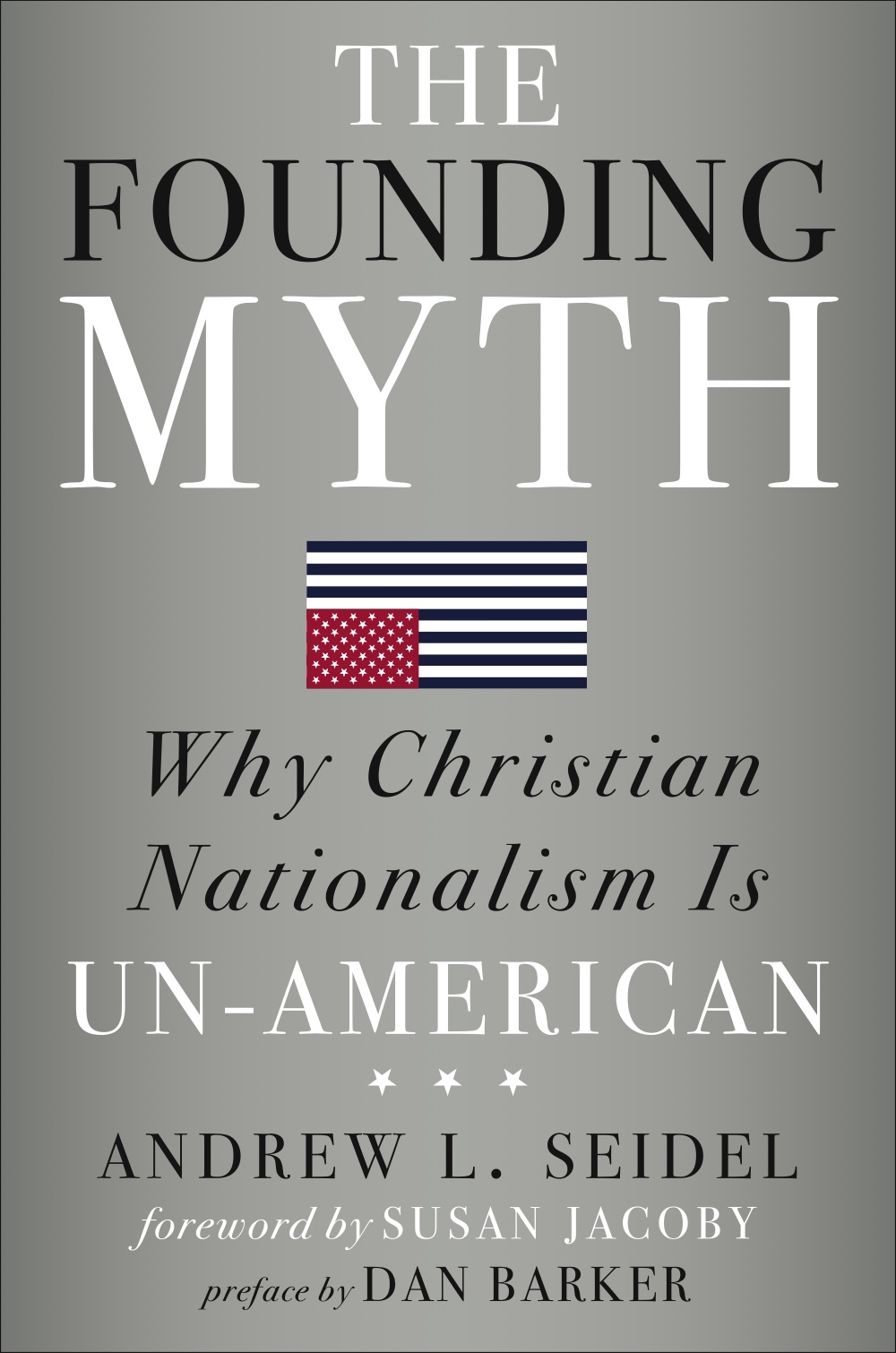
Do “In God We Trust,” the Declaration of Independence, and other historical “evidence” prove that America was founded on Judeo-Christian principles? Are the Ten Commandments the basis for American law? A constitutional attorney dives into the debate about religion’s role in America’s founding. In today’s contentious political climate, understanding religion’s role in American government is more important than ever. Christian nationalists assert that our nation was founded on Judeo-Christian principles, and advocate an agenda based on this popular historical claim. But is this belief true? The Founding Myth answers the question once and for all. Andrew L. Seidel, a constitutional attorney at the Freedom from Religion Foundation, builds his case point by point, comparing the Ten Commandments to the Constitution and contrasting biblical doctrine with America’s founding philosophy, showing that the Bible contradicts the Declaration of Independence’s central tenets. Thoroughly researched, this persuasively argued and fascinating book proves that America was not built on the Bible and that Christian nationalism is, in fact, un-American.Trim x 9 Inches

We all want to lead a happy life. Traditionally, when in need of guidance, comfort or inspiration, many people turn to religion. But there has been another way to learn how to live well - the humanist way - and in today's more secular world, it is more relevant than ever.In The Little Book of Humanism, Alice Roberts and Andrew Copson share over two thousand years of humanist wisdom through an uplifting collection of stories, quotes and meditations on how to live an ethical and fulfilling life, grounded in reason and humanity.With universal insights and beautiful original illustrations, The Little Book of Humanism is a perfect introduction to and a timeless anthology of humanist thought from some of history and today's greatest thinkers.