
Christian Smith
Christian Smith is the William R. Kenan, Jr. Professor of Sociology and Director of the Center for the Study of Religion and Society at the University of Notre Dame. Smith's research focuses primarily on religion in modernity, adolescents, American evangelicalism, and culture.
29 Books Written

In recent years atheism has become ever more visible, acceptable, and influential. Atheist apologists have become increasingly vociferous and confident in their that a morality requiring benevolence towards all and universal human rights need not be grounded in religion; that modern science disproves the existence of God; and that there is nothing innately religious about human beings.In Atheist Overreach , Christian Smith takes a look at the evidence and arguments, and explains why we ought to be skeptical of these atheists' claims about morality, science, and human nature. He does not argue that atheism is necessarily wrong, but rather that its advocates are advancing crucial claims that are neither rationally defensible nor realistic. Their committed worldview feeds unhelpful arguments and contributes to the increasing polarization of today's political landscape. Everyone involved in the theism-atheism debates, in shared moral reflection, and in the public consumption of the findings of science should be committed to careful reasoning and rigorous criticism. This book provides readers with the information they need to participate more knowledgably in debates about atheism and what it means for our society.

The Bible Made Impossible: Why Biblicism Is Not a Truly Evangelical Reading of Scripture
by Christian Smith
Rating: 3.9 ⭐
Biblicism, an approach to the Bible common among some American evangelicals, emphasizes together the Bible's exclusive authority, infallibility, clarity, self-sufficiency, internal consistency, self-evident meaning, and universal applicability. Acclaimed sociologist Christian Smith argues that this approach is misguided and unable to live up to its own claims. If evangelical biblicism worked as its proponents say it should, there would not be the vast variety of interpretive differences that biblicists themselves reach when they actually read and interpret the Bible.Smith describes the assumptions, beliefs, and practices of evangelical biblicism and sets it in historical, sociological, and philosophical context. He explains why it is an impossible approach to the Bible as an authority and provides constructive alternative approaches to help evangelicals be more honest and faithful in reading the Bible. Far from challenging the inspiration and authority of Scripture, Smith critiques a particular rendering of it, encouraging evangelicals to seek a more responsible, coherent, and defensible approach to biblical authority.

Soul Searching: The Religious and Spiritual Lives of American Teenagers
by Christian Smith
Rating: 4.0 ⭐
In innumerable discussions and activities dedicated to better understanding and helping teenagers, one aspect of teenage life is curiously overlooked. Very few such efforts pay serious attention to the role of religion and spirituality in the lives of American adolescents. But many teenagers are very involved in religion. Surveys reveal that 35% attend religious services weekly and another 15% attend at least monthly. 60% say that religious faith is important in their lives. 40% report that they pray daily. 25% say that they have been "born again." Teenagers feel good about the congregations they belong to. Some say that faith provides them with guidance and resources for knowing how to live well. What is going on in the religious and spiritual lives of American teenagers? What do they actually believe? What religious practices do they engage in? Do they expect to remain loyal to the faith of their parents? Or are they abandoning traditional religious institutions in search of anew, more authentic "spirituality"? This book attempts to answer these and related questions as definitively as possible. It reports the findings of The National Study of Youth and Religion, the largest and most detailed such study ever undertaken. The NYSR conducted a nationwide telephone survey of teens and significant caregivers, as well as nearly 300 in-depth face-to-face interviews with a sample of the population that was surveyed. The results show that religion and spirituality are indeed very significant in the lives of many American teenagers. Among many other discoveries, they find that teenagers are far more influenced by the religious beliefs and practices of their parents and caregivers than commonly thought. They refute the conventional wisdom that teens are "spiritual but not religious." And they confirm that greater religiosity is significantly associated with more positive adolescent life outcomes. This eagerly-awaited volume not only provides an unprecedentedunderstanding of adolescent religion and spirituality but, because teenagers serve as bellwethers for possible future trends, it affords an important and distinctive window through which to observe and assess the current state and future direction of American religion as a whole.

Souls in Transition: The Religious and Spiritual Lives of Emerging Adults
by Christian Smith
Rating: 3.9 ⭐
How important is religion for young people in America today? What are the major influences on their developing spiritual lives? How do their religious beliefs and practices change as young people enter into adulthood?Christian Smith's Souls in Transition explores these questions and many others as it tells the definitive story of the religious and spiritual lives of emerging adults, ages 18 to 24, in the U.S. today. This is the much-anticipated follow-up study to the landmark book, Soul The Religious and Spiritual Lives of American Teenagers . Based on candid interviews with thousands of young people tracked over a five-year period, Souls in Transition reveals how the religious practices of the teenagers portrayed in Soul Searching have been strengthened, challenged, and often changed as they have moved into adulthood. The book vividly describes as well the broader cultural world of today's emerging adults, how that culture shapes their religious outlooks, and what the consequences are for religious faith and practice in America more generally. Some of Smith's findings are surprising. Parents turn out to be the single most important influence on the religious outcomes in the lives ofyoung adults. On the other hand, teenage participation in evangelization missions and youth groups does not predict a high level of religiosity just a few years later. Moreover, the common wisdom that religiosity declines sharply during the young adult years is shown to be greatly exaggerated.Painstakingly researched and filled with remarkable findings, Souls in Transition will be essential reading for youth ministers, pastors, parents, teachers and students at church-related schools, and anyone who wishes to know how religious practice is affected by the transition into adulthood in America today.
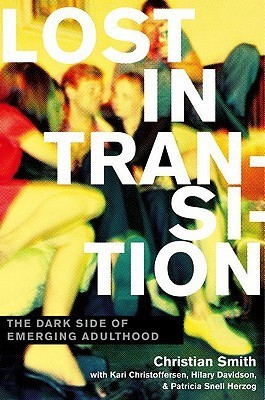
Life for emerging adults is vastly different today than it was for their counterparts even a generation ago. Young people are waiting longer to marry, to have children, and to choose a career direction. As a result, they enjoy more freedom, opportunities, and personal growth than ever before. But the transition to adulthood is also more complex, disjointed, and confusing.In Lost in Transition , Christian Smith and his collaborators draw on 230 in-depth interviews with a broad cross-section of emerging adults (ages 18-23) to investigate the difficulties young people face today, the underlying causes of those difficulties, and the consequences both for individuals and for American society as a whole. Rampant consumer capitalism, ongoing failures in education, hyper-individualism, postmodernist moral relativism, and other aspects of American culture are all contributing to the chaotic terrain that emerging adults must cross. Smith identifies five major problems facing very many young people confused moral reasoning, routine intoxication, materialistic life goals, regrettable sexual experiences, and disengagement from civic and political life. The trouble does not lie only with the emerging adults or their poor individual decisions but has much deeper roots in mainstream American culture--a culture which emerging adults have largely inherited ratherthan created. Older adults, Smith argues, must recognize that much of the responsibility for the pain and confusion young people face lies with them. Rejecting both sky-is-falling alarmism on the one hand and complacent disregard on the other, Smith suggests the need for what he calls "realistic concern"--and a reconsideration of our cultural priorities and practices--that will help emerging adults more skillfully engage unique challenges they face.Even-handed, engagingly written, and based on comprehensive research, Lost in Transition brings much needed attention to the darker side of the transition to adulthood.

What kind of animals are human beings? And how do our visions of the human shape our theories of social action and institutions? In Moral, Believing Animals , Christian Smith advances a creative theory of human persons and culture that offers innovative, challenging answers to these and other fundamental questions in sociological, cultural, and religious theory.Smith suggests that human beings have a peculiar set of capacities and proclivities that distinguishes them significantly from other animals on this planet. Despite the vast differences in humanity between cultures and across history, no matter how differently people narrate their lives and histories, there remains an underlying structure of human personhood that helps to order human culture, history, and narration. Drawing on important recent insights in moral philosophy, epistemology, and narrative studies, Smith argues that humans are animals who have an inescapable moral and spiritual dimension. They cannot avoid a fundamental moral orientation in life and this, says Smith, has profound consequences for how sociology must study human beings.
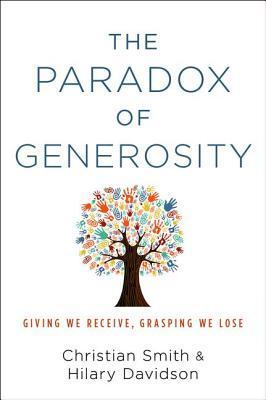
Determining why, when, and to whom people feel compelled to be generous affords invaluable insight into positive and problematic ways of life. Organ donation, volunteering, and the funding of charities can all be illuminated by sociological and psychological perspectives on how American adults conceive of and demonstrate generosity. Focusing not only on financial giving but on the many diverse forms generosity can take, Christian Smith and Hilary Davidson show the deep impact-usually good, sometimes destructive-that giving has on individuals.The Paradox of Generosity is the first study to make use of the cutting-edge empirical data collected in Smith's groundbreaking, multidisciplinary, five-year Science of Generosity Initiative. It draws on an extensive survey of 2,000 Americans, more than sixty in-depth interviews with individuals across twelve states, and analysis of over 1,000 photographs and other visual materials. This wealth of evidence reveals a consistent link between demonstrating generosity and leading a better more generous people are happier, suffer fewer illnesses and injuries, live with a greater sense of purpose, and experience less depression. Smith and Davidson also show, however, that to achieve a better life a person must practice generosity regularly-random acts of kindness are not enough.Offering a wide range of vividly illustrative case studies, this volume will be a crucial resource for anyone seeking to understand the true impact and meaning of generosity.

How to Go from Being a Good Evangelical to a Committed Catholic in Ninety-Five Difficult Steps
by Christian Smith
Rating: 3.7 ⭐
American evangelicalism has recently experienced a new openness to Roman Catholicism, and many evangelicals, both famous and ordinary, have joined the Catholic Church or are considering the possibility. This book helps evangelicals who are exploring Roman Catholicism to sort out the kinds of concerns that typically come up in discerning whether to enter into the full communion of the Catholic Church. In simple language, it explains many theological misunderstandings that evangelicals often have about Roman Catholicism, and suggests the kind of practical steps many take to enter the Catholic Church. The book frames evangelicals becoming Roman Catholic as a kind of "paradigm shift" involving the buildup of anomalies about evangelicalism, a crisis of the evangelical paradigm, a paradigm revolution, and the consolidation of the new Roman Catholic paradigm. It will be useful for both evangelicals interested in pursuing and understanding Roman Catholicism and Catholic pastoral workers seeking to help evangelical seekers who come to them.

Why Religion Went Obsolete: The Demise of Traditional Faith in America
by Christian Smith
Rating: 4.2 ⭐
Is traditional American religion doomed? Traditional religion in the United States has suffered huge losses in recent decades. The number of Americans identifying as "not religious" has increased remarkably. Religious affiliation, service attendance, and belief in God have declined. More and more people claim to be "spiritual but not religious." Religious organizations have been reeling from revelations of sexual and financial scandals and cover-ups. Public trust in "organized religion" has declined significantly. Crucially, these religious losses are concentrated among younger generations. This means that, barring unlikely religious revivals among youth, the losses will continue and accelerate in time, as less-religious younger Americans replace older more-religious ones and increasingly fewer American children are raised by religious parents. All this is clear. But what is less clear is exactly why this is happening. We know a lot more about the fact that traditional American religion has declined than we do about why this is so. Why Religion Went Obsolete aims to change that. Drawing on survey data and hundreds of interviews, Christian Smith offers a sweeping, multifaceted account of why many Americans have lost faith in traditional religion. An array of large-scale social forces-everything from the end of the Cold War to the rise of the internet to shifting ideas about gender and sexuality-came together to render traditional religion culturally obsolete. For growing numbers of Americans, traditional religion no longer seems useful or relevant. Using quantitative empirical measures of big-picture changes over time as well as exploring the larger cultural environment--the cultural "zeitgeist"--Smith explains why this is the case and what it means for the future. Crucially, he argues, it does not mean a strictly secular future. Rather, Americans' spiritual impulses are being channelled in new and interesting directions. Why Religion Went Obsolete is a tour de force from one of our leading chroniclers of religion in America.

What Is a Person?: Rethinking Humanity, Social Life, and the Moral Good from the Person Up
by Christian Smith
Rating: 4.1 ⭐
What is a person? This fundamental question is a perennial concern of philosophers and theologians. But, Christian Smith here argues, it also lies at the center of the social scientist’s quest to interpret and explain social life. In this ambitious book, Smith presents a new model for social theory that does justice to the best of our humanistic visions of people, life, and society.Finding much current thinking on personhood to be confusing or misleading, Smith finds inspiration in critical realism and personalism. Drawing on these ideas, he constructs a theory of personhood that forges a middle path between the extremes of positivist science and relativism. Smith then builds on the work of Pierre Bourdieu, Anthony Giddens, and William Sewell to demonstrate the importance of personhood to our understanding of social structures. From there he broadens his scope to consider how we can know what is good in personal and social life and what sociology can tell us about human rights and dignity.Innovative, critical, and constructive, What Is a Person? offers an inspiring vision of a social science committed to pursuing causal explanations, interpretive understanding, and general knowledge in the service of truth and the moral good.

Handing Down the Faith: How Parents Pass Their Religion on to the Next Generation
by Christian Smith
Rating: 3.7 ⭐
A new examination of how and why American religious parents seek to pass on religion to their childrenThe most important influence shaping the religious and spiritual lives of children, youth, and teenagers is their parents. A myriad of studies show that the parents of American youth play the leading role in shaping the character of their religious and spiritual lives, even well after they leavehome and often for the rest of their lives. We know a lot about the importance of parents in faith transmission. However we know much less about the actual beliefs, feelings, and activities of the parents themselves, what Christian Smith and Amy Adamczyk call the intergenerational transmission ofreligious faith and practice. To address that gap, this book reports the findings of a new national study of religious parents in the United States. The findings and conclusions in Handing Down the Faith are based on 215 in-depth, personal interviews with religious parents from many traditions anddifferent parts of the country, and sophisticated analyses of two nationally representative surveys of American parents about their religious parenting.Handing Down the Faith explores the background beliefs informing how and why religious parents seek to pass on religion to their children; examines how parenting styles interact with parent religiousness to shape effective religious transmission; shows how parents have been influenced by theirexperiences as children influenced by their own parents; reveals how religious parents view their congregations and what they most seek out in a local church, synagogue, temple, or mosque; explores the experiences and outlooks of immigrant parents including Latino Catholics, East Asian Buddhists, South Asian Muslims, and Indian Hindus. Smith and Adamczyk step back to consider how American religion has transformed over the last 100 years and to explain why parents today shoulder such a huge responsibility in transmitting religious faith and practice to their children. The book is rich inempirical evidence and unique in many of the topics it explores and explains, providing a variety of sometimes counterintuitive findings that will interest scholars of religion, social scientists interested in the family, parenting, and socialization; clergy and religious educators and leaders; andreligious parents themselves.

Evangelicalism is one of the strongest religious traditions in America today; 20 million Americans identify themselves with the evangelical movement. Given the modern pluralistic world we live in, why is evangelicalism so popular?Based on a national telephone survey and more than three hundred personal interviews with evangelicals and other churchgoing Protestants, this study provides a detailed analysis of the commitments, beliefs, concerns, and practices of this thriving group. Examining how evangelicals interact with and attempt to influence secular society, this book argues that traditional, orthodox evangelicalism endures not despite, but precisely because of, the challenges and structures of our modern pluralistic environment. This work also looks beyond evangelicalism to explore more broadly the problems of traditional religious belief and practice in the modern world.With its impressive empirical evidence, innovative theory, and substantive conclusions, American Evangelicalism will provoke lively debate over the state of religious practice in contemporary America.

A groundbreaking new theory of religionReligion remains an important influence in the world today, yet the social sciences are still not adequately equipped to understand and explain it. This book builds on recent developments in science, theory, and philosophy to advance an innovative theory of religion that goes beyond the problematic theoretical paradigms of the past.Drawing on the philosophy of critical realism and personalist social theory, Christian Smith answers key questions about the nature, powers, workings, appeal, and future of religion. He defines religion in a way that resolves myriad problems and ambiguities in past accounts, explains the kinds of causal influences religion exerts in the world, and examines the key cognitive process that makes religion possible. Smith explores why humans are religious in the first place--uniquely so as a species--and offers an account of secularization and religious innovation and persistence that breaks the logjam in which so many religion scholars have been stuck for so long.Certain to stimulate debate and inspire promising new avenues of scholarship, Religion features a wealth of illustrations and examples that help to make its concepts accessible to readers. This superbly written book brings sound theoretical thinking to a perennially thorny subject, and a new vitality and focus to its study.

Passing the Plate: Why American Christians Don't Give Away More Money
by Christian Smith
Rating: 4.0 ⭐
Passing the Plate shows that few American Christians donate generously to religious and charitable causes -- a parsimony that seriously undermines the work of churches and ministries. Far from the 10 percent of one's income that tithing requires, American Christians' financial giving typically amounts, by some measures, to less than one percent of annual earnings. And a startling one out of five self-identified Christians gives nothing at all.This eye-opening book explores the reasons behind such ungenerous giving, the potential world-changing benefits of greater financial giving, and what can be done to improve matters. If American Christians gave more generously, say the authors, any number of worthy projects -- from the prevention and treatment of HIV/AIDS to the promotion of inter-religious understanding to the upgrading of world missions -- could be funded at astounding levels. Analyzing a wide range of social surveys and government and denominational statistical datasets and drawing on in-depth interviews with Christian pastors and church members in seven different states, the book identifies a crucial set of factors that appear to depress religious financial support -- among them the powerful allure of a mass-consumerist culture and its impact on Americans' priorities, parishioners' suspicions of waste and abuse by nonprofit administrators, clergy's hesitations to boldly ask for money, and the lack of structure androutine in the way most American Christians give away money. In their conclusion, the authors suggest practical steps that clergy and lay leaders might take to counteract these tendencies and better educate their congregations about the transformative effects of generous giving.By illuminating the social and psychological forces that shape charitable giving, Passing the Plate is sure to spark a much-needed debate on a critical issue that is of much interest to church-goers, religious leaders, philanthropists, and social scientists.

Counter to popular perceptions, contemporary American sociology is and promotes a profoundly sacred project at heart. Sociology today is in fact animated by sacred impulses, driven by sacred commitments, and serves a sacred project.Sociology appears on the surface to be a secular, scientific enterprise--its founding fathers were mostly atheists. Its basic operating premises are secular and naturalistic. Sociologists today are disproportionately not religious, compared to all Americans, and often irreligious.The Sacred Project of American Sociology shows, counter-intuitively, that the secular enterprise that everyday sociology appears to be pursuing is actually not what is really going on at sociology's deepest level. Christian Smith conducts a self-reflexive, tables-turning, cultural and institutional sociology of the profession of American sociology itself, showing that this allegedly secular discipline ironically expresses Emile Durkheim's inescapable sacred, exemplifies its own versions of Marxist false consciousness, and generates a spirited reaction against Max Weber's melancholically observed disenchantment of the world.American sociology does not escape the analytical net that it casts over the rest of the ordinary world. Sociology itself is a part of that very human, very social, often very sacred and spiritual world. And sociology's ironic mis-recognition of its own sacred project leads to a variety of arguably self-destructive and distorting tendencies. This book re-asserts a vision for what sociology is most important for, in contrast with its current commitments, and calls sociologists back to a more honest, fair, and healthy vision of its purpose.

Young Catholic America: Emerging Adults In, Out of, and Gone from the Church
by Christian Smith
Rating: 4.1 ⭐
Best Review at the Catholic Press Association ConventionStudies of young American Catholics over the last three decades suggest a growing crisis in the Catholic compared to their elders, young Catholics are looking to the Church less as they form their identities, and fewer of them can even explain what it means to be Catholic and why that matters.Young Catholic America , the latest book based on the groundbreaking National Study of Youth and Religion, explores a crucial stage in the life of Catholics. Drawing on in-depth surveys and interviews of Catholics and ex-Catholics ages 18 to 23--a demographic commonly known as early "emerging adulthood"--leading sociologist Christian Smith and his colleagues offer a wealth of insight into the wide variety of religious practices and beliefs among young Catholics today, the early influences and life-altering events that lead them to embrace the Church or abandon it, and how being Catholic affects them as they become full-fledged adults. Beyond its rich collection of statistical data, the book includes vivid case studies of individuals spanning a full decade, as well as insight into the twentieth-century events that helped to shape the Church and its members in America.An innovative contribution to what we know about religion in the United States and the evolving Catholic Church, Young Catholic America is the definitive source for anyone seeking to understand what it means to be young and Catholic in America today.

The Secular Revolution: Power, Interests, and Conflict in the Secularization of American Public Life
by Christian Smith
Rating: 3.8 ⭐
Sociologists, historians, and other social observers have long considered the secularization of American public life over the past hundred and thirty years to be an inevitable and natural outcome of modernization. This groundbreaking work rejects this view and fundamentally rethinks the historical and theoretical causes of the secularization of American public life between 1870 and 1930. Christian Smith and his team of contributors boldly argue that the declining authority of religion was not the by-product of modernization, but rather the intentional achievement of cultural and intellectual elites, including scientists, academics, and literary intellectuals, seeking to gain control of social institutions and increase their own cultural authority.Writing with vigor and a broad intellectual grasp, the contributors examine power struggles and ideological shifts in various social sectors where the public authority of religion has diminished, in particular education, science, law, and journalism. Together the essays depict a cultural and institutional revolution that is best understood in terms of individual agency, conflicts of interest, resource mobilization, and struggles for authority. Engaging both sociological and historical literature, The Secular Revolution offers a new theoretical framework and original empirical research that will inform our understanding of American society from the nineteenth to the twenty-first centuries. The ramifications of its provocative and cogent thesis will be felt throughout sociology, religious studies, and our general thinking about society for years to come.

The Emergence of Liberation Theology: Radical Religion and Social Movement Theory
by Christian Smith
Rating: 4.1 ⭐
Liberation theology is a school of Roman Catholic thought which teaches that a primary duty of the church must be to promote social and economic justice. In this book, Christian Smith explains how and why the liberation theology movement emerged and succeeded when and where it did.

A comprehensive analysis of the U.S. Central America peace movement, Resisting Reagan explains why more than one hundred thousand U.S. citizens marched in the streets, illegally housed refugees, traveled to Central American war zones, committed civil disobedience, and hounded their political representatives to contest the Reagan administration's policy of sponsoring wars in Nicaragua and El Salvador.Focusing on the movement's three most important national campaigns—Witness for Peace, Sanctuary, and the Pledge of Resistance—this book demonstrates the centrality of morality as a political motivator, highlights the importance of political opportunities in movement outcomes, and examines the social structuring of insurgent consciousness. Based on extensive surveys, interviews, and research, Resisting Reagan makes significant contributions to our understanding of the formation of individual activist identities, of national movement dynamics, and of religious resources for political activism.

In recent decades Protestant evangelicalism has become a conspicuous and--to many Americans, worrisome--part of this country's cultural and political landscape. But just how unified is the supposed constituency of the Christian Coalition? And who exactly are the people the Christian Right claims to represent? In the most extensive study of American evangelicals ever conducted, Christian Smith explores the beliefs, values, commitments, and goals of the ordinary men and women who make up this often misunderstood religious group. The result is a much-needed contribution to the discussion of issues surrounding fundamental American freedoms and the basic identity of the United States as a pluralistic nation.Based on data from a three-year national study, including more than 200 in-depth interviews of evangelicals around the country, Christian America? assesses the common stereotype of evangelicals as intolerant, right-wing, religious zealots seeking to impose a Christian moral order through political force. What Smith finds instead are people vastly more diverse and ambivalent than this stereotype suggests. On issues such as religion in education, "family values," Christian political activism, and tolerance of other religions and moralities, evangelicals are highly disparate and conflicted. As the voices of interviewees make clear, the labels "conservative" and "liberal" are too simplistic for understanding their approaches to public life and political action.

To Flourish or Destruct: A Personalist Theory of Human Goods, Motivations, Failure, and Evil
by Christian Smith
Rating: 4.0 ⭐
In his 2010 book What Is a Person?, Christian Smith argued that sociology had for too long neglected this fundamental question. Prevailing social theories, he wrote, do not adequately “capture our deep subjective experience as persons, crucial dimensions of the richness of our own lived lives, what thinkers in previous ages might have called our ‘souls’ or ‘hearts.’” Building on Smith’s previous work, To Flourish or Destruct examines the motivations intrinsic to this subjective Why do people do what they do? How can we explain the activity that gives rise to all human social life and social structures? Smith argues that our actions stem from a motivation to realize what he calls natural human ends that are, by nature, constitutionally good for all human beings. He goes on to explore the ways we can and do fail to realize these ends―a failure that can result in varying gradations of evil. Rooted in critical realism and informed by work in philosophy, psychology, and other fields, Smith’s ambitious book situates the idea of personhood at the center of our attempts to understand how we might shape good human lives and societies.

When the world is ending, 18 year-old Quinn York's tourist shuttle to Mars unexpectedly crashes back to earth. He wakes up only remembering one Celeste. Knowing he has to find her at any cost, he sets off into the dark, only to find the world is a much different place and time than he used to know. Having been in stasis for five years, Quinn discovers the nuclear holocaust that caused the shuttle to crash also set the world in commotion. It becomes a "kill or be killed" life for Quinn as he does anything he can to find Celeste. To do so, he must survive cruel raiders, grotesque animals, and a new breed of mutated human survivors called Skulks. Three main tribes vie for power amidst the the strong, military tribe known as Sempers, the wealthy Terra tribe, and the ever-intelligent Mechanicus tribe. Quinn's journey takes him smack-dab into the middle of a tribal civil war with the last remaining vestiges of human life. The exuberant and lavish lifestyle he once knew is no more. Survival is the name of the game. Set in first-person, Nuclear Rising emanates a moral choose-your-own-adventure style novel where readers engage the post-apocalyptic action adventure firsthand, experiencing Quinn's struggles as he attempts to cope with the new rules of living and dying while trying to find true love. Will he survive? Will Quinn find his true love? And what is that howling thing in the dark distance? If you like the following, then you'll love this - Post-apocalyptic survival rife with danger and gun-slinging like the old Wild West. - Snarky, witty back and forth dialog between characters who you're rooting for. - A sprinkle of love story that drives our main character to places he never thought he would go. - A fun, casual action adventure read to immerse yourself in another unique story-driven world.

Building Catholic Higher Education: Unofficial Reflections from the University of Notre Dame
by Christian Smith
Rating: 4.5 ⭐
American Catholic universities and colleges are wrestling today with how to develop in ways that faithfully serve their mission in Catholic higher education without either secularizing or becoming sectarian. Major challenges are faced when trying to simultaneously build and sustain excellence in undergraduate teaching, strengthen faculty research and publishing, and deepen the authentically Catholic character of education. This book uses the particular case of the University of Notre Dame to raise larger issues, to make substantive proposals, and thus to contribute to a national conversation affecting all Catholic universities and colleges in the United States (and perhaps beyond) today. Its arguments focus particularly on challenging questions around the recruitment, hiring, and formation of faculty in Catholic universities and colleges.

The church today is often tired, lacking vision, and mired in bureaucratic structures, argues Christian Smith. Smith offers an alternative. The church can return to its roots. It can draw fresh vision from the Bible, Jesus, the early church, various and grassroots movements of Christians open to new directions. Congregations which go to the root will reexamine ways they handle such important issues as leadership and the role of clergy; decision making; Christian community; the role of women; worship, evangelism, and spirituality; and traditional church buildings.

Religious Parenting: Transmitting Faith and Values in Contemporary America
by Christian Smith
Rating: 4.0 ⭐
How parents approach the task of passing on religious faith and practice to their childrenHow do American parents pass their religion on to their children? At a time of overall decline of traditional religion and an increased interest in personal “spirituality,” Religious Parenting investigates the ways that parents transmit religious beliefs, values, and practices to their kids. We know that parents are the most important influence on their children’s religious lives, yet parents have been virtually ignored in previous work on religious socialization. Renowned religion scholar Christian Smith and his collaborators Bridget Ritz and Michael Rotolo explore American parents’ strategies, experiences, beliefs, and anxieties regarding religious transmission through hundreds of in-depth interviews that span religious traditions, social classes, and family types all around the country.Throughout we hear the voices of evangelical, Catholic, Mormon, mainline and black Protestant, Jewish, Muslim, Hindu, and Buddhist parents and discover that, despite massive diversity, American parents share a nearly identical approach to socializing their children religiously. For almost all, religion is important for the foundation it provides for becoming one’s best self on life’s difficult journey. Religion is primarily a resource for navigating the challenges of this life, not preparing for an afterlife. Parents view it as their job, not religious professionals’, to ground their children in life-enhancing religious values that provide resilience, morality, and a sense of purpose. Challenging longstanding sociological and anthropological assumptions about culture, the authors demonstrate that parents of highly dissimilar backgrounds share the same “cultural models” when passing on religion to their children.Taking an extensive look into questions of religious practice and childrearing, Religious Parenting uncovers parents’ real-life challenges while breaking innovative theoretical ground.

For God’s sake, don’t take the acid!Seven teenagers gather at an isolated house in the woods for an LSD party, but the strange drug annihilates reality and unleashes an irrational nightmare. Jason Stanton is a horror movie fanatic who worships the films of Hooper, Romero, and Raimi. His trip dissolves imagery from these classics into a mélange of pure madness, and externalizes his hallucinations into a real world acid party chainsaw massacre. Trip Chainsaw is like an ultra-violent video nasty in your head, with a post-modern twist of hallucinogenic insanity. It’s a bad trip.

Several years ago I was living the American Dream. I was just another asshole at a finance company making the dream of home-ownership and unmanageable debt a reality for families all over California. I had a nearly perfect life. It was only missing the one thing that I seem to be hardwired to crave. It was missing a crisis.After foreclosures skyrocketed in 2008, with a stroke of their alchemist pen, the Federal Reserve created enough money to pay off every mortgage in America, twice. The Fed then distributed all this money to its member banks along with Bank Owned signs to stick in the lawns of the homes they were taking from freshly homeless families. My house was one of those homes and my family was among the refugees. When they created all those Bank Owned signs, they also created a monster. Banker Robber is the story of this monster.www.bankerrobber.com

Latin America is undergoing a period of intense religious transformation and upheaval. This book analyzes some of the more important new discoveries about religious movements in the region. It examines important shifts such as the expansion and politicization of Protestantism, the ongoing transformation of the Catholic church, the growth of Afro-Brazilian religions, and the genuine pluralization of faith.

Soul Searching Publisher: Oxford University Press, USA; Reprint edition
by Christian Smith
Rating: 5.0 ⭐