Loading genres...
Explore the best books about Film genre.


A generation of screenwriters has used Syd Field’s bestselling books to ignite successful careers in film. Now the celebrated producer, lecturer, teacher, and bestselling author has updated his classic guide for a new generation of filmmakers, offering a fresh insider’s perspective on the film industry today. From concept to character, from opening scene to finished script, here are easily understood guidelines to help aspiring screenwriters—from novices to practiced writers—hone their craft. Filled with updated material—including all-new personal anecdotes and insights, guidelines on marketing and collaboration, plus analyses of recent films, from American Beauty to Lord of the Rings—Screenplay presents a step-by-step, comprehensive technique for writing the screenplay that will succeed in Hollywood. Discover:•Why the first ten pages of your script are crucially important•How to visually “grab” the reader from page one, word one •Why structure and character are the essential foundation of your screenplay•How to adapt a novel, a play, or an article into a screenplay•Tips on protecting your work—three legal ways to claim ownership of your screenplay•The essentials of writing great dialogue, creating character, building a story line, overcoming writer’s block, getting an agent, and much more.With this newly updated edition of his bestselling classic, Syd Field proves yet again why he is revered as the master of the screenplay—and why his celebrated guide has become the industry’s gold standard for successful screenwriting.

What Makes Sammy Run?Everyone of us knows someone who runs. He is one of the symp-toms of our times—from the little man who shoves you out of the way on the street to the go-getter who shoves you out of a job in the office to the Fuehrer who shoves you out of the world. And all of us have stopped to wonder, at some time or another, what it is that makes these people tick. What makes them run?This is the question Schulberg has asked himself, and the answer is the first novel written with the indignation that only a young writer with talent and ideals could concentrate into a manuscript. It is the story of Sammy Glick, the man with a positive genius for being a heel, who runs through New York’s East Side, through newspaper ranks and finally through Hollywood, leaving in his wake the wrecked careers of his associates; for this is his tragedy and his chief characteristic—his congenital incapacity for friendship.An older and more experienced novelist might have tempered his story and, in so doing, destroyed one of its outstanding qualities. Compromise would mar the portrait of Sammy Glick. Schulberg has etched it in pure vitriol, and dissected his victim with a precision that is almost frightening.When a fragment of this book appeared as a short story in a national magazine, Schulberg was surprised at the number of letters he received from people convinced they knew Sammy Glick’s real name. But speculation as to his real identity would be utterly fruitless, for Sammy is a composite picture of a loud and spectacular minority bitterly resented by the many decent and sincere artists who are trying honestly to realize the measureless potentialities of motion pictures. To this group belongs Schulberg himself, who has not only worked as a screen writer since his graduation from Dartmouth College in 1936, but has spent his life, literally, in the heart of the motion-picture colony. In the course of finding out what makes Sammy run (an operation in which the reader is spared none of the grue-some details) Schulberg has poured out everything he has felt about that place. The result is a book which the publishers not only believe to be the most honest ever written about Hollywood, but a penetrating study of one kind of twentieth-century success that is peculiar to no single race of people or walk of life.

Where do ideas come from?In Catching the Big Fish, internationally acclaimed filmmaker David Lynch provides a rare window into his methods as an artist, his personal working style, and the immense creative benefits he has experienced from the practice of meditation.Lynch describes the experience of "diving within" and "catching" ideas like fish - and then preparing them for television or movie screens, and other mediums in which he works, such as painting, music, and design. Lynch writes for the first time about his more than three-decade commitment to Transcendental Meditation and the difference it has made in his creative process.In brief chapters, Lynch explains the development of his ideas - where they came from, how he grasps them, and which ones appeal to him the most. He specifically discusses how he puts his thoughts into action and how he engages with others around him. Finally, he considers the self and the surrounding world - and how the process of "diving within" that has so deeply affected his own work can directly benefit others.Catching the Big Fish comes as a revelation to the legion of fans who have longed to better understand Lynch's personal vision. And it is equally intriguing to those who wonder how they can nurture their own creativity.

No one knows the writer's Hollywood more intimately than William Goldman. Two-time Academy Award-winning screenwriter and the bestselling author of Marathon Man, Tinsel, Boys and Girls Together, and other novels, Goldman now takes you into Hollywood's inner sanctums...on and behind the scenes for Butch Cassidy and the Sundance Kid, All the President's Men, and other films...into the plush offices of Hollywood producers...into the working lives of acting greats such as Redford, Olivier, Newman, and Hoffman...and into his own professional experiences and creative thought processes in the crafting of screenplays. You get a firsthand look at why and how films get made and what elements make a good screenplay. Says columnist Liz Smith, "You'll be fascinated.

Explores the epic human drama behind the making of the five movies nominated for Best Picture in 1967-Guess Who's Coming to Dinner, The Graduate, In the Heat of the Night, Doctor Doolittle, and Bonnie and Clyde-and through them, the larger story of the cultural revolution that transformed Hollywood, and America, forever.

When a filmmaker makes a film with herself as a subject, she is already divided as both the subject matter of the film and the subject making the film. The two senses of the word are immediately in play – the matter and the maker―thus the two ways of being subjectified as both subject and object. Subjectivity finds its filmic expression, not surprisingly, in very personal ways, yet it is nonetheless shaped by and in relation to collective expressions of identity that can transform the cinema of 'me' into the cinema of 'we'. Leading scholars and practitioners of first-person film are brought together in this groundbreaking collection to consider the theoretical, ideological, and aesthetic challenges wrought by this form of filmmaking in its diverse cultural, geographical, and political contexts.

This down-and-dirty romp through Hollywood in the 1970s introduces the young filmmakers--Coppola, Scorsese, Lucas, Spielberg, Altman, and Beatty--and recreates an era that transformed American culture forever.

"When the history of Hollywood is written, few people will have played a larger role than Michael Ovitz.... It is impossible to read such a chronicle and not see Mr. Ovitz as the Steve Jobs of agenting, possessing a version of Jobs's fanatical drive and a similar desire to remake an industry." --The Wall Street JournalWho is Michael Ovitz? He's a striver who talked his way into the famous mailroom of the William Morris Agency without any connections, then worked his way out of the mailroom in record time.He's an entrepreneur who left a safe job to launch Creative Artists Agency, growing it from five guys in a rundown office to the most powerful agency in the world.He's a friend and confidant to megastars such as Steven Spielberg, Tom Cruise, Robert De Niro, David Letterman, Sean Connery, Bill Murray, Paul Newman, and Martin Scorsese.He's a pioneer who reinvented the role of the agent in packaging actors, directors, writers, and producers, which made CAA the essential hub of countless movies and television shows.He's a master negotiator who drove historic deals for many of his clients, as well as the acquisitions of two major studios by Sony and Matsushita.He's a self-taught connoisseur of art and architecture, a generous philanthropist, a devoted father...And to his detractors he's a world-class jerk and a ruthless manipulator who double-crossed his friends, crushed his enemies, and let nothing stand in his way, ever.After decades of near silence in the face of relentless controversy, Ovitz finally tells his whole story in this memoir, with remarkable candor and insight. If you're going to read just one book about how show business really works, this is the one.

“Melissa Maerz’s brilliant oral history is the definitive account of a cult-classic movie that took a slow ride into the Seventies and defined the Nineties.” –Rob Sheffield, Rolling StoneThe definitive oral history of the cult classic Dazed and Confused , featuring behind-the-scenes stories from the cast, crew, and Oscar-nominated director Richard Linklater.Dazed and Confused not only heralded the arrival of filmmaker Richard Linklater, it introduced a cast of unknowns who would become the next generation of movie stars. Embraced as a cultural touchstone, the 1993 film would also make Matthew McConaughey’s famous phrase—alright, alright, alright—ubiquitous. But it started with a simple idea: Linklater thought people might like to watch a movie about high school kids just hanging out and listening to music on the last day of school in 1976. To some, that might not even sound like a movie. But to a few studio executives, it sounded enough like the next American Graffiti to justify the risk. Dazed and Confused underperformed at the box office and seemed destined to disappear. Then something weird happened: Linklater turned out to be right. This wasn’t the kind of movie everybody liked, but it was the kind of movie certain people loved, with an intensity that felt personal. No matter what their high school experience was like, they thought Dazed and Confused was about them.Alright, Alright, Alright is the story of how this iconic film came together and why it worked. Combining behind-the-scenes photos and insights from nearly the entire cast, including Matthew McConaughey, Parker Posey, Ben Affleck, Joey Lauren Adams, and many others, and with full access to Linklater’s Dazed archives, it offers an inside look at how a budding filmmaker and a cast of newcomers made a period piece that would feel timeless for decades to come.

For the first time, the full story of what happened when Frank brought his best pals to party in a land called VegasJanuary 1960. Las Vegas is at its smooth, cool peak. The Strip is a jet-age theme park, and the greatest singer in the history of American popular music summons a group of friends there to make a movie. One is an insouciant singer of Italian songs, ex-partner to the most popular film comedian of the day. One is a short, black, Jewish, one-eyed, singing, dancing wonder. One is an upper-crust British pretty boy turned degenerate B-movie star actor, brother-in-law to an ascendant politician. And one is a stiff-shouldered comic with the quintessential Borscht Belt emcee’s knack for needling one-liners. The architectonically sleek marquee of the Sands Hotel announces their presence simply by listing their FRANK SINATRA. DEAN MARTIN. SAMMY DAVIS, JR. PETER LAWFORD. JOEY BISHOP. Around them an entire cast actors, comics, singers, songwriters, gangsters, politicians, and women, as well as thousands of starstruck everyday folks who fork over pocketfuls of money for the privilege of basking in their presence. They call themselves The Clan. But to an awed world, they are known as The Rat Pack.They had it all. Fame. Gorgeous women. A fabulouse playground of a city and all the money in the world. The backing of fearsome crime lords and the blessing of the President of the United States. But the dark side–over the thin line between pleasure and debauchery, between swinging self-confidence and brutal arrogance–took its toll. In four years, their great ride was over, and showbiz was never the same.Acclaimed Jerry Lewis biographer Shawn Levy has written a dazzling portrait of a time when neon brightness cast sordid shadows. It was Frank’s World, and we just lived in it.

An invaluable set of career-length interviews with the German genius hailed by François Truffaut as "the most important film director alive" Most of what we've heard about Werner Herzog is untrue. The sheer number of false rumors and downright lies disseminated about the man and his films is truly astonishing. Yet Herzog's body of work is one of the most important in postwar European cinema.His international breakthrough came in 1973 with Aguirre, The Wrath of God , in which Klaus Kinski played a crazed Conquistador. For The Enigma of Kaspar Hauser , Herzog cast in the lead a man who had spent most of his life institutionalized, and two years later he hypnotized his entire cast to make Heart of Glass . He rushed to an explosive volcanic Caribbean island to film La Soufrière , paid homage to F. W. Murnau in a terrifying remake of Nosferatu , and in 1982 dragged a boat over a mountain in the Amazon jungle for Fitzcarraldo . More recently, Herzog has made extraordinary "documentary" films such as Little Dieter Needs to Fly . His place in cinema history is assured, and Paul Cronin's volume of dialogues provides a forum for Herzog's fascinating views on the things, ideas, and people that have preoccupied him for so many years.

Story provides insight and inspiration for screen and television writers, novelists, playwrights, journalists - anyone with a story to tell.'In difficult periods of writing, particularly with structure, I often turn to Robert McKee's wonderful book, Story, for guidance.' -- Dominic Dunne, novelist of Another City, Not My Own, The Two Mrs Grenvilles.'...stimulating, innovative, refreshingly practical.' -- Lawrence Kasdan, screenwriter/director of The Accidental Tourist, The Big Chill, Body Heat, The Empire Strikes Back'McKee is the arch defender of story; his book is a revelation.' -- Griffin Dunne, screenwriter/director/producer of After Hours, Addicted To Love, Running On Empty, Chilly Scenes Of Winter'An amazingly important course.' -- John Cleese'Since I first attended Robert McKee's course, I have sold four screenplays and two novels. I could not have done so without the wisdom and inspiration he provided.' -- Tim Willocks, novelist/screenwriter of Bad City Blues, Green River Rising, Swept From The Sea

The distinguished filmmaker chronicles his life from his birth in 1910 to the worldwide success in 1950 of his film Rashomon and provides a provocative account of the Japanese film industry.

What choices--creative, practical, and technical--make a movie what it is? Here a gifted writer and filmmaker takes us behind the camera and provides a full description of the movie-making process.When John Sayles turned from writing fiction to making movies, he did so with little help from Hollywood: Return of the Secaucus Seven, Sayles's first movie as director and writer, was produced with 60,000 of his own money. Many films later, he still works outside the studio system and guides every phase of his productions.Now Sayles has written an illuminating book about the complex choices that lie at the heart of every movie. Using the making of his film Matewan as an example, he offers chapters on screenwriting, directing, editing, sound, and more. Photographs, sketches, and the complete shooting script illustrate this engaging account of how Sayles's curiosity about a coal miners' strike in the town of Matewan, West Virginia, became a screenplay--and then a movie.

Among the many "how-to" playwriting books that have appeared over the years, there have been few that attempt to analyze the mysteries of play construction. Lajos Egri's classic, The Art of Dramatic Writing, does just that, with instruction that can be applied equally well to a short story, novel, or screenplay. Examining a play from the inside out, Egri starts with the heart of any drama: its characters. All good dramatic writing hinges on people and their relationships, which serve to move the story forward and give it life, as well as an understanding of human motives - why people act the way that they do. Using examples from everything from William Shakespeare's Romeo and Juliet to Henrik Ibsen's A Doll's House, Egri shows how it is essential for the author to have a basic premise - a thesis, demonstrated in terms of human behavior - and to develop the dramatic conflict on the basis of that behavior.Using Egri's ABCs of premise, character, and conflict, The Art of Dramatic Writing is a direct, jargon-free approach to the problem of achieving truth in writing.

"This fascinating and detailed book about acting is Miss Hagen's credo, the accumulated wisdom of her years spent in intimate communion with her art. It is at once the voicing of her exacting standards for herself and those she teaches, and an explanation of the means to the end. For those unable to avail themselves of her personal tutelage, her book is the best substitute."— Publishers Weekly "Uta Hagen's Respect for Acting is not only pitched on a high artistic level but it is full of homely, practical information by a superb craftswoman. crafts-woman. An illuminating discussion of the standards and techniques of enlightened stage acting."— Brooks Atkinson "Hagen adds to the large corpus of titles on acting with vivid dicta drawn from experience, skill, and a sense of personal and professional worth. Her principal asset in this treatment is her truly significant imagination. Her ‘object exercises’ display a wealth of detail with which to stimulate the student preparing a scene for presentation."— Library Journal "Respect for Acting is a simple, lucid and sympathetic statement of actors' problems in the theatre and basic tenets for their training wrought from the personal experience of a fine actress and teacher of acting."— Harold Clurman "Uta Hagen's Respect for Acting…is a relatively small book. But within it Miss Hagen tells the young actor about as much as can be conveyed in print of his craft."— Los Angeles Times "Uta Hagen is our greatest living actor; she is, moreover, interested and mystified by the presence of talent and its workings; her third gift is a passion to communicate the mysteries of the craft to which she has given her life. There are almost no American actors uninfluenced by her."— Fritz Weaver "This is a textbook for aspiring actors, but working thespians can profit much by it. Anyone with just a casual interest in the theater should also enjoy its behind-the-scenes flavor. Respect for Acting is certainly a special book, perhaps for a limited readership, but of its "How-To" kind I'd give it four curtain calls, and two hollers of "Author, Author— King Features Syndicate

This book, written in collaboration with Dennis Longwell, follows an acting class of eight men and eight women for fifteen months, beginning with the most rudimentary exercises and ending with affecting and polished scenes from contemporary American plays. Throughout these pages Meisner is delight--always empathizing with his students and urging them onward, provoking emotion, laughter, and growing technical mastery from his charges. With an introduction by Sydney Pollack, director of "Out of Africa" and "Tootsie," who worked with Meisner for five years."This book should be read by anyone who wants to act or even appreciate what acting involves. Like Meisner's way of teaching, it is the straight goods."--Arthur Miller"If there is a key to good acting, this one is it, above all others. Actors, young and not so young, will find inspiration and excitement in this book."--Gregory Peck

Stella Adler was one of the 20th Century's greatest figures. She is arguably the most important teacher of acting in American history. Over her long career, both in New York and Hollywood, she offered her vast acting knowledge to generations of actors, including Marlon Brando, Warren Beatty, and Robert De Niro. The great voice finally ended in the early Nineties, but her decades of experience and teaching have been brilliantly caught and encapsulated by Howard Kissel in the twenty-two lessons in this book.

Internationally-renowned directing coach Weston demonstrates what constitutes a good performance, what actors want from a director, what directors do wrong, script analysis and preparation, how actors work, and shares insights into the director/actor relationship.

An international bestseller, Klaus Kinski's memoir has become a cult classic, telling the story of his fascinating life, from his tortured, poverty-stricken childhood in prewar Berlin to his rise to international stardom as a film actor. "Probably the most outrageous autobiography ever--less a memoir than a hyperbolically pornographic performance piece."--Newsweek.

An autobiography of controversial German dancer, actress and eventually Hitler's top national film executive, Leni Riefenstahl.

Howard Hughes has always fascinated the public with his mixture of secrecy, dashing lifestyle, and reclusiveness. This is the book that breaks through the image to get at the man. Originally published under the title Empire: The Life, Legend, and Madness of Howard Hughes.

"A definitive portrait of the madness of big-time moviemaking" ( Newsweek ), now the basis for the new season of TCM's hit podcast, "The Plot Thickens"When Brian De Palma agreed to allow Julie Salamon unlimited access to the film production of Tom Wolfe's best-selling book The Bonfire of the Vanities , both director and journalist must have felt like they were on to something big. How could it lose? But instead Salamon got a front-row seat at the Hollywood disaster of the decade. She shadowed the film from its early stages through the last of the eviscerating reviews, and met everyone from the actors to the technicians to the studio executives. They'd all signed on for a blockbuster, but there was a sense of impending doom from the start--heart-of-gold characters replaced Wolfe's satiric creations; affable Tom Hanks was cast as the patrician heel; Melanie Griffith appeared mid-shoot with new, bigger breasts. With a keen eye and ear, Salamon shows us how the best of intentions turned into a legendary Hollywood debacle.The Devil's Candy joins John Gregory Dunne's The Studio, Steven Bach's Final Cut, and William Goldman's Adventures in the Screen Trade as a classic for anyone interested in the workings of Hollywood. With a new afterword profiling De Palma ten years after the movie's devastating flop (and this book's best-selling publication), Julie Salamon has created a riveting insider's portrait of an industry where art, talent, ego, and money combine and clash on a monumental scale.

The Fantasy ContinuesThe Art of Spirited Away collects color illustrations of Spirited Away (Sen to Chihiro no Kamikakushi) for the first time in an English edition! This book includes paintings and designs from the new animated film from the director of Kiki's Delivery Service and Princess Mononoke.Large-size, hardcover coffee-table book featuring artwork from the renowned animated film, Spirited Away , directed by Hayao Miyazaki. Features commentary, color stills, sketches, storyboards, and illustrations used to envision the rich fantasy world of the film. Also includes a complete English-language script.

Originally published in Paris, this is a collection of Hollywood's darkest and best kept secrets from the pen of Kenneth Anger, a former child movie actor who grew up to become one of America's leading underground film-makers.

German cinema of the Third Reich, even a half-century after Hitler's demise, still provokes extreme reactions. "Never before and in no other country," observes director Wim Wenders, "have images and language been abused so unscrupulously as here, never before and nowhere else have they been debased so deeply as vehicles to transmit lies." More than a thousand German feature films that premiered during the reign of National Socialism survive as mementoes of what many regard as film history's darkest hour.As Eric Rentschler argues, however, cinema in the Third Reich emanated from a Ministry of Illusion and not from a Ministry of Fear. Party vehicles such as Hitler Youth Quex and anti-Semitic hate films such as Jew Süss may warrant the epithet "Nazi propaganda," but they amount to a mere fraction of the productions from this era. The vast majority of the epoch's films seemed to be "unpolitical"--melodramas, biopix, and frothy entertainments set in cozy urbane surroundings, places where one rarely sees a swastika or hears a "Sieg Heil."Minister of propaganda Joseph Goebbels, Rentschler shows, endeavored to maximize film's seductive potential, to cloak party priorities in alluring cinematic shapes. Hitler and Goebbels were master showmen enamored of their media images, the Third Reich was a grand production, the Second World War a continuing movie of the week. The Nazis were movie mad, and the Third Reich was movie made. Rentschler's analysis of the sophisticated media culture of this period demonstrates in an unprecedented way the potent and destructive powers of fascination and fantasy. Nazi feature films--both as entities that unreeled in moviehouses during the regime and as productions that continue to enjoy wide attention today--show that entertainment is often much more than innocent pleasure.

A collection of 125 acting exercises that are based on journal excerpts and dialogues from Mr. Morris' classes. Foreword by Jack Nicholson.

“The definitive source book on acting.”— Los Angeles Times Marlon Brando, Al Pacino, Paul Newman, Dustin Hoffman, Dennis Hopper, Robert DeNiro, Marilyn Monroe, and Joanne Woodward—these are only a few of the many actors training in “Method” acting by the great and legendary Lee Strasberg. This revolutionary theory of acting—developed by Stanislavski and continued by Strasberg—has been a major influence on the art of acting in our time. During his last decade, Strasberg devoted himself to a work that would explain once and for all what The Method was and how it worked, as well as telling the story of its development and of the people involved with it. The result is a masterpiece of wisdom and guidance for anyone involved with the theater in any way. “A must for young actors—for old ones, too, for that matter.”— Paul Newman “An exploration of the creative process that will reward all who are interested in the nature of inspiration.”— Library Journal “An important cultural document.”— Booklist

A portrait of the Hollywood legend draws from the information in his FBI folder, more than three hundred interviews with actors and other coworkers, and data from the Warner Brothers archives

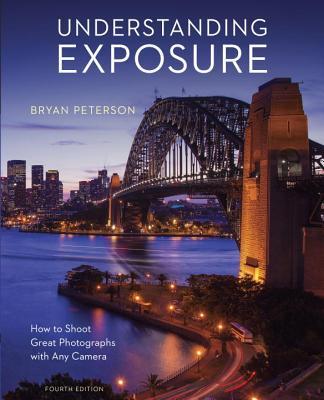
This newly revised edition of Bryan Peterson's most popular book demystifies the complex concepts of exposure in photography, allowing readers to capture the images they want.With his trademark accessible style, Peterson instructs readers on how to achieve successful images in almost any situation, explaining the fundamentals of exposure and its component parts of light, aperture, and shutter speed. With an emphasis on getting the best exposure even in tricky situations, Understanding Exposure shows how to get (or lose) sharpness and contrast in images, how to freeze action, and how to take the best meter readings, while also exploring filters, flash, and light. With all new images, and updated captions throughout, this revised edition is sure to be as popular as ever.

Stanislavski's simple exercises fire the imagination, and help readers not only discover their own conception of reality but how to reproduce it as well.

Sidney Lumet è stato un protagonista indiscusso della storia del cinema americano del secondo Novecento, con un Oscar alla carriera e oltre quaranta film, alcuni indimenticabili. Il regista di Serpico e Quinto potere accompagna il lettore in un’appassionante analisi di ogni aspetto della preparazione di un film, dalla pre alla postproduzione, passando per la scenografia e i costumi, le riprese e il montaggio, la scelta della colonna sonora, le luci e la distribuzione, fino all’attesissima uscita in sala, raccontando così – con lo stile avvincente che caratterizza anche la sua regia – l’emozionante trasformazione di una semplice idea in un film.Cinquant’anni di esperienza condensati in un libro che è innanzitutto una preziosa lezione di cinema per studiosi e appassionati, ma anche un divertente excursus nella vita sul set, un’occasione per sbirciare dietro le quinte e scoprire tutto ciò che vuol dire, nella teoria come nella pratica, «fare un film».Questa nuova edizione italiana comprende un’esclusiva prefazione di Ethan Hawke, l’attore protagonista di Giovani, carini e disoccupati e Training Day che ha lavorato con Lumet in Onora il padre e la madre.

Peter Bogdanovich, known primarily as a director, film historian and critic, has been working with professional actors all his life. He started out as an actor (he debuted on the stage in his sixth-grade production of Finian’s Rainbow ); he watched actors work (he went to the theater every week from the age of thirteen and saw every important show on, or off, Broadway for the next decade); he studied acting, starting at sixteen, with Stella Adler (his work with her became the foundation for all he would ever do as an actor and a director).Now, in his new book, Who the Hell’s in It, Bogdanovich draws upon a lifetime of experience, observation and understanding of the art to write about the actors he came to know along the way; actors he admired from afar; actors he worked with, directed, befriended. Among Lauren Bacall, Humphrey Bogart, James Cagney, John Cassavetes, Charlie Chaplin, Montgomery Clift, Marlene Dietrich, Henry Fonda, Ben Gazzara, Audrey Hepburn, Boris Karloff, Dean Martin, Marilyn Monroe, River Phoenix, Sidney Poitier, Frank Sinatra, and James Stewart.Bogdanovich captures—in their words and his—their work, their individual styles, what made them who they were, what gave them their appeal and why they’ve continued to be America’s iconic actors.On Lillian “the first virgin hearth goddess of the screen . . . a valiant and courageous symbol of fortitude and love through all distress.”On Marlon “He challenged himself never to be the same from picture to picture, refusing to become the kind of film star the studio system had invented and thrived upon—the recognizable human commodity each new film was built around . . . The funny thing is that Brando’s charismatic screen persona was vividly apparent despite the multiplicity of his guises . . . Brando always remains recognizable, a star-actor in spite of himself. ”Jerry Lewis to Bogdanovich on the first laugh Lewis ever got “I was five years old. My mom and dad had a tux made—I worked in the borscht circuit with them—and I came out and I sang, ‘Brother, Can You Spare a Dime?’ the big hit at the time . . . It was 1931, and I stopped the show—naturally—a five-year-old in a tuxedo is not going to stop the show? And I took a bow and my foot slipped and hit one of the floodlights and it exploded and the smoke and the sound scared me so I started to cry. The audience laughed—they were hysterical . . . So I knew I had to get the rest of my laughs the rest of my life, breaking, sitting, falling, spinning.”John Wayne to Bogdanovich, on the early years of Wayne’s career when he was working as a prop “Well, I’ve naturally studied John Ford professionally as well as loving the man. Ever since the first time I walked down his set as a goose-herder in 1927. They needed somebody from the prop department to keep the geese from getting under a fake hill they had for Mother Machree at Fox. I’d been hired because Tom Mix wanted a box seat for the USC football games, and so they promised jobs to Don Williams and myself and a couple of the players. They buried us over in the properties department, and Mr. Ford’s need for a goose-herder just seemed to fit my pistol.”These twenty-six portraits and conversations are unsurpassed in their evocation of a certain kind of great movie star that has vanished. Bogdanovich’s book is a celebration and a farewell.

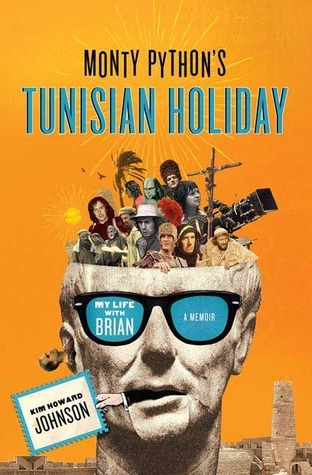
In 1978, Kim “Howard” Johnson ran away to join the circus---Monty Python’s Flying Circus, that is. The Pythons converged on Tunisia to film their timeless classic, Life of Brian, and Howard found himself in the thick of it, doubling for nearly all the Pythons, playing more roles in the film than John Cleese, and managing to ruin only one shot. He became the unit journalist, substitute still photographer, Roman soldier, peasant, Biggus Dickus’s double, near-stalker, and, ultimately, friend and confidant of the comedy legends. He also kept a detailed journal of what he saw and heard, on set and off, throughout those six weeks. The result is a unique eyewitness account that reveals the Pythons at work and at play in a way that nothing else written about them could do. Now, for the first time ever, the inside story of the making of the film is revealed through the fly-on-the-castle-wall perspective. Even the most diehard fans will get a fresh take on the comedy greats through some never-before-revealed nuggets of Python brilliance: what John Cleese offered to exchange for suntan lotion; Terry Jones directing in drag; Michael Palin’s secret to playing revolutionaries and peasants; Graham Chapman gets naked; Terry Gilliam gets filthy; Eric Idle haggles; the secret of the Thespo-Squat; Mrs. Pilate; talk of George Harrison; the cake-flinging that jeopardized the production; badminton, impromptu cricket, and erotic frescoes; and the first-ever presentation of “Always Look on the Bright Side of Life.” Here, uncensored, are the legendary Pythons in their prime. It was a period of comedy history that will never be duplicated, and Monty Python’s Tunisian Holiday captures the wit, the genius, and the sheer silliness of the six men that comprised Python.

Biographer Charlotte Chandler draws on a series of interviews she conducted with the star just months before her death in 1980, as well as interviews with people who worked or lived with her. Actress, playwright, screenwriter, and iconic sex symbol Mae West created a scandal--and a sensation--on Broadway with her play Sex in 1926. Sentenced to ten days in prison for obscenity, she went in a convict and emerged a star. Her next play, Diamond Lil, was a smash, and she would play variations on Diamond Lil for virtually her entire career. In 1930s Hollywood she saved Paramount Studios from bankruptcy. Her screenplays included some notorious one-liners that have become part of Hollywood lore, but behind the clever quips was Mae's deep desire to see women treated equally with men. She fought the double standard of the time that permitted men things that women would be ruined for doing.--From publisher description.

Elizabeth Taylor has never been short on star power, but in this unprecedented biography, the spotlight is entirely on her—a spirited beauty full of magic, professional daring, and wit. Acclaimed biographer William Mann follows Elizabeth Taylor publicly as she makes her ascent at MGM, falls into (and out of) marriages, wins Oscars, fights studio feuds, and combats America's conservative values with her decidedly modern love affairs. But he also shines a light on Elizabeth's rich private life, revealing a love for her craft and a loyalty to the underdog that fueled her lifelong battle against the studio system. Swathed in mink, disposing of husbands but keeping the diamonds—this is Elizabeth Taylor as she lived and loved, breaking and making the rules in the game of supreme celebrity.

In the long-awaited sequel to his surprise bestseller, Save the Cat!, author and screenwriter Blake Snyder returns to form in a fast-paced follow-up that proves why his is the most talked-about approach to screenwriting in years. In the perfect companion piece to his first book, Snyder delivers even more insider's information gleaned from a 20-year track record as ?one of Hollywood's most successful spec screenwriters, ? giving you the clues to write your movie. Designed for screenwriters, novelists, and movie fans, this book gives readers the key breakdowns of the 50 most instructional movies from the past 30 years. From M*A*S*H to Crash, from Alien to Saw, from 10 to Eternal Sunshine of the Spotless Mind, Snyder reveals how screenwriters who came before you tackled the same challenges you are facing with the film you want to write ? or the one you are currently working on.

Characterized by grandiose song-and-dance numbers featuring ornate geometric patterns and mimicked in many modern films, Busby Berkeley's unique artistry is as recognizable and striking as ever. From his years on Broadway to the director's chair, Berkeley is notorious for his inventiveness and signature style. Through sensational films like 42nd Street (1933), Gold Diggers of 1933 (1933), Footlight Parade (1933), and Dames (1934), Berkeley sought to distract audiences from the troubles of the Great Depression. Although his bold technique is familiar to millions of moviegoers, Berkeley's life remains a mystery. The Life and Art of Busby Berkeley is a telling portrait of the filmmaker who revolutionized the musical and changed the world of choreography. Berkeley pioneered many conventions still in use today, including the famous "parade of faces" technique, which lends an identity to each anonymous performer in a close-up. Carefully arranging dancers in complex and beautiful formations, Berkeley captured perspectives never seen before.Jeffrey Spivak's meticulous research magnifies the career and personal life of this beloved filmmaker. Employing personal letters, interviews, studio memoranda, and Berkeley's private memoirs, Spivak unveils the colorful life of one of cinema's greatest artists.

Much has been written about the storied New Hollywood of the 1970s, but at the same time that Steven Spielberg and Martin Scorcese were producing their first classic movies, a parallel universe of directors gave birth to the modern horror film. Shock Value tells the unlikely story of how directors like Wes Craven, Roman Polanski, and John Carpenter revolutionized the genre in the 1970s, plumbing their deepest anxieties to bring a gritty realism and political edge to their craft. From Rosemary’s Baby to Halloween, the films they unleashed on the world created a template for horror that has been relentlessly imitated but rarely matched. Based on unprecedented access to the genre’s major players, this is an enormously entertaining account of a hugely influential golden age in American film.

This is the only screenwriting guide by two guys who have actually done it (instead of some schmuck who just gives lectures about screenwriting at the airport Marriott); “These guys are proof that with no training and little education, ANYONE can make it as a screenwriter” (Paul Rudd).Robert Ben Garant and Thomas Lennon’s movies have made over a billion dollars at the box office—and now they show you how to do it yourself! This book is full of secret insider information about how to conquer the Hollywood studio how to write, pitch, structure, and get drunk with the best of them. Well…maybe not the best of them, but certainly the most successful. (If you’re aiming to win an Oscar, this is not the book for you!) But if you can type a little, and can read and speak English—then you too can start turning your words into stacks of money! This is the only screenwriting book you will ever need (because all other ones pretty much suck). In these pages, Garant and Lennon provide the kind of priceless tips you won’t find anywhere else, -The art of pitching -Getting your foot in the door -Taking notes from movie stars -How to get fired and rehired -How to get credit and royalties! And most what to buy with the huge piles of money you’re going to make! Writing Movies for Fun and Profit will take you through the highs and lows of life as a professional screenwriter. From the highs of hugging Gisele Bündchen and getting kung fu punched by Jackie Chan to the soul-crushing lows of Fully Loaded. Read this book and you’ll have everything you need to make your first billion the old-fashioned way—by “selling out” in show business! A portion of the authors’ proceeds from this book are being contributed to the USO of Metropolitan Washington, a private, nonprofit organization dedicated to serving active duty military members and their families in the greater Washington, DC, region.

WITH 8 PAGES OF BLACK-AND-WHITE PHOTOGRAPHSHow—and why—do we obsess over movie stars? How does fame both reflect and mask the person behind it? How have the image of stardom and our stars’ images altered over a century of cultural and technological change? Do we create celebrities, or do they create us? Ty Burr, film critic for The Boston Globe , answers these questions in this lively and fascinating anecdotal history of stardom, with all its blessings and curses for star and stargazer alike. From Mary Pickford and Charlie Chaplin to Archie Leach (a.k.a. Cary Grant) and Marion Morrison (a.k.a. John Wayne), Tom Cruise and Julia Roberts, and such no-cal stars of today as the Kardashians and the new online celebrity (i.e., you and me), Burr takes us on an insightful and entertaining journey through the modern fame game at its flashiest, most indulgent, occasionally most tragic, and ultimately, its most revealing.

Netflix has come a long way since 1997, when two Silicon Valley entrepreneurs, Marc Randolph and Reed Hastings, decided to start an online DVD store before most people owned a DVD player. They were surprised and elated when launch-day traffic in April 1998 crashed their server and resulted in 150 sales. Today, Netflix has more than 25 million subscribers and annual revenues above $3 billion. Yet long- term success-or even survival-is still far from guaranteed. Journalist Gina Keating recounts the absorbing, fast-paced drama of the company's turbulent rise to the top and its attempt to invent two new kinds of business. First it engaged in a grueling war against video-store behemoth Blockbuster, transforming movie rental forever. Then it jumped into an even bigger battle for online video streaming against Google, Hulu, Amazon, and the big cable companies. Netflix ushered in such innovations as DVD rental by mail, a patented online queue of upcoming rentals, and a recommendation algorithm called Cinematch that proved crucial in its struggle against bigger rivals. Yet for all its success, Netflix is still a polarizing company. Hastings is often heralded as a visionary-he was named Business Person of the Year in 2010 by Fortune-even as he has been called the nation's worst CEO. Netflix also faces disgruntled customers after price increases and other stumbles that could tarnish the brand forever. The quest to become the world's portal for premium video on demand will determine nothing less than the future of entertainment and the Internet. Drawing on extensive new interviews and her years covering Netflix as a financial and entertainment reporter, Keating makes this tale as absorbing as it is important.

Irresistibly magnetic on stage, mesmerizing in movies, seven times an Academy Award nominee, Richard Burton rose from humble beginnings in Wales to become Hollywood's most highly paid actor and one of England's most admired Shakespearean performers. His epic romance with Elizabeth Taylor, his legendary drinking and story-telling, his dazzling purchases (enormous diamonds, a jet, homes on several continents), and his enormous talent kept him constantly in the public eye. Yet the man behind the celebrity façade carried a surprising burden of insecurity and struggled with the peculiar challenges of a life lived largely in the spotlight.This volume publishes Burton's extensive personal diaries in their entirety for the first time. His writings encompass many years—from 1939, when he was still a teenager, to 1983, the year before his death—and they reveal him in his most private moments, pondering his triumphs and demons, his loves and his heartbreaks. The diary entries appear in their original sequence, with annotations to clarify people, places, books, and events Burton mentions.From these hand-written pages emerges a multi-dimensional man, no mere flashy celebrity. While Burton touched shoulders with shining lights—among them Olivia de Havilland, John Gielgud, Claire Bloom, Laurence Olivier, John Huston, Dylan Thomas, and Edward Albee—he also played the real-life roles of supportive family man, father, husband, and highly intelligent observer. His diaries offer a rare and fresh perspective on his own life and career, and on the glamorous decades of the mid-twentieth century.

Crab Monsters, Teenage Cavemen, and Candy Stripe Nurses is an outrageously rollicking account of the life and career of Roger Corman―one of the most prolific and successful independent producers, directors, and writers of all time, and self-proclaimed king of the B movie. As told by Corman himself and graduates of 'The Corman Film School', including Peter Bogdanovich, James Cameron, Francis Ford Coppola, Robert De Niro, and Martin Scorsese, this comprehensive oral history takes readers behind the scenes of more than six decades of American cinema, as now-legendary directors and actors candidly unspool recollections of working with Corman, continually one-upping one another with tales of the years before their big breaks.Crab Monsters... is supplemented with dozens of full-color reproductions of classic Corman movie posters; behind-the-scenes photographs and ephemera (many taken from Corman’s personal archive); and critical essays on Corman’s most daring films―including The Intruder, Little Shop of Horrors, and The Big Doll House―that make the case for Corman as an artist like no other.

More than a quarter-century after his death, Bob Fosse’s fingerprints on popular culture remain indelible. The only person ever to win Oscar, Emmy, and Tony awards in the same year, Fosse revolutionized nearly every facet of American entertainment, forever marking Broadway and Hollywood with his iconic style — hat tilted, fingers splayed — that would influence generations of performing artists. Yet in spite of Fosse’s innumerable achievements, no accomplishment ever seemed to satisfy him, and offstage his life was shadowed in turmoil and anxiety.Now, bestselling author Sam Wasson unveils the man behind the swaggering sex appeal, tracing Fosse’s untold reinventions of himself over a career that would spawn The Pajama Game , Cabaret , Pippin , All That Jazz , and Chicago , one of the longest-running Broadway musicals ever. Drawing on a wealth of unpublished material and hundreds of sources — friends, enemies, lovers, and collaborators, many of whom have never spoken publicly about Fosse before — Wasson illuminates not only Fosse’s prodigious professional life, but also his close and conflicted relationships with everyone from Liza Minnelli to Ann Reinking to Jessica Lange and Dustin Hoffman. Wasson also uncovers the deep wounds that propelled Fosse’s insatiable appetites — for spotlights, women, and life itself. In this sweeping, richly detailed account, Wasson’s stylish, effervescent prose proves the ideal vehicle for revealing Bob Fosse as he truly was — after hours, close up, and in vibrant color.

Writing with an exuberant love of language and detail, Anjelica Huston shares her enchanted childhood in Ireland, her teen years in London, and her coming-of-age as a model and nascent actress in New York.Living with her glamorous and artistic mother, educated by tutors and nuns, intrepid on a horse, Huston was raised on an Irish estate to which—between movies—her father brought his array of extraordinary friends, from Carson McCullers and John Steinbeck to Peter O’Toole and Marlon Brando. Every morning, Anjelica and her brother visited their father while he took his breakfast in bed. “What news?” he’d ask. “I’d seen him the night before,” Anjelica recalls. “There wasn’t much to report.” So she became a storyteller.In London, where she lives with her mother and brother in the early sixties when her parents separate, Huston encounters the Rolling Stones and Fleetwood Mac. She understudies Marianne Faithfull in Hamlet. Seventeen, striking, precocious, but still young and vulnerable, she is devastated when her mother dies in a car crash.Months later she moves to New York, falls in love with the much older, brilliant but disturbed photographer Bob Richardson, and becomes a model. Living in the Chelsea Hotel, working with Richard Avedon and other photographers, she navigates a volatile relationship and the dynamic cultural epicenter of New York in the seventies.A Story Lately Told ends as Huston launches her Hollywood life. The second part of her story—Watch Me—opens in Los Angeles in 1973 and will be published in Fall 2014. Beguiling and beautifully written, Huston’s memoir is a treasure.

The director of Do the Right Thing and Jungle Fever describes the troubles he encountered while making Malcolm X, a film based on the life of the slain African-American leader. Original.

In Pictures at a Revolution, Mark Harris turned the story of the five movies nominated for Best Picture in 1967 into a landmark work of cultural history, a book about the transformation of an art form and the larger social shift it signified. In Five Came Back, he achieves something larger and even more remarkable, giving us the untold story of how Hollywood changed World War II, and how World War II changed Hollywood, through the prism of five film directors caught up in the war: John Ford, William Wyler, John Huston, Frank Capra, and George Stevens. It was the best of times and the worst of times for Hollywood before the war. The box office was booming, and the studios’ control of talent and distribution was as airtight as could be hoped. But the industry’s relationship with Washington was decidedly uneasy—hearings and investigations into allegations of corruption and racketeering were multiplying, and hanging in the air was the insinuation that the business was too foreign, too Jewish, too un-American” in its values and causes. Could an industry this powerful in shaping America’s mind-set really be left in the hands of this crew? Following Pearl Harbor, Hollywood had the chance to prove its critics wrong and did so with vigor, turning its talents and its business over to the war effort to an unprecedented extent. No industry professionals played a bigger role in the war than America’s most legendary directors: Ford, Wyler, Huston, Capra, and Stevens. Between them they were on the scene of almost every major moment of America’s war, and in every branch of service—army, navy, and air force; Atlantic and Pacific; from Midway to North Africa; from Normandy to the fall of Paris and the liberation of the Nazi death camps; to the shaping of the message out of Washington, D.C. As it did for so many others, World War II divided the lives of these men into before and after, to an extent that has not been adequately understood. In a larger sense—even less well understood—the war divided the history of Hollywood into before and after as well. Harris reckons with that transformation on a human level—through five unforgettable lives—and on the level of the industry and the country as a whole. Like these five men, Hollywood too, and indeed all of America, came back from the war having grown up more than a little.

From actor Cary Elwes, who played the iconic role of Westley in The Princess Bride, comes a first-person account and behind-the-scenes look at the making of the cult classic film filled with never-before-told stories and interviews with costars Robin Wright, Wallace Shawn, Billy Crystal, Christopher Guest, and Mandy Patinkin, as well as author and screenwriter William Goldman, producer Norman Lear, and director Rob Reiner.The Princess Bride has been a family favorite for close to three decades. Ranked by the American Film Institute as one of the top 100 Greatest Love Stories and by the Writers Guild of America as one of the top 100 screenplays of all time, The Princess Bride will continue to resonate with audiences for years to come.Cary Elwes was inspired to share his memories and give fans an unprecedented look into the creation of the film while participating in the twenty-fifth anniversary cast reunion. In As You Wish he has created an enchanting experience; in addition to interviews with his fellow cast mates, there are plenty of set secrets and backstage stories.With a foreword by Rob Reiner, As You Wish is a must-have for all fans of this beloved film.

An addictive true tale of ambition, scandal, intrigue, murder, and the creation of the modern film industryBy 1920, the movies had suddenly become America’s new favorite pastime, and one of the nation’s largest industries. Never before had a medium possessed such power to influence. Yet Hollywood’s glittering ascendency was threatened by a string of headline-grabbing tragedies—including the murder of William Desmond Taylor, the popular president of the Motion Picture Directors Association, a legendary crime that has remained unsolved until now.In a fiendishly involving narrative, bestselling Hollywood chronicler William J. Mann draws on a rich host of sources, including recently released FBI files, to unpack the story of the enigmatic Taylor and the diverse cast that surrounded him—including three beautiful, ambitious actresses; a grasping stage mother; a devoted valet; and a gang of two-bit thugs, any of whom might have fired the fatal bullet. And overseeing this entire landscape of intrigue was Adolph Zukor, the brilliant and ruthless founder of Paramount, locked in a struggle for control of the industry and desperate to conceal the truth about the crime. Along the way, Mann brings to life Los Angeles in the Roaring Twenties: a sparkling yet schizophrenic town filled with party girls, drug dealers, religious zealots, newly-minted legends and starlets already past their prime—a dangerous place where the powerful could still run afoul of the desperate.A true story recreated with the suspense of a novel, Tinseltown is the work of a storyteller at the peak of his powers—and the solution to a crime that has stumped detectives and historians for nearly a century.

Before becoming the world's most notorious dictator, Kim Jong-Il ran North Korea's Ministry for Propaganda and its film studios. Conceiving every movie made, he acted as producer and screenwriter. Despite this control, he was underwhelmed by the available talent and took drastic steps, ordering the kidnapping of Choi Eun-Hee (Madam Choi)-South Korea's most famous actress-and her ex-husband Shin Sang-Ok, the country's most famous filmmaker.Madam Choi vanished first. When Shin went to Hong Kong to investigate, he was attacked and woke up wrapped in plastic sheeting aboard a ship bound for North Korea. Madam Choi lived in isolated luxury, allowed only to attend the Dear Leader's dinner parties. Shin, meanwhile, tried to escape, was sent to prison camp, and "re-educated." After four years he cracked, pledging loyalty. Reunited with Choi at the first party he attends, it is announced that the couple will remarry and act as the Dear Leader's film advisors. Together they made seven films, in the process gaining Kim Jong-Il's trust. While pretending to research a film in Vienna, they flee to the U.S. embassy and are swept to safety.A nonfiction thriller packed with tension, passion, and politics, author Paul Fischer's A Kim Jong-Il Production offers a rare glimpse into a secretive world, illuminating a fascinating chapter of North Korea's history that helps explain how it became the hermetically sealed, intensely stage-managed country it remains today.

The last book from beloved Hollywood icon Carrie Fisher, The Princess Diarist is an intimate, hilarious, and revealing recollection of what happened behind the scenes on one of the most famous film sets of all time, the first Star Wars movie. When Carrie Fisher discovered the journals she kept during the filming of the first Star Wars movie, she was astonished to see what they had preserved--plaintive love poems, unbridled musings with youthful naiveté, and a vulnerability that she barely recognized. Before her passing, her fame as an author, actress, and pop-culture icon was indisputable, but in 1977, Carrie Fisher was just a teenager with an all-consuming crush on her costar, Harrison Ford.With these excerpts from her handwritten notebooks, The Princess Diarist is Fisher's intimate and revealing recollection of what happened on one of the most famous film sets of all time--and what developed behind the scenes. Fisher also ponders the joys and insanity of celebrity, and the absurdity of a life spawned by Hollywood royalty, only to be surpassed by her own outer-space royalty. Laugh-out-loud hilarious and endlessly quotable, The Princess Diarist brims with the candor and introspection of a diary while offering shrewd insight into one of Hollywood's most beloved stars.

“A brisk, frothy narrative . . . informative and fun.” ―The Wall Street Journal In the dizzying wake of World War II, Rome skyrocketed to prominence as an epicenter of film, fashion, photography, and boldfaced libertinism. Artists, exiles, and a dazzling array of movie talent rushed to Rome for a chance to thrive in this hotbed of excitement. From the photographers who tailed the stars to the legends who secured their place in cinematic fame, Dolce Vita Confidential resurrects the drama that permeated the streets and screens of Rome. 8 pages of photographs

Traditional network television programming has always followed the same script: executives approve a pilot, order a trial number of episodes, and broadcast them, expecting viewers to watch a given show on their television sets at the same time every week. But then came Netflix's "House of Cards." Netflix gauged the show's potential from data it had gathered about subscribers' preferences, ordered two seasons without seeing a pilot, and uploaded the first thirteen episodes all at once for viewers to watch whenever they wanted on the devices of their choice.In this book, Michael Smith and Rahul Telang, experts on entertainment analytics, show how the success of "House of Cards" upended the film and TV industries -- and how companies like Amazon and Apple are changing the rules in other entertainment industries, notably publishing and music. We're living through a period of unprecedented technological disruption in the entertainment industries. Just about everything is affected: pricing, production, distribution, piracy. Smith and Telang discuss niche products and the long tail, product differentiation, price discrimination, and incentives for users not to steal content. To survive and succeed, businesses have to adapt rapidly and creatively. Smith and Telang explain how.How can companies discover who their customers are, what they want, and how much they are willing to pay for it? Data. The entertainment industries, must learn to play a little "moneyball." The bottom line: follow the data.

In The Charisma Myth , Olivia Fox Cabane offered a groundbreaking approach to becoming more charismatic. Now she teams up with Judah Pollack to reveal how anyone can train their brain to have more eureka insights.The creative mode in your brain is like a butterfly. It's beautiful and erratic, hard to catch and highly valued as a result. If you want to capture it, you need a net. Enter the executive mode, the task-oriented network in your brain that help you tie your shoes, run a meeting, or pitch a client. To succeed, you need both modes to work together--your inner butterfly to be active and free, but your inner net to be ready to spring at the right time and create that "aha!" moment. But is there any way to trigger these insights, beyond dumb luck?Thanks to recent neuroscience discoveries, we can now explain these breakthrough moments--and also induce them through a series of specific practices. It turns out there's a hidden pattern to all these seemingly random breakthrough ideas. From Achimedes' iconic moment in the bathtub to designer Adam Cheyer's idea for Siri, accidental breakthroughs throughout history share a common origin story. In this book, you will learn to master the skills that will transform your brain into a consistent generator of insights.Drawing on their extensive coaching and training practice with top Silicon Valley firms, Cabane and Pollack provide a step-by-step process for accessing the part of the brain that produces breakthroughs and systematically removing internal blocks. Their tactics range from simple to zany, such · Imagine an alternate universe where gravity doesn’t exist, and the social and legal rules that govern it.· Map Disney’s Pocahontas story onto James Cameron’s Avatar .· Rid yourself of imposter syndrome through mental exercises.· Literally change your perspective by climbing a tree.· Stimulate your butterfly mode by watching a foreign film without subtitles.By trying the exercises in this book, readers will emerge with a powerful new capacity for breakthrough thinking.

Audiences love the glitz and glamour of Hollywood, but beyond the red carpet and behind the velvet curtain exists a legion of individuals who make showbiz work : agents. Whether literary, talent, or indie film, agents are behind the scenes brokering power, handling mediation, and doing the deal-making that keeps Hollywood spinning. In Representing Talent , Violaine Roussel explores the little-known but decisive work of agents, turning the spotlight on how they help produce popular culture.The book takes readers behind the scenes to observe the day-to-day activities of agents, revealing their influence on artistic careers and the prospects of Hollywood’s forthcoming projects. Agents are crucial to understanding how creative and economic power are intertwined in Hollywood today. They play a key role in the process by which artistic worth and economic value are evaluated and attributed to people and projects. Roussel’s fieldwork examines what “having relationships” really means for agents, and how they perform the relationship work that’s at the heart of their professional existence and success. Representing Talent helps us to understand the players behind the definition of entertainment itself, as well as behind its current transformations.

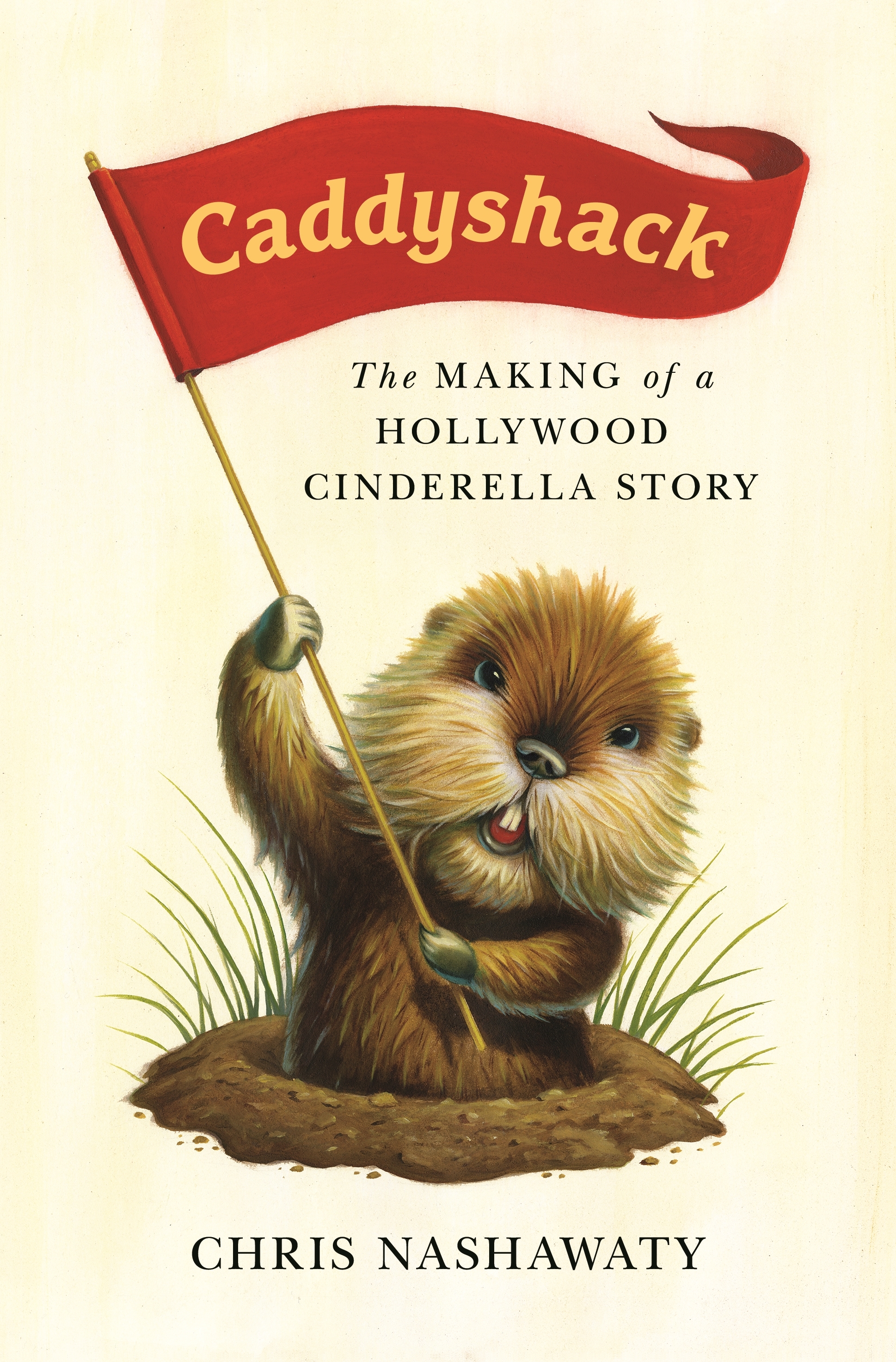
“This is a tough, sharp history of comedy and competitiveness, of rising stars and brilliant upstarts. Of difficult egos, awful behavior, fragile friendships, bursts of inspiration, and blizzards of cocaine―told by the survivors and shaped by Chris Nashawaty's welcome insight and perspective.”― Mark Harris, New York Times bestselling author of Pictures at a Revolution and Five Came BackCaddyshack is one of the most beloved comedies of all time, a classic snobs vs. slobs story of working class kids and the white collar buffoons that make them haul their golf bags in the hot summer sun. It has sex, drugs and one very memorable candy bar, but the movie we all know and love didn’t start out that way, and everyone who made it certainly didn’t have the word “classic” in mind as the cameras were rolling.In Caddyshack:The Making of a Hollywood Cinderella Story film critic for Entertainment Weekly Chris Nashawaty goes behind the scenes of the iconic film, chronicling the rise of comedy’s greatest deranged minds as they form The National Lampoon, turn the entertainment industry on its head, and ultimately blow up both a golf course and popular culture as we know it. Caddyshack is at once an eye-opening narrative about one of the most interesting, surreal, and dramatic film productions there’s ever been, and a rich portrait of the biggest, and most revolutionary names in Hollywood. So, it’s got that going for it…which is nice.

In this riveting popular history, the creator of You Must Remember This probes the inner workings of Hollywood’s glamorous golden age through the stories of some of the dozens of actresses pursued by Howard Hughes, to reveal how the millionaire mogul’s obsessions with sex, power, and publicity trapped, abused or benefitted women who dreamt of screen stardom.In recent months, the media has reported on scores of entertainment figures who used their power and money in Hollywood to sexually harass and coerce some of the most talented women in cinema and television. But as Karina Longworth reminds us, long before the Harvey Weinsteins there was Howard Hughes—the Texas millionaire, pilot, and filmmaker whose reputation as a cinematic provocateur was matched only by that as a prolific womanizer.His supposed conquests between his first divorce in the late 1920s and his marriage to actress Jean Peters in 1957 included many of Hollywood’s most famous actresses, among them Billie Dove, Katharine Hepburn, Ava Gardner, and Lana Turner. From promoting bombshells like Jean Harlow and Jane Russell to his contentious battles with the censors, Hughes—perhaps more than any other filmmaker of his era—commoditized male desire as he objectified and sexualized women. Yet there were also numerous women pulled into Hughes’s grasp who never made it to the screen, sometimes virtually imprisoned by an increasingly paranoid and disturbed Hughes, who retained multitudes of private investigators, security personnel, and informers to make certain these actresses would not escape his clutches.Vivid, perceptive, timely, and ridiculously entertaining, Seduction is a landmark work that examines women, sex, and male power in Hollywood during its golden age—a legacy that endures nearly a century later.

A comprehensive collection of the writings of Mark Fisher (1968-2017), whose work defined critical writing for a generation.This comprehensive collection brings together the work of acclaimed blogger, writer, political activist and lecturer Mark Fisher (aka k-punk). Covering the period 2004 - 2016, the collection will include some of the best writings from his seminal blog k-punk; a selection of his brilliantly insightful film, television and music reviews; his key writings on politics, activism, precarity, hauntology, mental health and popular modernism for numerous websites and magazines; his final unfinished introduction to his planned work on "Acid Communism"; and a number of important interviews from the last decade. Edited by Darren Ambrose and with a foreword by Simon Reynolds.

Since 1929, Hollywood’s brightest stars have flocked to the Chateau Marmont as if it were a second home. An apartment building-turned-hotel, the Chateau has been the backdrop for generations of gossip and folklore: where director Nicholas Ray slept with his sixteen-year-old Rebel Without a Cause star Natalie Wood; Jim Morrison swung from the balconies; John Belushi suffered a fatal overdose; and Lindsay Lohan got the boot after racking up nearly $50,000 in charges in less than two months.But despite its mythic reputation, much of what has happened inside the Chateau’s walls has eluded the public eye—until now. With wit and insight, Shawn Levy recounts the wild revelries and scandalous liaisons, the creative breakthroughs and marital breakdowns, the births and deaths to which the hotel has been a party. Vivid, salacious, and richly informed, The Castle on Sunset is a glittering tribute to Hollywood as seen from inside the walls of its most hallowed hotel.

New York Times bestselling author and iconic Hollywood producer Brian Grazer reveals a new secret to forge a happier and more successful life. Through his own personal stories, discover how eye contact—a power available to nearly everyone—can change your life too.In his bestseller A Curious Mind: The Secret to a Bigger Life, Academy Award-winning producer Brian Grazer helped everyone from parents to CEOs to artists to young graduates develop their curiosity into a superpower that would expand their world. Now, he reveals a new secret. Whether you’re looking to develop a relationship, build your confidence or win a negotiation: the answer is in the eyes. Grazer delves into the power of eye contact, as he shares personal, life-changing stories and insightful advice that will help you immediately discover the secret to a more meaningful life.While it might seem like second nature, Grazer proves that eye contact—really looking someone in the eyes—is one of the most transformative habits you can develop in your daily life. Eye contact has the power to offer validation, show generosity, create intimacy, and—most importantly—establish genuine human connection. Even as technology takes on a bigger and bigger role in our lives, from self-driving cars to the smartphones in our pockets, no machine will ever be able to replace the unique and powerful benefits of eye contact.As one of the most acclaimed Hollywood producers in the world, Grazer transports you into the moments from his life where eye contact proves to be the key to unlocking power, emotion, and insight. These are moments like a high-powered CEO conference with Bill Gates; a surprise date with supermodel Kate Moss; a tough conversation with Eminem when creating the movie 8 Mile; a tête-à-tête with George W. Bush; and encounters with personalities like Taraji Henson, Airbnb Founder Brian Chesky, and Chance The Rapper.With his flair for telling intriguing stories, Grazer’s highly readable book will give you a powerful advantage across every aspect of your life. Read this book now, and learn how a happier and more meaningful life is just a blink away.

The behind-the-scenes story of the iconic funnymen who ruled '80s Hollywood—Bill Murray, Steve Martin, Chevy Chase, John Belushi, Dan Aykroyd, and Eddie Murphy—and the beloved films that made them stars, including Animal House, Caddyshack, and Ghostbusters. NAMED ONE OF THE BEST BOOKS OF THE YEAR BY NEW YORK. "An enjoyable romp that vividly captures the manic ups and downs of the remarkable group of funny folk who gave us a golden age of small and big screen comedy, from SNL to Groundhog Day." —Peter Biskind, author of Easy Riders, Raging Bulls. Wild and Crazy Guys opens in 1978 with Chevy Chase and Bill Murray taking bad-tempered swings at each other backstage at Saturday Night Live, and closes 21 years later with the two doing a skit in the same venue, poking fun at each other, their illustrious careers, triumphs and prat falls. In between, Nick de Semlyen takes us on a trip through the tumultuous '80s, delving behind the scenes of movies such as National Lampoon's Vacation, Beverly Hills Cop, The Blues Brothers, Dirty Rotten Scoundrels, and dozens more. Chronicling the off-screen, larger-than-life antics of Bill Murray, Chevy Chase, Steve Martin, Dan Aykroyd, Eddie Murphy, John Belushi, John Candy, and Rick Moranis, it's got drugs, sex, punch-ups, webbed toes, and Bill Murray being pushed into a swimming pool by Hunter S. Thompson while tied to a lawn chair. What's not to like? Based on candid interviews from many of the stars themselves, as well as those in their immediate orbit, including directors John Landis, Carl Reiner, and Amy Heckerling, Wild and Crazy Guys is a fantastic insider account of the friendships, feuds, triumphs, and disasters experienced by these beloved comedians. Hilarious and revealing, it is both a hidden history of the most fertile period ever for screen comedy and a celebration of some of the most popular films of all time. Praise for Wild and Crazy Guys: "Eminently readable . . . Children of the 1980s, take note: this is a fond, engrossing look back at the making of movies that became cultural touchstones." —Booklist (starred review). "Nick de Semlyen smartly charts the pinballing career paths of the stars of this new comic wave. . . . His punchy, nonstop narrative . . . tells a [story] where art and commerce smash hard against each other, sometimes causing destruction, but sometimes making sparks fly." —The Sunday Times (UK)

"For its sheer excellence, diversity, and cultural impact, Paul Hirsch's filmography speaks for itself. They say a film is made in the editing room, and this book is easily the most comprehensive, revelatory, and illuminating account of this essential cinematic art. A must-read for both the casual moviegoer and the serious cinephile alike." —Mark HamillA Long Time Ago in a Cutting Room Far, Far Away provides a behind-the-scenes look at some of the most influential films of the last fifty years as seen through the eyes of Paul Hirsch, the Oscar-winning film editor who worked on such classics as George Lucas’s Star Wars and The Empire Strikes Back , Brian De Palma’s Carrie and Impossible , Herbert Ross’s Footloose and Steel Magnolias , John Hughes’s Ferris Bueller’s Day Off and Planes, Trains & Automobiles , Joel Schumacher’s Falling Down , and Taylor Hackford’s Ray .Hirsch breaks down his career movie by movie, offering a riveting look at the decisions that went into creating some of cinema’s most iconic scenes. He also provides behind-the-scenes insight into casting, directing, and scoring and intimate portraits of directors, producers, composers, and stars.Part film school primer, part paean to legendary filmmakers and professionals, this funny and insightful book will entertain and inform aficionados and casual moviegoers alike.

Book/Author CBS This Morning , New York Times , Washington Post , BBC , NPR , Wall Street Journal , Tucker Carlson Tonight, Fox News, CNN / Smerconish, Bloomberg, Fox Sports, Maria Bartiromo, Fast Company, Los Angeles Times, South China Morning Post, SALT Talks, Sky News, VOA, Greta Van Susteren, War Room, Adam Carolla Show, Keiser Report, CNBC, VOA, Outkick, The Bulwark, Fox Business, & more....A deeply revealing memoir of big wins and hard lessons from a seasoned executive caught smack in the middle of the trillion-dollar soft power struggle pitting China against Hollywood, the NBA, and American business.

A magnificent biography of one of the most protean creative forces in American entertainment history, a life of dazzling highs and vertiginous plunges--some of the worst largely unknown until now--by the acclaimed author of Pictures at a Revolution and Five Came BackMike Nichols burst onto the scene as a wunderkind: while still in his twenties, he was half of a hit improv duo with Elaine May that was the talk of the country. Next he directed four consecutive hit plays, won back-to-back Tonys, ushered in a new era of Hollywood moviemaking with Who's Afraid of Virginia Woolf?, and followed it with The Graduate, which won him an Oscar and became the third-highest-grossing movie ever. At thirty-five, he lived in a three-story Central Park West penthouse, drove a Rolls-Royce, collected Arabian horses, and counted Jacqueline Kennedy, Elizabeth Taylor, Leonard Bernstein, and Richard Avedon as friends.Where he arrived is even more astonishing given where he had begun: born Igor Peschkowsky to a Jewish couple in Berlin in 1931, he and his younger brother were sent to America on a ship in 1939. The young immigrant boy caught very few breaks. He was bullied and ostracized--an allergic reaction had rendered him permanently hairless--and his father died when he was just twelve, leaving his mother alone and overwhelmed.The gulf between these two sets of facts explains a great deal about Nichols's transformation from lonely outsider to the center of more than one cultural universe--the acute powers of observation that first made him famous; the nourishment he drew from his creative partnerships, most enduringly with May; his unquenchable drive; his hunger for security and status; and the depressions and self-medications that brought him to terrible lows. It would take decades for him to come to grips with his demons. In an incomparable portrait that follows Nichols from Berlin to New York to Chicago to Hollywood, Mark Harris explores, with brilliantly vivid detail and insight, the life, work, struggle, and passion of an artist and man in constant motion. Among the 250 people Harris interviewed: Elaine May, Meryl Streep, Stephen Sondheim, Robert Redford, Glenn Close, Tom Hanks, Candice Bergen, Emma Thompson, Annette Bening, Natalie Portman, Julia Roberts, Lorne Michaels, and Gloria Steinem.Mark Harris gives an intimate and evenhanded accounting of success and failure alike; the portrait is not always flattering, but its ultimate impact is to present the full story of one of the most richly interesting, complicated, and consequential figures the worlds of theater and motion pictures have ever seen. It is a triumph of the biographer's art.

From the moment Star Wars burst onto the screen in 1977, audiences have been in equal parts fascinated and appalled by the half-man/half-machine hybrid Darth Vader. In 1999, creator George Lucas began the story of how Anakin Skywalker grew up to train as a Jedi under Obi-Wan Kenobi, found love with the Queen of Naboo, Padmé Amidala, before turning to the dark side of his nature and becoming more machine than man.After driving the development of nascent digital technology, George Lucas perceived how he could create new creatures and new worlds on a grander scale than ever before. He created the first digital blockbuster, and met fierce resistance when he pushed for widespread digital cameras, sets, characters, and projection - all of which are now used throughout the industry. He essentially popularized the modern way of making movies.Made with the full cooperation of George Lucas and Lucasfilm, this second volume covers the making of the prequel trilogy -- Episode I The Phantom Menance, Episode II Attack of the Clones, and Episode III Revenge of the Sith -- and features exclusive interviews with Lucas and his collaborators. The book is profusely illustrated with script pages, production documents, concept art, storyboards, on-set photography, stills, and posters.

Michael Mann, four-time-Oscar-nominated writer-director of The Last of the Mohicans, The Insider, Ali, Miami Vice, Collateral, and Heat teams up with Edgar Award–winning author Meg Gardiner to deliver Mann’s first novel, an explosive return to the universe and characters of his classic crime film—with an all-new story unfolding in the years before and after the iconic movieOne day after the end of Heat, Chris Shiherlis (Val Kilmer) is holed up in Koreatown, wounded, half delirious, and desperately trying to escape LA. Hunting him is LAPD detective Vincent Hanna (Al Pacino). Hours earlier, Hanna killed Shiherlis’s brother in arms Neil McCauley (Robert De Niro) in a gunfight under the strobe lights at the foot of an LAX runway. Now Hanna’s determined to capture or kill Shiherlis, the last survivor of McCauley’s crew, before he ghosts out of the city.In 1988, seven years earlier, McCauley, Shiherlis, and their highline crew are taking scores on the West Coast, the US-Mexican border, and now in Chicago. Driven, daring, they’re pulling in money and living vivid lives. And Chicago homicide detective Vincent Hanna—a man unreconciled with his history—is following his calling, the pursuit of armed and dangerous men into the dark and wild places, hunting an ultraviolent gang of home invaders.Meanwhile, the fallout from McCauley’s scores and Hanna’s pursuit cause unexpected repercussions in a parallel narrative, driving through the years following Heat.Heat 2projects its dimensional and richly drawn men and women into whole new worlds—from the inner sanctums of rival crime syndicates in a South American free-trade zone to transnational criminal enterprises in Southeast Asia. The novel brings you intimately into these lives. In Michael Mann’s Heat universe, they will confront new adversaries in lethal circumstances beyond all boundaries.Heat 2 is engrossing, moving, and tragic—a masterpiece of crime fiction with the same extraordinary ambitions, scope, and rich characterizations as the epic film.

INSTANT NEW YORK TIMES BESTSELLER "A superb chronicle of how Marvel Studios conquered Hollywood…. This definitive account of the Hollywood juggernaut thrills." ― Publishers Weekly , starred reviewThe unauthorized, behind-the-scenes story of the stunning rise―and suddenly uncertain reign―of the most transformative cultural phenomenon of our the Marvel Cinematic Universe. Marvel Entertainment was a moribund toymaker not even twenty years ago. Today, Marvel Studios is the dominant player both in Hollywood and in global pop culture. How did an upstart studio conquer the world? In MCU , beloved culture writers Joanna Robinson, Dave Gonzales, and Gavin Edwards draw on more than a hundred interviews with actors, producers, directors, and writers to present the definitive chronicle of Marvel Studios and its sole, ongoing production, the Marvel Cinematic Universe. For all its outward success, the studio was forged by near-constant conflict, from the contentious hiring of Robert Downey Jr. for its 2008 debut, Iron Man , all the way up to the disappointment of Ant-Man and the Quantumania and shocking departures of multiple Marvel executives in 2023. Throughout, the authors demonstrate that the original genius of Marvel was its resurrection and modification of Hollywood’s old studio system. But will it survive its own spectacular achievements? Dishy and authoritative, MCU is the first book to tell the Marvel Studios story in full―and an essential, effervescent account of American mass culture.