
Jason Zinoman
8 Books Written

Shock Value: How a Few Eccentric Outsiders Gave Us Nightmares, Conquered Hollywood, and Invented Modern Horror
by Jason Zinoman
Rating: 4.0 ⭐
• 2 recommendations ❤️
Much has been written about the storied New Hollywood of the 1970s, but at the same time that Steven Spielberg and Martin Scorcese were producing their first classic movies, a parallel universe of directors gave birth to the modern horror film. Shock Value tells the unlikely story of how directors like Wes Craven, Roman Polanski, and John Carpenter revolutionized the genre in the 1970s, plumbing their deepest anxieties to bring a gritty realism and political edge to their craft. From Rosemary’s Baby to Halloween, the films they unleashed on the world created a template for horror that has been relentlessly imitated but rarely matched. Based on unprecedented access to the genre’s major players, this is an enormously entertaining account of a hugely influential golden age in American film.

New York Times comedy critic Jason Zinoman delivers the definitive story of the life and artistic legacy of David Letterman, the greatest television talk show host of all time and the signature comedic voice of a generation.In a career spanning more than thirty years, David Letterman redefined the modern talk show with an ironic comic style that transcended traditional television. While he remains one of the most famous stars in America, he is a remote, even reclusive, figure whose career is widely misunderstood. In Letterman, Jason Zinoman, the first comedy critic in the history of the New York Times, mixes groundbreaking reporting with unprecedented access and probing critical analysis to explain the unique entertainer’s titanic legacy. Moving from his early days in Indiana to his retirement, Zinoman goes behind the scenes of Letterman’s television career to illuminate the origins of his revolutionary comedy, its overlooked influences, and how his work intersects with and reveals his famously eccentric personality.Zinoman argues that Letterman had three great artistic periods, each distinct and part of his evolution. As he examines key broadcasting moments—"Stupid Pet Tricks" and other captivating segments that defined Late Night with David Letterman—he illuminates Letterman’s relationship to his writers, and in particular, the show’s co-creator, Merrill Markoe, with whom Letterman shared a long professional and personal connection.To understand popular culture today, it’s necessary to understand David Letterman. With this revealing biography, Zinoman offers a perceptive analysis of the man and the artist whose ironic voice and caustic meta-humor was critical to an entire generation of comedians and viewers—and whose singular style ushered in new tropes that have become clichés in comedy today.

In 2005, Dave Chappelle left show business at the height of his fame, giving up a small fortune and the hottest new television show in many years. In so doing, he transformed from being one of the greatest comics of his generation into one of the most enigmatic ever. In Searching for Dave Chappelle, Jason Zinoman, the first comedy critic in the history of The New York Times, sorts through the myriad theories and examines what happened to this singular artist. Through extensive reporting, this kindle single tells a compelling narrative that takes readers behind the scenes of Comedy Central, the New York comedy scene and network television. This is not just a story about Dave Chappelle, but also about race, fame and the often blurry relationship between image and reality. Chappelle’s reputation has only grown over the years and he remains one of the most influential and admired comedians alive. Just as he tip-toes back into the spotlight with a high-profile national tour, this E-book delivers the essential analysis of his life and work.
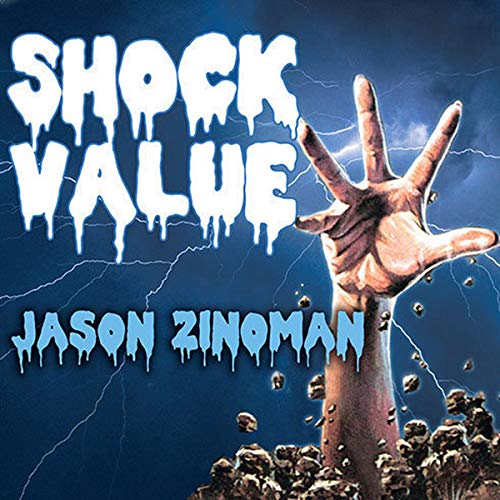
Shock Value: How a Few Eccentric Outsiders Gave Us Nightmares, Conquered Hollywood, and Invented Modern Horror
by Jason Zinoman
Rating: 5.0 ⭐
MP3 CD Format Much has been written about the storied New Hollywood of the 1970s, but while Martin Scorsese, Steven Spielberg, and Francis Ford Copola were making their first classic movies, a parallel universe of directors gave birth to the modern horror film—aggressive, raw, and utterly original. Based on unprecedented access to the genre's major players, New York Times critic Jason Zinoman's Shock Value delivers the first definitive account of horror's golden age. By the late 1960s, horror was stuck in the past, confined mostly to drive-in theaters and exploitation houses and shunned by critics. Shock Value tells the unlikely story of how the much-disparaged horror film became an ambitious art form while also conquering the multiplex. Directors such as Wes Craven, Roman Polanski, John Carpenter, and Brian De Palma—counterculture types operating largely outside Hollywood—revolutionized the genre, exploding taboos and bringing a gritty aesthetic, confrontational style, and political edge to horror. Zinoman recounts how these directors produced such classics as Rosemary's Baby, Carrie, The Texas Chainsaw Massacre, and Halloween, creating a template for horror that has been imitated relentlessly but whose originality has rarely been matched. This new kind of film dispensed with the old vampires and werewolves and instead assaulted audiences with portraits of serial killers, the dark side of suburbia, and a brand of nihilistic violence that had never been seen before. Shock Value tells the improbable stories behind the making of these movies, which were often directed by obsessive and insecure young men working on shoestring budgets, were funded by sketchy investors, and featured porn stars. But once The Exorcist became the highest grossing film in America, Hollywood took notice. The classic horror films of the 1970s have now spawned a billion-dollar industry, but they have also penetrated deep into the American consciousness. Quite literally, Zinoman reveals, these movies have taught us what to be afraid of. Drawing on interviews with hundreds of the most important artists in horror, Shock Value is an enthralling and personality-driven account of an overlooked but hugely influential golden age in American film.


Shock Value: How a Few Eccentric Outsiders Gave Us Nightmares, Conquered Hollywood, and Invented Modern Horror
by Jason Zinoman
![[(Shock Value)] [ By (author) Jason Zinoman ] [November, 2013]](/placeholder.svg?height=400&width=300)
[(Shock Value)] [ By (author) Jason Zinoman ] [November, 2013]
by Jason Zinoman

SHOCK VALUE: Cómo unos 'outsiders' provocaron pesadillas, conquistaron Hollywood y reinventaron el terror moderno
by Jason Zinoman