
29 Books Written

HOW TO BE A MOVIE STAR: ELIZABETH TAYLOR IN HOLLYWOOD: Elizabeth Taylor in Hollywood
by William J. Mann
Rating: 3.4 ⭐
• 2 recommendations ❤️
Elizabeth Taylor has never been short on star power, but in this unprecedented biography, the spotlight is entirely on her—a spirited beauty full of magic, professional daring, and wit. Acclaimed biographer William Mann follows Elizabeth Taylor publicly as she makes her ascent at MGM, falls into (and out of) marriages, wins Oscars, fights studio feuds, and combats America's conservative values with her decidedly modern love affairs. But he also shines a light on Elizabeth's rich private life, revealing a love for her craft and a loyalty to the underdog that fueled her lifelong battle against the studio system. Swathed in mink, disposing of husbands but keeping the diamonds—this is Elizabeth Taylor as she lived and loved, breaking and making the rules in the game of supreme celebrity.

Tinseltown: Murder, Morphine, and Madness at the Dawn of Hollywood
by William J. Mann
Rating: 3.9 ⭐
• 2 recommendations ❤️
New York Times Bestseller • Edgar Award winner for Best Fact Crime The Day of the Locust meets The Devil in the White City and Midnight in the Garden of Good and Evil in this juicy, untold Hollywood an addictive true tale of ambition, scandal, intrigue, murder, and the creation of the modern film industry. By 1920, the movies had suddenly become America’s new favorite pastime, and one of the nation’s largest industries. Never before had a medium possessed such power to influence. Yet Hollywood’s glittering ascendency was threatened by a string of headline-grabbing tragedies—including the murder of William Desmond Taylor, the popular president of the Motion Picture Directors Association, a legendary crime that has remained unsolved until now. In a fiendishly involving narrative, bestselling Hollywood chronicler William J. Mann draws on a rich host of sources, including recently released FBI files, to unpack the story of the enigmatic Taylor and the diverse cast that surrounded him—including three beautiful, ambitious actresses; a grasping stage mother; a devoted valet; and a gang of two-bit thugs, any of whom might have fired the fatal bullet. And overseeing this entire landscape of intrigue was Adolph Zukor, the brilliant and ruthless founder of Paramount, locked in a struggle for control of the industry and desperate to conceal the truth about the crime. Along the way, Mann brings to life Los Angeles in the Roaring a sparkling yet schizophrenic town filled with party girls, drug dealers, religious zealots, newly-minted legends and starlets already past their prime—a dangerous place where the powerful could still run afoul of the desperate. A true story recreated with the suspense of a novel, Tinseltown is the work of a storyteller at the peak of his powers—and the solution to a crime that has stumped detectives and historians for nearly a century.

The first major Katharine Hepburn biography independent of her control reveals the smart, complicated, and sophisticated woman behind the imageOnscreen she played society girls, Spencer Tracy's sidekick, lionesses in winter. But the best character Katharine Hepburn ever created was Katharine a Connecticut Yankee, outspoken and elegant, she wore pants whatever the occasion and bristled at Hollywood glitter. So captivating was her image that she never seemed less than authentic. But how well did we know her, really? Was there a woman behind the image who was more human, more driven, and ultimately more triumphant because of her vulnerability?William J. Mann--a cultural historian and journalist, a sympathetic admirer but no mere fan--has fashioned an intimate, often revisionist, and truly unique close-up that challenges much of what we think we know about the Great Kate. Previous biographies--mostly products of friends and fans--have recycled the stories she hid behind, taking Hollywood myths at face value. Mann goes deeper, delivering new details from friends and family who have not been previously interviewed and drawing on materials only available since Hepburn's death.With affection, intelligence, and a voluminous knowledge of Hollywood history, Mann shows us how a woman originally considered too special and controversial for fame learned the fine arts of movie stardom and transformed herself into an icon as durable and all-American as the Statue of Liberty.

In 1960, she was a seventeen-year-old Brooklyn kid with plenty of talent but no connections and certainly no money; her mother brought her soup to make sure she stayed fed as she took acting classes and scraped out a living. Just four years later, Barbra Streisand was the top-selling female recording artist in America and the star of one of Broadway’s biggest hits. Now the acclaimed Hollywood biographer William Mann chronicles that dizzying ascent, telling the riveting behind-the-scenes story of how Streisand and her team transformed her from an unknown dreamer into a worldwide superstar. Drawing on the private papers of Jerome Robbins and Bob Fosse, and interviewing scores of the friends and lovers who knew Barbara before she became Barbra, Mann recreates the vanished world of 1960s New York City and uncovers the truth behind the myths of her formative years. He shows us how Funny Girl was slowly altered, by Fosse and Robbins among others, from a Fanny Brice bio into a star-making vehicle for Streisand; takes us into the clubs and onto the set for her early nightclub and television appearances, including her torch-handing turn with Judy Garland; and introduces the canny marketing team whose strategies made her stardom seem inevitable. The Streisand who emerges is a revelation: a young woman who, for all her tough-skinned ambition, was surprisingly vulnerable in love. Everyone who has felt outside the gate, as she once did, remembers a time when the newness and difference of Barbra Streisand changed everything and rewrote all the rules. In Hello, Gorgeous, Mann incisively illuminates the woman before she became the icon and pays tribute to one of the world’s most beloved performers.

The Wars of the Roosevelts: The Ruthless Rise of America's Greatest Political Family
by William J. Mann
Rating: 4.2 ⭐
The award-winning author presents a provocative, thoroughly modern revisionist biographical history of one of America’s greatest and most influential families—the Roosevelts—exposing heretofore unknown family secrets and detailing complex family rivalries with his signature cinematic flairDrawing on previously hidden historical documents and interviews with the long-silent “illegitimate” branch of the family, William J. Mann paints an elegant, meticulously researched and groundbreaking group portrait of this legendary family. Mann argues that the Roosevelts’ rise to power and prestige was actually driven by a series of intense, personal contests that at times devolved to blood sport. His compelling and eye-opening masterwork is the story of a family at war with itself, of social Darwinism at its most ruthless—in which the strong devoured the weak and repudiated the inconvenient.Mann focuses on Eleanor Roosevelt, who, he argues, experienced this brutality firsthand, witnessing her Uncle Theodore cruelly destroy her father, Elliott—his brother and bitter rival—for political expediency. Mann presents a fascinating alternate picture of Eleanor, contending that this “worshipful niece” in fact bore a grudge against TR for the rest of her life, and dares to tell the truth about her intimate relationships without obfuscations, explanations, or labels.Mann also brings into focus Eleanor’s cousins, TR’s children, whose stories propelled the family rivalry but have never before been fully chronicled, as well as her illegitimate half-brother, Elliott Roosevelt Mann, who inherited his family’s ambition and skill without their name and privilege. Growing up in poverty just miles from his wealthy relatives, Elliott Mann embodied the American Dream, rising to middle class prosperity and enjoying one of the very few happy, long-term marriages in the Roosevelt saga. For the first time, The Wars of the Roosevelts also includes the stories of Elliott’s daughter and grandchildren and never-before-seen photographs from their archives.Deeply psychological and finely rendered, illustrated with sixteen pages of black-and-white photographs, The Wars of the Roosevelts illuminates not only the enviable strengths but also the profound shames of this remarkable and influential family.

Jeff O’Brien - bright, good-looking, and inching dangerously past thirty, is caught between two generations, the Baby Boomers and Generation X. He’s been with his partner, Lloyd, for seven years now, but when Lloyd announces that there’s no passion left between them, Jeff is sent into something of an existential frenzy. Desperate not to end up alone, Jeff haunts the dance floor and roadside rest stops, finding both the sordid and the sublime in anonymous encounters. But it’s love he’s after, so ultimately it’s his bittersweet romance in Provincetown with Eduardo, twenty-two and a vision of gorgeous, wide-eyed youth, that lingers in his mind and seems to hold the answers he seeks. This is a story of a man coming to terms with the accelerating ambiguity of his world, where men die young but old age is actively devalued. It is the story of gay life today, the life being led by thousands of men trying desperately to keep up, and to discover if anything really unites gay men other than desire. It is the story of how the truths of gay life are handed down from gay generation to gay generation. It is the story of what separates the men from the boys.

Entertainment Weekly's BIG FALL BOOKS PREVIEW SelectionBest Book of 2019 -- Publisher's WeeklyBased on new and revelatory material from Brando’s own private archives, an award-winning film biographer presents a deeply-textured, ambitious, and definitive portrait of the greatest movie actor of the twentieth century, the elusive Marlon Brando, bringing his extraordinarily complex life into view as never before.The most influential movie actor of his era, Marlon Brando changed the way other actors perceived their craft. His approach was natural, honest, and deeply personal, resulting in performances—most notably in A Streetcar Named Desire and On the Waterfront—that are without parallel. Brando was heralded as the American Hamlet—the Yank who surpassed British stage royalty Laurence Olivier, John Gielgud, and Ralph Richardson as the standard of greatness in the mid-twentieth century.Brando’s impact on American culture matches his professional significance; he both challenged and codified our ideas of masculinity and sexuality. Brando was also one of the first stars to use his fame as a platform to address social, political, and moral issues, courageously calling out America’s deeply rooted racism.William Mann’s brilliant biography of the Hollywood legend illuminates this culture icon for a new age. Mann astutely argues that Brando was not only a great actor but also a cultural soothsayer, a Cassandra warning us about the challenges to come. Brando’s admonitions against the monetization of nearly every aspect of the culture were prescient. His public protests against racial segregation and discrimination at the height of the Civil Rights movement—getting himself arrested at least once—were criticized as being needlessly provocative. Yet those actions of fifty years ago have become a model many actors follow today.Psychologically astute and masterfully researched, based on new and revelatory material, The Contender explores the star and the man in full, including the childhood traumas that reverberated through his professional and personal life. It is a dazzling biography of our nation’s greatest actor that is sure to become an instant classic.The Contender includes sixteen pages of photographs.

Bogie & Bacall: The Surprising True Story of Hollywood’s Greatest Love Affair
by William J. Mann
Rating: 3.7 ⭐
From the noted Hollywood biographer and author of The Contender comes this celebration of the great American love story—the romance between Lauren Bacall and Humphrey Bogart—capturing its complexity, contradictions, and challenges as never before. In Bogie & Bacall, William Mann offers a deep and comprehensive look at Lauren Bacall, Humphrey Bogart, and the unlikely love they shared. Mann details their early years—Bogart’s effete upbringing in New York City; Bacall’s rise as a model and actress. He paints a vivid portrait of their courtship and twelve-year the fights, the reconciliations, the children, the affairs, Bogie’s illness and Bacall’s steadfastness until his death. He offers a sympathetic yet clear-eyed portrait of Bacall’s life after Bogie, exploring her relationships with Frank Sinatra and Jason Robards, who would become her second husband, and the identity crisis she faced. Surpassing previous biographies, Mann digs deep into the celebrities’ personal lives and considers their relationship from surprising angles. Bacall was just nineteen when she started dating the thrice-married forty-five-year-old Bogart. How might that age gap have influenced their relationship? In addition to what she gained, what might Bacall have lost by marrying a Hollywood superstar more than twice her age? How did Bogart, a man of average looks, become one of the greatest movie stars of all time? Throughout, Mann explains the unparalleled successes of their individual careers as well as the extraordinary love between them and the legend that has endured. Filled with entertaining details and thoughtful insights based on newly available records and correspondence, and illustrated with 30-40 photographs, Bogie & Bacall offers a fresh look at this famous couple, their remarkable relationship, and their legacy.

Wisecracker: The Life and Times of William Haines, Hollywood's First Openly Gay Star
by William J. Mann
Rating: 4.2 ⭐
In 1930 William Haines was Hollywood's number-one box-office draw--a talented, handsome, romantic lead. Offscreen, he was openly gay. This bestselling biography captures the rich gay subculture of Hollywood before the Production Code--before studio intimidation led to the establishment of the Hollywood closet. Alone among his contemporaries, Billy Haines (1900-1973) refused to compromise and was ultimately booted out by Louis B. Mayer. Forced to give up acting, Haines went on to become a top interior designer to the stars and to clients such as Nancy Reagan. By his side through it all was his lover, Jimmie Shields; their fifty-year relationship led their best friend, Joan Crawford, to call them the "happiest married couple in Hollywood." Wisecracker is an astounding piece of newly discovered gay history, a chronicle of high Hollywood, and--at its heart--a great and enduring love story.

In William J. Mann's witty and provocative follow-up to his acclaimed bestseller The Men From the Boys, Jeff O'Brien-still in search of love and sex-navigates the circuit in the company of friends, tricks, old loves, and irresistible strangers, going any place... Where The Boys Are "Someday, when they look back and write about these times, I will be able to say that I was here. I danced every dance and knew the words to every song." Jeff and his on-again, off-again lover Lloyd Griffith are thirty-something professionals still grieving the death of their mentor, Javitz. Jeff bounces from party to party, forgetting his pain only when he's on the dance floor, immersed in a sea of beautiful boys with sculpted pecs and speed-bump abs. At his side is his protege, best friend, sister, and not-so-secret admirer Henry Weiner, once a ninety-eight-pound weakling who has lately blossomed into a hunky muscle-boy escort. As the lives of Jeff, Lloyd, and Henry intertwine, each confronts a different challenge. Henry's repressed feelings of love for Jeff propel him on a quest to discover his own identity amid the often-seedy world of sex for cash. Lloyd deals with the dark side of the "fag hag" experience when his Provincetown housemate, Eva, exhibits increasingly bizarre behavior. But the most intriguing mystery of all involves the beautiful stranger Jeff meets at yet another circuit party and invites to move in. Anthony Sabe is a young man seemingly without a past, whose bright-eyed ingenuousness at first charms everyone, but later raises suspicions. When Jeff sets out to uncover the truth about Anthony, what he finds is progressively more disturbing, raising questions not only about Anthony but also about himself. Over the course of a life-changing summer, Jeff, Lloyd, and Henry deal with the myriad issues confronting gay men today: sex, drugs, grief, AIDS, barebacking, body image, commitment, one-night stands, and the search for love. The first novel to be set on the gay party circuit, Where The Boys Are evokes a world with its own language, customs, traditions, and idiosyncracies, set to a backdrop of sex, drugs, and dance music. "Guaranteed to send your temperature soaring."-The Advocate

When a call from his estranged mother brings him home, actor Wally Day is forced to confront his dark past and his relationship with his family, which leads him on a powerful journey of self-discovery, self-acceptance, and salvation.
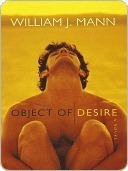
“It’s always been golden for you, Danny. You’ve always been the golden boy.” Danny Fortunato seemed to have it all. He was cute, funny, sexy, smart—the hottest go-go boy in West Hollywood. When he danced on stage, all eyes were upon him and all men desired him. But something always kept Danny from ever really believing he was the golden boy that others said he was...a secret that he'd carried with him ever since he was a teenager. Twenty years later, living in Palm Springs, Danny is celebrating his 41st birthday—although “celebrating” might not be the right word for how he feels about his life today. To the outside world, he's still he still has his looks, and he still loves Frank, his boyfriend of nearly two decades. But something is missing in his life. Passion. Romance. Adventure. The same something that's been missing ever since that day when he turned fourteen, when his sister Becky disappeared and his whole world flipped upside-down. Now into Danny's life walks a gorgeous young bartender named Kelly, who becomes for Danny an obsession, an object of desire and fascination. But Kelly's indifference to this onetime golden boy only confirms what Danny secretly that he’s “vanishing” into thin air—like his sister, so long ago. As he reflects on his angst-ridden childhood—the shattering of his family, the sex and drugs of his youth as one of L.A.’s most coveted boy toys—Danny begins to recognize certain patterns. Somewhere along the way, he gave up on his dreams—not only of becoming an actor, but his very lust for life. And yet—all that’s about to change, when a surprising, agonizing connection with Kelly sends Danny on a soul-searching quest to reclaim the things he has loved and lost. Filled with unforgettable warmth, incorrigible humor, and irresistible charm, Object of Desire takes readers through three milestone eras in one man’s life—his youth in the 1970s, his days of abandon in the 1980s, and his more sober, reflective existence today—and reaffirms William J. Mann’s reputation as one of gay fiction’s major narrative powers.

The first full accouning of the role of gays and lesbians in Hollywood argues that homosexuals were in fact a protected class in the film industry who had considerable power to shape the art and business of movie-making.

As best-selling author Jeff O'Brien and his partner Lloyd prepare to get married and adopt Jeff's ten-year-old nephew, their best friend Henry, an escort-turned-erotic energy worker who longs for what they have, gets involved with a seductive young man who is not what he seems.

Meticulously blending fact and real-life characters with fiction, this richly textured historical novel re-creates the life of Florence Lawrence, an early twentieth-century actress and vaudevillian who by 1910, was the "Biograph Girl," the world's first movie star. Reprint.

A darkly sensual collection, centering around the immortal dead, features Jeff Mann's Devoured, in which Derek Macliane, haunted by the death of his lover in Scotland, loses himself in New York's dark underworld where his hunger for vengeance is finally satisfied. Original. 15,000 first printing.

Illuminating and captivating, New York Times bestselling author of Tinseltown and Bogart offers the first definitive account of the Black Dahlia murder—the most famous unsolved true crime case in American history—which humanizes the victim and situates the notorious case within an anxious, postwar country grappling with new ideas, demographics, and technologies.The brutal murder of Elizabeth Short—better known as the Black Dahlia—in 1947 has been in the public consciousness for nearly eighty years, yet no serious study of the crime has ever been published. Short has been mischaracterized as a wayward sex worker or vagabond, and—like the seductive femme fatales of film noir—responsible for and perhaps deserving of her fate. William J. Mann, however, is interested in the truth. His extensive research reveals her as a young woman with curiosity and drive, who leveraged what little agency postwar society gave her to explore the world, defying draconian postwar gender expectations to settle down, marry, and have children. It’s time to reexamine the woman who became known as the Black Dahlia. Using a 21st-century lens, Mann connects Short’s story to the anxious era after World War II, when the nation was grappling with new ideas, new demographics, new technologies, and old fears dressed up as new ones. Only by situating the Black Dahlia case within this changing world can we understand the tragedy of this young woman, whose life and death offer surprising mirrors on today. Mann has strong opinions on who might’ve killed her, and even stronger ones on who did not. He spent five years sifting through the evidence and has found unknown connections by cross-referencing police reports, District Attorney investigations, FBI files, court documents, military records, and more, using the deep, intense research skills that have become his trademark. He also spoke with the families of the original detectives, of Short’s friends, and even of suspects, and relied on advice from experienced physicians and homicide detectives. Mann deftly sifts through the sensationalized journalism, preconceived notions, myths, and misunderstandings surrounding the case to uncover the truth about Elizabeth Short like no book before. The Black Dahlia promises to be the definitive study about the most famous unsolved case in American history.

Edge of Midnight: The Life of John Schlesinger: The Authorised Biography
by William J. Mann
Rating: 4.1 ⭐
Mann, a novelist and author of books on film history, presents this biography of director John Schlesinger (1926-2003), based on interviews with the director and his family following his stroke in 2001, in addition to other primary source documents, articles, and reviews. He describes Schlesinger's childhood; his early days as a documentary director at the BBC; his films during the era of New Hollywood; and Midnight Cowboy, which won an Academy Award. His other films, such as Billy Liar, Darling, Cold Comfort Farm, and The Day of the Locust, are discussed, as well as his accurate depictions of homosexuality, and his personal and professional relationships. Annotation ©2006 Book News, Inc., Portland, OR (booknews.com)

Summer romance gets a new twist in this sexy quartet of novellas, as four of Kensington's most talented and popular gay authors come together to celebrate fun in the sun.Includes:Sugar Daddy Summer Chris KenryThe Perfect Husband William J. MannThe Outline of a Torso Andy SchellSatisfaction Ben Tyler

The Ancient Greeks—What’s there to be proud of about the ancient Greeks? Well, only that they set the groundwork for all of Western Civilization, thought up the concept of democracy, encouraged more original thinking than anyone before or since, and actually celebrated same-sex love. The Castro—For any gay first-time visitor, alighting from the trolley at the famous intersection of Castro and Market in San Francisco is like stepping into Oz. Historian Susan Stryker has called it "the symbolic main street of the city’s queer community and an emblem of gay pride around the world." It has become synonymous with liberation, freedom, and celebration, and while today there are many vibrant gay neighborhoods, the Castro retains an enduring place in the hearts of gay men and lesbians everywhere. Alan Turing—The founder of computer science. A brilliant mathematician. Philosopher, wartime codebreaker, visionary—and an unapologetic gay man well ahead of his time. The NEA Four—Tim Miller, John Fleck, Holly Hughes, and Karen Finley—two gay men, a lesbian, and a queer-identified straight woman. No wonder these performance artists were singled out by the National Endowment for the Arts in 1990 and denied artists’ grants, causing an international uproar that still has ramifications today. These are just a few of the fabulous reasons for Gay Pride. Read on to find out more about the queer pioneers, past and present, who have made the world a braver, bolder, and better place—for everyone! We’re here. We’re queer. Get used to it! As if Alexander the Great, the Harlem Renaissance, A Member of the Wedding, and piano bars weren’t enough, here are 101 fabulous reasons to celebrate the rich heritage and vast cultural contributions of gays and lesbians. This inspiring, joyous book triumphantly commemorates the many ways gays and lesbians have profoundly shaped the face of the world’s politics, art, literature, music, theatre, cinema, sports, civil rights, and much more. From the fighting spirit of the Radical Faeries to the groundbreaking TV comedy of Will and Grace, from Walt Whitman’s immortal "Song of Myself" to the incendiary power of Tony Kushner’s Angels in America and the searingly candid art of Frida Kahlo, gays and lesbians have made life sweeter, deeper, more humane, and, well, so much more fabulous. Need more reasons to be glad? How Gay places of The Castro, Bloomsbury, Metropolitan Community Church, Berlin. Literary Gertrude Stein and Alice B. Toklas, Oscar Wilde, James Baldwin, Dorothy Allison. Gay power The Sony Building in New York, Freed’s Fairies and the MGM musicals, Dykes on Bikes, PFLAG, ACT-UP. Gay Ian McKellan, Elton John, Rudy Galindo, Martina Navratilova, Ellen DeGeneres, Marlene Dietrich. Whether it’s the wicked fun of camp, the powerful impact of queer cinema, or the lazy, summertime pull of Provincetown, Gay Pride is filled with an array of reasons to live proud that is as diverse and beautiful as the gay and lesbian community it celebrates.

«Amantes: aquellos que aman. Aquellos que se apoyan y se cuidan el uno al otro, aquellos que permanecen juntos, que comparten temores y sueños. Serviría para ambos, tanto para Lloyd como para Javitz. Mis amantes. Los heteros usan la palabra amante cuando quieren decir sexo; los gays la usan cuando quieren decir amor. ¿ Y qué si Lloyd y yo no hemos tenido relaciones sexuales en meses? No es eso lo que significa amante, no para nosotros. Javitz y yo dejamos de tener relaciones sexuales hace siete años y él no ha dejado de ser mi amante, aunque nosotros digamos que sí y el resto del mundo, con la posible excepción de las malas lenguas de Provincetown, así lo crea.»Amigos y Amantes es una novela sincera y realista sobre el significado de la vida gay en los años '90. Es también una historia sobre sexo, sexo seguro, sexo casual y amor, jóvenes amantes, amantes maduros y ex amantes.Pocas novelas han sabido penetrar de forma tan convincente en la complejidad de las relaciones de amor y amistad entre gays.


The Black Dahlia: Murder, Monsters, and Madness in Midcentury America
by William J. Mann
Rating: 5.0 ⭐

The Cape diary and letters of William Mann, astronomer and mountaineer: 1839-1843
by William J. Mann
Rating: 5.0 ⭐

2 Daniel Silva Books! 1) The English Spy 2) The English Girl
by William J. Mann

Barbra Streisand
by William J. Mann

Where The Boys Are
by William J. Mann

Edge of Midnight: The Life of John Schlesinger
by William J. Mann
Edge of The Life of John Schlesinger [Hardcover] [Jan 01, 2005] Mann, william J