Loading themes...
Explore the best books about Genetics theme.

Spanning the globe and several centuries, The Gene is the story of the quest to decipher the master-code that makes and defines humans, that governs our form and function.The story of the gene begins in an obscure Augustinian abbey in Moravia in 1856 where a monk stumbles on the idea of a ‘unit of heredity’. It intersects with Darwin’s theory of evolution, and collides with the horrors of Nazi eugenics in the 1940s. The gene transforms post-war biology. It reorganizes our understanding of sexuality, temperament, choice and free will. This is a story driven by human ingenuity and obsessive minds – from Charles Darwin and Gregor Mendel to Francis Crick, James Watson and Rosalind Franklin, and the thousands of scientists still working to understand the code of codes.This is an epic, moving history of a scientific idea coming to life, by the author of The Emperor of All Maladies. But woven through The Gene, like a red line, is also an intimate history – the story of Mukherjee’s own family and its recurring pattern of mental illness, reminding us that genetics is vitally relevant to everyday lives. These concerns reverberate even more urgently today as we learn to “read” and “write” the human genome – unleashing the potential to change the fates and identities of our children.Majestic in its ambition, and unflinching in its honesty, The Gene gives us a definitive account of the fundamental unit of heredity – and a vision of both humanity’s past and future.


How much credit do parents deserve when their children turn out well? How much blame when they turn out badly? Judith Rich Harris has a message that will change parents' lives: The "nurture assumption"-- the belief that what makes children turn out the way they do, aside from their genes, is the way their parents raise them--is nothing more than a cultural myth. This electrifying book explodes some of our unquestioned beliefs about children and parents and gives us a radically new view of childhood.Harris examines with a fresh eye the lives of real children to show that it is what they experience outside the home, in the company of their peers, that matters most. Parents don't socialize children; children socialize children. With eloquence and humor, Judith Harris explains why parents have little power to determine the sort of people their children will become. The Nurture Assumption brings together insights from psychology, sociology, anthropology, primatology, and evolutionary biology to offer a startling new view of who we are and how we got that way.

The New York Times bestselling book coauthored by the Nobel Prize winner who discovered telomerase and telomeres' role in the aging process and the health psychologist who has done original research into how specific lifestyle and psychological habits can protect telomeres, slowing disease and improving life.Have you wondered why some sixty-year-olds look and feel like forty-year-olds and why some forty-year-olds look and feel like sixty-year-olds? While many factors contribute to aging and illness, Dr. Elizabeth Blackburn discovered a biological indicator called telomerase, the enzyme that replenishes telomeres, which protect our genetic heritage. Dr. Blackburn and Dr. Elissa Epel's research shows that the length and health of one's telomeres are a biological underpinning of the long-hypothesized mind-body connection. They and other scientists have found that changes we can make to our daily habits can protect our telomeres and increase our health spans (the number of years we remain healthy, active, and disease-free).THE TELOMERE EFFECT reveals how Blackburn and Epel's findings, together with research from colleagues around the world, cumulatively show that sleep quality, exercise, aspects of diet, and even certain chemicals profoundly affect our telomeres, and that chronic stress, negative thoughts, strained relationships, and even the wrong neighborhoods can eat away at them. Drawing from this scientific body of knowledge, they share lists of foods and suggest amounts and types of exercise that are healthy for our telomeres, mind tricks you can use to protect yourself from stress, and information about how to protect your children against developing shorter telomeres, from pregnancy through adolescence. And they describe how we can improve our health spans at the community level, with neighborhoods characterized by trust, green spaces, and safe streets. THE TELOMERE EFFECT will make you reassess how you live your life on a day-to-day basis. It is the first book to explain how we age at a cellular level and how we can make simple changes to keep our chromosomes and cells healthy, allowing us to stay disease-free longer and live more vital and meaningful lives.

One of the world's top behavioural geneticists argues that we need a radical rethink about what makes us who we are The blueprint for our individuality lies in the 1% of DNA that differs between people. Our intellectual capacity, our introversion or extraversion, our vulnerability to mental illness, even whether we are a morning person - all of these aspects of our personality are profoundly shaped by our inherited DNA differences. In Blueprint, Robert Plomin, a pioneer in the field of behavioural genetics, draws on a lifetime's worth of research to make the case that DNA is the most important factor shaping who we are. Our families, schools and the environment around us are important, but they are not as influential as our genes. This is why, he argues, teachers and parents should accept children for who they are, rather than trying to mould them in certain directions. Even the environments we choose and the signal events that impact our lives, from divorce to addiction, are influenced by our genetic predispositions. Now, thanks to the DNA revolution, it is becoming possible to predict who we will become, at birth, from our DNA alone. As Plomin shows us, these developments have sweeping implications for how we think about parenting, education, and social mobility. A game-changing book by a leader in the field, Blueprint shows how the DNA present in the single cell with which we all begin our lives can impact our behaviour as adults.

People commonly view evolution as a process of competition between individuals—known as “survival of the fittest”—with the individual representing the “unit of selection.” Richard Dawkins offers a controversial reinterpretation of that idea in The Extended Phenotype, now being reissued to coincide with the publication of the second edition of his highly-acclaimed The Selfish Gene. He proposes that we look at evolution as a battle between genes instead of between whole organisms. We can then view changes in phenotypes—the end products of genes, like eye color or leaf shape, which are usually considered to increase the fitness of an individual—as serving the evolutionary interests of genes.Dawkins makes a convincing case that considering one’s body, personality, and environment as a field of combat in a kind of “arms race” between genes fighting to express themselves on a strand of DNA can clarify and extend the idea of survival of the fittest. This influential and controversial book illuminates the complex world of genetics in an engaging, lively manner.

Francis Crick, who died at the age of eighty-eight in 2004, will be bracketed with Galileo, Darwin, and Einstein as one of the great scientists of all time. Between 1953 and 1966 he made and led a revolution in biology by discovering, quite literally, the secret of life: the digital cipher at the heart of heredity that distinguishes living from non-living things -- the genetic code. His own discoveries -- though he always worked with one other partner and did much of his thinking in conversation -- include not only the double helix but the whole mechanism of protein synthesis, the three-letter nature of the code, and much of the code itself. Matt Ridley's biography traces Crick's life from middle-class mediocrity in the English Midlands, through a lackluster education and six years designing magnetic mines for the Royal Navy, to his leap into biology at the age of thirty-one. While at Cambridge, he suddenly began to display the unique visual imagination and intense tenacity of thought that would allow him to see the solutions to several great scientific conundrums -- and to see them long before most biologists had even conceived of the problems. Having set out to determine what makes living creatures alive and having succeeded, he immigrated at age sixty to California and turned his attention to the second question that had fascinated him since his youth: What makes conscious creatures conscious? Time ran out before he could find the answer.

Acclaimed author Matt Ridley's thrilling follow-up to his bestseller Genome. Armed with the extraordinary new discoveries about our genes, Ridley turns his attention to the nature versus nurture debate to bring the first popular account of the roots of human behaviour. What makes us who we are? In February 2001 it was announced that the genome contains not 100,000 genes as originally expected but only 30,000. This startling revision led some scientists to conclude that there are simply not enough human genes to account for all the different ways people behave: we must be made by nurture, not nature. Matt Ridley argues that the emerging truth is far more interesting than this myth. Nurture depends on genes, too, and genes need nurture. Genes not only predetermine the broad structure of the brain; they also absorb formative experiences, react to social cues and even run memory. They are consequences as well as causes of the will. Published fifty years after the discovery of the double helix of DNA, Nature via Nurture chronicles a new revolution in our understanding of genes. Ridley recounts the hundred years' war between the partisans of nature and nurture to explain how this paradoxical creature, the human being, can be simultaneously free-willed and motivated by instinct and culture. Nature via Nurture is an enthralling, up-to-the-minute account of how genes build brains to absorb experience.

This text presents a novel theory of creativity that is based on the linkage between the psychopathological characteristics of creative persons and geniuses. It traces creativity from DNA through personality to special cognitive processes and the qualities of genius.

How did the replication bomb we call ”life” begin and where in the world, or rather, in the universe, is it heading? Writing with characteristic wit and an ability to clarify complex phenomena (the New York Times described his style as ”the sort of science writing that makes the reader feel like a genius”), Richard Dawkins confronts this ancient mystery.

Why do we want-and do-so many things that are bad for us? In Mean Genes Terry Burnham and Jay Phelan argue that we need to stop looking to Sigmund Freud for answers and start looking to Charles Darwin. Mean Genes reveals that our struggles for self-improvement are, in fact, battles against our own genes - genes that helped our distant ancestors flourish, but are selfish and out of place in the modern world. Using this evolutionary lens, Mean Genes brilliantly examines the issues that most affect our lives-body image, money, addiction, violence, and relationships, friendship, love, and fidelity-and offers steps to help us lead more satisfying lives.

The triumphant true story of the man who achieved one of the greatest feats of our era—the mapping of the human genome Growing up in California, Craig Venter didn’t appear to have much of a future. An unremarkable student, he nearly flunked out of high school. After being drafted into the army, he enlisted in the navy and went to Vietnam, where the life and death struggles he encountered as a medic piqued his interest in science and medicine. After pursuing his advanced degrees, Venter quickly established himself as a brilliant and outspoken scientist. In 1984 he joined the National Institutes of Health, where he introduced novel techniques for rapid gene discovery, and left in 1991 to form his own nonprofit genomics research center, where he sequenced the first genome in history in 1995. In 1998 he announced that he would successfully sequence the human genome years earlier, and for far less money, than the government-sponsored Human Genome Project would— a prediction he kept in 2001. A Life Decoded is the triumphant story of one of the most fascinating and controversial figures in science today. In his riveting and inspiring account Venter tells of the unparalleled drama of the quest for the human genome, a tale that involves as much politics (personal and political) as science. He also reveals how he went on to be the first to read and interpret his own genome and what it will mean for all of us to do the same. He describes his recent sailing expedition to sequence microbial life in the ocean, as well as his groundbreaking attempt to create synthetic life. Here is one of the key scientific chronicles of our lifetime, as told by the man who beat the odds to make it happen.

One of the most dramatic stories of genetic discovery since James Watson's The Double Helix—a work whose scientific and cultural reverberations will be discussed for years to come.In 1994 Professor Bryan Sykes, a leading world authority on DNA and human evolution, was called in to examine the frozen remains of a man trapped in glacial ice in northern Italy. News of both the Ice Man's discovery and his age, which was put at over five thousand years, fascinated scientists and newspapers throughout the world. But what made Sykes's story particularly revelatory was his successful identification of a genetic descendant of the Ice Man, a woman living in Great Britain today. How was Sykes able to locate a living relative of a man who died thousands of years ago?In The Seven Daughters of Eve, he gives us a firsthand account of his research into a remarkable gene, which passes undiluted from generation to generation through the maternal line. After plotting thousands of DNA sequences from all over the world, Sykes found that they clustered around a handful of distinct groups. Among Europeans and North American Caucasians, there are, in fact, only seven. This conclusion was almost everyone of native European descent, wherever they may live throughout the world, can trace their ancestry back to one of seven women, the Seven Daughters of Eve.Naming them Ursula, Xenia, Helena, Velda, Tara, Katrine, and Jasmine, Sykes has created portraits of their disparate worlds by mapping the migratory patterns followed by millions of their ancestors. In reading the stories of these seven women, we learn exactly how our origins can be traced, how and where our ancient genetic ancestors lived, and how we are each living proof of the almost indestructible strands of DNA, which have survived over so many thousands of years. Indeed, The Seven Daughters of Eve is filled with dramatic from Sykes's identification, using DNA samples from two living relatives, of the remains of Tsar Nicholas and Tsaress Alexandra, to the Caribbean woman whose family had been sold into slavery centuries before and whose ancestry Sykes was able to trace back to the Eastern coast of central Africa. Ultimately, Sykes's investigation reveals that, as a race, what humans have in common is more deeply embedded than what separates us.

The first edition of Jim Watson's classic textbook Molecular Biology of the Gene appeared in 1965. This new edition, written with five new authors, has been brought fully up to date, and incorporates insights very recently derived from genome sequencing in a variety of organisms. The book isan authoritative and comprehensive survey of the fundamentals of molecular biology, from basic mechanisms to the elaborate role of gene regulation in embryonic development and evolution. Although updated, the twentyDSone chapters of the new edition retain the distinctive and celebrated features ofthe original work, including introductory chapters on the history of genetics and molecular biology and an emphasis throughout on the chemical underpinnings of molecular biology. The new team of authors brings to this edition awardDSwinning teaching experience and outstanding research achievements.By revealing the intellectual framework and experimental approaches that made new discoveries in the field possible, the new edition highlights the significance of the molecular approach for all of biology.

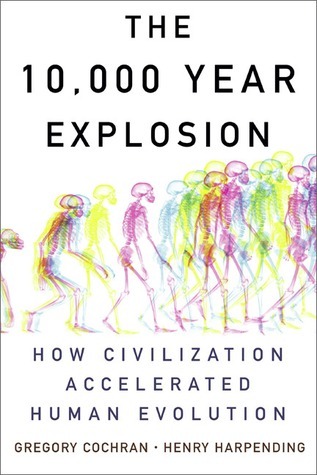
The 10,000 Year Explosion: How Civilization Accelerated Human Evolution

All of us have a most remarkable gene lurking in our DNA. Its job is to protect us from cancer. This gene, known simply as p53, constantly scans our cells to ensure that when they grow and divide as part of the routine maintenance of our bodies, they do so without mishap. If a cell makes a mistake in copying its DNA during the process, p53 repairs it before allowing the cell to carry on dividing. If the mistake is irreparable and the rogue cell threatens to grow out of control (as happens in cancer), p53 commands the cell to commit suicide. Cancer cannot develop unless p53 itself is damaged or handicapped by some other fault in the system. Not surprisingly, p53 is the most studied single gene in history.p53: The Gene that Cracked the Cancer Code tells the story of the discovery of the gene and of medical science's mission to unravel its mysteries and get to the heart of what happens in our cells when they turn cancerous. Through the personal accounts of key researchers, the book reveals the excitement of the hunt for new cures--the lost opportunities, the blind alleys, and the thrilling breakthroughs. As the long-anticipated revolution in cancer treatment tailored to each individual patient's symptoms starts to take off at last, p53 is at the cutting edge. This is a timely tale of scientific discovery and advances in our understanding of a disease that still affects more than one in three of us at some point in our lives.

Carl Zimmer presents a history of our understanding of heredity in this sweeping, resonating overview of a force that shaped human society--a force set to shape our future even more radically.She Has Her Mother's Laugh presents a profoundly original perspective on what we pass along from generation to generation. Charles Darwin played a crucial part in turning heredity into a scientific question, and yet he failed spectacularly to answer it. The birth of genetics in the early 1900s seemed to do precisely that. Gradually, people translated their old notions about heredity into a language of genes. As the technology for studying genes became cheaper, millions of people ordered genetic tests to link themselves to missing parents, to distant ancestors, to ethnic identities. . . .But, Zimmer writes, "Each of us carries an amalgam of fragments of DNA, stitched together from some of our many ancestors. Each piece has its own ancestry, traveling a different path back through human history. A particular fragment may sometimes be cause for worry, but most of our DNA influences who we are--our appearance, our height, our penchants--in inconceivably subtle ways." Heredity isn't just about genes that pass from parent to child. Heredity continues within our own bodies, as a single cell gives rise to trillions of cells that make up our bodies. We say we inherit genes from our ancestors--using a word that once referred to kingdoms and estates--but we inherit other things that matter as much or more to our lives, from microbes to technologies we use to make life more comfortable. We need a new definition of what heredity is and, through Carl Zimmer's lucid exposition and storytelling, this resounding tour de force delivers it. Weaving historical and current scientific research, his own experience with his two daughters, and the kind of original reporting expected of one of the world's best science journalists, Zimmer ultimately unpacks urgent bioethical quandaries arising from new biomedical technologies, but also long-standing presumptions about who we really are and what we can pass on to future generations.

Cystic fibrosis was once a mysterious disease that killed infants and children. Now it could be the key to healing millions with genetic diseases of every type—from Alzheimer's and Parkinson's to diabetes and sickle cell anemia.In 1974, Joey O'Donnell was born with strange symptoms. His insatiable appetite, incessant vomiting, and a relentless cough—which shook his tiny, fragile body and made it difficult to draw breath—confounded doctors and caused his parents agonizing, sleepless nights. After six sickly months, his salty skin provided the critical clue: he was one of thousands of Americans with cystic fibrosis, an inherited lung disorder that would most likely kill him before his first birthday.The gene and mutation responsible for CF were found in 1989—discoveries that promised to lead to a cure for kids like Joey. But treatments unexpectedly failed and CF was deemed incurable. It was only after the Cystic Fibrosis Foundation, a grassroots organization founded by parents, formed an unprecedented partnership with a fledgling biotech company that transformative leaps in drug development were harnessed to produce groundbreaking new treatments: pills that could fix the crippled protein at the root of this deadly disease.From science writer Bijal P. Trivedi, Breath from Salt chronicles the riveting saga of cystic fibrosis, from its ancient origins to its identification in the dank autopsy room of a hospital basement, and from the CF gene's celebrated status as one of the first human disease genes ever discovered to the groundbreaking targeted genetic therapies that now promise to cure it.Told from the perspectives of the patients, families, physicians, scientists, and philanthropists fighting on the front lines, Breath from Salt is a remarkable story of unlikely scientific and medical firsts, of setbacks and successes, and of people who refused to give up hope—and a fascinating peek into the future of genetics and medicine.