
Hans Jürgen Eysenck
= Hans J. Eysenck = H.J. Eysenck Hans Jürgen Eysenck (/ˈaɪzɛŋk/; 4 March 1916 – 4 September 1997) was a psychologist born in Germany, who spent his professional career in Great Britain. He is best remembered for his work on intelligence and personality, though he worked in a wide range of areas. At the time of his death, Eysenck was the living psychologist most frequently cited in science journals
29 Books Written

This text presents a novel theory of creativity that is based on the linkage between the psychopathological characteristics of creative persons and geniuses. It traces creativity from DNA through personality to special cognitive processes and the qualities of genius.
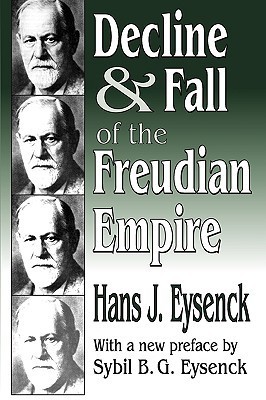
Hans Eysenck was one of the best-known research psychologists of the twentieth century. Respected as a prolific author, he was unafraid to address controversial topics. In Decline and Fall of the Freudian Empire, he places himself at the center of the debate on psychoanalytic theory, challenging the state of Freudian theory and modern-day psychoanalytic practice and questioning the premises on which psychoanalysis is based. In so doing, Eysenck illustrates the shortcomings of both psychoanalysis as a method of curing neurotic and psychotic behaviors, and of the theory of dreams and their interpretation. He also analyzes Freud's influence on anthropology and his alleged contributions to science.While books about Sigmund Freud and psychoanalysis abound, most have been written by followers and acolytes and are therefore uncritical, unaware of alternative theories, or written as weapons in a war of propaganda. Others are long and highly technical, and therefore valuable only to students and professionals. Decline and Fall of the Freudian Empire, on the other hand, was written with the non-professional in mind, and is for those who wish to know what modern scholarship has discovered about the truth or falsity of Freudian doctrines.Graced with an incisive new preface by Sybil Eysenck exploring her husband's motivation for writing the book, Decline and Fall of the Freudian Empire is an authoritative and convincing work that exposes the underlying contradictions in Freudian theory, as well as the limitations and errors of psychoanalysis.

自由与责任密不可分。20世纪极具影响力的新闻评论家及传播学学者李普曼的这部经典作品对西方民主社会的变化展开了透彻而令人信服的分析,为20世纪每一位公民所面临的关键性决策困境进行了清晰明了的总结。他呼吁所有追求自由的人们积极主动且负责任地关注政府决策,以保障自身自由权利不受侵犯,避免陷入极权主义。

In this work, father and son psychologists Hans and Michael Eysenck take the general reader on a tour of the human personality. It includes an experiment which tested people's obedience to authority, as well as evidence that stress can kill, and how personality determines our life.
This a previously-published edition of ISBN 0140206566.In this sequel to "Know Your Own IQ", Eysenck responds to criticisms, providing five new tests of the standard type as a check. He also provides three specific tests which are designed to determine whether the reader shows more ability in verbal, numerical or visual-spatial terms.

Psychology occupies a somewhat ambiguous-place in the world today. Its findings are being widely applied in clinics, in industry, in education, and in the armed forces. At the same time, many intelligent people are critical of the alleged laws of human behavior discovered by psychologists, psychiatrists, and psychoanalysts, and doubtful about the applicability of scientific methods to the study of human beings. In this book, a well-known psychologist has tried to strike a balance, to indicate to what extent the claims made for his science are justified, and to what extent they fail to have any factual basis. The discussion is very fully documented by references to the most important and relevant researches carried out in this country and abroad. Topics dealt with are the testing of intelligence, selection procedures in schools and universities, vocational guidance and occupational selection, psychotherapy and its effects, national differences, racial intolerance, Gallup surveys, industrial productivity, and many others. In each case, psychological findings are submitted to a searching criticism, and a clear distinction made between those uses of psychology where enough is known to support social action, and those abuses where personal opinions rather than experimentally demonstrated fact seem to be involved.

Sense and Nonsense in Psychology (Pelican)

Intelligence quotient, as a useful means of measuring brain capacity, has come increasingly into the public eye in recent years. This famous book (and its sequel "Check Your Own IQ") enables the reader to estimate and confirm his/her own IQ rating.

Carefully researched questionnaires enable readers to assess their extraversion, emotional stability, sense of humor, and sexual, social, and political attitudes

This is the original work on which Hans Eysenck's fifty years of research have been built. It introduced many new ideas about the nature and measurement of personality into the field, related personality to abnormal psychology, and demonstrated the possibility of testing personality theory experimentally. The book is the result of a concentrated and cooperative effort to discover the main dimensions of personality, and to define them operationally, that is, by means of strictly experimental, quantitative procedures. More than three dozen separate researches were carried out on some 10,000 normal and neurotic subjects by a research team of psychologists and psychiatrists. A special feature of this work is the close collaboration between psychologists and psychiatrists. Eysenck believes that the exploration of personality would have reached an advanced state much earlier had such a collaboration been the rule rather than the exception in studies of this kind. Both disciplines benefit by working together on the many problems they have in common. In his new introduction, Eysenck discusses the difficulty he had in conveying this belief to scientists from opposite ends of the psychology spectrum when he first began work on this book. He goes on to explain the basis from which Dimensions of Personality developed. Central to any concept of personality, he states, must be hierarchies of traits organized into a dimensional system. The two major dimensions he posited, neuroticism and extraversion, were in disfavor with most scientists of personality at the time. Now they form part of practically all descriptions of personality. Dimensions of Personality is a landmark study and should be read by both students and professionals in the fields of psychiatry, psychology, and sociology.

Intelligence: the Battle for the Mind: H.J. Eysenck Versus Leon Kamin
by Hans Jürgen Eysenck
Rating: 3.4 ⭐
The concept and measurement of intelligence present a curious paradox. On the one hand, scientists, fluent in the complex statistics of intelligence-testing theories, devote their lives to exploration of cognitive abilities. On the other hand, the media, and inexpert, cross-disciplinary scientists decry the effort as socially divisive and useless in practice. In the past decade, our understanding of testing has radically changed. Better selected samples have extended evidence on the role of heredity and environment in intelligence. There is new evidence on biology and behavior. Advances in molecular genetics have enabled us to discover DMA markers which can identify and isolate a gene for simple genetic traits, paving the way for the study of multiple gene traits, such as intelligence. Hans Eysenck believes these recent developments approximate a general paradigm which could form the basis for future research. He explores the many special abilities--verbal, numerical, visuo-spatial memory--that contribute to our cognitive behavior. He examines pathbreaking work on "multiple" intelligence, and the notion of "social" or "practical" intelligence and considers whether these new ideas have any scientific meaning. Eysenck also includes a study of creativity and intuition--as well as the production of works of art and science--identifying special factors that interact with general intelligence to produce predictable effects in the actual world. The work that Hans Eysenck has put together over the last fifty years in research into individual differences constitutes most of what anyone means by the structure and biological basis of personality and intelligence. A giant in the field of psychology, Eysenck almost single-handedly restructured and reordered his profession. Intelligence is Eysenck's final book and the third in a series of his works from Transaction.

Test Your IQ: A Detailed Explanation of What IQ Means and How It Is Measured--Including Eight Tests You Can Take
by Hans Jürgen Eysenck
Rating: 3.9 ⭐
Do you know your IQ score? IQ testing measures the ability to think abstractly, to reason, to solve problems, and the capacity to acquire knowledge. In Test Your IQ, Professor Hand Eysenck, the world-renowned expert on IQ testing, presents an introduction to the meaning, significance, and measurement of intelligence testing that sheds light on the controversy surrounding IQ scores. Is intelligence inherent or is it learned? Does a person's genetic makeup and ethnic origin have any significance in intelligence testing? Test your IQ and find your own answers to the controversy with eight sets of tests designed especially for this book. Answers to the tests and a graph to convert your results into an IQ score will reveal if you're above average - or maybe even a genius!
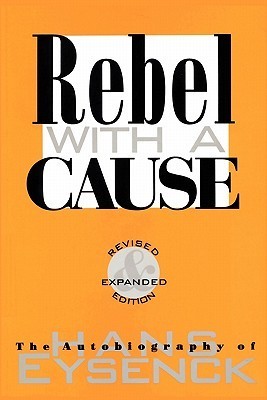
Hans Eysenck is one of the world's leading psychologists and undoubtedly the most controversial. Throughout a long and illustrious career his work on personality and intelligence has aroused impassioned debate and attacks, both verbal and physical, on Eysenck himself. In his compelling and absorbing autobiography, Eysenck recounts in some detail the battles he had to fight in order to establish his major conclusions, as well as the reasons why he investigated these subjects. He also discusses his work on such topics as the health hazards of smoking, the prophylactic effects of behavior therapy on cancer and coronary heart disease, parapsychology, astrology, and other matters. In a new foreword, written for this edition, Eysenck expresses his pleasure regarding the fact that his autobiography is now being published in the United States. He discusses how much of his scientific life has been bound up with American psychology. Also new to this American edition is a chapter titled "Genius, Creativity, and Vitamins," in which Eysenck talks about the research he has worked on since his retirement in 1983. Rebel with a Cause is an intriguing autobiography and will be of paramount interest to psychologists, sociologists, and genetic scientists.

Book by Eysenck, Hans J., Sargent, Carl

Hardcover edition 1968 publishing


La supuesta relación de estrecha dependencia entre las actitudes sociales y políticas, por un lado, y la valoración del papel de la herencia y del ambiente en la conducta humana, por otro, ha dado lugar a discusiones tan airadas como improductivas. Sin embargo, señala H.J. EYSENCK, la igualdad ante la ley, la igualdad de oportunidades y la igualdad de derechos ciudadanos son principios universales que pueden afirmarse y deben ser defendidos con independencia de los condicionamientos genéticos de nuestra especie. El reconocimiento de LA DESIGUALDAD DEL HOMBRE por causas hereditarias no implica juicios de superioridad o inferioridad respecto a las diferencias innatas ni tiene por qué conducir a discriminaciones políticas, jurídicas, ideológicas o educativas. De otra parte, las viejas polémicas entre "ambientalistas" y "partidarios de la herencia", caracterizadas por la defensa unilateral de una u otra postura, carecen de sentido, dado que la interacción entre los factores genéticos y el medio constituye un hecho indiscutible. Mientras el genotipo determina las potencialidades de un organismo, el medio condiciona el desarrollo de tales potencialidades; y la diversidad genética del hombre, que se manifiesta en la dotación física, el comportamiento sexual, la enfermedad mental y las desviaciones de la conducta, constituye precisamente la garantía de que nuestra especie pueda ajustarse a las variaciones exteriores del medio. Por lo demás, la diversidad humana exige, a la vez que el entendimiento científico de las limitaciones impuestas por los inexorables hechos biológicos como condición previa para reformar la sociedad sobre bases racionales, la tolerancia hacia las ideas, los patrones de vida y los modos de ajuste que forman la riqueza multiforme de nuestra especie. Otras obras de H.J. Eysenck en Alianza "Psicologí Hechos y palabrería" (LB 657), "Usos y abusos de la pornografía" (LB 711), "La rata o el diván" (LB 728) y "El estudio experimental de las teoría freudianas" (AU 270).

Book by Eysenck, H. J

In writing The Psychology of Politics, Hans Eysenck had two aims in to write a book about modern developments in the field of attitude studies which would be intelligible to the layman; and one that would integrate into one consistent theoretical system a large number of contributions on the topic from different fields. Eysenck believes that science has something to say about such problems as anti-Semitism, the origin and growth of fascist and communist ideologies, the causal determinants of voting behavior, the structure of opinions and attitudes, and the relationship between politics and personality. He seeks to rescue these factual findings from the obscurity of technical journals and present them in a more accessible form. The research presented in this book outlines the main principles of organization and structure in the field of attitudes. These principles account in a remarkably complete and detailed manner for the systems of political organization found in Great Britain, that is, the Conservative, Liberal, and Socialist parties, and the communist and fascist groups. Next, Eysenck relates these principles to the system of personality structure which for many years formed the main focus of research activity at the Institute of Psychiatry in London. The Psychology of Politics integrates attitude research with modern learning theory. In his new introduction, Eysenck writes that his research and personal experiences in Germany led him to believe that authoritarianism could appear equally well on the left as on the right. He saw Stalin as equally authoritarian as Hitler, and communism as equally totalitarian as Nazism. The Psychology of Politics contains the evidence and arguments Eysenck used to demonstrate his approach. This volume is of enduring significance for psychologists, political theorists, and historians. It is by indirection a major statement in modern liberalism.
Book by Eysenck, Hans J.

Science or Superstition?

Advances in molecular genetics have enabled the discovery of DNA markers which can identify simple genet ic traits such as intelligence. In this book Hans Eysenck ex plains the concepts and measurement of intelligence. '

The Biological Basis of Personality represents Eysencks third phase of study, when he dug deeper to find biological causes underlying the psychological concepts of emotion, excitation, and inhibition which had formed the building blocks of his earlier efforts. In this work, the causal links he postulates between personality variables and neurological and physiological discoveries establish a realistic model that takes theory out of the field of mere speculation.

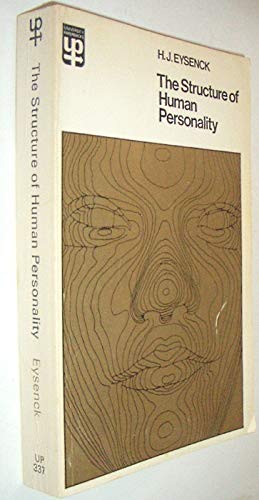
Originally published in 1953, this third edition was first published in 1970. It was one of the early attempts at bringing together theories of personality organisation and finding empirical evidence to test their hypotheses. This third edition includes additional chapters and updated references to current research of the time. It is a particular feature of this book that a large number of figures are reproduced in the text; this is essentially a consequence of the writer's belief that diagrammatic representations are better suited to the transmitting and remembering of information than are words or numbers.The first chapter outlines the theories and discusses some of their implications, the second and third look at methods of analysis and projective techniques, while the rest of the book is devoted to a critical presentation of the evidence, arranged according to the technique employed - rating, self-rating, objective testing, constitutional assessment, autonomic measurement, and so on. Today it can be read and enjoyed in its historical context.

Financial Accounting 3th Edition Annual Report with Student Working Papers Student Study Guide and eGrade Plus Set
by Hans Jürgen Eysenck
Rating: 3.0 ⭐
Book by Hans J. Eysenck; Carl Sargent

De auteur, een vooraanstaand leertheoreticus, stelt, dat op het gebied van de psychotherapie de ongewenste situatie is ontstaan dat de verbinding tussen werkelijkheid en theorievorming is verbroken. Gepleit wordt voor een beoordeling van psychotherapeutische theorieen naar hun therapeutisch succes. Uit de door de auteur aangehaalde experimenten blijkt dat gedragstherapie voor neurosen veruit superieur is aan andere methoden. In het kort wordt het leertheoretisch model van de oorzaken, en behandelingsmethoden weergegeven en wordt een aantal kritieken op de gedragstherapie en ethische aspecten van de gedragstherapie besproken. Het boek is in een duidelijke stijl geschreven, is duidelijk ingedeeld en is geschikt voor lezers die in de geestelijke volksgezondheid werkzaam zijn en voor geinteresseerden.
Personality and Individual Differences: A Natural Science Approach
by Hans Jürgen Eysenck
Rating: 4.0 ⭐
A Natural Science Approach Hans J. Eysenck Institute of Psychiatry University of London London, England Michael W. Eysenck Birkbeck College University of London London, England This fascinating study of personality and individ¬ual differences deals with the historical develop¬ment of the concepts involved, intelligence and temperament, and genetic, biological, and behav¬ioral factors. The Eysencks survey a large amount of empirical material and attempt to integrate this information with current theories of personality, detailing both psychometric-correlational and strictly experimen¬tal studies. They take issue with a number of popular theoretical views, such as the belief that personality traits are of an inconsistent nature, and that behavior is very situation-specific. They also stress the influence of genetic factors on per¬sonality and pay particular attention to the growth of the concepts being examined. In tracing this de¬velopment, the Eysencks reveal a surprising amount of agreement on the fundamentals of per¬sonality among many theorists whose concepts would appear to have little in common. The authors have made a special effort to make the material accessible to students lacking specialized knowledge of the areas under consi-deration, making this volume an ideal text for all students of psychology.

Reminiscence, Motivation, and Personality: A Case Study in Experimental Psychology
by Hans Jürgen Eysenck
Rating: 4.0 ⭐
This is a book on reminiscence, or more modestly a book on reminiscence in motor tasks, or more modestly still on reminiscence in pursuit rotor learning, with occasional references to other types of reminiscence. The vast majority of experiments investigating reminiscence with the pur suit rotor have been carried out within the framework of Hullian learn ing theory. Thus, of necessity, this book also will be much concerned with that theory. Some readers may feel that so much detailed attention paid to one piece of apparatus and one now rather discredited theory, is overdone; we could not agree with such an evaluation. There are several features of pursuit-rotor performance which make it particularly worthy of attention. One of the more important of these features is the easy replicability of many of the phenomena found in performance of this task; this is our first point. Replicability is the life blood of science; what cannot be replicated by any well-trained observer is of doubtful status in science, and on this score pursuit-rotor work certainly emerges as perhaps the most reliable set of observations in experimental psychology. The effects of massing and spacing; of rest pauses of different length; of switching from massed to spaced learn ing, or vice versa; of interpolating different activities; of introducing distracting stimuli; of switching from right to left hand, or vice versa; of changing the speed of rotation, or the diameter of the target disk these are clear-cut and replicable as few phenomena in psychology are.