Loading themes...
Explore the best books about Criticism theme.

When we look at a painting hanging on an art gallery wall, we see only what the artist has chosen to disclose--the finished work of art. What remains mysterious is the process of creation itself--the making of the work of art. Everyone who has looked at paintings has wondered about this, and numerous efforts have been made to discover and depict the creative method of important artists. A Giacometti Portrait is a picture of one of the century's greatest artists at work.James Lord sat for eighteen days while his friend Alberto Giamcometti did his portrait in oil. The artist painted, and the model recorded the sittings and took photographs of the work in its various stages. What emerged was an illumination of what it is to be an artist and what it was to be Giacometti--a portrait in prose of the man and his art. A work of great literary distinction, A Giacometti Portrait is, above all, a subtle and important evocation of a great artist.

Samuel Johnson's literary reputation rests on such a varied output that he defies easy description: poet, critic, lexicographer, travel writer, essayist, editor, and, thanks to his good friend Boswell, the subject of one of the most famous English biographies.This volume celebrates Johnson's astonishing talent by selecting widely across the full range of his work. It includes London and The Vanity of Human Wishes among other poems, and many of his essays for the Rambler and Idler. The prefaces to his edition of Shakespeare and his famous Dictionary, together with samples from the texts, are given, as well as selections from A Journey to the Western Islands of Scotland, the Lives of the Poets and Rasselas in its entirety. There is also a substantial representation of lesser-known prose, and of his poetry, letters, and journals.

Can we continue to believe in progress? In this sobering analysis of the Western human condition, Christopher Lasch seeks the answer in a history of the struggle between two ideas: one is the idea of progress - an idea driven by the conviction that human desire is insatiable and requires ever larger production forces. Opposing this materialist view is the idea that condemns a boundless appetite for more and better goods and distrusts "improvements" that only feed desire. Tracing the opposition to the idea of progress from Rousseau through Montesquieu to Carlyle, Max Weber and G.D.H. Cole, Lasch finds much that is desirable in a turn toward moral conservatism, toward a lower-middle-class culture that features egalitarianism, workmanship and loyalty, and recognizes the danger of resentment of the material goods of others.

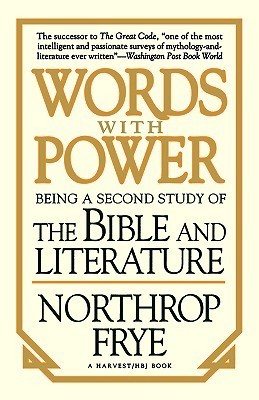
Frye continues his exploration, begun in The Great Code, of the influence of Biblical themes and forms of expression on Western literature, with discussions of authors ranging from Chaucer and Shakespeare to Yeats and Eliot. Frye identifies four key elements found in the Bible-the mountain, the garden, the cave, and the furnace-and describes how they recur in later secular writings. Indices.

Featuring the column Orwell wrote for the Socialist weekly Tribune (where he was the literary editor), As I Please also includes Orwell's spirited defense of English cooking, notes on the perfect cup of tea, and accounts of the difficulties with - and ultimate success of - Animal Farm.--From the 2000 edition.

An examination of the influence of the Bible on Western art and literature and on the Western creative imagination in general. Frye persuasively presents the Bible as a unique text distinct from all other epics and sacred writings. “No one has set forth so clearly, so subtly, or with such cogent energy as Frye the literary aspect of our biblical heritage” (New York Times Book Review). Indices.

Complete and unabridged paperback edition. An essay containing the most extensive statements of Wilde's aesthetic philosophy.First published in 1891.

Is Emily Dickinson "the female Sade"? Is Donatello's David a bit of paedophile pornography? What is the secret kinship between Byron and Elvis Presley, between the Medusa and Madonna? How do liberals and feminists - as well as conservatives - fatally misread human nature? This audacious and omnivorously learned work of guerilla scholarship offers nothing less than a unified-field theory of Western culture, high and low, since the Egyptians invented beauty - making a persuasive case for all art as a pagan battleground between male and female, form and chaos, civilisation and demonic nature.

Forty years in the making, a new cultural canon that celebrates truth over hypocrisy, literature over totalitarianism.Echoing Edward Said’s belief that “Western humanism is not enough, we need a universal humanism,” the renowned critic Clive James presents here his life’s work. Containing over one hundred original essays, organized by quotations from A to Z, Cultural Amnesia illuminates, rescues, or occasionally destroys the careers of many of the greatest thinkers, humanists, musicians, artists, and philosophers of the twentieth century. In discussing, among others, Louis Armstrong, Walter Benjamin, Sigmund Freud, F. Scott Fitzgerald, Franz Kafka, Marcel Proust, and Ludwig Wittgenstein, James writes, “If the humanism that makes civilization civilized is to be preserved into the new century, it will need advocates. These advocates will need a memory, and part of that memory will need to be of an age in which they were not yet alive.” Soaring to Montaigne-like heights, Cultural Amnesia is precisely the book to burnish these memories of a Western civilization that James fears is nearly lost.

The global turmoil of the last few years has severely tested every analyst and commentator. Few have written with such insight as Christopher Hitchens about the large events — or with such discernment and wit about the small tell-tale signs of a disordered culture.For the Sake of Argument ranges from the political squalor of Washington, as a beleaguered Bush administration seeks desperately to stave off disaster and Clinton prepares for power; to the twilight of Stalinism in Prague; from the Jewish quarter of Damascus in the aftermath of the Gulf War to the embattled barrios of Central America and the imperishable resistance of Sarajevo, as a difficult peace is negotiated with ruthless foes. Hitchens’s unsparing account of Western realpolitik in the end shows it to rest on delusion as well as deception.The reader will find in these pages outstanding essays on political assassination in America as well as a scathing review of the evisceration of politics by pollsters and spin-doctors. Hitchens’s knowledge of the tortuous history of revolutions in the twentieth century helps him explain both the New York intelligentsia's flirtation with Trotskyism and the frailty of Communist power structures in Eastern Europe.Hitchens's pointed reassessments of Graham Greene, P. G. Wodehouse and C. L. R. James, or his riotous celebration of drinking and smoking, display an engaging enthusiasm and an acerbic wit. Equally entertaining is his unsparing rogues’ gallery, which gives us unforgettable portraits of the lugubrious “Dr.” Kissinger, the comprehensively reactionary “Mother” Teresa, the preposterous Paul Johnson and the predictable P. J. O’Rourke.

"When Steiner deals with transactions between languages . . . as in discussion of various English versions of the Bible or Robert Lowell`s translation of Racine, we see a keenly discriminating literary mind at work on what it loves."-Robert Gorham Davis, New York Times Book Review "An extraordinarily sharp, brilliant, and thoughtful discussion of the strange conditions into which modern writing has worked itself. . . . Few, very few writers today have as much that is worthwhile to say on today`s writing as does the author."-Joseph G. Harrison, Christian Science Monitor "Whoever has valued and needed this book for its insights into some one particular matter . . . will upon rereading discover the astounding breadth of attention in [it]: from Homer to Thomas Mann, from Marshall McLuhan to The Warsaw Diary of Chaim Kaplan. In each of these essays, a single sentence, and often more than one, can endlessly provoke and illuminate thought."-John Felstiner How do we evaluate the power and utility of language when it has been made to articulate falsehoods in certain totalitarian regimes or has been charged with vulgarity and imprecision in a mass-consumer democracy? How will language react to the increasingly urgent claims of more exact speech such as mathematics and symbolic notation? These are some of the questions Steiner addresses in this elegantly written book, first published in 1967 to international acclaim.

From the renowned comedian, creator, star and executive producer/multiple title-holder of Comedy Central's Important Things with Demetri Martin comes a bold, original, and rectangular kind of humor book.Demetri's first literary foray features longer-form essays and conceptual pieces (such as Protagonists' Hospital , a melodrama about the clinic doctors who treat only the flesh wounds and minor head scratches of Hollywood action heroes), as well as his trademark charts, doodles, drawings, one-liners, and lists (i.e., the world views of optimists, pessimists and contortionists), Martin's material is varied, but his unique voice and brilliant mind will keep readers in stitches from beginning to end.

WITH 8 PAGES OF BLACK-AND-WHITE PHOTOGRAPHSHow—and why—do we obsess over movie stars? How does fame both reflect and mask the person behind it? How have the image of stardom and our stars’ images altered over a century of cultural and technological change? Do we create celebrities, or do they create us? Ty Burr, film critic for The Boston Globe , answers these questions in this lively and fascinating anecdotal history of stardom, with all its blessings and curses for star and stargazer alike. From Mary Pickford and Charlie Chaplin to Archie Leach (a.k.a. Cary Grant) and Marion Morrison (a.k.a. John Wayne), Tom Cruise and Julia Roberts, and such no-cal stars of today as the Kardashians and the new online celebrity (i.e., you and me), Burr takes us on an insightful and entertaining journey through the modern fame game at its flashiest, most indulgent, occasionally most tragic, and ultimately, its most revealing.

White Girls, Hilton Als’s first book since The Women fourteen years ago, finds one of The New Yorker's boldest cultural critics deftly weaving together his brilliant analyses of literature, art, and music with fearless insights on race, gender, and history. The result is an extraordinary, complex portrait of "white girls," as Als dubs them—an expansive but precise category that encompasses figures as diverse as Truman Capote and Louise Brooks, Malcolm X and Flannery O’Connor. In pieces that hairpin between critique and meditation, fiction and nonfiction, high culture and low, the theoretical and the deeply personal, Als presents a stunning portrait of a writer by way of his subjects, and an invaluable guide to the culture of our time.

A National Book Critics Circle Finalist for CriticismA deeply Malcolmian volume on painters, photographers, writers, and critics.Janet Malcolm's In the Freud Archives and The Journalist and the Murderer, as well as her books about Sylvia Plath and Gertrude Stein, are canonical in the realm of nonfiction—as is the title essay of this collection, with its forty-one "false starts," or serial attempts to capture the essence of the painter David Salle, which becomes a dazzling portrait of an artist. Malcolm is "among the most intellectually provocative of authors," writes David Lehman in The Boston Globe, "able to turn epiphanies of perception into explosions of insight."Here, in Forty-one False Starts, Malcolm brings together essays published over the course of several decades (largely in The New Yorker and The New York Review of Books) that reflect her preoccupation with artists and their work. Her subjects are painters, photographers, writers, and critics. She explores Bloomsbury's obsessive desire to create things visual and literary; the "passionate collaborations" behind Edward Weston's nudes; and the character of the German art photographer Thomas Struth, who is "haunted by the Nazi past," yet whose photographs have "a lightness of spirit." In "The Woman Who Hated Women," Malcolm delves beneath the "onyx surface" of Edith Wharton's fiction, while in "Advanced Placement" she relishes the black comedy of the Gossip Girl novels of Cecily von Zeigesar. In "Salinger's Cigarettes," Malcolm writes that "the pettiness, vulgarity, banality, and vanity that few of us are free of, and thus can tolerate in others, are like ragweed for Salinger's helplessly uncontaminated heroes and heroines." "Over and over," as Ian Frazier writes in his introduction, "she has demonstrated that nonfiction—a book of reporting, an article in a magazine, something we see every day—can rise to the highest level of literature."One of Publishers Weekly's Best Nonfiction Books of 2013

A comprehensive collection of the writings of Mark Fisher (1968-2017), whose work defined critical writing for a generation.This comprehensive collection brings together the work of acclaimed blogger, writer, political activist and lecturer Mark Fisher (aka k-punk). Covering the period 2004 - 2016, the collection will include some of the best writings from his seminal blog k-punk; a selection of his brilliantly insightful film, television and music reviews; his key writings on politics, activism, precarity, hauntology, mental health and popular modernism for numerous websites and magazines; his final unfinished introduction to his planned work on "Acid Communism"; and a number of important interviews from the last decade. Edited by Darren Ambrose and with a foreword by Simon Reynolds.