Loading themes...
Explore the best books about Chess theme.

This book is essentially a teaching machine. The way a teaching machine works is: It asks you a question. If you give the right answer, it goes on to the next question. If you give the wrong answer, it tells you why the answer is wrong and tells you to go back and try again. This is called "programmed learning". The real authors were experts and authorities in the field of programmed learning. Bobby Fischer lent his name to the project. Stuart Margulies is a chess master and also a recognized authority on programmed learning. He is a widely published author of more than 40 books, all in the field of programmed learning, especially in learning how to read. For example, one of his books is "Critical reading for proficiency 1 : introductory level". Donn Mosenfelder is not a known or recognized chess player, but he was the owner of the company that developed and designed this book. He has written more than 25 books, almost all on basic reading, writing and math.
An epic chess match on a transatlantic liner unearths a story of persecution and obsession. One of the most perfectly gripping novellas from a master of the form, Stefan Zweig.Chess world champion Mirko Czentovic is travelling on an ocean liner to Buenos Aires. Dull-witted in all but chess, he entertains himself on board by allowing others to challenge him in the game, before beating each of them and taking their money. But there is another passenger with a passion for chess: Dr B, previously driven to insanity during Nazi imprisonment by the chess games in his imagination. But in agreeing to take on Czentovic, what price will Dr B ultimately pay?A moving portrait of one man's madness, A Chess Story is a searing examination of the power of the mind and the evil it can do."The rediscovery of this extraordinary writer could well be on a par with last year's refinding of the long-lost Stoner, by John Williams, and which similarly could pluck his name out of a dusty obscurity." - Simon Winchester, Telegraph"Perhaps the best chess story ever written, perhaps the best about any game. Never mind that you may have never moved a pawn to King four; the story will grip you." - Economist"His great achievement in short form" - The TimesA staunch pacifist after his time in the Ministry of War during the First World War, Stefan Zweig was, at his peak, one of the bestselling and most widely acclaimed authors in the world. Following Hitler's rise to power, he and his second wife fled Austria; first to England, then to America, and finally, in 1940, they travelled together to Brazil, where the couple took an overdose and died. Much of his work is available from Pushkin Press.

For over 100 years, the world's leading chess players and teachers have told their students to study the endgame. This book teaches the students what they need to know at their current rating level, and builds on that knowledge for each subsequent phase of the player's development.

Based on his private course for students, America’s foremost chess coach and game strategist for Netflix’s The Queen’s Gambit presents an easy-to-use guide that explains invaluable "inner circle" endgame concepts for players of any level.The endgame has always been a particularly instructive phase of chess play. It provides the perfect opportunity for understanding the potential power of each chess piece in every chess situation—from opening move to checkmate.But the endgame is often viewed as an inaccessible area of play by most players whose experience is limited to watching championship games. Now, Pandolfini changes all of that.With one endgame example per page and covering every endgame category in order of difficulty, Paldolfini walks you through all the basic concepts --square of the pawn--critical squares--corresponding squares--other new approaches not mentioned in classic referencesFeaturing a glossary of concepts and diagrams throughout, this volume is the not-so-secret password to a whole new realm of chess play and entertainment for the average player.

A Modern Classic - Third Edition!When it first appeared, Dvoretsky's Endgame Manual was immediately recognized by novice and master alike as one of the best books ever published on the endgame. The third edition, revised and enlarged - now over 400 pages - covers all the most important concepts required for endgame mastery."I am sure that those who study this work carefully will not only play the endgame better, but overall, their play will improve. One of the secrets of the Russian chess school is now before you, dear reader! - From the Foreword to the First Edition by Grandmaster Artur Yusupov"Going through this book will certainly improve your endgame knowledge, but just as important, it will also greatly improve your ability to calculate variations, What really impresses me is the deep level of analysis in the book, All I can say is: This is a great book. I hope it will bring you as much pleasure as it has me. - From the Preface to the First Edition by International Grandmaster Jacob Aagaard Here's what they had to say about the First Edition: "Dvoretsky's Endgame Manual ... may well be the chess book of the year... [It] comes close to an ultimate one-volume manual on the endgame. - Lubomir Kavalek in his chess column of December 1, 2003 in the Washington Post."Dvoretsky's Endgame Manual is quite simply a masterpiece of research and insight. It is a tremendous contribution to endgame literature, certainly the most important one in many years, and destined to be a classic of the literature (if it isn't already one). The famous trainer Mark Dvoretsky has put together a vast number of examples that he has not only collected, but analysed and tested with some of the world's strongest players. This is a particularly important book from the standpoint of clarifying, correcting, and extending the theory of endings. Most of all, Dvoretsky's analysis is staggering in its depth and accuracy. - John Watson, reviewing DEM at The Week In Chess2003 Book of the Year - JeremySilman.com2003 Book of the Year - Seagaard Chess Reviews: "This is an extraordinary good chess book. To call this the best book on endgames ever written seems to be an opinion shared by almost all reviewers and commentators. And I must say that I am not to disagree." - Erik Sobjerg

John Nunn is one of the most highly regarded chess writers in the world. He has carefully selected thirty modern games to help the reader understand the most important aspects of chess and to illustrate modern chess principles in action.Virtually every move is explained using words that everyone can understand. Jargon is avoided as far as possible. Almost all the examples are taken from recent decades and show how key ideas are handled by modern grandmasters. The emphasis is on general principles that readers will be able to use in their own games, and detailed analysis is only given where it is necessary.Each game contains many lessons, but to guide the reader through the most important ideas in each phase of the game, the thirty games are grouped thematically into those highlighting opening, middlegame and endgame themes.John Nunn is a grandmaster from England. He has won four individual gold medals and three team silver medals at Chess Olympiads. In the Chess World Cup of 1988/9, he finished sixth overall, ahead of several former World Champions. He is arguably the most highly acclaimed chess writer in the world, with three of his books receiving the prestigious British Chess Federation Book of the Year Award. He is principal author of the definitive one-volume openings encyclopedia, Nunn’s Chess Openings .

How to Reassess Your Chess is the popular step-by-step course that will create a marked improvement in anyone's game. In clear, direct language, Silman shows how to dissect a position, recognize its individual parts and ultimately find the move that conforms to the needs of that particular situation. By explaining the thought processes that go into a master's choice of move, the author presents a system of thought that makes advanced strategies seem clear, logical and at times even obvious. How the Reassess Your Chess offers invaluable knowledge and insight that cannot be found in any other book.

Why is Modern Chess Openings called "the chessplayer's bible"? Because since it was first published over a half-century ago, it has been one of the most trusted books in the chess world. Because it is the world's most current and comprehensive one-volume reference work on the chess openings. And because it has been completely revised to reflect the changes and advances made in chess over the past eight years, including major tournament matches and published theoretical works.

International chess master Jeremy Silman provides 131 problems designed to test a player's strengths and weaknesses, cover openings, middlegames, and endgames. This workbook may be utilizes with or without Silman's earlier book "How to Reassess Your Chess". Illustrations.

One of the finest chess books ever written, the Art of Attack has been transcribed into algebraic notation for the first time. In this revised edition of the great classic, the author expounds both the basic principles and the most complex forms of attack on the king. A study of this masterpiece will add power and brilliance to any chess enthusiast's play. (5 3/4' X 8 1/4', 352 pages, illustrations, index)

Once a chess-player has learnt the basic rules of the game, the next step is to study tactics . A knowledge of tactics will enable a novice to start winning games by giving checkmate or taking his opponent’s pieces. As the player progresses, his tactical arsenal will broaden and he will start to play sacrifices and combinations. Improving your tactical ability is the most efficient way to win more games and gain confidence at the chessboard.Given the fundamental importance of chess tactics, there are surprisingly few books that teach the subject in a systematic way. Consequently, many players suffer from tactical blind-spots that plague them throughout their career. The step-by-step approach used in this book ensures that each concept is explained and tested before the next one is introduced.John Nunn is a renowned grandmaster noted for his devastating tactical ability. In this book, he guides the reader to an understanding of key tactical ideas such as the fork, pin, and discovered attack, and discusses general ideas such as elimination and compulsion. No prior knowledge is assumed apart from the basic rules of chess.Throughout the book there are carefully graded exercises to test the reader’s understanding.Dr John Nunn is a grandmaster from England. He has won four individual gold medals and three team silver medals at Chess Olympiads. In the Chess World Cup of 1988/9, he finished sixth overall, ahead of several former World Champions. He is arguably the most highly acclaimed chess writer in the world, with three of his books receiving the prestigious British Chess Federation Book of the Year Award.

Steve Giddins has chosen 50 supremely instructive games - some old, some new, and including many that few readers will have seen before. He has annotated these games in detail from a modern perspective, explaining the useful lessons that can be learnt from them, while avoiding the harmful dogma that characterized many older works of this type. Topics Attacking the King, Defence, Piece Power, and Endgame Themes. Each game is followed by a recap of the main lessons to be learned.Giddins writes in a highly accessible down-to-earth style that appeals to club players seeking to improve their understanding of practical chess. His knowledge of Russian-language chess literature has enabled him to find many excellent examples that have not appeared in previous western literature.

By concentrating on the basic principles the average player is not only given a working knowledge of the endgame but also a firm foundation on which to further develop his or her interest and technique in this fascinating stage of a chess game. The author, a Russian Grandmaster and endgame expert, takes the reader from the most elementary checkmates, through the exploitation of positional and material advantage, right up to the analysis of actual endings from master play.

Rapid Chess Improvement is the ideal book for serious adult players who want to improve. It describes a study plan which came about thanks to a re-evaluation of standard chess teaching and includes several unique components aimed at improving deficiencies in the play of adult players.This book is the only one of its kind for the simple reason that it has been written by an author who hugely improved his own rating over a 12 month period by following his own advice. He therefore fully understands the challenges faced by enthusiastic players who are relatively new to the game. This is in sharp contrast to most books aimed at this level which are usually written by very strong players who have long forgotten what it feels like to be starting out in the game.

This wonderfully entertaining book also happens to be quite effective. Everything any child will need to know about chess strategy and more is here in this book, which is well laid out and easy to follow. Part of the fun factor for kids is that the book is replete with cartoon images of chess characters to help make the learning experience more exciting. A bright and colorful cover, as well as the large workbook format and algebraic notation make this a book which will occupy your child's attention for many hours. The flexible "perfect binding" makes it easy to turn the pages and have them stay in place.

Book by Bain, John A.

From America’s foremost chess coach and game strategist for Netflix’s The Queen’s Gambit comes t he best chess drill book for beginners of all ages.From ever-popular chess instructor Bruce Pandolfini comes this entertaining, interactive, and effective book for teaching young chess players and other newcomers to the game. Filled with hundreds of questions and answers, fill-in-the-blanks, and true-or-false posers, Square One combines traditional chess drills with diverting games and problems to stimulate the analytical skills of beginners of all ages.Besides covering the basics—the board, moves, rules, and notation— Square One goes on to include information on attacks, checkmate, draws, and special rules, giving the beginner a broad overview of the game. With more than 200 instructional diagrams, and answers to all questions and problems, it is a complete workbook for chess players starting at square one.

This new and expanded edition of The Mammoth Book of the World's Greatest Chess Games contains the 112 greatest chess games of all time—selected, analyzed, re-evaluated and explained by a team of experts and illustrated with more than 900 diagrams. Among the highlights are Kasparov vs. Topalov; Kasparov vs. Wijk aan Zee; the super-computer Deep Blue's historic first win over Kasparov; Boris Spassky's "James Bond" Mating Combination; and Bobby Fischer's "Game of the Century." Study these games and learn about defense and counterattack, logical opening play, endgame strategy, psychological warfare, and how great players think.

Here are 62 masterly demonstrations of the basic strategies of winning at chess, compiled and annotated by one of the game's most admired and respected writers. Each game offers a classic example of a fundamental problem and its best resolution, described and diagrammed in the clearest possible manner for players of every level of skill.As Irving Chernev observes in the Introduction, "Who will doubt the tremendous power exerted by a Rook posted on the seventh rank after seeing Capablanca's delightfully clear-cut demonstration in Game No. 1 against Tartakower? And who will not learn a great deal about the art of handling Rook and Pawn endings (the most important endings in chess) after playing through Tarrasch's game against Thorold?"Chernev's lively and illuminating notes on each game reveal precisely how Capablanca, Tarrasch, and other masters — Fischer, Alekhine, Lasker, and Petrosian among them — turn theory into practice as they attack and maneuver to control the board. Readers will find their techniques improving with each lesson as Irving Chernev dissects winning strategies, comments on alternate tactics, and marvels at the finesse of winning play, noting at the end of his "I might just as well have called this collection The Most Beautiful Games of Chess Ever Played ."

Once a chess player has figured out how all the chess pieces move, what is the next step on the chess ladder? This helpful and entertaining book provides players with the complete answer. In this easy-to-follow guide, renowned chess teacher Chris Ward explains all the crucial checkmating patterns, plus how to catch out opponents with an assortment of tricks and traps, commonly known as chess tactics. There is something for everyone in this improving players can benefit from learning the basic checkmates and the key tactics such as attacking and defending pieces, forks, pins, and skewers, while more experienced players can discover the delights of advanced checkmates and sneaky tricks, ones that can flummox even the world's best players!Learning chess tactics is fun and one of the quickest ways of improving in chess, and it's even more enjoyable when opponents begin falling for these tricks! Read this book and, with the help of a Grandmaster, any chess player will be ready to unleash the weapons in their chess battles, whoever their opponent is.>An ideal chess tactics and checkmates guide for the improving player>Written by a distinguished chess author>Full of notes, tips, and warnings to help the reader

Winning Chess Strategy for Kids is a fun and comprehensive chess course written for children 7 to 13 years old. Full of original material and entertaining artwork, it's a perfect guide for learning the royal game. Parents and teachers are sure to like it too. The book begins on square covering the rules, basic mates, and elementary tactics. It then leads the student through a whole range of advanced strategies, including piece development, pawn structure, and attacking the castled king. Opening principles, middlegame plans, and endgames techniques are all explained in clear and simple language. Separate sections throughout the book are devoted to combinations and terminology. Whether kids are learning chess for recreation or are interested in playing competitively, Winning Chess Strategy for Kids will help them understand the game better and enjoy it more.

The difference between a Grandmaster and an ordinary chess player isn’t just sheer brainpower. It’s the creative ability to develop a far-reaching plan. In this indispensable follow-up to his incredibly successful The Art of Logical Thinking, International Grandmaster Neil McDonald takes a penetrating look at more than 40 of the most outstanding games of the last 25 years, offering detailed, in-depth analysis of the strategic concepts behind each move. By showing how the players develop their plans many moves ahead, he gives the reader a unique opportunity to virtually get inside the Grandmasters’ heads as they play.

Chess is the art that expresses the science of logic . Mikhail BotvinnikGrandmaster Neil McDonald explains every single move made by White and Black in 30 striking tactical or strategical games played over the last quarter century.These games have been carefully chosen for their consistent logical thread, thereby providing the reader with prime instruction in the art of conceiving appropriate plans and attacks and carrying them out to their natural conclusion. Watching games unfold in this way will be both an education and inspiration to readers who can then try to play in the same purposeful way in their own games – with a corresponding increase in their playing strength.
This book offers a unique approach to chess self-evaluation and training. It will answer the two most common questions that players ask an experienced coach - what is my true rating (or strengths and weaknesses)? How do I improve?The readers will 100 diagrams & 200 total questions of various difficulty.Comprehensive answers include diagrams for easy reading away from the chessboard.Distributions of answers, percentiles and other statistical reports by rating group from unrated to 2400+.Match yourself against players of all levels, up to grandmaster and see how you stock up.Results evaluated and Rating assigned overall & by 12 distinct Opening, Middlegame, Endgame, Attack, Defense, Counterattack, Tactics, Strategy, Calculations, Standard Positions (Endgame), Sacrifices, Recognizing Threats.Comprehensive reports on each of the categories with examples, training recommendations and book/materials suggestionsThe book will be essential reading for everyone who plays chess because it a. help them to understand their current situation by identifying their strengths and weaknesses;b. give them clear explanations on how to improve, both in suggesting the appropriate training materials and in outlining the training methods;c. encourage players to establish and then follow a structured training plan;d. relieve player's anxiety by assuring that there is plenty of help available to those who are interested in understanding the game better and improve their skills;e. provide players with means of getting all their questions answered via timely advice from experienced coaches and also their peers.

One of the most influential books on chess ever published – now in digital format. The Tiger is a vicious beast. He doesn't care about the aesthetic side of chess. He doesn't even care about making the 'best' moves. All he cares about is winning. Do you want to win more games? Then become a Tiger. 'Chess for Tigers' tellsyou how to make the most of your playing strength, how to play upon youropponent's weaknesses, how to steer the game into a position which suits youand not your opponent, how to get results against strong opposition and how toavoid silly mistakes. This is a cult classic that is as relevant to today's generation of chess players asthe first edition was. Regularly voted in the top 10 best chess books of all time,this book should be read by all chess players, especially beginners who want towin at all costs. Author InformationMr Webb started to make an impact on the chess world in the 1960s. He learnedthe game at the age of seven and ten years later, in 1966, he was under-18champion in Britain and fourth in the European junior Championship. He marriedand moved to Sweden in the 1970s and became one of the few correspondencechess Grand Masters. The first edition of Chess for Tigers was first published in1978. The sad death of Simon Webb in March 2005 shocked the chesscommunity.

Chess Workbook for Children is a fun, comprehensive workbook and instruction book for children (and adults) who are new to chess or who are in the beginning stages of learning to play the royal game. Two hundred problems with a comprehensive answer key are given at two skill Basset Hound (beginner) and Chess Detective (intermediate). The book has large print and is easy to read and understand. Note this is a Workbook and Instructional chess book. You can write out your answers to the problems on a separate sheet of paper, since you using a Kindle. For years, this is the best-selling beginner chess book in the United States.

This book takes the student on a journey through his own mind and returns him to the chess board with a wealth of new-found knowledge and the promise of a significant gain in strength. Most amateurs possess erroneous thinking processes that remain with them throughout their chess lives. These flaws in their mental armour result in stinging defeats and painful reversals. Books can be bought and studied, lessons can be taken -- but in the end, these elusive problems always prove to be extremely difficult to eradicate. Seeking a solution to this dilemma, the author wrote down the thoughts of his students while they played actual games, analysed them, and catalogued the most common misconceptions that arose. This second edition greatly expands on the information contained in the popular first edition.

This newly revised volume in the successful Comprehensive Chess Course sharpens and tightens your game through examination and study of the 300 most important chess game positions. The most important and instructive positions over the last 100 years arranged as challenges, with illuminating explanations and solutions. Lev Alburt, Grandmaster of Chess and renowned three-time US chess champion, presents and analyzes the 300 most important game positions an average player should understand and remember to become a chess expert. These most crucial and instructive positions taken from games over the last 100 years are arranged as challenges, with instructive explanations and solutions on facing pages. Besides giving students this essential knowledge, this book also helps them to train their chess abilities and improve their skills steadily and efficiently. These practical exercises, easy to read and to understand, take the reader from beginner to tournament-strength chess player.

Winning Chess Puzzles For Kids is the perfect introduction to basic chess tactics for children ages 7 to 13. Full of imaginative drawings, this fun and instructive workbook combines standard chess problems with a variety of insightful chess-related puzzles. The main part of the book consists of exercise sheets with more than 1000 positions, covering mates in one or two moves, and simple tactics such as forks, pins, and discovered checks. There are also over 100 pages of additional material with names like Lily's Puzzlers, Combo Mombo, Kiril's Kontest, Who's The Goof, and Switcheroos, as well as word searches and chess mazes. This book can be studied by itself or used as a supplement to the author's earlier Winning Chess Strategy For Kids and Winning Chess Exercises For Kids. Taken together, they make a complete course of instruction for the aspiring player.

There are more than 30 moves to choose from in a typical chess position. Yet masters regularly manage to select the best one--and they do it faster, more confidently, and with less calculation than other players. The reason: masters know shortcuts that enable them to think more efficiently. International Grandmaster Andrew Soltis explains these techniques, including how to use specific cues to find good moves, how to streamline the analysis of a move's consequences, and how to use both objective and highly subjective criteria to find the right move--from any position. An enlightening window into a Grandmaster's thinking process.

Description of an original comprehensive approach to chess for advanced players from one of the world's best coaches. Consists of theoretical and practical sections. Printed in France. Translated from Russian to English by Ken Neat.

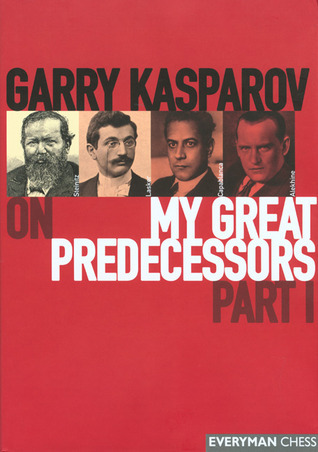
The battle for the World Chess Championship has witnessed numerous titanic struggles which have engaged the interest not only of chess enthusiasts but also of the public at large. The chessboard is the ultimate mental battleground and the world champions themselves are supreme intellectual gladiators.These magnificent compilations of chess form the basis of the first two parts of Garry Kasparov's definitive history of the World Chess Championship. Garry Kasparov, who is universally acclaimed as the greatest chessplayer ever, subjects the play of his predecessors to a rigorous analysis.Part one features the play of champions Wilhelm Steinitz (1886-1894), Emanuel Lasker (1894-1921), Jose Capablanca (1921-1927) and Alexander Alekhine (1927-1935 and 1937-1946).Part two features the play of champions Max Euwe (1935-1937) Mikhail Botvinnik (1946-1957, 1958-1961 and 1961-1963), Vassily Smyslov (1957-1958) and Mikhail Tal (1960-1961).These books are more than just a compilation of the games of these champions. Kasparov's biographies place them in a fascinating historical, political and cultural context. Kasparov explains how each champion brought his own distinctive style to the chessboard and enriched the theory of the game with new ideas.All these games have been thoroughly reassessed with the aid of modern software technology and the new light this sheds on these classic masterpieces is fascinating.

Thorough classification of 23 mating situations, including Legal's pseudo-sacrifice, the double check, smothered mate, Greco's mate, the Corridor mate, and many others. Learn from 127 games by Tartakower, Janowski, Rubinstein, Blackburne, others, illustrating positional maneuvers leading to these mates. Review quizzes test progress.

A First Book of Morphy illustrates basic principles of chess with more than 60 brilliant and instructive games played by the first American chess champion, Paul Morphy.

Professionals know that during the course of a game, the value of chess pieces change. And they use this knowledge to decide which pieces to exchange--and when. International grandmaster Andrew Soltis, the author of Bobby Fischer Rediscovered , helps pass this important information on to novices so they can benefit, too. He investigates why the traditional "chart of relative values" or computer analysis so often fails to explain why certain trades and sacrifices work and others just don't. All the typical decisions a player has to make, such as whether to swap two minor pieces for rook and pawn, receive detailed scrutiny. Players will appreciate the insightful analysis.

First-rate text of comprehensive strategy, tactics, theory for the amateur. No gambits to memorize, just a clear, logical approach.

Since he first burst onto the world chess scene in 1992, displaying a maturity of play far beyond his sixteen years, Vladimir Kramnik has benn tipped as a future world champion. Still only in his mid twenties, he is now firmly consolidated in the world top three (as of 2000 when the book was published).This book describes Kramnik's rise to the elite levels of professional chess and ends just before his historic upset of Garry Kasparov later in 2000.

This is a basic book that teaches strategic planning in chess. It is a book that an entire generation of aspiring chess players studied and read, but seems to be nearly forgotten today. Written by a former Chess Champion of the world, this book has as its basis an entirely novel idea which will help players over a real difficulty. Many books have been written on the openings, some knowledge of which is essential to those who wish to enjoy their chess by playing it well. But after eight to fifteen moves or so the book on openings must of necessity break off, and the student is left with the intimation that the position in question is even, or that White or Black stands slightly better. This book is concerned with the game from then on. The author studies a number of orthodox openings and position from the point where the opening stage has come to an end. He describes the characteristics of the position reached, shows why one or the other side stands better, and gives a thoroughly practical demonstration of the means by which the game can be brought to its logical conclusion.

Teaches opening moves designed for early advantage, with diagrams, quizzes, and analyses intended for the advanced beginning and intermediate player.

300 practical endgame situations, ranging from very simple to masterpieces by Capablanca, Reti, Tarrasch, Lasker, more.

A transposition in chess is a little like a bait-and-switch marketing ploy. The customer thinks he’s getting a bargain on one piece of merchandise, but he ends up buying another at a much higher price. In the first book devoted to chess transpositions, New York Post columnist and acclaimed chess author Andy Soltis shows how this strategy works over the board. By transposing a series of well-known moves (i.e., making them in an unfamiliar order), a player leads his opponent into an unfavorable position that he would normally have shunned. Using entertaining examples from the games of the masters, Soltis covers a variety of transpositions in virtually every kind of double e-pawn, Sicilian, the Reti, English, Indian, and others.

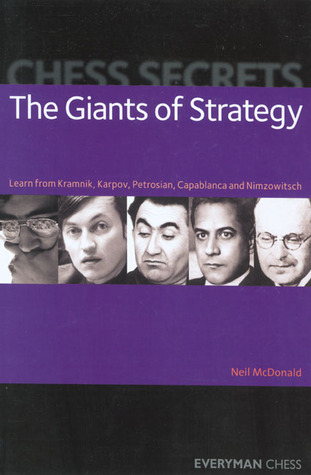
The chess world has been blessed by a number of wonderful strategists, and in Chess The Giants of Strategy , Neil McDonald decides upon his selection of the most prominent ones, highlighting the major contributions they have made. McDonald examines their differing approaches and styles, and from Nimzowitsch to Kramnik, how they followed in each other's footsteps.Throughout history there have been many famous players who have dazzled the chess world with their swashbuckling approach to opening play. In Chess The Great Gambiteers , John Cox picks out his selection of famous gambiteers and studies the mark they made in the sphere of attacking play in the opening. Themes include attacking the opponent's king, exploiting a lead in development, controlling the centre, as well as the significant enhancement of opening theory through the invention of numerous dangerous gambits.*Learn from the greats of the game*Discover how famous chess minds work*Written in an easy-to-read format*Ideal for improvers, club players and tournament players*

Chess Rules of Thumb gives you the winning principles of chess in clear, short statements. Three-time US Champion Lev Alburt and World Chess Hall of Fame Curator Al Lawrence have put together three centuries of insights from the masters. Fun to browse or to read from cover-to-cover, it's a book that all chess playersfrom beginners to grandmasterslwiull enjoy for a lifetime. Like life, chess has its rules. The difference that your parents probably didn't tell you about chess. Save hours of head-scratching and uncertainty in your own games and understand why the masters make the moves they Backed up with diagrams and illustrations to help you remember key principles, a glossary of essential chess terms and a rundown on all major openings, Chess Rules of Thumb will improve your chess play. And it's great fun to read!

It’s a fact that you can win some chess games just by playing one solid-looking move after another. But at the higher levels of competition, it’s not enough to play move by move: you need a plan. Chess Success is about making that plan. It shows, with fascinating examples taken from actual grandmaster games, why the solid-looking move—the “natural” move—can often be a subtle blunder. Learn to make a better move by first looking at the pawn structure of the game and understand how it’s “warped” by the positions of the pieces. Apart from this powerful new way of looking at chess strategy, the games with their unexpected twists are tremendously entertaining to replay.


This is a detailed, comprehensive guide to learning how to play chess. Primarily intended to serve as a manual for those teaching chess in schools and colleges, and for parents teaching chess to their children, or themselves, the book is an ideal starting point for anyone, no matter what age, who wants to take up the sport. "Volume I" looks at the chessboard and the starting position; how pawns, rook, bishop, queen, knight and king move and capture; chess notation; the centre; check; checkmate; castling; relative values of chess forces; how games are drawn; how to record moves; how to open a chess game; test. "Volume II" looks at the rules of play; chess terms and concepts; attack and defence; mistakes in the opening; opening traps; exploiting a large material advantage; double attack; pawn endgames; pinning; the skewer; typical mating combinations; other endgames; final test.

Raise your chess to the next level with this program of 600 instructive and challenging exercises covering all aspects of the game. This book will sharpen your tactical vision, deepen your positional understanding, and enrich your knowledge of theoretical positions. It will also strengthen your analytical skills, and instill a sound move selection process. Win more games and increase your enjoyment of chess!

There is much published on chess tactics, strategy, openings and endings, but little on how to come up with imaginative solutions through logical thinking and evaluation. This book is dedicated to that task and provides over 700 'fresh' positions, incorporating a variety of schemes of thought for the reader to solve. The examples emphasise the power of logical and resourceful thinking, quick wit and imagination. In each chapter the author presents little-explored concepts, such as progressive and reciprocal thinking, to help the reader achieve decisive results and to make fewer mistakes in calculation.The material has been accumulated by the author over many years as a trainer and will be of great benefit to competitive players seeking to improve their methods of thinking.

Inside the Chess Mind enters fresh territory in chess literature by providing a thought-provoking insight as to how the chess brains of the great, the good, and the improver operate. Renowned chess writer Jacob Aagaard supplies numerous challenges to a group of chess players of a very wide range of ages and playing strengths.

"One of the few books…which, at a glance, one can recognize as an immortal." — Chess .The proper use of pawns — of paramount importance in chess strategy — sometimes even puzzles experienced players. This profoundly original and stimulating book by an International Master and prolific chess writer offers superb instruction in pawn play by isolating its elements and elaborating on various aspects.After a lucid exposition of the fundamentals and the basic formations of one or two pawns that virtually constitute the keys to winning chess strategy, the reader is shown a multitude of examples demonstrating the paramount significance of elements of pawn manipulation. The author’s masterly explanation makes it perfectly clear to the beginner as well as the advanced player how the fate of a game depends on pawn formation and how pawn power holds the proceedings under its remote control. Over 180 games and diagrams illustrate the author’s theory and make it easy to follow the points made in the text.Hans Kmoch played with distinction in several international tournaments and is the author of a number of books and columns on chess and chess tournaments.“We consider it the best publication on chess strategy since the end of World War II.” — Die Welt.

There are, contrary to what most amateurs believe, relatively few chess endgames one must know. Jesus de la Villa, an international grandmaster and former champion of Spain, presents the endgames that show up most frequently in practice, are easy to learn and contain ideas and concepts that are useful in more difficult positions. He brings you simple rules, guiding ideas at the beginning of each chapter, detailed and lively explanations, many diagrams, clear summaries of the most important themes, recommended exercises that will help you understand the material, and tests, divided in two parts: basic and final. The main thing De la Villa asks of you is to always understand WHY you play a move.

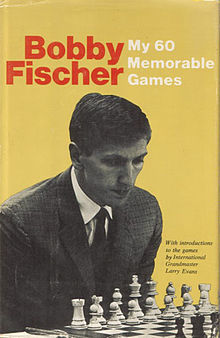
In this book, published by Simon and Schuster in 1969, Bobby Fischer analyzes his most important and representative games. He shows the strategic considerations, the tactics, and sometimes the blunders, that occur during the pressure of tournament play. He assesses his opponents’ thinking as well. Each game has, in addition to Fischer's own annotations, an analytical introduction by International Grandmaster Larry Evans.

In this highly original and instructive test yourself book Chris Ward invites readers to solve a selection of carefully chosen puzzles. In this, the second book in the ¿It¿s Your Move¿ series, the positions are aimed at improving players, specifically the low level club players who are looking to hone their skills in order to climb further up the chess ladder. The reader is given a choice of five plausible plans for each position and has to decide which is the most likely to succeed. The answers then identify the most promising plan and explain why the other choices are less attractive.

A book for chess players who want to build their skills on solid foundations. Yusupov guides the reader towards a higher level of chess understanding using carefully selected positions and advice. This new understanding is then tested by a series of puzzles.Artur Yusupov was ranked No. 3 in the world from 1986 to 1992, just behind the legendary Karpov and Kasparov. He has won everything there is to win in chess except for the World Championship. In recent years he has mainly worked as a chess trainer with players ranging from current World Champion Anand to local amateurs in Germany, where he resides.

As a professional journalist and popular chess author, International Master Andrew Soltis is perhaps the best qualified to collect and edit this treasury of chess wisdom through the ages. With quotations running the gamut from timeless irony (“The winner of the game is the player who makes the next-to-last mistake.”—Anonymous) to pithy advice (“To get squares, ya gotta give squares.”—Bobby Fischer), each nugget of wisdom is accompanied by a chess position illustrating the idea behind it. Divided into chapters on Calculation, Intuition, Strategy, Position Evaluation, Openings, Sacrifices, Attitude, Endgames, Mistakes, Studying, Time Management, and Tournament Tactics, this is a book that chess fans will appreciate as much for its memorable wit as for its practical lessons.

Chess Secrets is a series of books which uncover the mysteries of the most important aspects of strategy, attack, opening play and gambits, classical play, endgames and preparation. In each book the author studies a number of great players from chess history who have excelled in a particular field of the game and who have undeniably influenced those who have followed. In The Giants of Power Play , Neil McDonald selects five players who have excelled in the field of ‘power play' – the art of putting opponents under constant pressure. The methods of doing so are numerous, including gaining rapid development in return for material to build up an initiative, preparing powerful opening ideas in advance, or even developing completely new opening systems. McDonald examines the contributions made by each player, their differences in approach and style, and from Morphy to Topalov, how they followed in each other's footsteps. A study of this book will help you to enhance your skills in one of the most crucial elements of the game. *An entertaining and instructive guide to power play *Learn from the greats of the game *Discover how famous chess minds work

beginners chess book with lots of chess puzzles

Every club player knows the the opening has ended, and now what? With this new edition of his award winning book, International Master Herman Grooten presents to amateur players a complete and structured course on how to recognize key characteristics in all types of positions and how to make use of those characteristics to choose the right plan.His teachings are based on the famous “Elements” of Wilhelm Steinitz, but Grooten has significantly expanded and updated the work of the first World Champion. He supplies many modern examples, tested in his own practice as a coach of talented youngsters.In Chess Strategy for Club Players you will learn the basic elements of positional pawn structure, piece placement, lead in development, open files, weaknesses, space advantage and king safety. You will master the art of converting a temporary plus into other, more permanent advantages.The author also explains what to do when, in a given position, the basic principles seem to point in different directions. Each chapter of this fundamental primer ends with a set of highly instructive exercises.This new 3rd edition has, besides various corrections and improvements, a new introduction and a brand-new chapter called ‘Total Control' with new exercises.

Beginners of all ages will win more games after studying this easy-to-follow book. This isn't another random collection of puzzles, but a systematic course that teaches you how to checkmate your opponent. Experienced chess coach Kevin Stark explains elementary mating patterns in all the important positions and provides many tests to see if you have really mastered the technique. A fun book and a great help in achieving the ultimate goal in chess.

Using a Socratic teacher-student approach in the characters of GM Noah Tall and Pat Sayre, Soltis centers his comments around the subjects the various pieces, techniques, plans, mismatches, rules, and how to get started—all dealt with from a chess grandmaster's perspective. Profuse illustrations and games allow everyone to grasp the concepts quicker, so you will improve in a shorter amount of time. Charts, graphics, and annotated examples in algebraic notation will add to your reading pleasure.

Leading chess author Colin Crouch selects and explains over 30 sensational games, all from the new millennium. By studying battles between the world's best players, Crouch examines in detail all the key areas of modern chess. Powerful attacking and resourceful defending, bloodthirsty tactical battles, profound positional mastery, deep opening preparation and superb endgame play are all in evidence here, while Crouch also explores the ever-increasing role of computers and the way human imagination can work in harness with them. There is something for everyone in this book: aspiring players will benefit greatly from the clear explanations of the fundamentals, while stronger players will gain considerably from Crouch's deep insight and analysis in more complex positions. This book reflects the continuing changes in modern chess, and how you can use the lessons learned to great effect in your own games.


Study is a necessity for competitive chess players, and acclaimed chess author and International Grandmaster Andrew Soltis explains how it should be done. In his trademark witty, accessible style, Soltis provides tips on everything from the need for memorization to the use of computers-and even how to develop that indefinable thing called intuition.

What does a chessmaster think when he prepartes his next move? How are his thoughts organized? Which methods and strategies does he use by solving his problem of choice? To answer these questions, the author did an experimental study in 1938, to which famous chessmasters participated (Alekhine, Max Euwe and Flohr). This book is still useful for everybody who studies cognition and artificial intelligence.

A power move, explains experienced chess teacher Charles Hertan, is a winning master tactic that requires thinking ahead. To become one of the best chess players in your school you need to be able to think just 1,5 moves ahead, and this book teaches the four basic tricks do so. You will learn how to weed out silly moves and just consider a few important ones. Forget about learning openings and endgames, power moves will help you win in all stages of the game. Charles Hertan introduces the four main characters who will help you to learn these basic Zort (a teenaged computer from the planet Zugszwang), the Dinosaurs, Power Chess Kid and the Chess Professor . The most complete and fun kids book ever on learning how to win games!

This is the ultimate book for lovers of chess. You will embark on an unforgettable intellectual expedition in the realm of the Royal Game. The beauty, the battle, the culture, the fun, the art and the heroism of chess are the main themes of this fascinating and often surprising journey. Your private guide is Christian Hesse, a Harvard-trained professor of Mathematics and an avid chess player. Hesse has written a sparkling book that will give you many hours of intense joy. With a preface by former world champion of chess Vladimir Kramnik.

The three-times World Chess Solving Champion distils the most useful middlegame concepts and knowledge into 100 lessons that everyone can understand.Following on from his successful Understanding Chess Endgames, John Nunn turns his attention to the middlegame - the phase of the chess battle where most games are decided, yet the one that has received the least systematic treatment from chess writers. With the outstanding clarity for which he is famous, Nunn breaks down complex problems into bite-sized pieces.In the case of attacking play, we are shown how to decide where to attack, and the specific methods that can be used to pursue the enemy king. Positional play is described in terms of the major structural issues, and how the pieces work around and with the pawns. Nunn explains how to assess when certain pieces are better than others, and how we can make use of this understanding at the board. Readers will never be short of a plan, whatever type of position arises.Each lesson features two inspiring examples from modern chess, annotated honestly and with a keen focus on the main instructive points. Both sides' ideas are emphasized, so we get a clear picture of the ways to disrupt typical plans as well as how to form them.

Every competitive chess player needs to decide which openings he wants to play. Selecting a set of moves to employ, with either white or black, against each likely countermove by your opponent is a daunting challenge that takes a lot of time and effort.Grandmaster and former senior world champion Larry Kaufman provides a ready-to-go repertoire for both colors that is based not on what on what is objectively ‘best' (meaning the most popular in recent grandmaster play), but on what is easy to digest for amateurs. Kaufman has selected a range of sound lines that do not outdate rapidly, do not require the memorization of lots of theory and can be played with confidence. The recommended openings are not razor-sharp but contain enough venom for the white side to strive for a clear advantage and for sufficient counter-chances on the black side. Kaufman presents his material with a good balance between narrative and variations and also provides common-sense guidance on how to evaluate positions. This manual, a completely revised and updated edition of ‘The Chess Advantage in Black and White', provides a practical and reliable chess opening repertoire for a broad audience.

The chess instruction establishment claims that all you need to do is concentrate on the characteristics of a position. Stick to some rules of thumb and good moves will pop up more or less automatically. But that is not how it works, finds International Master Willy Hendriks. Chess players, both weak and strong, don't first make a plan before looking at candidate moves. Trial and error is a very common and in fact highly effective way to get to the best move. In his journey into the chessplaying mind, Hendriks uses recent scientific insights in the working of our brain. He raises a number of intriguing questions: Can you, too (whether you are talented or not), become a grandmaster? Why does a chess trainer's advice often sound like a horoscope? Can you find strong moves by ticking off a todo list? Is it possible to reach master level without ever making a plan? Presents a wealth of valuable, nononsense training material. In this refreshing, entertaining and highly instructive book, Willy Hendriks shows how you can travel light on the road to chess improvement!"

International Master Jonathan Hawkins was a relatively slow starter in the world of chess. Learning the game at the age of eight, he was a keen junior who won a number of local tournaments. But by his own admission, ‘by the time I was in my mid-teens my age-to-playing-strength ratio was distinctly average.’He started to study chess very seriously in his late teens and achieved a rapid rise through the ranks. He became a FIDE Master in 2008 and earned the title of International Master in 2010. 2011 brought Jonathan two Grandmaster norms. One of them was earned at the super-strong British Championship, in which he outscored numerous Grandmasters to share third place.How did Jonathan Hawkins manage to go from being an average tournament competitor to a player on the brink of clinching the Grandmaster title? It took just three years for him to become a FIDE Master, an International Master and to achieve his first two Grandmaster norms.The secret was knowing what to study and how to learn as efficiently as possible. Focusing his attention firmly on the endgame, Jonathan devised a number of building blocks and identified a number of very important areas of study. The result of his hard work was a meteoric rise through the ranks, as he became firmly established as a prominent GM killer on the English tournament circuit.These pages reveal the secrets of his notebooks for the first time. IM Hawkins presents special material aimed to help you become a much better practical player, one armed with a deeper understanding of key aspects of chess.A careful study of the lessons presented in this book should enable the chess student to gain a significant improvement in both performance and rating.

lThe sacrifice is one of the most beautiful, rewarding and complex aspects of chess. During a game the decision to give up material in order to get an advantage is probably the most difficult one a player has to take. Often, you have to burn your bridges without being able to fully calculate the consequences. Risks and rewards are racing through your mind, fighting for precedence while the clock keeps ticking. Now is the moment, because after the next move the window for this opportunity may be closed. In this book Ivan Sokolov presents a set of practical tools that will help you to master the art of sacrifice. By concentrating on the aim you are trying to achieve, rather than on the opening you are playing or the piece you might be going to sack, he teaches you how to come to a reasonable risk assessment and how to trust your intuition. There is a separate part on seizing the initiative without actually giving up material. Ivan Sokolov has written an entertaining and instructive guide, packed with useful advice and lots of practical examples.

Chess Strategy Workbook teaches you to be observant and take your time to discover the clues in chess positions, introducing many of the strategies used by chess masters in a way that is fun and easy to understand. Learn how to use the different types of chess advantages (king safety, material, piece activity, and pawn structure) to correctly evaluate the position in order to select the best move. Basic strategies for the opening, middlegame, and endgame are covered in detail as well as pitfalls to avoid and how to think during the game. Two hundred problems with a comprehensive answer key are given at two skill Basset Hound (novice to intermediate) and Chess Detective (intermediate to advanced). Note this is a Workbook and Instructional chess book. You can write out your answers to the problems on a separate sheet of paper, since you using a Kindle. For years, this has been one of the best-selling chess books in the United States.

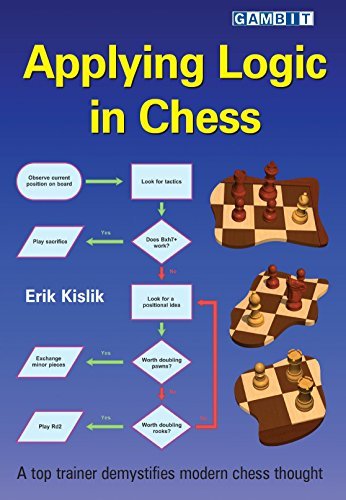
Is chess a logical game? What constitutes an advantage in chess? How can we set problems and create psychologically difficult situations for the opponent? These are big questions, and Erik Kislik tackles them and others head-on in this thought-provoking, thoroughly modern, and original work. He answers the first of those questions with a resounding ‘yes!’. His assessments focus on concrete points: pawn-structure, material imbalance and compensation. Even though the analytical proofs may be complex, he repeatedly shows that these elements are the keys to evaluating positions and forming plans. As the trainer of players ranging from high-level grandmasters to average club-players, Kislik is very strong on providing practical guidance on topics such as how best to use chess software, choosing hardware, getting psychologically ready for a game and preparing for specific opponents. He is always willing to boldly state his views, even when they run contrary to conventional chess wisdom. “I was excited by this book because of the way all of the ideas are intertwined and you get very concrete advice ... Everything is applicable and it is easy to see how it applies to the real world.” – from the Foreword by GM Hjörvar Steinn Gretarsson. Erik Kislik is an International Master originally from California who lives in Budapest. He is an expert in computer chess and one of the most in-demand chess trainers on ICC. He has coached many grandmasters and assisted a number of elite players with their opening preparation.

It took AlphaZero only a few hours of self-learning to become the chess player that shocked the world. The artificial intelligence system, created by DeepMind, had been fed nothing but the rules of the Royal Game when it beat the world’s strongest chess engine in a prolonged match. The selection of ten games published in December 2017 created a worldwide sensation: how was it possible to play in such a brilliant and risky style and not lose a single game against an opponent of superhuman strength?For Game Changer, Matthew Sadler and Natasha Regan investigated more than two thousand previously unpublished games by AlphaZero. They also had unparalleled access to its team of developers and were offered a unique look ‘under the bonnet’ to grasp the depth and breadth of AlphaZero’s search. Sadler and Regan reveal its thinking process and tell the story of the human motivation and the techniques that created AlphaZero.Game Changer also presents a collection of lucidly explained chess games of astonishing quality. Both professionals and club players will improve their game by studying AlphaZero’s stunning discoveries in every field that matters: opening preparation, piece mobility, initiative, attacking techniques, long-term sacrifices and much more.The story of AlphaZero has a wider impact. Game Changer offers intriguing insights into the opportunities and horizons of Artificial Intelligence. Not just in solving games, but in providing solutions for a wide variety of challenges in society.With a foreword by former World Chess Champion Garry Kasparov and an introduction by DeepMind CEO Demis Hassabis.Matthew Sadler (1974) is a Grandmaster who twice won the British Championship and was awarded an individual Gold Medal at the 1996 Olympiad. He has authored several highly acclaimed books on chess and has been writing the famous ‘Sadler on Books’ column for New In Chess magazine for many years. Natasha Regan is a Women’s International Master from England who achieved a degree in mathematics from Cambridge University. Matthew Sadler and Natasha Regan won the English Chess Federation 2016 Book of the Award for their book Chess for Life.