
Erik Kislik
2 Books Written
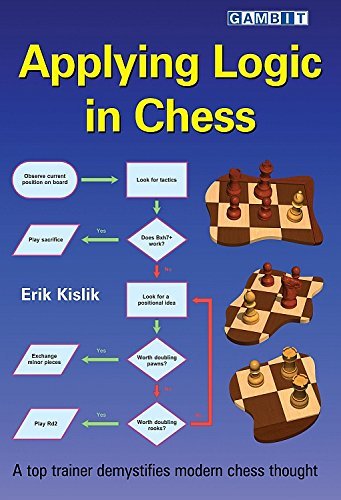
Shortlisted for the FIDE Book of the Year AwardIs chess a logical game? What constitutes an advantage in chess? How can we set problems and create psychologically difficult situations for the opponent? These are big questions, and Erik Kislik tackles them and others head-on in this thought-provoking, thoroughly modern, and original work.He answers the first of those questions with a resounding ‘yes!’. His assessments focus on concrete pawn-structure, material imbalance and compensation. Even though the analytical proofs may be complex, he repeatedly shows that these elements are the keys to evaluating positions and forming plans.As the trainer of players ranging from high-level grandmasters to average club-players, Kislik is very strong on providing practical guidance on topics such as how best to use chess software, choosing hardware, getting psychologically ready for a game and preparing for specific opponents. He is always willing to boldly state his views, even when they run contrary to conventional chess wisdom.“I was excited by this book because of the way all of the ideas are intertwined and you get very concrete advice ... Everything is applicable and it is easy to see how it applies to the real world.” – from the Foreword by GM Hjörvar Steinn Gretarsson.
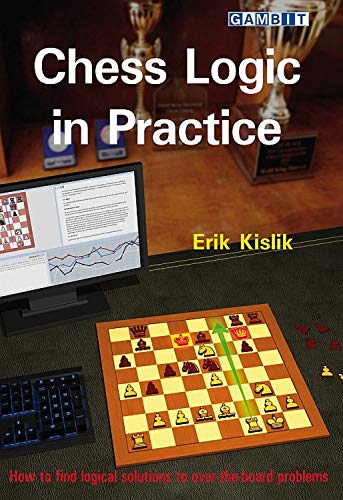
Chess-players understand that it is vital to play logically, but often lack the methods needed to do so. In this book, renowned trainer Erik Kislik presents a wide range of specific concepts that will help them succeed. These include positional techniques, thinking methods, and modes of play to adopt when either better or worse.Just the list of chapter titles shows how original Kislik’s presentation is. They Throughout, the discussion is illustrated by a mass of examples from both recent elite chess and the play of Kislik and his students, showing how his themes cut across all levels of chess. After the book’s two main sections – Thinking Concepts and Positional Concepts – comes a section of exercises, again with a strikingly original our task is simply to assess each position.