Loading genres...
Explore the best books about Italy genre.

For Alessandro Giullani, the young son of a prosperous Roman Lawyer, golden trees shimmer in the sun beneath a sky of perfect blue. At night the moon is amber and the city of Rome seethes with light. He races horses across the country to the sea, and in the Alps he practices the precise and sublime art of mountain climbing. At the ancient university in Bologna he is a student of painting and the science of beauty. And he falls in love. His is a world of adventure and dreams, of music, storm, and the spirit. Then the Great War intervenes. Half a century later, in August of 1964, Alessandro, a white-haired professor, still tall and proud, finds himself unexpectedly on the road with an illiterate young factory worker. As they walk toward Monte Prato, a village seventy kilometers distant, the old man tells the story of his life. How he became a soldier. A hero. A prisoner. A deserter. A wanderer in the hell that claimed Europe. And how he tragically lost one family and gained another. The boy is dazzled by the action and envious of the richness and color of the story, and realizes that the old man's magnificent tale of love and war is more than a it is the recapitulation of his life, his reckoning with mortality, and above all, a love song for his family.

"The best novel of the year." — Maureen Corrigan, NPR's Fresh AirA #1 New York Times bestseller, this “absolute masterpiece” (Richard Russo) is the story of an almost-love affair that begins on the Italian coast in 1962 and resurfaces fifty years later in Hollywood. From the lavish set of Cleopatra to the shabby revelry of the Edinburgh Fringe Festival to the back lots of contemporary Hollywood, this is a dazzling, yet deeply human roller coaster of a novel.The acclaimed author of the national bestseller The Financial Lives of the Poets returns with his funniest, most romantic, and most purely enjoyable novel yet. Hailed by critics and loved by readers of literary and historical fiction, Beautiful Ruins is gloriously inventive and constantly surprising—a story of flawed yet fascinating people navigating the rocky shores of their lives while clinging to their improbable dreams.

“Two years before leaving home my father said to my mother that I was very ugly. The sentence was uttered under his breath, in the apartment that my parents, newly married, had bought in Rione Alto, at the top of Via San Giacomo dei Capri. Everything—the spaces of Naples, the blue light of a very cold February, those words—remained fixed. But I slipped away, and am still slipping away, within these lines that are intended to give me a story, while in fact I am nothing, nothing of my own, nothing that has really begun or really been brought to completion: only a tangled knot, and nobody, not even the one who at this moment is writing, knows if it contains the right thread for a story or is merely a snarled confusion of suffering, without redemption.”

The clownish Bombolini becomes a man of significance when he devises a plan to prevent the Germans from taking Santa Vittoria's liquor supply

In 49 B.C., the seven hundred fifth year since the founding of Rome, Julius Caesar crossed a small border river called the Rubicon and plunged Rome into cataclysmic civil war. Tom Holland’s enthralling account tells the story of Caesar’s generation, witness to the twilight of the Republic and its bloody transformation into an empire.From Cicero, Spartacus, and Brutus, to Cleopatra, Virgil, and Augustus, here are some of the most legendary figures in history brought thrillingly to life. Combining verve and freshness with scrupulous scholarship, Rubicon is not only an engrossing history of this pivotal era but a uniquely resonant portrait of a great civilization in all its extremes of self-sacrifice and rivalry, decadence and catastrophe, intrigue, war, and world-shaking ambition.

Few figures in intellectual history have proved as notorious and ambiguous as Niccolò Machiavelli. But while his treatise The Prince made his name synonymous with autocratic ruthlessness and cynical manipulation, The Discourses (c. 1517) shows a radically different outlook on the world of politics. In this carefully argued commentary on Livy's history of republican Rome, Machiavelli proposed a system of government that would uphold civic freedom and security by instilling the virtues of active citizenship, and that would also encourage citizens to put the needs of the state above selfish, personal interests. Ambitious in scope, but also clear-eyed and pragmatic, The Discourses creates a modern theory of republic politics.Leslie J. Walker's translation, revised by Brian Richardson, is accompanied by an introduction by Bernard Crick, which illuminates Machiavelli's historical context and his new theories of politics. This edition also includes suggestions for further reading and notes.

Un uomo è il romanzo sulla vita di Alekos Panagulis, che nel 1968 fu condannato a morte nella Grecia dei colonnelli per l'attentato a Georgios Papadopulos, il militare a capo del regime. Segregato per cinque anni in un carcere dove subirà le più atroci torture, restituito brevemente alla libertà, conosce l'esilio, torna in patria quando la dittatura si sgretola, è eletto deputato in Parlamento e inutilmente cerca di dimostrare che gli stessi uomini della deposta Giunta continuano a occupare posizioni di potere. Perde la vita in un misterioso incidente d'auto nel 1976. Oriana Fallaci incontra Panagulis nel 1973 quando, graziato di una grazia che non aveva chiesto, ma che il mondo intero reclamava per lui, esce dal carcere. Lei lo affianca e ne condivide una lotta mai paga. "Il poeta ribelle, l'eroe solitario, è un individuo senza seguaci: non trascina le masse in piazza, non provoca le rivoluzioni. Però le prepara. Anche se non combina nulla di immediato e di pratico, anche se si esprime attraverso bravate o follie, anche se viene respinto e offeso, egli muove le acque dello stagno che tace, incrina le dighe del conformismo che frena, disturba il potere che opprime".

The Machiavellian Moment is a classic study of the consequences for modern historical and social consciousness of the ideal of the classical republic revived by Machiavelli and other thinkers of Renaissance Italy. J.G.A. Pocock suggests that Machiavelli's prime emphasis was on the moment in which the republic confronts the problem of its own instability in time, and which he calls the "Machiavellian moment."After examining this problem in the thought of Machiavelli, Guicciardini, and Giannotti, Pocock turns to the revival of republican thought in Puritan England and in Revolutionary and Federalist America. He argues that the American Revolution can be considered the last great act of civic humanism of the Renaissance. He relates the origins of modern historicism to the clash between civic, Christian, and commercial values in the thought of the eighteenth century.

Excerpt from Dei Delitti e Delle PeneAlcuni avanzi di leggi di: un antico popolo conquistatore fatte compilare da 'un principei. Che dodici secoli fa regnava in Constantinopoli, frammischi'ate poscia co' riti Longobardi, ed invoice in farraginosi volumi di privati ed oscuri interpetri, for mano quella tradizione di opi nioni, che da' una gran parte dell' europa ha tuttavia il nome di leggi; ed e cosa funesta quanto.About the PublisherForgotten Books publishes hundreds of thousands of rare and classic books. Find more at www.forgottenbooks.comThis book is a reproduction of an important historical work. Forgotten Books uses state-of-the-art technology to digitally reconstruct the work, preserving the original format whilst repairing imperfections present in the aged copy. In rare cases, an imperfection in the original, such as a blemish or missing page, may be replicated in our edition. We do, however, repair the vast majority of imperfections successfully; any imperfections that remain are intentionally left to preserve the state of such historical works.

This book is perhaps the jewel in Prospect Book's crown. Within a few months of its first appearance in 1986 it was hailed as a modern classic. Fiona MacCarthy wrote in The Times that, 'the book is a large and grandiose life history, a passionate narrative of extremes of experience.'; Jeremy Round called Patience Gray 'he high priestess of cooking';, whose book pushes the form of the cookery book as far as it can go. Angela Carter remarked that it was less a cookery book that a summing-up of the genre of the late-modern British cookery book. The work has attracted a cult following in the United States, where passages have been read out at great length on the radio; and it has been anthologized by Paul Levy in The Penguin Book of Food and Drink. It was given a special award by the Andre Simon Book Prize committee in 1987.

In this superbly illustrated volume, Athens and Rome, the two greatest cities of antiquity, spring to life under the masterful pen of Peter Connolly. All the historical and archaelogical evidence has been seamlessly pieced together to reconstruct the architectural wonders of these mightycivilizations. Re creating public buildings, religious temples, shops, and houses, Connolly reveals every aspect of life in glorious detail, from religion and food to drama, games, and the baths. In addition to the great monuments and moments of classical Greece and Rome, readers learn about atypical day in the life of an Athenian and a Roman. They read about and see the houses people inhabited; attend 5 day festivals and go to the theater; fight great battles and witness the birth of Rome's navy; visit temples and spend a day at the chariot races. The spectacular artwork and vividdescriptions provide a window into the fascinating history of these two extraordinary cities and civilizations. The Ancient City is the crowning achievement of Peter Connolly's distinguished career.

Painting and Experience in Fifteenth Century Italy An introduction to 15th century Italian painting and the social history behind it, arguing that the two are interlinked and that the conditions of the time helped fashion distinctive elements in the painter's style. Serving as both an introduction to fifteenth-century Italian painting and as a text on how to interpret social history from the style of pictures in a given historical period, this new edition to Baxandall's pre-eminent scholarly volume examines early Renaissance painting, and explains how the style of painting in any society reflects the visual skills and habits that evolve out of daily life. Renaissance painting, for example, mirrors the experience of such activities as preaching, dancing, and gauging barrels. The volume includes discussions of a wide variety of painters, including Filippo Lippi, Fra Angelico, Stefano di Giovanni, Sandro Botticelli, Masaccio, Luca Signorelli, Boccaccio, and countless others. Baxandall also defines and illustrates sixteen concepts used by a contemporary critic of painting, thereby assembling the basic equipment needed to explore fifteenth-century art.

Here's a book for lovers of all things Italian. This city on the Adriatic has always tantalized Jan Morris with its moodiness and changeability. After visiting Trieste for more than half a century, she has come to see it as a touchstone for her interests and preoccupations: cities, seas, empires. It has even come to reflect her own life in its loves, disillusionments, and memories. Her meditation on the place is characteristically layered with history and sprinkled with stories of famous visitors from James Joyce to Sigmund Freud. A lyrical travelogue, Trieste and the Meaning of Nowhere is also superb cultural history and the culmination of a singular career-"an elegant and bittersweet farewell" (Boston Globe).

The Republic of St. Peter seeks to reclaim for central Italy an important part of its own history. Noble's thesis is at once original and that the Republic, an independent political entity, was in existence by the 730s and was not a creation of the Franks in the 750s.Noble examines the political, economic, and religious problems that impelled the central Italians—and a succession of resolute popes—to seek emancipation from the Byzantine Empire. He delineates the social structures and historical traditions that produced a distinctive political society, describes the complete governmental apparatus of the Republic, and provides a comprehensive assessment of the Franco-papal alliance.

Combining engrossing detail and magisterial overview, Venice, A Maritime Republic traces the history of Venice from its origins in the sixth century through its rise and decline as the first modern empire of Europe. "Among the many cities men have made," Frederic C. Lane writes, "Venice stands out as a symbol of beauty, of wise government, and of communally controlled capitalism." Drawing on a lifetime of study and reflection, the author shows how that resplendent city came to have the institutions, the buildings, and the pattern of urban life that make it unique.

When Tiro, the confidential secretary (and slave) of a Roman senator, opens the door to a terrified stranger on a cold November morning, he sets in motion a chain of events that will eventually propel his master into one of the most suspenseful courtroom dramas in history. The stranger is a Sicilian, a victim of the island's corrupt Roman governor, Verres. The senator is Marcus Cicero—an ambitious young lawyer and spellbinding orator, who at the age of twenty-seven is determined to attain imperium—supreme power in the state. Of all the great figures of the Roman world, none was more fascinating or charismatic than Cicero. And Tiro—the inventor of shorthand and author of numerous books, including a celebrated biography of his master (which was lost in the Dark Ages)—was always by his side. Compellingly written in Tiro's voice, Imperium is the re-creation of his vanished masterpiece, recounting in vivid detail the story of Cicero's quest for glory, competing with some of the most powerful and intimidating figures of his—or any other—age: Pompey, Caesar, Crassus, and the many other powerful Romans who changed history. Robert Harris, the world's master of innovative historical fiction, lures us into a violent, treacherous world of Roman politics at once exotically different from and yet startlingly similar to our own—a world of Senate intrigue and electoral corruption, special prosecutors and political adventurism—to describe how one clever, compassionate, devious, vulnerable man fought to reach the top.

The Decameron (c.1351) is an entertaining series of one hundred stories written in the wake of the Black Death. The stories are told in a country villa outside the city of Florence by ten young noble men and women who are seeking to escape the ravages of the plague. Boccaccio's skill as a dramatist is masterfully displayed in these vivid portraits of people from all stations in life, with plots that revel in a bewildering variety of human reactions.Translated with an Introduction and Notes by G. H. McWilliam

TASCHEN's 25th anniversary - Special edition! Special bestseller price Leonardo da Vinci (1452-1519) possessed one of the greatest minds of all time; his importance and influence are inestimable. This XXL-format comprehensive survey is the most complete book ever made on the subject of this Italian painter, sculptor, architect, engineer, scientist and all-around genius. With huge, full-bleed details of Leonardo's masterworks, this highly original publication allows the reader to inspect the subtlest facets of his brushstrokes. * Part I explores Leonardo's life and work in ten chapters. All of his paintings are interpreted in depth, with The Annunciation and The Last Supper featured on large double-spreads. * Part II comprises a catalogue raisonn? of Leonardo's paintings, which covers all of his surviving and lost painted works and includes texts describing their states of preservation. * Part III contains an extensive catalogue of his drawings (numbering in the thousands, they cannot all be reproduced in one book); 663 are presented, arranged by category (architecture, technical, anatomical, figures, proportion, cartography, etc). This sumptuous TASCHEN offering is the most thorough and beautifully produced Leonardo book ever published, and this special edition offers it for a third of the usual price.

Now a Netflix SeriesIt’s here, in the first volume of Patricia Highsmith’s five-book Ripley series, that we are introduced to the suave Tom Ripley, a young striver seeking to leave behind his past as an orphan bullied for being a “sissy.” Newly arrived in the heady world of Manhattan, Ripley meets a wealthy industrialist who hires him to bring his playboy son, Dickie Greenleaf, back from gallivanting in Italy. Soon Ripley’s fascination with Dickie’s debonair lifestyle turns obsessive as he finds himself enraged by Dickie’s ambivalent affections for Marge, a charming American dilettante, and Ripley begins a deadly game.“Sinister and strangely alluring,” (Mark Harris, Entertainment Weekly) The Talented Mr. Ripley serves as an unforgettable introduction to this smooth confidence man, whose talent for self-invention is as unnerving—and unnervingly revealing of the American psyche—as ever.

How do we know a cat is a cat? And why do we call it a cat? How much of our perception of things is based on cognitive ability, and how much on linguistic resources? Here, in six remarkable essays, Umberto Eco explores in depth questions of reality, perception, and experience. Basing his ideas on common sense, Eco shares a vast wealth of literary and historical knowledge, touching on issues that affect us every day. At once philosophical and amusing, Kant and the Platypus is a tour of the world of our senses, told by a master of knowing what is real and what is not.

Marco Polo (1254-1329) has achieved an almost archetypal status as a traveller, and his Travels is one of the first great travel books of Western literature, outside the ancient world. The Travels recounts Polo's journey to the eastern court of Kublai Khan, the chieftain of the Mongol empire which covered the Asian continent, but which was almost unknown to Polo's contemporaries. Encompassing a twenty-four year period from 1271, Polo's account details his travels in the service of the empire, from Beijing to northern India and ends with the remarkable story of Polo's return voyage from the Chinese port of Amoy to the Persian Gulf. Alternately factual and fantastic, Polo's prose at once reveals the medieval imagination's limits, and captures the wonder of subsequent travel writers when faced with the unfamiliar, the exotic or the unknown.

This haunting, suspenseful tale of love and vengeance by the author of the international bestseller Silk surges with the hypnotic power of the ocean sea. In Ocean Sea, Alessandro Baricco presents a hypnotizing postmodern fable of human malady--psychological, existential, erotic--and the sea as a means of deliverance. At the Almayer Inn, a remote shoreline hotel, an artist dips his brush in a cup of ocean water to paint a portrait of the sea. A scientist pens love letters to a woman he has yet to meet. An adulteress searches for relief from her proclivity to fall in love. And a sixteen-year-old girl seeks a cure from a mysterious condition which science has failed to remedy. When these people meet, their fates begin to interact as if by design. Enter a mighty tempest and a ghostly mariner with a thirst for vengeance, and the Inn becomes a place where destiny and desire battle for the upper hand. Playful, provocative, and ultimately profound, Ocean Sea is a novel of striking originality and wisdom.

L’Agostino deixa de ser un nen l’estiu en què la seva mare s’enamora d’un home. Aquella deessa que ell sempre havia imaginat dedicada i intocable és també una dona. Decebut i ressentit per aquesta descoberta, el protagonista malda per alliberar-se de la figura materna i comença a freqüentar amistats dubtoses que el portaran a deixar enrere la innocència. La brutalitat d’aquests nous amics l’espanta però també hi ha alguna cosa d’ells que el fascina, una atracció deliciosa i cruel que l’atrapa i el repulsa alhora. Moravia explora amb precisió la dolorosa i incerta aventura de l’adolescent que es veu atrapat entre dues edats. Més enllà de la descripció d’una etapa difícil i plena de turments, en aquesta història hi podem llegir els símptomes d’una altra crisi que se situa en el centre de tota l’obra de l’autor: el desajustament entre la consciència i la realitat. Nascut a Roma el 1907, Alberto Moravia va escriure la seva primera novel·la, Els indiferents, quan tenia poc menys de vint anys en un sanatori del nord d’Itàlia on es refeia d’una tuberculosi que no li va deixar acabar els estudis. Durant la Segona Guerra Mundial, va ser perseguit pels feixistes per haver escrit una sàtira política. Després del final de la guerra, torna a Roma i gaudeix d’una gran popularitat. La seva obra està conformada per una trentena de títols entre els quals destaquen El conformista, El menyspreu i La camperola. Algunes de les seves novel·les han estat adaptades al cinema per directors com ara Vittorio De Sica o Jean-Luc Godard. Agostino també va ser duta al cinema el 1962. Va morir a Roma el setembre del 1990.

Milano, Bompiani, 1955, 8vo (cm. 20,5 x 12) brossura editoriale con sovraccoperta illustrata a colori, pp. 479 (I delfini).

Dorothy L. Sayers's landmark translation follows Dante's terza rima stanza's and brings his poetry vividly to life. Her work was completed after her death by Barbara Reynolds, who provides a foreword on the importance of the translation and an introduction on Dante's view of Heaven. This edition also includes a new foreword, updated further reading, notes, appendices, a glossary, diagrams and genealogical tables.

International bestselling and award-winning author Umberto Eco's Foucault's Pendulum is "an intellectual adventure story, as sensational, thrilling, and packed with arcana as Raiders of the Lost Ark or The Count of Monte Cristo" (The Washington Post Book World).Bored with their work, three Milanese editors cook up "the Plan," a hoax that connects the medieval Knights Templar with other occult groups from ancient to modern times. This produces a map indicating the geographical point from which all the powers of the earth can be controlled — a point located in Paris, France, at Foucault’s Pendulum. But in a fateful turn the joke becomes all too real, and when occult groups, including Satanists, get wind of the Plan, they go so far as to kill one of the editors in their quest to gain control of the earth.Orchestrating these and other diverse characters into his multilayered semiotic adventure, Eco has created a superb cerebral entertainment.

A magisterial work of gripping history, City of Fortune tells the story of the Venetian ascent from lagoon dwellers to the greatest power in the Mediterranean - an epic five hundred year voyage that encompassed crusade and trade, plague, sea battles and colonial adventure. In Venice, the path to empire unfolded in a series of extraordinary contests - the sacking of Constantinople in 1204, the fight to the finish with Genoa and a desperate defence against the Turks. Under the lion banner of St Mark, she created an empire of ports and naval bases which funnelled the goods of the world through its wharfs. In the process the city became the richest place on earth - a brilliant mosaic fashioned from what it bought, traded, borrowed and stole.Based on first hand accounts of trade and warfare, seafaring and piracy and the places where Venetians sailed and died, City of Fortune is narrative history at its finest. Beginning on Ascension Day in the year 1000 and ending with an explosion off the coast of Greece - and the calamitous news that the Portuguese had pioneered a sea route to India - it will fascinate anyone who loves Venice and the Mediterranean world.

Author and historian Tom Holland returns to his roots in Roman history and the audience he cultivated with Rubicon—his masterful, witty, brilliantly researched popular history of the fall of the Roman republic—with Dynasty, a luridly fascinating history of the reign of the first five Roman emperors. Dynasty continues Rubicon's story, opening where that book ended: with the murder of Julius Caesar. This is the period of the first and perhaps greatest Roman Emperors and it's a colorful story of rule and ruination, running from the rise of Augustus through to the death of Nero. Holland's expansive history also has distinct shades of I Claudius, with five wonderfully vivid (and in three cases, thoroughly depraved) Emperors—Augustus, Tiberius, Caligula, Claudius, and Nero—featured, along with numerous fascinating secondary characters. Intrigue, murder, naked ambition and treachery, greed, gluttony, lust, incest, pageantry, decadence—the tale of these five Caesars continues to cast a mesmerizing spell across the millennia.

“A brisk, frothy narrative . . . informative and fun.” ―The Wall Street Journal In the dizzying wake of World War II, Rome skyrocketed to prominence as an epicenter of film, fashion, photography, and boldfaced libertinism. Artists, exiles, and a dazzling array of movie talent rushed to Rome for a chance to thrive in this hotbed of excitement. From the photographers who tailed the stars to the legends who secured their place in cinematic fame, Dolce Vita Confidential resurrects the drama that permeated the streets and screens of Rome. 8 pages of photographs

A painter and architect in his own right, Giorgio Vasari (1511-74) achieved immortality for this book on the lives of his fellow Renaissance artists, first published in Florence in 1550. Although he based his work on a long tradition of biographical writing, Vasari infused these literary portraits with a decidedly modern form of critical judgment. The result is a work that remains to this day the cornerstone of art historical scholarship. Spanning the period from the thirteenth century to Vasari's own time, the Lives opens a window on the greatest personalities of the period, including Giotto, Brunelleschi, Mantegna, Leonardo, Raphael, Michelangelo, and Titian. This Modern Library edition, abridged from the original text with notes drawn from earlier commentaries, as well as current research, reminds us why The Lives of the Most Excellent Painters, Sculptors, and Architects is indispensable to any student interested in Renaissance art. "From the Trade Paperback edition."

Based on the true story of a forgotten hero, Beneath a Scarlet Sky is the triumphant, epic tale of one young man’s incredible courage and resilience during one of history’s darkest hours. Pino Lella wants nothing to do with the war or the Nazis. He’s a normal Italian teenager—obsessed with music, food, and girls—but his days of innocence are numbered. When his family home in Milan is destroyed by Allied bombs, Pino joins an underground railroad helping Jews escape over the Alps, and falls for Anna, a beautiful widow six years his senior.In an attempt to protect him, Pino’s parents force him to enlist as a German soldier—a move they think will keep him out of combat. But after Pino is injured, he is recruited at the tender age of eighteen to become the personal driver for Adolf Hitler’s left hand in Italy, General Hans Leyers, one of the Third Reich’s most mysterious and powerful commanders.Now, with the opportunity to spy for the Allies inside the German High Command, Pino endures the horrors of the war and the Nazi occupation by fighting in secret, his courage bolstered by his love for Anna and for the life he dreams they will one day share.Fans of All the Light We Cannot See, The Nightingale, and Unbroken will enjoy this riveting saga of history, suspense, and love.

Time is a mystery that does not cease to puzzle us. Philosophers, artists and poets have long explored its meaning while scientists have found that its structure is different from the simple intuition we have of it. From Boltzmann to quantum theory, from Einstein to loop quantum gravity, our understanding of time has been undergoing radical transformations. Time flows at different speeds in different places, the past and the future differ far less than we might think and the very notion of the present evaporates in the vast universe. With his extraordinary charm and sense of wonder, bringing together science, philosophy and art, Carlo Rovelli unravels this mystery, inviting us to imagine a world where time is in us and we are not in time.

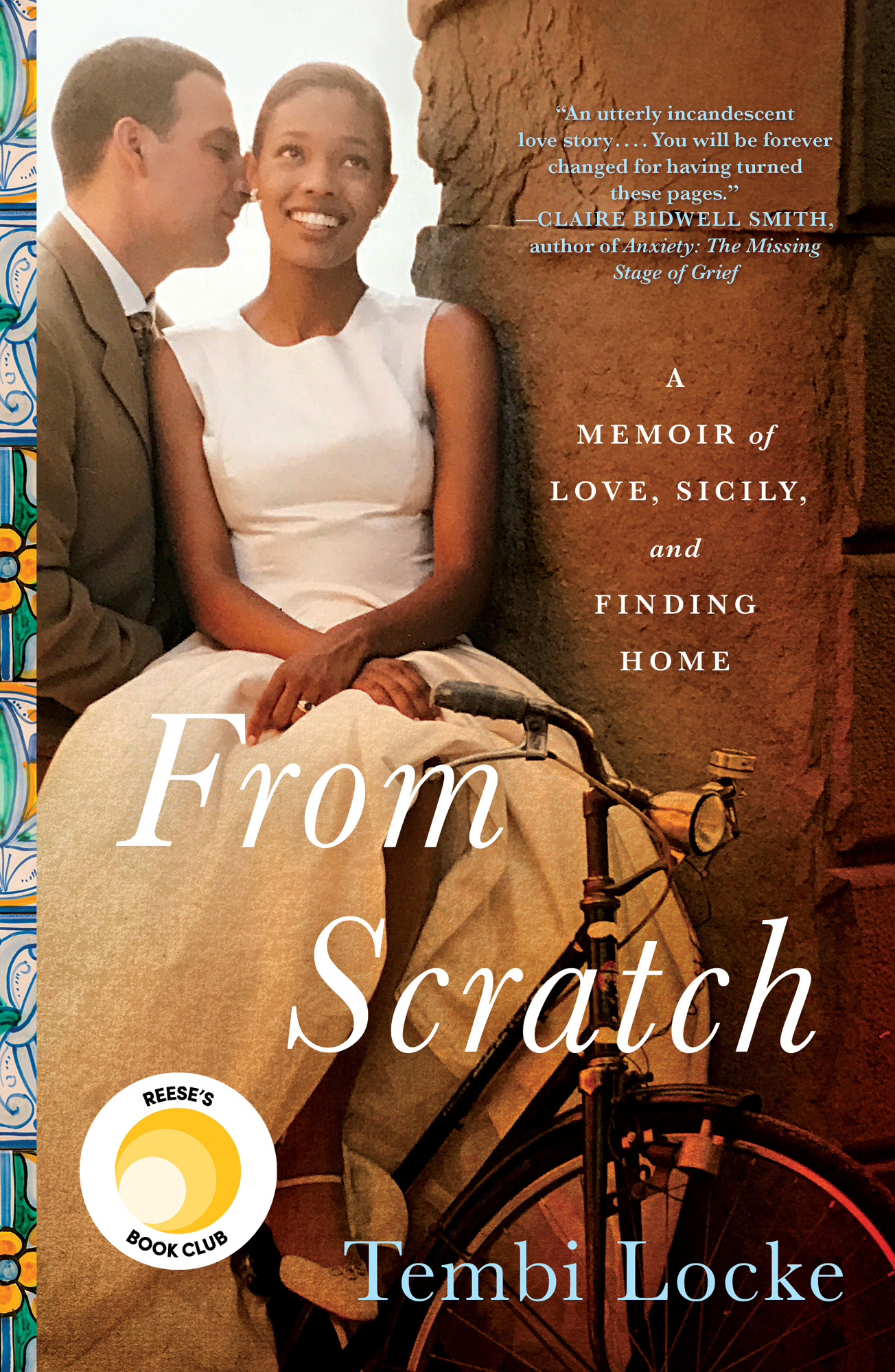
This Reese Witherspoon Book Club Pick and New York Times bestseller is set in the lush Sicilian countryside, where one woman discovers the healing powers of food, family, and unexpected grace in her darkest hours.It was love at first sight when actress Tembi met professional chef, Saro, on a street in Florence. There was just one problem: Saro’s traditional Sicilian family did not approve of his marrying a black American woman. However, the couple, heartbroken but undeterred, forged on. They built a happy life in Los Angeles, with fulfilling careers, deep friendships, and the love of their lives: a baby girl they adopted at birth. Eventually, they reconciled with Saro’s family just as he faced a formidable cancer that would consume all their dreams.From Scratch chronicles three summers Tembi spends in Sicily with her daughter, Zoela, as she begins to piece together a life without her husband in his tiny hometown hamlet of farmers. Where once Tembi was estranged from Saro’s family, now she finds solace and nourishment—literally and spiritually—at her mother-in-law’s table. In the Sicilian countryside, she discovers the healing gifts of simple fresh food, the embrace of a close knit community, and timeless traditions and wisdom that light a path forward. All along the way she reflects on her and Saro’s romance—an incredible love story that leaps off the pages.In Sicily, it is said that every story begins with a marriage or a death—in Tembi Locke’s case, it is both. Her story is also about love, finding a home, and chasing flavor as an act of remembrance. From Scratch is for anyone who has dared to reach for big love, fought for what mattered most, and those who needed a powerful reminder that life is...delicious.

« Lorsqu’on commande un café à Naples, on peut en régler un second qui sera offert à qui n’aura pas les moyens de s’en payer une tasse. Il est indiqué sur l’ardoise du bar comme un café sospeso : un café suspendu. Voici un récit composé de sept histoires que j’ai recueillies par bribes au café Nube pendant les quarante dernières années. Toutes sont liées par ce fil invisible qu’est le café suspendu. Du côté de celui qui offre comme de celui qui reçoit, la vie passe dans cette tasse… » Le narrateur, Jacques Madelin, un Français installé à Naples après une déception amoureuse, passe le plus clair de son temps installé au café, juste en bas de chez lui, à prendre des notes en observant les personnes qui se croisent, se cachent ou se cherchent, les rencontres amoureuses ou amicales qui se tissent. La peau d’un crocodile de légende transformée en un étrange sac, une femme trompée qui s’arrange avec la maîtresse de son mari pour garder ce dernier, une jeune femme qui doit se débarrasser du foulard légué par sa grand-mère pour retrouver le goût de vivre, un écrivain aux mille visages, un homme qui a peur de dormir, et même un médecin chinois qui veut soigner les gens en bonne santé…Tout en racontant des histoires pleines d’humanité, de fantaisie, de souvenirs, de récits historiques, légendaires ou imprégnés de psychanalyse, Jacques dessine au fil des pages un bouleversant autoportrait. C’est aussi un livre sur la charité, sur la manière dont la prodigalité se répercute sur nos destins.Le talent de conteuse d’Amanda Sthers fait merveille, alliant grâce poétique, peinture des sentiments et évocation d’une ville à l’atmosphère unique.

Often likened to Kafka's The Castle, The Tartar Steppe is both a scathing critique of military life and a meditation on the human thirst for glory. It tells of young Giovanni Drogo, who is posted to a distant fort overlooking the vast Tartar steppe. Although not intending to stay, Giovanni suddenly finds that years have passed, as, almost without his noticing, he has come to share the others' wait for a foreign invasion that never happens. Over time the fort is downgraded and Giovanni's ambitions fade until the day the enemy begins massing on the desolate steppe...