
Alberto Moravia
Alberto Moravia, born Alberto Pincherle, was one of the leading Italian novelists of the twentieth century whose novels explore matters of modern sexuality, social alienation, and existentialism. He was also a journalist, playwright, essayist and film critic. Moravia was an atheist, his writing was marked by its factual, cold, precise style, often depicting the malaise of the bourgeoisie, underpinned by high social and cultural awareness. Moravia believed that writers must, if they were to represent reality, assume a moral position, a clearly conceived political, social, and philosophical attitude, but also that, ultimately, "A writer survives in spite of his beliefs".
30 Books Written

L’Agostino deixa de ser un nen l’estiu en què la seva mare s’enamora d’un home. Aquella deessa que ell sempre havia imaginat dedicada i intocable és també una dona. Decebut i ressentit per aquesta descoberta, el protagonista malda per alliberar-se de la figura materna i comença a freqüentar amistats dubtoses que el portaran a deixar enrere la innocència. La brutalitat d’aquests nous amics l’espanta però també hi ha alguna cosa d’ells que el fascina, una atracció deliciosa i cruel que l’atrapa i el repulsa alhora. Moravia explora amb precisió la dolorosa i incerta aventura de l’adolescent que es veu atrapat entre dues edats. Més enllà de la descripció d’una etapa difícil i plena de turments, en aquesta història hi podem llegir els símptomes d’una altra crisi que se situa en el centre de tota l’obra de l’autor: el desajustament entre la consciència i la realitat. Nascut a Roma el 1907, Alberto Moravia va escriure la seva primera novel·la, Els indiferents, quan tenia poc menys de vint anys en un sanatori del nord d’Itàlia on es refeia d’una tuberculosi que no li va deixar acabar els estudis. Durant la Segona Guerra Mundial, va ser perseguit pels feixistes per haver escrit una sàtira política. Després del final de la guerra, torna a Roma i gaudeix d’una gran popularitat. La seva obra està conformada per una trentena de títols entre els quals destaquen El conformista, El menyspreu i La camperola. Algunes de les seves novel·les han estat adaptades al cinema per directors com ara Vittorio De Sica o Jean-Luc Godard. Agostino també va ser duta al cinema el 1962. Va morir a Roma el setembre del 1990.

Gli indifferenti è il primo romanzo scritto da Moravia appena diciottenne e pubblicato nel 1929. Tema principale del libro è la rappresentazione della borghesia nel momento della decadenza nel passaggio da un'epoca all'altra, con tutti i suoi più grandi difetti: la superficialità, le ipocrisie e il suo clima di costante menzogna. Chi vive in questa società, come i protagonisti del romanzo, sono perciò "indifferenti" di fronte alla vita, sono degli inetti incapaci di agire ma solo in grado di subire passivamente ciò che gli accade, dei deboli e degli impotenti che non sanno provare delle passioni vere (per questo accostabili ai personaggi di Svevo e Pirandello). La struttura del romanzo richiama quella di una pièce teatrale; le vicende si svolgono in due soli giorni e sempre in interni borghesi che si alternano, descritti in modo preciso per rispecchiare la vita di chi li occupa, poiché la priorità di Moravia è la rappresentazione psicologica dei protagonisti. Il linguaggio è semplice ed essenziale volto a rendere in maniera realistica i pensieri dei personaggi e gli ambienti in cui si muovono

Contempt is a brilliant and unsettling work by one of the revolutionary masters of modern European literature. All the qualities for which Alberto Moravia is justly famous ~~ his cool clarity of expression, his exacting attention to psychological complexity and social pretension, his still-striking openness about sex—are evident in this story of a failing marriage. Contempt (which was to inspire Jean-Luc Godard’s no-less-celebrated film) is an unflinching examination of desperation and self-deception in the emotional vacuum of modern consumer society.

The novels that the great Italian writer Alberto Moravia wrote in the years following the Second World War represent an extraordinary survey of the range of human behavior in a fragmented modern society.Boredom, the story of a failed artist and pampered son of a rich family who becomes dangerously attached to a young model, examines the complex relations between money, sex, and imperiled masculinity. This powerful and disturbing study in the pathology of modern life is one of the masterworks of a writer whom as Anthony Burgess once remarked, was "always trying to get to the bottom of the human imbroglio."

La ciociara è la storia delle avventure di una madre e una figlia, costrette dal caso a passare un anno nelle prossimità del fronte del Garigliano tra il 1943 e il 1944. Ma La ciociara è anche soprattutto la descrizione di due atti di violenza, l'uno collettivo e l'altro individuale, la guerra e lo stupro. Dopo la guerra e dopo lo stupro né un paese né una donna sono più quello che erano prima. Un cambiamento profondo è avvenuto, un passaggio si è verificato da uno strato di innocenza e integrità a un altro di nuova e amara consapevolezza. D'altra parte tutte le guerre che penetrano profondamente nel territorio di un paese e colpiscono le popolazioni civili sono stupri. La ciociara non è un libro di guerra nel senso tradizionale del termine; è un romanzo in cui è narrata l'esperienza umana di quella violenza profanatoria che è la guerra.

Secrecy and Silence are second nature to Marcello Clerici, the hero of The Conformist, a book which made Alberto Moravia one of the world's most read postwar writers. Clerici is a man with everything under control - a wife who loves him, colleagues who respect him, the hidden power that comes with his secret work for the Italian political police during the Mussolini years. But then he is assigned to kill his former professor, now exiled in France, to demonstrate his loyalty to the Fascist state, and falls in love with a strange, compelling woman; his life is torn open - and with it the corrupt heart of Fascism. Moravia equates the rise of Italian Fascism with the psychological needs of his protagonist for whom conformity becomes an obsession in a life that has included parental neglect, an oddly self-conscious desire to engage in cruel acts, and a type of male beauty which, to Clerici's great distress, other men find attractive.

The glitter and cynicism of Rome under Mussolini provide the background of what is probably Alberto Moravia’s best and best-known novel — The Woman of Rome. It’s the story of Adriana, a simple girl with no fortune but her beauty who models naked for a painter, accepts gifts from men, and could never quite identify the moment when she traded her private dream of home and children for the life of a prostitute.One of the very few novels of the twentieth century which can be ranked with the work of Dostoevsky, The Woman of Rome also tells the stories of the tortured university student Giacomo, a failed revolutionary who refuses to admit his love for Adriana; of the sinister figure of Astarita, the Secret Police officer obsessed with Adriana; and of the coarse and brutal criminal Sonzogno, who treats Adriana as his private property. Within this story of passion and betrayal, Moravia calmly strips away the pride and arrogance hiding the corrupt heart of Italian Fascism.

Racconti romani (Roman Tales) is a series of short stories written and published initially in the Italian newspaper, Il Corriere della Sera. They were first published as a collection in 1954. All of the stories are set in Rome or its surroundings after World War II, and focus on 'the common people of Rome' (Roma popolana). The characters in these stories tend to be the unemployed, ex-convicts, waiters, drivers, con artists, thieves and petty criminals, the average man (or woman) and the lower classes aspiring to climb out of poverty.All the stories are told in the first person with the narrator often unnamed, although details are usually furnished to provide a clue to the narrator's identity, such as their occupation, motivations, and social status. Moravia's Racconti Romani provide a snapshot on life in Rome after World War II, revealing much about the inhabitants of Rome in the early 1950s.

To begin with I’d like to talk about my wife. To love means, in addition to many other things, to delight in gazing upon and observing the beloved.--From Conjugal LoveWhen Silvio, a rich Italian dilettante, and his beautiful wife agree to move to the country and forgo sex so that he will have the energy to write a successful novel, something is bound to go Silvio’s literary ambitions are far too big for his second-rate talent, and his wife Leda is a passionate woman. This dangerously combustible situation is set off when Leda accuses Antonio, the local barber who comes every morning to shave Silvio, of trying to molest her. Silvio obstinately refuses to dismiss him, and the quarrel and its shattering consequences put the couple’s love to the test.

Edoardo, ex-left-wing militant turned professor of French, is a voyeur of life and love. Family and other problems haunt him, and he discovers that he has been unable to see for looking. By the Italian author of "The Woman of Rome" and "Contempt", whose books were banned during the years of fascism.

Edito nel 1948, questo breve romanzo riprende, ampliandola e approfondendola, l’avventura già narrata in Agostino, la guarigione, cioè, attraverso l’iniziazione sessuale, di un adolescente incapace di trovare un vitale equilibrio tra sé e l’ambiente, tra le sue aspirazioni e la realtà. Per risolvere il conflitto causato dalla sua incapacità di adattamento, Luca, il protagonista, ricorre a una continua e sistematica disubbidienza ai doveri, agli affetti, ai piaceri, fino al rifiuto della vita stessa. Sarà l’esperienza suprema dell’adolescenza, l’incontro con l’altro sesso, a sottrarlo a questo incantesimo negativo indicandogli una alternativa più gioiosa e vitale.

تعتبر هذه الرواية مرحلة جديدة في أسلوب مورافيا الروائي يختلف عن أسلوبه السابق في “السأم” و”الاحتقار” و”الانتباه” وسواها، بالرغم من أن موضوع الجنس يطغى عليها جميعاً. ولكن الجنس هنا ليس عضواً من الجسم بقدر ما هو شخصية ذات كيان يقوم بينها وبين “الأنا” الفرويدي صراع يعبر عن انفصام البطل “الشيزوفرانيا”. وإلى جانب كون هذه الرواية جنسية فلسفية، فهي تراجيدية كوميدية معاً. (فالأنا) رجل يعمل في ميدان السينما ويطمح إلى وضع سيناريو فيلم مناصر للحركة اليسارية، ولكن “الآخر” الذي هو رغبته الجنسية يقف عقبة كأداء في سبيل تحقيق آماله بما يفرضه عليه من مطالب.. وهكذا تروي القصة أحداث صراع “ريكو” مع شخصيته الثانية. فلا بد للقارئ من اكتشاف رموز كثيرة وراء الوقائع المادية المحسوسة.ويعتبر مورافيا نفسه في الرواية واقعياً جداً حتى من حيث مواجهته لفرويد وماركس معاً، و”ريكو” يدرك أن سيناريو الفيلم الذي يكتبه وهو “الاستملاك” يجب أن يتضمن نقده الذاتي في شكل ما.
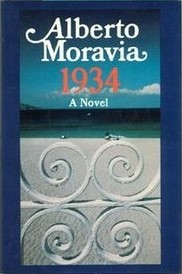
Moravia's political fable about an Italian anti-Fascist and the frightened, suicide-seeking German girl he encounters on a boat to Capri--the setting of Moravia's Il disprezzo from 1954--was welcomed as one of his finest novels. Stephen Spender for The New York Review of Books commented: "One of the most brilliant strokes in this novel about relations in the Thirties between Italians and Germans is that Moravia never reveals whether his Italian narrator and hero is serious or not, and doubt about the seriousness lies in his being Italian. ... This is the truth of the book: that within the external situation of the Italian Fascist--German Nazi relationship it is impossible to accept as authentic virtually anything people do."Moravia is not simply painting the portrait of an age but also coming to grips through his art with the great questions of all ages - the erotic, love, death, and the purpose of life. 1934 recapitulates the major themes of his art and at the same time takes us beyond them.

Desideria, giovane, bella e spietata, figlia adottiva di Viola, ricchissima e corrotta, confessa al narratore, che la incalza e la induce a una chiarezza estrema, una vita di ribellione alla propria famiglia, alla propria classe, alla società che l'ha generata. Spinta dalla Voce interiore, dallo spirito di rivolta, non esita di fronte alla prostituzione, all'orgia, alla trama di un sequestro, a una rapina, all'incesto.La vita interiore è stato definito "il romanzo più terribile" di Moravia: sette anni di lavoro, sette stesure, lo sconvolgente ritratto di una borghesia che sembra capace soltanto di far male e farsi male.

أصبح الكاتب الإيطالي ألبوتو مورافيا روائياً شهيراً في أوساط الأدب العالمي، وقد عرفه القراء العرب عبر روايات رائعة أشهرها "السأم و"الاحتقار". ورواية "الانتباه" هذه أثارت عند صدورها ضجة كبيرة في الندوات وبين النقاد، لا سيما وأن مورافيا طرح فيها، لأول مرة، مشكلة الكاتب الروائي أمام أبطاله، وكيف ينبغي له أن يواجه واقعهم وواقعه: أيكون صادقاً مئة بالمئة، أم يحور في هذا الواقع؟ كل ذلك يرويه مورافيا من خلال قصة غرام مثيرة: قصة صحفي يمل زوجته، فيهجرها ويسافر في رحلات طويلة، وحين يعود يكشف أن زوجته تدير "بيتاً للمواعيد". كما يكتشف أن ابنتها من علاقة أولى غير شرعية قد كبرت وأصبحت جميلة، فإذا بالصحفي الزوج يقع في غرام الابنة...

En 1961, Alberto Moravia voyage en Inde avec Elsa Morante, sa femme, et leur ami Pier Paolo Pasolini. De ce voyage, la littérature gardera deux livres complémentaires et éblouissants : celui de Pier Paolo Pasolini, L'Odeur de L'Inde, et celui d'Alberto Moravia, qui participe d'une plus réelle objectivité.Tout en cherchant les causes de la pauvreté d'une grande partie de la population, Moravia s'entretient avec Nehru, n'hésite pas à dénoncer le système des castes, et passe en revue les religions du sous-continent : hindouisme, jaïnisme, sikhisme, islam, judaïsme, bouddhisme et christianisme. Si le regard de Pasolini est toujours léger et humain, celui de Moravia traverse les siècles et les cultures avec un esprit de synthèse remarquable.

"La donna leopardo" appartiene alla serie dei romanzi moraviani a respiro breve, come "Agostino", "La Disubbidienza", "L'Amore coniugale". È la storia, volutamente priva di soluzione, di un tradimento amoroso, di una sofferenza voyeuristica e di una dolente incapacità di comprensione, e segna uno dei punti più alti della meditazione esistenziale di Moravia: la vita non si conosce e noi non la conosciamo. Pubblicato nel 1991, "La donna leopardo" è ascrivibile a quello che Cecchi definiva "il Moravia migliore".

Gemma è una giovane di modeste condizioni ma bella e vanitosa, nata e cresciuta in un capoluogo dell'Italia centrale e che non sopporta la noiosa e un po' ipocrita vita della provincia. Ella cerca un riscatto sociale, ha un primo grande amore, ricambiato, per un ragazzo ricco con cui ha passato tutte le estati dai tempi dell'infanzia, ma deve rinunciarci perché scopre di essergli sorella. Dopo questa delusione, si adatta a sposare un modesto professore universitario per cui non prova nulla. Dopo le nozze è preda di risentimento e insoddisfazione. Si lascia così avvicinare da una donna molto chiacchierata, una sedicente contessa rumena che la vuole iniziare all'alta società spingendola a farsi un amante. La manutengola, che ora può ricattare la donna, si insedia in casa di lei... Gemma è il prototipo letterario delle ragazze convinte che l'avvenenza fisica sia il passaporto per il successo e la notorietà, e che sia possibile trovare delle illusorie scorciatoie per vivere una vita felice e spensierata. In questo senso il racconto è di grande attualità. La voce è dell'attrice Maria Grazia Mandruzzato. Contenuto: racconto tratto da Moravia - Racconti, Edizioni Garzanti, Milano, 1974 (versione integrale).

In Storie della preistoria, superando gli schemi e la morale talvolta spietata della favolistica classica, Alberto Moravia narra le avventure e le disavventure di una grande folla di animali umanizzati. O meglio: di uomini che si nascondono dietro una maschera animalesca. Come sempre accade sul palcoscenico della favola, il debole si mescola ai forti, l'ingenuo agli astuti, il buono ai cattivi. Qui però la verità non ha le tinte fosche della tragedia o i toni grotteschi della farsa perché Moravia non rinuncia mai alla speranza: così il lettore impara divertendosi, senza rabbrividire di paura e di sgomento. Le sue storie sono a tratti esilaranti, adatte tanto al lettore bambino quanto a quello adulto.

The ribald masterpiece by one of the world's great novelists -- an unflinching view of private lives in Roman of mid-20th century.

"دع نبتتي المسكينة بسلام... اعتقد أنك أتيت لتكلمني عن الحياة التي سنمضيها عندما نصبح زوجين... ها أنا ذا أسمعك، جفل ثم أخذ يتأتئ. آه نعم، لقد نسيت أن أخبركم بأن له، بالإضافة إلى غضونه، حبسه في لسانه، كان يتلعثم في كل مقطع وهو يجيبني آلياً كأنه يُسمعني درساً حفظه عن ظهر قلب: سوف نسكن في الريف؛ في فيللتي حيث تعيش أيضاً أمي وأخي: سوف نحيا حياة بسيطة، حياة نظيفة، أنا سأهتم بمزرعتي وأنت ستبقين في البيت... إنها حياة بسيطة ونظيفة كحياة أبي وجدي وكل أجدادي منذ أجيال... وهل أنت واثق من أنه سيكون لك أطفال... كم؟ على الأقل ستة أو ثمانية أو عشرة. أريد أسرة كثيرة العدد. إذا لم يكن عددهم كبيراً، فما فائدتهم؟ إني أطرح السؤال عينه على نفسي... ولكن هل فكرت في أنني أنا من سينجب لك هؤلاء الأطفال؟..."هكذا وفي جميع قصصها، بدت القاصة ثائرة على حياتها، ومجتمعها متحررة من قيود الحياة الروتينية معتزة بنفسها هي امرأة غير عادية هكذا أخبرتها صوت البحر الذي لطالما همس لها بصوته الغامض والمقنع أنت امرأة غير عادية!!

Signet 1st Printing No. 1122 w/Cover Painting by James Avati

Moravia's collection of erotic short stories turns a penetrating eye on the psychology of human desire: the loves, hopes, fears, and perversities that haunt the everyday lives of any group of modern city dwellers.

"Un nuovo romanzo da mettere in biblioteca soprattutto perché in una biblioteca che si rispetti un classico del Novecento come Moravia deve essere presente con le opere complete." (Geno Pampaloni) "Il viaggio a Roma è un romanzo di iniziazione, di iniziazione alla maturità; o di liberazione dalla nevrotica turbolenza dell'adolescenza." (Enzo Siciliano) "Un romanzo audace dove la strada dell'incesto è sbarrata soprattutto dalla tomba della madre; un romanzo continuamente in bilico tra la soglia oscura della memoria e i lampi contraddittori del presente." (Giulio Nascimbeni)

الحمد لله رب العالمينمجموعة من القصص القصيرة للكاتب الإيطالى ألبيرتو مورافيا.

U ovoj zbirci pripovijedaka autor slika trideset i četiri ženska lika, trideset ičetiri žene koje govore o sebi, pričaju svoje životne istine u prvom licu.

Nella corrispondenza che Moravia indirizza a Morante tra il 1947 e gli anni ottanta si confrontano un uomo e una donna, e1 insieme line grandi si littori del Novecento. Il valore dei documenti qui raccolti sta nella testimonianza intima di un legame in lui la vita non può mai essere del tutto separata dall'arte, tanto che l'amore, nulla di più privato e al contempo di più letterario, si proietta in una dimensione altra, universale. Lo dimostrano queste lettere di Moravia scritte di getto, con verità non meditata e con quel pudore che non impedisce di condividere emozioni, idee e inquietudini [...]. Uniti e insieme divisi. per l'intera vita. Li dividono la diversità di carattere, le origini borghesi per lui e modeste per lei - che pesano sin dai primi momenti sugli equilibri della relazione. A unirli è soprattutto il demone della letteratura che nella corrispondenza vi manifesta di rado, ma è onnipresente a un livello sotterraneo e pronto ad affacciarsi quando la vita lo richieda.'

Subtitle: The Stories of Agostino and Luca. Includes Agostino (original Italian 1944), translated by Beryl de Zoete, and Luca (original Italian "La Disubbidienza" 1948), translated by Angus Davidson.Since the publcation of 'The Woman of Rome', most American critics agree that Alberto Moravia is a novelist of importance; one of the leaders of the literary renaissance that Italy has been enjoying since the war. Moravia again displays his gifts as a teller of stories sharp with characterization and deep understanding.'Agostino'is the story of a sensitive, cloistered boy who, beyond all sense of proportion, loves and idolizes his youthful widowed mother. The shock of finding he is not the center of his mother's universe - that she is favorable to the attentions of a man of her own generation - is more than Agostino can stand. In an instinctive fumbling effort to gain self-respect and values, Agostino joins a gang of older boys who derisively and callously supply him with a quick and drastic sexual education. Agostino finds he has won knowledge without wisdom; and in the words of Moravia, "He has lost his first estate without having succeeded in winning another." Agostino is the true adolescent, familiar to everyone who recalls that confused tragi-comic period of their youth.Luca is worlds apart in outlook from Agostino, more sophisticated, knowing and introspective - moody and on the threshold of maturity. Luca, perhaps, knows too much and thinks too much, and when his active mind questions the conventions and routine of everyday life he comes gradually to the conclusion that life is a monstrous conspiracy - a plot to make one conform at the expense of one's soul. His answer is a complete negation of the pattern of living - an austere and adolescent reaction that leads him, unwittingly, to the brink of death itself, and from which only the purge of violent illness and an unexpected romance save him, mentally and physically, and show him the way to maturity.[from the flaps]

Nella semplicità dello schema della narrazione breve si inserisce una lucida analisi introspettiva che porta Moravia a farsi interprete delle difficoltà psicologiche e morali in cui si dibatte l'uomo moderno. Personaggi che agiscono come macchine, come automi appunto: è il tema sottile che lega questa serie di racconti.

"Le ambizioni sbagliate", secondo romanzo di Moravia, riassume in sé le tematiche caratteristiche di tutta l'opera successiva dello scrittore da un lato la ricca borghesia di Roma, dall'altro figure contrassegnate da atonia morale, snobismo, bassa avidità di denaro, piatta sensualità.