Loading themes...
Explore the best books about Research theme.

Writing for science fiction and fantasy audiences can be the most exciting writing you've ever done. Your readers are curious and want you to take them beyond ""The Fields We Know,"" to help them explore the infinite boundaries of the worlds you create.Here, science fiction great Orson Scott Card shares his expertise in these genres. You'll learn:- What is and isn't science fiction and fantasy, and by whose standards -- and where your work fits in.- How to build, populate, and dramatize a credible, inviting world your readers will want to explore.- How to use the MICE quotient -- milieu, idea, character, event -- to structure a successful story.- Where the markets are and how to reach them to get published.The knowledge and skills you gain through this book will help you effectively lead your readers into the strangeness you create -- one tantalizing step at a time.

Craft an Engaging PlotHow does plot influence story structure? What's the difference between plotting for commercial and literary fiction? How do you revise a plot or structure that's gone off course?With "Write Great Fiction: Plot & Structure," you'll discover the answers to these questions and more. Award-winning author James Scott Bell offers clear, concise information that will help you create a believable and memorable plot, including: Techniques for crafting strong beginnings, middles, and endsEasy-to-understand plotting diagrams and chartsBrainstorming techniques for original plot ideasThought-provoking exercises at the end of each chapterStory structure models and methods for all genresTips and tools for correcting common plot problemsFilled with plot examples from popular novels, comprehensive checklists, and practical hands-on guidance, "Write Great Fiction: Plot & Structure" gives you the skills you need to approach plot and structure like an experienced pro.

"As our machines are increasingly jacked into global networks of information, it becomes more and more difficult to imagine the dataspace at our fingertips, to picture all that complexity in our mind's eye . . . Representing all that information is going to require a new visual language, as complex and meaningful as the great metropolitan narratives of the 19th-century novel."--from Interface Culture In this hip, erudite manifesto, Steven Johnson--one of the most influential people in cyberspace, according to Newsweek bridges the gap that yawns between technology and the arts. Drawing on his own expertise in the humanities and on the Web, he not only demonstrates how interfaces--those buttons, graphics and words on the screen through which we control information--influence our daily lives, but also tracks their roots back to Victorian novels, early cinema and even medieval urban planning. The result is a lush cultural and historical tableau in which today's interfaces take their rightful place in the lineage of artistic innovation. With Interface Culture , Johnson brilliantly charts the vital role interface design plays in modern society. Just as the great novels of Melville, Dickens and Zola explain a rapidly industralizing society to itself, he argues, web sites, Microsoft Bob, flying toasters and the landscapes of video games tell the digital society how to imagine itself and how to get around in cyberspace's unfamiliar realm. The role once played by novelists is now fulfilled by the interface designer, who has bridged the gap between technology and everyday life by providing a conceptual framework for the vast amounts of information and computation that surround us. Johnson boldly explores the past--a terrain few tech thinkers have dared enter, and one that throws dazzling light on the modern interface's roots. From the great cathedrals of the Middle Ages to the rise of perspective drawing in the Renaissance, from Enlightenment satire to the golden age of television, Interface Culture uses a wealth of venerable "interface innovation" to place newfangled creations like Windows 95 and the Web in a rich historical context. Controversial, clear-sighted and challenging, Interface Culture also looks at the future--from what PC screens will look like in 10 years to how new interfaces will alter the style of our conversation, prose and thoughts. With a distinctively accessible style, Interface Culture brings new intellectual depth to the vital discussion of how technology has transformed society, and is sure to provoke wide debate in both literary and technological circles.

The 15th edition of The Chicago Manual of Style has been superseded by the 17th edition. In the 1890s, a proofreader at the University of Chicago Press prepared a single sheet of typographic fundamentals intended as a guide for the University community. That sheet grew into a pamphlet, and the pamphlet grew into a book—the first edition of the Manual of Style, published in 1906. Now in its fifteenth edition, The Chicago Manual of Style—the essential reference for authors, editors, proofreaders, indexers, copywriters, designers, and publishers in any field—is more comprehensive and easier to use than ever before.Those who work with words know how dramatically publishing has changed in the past decade, with technology now informing and influencing every stage of the writing and publishing process. In creating the fifteenth edition of the Manual, Chicago's renowned editorial staff drew on direct experience of these changes, as well as on the recommendations of the Manual's first advisory board, composed of a distinguished group of scholars, authors, and professionals from a wide range of publishing and business environments.Every aspect of coverage has been examined and brought up to date—from publishing formats to editorial style and method, from documentation of electronic sources to book design and production, and everything in between. In addition to books, the Manual now also treats journals and electronic publications. All chapters are written for the electronic age, with advice on how to prepare and edit manuscripts online, handle copyright and permissions issues raised by technology, use new methods of preparing mathematical copy, and cite electronic and online sources.A new chapter covers American English grammar and usage, outlining the grammatical structure of English, showing how to put words and phrases together to achieve clarity, and identifying common errors. The two chapters on documentation have been reorganized and updated: the first now describes the two main systems preferred by Chicago, and the second discusses specific elements and subject matter, with examples of both systems. Coverage of design and manufacturing has been streamlined to reflect what writers and editors need to know about current procedures. And, to make it easier to search for information, each numbered paragraph throughout the Manual is now introduced by a descriptive heading.Clear, concise, and replete with commonsense advice, The Chicago Manual of Style, fifteenth edition, offers the wisdom of a hundred years of editorial practice while including a wealth of new topics and updated perspectives. For anyone who works with words, whether on a page or computer screen, this continues to be the one reference book you simply must have.What's new in the Fifteenth Edition:* Updated material throughout to reflect current style, technology, and professional practice* Scope expanded to include journals and electronic publications* Comprehensive new chapter on American English grammar and usage by Bryan A. Garner (author of A Dictionary of Modern American Usage)* Updated and rewritten chapter on preparing mathematical copy* Reorganized and updated chapters on documentation, including guidance on citing electronic sources* Streamlined coverage of current design and production processes, with a glossary of key terms* Descriptive headings on all numbered paragraphs for ease of reference* New diagrams of the editing and production processes for both books and journals, keyed to chapter discussions* New, expanded Web site with special tools and features for Manual users at www.chicagomanualofstyle.org.

With intelligence now getting a front-row seat in governments around the world, this book is especially timely. Intelligence rains in, but without an understanding of the nature of the intelligence, it accumulates in puddles of obscurity. The problems therefore seem to be how to obtain it, how to understand it, and how to sell it to one's bosses. This book deals with how to understand it. Three fundamental points are at the heart of this presentation about the cognitive challenges intelligence analysts face: The mind is poorly wired to deal effectively with both inherent uncertainty (the natural fog surrounding complex, indeterminate intelligence issues) and induced uncertainty (the man-made fog fabricated by denial and deception operations). Even increased awareness of cognitive and other unmotivated biases, such as the tendency to see information confirming an already-held judgement more vividly than one sees disconfirming information, does little by itself to help analysts deal effectively with uncertainty. critical thinking can substantially improve analysis on complex issues on which information is incomplete, ambiguous, and often deliberately distorted. Key examples of such intellectual devices include techniques for structuring information, challenging assumptions, and exploring alternative interpretations. This book was first issued by the CIA.

This study, first published in 1958, offers Michael Polanyis' epistemological insights. Polanyi, originally a chemist and chemical physicist, is widely acclaimed for his epistemology which opposes the prevailing positivist approaches. His discussion of tacit knowledge has proved to be influential in many fields from theology to artificial intelligence. This text represnts a contribution to 20th-century thought, and continues to make valuable insights to our understanding of how knowledge functions.

The grand, leading principle, towards which every argument . . . unfolded in these pages directly converges, is the absolute and essential importance of human development in its richest diversity.This description by Wilhelm von Humboldt of his purpose in writing The Limits of State Action animates John Stuart Mill's On Liberty and serves as its famous epigraph. Seldom has a book spoken so dramatically to another writer. Many commentators even believe that Humboldt's discussion of issues of freedom and individual responsibility possesses greater clarity and directness than Mill's. The Limits of State Action, by "Germany's greatest philosopher of freedom," as F. A. Hayek called him, has an exuberance and attention to principle that make it a valuable introduction to classical liberal political thought. It is also crucial for an understanding of liberalism as it developed in Europe at the turn of the nineteenth century. Humboldt explores the role that liberty plays in individual development, discusses criteria for permitting the state to limit individual actions, and suggests ways of confining the state to its proper bounds. In so doing, he uniquely combines the ancient concern for human excellence and the modern concern for what has come to be known as negative liberty.J. W. Burrow is Professor of History at the University of Sussex.

Beginning in the year 711 and continuing for nearly a thousand years, the Islamic presence survived in Spain, at times flourishing, and at other times dwindling into warring fiefdoms. But the culture and science thereby brought to Spain, including long-buried knowledge from Greece, largely forgotten during Europe’s Dark Ages, was to have an enduring impact on the country as it emerged into the modern era. In this gracefully written history, Richard Fletcher reveals the Moorish culture in all its fascinating disparity and gives us history at its best: here is vivid storytelling by a renowned scholar.

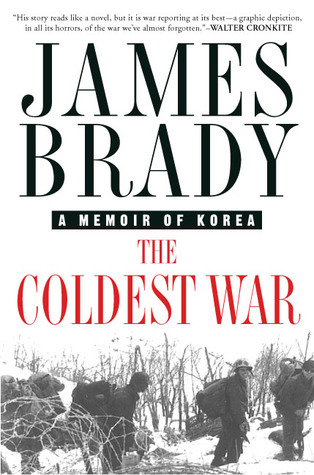
James Brady's The Coldest War is a powerful and moving memoir of the Korean War.America's "forgotten war" lasted just thirty-seven months, yet 54,246 Americans died in that time -- nearly as many as died in ten years in Vietnam. On the fiftieth anniversary of this devastating conflict, James Brady tells the story of his life as a young marine lieutenant in Korea.In 1947, seeking to avoid the draft, nineteen-year-old Jim Brady volunteered for a Marine Corps program that made him a lieutenant in the reserves on the day he graduated college. He didn't plan to find himself in command of a rifle platoon three years later facing a real enemy, but that is exactly what happened after the Chinese turned a so-called police action into a war.The Coldest War vividly describes Brady's rapid education in the realities of war and the pressures of command. Opportunities for bold offensives sink in the miasma of trench warfare; death comes in fits and starts as too-accurate artillery on both sides seeks out men in their bunkers; constant alertness is crucial for survival, while brutal cold and a seductive silence conspire to lull soldiers into an often fatal stupor.The Korean War affected the lives of all Americans, yet is little known beyond the antics of "M*A*S*H." Here is the inside story that deserves to be told, and James Brady is a powerful witness to a vital chapter of our history.

A 600-page color illustrated book now available in limited edition. The Keys of Enoch® contain spiritual-scientific teaching from two higher Teachers of universal intelligence called “Enoch” and “Metatron.” Enoch identified himself as the same Enoch mentioned in the ancient biblical texts. However, this book is not channeled information but comes from a direct experience.The purpose of The Book of Knowledge: The Keys of Enoch® is to open the mind of humanity to new ideas, inviting you to share in the experience of the education of the soul. The Keys are a blueprint of the many levels of spiritual consciousness and are designed to bring you in touch with the meaning of Divine Intelligence.

Uncovers the elements of creative collaboration by examining six of the century's most extraordinary groups and distill their successful practices into lessons that virtually any organization can learn and commit to in order to transform its own management into a collaborative and successful group of leaders. Paper. DLC: Organizational effectiveness - Case studies.

"Still a joy to read." — Mathematical Gazette This classic by the famous mathematician defines the basic methodology and psychology of scientific discovery, particularly regarding mathematics and mathematical physics. Drawing on examples from many fields, it explains how scientists analyze and choose their working facts, and it explores the nature of experimentation, theory, and the mind. 1914 edition.

This best-selling book is a beautifully illustrated history of the English country house from the Middle Ages to the twentieth century. In it, renowned architectural historian Mark Girouard presents a rare and revealing glimpse of the English upper classes—their public and personal lives, their servants, and their homes."A deeply important book, one of the most interesting contributions to architectural history."—J. H. Plumb, The New York Review of Books"A survey of country houses through the past five centuries, from a broad range of materials: family archives, literature, plans and photographs.... The book itself is a physical artifact of surpassing beauty which could fit on the grandest table in the houses it describes."—David Hackett Fischer, The New Republic"Informative, balanced, knowledgeable, and witty."—The New Yorker"This enthralling and immensely informative book...tells with wit, scholarship, and lucidity how the country house evolved to meet the needs and reflect the social attitudes of the times."—Philip Ziegler, The Times"One of those very useful and very enjoyable books that the learned can seldom write, and the entertaining seldom achieve—clear, detailed, and witty."—Angus Wilson, The ObserverWinner of the 1978 Duff Cooper Memorial Prize and the W. H. Smith & Son Annual Literary Award for 1979.

This brilliant and evocative book is now widely regarded as the greatest single study of the age in any language. The late George Kitson Clark characterized it as "an historical essay of unique interest and importance." Though the book deserves to rank as a classic, its allusive style makes it rather difficult fare for the general reader. In less than two hundred pages Young paints a picture so subtle and compact that only the specialist in Victorian history can fully appreciate the value of his vivid narrative. The allusive nature of the Portrait recently sent a few dozen scholars scurrying under the guidance of Kitson Clark, to hunt down and verify its numerous references and quotations. Their exhaustive efforts have unearthed a few minor blemishes, but these fail to detract from the book's overall brilliance. Thought the Portrait is esteemed by scholars, few have noted how much the book is a reflection of its time and of the abiding cultural concerns of Young's intellectual life. In print continuously since its first appearance in 1936, this study of the Victorian era from 1837-1901 is regarded as the greatest history of that time ever written. G. M Young's remarkable survey has outstanding clarity, delicious wit, and penetrating scholarship. "An immortal classic, the greatest long essay ever written."--Simon Schama. "A magnificent piece."--Punch. "Every page is delightful reading."--Guardian. "[A] breathtaking range of scholarship, richness and aptness of language, and acid sharpness of wit."--Country Life.

Using interviews with and writings by 30 astronauts and cosmonauts, Frank White shows how experiences such as circling the Earth every 90 minutes and viewing it from the moon have profoundly affected our space travelers' perceptions of themselves, their world, and the future. He shows how the rest of us, who have participated imaginatively in these great adventures, have also been affected psychologically by them.

Confronting us at every turn, flowing from every imaginable source, information defines our era--and yet what we don't know about it could--and does--fill a book. In this indispensable volume, a primer for the information age, Hans Christian von Baeyer presents a clear description of what information is, how concepts of its measurement, meaning, and transmission evolved, and what its ever-expanding presence portends for the future. Information is poised to replace matter as the primary stuff of the universe, von Baeyer suggests; it will provide a new basic framework for describing and predicting reality in the twenty-first century. Despite its revolutionary premise, von Baeyer's book is written simply in a straightforward fashion, offering a wonderfully accessible introduction to classical and quantum information. Enlivened with anecdotes from the lives of philosophers, mathematicians, and scientists who have contributed significantly to the field, Information conducts readers from questions of subjectivity inherent in classical information to the blurring of distinctions between computers and what they measure or store in our quantum age. A great advance in our efforts to define and describe the nature of information, the book also marks an important step forward in our ability to exploit information--and, ultimately, to transform the nature of our relationship with the physical universe. (20040301)

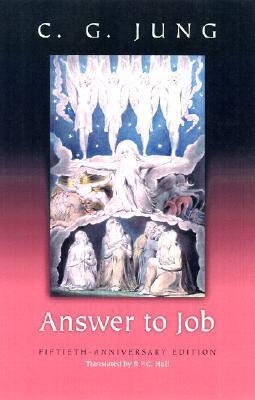
Jung has never pursued the "psychology of religion" apart from general psychology. The unique importance of his work lies rather in his discovery and treatment of religious, or potentially religious, factors in his investigation into the unconscious as a whole and in his general therapeutic practice. In Answer to Job, first published in Zurich in 1952, Jung employs the familiar language of theological discourse. Such terms as "God," "wisdom," and "evil" are the touchstones of his argument. And yet, Answer to Job, perhaps Jung's most controversial work, is not an essay in theology as much as it is an examination of the symbolic role that theological concepts play in a person's psychic life.

This acclaimed book is a master teacher's tested program for turning clumsy prose into clear, powerful, and effective writing. A logical, expert, easy-to-use plan for achieving excellence in expression, Style offers neither simplistic rules nor endless lists of dos and don'ts. Rather, Joseph Williams explains how to be concise, how to be focused, how to be organized. Filled with realistic examples of good, bad, and better writing, and step-by-step strategies for crafting a sentence or organizing a paragraph, Style does much more than teach it helps anyone who must write clearly and persuasively transform even the roughest of drafts into a polished work of clarity, coherence, impact, and personality."Buy Williams's book. And dig out from storage your dog-eared old copy of The Elements of Style. Set them side by side on your reference shelf."—Barbara Walraff, Atlantic"Let newcoming writers discover this, and let their teachers and readers rejoice. It is a practical, disciplined text that is also a pleasure to read."— Christian Century"An excellent book....It provides a sensible, well-balanced approach, featuring prescriptions that work."—Donald Karzenski, Journal of Business Communication"Intensive fitness training for the expressive mind."— Booklist(The college textbook version, Ten Lessons in Clarity and Grace , 9th edition, is available from Longman. ISBN 9780321479358.)

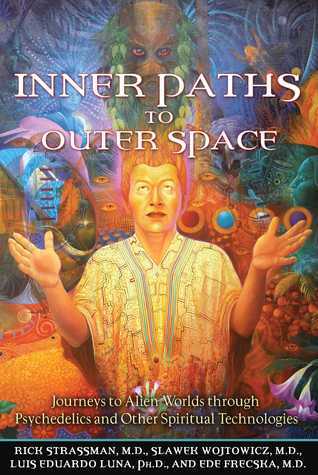
An investigation into experiences of other realms of existence and contact with otherworldly beings • Examines how contact with alien life-forms can be obtained through the “inner space” dimensions of our minds • Presents evidence that other worlds experienced through consciousness-altering technologies are often as real as those perceived with our five senses • Correlates science fiction’s imaginal realms with psychedelic research For thousands of years, voyagers of inner space--spiritual seekers, shamans, and psychoactive drug users--have returned from their inner imaginal travels reporting encounters with alien intelligences. Inner Paths to Outer Space presents an innovative examination of how we can reach these other dimensions of existence and contact otherworldly beings. Based on their more than 60 combined years of research into the function of the brain, the authors reveal how psychoactive substances such as DMT allow the brain to bypass our five basic senses to unlock a multidimensional realm of existence where otherworldly communication occurs. They contend that our centuries-old search for alien life-forms has been misdirected and that the alien worlds reflected in visionary science fiction actually mirror the inner space world of our minds. The authors show that these “alien” worlds encountered through altered states of human awareness, either through the use of psychedelics or other methods, possess a sense of reality as great as, or greater than, those of the ordinary awareness perceived by our five senses.

The art of scientific investigation - Includes preparation, experimentation, chance, hypothesis, imagination, intuition and more.

An insider's history of Texas that examines the people, politics, and events which have shaped the Lone Star State, from prehistory to the modern dayHere is an up-to-the-moment history of the Lone Star State, together with an insider's look at the people, politics, and events that have shaped Texas from the beginning right up to our days. Never before has the story been told with more vitality and immediacy. Fehrenbach re-creates the Texas saga from prehistory to the Spanish and French invasions to the heyday of the cotton and cattle empires. He dramatically describes the emergence of Texas as a republic, the vote for secession before the Civil War, and the state's readmission to the Union after the War. In the twentieth century oil would emerge as an important economic resource and social change would come. But Texas would remain unmistakably Texas, because Texans "have been made different by the crucible of history; they think and act in different ways, according to the history that shaped their hearts and minds."

Elkhonon Goldberg's groundbreaking The Executive Brain was a classic of scientific writing, revealing how the frontal lobes command the most human parts of the mind. Now he offers a completely new book, providing fresh, iconoclastic ideas about the relationship between the brain and the mind. In The New Executive Brain, Goldberg paints a sweeping panorama of cutting-edge thinking in cognitive neuroscience and neuropsychology, one that ranges far beyond the frontal lobes. Drawing on the latest discoveries, and developing complex scientific ideas and relating them to real life through many fascinating case studies and anecdotes, the author explores how the brain engages in complex decision-making; how it deals with novelty and ambiguity; and how it addresses moral choices. At every step, Goldberg challenges entrenched assumptions. For example, we know that the left hemisphere of the brain is the seat of language--but Goldberg argues that language may not be the central adaptation of the left hemisphere. Apes lack language, yet many also show evidence of asymmetric hemispheric development. Goldberg also finds that a complex interaction between the frontal lobes and the amygdale--between a recently evolved and a much older part of the brain--controls emotion, as conscious thoughts meet automatic impulses. The author illustrates this observation with a personal the difficulty he experienced when trying to pick up a baby alligator he knew to be harmless, as his amygdala battled his effort to extend his hand. The New Executive Brain , Goldberg affirms Goldberg's place as one of our most creative and insightful scientists, offering lucid writing and bold, paradigm-shifting ideas.

What will the economy of the future look like? Where will advancing technology, job automation, outsourcing and globalization lead? This groundbreaking book by a Silicon Valley computer engineer explores these questions and shows how accelerating technology is likely to have a highly disruptive influence on our economy in the near future--and may well already be a significant factor in the current global crisis. THE LIGHTS IN THE TUNNEL employs a powerful thought experiment to explore the economy of the future. An imaginary "tunnel of lights" is used to visualize the economic implications of the new technologies that are likely to appear in the coming years and decades. The book directly challenges conventional views of the future and illuminates the danger that lies ahead if we do not plan for the impact of rapidly advancing technology. It also shows how the economic realities of the future might offer solutions to issues such as poverty and climate change.

In spite of soaring tuition costs, more and more students go to college every year. A bachelor’s degree is now required for entry into a growing number of professions. And some parents begin planning for the expense of sending their kids to college when they’re born. Almost everyone strives to go, but almost no one asks the fundamental question posed by Academically Adrift: are undergraduates really learning anything once they get there?For a large proportion of students, Richard Arum and Josipa Roksa’s answer to that question is a definitive no. Their extensive research draws on survey responses, transcript data, and, for the first time, the state-of-the-art Collegiate Learning Assessment, a standardized test administered to students in their first semester and then again at the end of their second year. According to their analysis of more than 2,300 undergraduates at twenty-four institutions, 45 percent of these students demonstrate no significant improvement in a range of skills—including critical thinking, complex reasoning, and writing—during their first two years of college. As troubling as their findings are, Arum and Roksa argue that for many faculty and administrators they will come as no surprise—instead, they are the expected result of a student body distracted by socializing or working and an institutional culture that puts undergraduate learning close to the bottom of the priority list.Academically Adrift holds sobering lessons for students, faculty, administrators, policy makers, and parents—all of whom are implicated in promoting or at least ignoring contemporary campus culture. Higher education faces crises on a number of fronts, but Arum and Roksa’s report that colleges are failing at their most basic mission will demand the attention of us all.

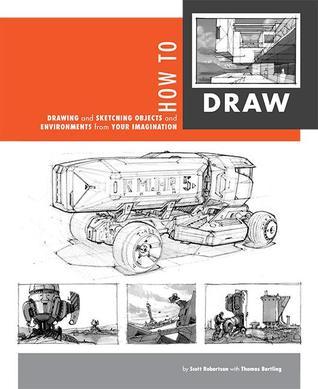
How to Draw is for artists, architects and designers. It is useful to the novice, the student and the professional. You will learn how to draw any object or environment from your imagination, starting with the most basic perspective drawing skills.Early chapters explain how to draw accurate perspective grids and ellipses that in later chapters provide the foundation for more complex forms. The research and design processes used to generate visual concepts are demonstrated, making it much easier for you to draw things never-before-seen!Best of all, more than 25 pages can be scanned via a smartphone or tablet using the new Design Studio Press app, which link to video tutorials for that section of the book!With a combined 26 years of teaching experience, Scott Robertson and Thomas Bertling bring you the lessons and techniques they have used to help thousands of their students become professional artists and designers.This book is indispensable for anyone who wants to learn, or teaches others, how to draw.

Neuropsychedelia examines the revival of psychedelic science since the "Decade of the Brain." After the breakdown of this previously prospering area of psychopharmacology, and in the wake of clashes between counterculture and establishment in the late 1960s, a new generation of hallucinogen researchers used the hype around the neurosciences in the 1990s to bring psychedelics back into the mainstream of science and society. This book is based on anthropological fieldwork and philosophical reflections on life and work in two laboratories that have played key roles in this a human lab in Switzerland and an animal lab in California. It sheds light on the central transnational axis of the resurgence connecting American psychedelic culture with the home country of LSD. In the borderland of science and religion, Neuropsychedelia explores the tensions between the use of hallucinogens to model psychoses and to evoke spiritual experiences in laboratory settings. Its protagonists, including the anthropologist himself, struggle to find a place for the mystical under conditions of late-modern materialism.

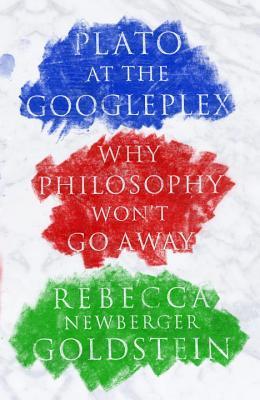
Is philosophy obsolete? Are the ancient questions still relevant in the age of cosmology and neuroscience, not to mention crowd-sourcing and cable news? The acclaimed philosopher and novelist Rebecca Newberger Goldstein provides a dazzlingly original plunge into the drama of philosophy, revealing its hidden role in today’s debates on religion, morality, politics, and science. At the origin of Western philosophy stands Plato, who got about as much wrong as one would expect from a thinker who lived 2,400 years ago. But Plato’s role in shaping philosophy was pivotal. On her way to considering the place of philosophy in our ongoing intellectual life, Goldstein tells a new story of its origin, re-envisioning the extraordinary culture that produced the man who produced philosophy. But it is primarily the fate of philosophy that concerns her. Is the discipline no more than a way of biding our time until the scientists arrive on the scene? Have they already arrived? Does philosophy itself ever make progress? And if it does, why is so ancient a figure as Plato of any continuing relevance? Plato at the Googleplex is Goldstein’s startling investigation of these conundra. She interweaves her narrative with Plato’s own choice for bringing ideas to life—the dialogue. Imagine that Plato came to life in the twenty-first century and embarked on a multicity speaking tour. How would he handle the host of a cable news program who denies there can be morality without religion? How would he mediate a debate between a Freudian psychoanalyst and a tiger mom on how to raise the perfect child? How would he answer a neuroscientist who, about to scan Plato’s brain, argues that science has definitively answered the questions of free will and moral agency? What would Plato make of Google, and of the idea that knowledge can be crowd-sourced rather than reasoned out by experts? With a philosopher’s depth and a novelist’s imagination and wit, Goldstein probes the deepest issues confronting us by allowing us to eavesdrop on Plato as he takes on the modern world.(With black-and-white photographs throughout.)

The first job of an author is, of course, to write great books, but these days, their second job is to market them.Marketing isn't a skill that most authors have naturally, and there is little formal training. But when your book hits the shelves, and the sales don't start rolling in, there's only two things an author can do. Keep writing more books and ... Get to grips with marketing. This book is for authors who want to sell more books, but it's also for those writers who want to think more like an entrepreneur. It's for traditionally published authors who want to take control of their future, and for self-published authors who want to jumpstart a career. There are some short-term tactics for those who want to kick up immediate sales, but the focus of the book is more about instilling values and marketing principles that will help your long-term career as a writer. It's also about going beyond just the book, because the methods in this guide can take you from being an author into professional speaking, making money from other products and creating opportunities that you can't even imagine yet. There are no rules in this game, but learning this kind of authentic marketing has certainly changed my life, so read on and I'll share everything I know with you.How To Market A Book covers an extensive range of marketing principles, strategies and tactics: Part 1: Marketing Principles - including myths, how to balance your time, co-opetition and generosity Part 2: Prerequisites for Success - including an understanding of yourself and your target market, professional editing and cover design, your book page on the retailer websites, pricing and the use of freePart 3: No Platform Needed - Short-term Marketing - including how to get book reviews, paid advertising, using traditional media and tips for TV, radio and press releases Part 4: The Author Platform - Long-term Marketing - including the reasons why a platform is a good thing, author branding, your author website, list-building and email marketing, content marketing and blogging, audio and podcasting, video and book trailers, social networking, professional speaking, and becoming an author-entrepreneur. Part 5: Launching Your Book - including how launching has changed, soft launch, launch spikes, post launch and relaunches as well as lessons learned from some major book launches. Plus/ tips for when you get overwhelmed and plenty more links to further resources.

Dorset , 1803.A shepherd’s son is enlisted as a soldier of the Army of Reserve.His name is Benjamin Randell Harris, private of the 95th Regiment of Foot.The Recollections of Benjamin Harris are the classic memoirs of a foot soldier during the Napoleonic Wars, originally published in 1848.With personal anecdotes, quick wit and vivid descriptions, The Recollections of Benjamin Harris is one of the few surviving accounts of military service from the Napoleonic era.The memoir charts Harris’s years of active service from joining the 95th Rifles in Ireland, to the Peninsular Wars of Northern Spain.Harris recollects the gripping campaign at Copenhagen, the engagement at the Battle of Rolica, the gruelling march to Salamanca and, finally, culminates with the Battle of Corunna.The Recollections of Benjamin Harris is a personal military account from the eyes of a foot soldier, and offers military history fans a unique insight into the Napoleonic wars.Praise for The Recollections of Benjamin “Wonderful memoirs... A piercing eye, a talent for description, and a constant good humour” – Bernard Cornwell

WHAT IS THE STORY GRID? The Story Grid is a tool developed by editor Shawn Coyne to analyze stories and provide helpful editorial comments. It's like a CT Scan that takes a photo of the global story and tells the editor or writer what is working, what is not, and what must be done to make what works better and fix what's not. The Story Grid breaks down the component parts of stories to identify the problems. And finding the problems in a story is almost as difficult as the writing of the story itself (maybe even more difficult.) The Story Grid is a tool with many 1. It will tell a writer if a Story "works" or "doesn't work." 2. It pinpoints story problems but does not emotionally abuse the writer, revealing exactly where a Story (not the person creating the Story...the Story) has failed. 3. It will tell the writer the specific work necessary to fix that Story's problems. 4. It is a tool to re-envision and resuscitate a seemingly irredeemable pile of paper stuck in an attic drawer. 5. It is a tool that can inspire an original creation. Shawn Coyne is a twenty-five year book-publishing veteran. He's acquired, edited, published or represented works from James Bamford, John Brenkus, James Lee Burke, Barbara Bush, Dick Butkus, Harlan Coben, Nellie Connally, Michael Connelly, Robert Crais, Ben Crenshaw, Catherine Crier, Brett Favre, David Feherty, John Feinstein, Tyler Florence, Jim Gant, Col. David H. Hackworth, Jamie Harrison, Mo Hayder, William Hjortsberg, Stephen Graham Jones, Jon Krakauer, David Leadbetter, Alan Lomax, David Mamet, Troon McAllister, Robert McKee, Matthew Modine, Bill Murray, Joe Namath, John J. Nance, Jack Olsen, Scott Patterson, Steven Pressfield, Matthew Quirk, Anita Raghavan, Ian Rankin, Ruth Rendell, Jerry Rice, Giora Romm, Tim Rosaforte, William Safire, Dava Sobel, Michael Thomas, Nick Tosches, Ann Scott Tyson, Minette Walters, Betty White, Randy Wayne White, Steven White, and Don Winslow among many others. During his years as an editor at the Big Five publishing houses, as an independent publisher, as a literary agent both at a major Hollywood talent agency and as head of Genre Management Inc., and as a bestselling co-writer and ghostwriter, Coyne created a methodology called The Story Grid to teach the editing craft.

The risks of global warming are pressing and potentially vast. The difficulty of doing without fossil fuels is daunting, possibly even insurmountable. So there is an urgent need to rethink our responses to the crisis. To meet that need, a small but increasingly influential group of scientists is exploring proposals for planned human intervention in the climate system: a stratospheric veil against the sun, the cultivation of photosynthetic plankton, fleets of unmanned ships seeding the clouds. These are the technologies of geoengineerin--and as Oliver Morton argues in this visionary book, it would be as irresponsible to ignore them as it would be foolish to see them as a simple solution to the problem."The Planet Remade" explores the history, politics, and cutting-edge science of geoengineering. Morton weighs both the promise and perils of these controversial strategies and puts them in the broadest possible context. The past century's changes to the planet--to the clouds and the soils, to the winds and the seas, to the great cycles of nitrogen and carbon--have been far more profound than most of us realize. Appreciating those changes clarifies not just the scale of what needs to be done about global warming, but also our relationship to nature.Climate change is not just one of the twenty-first century's defining political challenges. Morton untangles the implications of our failure to meet the challenge of climate change and reintroduces the hope that we might. He addresses the deep fear that comes with seeing humans as a force of nature, and asks what it might mean--and what it might require of us--to try and use that force for good.

Praise for Katherine Franke’s The Perils of Marriage Equality : “A persuasive and provocative addition to scholarship on the history and the influence of marriage.” ― Women’s Review of Books “Rigorous, historical.” ― Los Angeles Review of Books Katherine Franke makes a powerful case for reparations for Black Americans by amplifying the stories of former slaves and calling for repairing the damage caused by America’s legacy of slavery. Building on the case started by Ta’Nehisi Coates, Repair invites readers to explore the historical context for reparations, offering a detailed account of the circumstances that surrounded the emancipation of enslaved African Americans in two unique contexts, the Sea Islands of South Carolina and Davis Bend, Jefferson Davis’s former plantation outside Vicksburg, Mississippi. Through these two critical historical examples, Franke unpacks the systemic racism and white privilege at the heart of American society and argues that reparations for slavery are both urgent and possible. Katherine Franke , professor at Columbia Law School, is one of the nation’s leading scholars writing on law, racial justice, African American history, and sexuality. She is a board member of Jewish Voice for Peace and chair of the Center for Constitutional Rights. Her first book was The Perils of Marriage Equality .

This lively book reveals the clothing and fashion of the world depicted in Jane Austen’s beloved books, focusing on the long Regency between the years 1795 and 1825. During this period, accelerated change saw Britain’s turbulent entry into the modern age, and clothing reflected these transformations. Starting with the intimate perspective of clothing the self, Dress in the Age of Jane Austen moves outward through the social and cultural spheres of home, village, countryside, and cities, and into the wider national and global realms, exploring the varied ways people dressed to inhabit these environments. Jane Austen’s famously observant fictional writings, as well as her letters, provide the entry point for examining the Regency age’s rich complexity of fashion, dress, and textiles for men and women in their contemporary contexts. Lavishly illustrated with paintings, drawings, historic garments, and fashion plates—including many previously unpublished images—this authoritative yet accessible book will help readers visualize the external selves of Austen’s immortal characters as clearly as she wrote of their internal ones. The result is an enhanced understanding of Austen’s work and time, and also of the history of one of Britain’s most distinctive fashion eras.