
Oliver Morton
6 Books Written

The Planet Remade: How Geoengineering Could Change the World
by Oliver Morton
Rating: 3.7 ⭐
• 2 recommendations ❤️
The risks of global warming are pressing and potentially vast. The difficulty of doing without fossil fuels is daunting, possibly even insurmountable. So there is an urgent need to rethink our responses to the crisis. To meet that need, a small but increasingly influential group of scientists is exploring proposals for planned human intervention in the climate system: a stratospheric veil against the sun, the cultivation of photosynthetic plankton, fleets of unmanned ships seeding the clouds. These are the technologies of geoengineerin--and as Oliver Morton argues in this visionary book, it would be as irresponsible to ignore them as it would be foolish to see them as a simple solution to the problem."The Planet Remade" explores the history, politics, and cutting-edge science of geoengineering. Morton weighs both the promise and perils of these controversial strategies and puts them in the broadest possible context. The past century's changes to the planet--to the clouds and the soils, to the winds and the seas, to the great cycles of nitrogen and carbon--have been far more profound than most of us realize. Appreciating those changes clarifies not just the scale of what needs to be done about global warming, but also our relationship to nature.Climate change is not just one of the twenty-first century's defining political challenges. Morton untangles the implications of our failure to meet the challenge of climate change and reintroduces the hope that we might. He addresses the deep fear that comes with seeing humans as a force of nature, and asks what it might mean--and what it might require of us--to try and use that force for good.

An intimate portrait of the Earth's closest neighbor--the Moon--that explores the history and future of humankind's relationship with itEvery generation has looked towards the heavens and wondered at the beauty of the Moon. Fifty years ago, a few Americans became the first to do the reverse--and shared with Earth-bound audiences the view of their own planet hanging in the sky instead.Recently, the connection has been discovered to be even a fragment of the Earth's surface was found embedded in a rock brought back from the Moon. And astronauts are preparing to return to the surface of the Moon after a half-century hiatus--this time to the dark side.Oliver Morton explores how the ways we have looked at the Moon have shaped our perceptions of the from the controversies of early astronomers such as van Eyck and Galileo, to the Cold War space race, to the potential use of the Moon as a stepping stone for further space exploration.Advanced technologies, new ambitions, and old dreams mean that men, women, and robots now seem certain to return to the Moon. For some, it is a future on which humankind has turned its back for too long. For others, an adventure yet to begin.
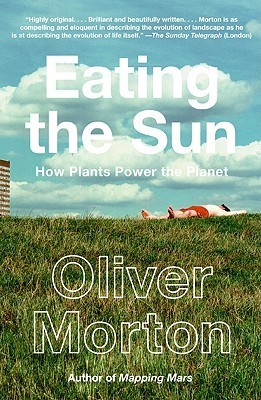
A story of a world in crisis and the importance of plants, the history of the earth, and the feuds and fantasies of warring scientists—this is not your fourth-grade science class's take on photosynthesis. From acclaimed science journalist Oliver Morton comes this fascinating, lively, profound look at photosynthesis, nature's greatest miracle. Wherever there is greenery, photosynthesis isworking to make oxygen, release energy, and create living matter from the raw material of sunlight, water, and carbon dioxide. Without photosynthesis, there would be an empty world, an empty sky, and a sun that does nothing more than warm the rocks and reflect off the sea. With photosynthesis, we have a living world with three billion years of sunlight-fed history to relish. Eating the Sun is a bottom-up account of our planet, a celebration of how the smallest things, enzymes and pigments, influence the largest things—the oceans, the rainforests, and the fossil fuel economy. From the physics, chemistry, and cellular biology that make photosynthesis possible, to the quirky and competitive scientists who first discovered the beautifully honed mechanisms of photosynthesis, to the modern energy crisis we face today, Oliver Morton offers a complete biography of the earth through the lens of this mundane and most important of processes. More than this, Eating the Sun is a call to arms. Only by understanding photosynthesis and the flows of energy it causes can we hope to understand the depth and subtlety of the current crisis in the planet's climate. What's more, nature's greatest energy technology may yet inspire the breakthroughs we need to flourish without such climatic chaos in the century to come. Entertaining, thought-provoking, and deeply illuminating, Eating the Sun reveals that photosynthesis is not only the key to humanity's history; it is also vital to confronting and understanding contemporary realities like climate change and the global food shortage. This book will give you a new and perhaps troubling way of seeing the world, but it also explains how we can change our situation—for the better or the worse.
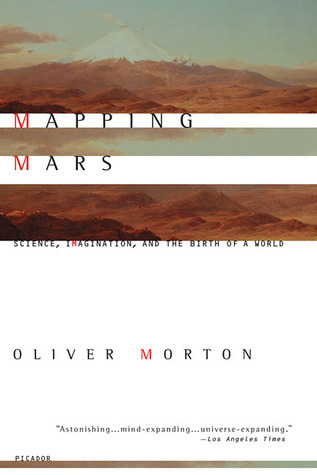
How can you make sense of a world where no one has ever lived? Acclaimed science writer Oliver Morton tells the story of the heroic landscapes of Mars, now better mapped in some ways than the Earth itself. Mapping Mars introduces the reader to the nineteenth-century visionaries and spy-satellite pioneers, the petroleum geologists and science-fiction writers, the artists and Arctic explorers who have devoted themselves to the discovery of Mars. In doing so they have given a new world to the human imagination, a setting for our next great adventure.

Occupying a space between the documentary and the make-believe, Dan Holdsworth's photographs transform Icelandic glaciers into a strange and futuristic landscape. In Blackout the landscape is present only as a brooding, eerie image of the blue of the sky has become the deep black of space, while the earth appears in pale negative. This lunarlike terrain humbles the viewer before a foreign, awe-inspiring nature and repositions the notion of the romantic sublime.

Los secretos de la perfecta barbacoa: Cómo ser el centro de atención en su próxima reunión
by Oliver Morton