Loading themes...
Explore the best books about Architecture theme.
A pioneering urban economist offers fascinating, even inspiring proof that the city is humanity's greatest invention and our best hope for the future.America is an urban nation. More than two thirds of us live on the 3 percent of land that contains our cities. Yet cities get a bad they're dirty, poor, unhealthy, crime ridden, expensive, environmentally unfriendly... Or are they?As Edward Glaeser proves in this myth-shattering book, cities are actually the healthiest, greenest, and richest (in cultural and economic terms) places to live. New Yorkers, for instance, live longer than other Americans; heart disease and cancer rates are lower in Gotham than in the nation as a whole. More than half of America's income is earned in twenty-two metropolitan areas. And city dwellers use, on average, 40 percent less energy than suburbanites.Glaeser travels through history and around the globe to reveal the hidden workings of cities and how they bring out the best in humankind. Even the worst cities-Kinshasa, Kolkata, Lagos- confer surprising benefits on the people who flock to them, including better health and more jobs than the rural areas that surround them. Glaeser visits Bangalore and Silicon Valley, whose strangely similar histories prove how essential education is to urban success and how new technology actually encourages people to gather together physically. He discovers why Detroit is dying while other old industrial cities-Chicago, Boston, New York-thrive. He investigates why a new house costs 350 percent more in Los Angeles than in Houston, even though building costs are only 25 percent higher in L.A. He pinpoints the single factor that most influences urban growth-January temperatures-and explains how certain chilly cities manage to defy that link. He explains how West Coast environmentalists have harmed the environment, and how struggling cities from Youngstown to New Orleans can "shrink to greatness." And he exposes the dangerous anti-urban political bias that is harming both cities and the entire country.Using intrepid reportage, keen analysis, and eloquent argument, Glaeser makes an impassioned case for the city's import and splendor. He reminds us forcefully why we should nurture our cities or suffer consequences that will hurt us all, no matter where we live.

Traces the life and career of the California artist, who currently works with pure light and the subtle modulation of empty space

Mumford explains the forces that have shaped technology since prehistoric times and shaped the modern world. He shows how tools developed because of significant parallel inventions in ritual, language, and social organization. “It is a stimulating volume, informed both with an enormous range of knowledge and empathetic spirit” (Eliot Fremont-Smith, New York Times). Index; photographs.

Packed With Magnificent Material On Southern California's Galaxy of Person Alities, This Book Provides Insights Into Subjects Ranging From The Origins Hollywood To The Flowering of International-Style Architecture. and It Does That By Looking At Personalities As Diverse As Helen Hunt Jackson To Aimee Semple McPherson, Huntington The Finan- Cier To Hatfield The Rainmaker.

J. E. Gordon's classic introduction to the properties of materials used in engineering answers some fascinating and fundamental questions about how the structural world around us works. Gordon focuses on so-called strong materials--such as metals, wood, ceramics, glass, and bone--explaining in engaging and accessible terms the unique physical and chemical basis for their inherent structural qualities. He also shows how an in-depth understanding of these materials’ intrinsic strengths--and weaknesses--guides our engineering choices, allowing us to build the structures that support our society. This work is an enduring example of first-rate scientific communication. Philip Ball's introduction describes Gordon's career and the impact of his innovations in materials research, while also discussing how the field has evolved since Gordon wrote this enduring example of first-rate scientific communication.

The epic of Chicago is the story of the emergence of modern America. Here, witness Chicago's growth from a desolate fur-trading post in the 1830s to one of the world's most explosively alive cities by 1900.Donald Miller's powerful narrative embraces it all: Chicago's wild beginnings, its reckless growth, its natural calamities (especially the Great Fire of 1871), its raucous politics, its empire-building businessmen, its world-transforming architecture, its rich mix of cultures, its community of young writers and journalists, and its staggering engineering projects -- which included the reversal of the Chicago River and raising the entire city from prairie mud to save it from devastating cholera epidemics. The saga of Chicago's unresolved struggle between order and freedom, growth and control, capitalism and community, remains instructive for our time, as we seek ways to build and maintain cities that retain their humanity without losing their energy. City of the Century throbs with the pulse of the great city it brilliantly brings to life.

In a book that Business Insider noted as one of the "14 Books that inspired Elon Musk," J.E. Gordon strips engineering of its confusing technical terms, communicating its founding principles in accessible, witty prose.For anyone who has ever wondered why suspension bridges don't collapse under eight lanes of traffic, how dams hold back--or give way under--thousands of gallons of water, or what principles guide the design of a skyscraper, a bias-cut dress, or a kangaroo, this book will ease your anxiety and answer your questions. Or Why Things Don't Fall Down is an informal explanation of the basic forces that hold together the ordinary and essential things of this world--from buildings and bodies to flying aircraft and eggshells. In a style that combines wit, a masterful command of his subject, and an encyclopedic range of reference, Gordon includes such chapters as "How to Design a Worm" and "The Advantage of Being a Beam," offering humorous insights in human and natural creation.Architects and engineers will appreciate the clear and cogent explanations of the concepts of stress, shear, torsion, fracture, and compression. If you're building a house, a sailboat, or a catapult, here is a handy tool for understanding the mechanics of joinery, floors, ceilings, hulls, masts--or flying buttresses.Without jargon or oversimplification, Structures opens up the marvels of technology to anyone interested in the foundations of our everyday lives.

A personal view of how Western Europe evolved after the collapse of the Roman Empire and produced the ideas, books, buildings, works of art and great individuals that make up a Civilisation.

"Graced with a bold political and environmental vision, much splendid phrasemaking and a multitude of facts. . . . A truly eccentric contribution."--The New York Times Book Review Earthquakes. Wildfires. Floods. Drought. Tornadoes. Snakes in the sea, mountain lions, and a plague of bees. In this controversial tour de force of scholarship, unsparing vision, and inspired writing, Mike Davis, the author of City of Quartz, revisits Los Angeles as a Book of the Apocalypse theme park. By brilliantly juxtaposing L.A.'s fragile natural ecology with its disastrous environmental and social history, he compellingly shows a city deliberately put in harm's way by land developers, builders, and politicians, even as the incalculable toll of inevitable future catas-trophe continues to accumulate.Counterpointing L.A.'s central role in America's fantasy life--the city has been destroyed no less than 138 times in novels and films since 1909--with its wanton denial of its own real history, Davis creates a revelatory kaleidoscope of American fact, imagery, and sensibility. Drawing upon a vast array of sources, Ecology of Fear meticulously captures the nation's violent malaise and desperate social unease at the millennial end of "the American century." With savagely entertaining wit and compassionate rage, this book conducts a devastating reconnaissance of our all-too-likely urban future."Dizzying. . . . In Mr. Davis's account, the world ends in fire, and the next time is now."--The New York Times

What are the links between environment and world view? Topophilia, the affective bond between people and place, is the primary theme of this book that examines environmental perceptions and values at different levels: the species, the group, and the individual.Yi-Fu Tuan holds culture and environment and topophilia and environment as distinct in order to show how they mutually contribute to the formation of values. Topophilia examines the search for environment in the city, suburb, countryside, and wilderness from a dialectical perspective, distinguishes different types of environmental experience, and describes their character.

In this superbly illustrated volume, Athens and Rome, the two greatest cities of antiquity, spring to life under the masterful pen of Peter Connolly. All the historical and archaelogical evidence has been seamlessly pieced together to reconstruct the architectural wonders of these mightycivilizations. Re creating public buildings, religious temples, shops, and houses, Connolly reveals every aspect of life in glorious detail, from religion and food to drama, games, and the baths. In addition to the great monuments and moments of classical Greece and Rome, readers learn about atypical day in the life of an Athenian and a Roman. They read about and see the houses people inhabited; attend 5 day festivals and go to the theater; fight great battles and witness the birth of Rome's navy; visit temples and spend a day at the chariot races. The spectacular artwork and vividdescriptions provide a window into the fascinating history of these two extraordinary cities and civilizations. The Ancient City is the crowning achievement of Peter Connolly's distinguished career.

"For the first time, man has the chance to be a complete success in his environment." This startling thesis is supported in I Seem to Be a Verb, by the out-of-the-ordinary R. Buckminster Comprehensive designer, inventor, engineer, mathematician, architect, cartographer, philosopher, poet, cosmogonist, choreographer, visionary -- celebrated for developing geodesic houses that fly and for dysmaxion ways of living. Jerome Conceived and produced The Medium is the Massage, produced War and Peace in the Global Village, wrote The Making of Kubricks 2001, is writing with Arthur C. Clarke Arthur C. Clarke Meets Hieronymus Bosch, conceived and wrote the CBS lp record based on The Medium is the Massage. Quentin Graphics designer and author, co-author with Marshall McLuhan of The Medium is the Massage and War and Peace in the Global Village, media and telecommunications consultant, Director of By Other Means Foundation. This book is revolutionary in both its content and its design, it has to be seen and used, no description can do it justice.

The classic work that introduced the concept of the Garden City. Originally published in 1898 as A Peaceful Path to Real Reform and reissued in 1902 under its present title, Garden Cities of To-Morrow holds a unique place in town planning literature. The book led directly to two experiments in town-founding that have had a profound influence on practical urban development around the world. The book was also responsible for the introduction of the term Garden City, and set into motion ideas that helped transform town planning.

This best-selling book is a beautifully illustrated history of the English country house from the Middle Ages to the twentieth century. In it, renowned architectural historian Mark Girouard presents a rare and revealing glimpse of the English upper classes—their public and personal lives, their servants, and their homes."A deeply important book, one of the most interesting contributions to architectural history."—J. H. Plumb, The New York Review of Books"A survey of country houses through the past five centuries, from a broad range of materials: family archives, literature, plans and photographs.... The book itself is a physical artifact of surpassing beauty which could fit on the grandest table in the houses it describes."—David Hackett Fischer, The New Republic"Informative, balanced, knowledgeable, and witty."—The New Yorker"This enthralling and immensely informative book...tells with wit, scholarship, and lucidity how the country house evolved to meet the needs and reflect the social attitudes of the times."—Philip Ziegler, The Times"One of those very useful and very enjoyable books that the learned can seldom write, and the entertaining seldom achieve—clear, detailed, and witty."—Angus Wilson, The ObserverWinner of the 1978 Duff Cooper Memorial Prize and the W. H. Smith & Son Annual Literary Award for 1979.

In Baghdad, an enormous monument nearly twice the size of the Arc de Triomphe towers over the city. Two huge forearms emerge from the ground, clutching two swords that clash overhead. Those arms are enlarged casts of those of Saddam Hussein, showing every bump and follicle. The "Victory Arch" celebrates a victory over Iran (in their eight-year-long war) that never happened. This text is a study of the interplay between art and politics - of how culture, normally an unquestioned good, can play into the hands of a power with devastating effects. Kanan Makiya uses the culture invented by Saddam Hussein as a window into the nature of totalitarianism and shows how art can become the weapon of dictatorship. Under Saddam Hussein, culture connived in his evil - this text explains how. It should be useful reading for anyone concerned with the power of culture and the culture of power.

"Reduce, reuse, recycle," urge environmentalists; in other words, do more with less in order to minimize damage. But as architect William McDonough and chemist Michael Braungart point out in this provocative, visionary book, such an approach only perpetuates the one-way, "cradle to grave" manufacturing model, dating to the Industrial Revolution, that creates such fantastic amounts of waste and pollution in the first place. Why not challenge the belief that human industry must damage the natural world? In fact, why not take nature itself as our model for making things? A tree produces thousands of blossoms in order to create another tree, yet we consider its abundance not wasteful but safe, beautiful, and highly effective.Waste equals food. Guided by this principle, McDonough and Braungart explain how products can be designed from the outset so that, after their useful lives, they will provide nourishment for something new. They can be conceived as "biological nutrients" that will easily reenter the water or soil without depositing synthetic materials and toxins. Or they can be "technical nutrients" that will continually circulate as pure and valuable materials within closed-loop industrial cycles, rather than being "recycled" -- really, downcycled -- into low-grade materials and uses. Drawing on their experience in (re)designing everything from carpeting to corporate campuses, McDonough and Braungart make an exciting and viable case for putting eco-effectiveness into practice, and show how anyone involved with making anything can begin to do as well.

An essay on aesthetics by the Japanese novelist, this book explores architecture, jade, food, and even toilets, combining an acute sense of the use of space in buildings. The book also includes descriptions of laquerware under candlelight, and women in the darkness of the house of pleasure.

The revolutionary literary vision that sowed the seeds of Objectivism, Ayn Rand's groundbreaking philosophy, and brought her immediate worldwide acclaim.This modern classic is the story of intransigent young architect Howard Roark, whose integrity was as unyielding as granite...of Dominique Francon, the exquisitely beautiful woman who loved Roark passionately, but married his worst enemy...and of the fanatic denunciation unleashed by an enraged society against a great creator. As fresh today as it was then, Rand’s provocative novel presents one of the most challenging ideas in all of fiction—that man’s ego is the fountainhead of human progress...“A writer of great power. She has a subtle and ingenious mind and the capacity of writing brilliantly, beautifully, bitterly...This is the only novel of ideas written by an American woman that I can recall.”—The New York Times

“Houses aren’t refuges from history. They are where history ends up.”Bill Bryson and his family live in a Victorian parsonage in a part of England where nothing of any great significance has happened since the Romans decamped. Yet one day, he began to consider how very little he knew about the ordinary things of life as he found it in that comfortable home. To remedy this, he formed the idea of journeying about his house from room to room to “write a history of the world without leaving home.” The bathroom provides the occasion for a history of hygiene; the bedroom, sex, death, and sleep; the kitchen, nutrition and the spice trade; and so on, as Bryson shows how each has figured in the evolution of private life. Whatever happens in the world, he demonstrates, ends up in our house, in the paint and the pipes and the pillows and every item of furniture.(front flap)

Charles Montgomery’s Happy City will revolutionize the way we think about urban life.After decades of unchecked sprawl, more people than ever are moving back to the city. Dense urban living has been prescribed as a panacea for the environmental and resource crises of our time. But is it better or worse for our happiness? Are subways, sidewalks and condo towers an improvement on the car-dependence of sprawl?The award-winning journalist Charles Montgomery finds answers to such questions at the intersection between urban design and the emerging science of happiness, during an exhilarating journey through some of the world’s most dynamic cities. He meets the visionary mayor who introduced a “sexy” bus to ease status anxiety in Bogotá; the architect who brought the lessons of medieval Tuscan hill towns to modern-day New York City; the activist who turned Paris’s urban freeways into beaches; and an army of American suburbanites who have hacked the design of their own streets and neighborhoods.Rich with new insights from psychology, neuroscience and Montgomery’s own urban experiments, Happy City reveals how our cities can shape our thoughts as well as our behavior. The message is as surprising as it is hopeful: by retrofitting cities and our own lives for happiness, we can tackle the urgent challenges of our age. The happy city can save the world--and all of us can help build it.

Jeff Speck has dedicated his career to determining what makes cities thrive. And he has boiled it down to one key factor: walkability. The very idea of a modern metropolis evokes visions of bustling sidewalks, vital mass transit, and a vibrant, pedestrian-friendly urban core. But in the typical American city, the car is still king, and downtown is a place that's easy to drive to but often not worth arriving at. Making walkability happen is relatively easy and cheap; seeing exactly what needs to be done is the trick. In this essential new book, Speck reveals the invisible workings of the city, how simple decisions have cascading effects, and how we can all make the right choices for our communities. Bursting with sharp observations and real-world examples, giving key insight into what urban planners actually do and how places can and do change, Walkable City lays out a practical, necessary, and eminently achievable vision of how to make our normal American cities great again.

After years of sporadic work on other books and projects and following the almost complete loss of his virility, it's here: a new graphic novel by Chris Ware. Building Stories imagines the inhabitants of a three-story Chicago apartment building: a 30-something woman who has yet to find someone with whom to spend the rest of her life; a couple, possibly married, who wonder if they can bear each other's company another minute; and the building's landlady, an elderly woman who has lived alone for decades. Taking advantage of the absolute latest advances in wood pulp technology, Building Stories is a book with no deliberate beginning nor end, the scope, ambition, artistry and emotional prevarication beyond anything yet seen from this artist or in this medium, probably for good reason.

How to Draw is for artists, architects and designers. It is useful to the novice, the student and the professional. You will learn how to draw any object or environment from your imagination, starting with the most basic perspective drawing skills.Early chapters explain how to draw accurate perspective grids and ellipses that in later chapters provide the foundation for more complex forms. The research and design processes used to generate visual concepts are demonstrated, making it much easier for you to draw things never-before-seen!Best of all, more than 25 pages can be scanned via a smartphone or tablet using the new Design Studio Press app, which link to video tutorials for that section of the book!With a combined 26 years of teaching experience, Scott Robertson and Thomas Bertling bring you the lessons and techniques they have used to help thousands of their students become professional artists and designers.This book is indispensable for anyone who wants to learn, or teaches others, how to draw.

An argument that operational urban planning can be improved by the application of the tools of urban economics to the design of regulations and infrastructure. Urban planning is a craft learned through practice. Planners make rapid decisions that have an immediate impact on the ground—the width of streets, the minimum size of land parcels, the heights of buildings. The language they use to describe their objectives is qualitative—“sustainable,” “livable,” “resilient”—often with no link to measurable outcomes. Urban economics, on the other hand, is a quantitative science, based on theories, models, and empirical evidence largely developed in academic settings. In this book, the eminent urban planner Alain Bertaud argues that applying the theories of urban economics to the practice of urban planning would greatly improve both the productivity of cities and the welfare of urban citizens. Bertaud explains that markets provide the indispensable mechanism for cities' development. He cites the experience of cities without markets for land or labor in pre-reform China and Russia; this “urban planners' dream” created inefficiencies and waste. Drawing on five decades of urban planning experience in forty cities around the world, Bertaud links cities' productivity to the size of their labor markets; argues that the design of infrastructure and markets can complement each other; examines the spatial distribution of land prices and densities; stresses the importance of mobility and affordability; and critiques the land use regulations in a number of cities that aim at redesigning existing cities instead of just trying to alleviate clear negative externalities. Bertaud concludes by describing the new role that joint teams of urban planners and economists could play to improve the way cities are managed.

Seventeen homes demonstrate how Axel Vervoordt incorporates nature, art, and timeless interiors to create living spaces that encourage self-reflection, inspiration, and happiness.For a half century, Axel Vervoordt's vision has been defined by a continual quest for harmony, beauty, and the creation of interior atmospheres that are rooted in the past, connected to the future, and imbued with today's comforts. These eighteen residences--from an urban New York penthouse or Moscow apartment to a waterfront estate in New England, and from a Tokyo dwelling to a Bordeaux wine château or a Wabi-Sabi farmhouse--reveal how art complements architecture and the elements of nature in an alchemy of Vervoordt expression. Portraits of each residence--including the Vervoordts' own homes in Venice and Belgium--feature sweeping vistas of the surrounding landscape and a tour through the interiors. Each detail--from the materials used to the graceful placement of a well-chosen object--offers deep insight into the Vervoordt design approach and abiding principles for living and working well.

"This book should be essential reading for all who commission, design, manage, and use buildings--indeed anyone who is interested in a healthy environment."--Norman FosterAs businesses around the world consider when and how to reopen their doors to fight COVID-19, the Director of Harvard's Healthy Buildings Program and Harvard Business School's leading expert on urban resilience reveal what you can do to harness the power of your offices and homes to protect your health--and boost every aspect of your performance and well-being.Ever feel tired during a meeting? That's because most conference rooms are not bringing in enough fresh air. When that door opens, it literally breathes life back into the room. But there is a lot more acting on your body that you can't feel or see. From our offices and homes to schools, hospitals, and restaurants, the indoor spaces where we work, learn, play, eat, and heal have an outsized impact on our performance and well-being. They affect our creativity, focus, and problem-solving ability and can make us sick--jeopardizing our future and dragging down profits in the process.Charismatic pioneers of the healthy building movement who have paired up to combine the cutting-edge science of Harvard's School of Public Health with the financial know-how of the Harvard Business School, Joseph Allen and John Macomber make a compelling case in this urgently needed book for why every business and home owner should make certain relatively low-cost investments a top priority. Grounded in exposure and risk science and relevant to anyone newly concerned about how their surroundings impact their health, Healthy Buildings can help you evaluate the impact of small, easily controllable environmental fluctuations on your immediate well-being and long-term reproductive and lung health. It shows how our indoor environment can have a dramatic impact on a whole host of higher order cognitive functions--including things like concentration, strategic thinking, troubleshooting, and decision-making. Study after study has found that your performance will dramatically improve if you are working in optimal conditions (with high rates of ventilation, few damaging persistent chemicals, and optimal humidity, lighting and noise control). So what would it take to turn that knowledge into action?Cutting through the jargon to explain complex processes in simple and compelling language, Allen and Macomber show how buildings can both expose you to and protect you from disease. They reveal the 9 Foundations of a Healthy Building, share insider tips, and show how tracking what they call "health performance indicators" with smart technology can boost a company's performance and create economic value. With decades of practice in protecting worker health, they offer a clear way forward right now, and show us what comes next in a post-COVID world. While the "green" building movement introduced important new efficiencies, it's time to look beyond the four walls--placing the decisions we make around buildings into the larger conversation around development and health, and prioritizing the most important and vulnerable asset of any building: its people.

A beautifully designed guidebook to the unnoticed yet essential elements of our cities, from the creators of the wildly popular 99% Invisible podcastHave you ever wondered what those bright, squiggly graffiti marks on the sidewalk mean?Or stopped to consider why you don't see metal fire escapes on new buildings?Or pondered the story behind those dancing inflatable figures in car dealerships?99% Invisible is a big-ideas podcast about small-seeming things, revealing stories baked into the buildings we inhabit, the streets we drive, and the sidewalks we traverse. The show celebrates design and architecture in all of its functional glory and accidental absurdity, with intriguing tales of both designers and the people impacted by their designs.Now, in The 99% Invisible City: A Field Guide to Hidden World of Everyday Design, host Roman Mars and coauthor Kurt Kohlstedt zoom in on the various elements that make our cities work, exploring the origins and other fascinating stories behind everything from power grids and fire escapes to drinking fountains and street signs. With deeply researched entries and beautiful line drawings throughout, The 99% Invisible City will captivate devoted fans of the show and anyone curious about design, urban environments, and the unsung marvels of the world around them.

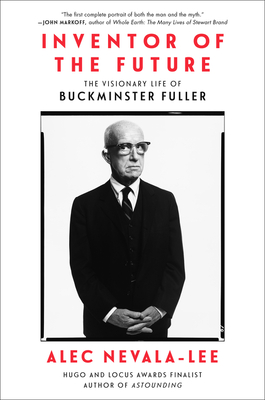
From Alec Nevala-Lee, the author of the Hugo and Locus Award finalist Astounding, comes a revelatory biography of the visionary designer who defined the rules of startup culture and shaped America's idea of the future. During his lifetime, Buckminster Fuller was hailed as one of the greatest geniuses of the twentieth century. As the architectural designer and futurist best known for the geodesic dome, he enthralled a vast popular audience, inspired devotion from both the counterculture and the establishment, and was praised as a modern Leonardo da Vinci. To his admirers, he exemplified what one man could accomplish by approaching urgent design problems using a radically unconventional set of strategies, which he based on a mystical conception of the universe's geometry. His views on sustainability, as embodied in the image of Spaceship Earth, convinced him that it was possible to provide for all humanity through the efficient use of planetary resources. From Epcot Center to the molecule named in his honor as the buckyball, Fuller's legacy endures to this day, and his belief in the transformative potential of technology profoundly influenced the founders of Silicon Valley.Inventor of the Future is the first authoritative biography to cover all aspects of Fuller's career. Drawing on meticulous research, dozens of interviews, and thousands of unpublished documents, Nevala-Lee has produced a riveting portrait that transcends the myth of Fuller as an otherworldly generalist. It reconstructs the true origins of his most famous inventions, including the Dymaxion Car, the Wichita House, and the dome itself; his fraught relationships with his students and collaborators; his interactions with Frank Lloyd Wright, Isamu Noguchi, Clare Boothe Luce, John Cage, Steve Jobs, and many others; and his tumultuous private life, in which his determination to succeed on his own terms came at an immense personal cost. In an era of accelerating change, Fuller's example remains enormously relevant, and his lessons for designers, activists, and innovators are as powerful and essential as ever.