
J.E. Gordon
James Edward Gordon (UK, 1913–1998) was one of the founders of materials science and biomechanics, and a well-known author of three books on structures and materials, which have been translated in many languages and are still widely used in schools and universities. (wikipedia)
13 Books Written

The New Science of Strong Materials: Or Why You Don't Fall through the Floor
by J.E. Gordon
Rating: 4.4 ⭐
• 2 recommendations ❤️
J. E. Gordon's classic introduction to the properties of materials used in engineering answers some fascinating and fundamental questions about how the structural world around us works. Gordon focuses on so-called strong materials--such as metals, wood, ceramics, glass, and bone--explaining in engaging and accessible terms the unique physical and chemical basis for their inherent structural qualities. He also shows how an in-depth understanding of these materials’ intrinsic strengths--and weaknesses--guides our engineering choices, allowing us to build the structures that support our society. This work is an enduring example of first-rate scientific communication. Philip Ball's introduction describes Gordon's career and the impact of his innovations in materials research, while also discussing how the field has evolved since Gordon wrote this enduring example of first-rate scientific communication.
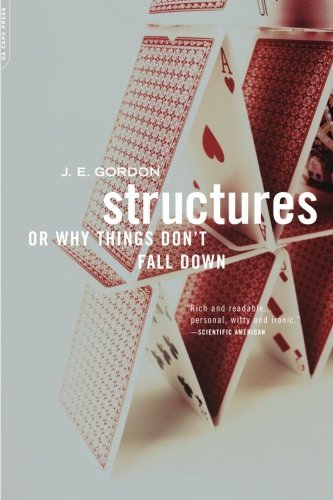
In a book that Business Insider noted as one of the "14 Books that inspired Elon Musk," J.E. Gordon strips engineering of its confusing technical terms, communicating its founding principles in accessible, witty prose.For anyone who has ever wondered why suspension bridges don't collapse under eight lanes of traffic, how dams hold back--or give way under--thousands of gallons of water, or what principles guide the design of a skyscraper, a bias-cut dress, or a kangaroo, this book will ease your anxiety and answer your questions. Or Why Things Don't Fall Down is an informal explanation of the basic forces that hold together the ordinary and essential things of this world--from buildings and bodies to flying aircraft and eggshells. In a style that combines wit, a masterful command of his subject, and an encyclopedic range of reference, Gordon includes such chapters as "How to Design a Worm" and "The Advantage of Being a Beam," offering humorous insights in human and natural creation.Architects and engineers will appreciate the clear and cogent explanations of the concepts of stress, shear, torsion, fracture, and compression. If you're building a house, a sailboat, or a catapult, here is a handy tool for understanding the mechanics of joinery, floors, ceilings, hulls, masts--or flying buttresses.Without jargon or oversimplification, Structures opens up the marvels of technology to anyone interested in the foundations of our everyday lives.
Covers form, tensile strength, tensile failure, metals, animal soft tissues, stiff biological materials, and new artificial materials.

The New Science of Strong Materials: Or Why You Don't Fall Through the Floor
by J.E. Gordon
Rating: 3.5 ⭐
Why isn't wood weaker that it is? Why isn't steel stronger? Why does glass sometimes shatter and sometimes bend like spring? Why do ships break in half? What is a liquid and is treacle one? All these are questions about the nature of materials. All of them are vital to engineers but also fascinating as scientific problems. During the 250 years up to the 1920s and 1930s they had been answered largely by seeing how materials behaved in practice. But materials continued to do things that they "ought" not to have done. Only in the last 40 years have these questions begun to be answered by a new approach. Material scientists have started to look more deeply into the make-up of materials. They have found many surprises; above all, perhaps, that how a material behaves depends on how perfectly - or imperfectly - its atoms are arranged. Using both SI and imperial units, Professor Gordon's account of material science is a demonstration of the sometimes curious and entertaining ways in which scientists isolate and solve problems.


Libros de bolsillo directos y sencillos para superar dificultadas psicológicas o profesionales de cada día. Un tesoro de sentido común y lucidez.

Personality and Behaviour
by J.E. Gordon
The New Science of Strong Materials
by J.E. Gordon
Hardback, ex-library, with usual stamps and markings, in fair all round condition.
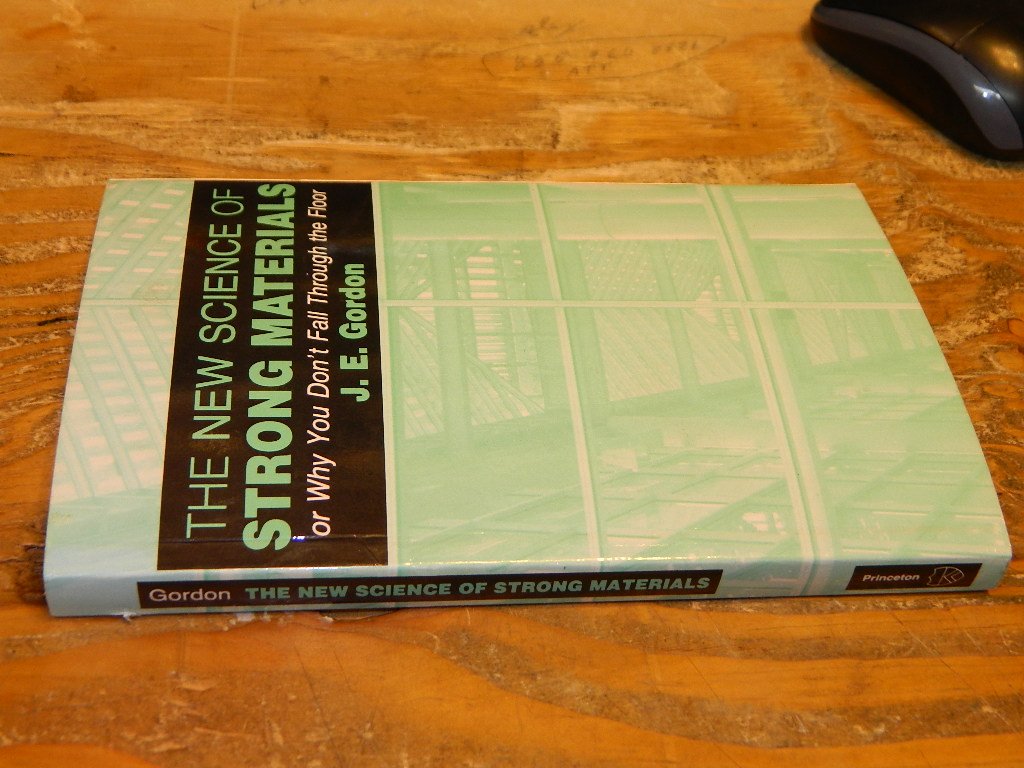
The New Science of Strong Materials or Why You Don't Fall Through the Floor Second edition
by J.E. Gordon
Book is in good condition. Book shows moderate cover and page wear from being handled. Contains minor notation and highlights in book. Could be an ex-library copy with stickers or marking. Eligible for FREE Super Saver Shipping! Fast Amazon shipping plus a hassle-free return policy means your satisfaction is guaranteed! Tracking number provided in your Amazon account with every order.

The New Science Of Strong Materials
by J.E. Gordon
![Assessing landscapes: a case study of tree and shrub diversity in the seasonally dry tropical forests of Oaxaca, Mexico and southern Honduras [An article from: Biological Conservation]](https://m.media-amazon.com/images/S/compressed.photo.goodreads.com/books/1705170834i/205332624.jpg)