Loading genres...
Explore the best books about Spanish Literature genre.

A comically expressive tot pays tribute to the all-important Blankie in a bright, playful board book sure to have instant toddler appeal.Anyone who's spent time with a toddler knows that few crises compare with the (even temporary) loss of a favorite blankie. Here, in her humorous, bold graphic style, Leslie Patricelli plays up this scenario, surely near and dear to every toddler's heart. Blankie is an affectionate ode to that special object that comforts many a child through the dramas of each day.
Art, Surrealism, autobiography all of Dali by Dali. Salvador Dali in his own words. With many, many numerous photographs and illustrations throughout. A beautifully designed book.

Since its U.S. debut almost fifty years ago, this brilliant text has set a new standard for historical scholarship of Latin America. It is also an outstanding political economy, a social and cultural narrative of the highest quality, and perhaps the finest description of primitive capital accumulation since Marx.Rather than chronology, geography, or political successions, Eduardo Galeano has organized the various facets of Latin American history according to the patterns of five centuries of exploitation. Thus he is concerned with gold and silver, cacao and cotton, rubber and coffee, fruit, hides and wool, petroleum, iron, nickel, manganese, copper, aluminum ore, nitrates, and tin. These are the veins which he traces through the body of the entire continent, up to the Rio Grande and throughout the Caribbean, and all the way to their open ends where they empty into the coffers of wealth in the United States and Europe.Weaving fact and imagery into a rich tapestry, Galeano fuses scientific analysis with the passions of a plundered and suffering people. An immense gathering of materials is framed with a vigorous style that never falters in its command of themes. All readers interested in great historical, economic, political, and social writing will find a singular analytical achievement, and an overwhelming narrative that makes history speak, unforgettably.This classic is now further honored by Isabel Allende’s inspiring introduction. Universally recognized as one of the most important writers of our time, Allende once again contributes her talents to literature, to political principles, and to enlightenment.

Here is a handsome edition of one of Borges' "ficciones," in a translation first published in Labyrinths in 1962. It's an important story in the Borges' canon, incorporating most of the author's philosophical and esthetic preoccupations in a typically brief compass. With great solemnity and a convincing array of scholarly detail (including annotated references to imaginary books and articles), Borges concocts a fable of an alternate world and its infiltration of our own. The reality of Tlön is idealist: material objects have no existence; language has no nouns; its principal discipline is psychology, since its inhabitants see the universe as nothing but a series of mental processes. A series of 24 illustrations accompanies the text. Their disturbing resemblances to our reality make them appropriate reflections of Borges's imaginative constructs.' —The Kingston Whig-Standard

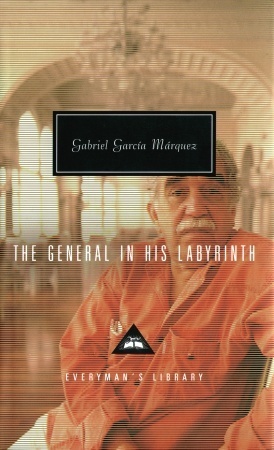
(Book Jacket Status: Jacketed)Gabriel García Márquez's most political novel is the tragic story of General Simón Bolívar, the man who tried to unite a continent.Bolívar, known in six Latin American countries as the Liberator, is one of the most revered heroes of the western hemisphere; in García Márquez's brilliant reimagining he is magnificently flawed as well. The novel follows Bolívar as he takes his final journey in 1830 down the Magdalena River toward the sea, revisiting the scenes of his former glory and lamenting his lost dream of an alliance of American nations. Forced from power, dogged by assassins, and prematurely aged and wasted by a fatal illness, the General is still a remarkably vital and mercurial man. He seems to remain alive by the sheer force of will that led him to so many victories in the battlefields and love affairs of his past. As he wanders in the labyrinth of his failing powers-and still-powerful memories-he defies his impending death until the last.The General in His Labyrinth is an unforgettable portrait of a visionary from one of the greatest writers of our time.

A new book of poetry translation that enhances the ordinaryAntonio Machado, a school teacher and philosopher and one of Spain's foremost poets of the twentieth century, writes of the mountains, the skies, the farms and the sentiments of his homeland clearly and without "Just as before, I'm interested/in water held in;/ but now water in the living/rock of my chest." "Machado has vowed not to soar too much; he wants to 'go down to the hells' or stick to the ordinary," Robert Bly writes in his introduction. He brings to the ordinary―to time, to landscape and stony earth, to bean fields and cities, to events and dreams―magical sound that conveys order, penetrating sight and attention. "The poems written while we are awake…are more original and more beautiful, and sometimes more wild than those made from dreams," Machado said.In the newspapers before and during the Spanish Civil War, he wrote of political and moral issues, and, in 1939, fled from Franco's army into the Pyrenees, dying in exile a month later. When in 1966 a bronze bust of Machado was to be unveiled in a town here he had taught school, thousands of people came in pilgrimage only to find the Civil Guard with clubs and submachine guns blocking their way.This selection of Machado's poetry, beautifully translated by Bly, begins with the Spanish master's first book, Times Alone, Passageways in the House, and Other Poems (1903), and follows his work to the poems published after his Poems from the Civil War (written during 1936 – 1939).

A cat. A seagull. An impossible task.A worldwide bestseller and the subject of a feature film, THE STORY OF A SEAGULL... is finally out in paperback!Her wings burdened by an oil slick, a seagull struggles to the nearest port to lay her final egg. Exhausted, she lands on a balcony where Zorba the cat is sunning himself. She extracts three extraordinary promises from that he will watch over the egg, that he will not EAT the egg, and that, when it's time, he will teach the baby gull to fly. The first two promises are hard enough, but the third one is surely impossible. Isn't it?

In a remote river town deep in the Ecuadoran jungle, Antonio José Bolívar seeks refuge in amorous novels. But tourists and opportunists are making inroads into the area, and the balance of nature is making a dangerous shift. Translated by Peter Bush.

Un adolescente, enardecido por la lectura de Moby Dick, aprovecha las vacaciones de verano para embarcarse, en los confines australes de América, allí donde se termina el mundo, en un ballenero que por primera vez le llevará por esos mares donde todavía navegan legendarios héroes de verdad y de mentira. Muchos años después, el joven chileno, ya convertido en adulto y residente en el otro extremo del planeta, periodista y miembro activo del movimiento Greenpeace, vuelve inesperadamente a los lejanos parajes de su escapada juvenil por una razón muy distinta, pero tal vez igualmente romántica: barcos piratas están depredando la fauna marítima ue habita las gélidas e impolutas aguas del mundo del fin del mundo. Hay que seguir las huellas sanguinarias del feroz capitán Tanifuji, encontrar pruebas, denunciarlo, impedir la barbarie y salvar a Sarita, atrapada en una enmarañada red de oscuros intereses internacionales.

Querríamos tener una armadura que nos proteja del dolor. Pero uno levanta una pared para protegerse de lo que viene de afuera y al final descubre que se ha quedado encerrado. Kamchatka es la última palabra que Harry escucha de labios de su padre. Aquel territorio fantástico e inaccesible, será el refugio donde ese chico de diez años se ocultará para curar sus heridas, para resistir. Para Harry, Kamchatka será su Avalón. De la mano de un niño obligado a contemplar el lado oscuro de la realidad, Marcelo Figueras nos lleva a recorrer el capítulo más aciago de nuestro pasado reciente. Este relato, poblado de personajes tiernos, cercanos y llenos de humor, es también una la de asomarse sobre el horizonte y descubrir que ninguna historia desaparece, simplemente cambia el género.

A sequel to Daughter of Fortune, New York Times bestselling author, Isabel Allende, continues her magic with this spellbinding family saga set against war and economic hardship.Aurora del Valle suffers a brutal trauma that erases from her mind all recollection of the first five years of her life. Raised by her ambitious grandmother, the regal and commanding Paulina del Valle, she grows up in a privileged environment, free of the limitations that circumscribe the lives of women at that time, but tormented by horrible nightmares. When she is forced to recognize her betrayal at the hands of the man she loves, and to cope with the resulting solitude, she decides to explore the mystery of her past.Portrait in Sepia is an extraordinary achievement: richly detailed, epic in scope, intimate in its probing of human character, and thrilling in the way it illuminates the complexity of family ties.

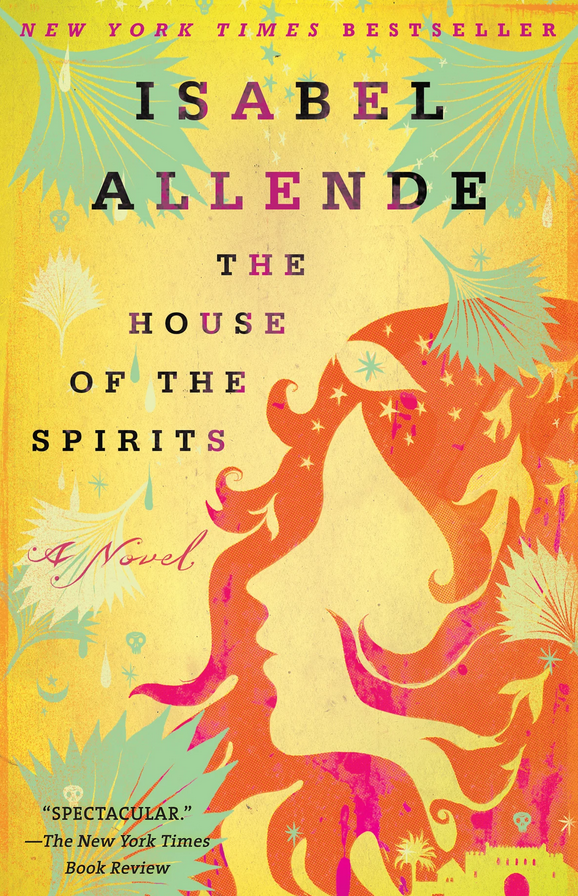
In one of the most important and beloved Latin American works of the twentieth century, Isabel Allende weaves a luminous tapestry of three generations of the Trueba family, revealing both triumphs and tragedies. Here is patriarch Esteban, whose wild desires and political machinations are tempered only by his love for his ethereal wife, Clara, a woman touched by an otherworldly hand. Their daughter, Blanca, whose forbidden love for a man Esteban has deemed unworthy infuriates her father, yet will produce his greatest joy: his granddaughter Alba, a beautiful, ambitious girl who will lead the family and their country into a revolutionary future.The House of the Spirits is an enthralling saga that spans decades and lives, twining the personal and the political into an epic novel of love, magic, and fate.

Throughout his career, Eduardo Galeano has turned our understanding of history and reality on its head. Isabelle Allende said his works “invade the reader’s mind, to persuade him or her to surrender to the charm of his writing and power of his idealism.”Mirrors, Galeano’s most ambitious project since Memory of Fire, is an unofficial history of the world seen through history’s unseen, unheard, and forgotten. As Galeano notes: “Official history has it that Vasco Núñez de Balboa was the first man to see, from a summit in Panama, the two oceans at once. Were the people who lived there blind??”Recalling the lives of artists, writers, gods, and visionaries, from the Garden of Eden to twenty-first-century New York, of the black slaves who built the White House and the women erased by men’s fears, and told in hundreds of kaleidoscopic vignettes, Mirrors is a magic mosaic of our humanity.

Si la botiga d'antiguitats de la família és tot un univers per al petit Adrià, el despatx del seu pare és el centre d'aquest univers, i el tresor més preuat de tots és un magnífic violí del segle XVIII al voltant del qual giren moltes històries d'aquesta novel·la de novel·les. Jo confesso és una llarga carta d'amor d'algú que ha hagut de jugar sol durant molts anys, entre llibres vells i secrets inconfessats; d'algú que ha estimat de manera incondicional; d'algú que se sent culpable d'una mort violenta, i d'algú que no entén el mal que recorre la història d'Occident.

A Colombian philosophy student is arrested in Bangkok and accused of drug trafficking. Unless he enters a guilty plea he will almost certainly be sentenced to death. But it is not his own death that weighs most heavily on him but a tender longing for his sister, Juana, whom he hasn't seen for years. Before he dies he wants nothing more than to be reunited with her.As a boy, Manuel was a dreamer, a lover of literature, and a tagger. Juana made a promise to do everything in her power to protect him from the drug-and violence-infested streets of Bogotá. She decided to take him as far from Colombia as possible, and in order to raise the money to do so, she went to work as a high priced escort and entered into contact with the dangerous world of corrupt politicians. When things spun out of control she was forced to flee, leaving her beloved brother behind. Juana and Manuel's story reaches the ears of the Colombian counsel general in New Delhi, and he tracks down Juana, now married to a rich Japanese man, in Tokyo. The counsel general takes it upon himself to reunite the two siblings. A feat that may be beyond his power. Fans of both Roberto Bolaño and Gabriel García Márquez will find much to admire in this story about the mean streets of Bogotá, the sordid bordellos of Thailand, and a love between siblings that knows no end. With the stylishness that has earned him a reputation as one of "the most important Colombian writers" (Manuel Vázquez Montalbán), Santiago Gamboa lends his story a driving, irresistible rhythm.

«Éste es un libro sobre la vida... apasionado y alegre, sentimental y burlón.» ROSA MONTERO. Una narración a medio camino entre el recuerdo personal y la memoria de todos, entre el análisis de nuestra época y la evocación íntima. Son páginas que hablan de la superación del dolor, de las relaciones entre hombres y mujeres, del esplendor del sexo, de la buena muerte y de la bella vida, de la ciencia y de la ignorancia, de la fuerza salvadora de la literatura y de la sabiduría de quienes aprenden a disfrutar de la existencia con plenitud y con ligereza. Vivo y original, este libro inclasificable incluye fotos, remembranzas, amistades y anécdotas que transmiten el primitivo placer de escuchar buenas historias. Sentirás que ha sido escrito sólo para ti.

“Como en los sueños, en Montevideo las cosas me resultaban parecidas pero diferentes. Eran pero no eran.”Lucas Pereyra viaja a Uruguay en barco por el día a buscar dólares. Son tiempos de restricciones cambiarias. Tiene ya arreglado un encuentro secreto en Montevideo, pero sus planes pueden fallar.Encandilado por el recuerdo de un verano anterior y agobiado por un matrimonio que se resquebraja, sueña con escaparse y no volver. ¿Con quién se va a encontrar? Montevideo, esa ciudad idealizada por la distancia, se volverá impredecible.La uruguaya es una novela inquietante y ferozmente entretenida. Con pulso magistral, Pedro Mairal sostiene la intriga en cada una de sus páginas y demuestra, de modo irrefutable, que es uno de los grandes de la literatura argentina contemporánea.

At once intimate and wide-ranging, and as enthralling, surprising, and vivid as the place itself, this is a uniquely eye-opening tour of one of the great metropolises of the world, and its largest Spanish-speaking city. Horizontal Vertigo: The title refers to the fear of ever-impending earthquakes that led Mexicans to build their capital city outward rather than upward. With the perspicacity of a keenly observant flaneur, Juan Villoro wanders through Mexico City seemingly without a plan, describing people, places, and things while brilliantly drawing connections among them. In so doing he reveals, in all its multitudinous glory, the vicissitudes and triumphs of the city ’s cultural, political, and social history: from indigenous antiquity to the Aztec period, from the Spanish conquest to Mexico City today—one of the world’s leading cultural and financial centers. In this deeply iconoclastic book, Villoro organizes his text around a recurring series of topics: “Living in the City,” “City Characters,” “Shocks,” “Crossings,” and “Ceremonies.” What he achieves, miraculously, is a stunning, intriguingly coherent meditation on Mexico City’s genius loci, its spirit of place.