
Salvador Dalí
Salvador Domingo Felipe Jacinto Dalí i Domènech, 1st Marquis of Púbol, was a Spanish surrealist painter born in Figueres, Catalonia. Dalí was a skilled draftsman, best known for the striking and bizarre images in his surrealist work. His painterly skills are often attributed to the influence of Renaissance masters. His best known work, The Persistence of Memory, was completed in 1931. Salvador Dalí's artistic repertoire also included film, sculpture, and photography. He collaborated with Walt Disney on the Academy Award-nominated short cartoon Destino, which was released posthumously in 2003. He also collaborated with Alfred Hitchcock on Hitchcock's film Spellbound. Dalí insisted on his "Arab lineage", claiming that his ancestors were descended from the Moors who occupied Southern Spain for nearly 800 years (711-1492), and attributed to these origins, "my love of everything that is gilded and excessive, my passion for luxury and my love of oriental clothes." Widely considered to be greatly imaginative, Dalí had an affinity for doing unusual things to draw attention to himself. This sometimes irked those who loved his art as much as it annoyed his critics, since his eccentric manner sometimes drew more public attention than his artwork. The purposefully-sought notoriety led to broad public recognition and many purchases of his works by people from all walks of life.
30 Books Written
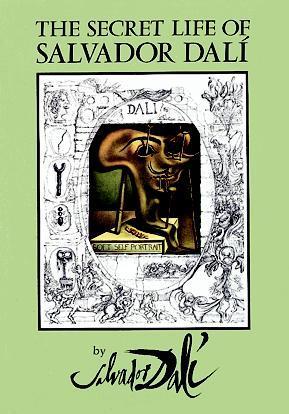
This early autobiography, which takes Dalí through his late thirties, is as startling and unpredictable as his art. On its first publication, the reviewer of Books observed: "It is impossible not to admire this painter as writer ... (Dalí) succeeds in doing exactly what he sets out to do ... communicates the snobbishness, self-adoration, comedy, seriousness, fanaticism, in short the concept of life and the total picture of himself he sets out to portray." Superbly illustrated with over eighty photographs of Dalí and his works, and scores of Dalí drawings and sketches.

Diary of a Genius stands as one of the seminal texts of Surrealism, revealing the most astonishing and intimate workings of the mind of Salvador Dalí, the eccentric polymath genius who became the living embodiment of Surrealism, the 20th century's most intensely subversive, disturbing and influential art movement. Dalí's second volume of autobiography, Diary of a Genius covers his life from 1952 to 1963, during which years we learn of his amour fou for his wife Gala, and their relationship both at home in Cadaqués and during bizarre world travels. We also learn how Dalí draws inspiration from excrement, rotten fish and Vermeer's Lacemaker to enter his "rhinocerontic" period, preaching his post-holocaustal gospels of nuclear mysticism and cosmogenic atavism; and we follow the labyrinthine mental journeys that lead to the creation of such paintings as the Assumption, and his film script The Flesh Wheelbarrow.This new expanded edition includes a brilliant and revelatory essay on Salvador Dalí, and the importance of his art to the 20th century, by the author J. G. Ballard.


With 101 Life magazine covers to his credit, Philippe Halsman (1906-1979) was one of the leading portrait photographers of his time. In addition to his distinguished career in photojournalism, Halsman was one of the great pioneers of experimental photography, motivated by a profound desire to push this youngest of art forms toward new frontiers by using innovative and unorthodox photographic techniques. One of Halsman's favorite subjects was Salvador Dali, the glittering and controversial painter and theorist with whom the photographer shared a unique friendship and extraordinary professional collaboration that spanned over thirty years. Whenever Dali imagined a photograph so strange that its production seemed impossible, Halsman tried to find the solution, and invariably succeeded. As Halsman explains in his postface, Dali's Mustache is the fruit of this marriage of the minds. The jointly conceived and seemingly nonsensical questions and answers reveal the gleeful humor and assumed cynicism for which Dali is famous, while the marvelous and inspired images of Dali's mustache brilliantly display Halsman's consumate skill and extraordinary inventiveness as a photographer. This combination of wit, absurdity, and the off-handedly profound is irresistible and has contributed to the enduring fascination inspired by this unique photographic interview, which has become a cult classic and valuable collector's item since its original publication in 1954. The present volume faithfully reproduces the first edition and will introduce a new generation to the irreverent humor and imaginative genius of two great artists.
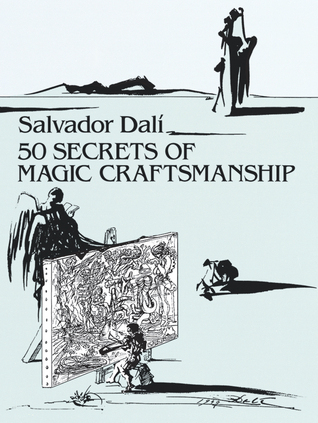
For many, Salvador Dalí (1904–1989) represents the Surrealist painter par excellence, one whose work explored his own dream life, hallucinations, and fetishes in the process of objectifying the irrational elements of the unconscious. In this rare and important volume, the painter expresses (in his inimitably eccentric fashion) his ideas of what painting should be, expounds on what is good and bad painting, offers opinions on the merits of Vermeer, Picasso, Cézanne, and other artists, and expresses his thoughts on the history of painting.In a blend of outrageous egotism and unconventional humor, Dalí presents 50 "secrets" for mastering the art of "the secret of sleeping while awake," "the secret of the periods of carnal abstinence and indulgence to be observed by the painter," "the secret of the painter's pointed mustaches," "the secret of learning to paint before knowing how to draw," "the secret of the painter's marriage," "the secret of the reason why a great draughtsman should draw while completely naked," and many other Daliesque prescriptions for artistic success.Illustrated with the artist's own drawings, this volume is a fascinating mixture of serious artistic advice, lively personal anecdotes, and academic craftsmanship. It is, according to the San Francisco Chronicle, "in lay-out and clarity of design . . . a remarkable work of art in itself." Especially esteemed for its insights into modern art, 50 Secrets of Magic Craftsmanship is indispensable reading for any student of Surrealism or 20th century painting.

Contains the frank and uncensored confessions of Salvador Dali, from his childhood and first adolescent sexual experiences to his emergence as a painter, surrealist and eventually the most famous - and possibly richest - artist of modern times. These inspired tracts, covering art, love, sex, money, death, fame, science, his famous friends and enemies and his extraordinary creative genius, reveal the intricate workings of Dali's mind to create not only an unparallelled autobiography but also one of the key Surrealist texts yet published.Illustrated with drawings by Dali and with rare photographs.

Influential artist's highly opinionated attack skewers both modern art and its practitioners. Outrageous evaluations of Picasso, Turner, Cézanne, many more. Text includes 15 renderings of paintings discussed and 44 of Dalí's calligraphic decorations. Will delight anyone who enjoys the artist's unconventional opinions and egotistical posturing.


This book is a translation of the first volume of Oui- a collection of texts compiled and edited by Dali's great chronicler, colleague and friend, Robert Descharnes. Arranged chronologically, these diverse (polymorphously perverse) texts cover the period of Dali's creative life, from his student days to his early associations with the Surrealist movement. They offer a microcosmic view of the "cosmic" life and art, creation and creative process, mind and body of Salvador Dali.

Este texto de Salvador Dalí , escrito en francés entre 1932 y 1935, se extravió en el momento en que Dalí y Gala tuvieron que abandonar a toda prisa la ciudad de Arcachon, pocas horas antes de la ocupación alemana. Veintidós años después, fue reencontrado y finalmente publicado en Francia, en 1963, sin que el autor, según el mismo confiesa, «tuviera que cambiar una coma». En 1978 publicamos esta obra por vez primera en castellano. El propio Salvador Dalí añadió nuevos comentarios y amplió la documentación gráfica -convirtiendo así esta edición en una auténtica primicia mundial-, pues no en vano la hipótesis desarrollada en esta obra fue una preocupación constante en su autor. Nunca, como en estas reflexiones suscitadas a Dalí por el conocido cuadro de Millet, El Angelus , han quedado mejor analizados tanto su teoría sobre el mecanismo del fenómeno paranoico desde el punto de vista surrealista, como su método de interpretación «paranoico-crítica». Durante la gestación y elaboración de este texto, Dalí sometió personalmente a sus amigos -André Breton, Giacometti, el entonces joven Lacan, Gala e incluso Freud- sus vivencias y visiones, que le habían ido revelando las múltiples interpretaciones del mito, ese mito trágico, de la mujer castradora frente al hijo «absorbido» y anulado con su inevitable secuela de obsesiones atávicas. Otro aspecto sorprendente de este texto en la actual edición es la confirmación definitiva de la hipótesis daliniana, según la cual Millet ocultaba, tras el pintor bucólico de sus inocentes cuadros, cuyas reproducciones presiden los hogares bienpensantes del mundo entero, al pintor secreto de dibujos e ilustraciones eróticas como los que aquí se reproducen. Esta edición definitiva de una de las obras fundamentales de la corriente surrealista se debe a la constancia del arquitecto Óscar Tusquets y a sus interminables charlas sobre pintura con Salvador Dalí .
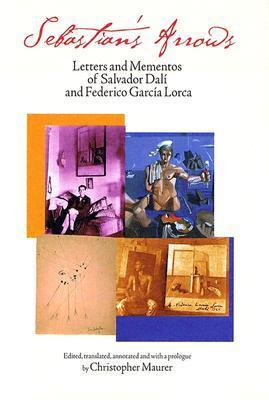
Sebastian's Arrows: Letters and Mementos of Salvador Dali and Federico Garcia Lorca
by Salvador Dalí
Rating: 4.4 ⭐
“Let us agree,” Federico Garcia Lorca wrote, “that one of man’s most beautiful postures is that of St. Sebastian.”“In my ‘Saint Sebastian’ I remember you,” Salvador Dali replied to Garcia Lorca, referring to the essay on aesthetics that Dali had just written, “. . . and sometimes I think he is you. Let’s see whether Saint Sebastian turns out to be you.”This exchange is but a glimpse into the complex relationship between two renowned and highly influential twentieth-century artists. On the centennial of Dali's birth, Sebastian’s Arrows presents a never-before-published collection of their letters, lectures, and mementos.Written between 1925 and 1936, the letters and lectures bring to life a passionate friendship marked by a thoughtful dialogue on aesthetics and the constant interaction between poetry and painting. From their student days in Madrid's Residencia de Estudiantes, where the two waged war against cultural “putrefaction” and mocked the sacred cows of Spanish art, Dali and Garcia Lorca exchanged thoughts on the act of creation, modernity, and the meaning of their art. The volume chronicles how in their poetic skirmishes they sharpened and shaped each other’s work—Garcia Lorca defending his verses of absence and elegy and his love of tradition while Dali argued for his theories of “Clarity” and “Holy Objectivity” and the unsettling logic of Surrealism.Christopher Maurer’s masterful prologue and selection of letters, texts, and images (many generously provided by the Fundacion Gala-Salvador Dali and Fundacion Federico Garcia Lorca), offer compelling and intimate insights into the lives and work of two iconic artists. The two men had a “tragic, passionate relationship,” Dali once wrote—a friendship pierced by the arrows of Saint Sebastian.

Oscillantes, enbroulées ou déroulées, remontées ou décadentes, les moustaches de Salvador Dali intriguaient et fascinaient tous ceux qui le rencontraient... Peintre de génie, écrivain baroque, amoureux de Gala, personnage haut en couleur du roman de sa propre vie, Salvador Dali se livre avec impudeur et humour pour nous laisser entrevoir les mystères de sa peinture.

NOUVELLE EDITION - 1989-2013 - 25e anniversaire de la disparition de Dali ! À qui en douterait encore, les Pensées du Maître rassemblées dans cet ouvrage opposent un formidable démenti. Que ce soit sur la peinture, sa vie, la religion, l'amour, les provocations daliniennes fusent, surprenantes et irrésistibles. L'humour de " la plus grande imagination du xxe siècle " est à l'image du personnage : fantasque, foudroyant et dérangeant. " L'unique différence entre un fou et moi, c'est que je ne suis pas fou ", prétendait le peintre. Chacun jugera. Mais ce génie de l'autocélébration avait le courage de ses opinions : " Un fait est certain : tout, absolument tout ce que je dirai ici est entièrement de ma faute et uniquement de ma faute. "" Je hais la liberté : elle oblige à choisir. "" La différence entre les surréalistes et moi, c'est que moi je suis surréaliste. "" Si les classiques sont froids, c'est parce que leur flfl amme est éternelle. "" Ne craignez pas la perfection. Vous n'y parviendrez jamais. "


English, French (translation)

Covering some of the major works in the Salvador Dali Museum, this book presents an overview of the career of the controversial surrealist artist, from the 1920s to the 1970s.

«Salvador Dalí, supremo déspota que rompe con todo, pisoteando cuantas leyes divinas y humanas existen, capaz de montar un concurso de hípica en un escaparate de la 5ª Avenida de Nueva York, arrestado por la policía, y al que se puede, repito, situar entre el Dalí poseído por un delirio furiosamente dionisíaco y el Dalí “ávido de dólares” (Avidadollars), sereno, apolíneo, católico, apostólico y romano, jesuíticamente gastronómico, monárquico (y partidario de la monarquía), respetuoso tanto de las estructuras blandas y legítimas como de la genética regia del ácido desoxirribonucleico, o de las arquitecturas no menos regias de la estética legítima...» De la «Introducción»

By 1970, artist Salvador Dali had transcended his own past to reinvent himself as the "Divine Dali" - the living embodiment of Surrealism, a master showman, eccentric world traveller, and accumulator of increasingly vast amounts of wealth. One of Dali's favoured haunts at this time was the Hotel Meurice in Paris, where he was often to be found holding court, surrounded by stark naked women, exotic wild animals, and other retainers. THE GREATˆMASTURBATOR is a record of ten conversational interviews held with Dali at this time, in which he provides his inimitable opinions on matters ranging from Modern and Classic art to the Beatles, sodomy, and scientific research into suspended animation. The result is a unique insight into the mind of one of the 20th century's most original artists and cross-disciplinary theorists. This special ebook edition includes a unique bonus feature, "The Erotic World Of Salvador Dali", comprising 5 erotic colour photos and photo-collages by Dali, dating from 197?.

Salvador Dalí (1904 – 1989) bol vskutku všestranný umelec – maliar, sochár, grafik, ilustrátor, fotograf, filmár a spisovateľ – a zároveň najznámejší predstaviteľ surrealizmu. Vďaka svojmu experimentovaniu a excentrickosti v tvorbe i v živote sa stal jedným z najslávnejších umelcov 20. storočia. Na Dalího tvorbu mala značný vplyv jeho životná láka Gala, ktorá bola jeho múzou a spolupracovníčkou neuveriteľných päťdesiat rokov.Som génius? Pre Salvadora Dalího je odpoveď jasná: o svojej genialite nikdy nepochyboval. Kniha Tajný život Salvadora Dalího je svojrázny monument, ktorý si vystaval na vlastnú počesť. Ak mu aj chýba falošná skromnosť, jeho úprimnosť je nesmierna. Dalí odhaľuje svoje tajomstvá takmer bezohľadným spôsobom. Je to vášnivá a zveličená autobiografia geniálneho umelca.

Turning away from the powerful Cubist influence of fellow painter Pablo Picasso, Salvador Dalí incorporated the hallucinatory qualities of Surrealism in his paintings and went on to become one of the 20th century's most famous artists.The melting clocks in his Persistence of Memory are among the most recognizable images in modern art. That well-known work appears here in sticker format along with 15 other scrupulously reproduced works by the Spanish artist, among them The Visage of War, Figure at a Window, The Enigma of Desire, and Surrealist Poster.

Bijeengebracht en vertaald door Gerrit Komrij3e druk. Omslag: Alfons van Heusden. Keuze uit diverse dagboeken van en interviews met de kunstenaar Salvador Dalí. Met verantwoording.


First published in 1931, Salvador Dali's Reverie is an extended, ritualistic masturbatory fantasy focusing on Dulita, a mythic girl-figure of his childhood. With unwavering hallucinatory power Dali describes how Dulita is seduced and finally violated in the cow stables of an old castle, on the Day of the Dead, amid erogenous piles of excrement and rotting straw. This special ebook edition of Reverie also includes Dali's confessional essay How To Become Erotic Whilst Remaining Chaste, detailing his many sexual obsessions and revealing the origins of Dulita as a key icon of his erotic imaginings.

Basta un paio di baffi per fare la rivoluzione. Per rompere le regole di tutto quello che è ordinario, di tutto quello che è venuto prima e di tutto quello che sarà. Basta un paio di baffi al mondo per dire: «Sono Salvador Dalí e salverò l’arte». Salvador Dalí, un artista poliedrico ed esuberante, che non ha avuto paura di esporsi e sperimentare pur di riuscire a esprimersi, pur di mostrare e liberare la parte più vera di sé. Quando rompere le regole diventa un elemento imprescindibile della propria esistenza, tutti i commenti, i giudizi di chi non comprende passano in secondo piano, scalzati dall’urgenza di agire in nome di qualcosa di più grande. In "Rompere le regole" i pensieri e le riflessioni di Dalí ci rivelano la sfrontatezza necessaria per andare oltre e lasciare un segno, perché solo spingendosi al limite, solo sperimentando l’inesplorato, si può raggiungere l’arte più viva, la vita più vera.

En abril de 1926, Salvador Dalí conoció a Pablo Picasso en París. Ese encuentro fue el inicio de una de las relaciones más complejas de la historia del arte del siglo xx. Si se la puede califi - car de amistad, ésta no estuvo exenta de rivalidad, mezcla de admiración y celos. Con el tiempo, la fascinación del joven Dalí por el arte del «maestro» se fue transformando casi en una obsesión, mientras que la aparente indiferencia de Picasso ocultaba un interés evidente por la carrera meteórica del ambicioso Dalí. Finalmente la difícil mezcla de admiración y envidia acabó distanciándolos y sus divergentes posturas respecto a la Guerra Civil truncaron defi nitivamente la posibilidad de un acercamiento. No es poco lo que se ha escrito sobre los encuentros entre los dos gigantes de la pintura, casi todo marcado por los tópicos y por la leyenda que se fue creando en torno a uno y otro, y que ambos, a su manera, contribuyeron a alimentar. Picasso y yo, título que procede de la más sonada de las conferencias que Dalí pronunció acerca del arte de Picasso, es un intento de glosar la relación que existió entre ellos, partiendo tanto del epistolario completo –con una única postal fi rmada por Picasso a Dalí– como de los textos que Dalí le dedicó al pintor malagueño. Las cartas, los escritos del propio Dalí y las declaraciones –hasta la fecha inéditas–, de testigos de primera mano, recogidas en el estudio preliminar de Víctor Fernández, son el material más vivaz y fi dedigno del que disponemos para construir el relato de su amistad.

Durant els anys 20 i a començament dels 30, Salvador Dalí va publicar nombrosos escrits en les revistes i diaris catalans: assaigs sobre pintura, polèmiques, manifestos i, de vegades, meres provocacions. Aquest volum recull, per primer cop, l’obra literària catalana completa d’una figura cabdal en l’art contemporani, on sovint hi trobem provatures literàries sorprenents—poemes, proses poètiques, petits relats—, que mostren els tempteigs d’un geni en formació. Tant els primers escrits, lírics i ingenus, com els darrers, agosaradament surrealistes, són una mostra de l’enorme personalitat de Salvador Dalí i, sobretot, de la seva talla com a escriptor en català, fins ara poc coneguda.

Salvador Dali assembled and painted 78 collages in his unique surrealist vision. An exquisite deck for historians, art lovers, and collectors, the oversized cards are each individually signed and edged in gold. For the Major Arcana, titles are given in English and Spanish, with the corresponding Hebrew letter and astrological symbol also shown. The instruction booklet comes in four languages; English, Spanish, German, and French, and includes 3 card spreads.


Obra Completa de Salvador Dalí Vol. III - Prosa, teatre, cinema i poesia