Loading genres...
Explore the best books about Law genre.

One of America’s pre-eminent economists offers a provocative critique of the failures of liberalismIn The Vision of the Anointed , Thomas Sowell presents a devastating critique of the mind-set behind the failed social policies of the past thirty years. Sowell sees what has happened during that time not as a series of isolated mistakes but as a logical consequence of a tainted vision whose defects have led to crises in education, crime, and family dynamics, and to other social pathologies. In this book, he describes how elites—the anointed—have replaced facts and rational thinking with rhetorical assertions, thereby altering the course of our social policy.
Chosen by BusinessWeek as One of the Top Ten Business Books of the YearWith apologies to Hegel, Marx, and Lenin, the basic unit of modern society is neither the state, nor the commune, nor the party; it is the company. From this bold premise, John Micklethwait and Adrian Wooldridge chart the rise of one of history’s great catalysts for good and evil.In a “fast-paced and well-written” work ( Forbes ), the authors reveal how innovations such as limitations on liability have permitted companies to rival religions and even states in importance, governing the flow of wealth and controlling human affairs–all while being largely exempt from the rules that govern our lives.The Company is that rare, remarkable book that fills a major gap we scarcely knew existed. With it, we are better able to make sense of the past four centuries, as well as the events of today.

In The Journalist And The Murderer, Janet Malcolm examines the psychopathology of journalism. She delves into the always uneasy, sometimes tragic relationship that exists between journalist and subject.

“Shareholder value is the dumbest idea in the world.”—Jack WelchExecutives, investors, and the business press routinely chant the mantra that corporations are required to “maximize shareholder value.” In this pathbreaking book, renowned corporate expert Lynn Stout debunks the myth that corporate law mandates shareholder primacy. Stout shows how shareholder value thinking endangers not only investors but the rest of us as well, leading managers to focus myopically on short-term earnings; discouraging investment and innovation; harming employees, customers, and communities; and causing companies to indulge in reckless, sociopathic, and irresponsible behaviors. And she looks at new models of corporate purpose that better serve the needs of investors, corporations, and society.

NAMED ONE OF THE “100 NOTABLE BOOKS OF THE YEAR” BY THE NEW YORK TIMES BOOK REVIEW“An extraordinary book, I can’t recommend it highly enough.” –Whoopi Goldberg, The ViewBy the widely celebrated New York Times bestselling author of Last Call —the powerful, definitive, and timely account of how the rise of eugenics helped America close the immigration door to “inferiors” in the 1920s.A forgotten, dark chapter of American history with implications for the current day, The Guarded Gate tells the story of the scientists who argued that certain nationalities were inherently inferior, providing the intellectual justification for the harshest immigration law in American history. Brandished by the upper class Bostonians and New Yorkers—many of them progressives—who led the anti-immigration movement, the eugenic arguments helped keep hundreds of thousands of Jews, Italians, and other unwanted groups out of the US for more than 40 years.Over five years in the writing, The Guarded Gate tells the complete story from its beginning in 1895, when Henry Cabot Lodge and other Boston Brahmins launched their anti-immigrant campaign. In 1921, Vice President Calvin Coolidge declared that “biological laws” had proven the inferiority of southern and eastern Europeans; the restrictive law was enacted three years later. In his characteristic style, both lively and authoritative, Okrent brings to life the rich cast of characters from this time, including Lodge’s closest friend, Theodore Roosevelt; Charles Darwin’s first cousin, Francis Galton, the idiosyncratic polymath who gave life to eugenics; the fabulously wealthy and profoundly bigoted Madison Grant, founder of the Bronx Zoo, and his best friend, H. Fairfield Osborn, director of the American Museum of Natural History; Margaret Sanger, who saw eugenics as a sensible adjunct to her birth control campaign; and Maxwell Perkins, the celebrated editor of Hemingway and Fitzgerald. A work of history relevant for today, The Guarded Gate is an important, insightful tale that painstakingly connects the American eugenicists to the rise of Nazism, and shows how their beliefs found fertile soil in the minds of citizens and leaders both here and abroad.

The prison writings of Kurdish freedom fighter and PKK leader Abdullah Ocalan

"The hour of capitalism's greatest triumph," writes Hernando de Soto, "is, in the eyes of four-fifths of humanity, its hour of crisis." In The Mystery of Capital, the world-famous Peruvian economist takes up the question that, more than any other, is central to one of the most crucial problems the world faces today: Why do some countries succeed at capitalism while others fail?In strong opposition to the popular view that success is determined by cultural differences, de Soto finds that it actually has everything to do with the legal structure of property and property rights. Every developed nation in the world at one time went through the transformation from predominantly informal, extralegal ownership to a formal, unified legal property system. In the West we've forgotten that creating this system is also what allowed people everywhere to leverage property into wealth. This persuasive book will revolutionize our understanding of capital and point the way to a major transformation of the world economy.

A key member of the prosecution team at the Nuremberg war crimes trials offers an eyewitness account of the tribunal, shedding new light on the accused top-echelon Nazis, the events of the trials, and the verdicts

Professors Fischl and Paul explain law school exams in ways no one has before, all with an eye toward improving the reader's performance. The book begins by describing the difference between educational cultures that praise students for "right answers" and the law school culture that rewards nuanced analysis of ambiguous situations in which more than one approach may be correct. Enormous care is devoted to explaining precisely how and why legal analysis frequently produces such perplexing situations. But the authors don't stop with mere description. Instead, Getting to Maybe teaches how to excel on law school exams by showing the reader how legal analysis can be brought to bear on examination problems. The book contains hints on studying and preparation that go well beyond conventional advice. The authors also illustrate how to argue both sides of a legal issue without appearing wishy-washy or indecisive. Above all, the book explains why exam questions may generate feelings of uncertainty or doubt about correct legal outcomes and how the student can turn these feelings to his or her advantage. In sum, although the authors believe that no exam guide can substitute for a firm grasp of substantive material, readers who devote the necessary time to learning the law will find this book an invaluable guide to translating learning into better exam performance.

In this classic work Hayek restates the ideals of freedom that he believes have guided, and must continue to guide, the growth of Western civilization. Hayek's book, first published in 1960, urges us to clarify our beliefs in today's struggle of political ideologies.

A brilliant and urgent appraisal of one of the most profound conflicts of our timeEven before George W. Bush gained reelection by wooing religiously devout "values voters," it was clear that church-state matters in the United States had reached a crisis. With Divided by God , Noah Feldman shows that the crisis is as old as this country--and looks to our nation's past to show how it might be resolved.Today more than ever, ours is a religiously diverse Muslim, Hindu, and Buddhist as well as Catholic, Protestant, and Jewish. And yet more than ever, committed Christians are making themselves felt in politics and culture.What are the implications of this paradox? To answer this question, Feldman makes clear that again and again in our nation's history diversity has forced us to redraw the lines in the church-state divide. In vivid, dramatic chapters, he describes how we as a people have resolved conflicts over the Bible, the Pledge of Allegiance, and the teaching of evolution through appeals to shared values of liberty, equality, and freedom of conscience. And he proposes a brilliant solution to our current crisis, one that honors our religious diversity while respecting the long-held conviction that religion and state should not mix.Divided by God speaks to the headlines, even as it tells the story of a long-running conflict that has made the American people who we are.

Excerpt from Dei Delitti e Delle PeneAlcuni avanzi di leggi di: un antico popolo conquistatore fatte compilare da 'un principei. Che dodici secoli fa regnava in Constantinopoli, frammischi'ate poscia co' riti Longobardi, ed invoice in farraginosi volumi di privati ed oscuri interpetri, for mano quella tradizione di opi nioni, che da' una gran parte dell' europa ha tuttavia il nome di leggi; ed e cosa funesta quanto.About the PublisherForgotten Books publishes hundreds of thousands of rare and classic books. Find more at www.forgottenbooks.comThis book is a reproduction of an important historical work. Forgotten Books uses state-of-the-art technology to digitally reconstruct the work, preserving the original format whilst repairing imperfections present in the aged copy. In rare cases, an imperfection in the original, such as a blemish or missing page, may be replicated in our edition. We do, however, repair the vast majority of imperfections successfully; any imperfections that remain are intentionally left to preserve the state of such historical works.

Charles Rice, professor of the jurisprudence of St. Thomas Aquinas for the last twenty years at Notre Dame Law School, presents a very readable book on the natural law as seen through the teachings of Aquinas and their foundations in reason and Revelation. Reflecting on the most persistent questions asked by his students over the years, Rice shows how the natural law works and how it is rooted in the nature of the human person whose Creator provided this law as a sure and knowable guide for man to achieve his end of eternal happiness. This book presents the teachings of the Catholic Church in her role as arbiter of the applications of the natural law on issues involving the right to live, bioethics, the family and the economy. Charles Rice has produced a firmly grounded and accessible handbook which touches on the most important topics regarding natural law that will benefit readers of all backgrounds.

The Internet Revolution, like all great industrial changes, has made the world's elephantine media companies tremble that their competitors-whether small and nimble mice or fellow elephants-will get to new terrain first and seize its commanding heights. In a climate in which fear and insecurity are considered healthy emotions, corporate violence becomes commonplace. In the blink of an eye-or the time it has taken slogans such as "The Internet changes everything" to go from hyperbole to banality-"creative destruction" has wracked the global economy on an epic scale.No one has been more powerful or felt more fear or reacted more violently than Bill Gates and Microsoft. Afraid that any number of competitors might outflank them-whether Netscape or Sony or AOL Time Warner or Sun or AT&T or Linux-based companies that champion the open-source movement or some college student hacking in his dorm room-Microsoft has waged holy war on all foes, leveraging its imposing strengths.In World War 3.0 , Ken Auletta chronicles this fierce conflict from the vantage of its most important theater of operations: the devastating second front opened up against Bill Gates's empire by the United States government. The book's narrative spine is United States v. Microsoft, the government's massive civil suit against Microsoft for allegedly stifling competition and innovation on a broad scale. With his superb writerly gifts and extraordinary access to all the principal parties, Ken Auletta crafts this landmark confrontation into a tight, character- and incident-filled courtroom drama featuring the best legal minds of our time, including David Boies and Judge Richard Posner. And with the wisdom gleaned from covering the converging media, software, and communications industries for The New Yorker for the better part of a decade, Auletta uses this pivotal battle to shape a magisterial reckoning with the larger war and the agendas, personalities, and prospects of its many combatants.

In 1787, the American union was in disarray. The incompatible demands of the separate states threatened its existence; some states were even in danger of turning into the kind of tyranny they had so recently deposed. A truly national government was needed, one that could raise money, regulate commerce, and defend the states against foreign threats–without becoming as overbearing as England. So thirty-six-year-old James Madison believed. That summer, the Virginian was instrumental in organizing the Constitutional Convention, in which one of the world’s greatest documents would be debated, created, and signed. Inspired by a sense of history in the making, he kept the most extensive notes of any attendee.Now two esteemed scholars have made these minutes accessible to everyone. Presented with modern punctuation and spelling, judicious cuts, and helpful notes–plus fascinating background information on every delegate and an overview of the tumultuous times–here is the great drama of how the Constitution came to be, from the opening statements to the final votes. This Modern Library Paperback Classic also includes an Introduction and appendices from the authors.

This book is about the great moral issues underlying many of the headline-making political controversies of our times. It is not a comforting book but a book about disturbing and dangerous trends. The Quest for Cosmic Justice shows how confused conceptions of justice end up promoting injustice, how confused conceptions of equality end up promoting inequality, and how the tyranny of social visions prevents many people from confronting the actual consequences of their own beliefs and policies. Those consequences include the steady and dangerous erosion of fundamental principles of freedom - amounting to a quiet repeal of the American revolution. The Quest for Cosmic Justice is the summation of a lifetime of study and thought about where we as a society are headed - and why we need to change course before we do irretrievable damage.

Hailed by Thomas Jefferson as “the best commentary on the principles of government which was ever written", The Federalist Papers is a collection of eighty-five essays published by Founding Fathers Alexander Hamilton, James Madison, and John Jay from 1787 to 1788, as a means to persuade the public to ratify the Constitution of the United States.With nearly two-thirds of the essays written by Hamilton, this enduring classic is perfect for modern audiences passionate about his work or seeking a deeper understanding of one of the most important documents in US history.AmazonClassics brings you timeless works from iconic authors. Ideal for anyone who wants to read a great work for the first time or revisit an old favorite, these new editions open the door to the stories and ideas that have shaped our world.

Oliver Wendell Holmes, Jr. (1841–1935) is generally considered one of the two greatest justices of the United States Supreme Court, Chief Justice John Marshall being the other. In more than 2000 opinions, he delineated an impressive legal philosophy that profoundly influenced American jurisprudence, particularly in the area of civil liberties and judicial restraint. At the same time, his abilities as a prose stylist earned him a position among the literary elite.In The Common Law , derived from a series of lectures delivered at the Lowell Institute in Boston, Holmes systematized his early legal doctrines. The result was an enduring classic of legal philosophy that continues to be read and consulted over a century later. Beginning with historical forms of liability (thought to have originated in the desire for vengeance in ancient Roman and Germanic blood feuds), the book goes on to discuss criminal law, torts, bails, possession and ownership, contracts, successions, and many other aspects of civil and criminal law.Encompassing Holmes's profound, wide-ranging knowledge of the law in its historical aspects, yet written in a manner easily accessible to the layman, The Common Law provoked this observation from another famed jurist; "The book is a classic in the sense that its stock of ideas has been absorbed and become part of common juristic thought … they placed law in a perspective which legal scholarship ever since has merely confirmed." — Felix Frankfurter, Of Law and Men .Now the influential ideas and judicial theory of Oliver Wendell Holmes, Jr. can be studied and appreciated in this superb edition — the only one in print — of his magnum opus. This edition also features a new introduction by Professor Sheldon M. Novick, author of Honorable The Life of Oliver Wendell Holmes . First published in 1881, this book is still indispensable reading for lawyers, political scientists, historians, general readers — anyone interested in the origins, development, and continuing evolution of the laws that govern human society.

In five years since the seventh edition of this book was published, a number of significant decisions have been handed down and a wealth of scholarly commentary has been generated. Accordingly, this new edition represents a complete revision and a fresh reevaluation, for purposes of re-editing and re-organizing, of all existing materials. It also constitutes the product of an extensive examination of the recent literature - in an effort to further enrich the notes, comments and questions. In addition to full updating, restructuring has been undertaken where called for by recent developments. The most significant revisions appear in Chapter 3 (Separation of Powers). Chapter 4 (State Power to Regulate), Chapter 13 (Limitations on Judicial Review), and parts of Chapter 10 (Equal Protection) dealing with Affirmative Action (Sec. 2, VI), Discriminations Based on Gender (Sec. 3), and Special Scrutiny for Other Classifications (Sec. 4).

This classic by an associate of Yugoslavia's Tito created a sensation when it was published in 1957 because it was the first time that a ranking Communist had publicly analyzed his disillusionment with the system.

This book originated as lectures for a course on political philosophy that Rawls taught regularly at Harvard in the 1980s. In time the lectures became a restatement of his theory of justice as fairness, revised in light of his more recent papers and his treatise Political Liberalism (1993). As Rawls writes in the preface, the restatement presents "in one place an account of justice as fairness as I now see it, drawing on all [my previous] works." He offers a broad overview of his main lines of thought and also explores specific issues never before addressed in any of his writings.Rawls is well aware that since the publication of A Theory of Justice in 1971, American society has moved farther away from the idea of justice as fairness. Yet his ideas retain their power and relevance to debates in a pluralistic society about the meaning and theoretical viability of liberalism. This book demonstrates that moral clarity can be achieved even when a collective commitment to justice is uncertain.

"For Michael Sandel, justice is not a spectator sport," The Nation's reviewer of Justice remarked. In his acclaimed book―based on his legendary Harvard course―Sandel offers a rare education in thinking through the complicated issues and controversies we face in public life today. It has emerged as a most lucid and engaging guide for those who yearn for a more robust and thoughtful public discourse. "In terms we can all understand," wrote Jonathan Rauch in The New York Times, Justice "confronts us with the concepts that lurk . . . beneath our conflicts."Affirmative action, same-sex marriage, physician-assisted suicide, abortion, national service, the moral limits of markets―Sandel relates the big questions of political philosophy to the most vexing issues of the day, and shows how a surer grasp of philosophy can help us make sense of politics, morality, and our own convictions as well.Justice is lively, thought-provoking, and wise―an essential new addition to the small shelf of books that speak convincingly to the hard questions of our civic life.

Equality is the endangered species of political ideals. Even left-of-center politicians reject equality as an ideal: government must combat poverty, they say, but need not strive that its citizens be equal in any dimension. In his new book Ronald Dworkin insists, to the contrary, that equality is the indispensable virtue of democratic sovereignty. A legitimate government must treat all its citizens as equals, that is, with equal respect and concern, and, since the economic distribution that any society achieves is mainly the consequence of its system of law and policy, that requirement imposes serious egalitarian constraints on that distribution.What distribution of a nation's wealth is demanded by equal concern for all? Dworkin draws upon two fundamental humanist principles--first, it is of equal objective importance that all human lives flourish, and second, each person is responsible for defining and achieving the flourishing of his or her own life--to ground his well-known thesis that true equality means equality in the value of the resources that each person commands, not in the success he or she achieves. Equality, freedom, and individual responsibility are therefore not in conflict, but flow from and into one another as facets of the same humanist conception of life and politics. Since no abstract political theory can be understood except in the context of actual and complex political issues, Dworkin develops his thesis by applying it to heated contemporary controversies about the distribution of health care, unemployment benefits, campaign finance reform, affirmative action, assisted suicide, and genetic engineering.

Gerry Spence is perhaps America's most renowned and successful trial lawyer, a man known for his deep convictions and his powerful courtroom presentations when he argues on behalf of ordinary people. Frequently pitted against teams of lawyers thrown against him by major corporate or government interests, he has never lost a criminal case and has not lost a civil jury trial since l969.In Win Your Case , Spence shares a lifetime of experience teaching you how to win in any arena-the courtroom, the boardroom, the sales call, the salary review, the town council meeting-every venue where a case is to be made against adversaries who oppose the justice you seek. Relying on the successful courtroom methods he has developed over more than half a century, Spence shows both lawyers and laypersons how you can win your cases as he takes you step by step through the elements of a trial-from jury selection, the opening statement, the presentation of witnesses, their cross-examinations, and finally to the closing argument itself.Spence teaches you how to prepare yourselves for these wars. Then he leads you through the new, cutting-edge methods he uses in discovering the story in which you form the evidence into a compelling narrative, discover the point of view of the decision maker, anticipate and answer the counterarguments, and finally conclude the case with a winning final argument.To make a winning presentation, you are taught to prepare the power-person (the jury, the judge, the boss, the customer, the board) to hear your case. You are shown that your emotions, and theirs, are the source of your winning. You learn the power of your own fear, of honesty and caring and, yes, of love. You are instructed on how to role-play through the use of the psychodramatic technique, to both discover and tell the story of the case, and, at last, to pull it all together into the winning final argument.Whether you are presenting your case to a judge, a jury, a boss, a committee, or a customer, Win Your Case is an indispensable guide to success in every walk of life, in and out of the courtroom.

Argues that future generations are being harmed by a restrictive copyright system that protects corporate interests, in a report that calls for an end of the practice of criminalizing artists who build on the creative works of others and for implementing a collaborative and profitable "hybrid economy" that protects both creative and ethical needs. 30,000 first printing.

Leonard W. Levy's Legacy of Suppression so disturbed Supreme Court Justice Hugo L. Black that he called it "one of the mosts devastating blows that has been delivered against civil liberty for a long time."Published in 1960, this book challenged the liberal interpretation of the First Amendment by claiming that the framers of the Constitution intended it only as a protection against the prior restraint of a publication. It was not, Levy vehemently argued, meant to be used as a defense in seditious libel cases. In other words, freedom of the press meant that a publisher had the freedom to publish, but not without impunity.In Emergence of Free Press, Levy rethinks many of the controversial opinions put forth in the original work. A revised and enlarged edition of the first volume, it offers a more moderate view of the rights guaranteed by the First Amendment. Based on extensive additional research, especially on the newspapers published in Revolutionary America, Levy now concedes that the original interpretation of the First Amendment, even if it wasn't the framer's intention, was broad in scope. "That so many courageous and irresponsible editors risked imprisonment amazes me." he writes. Though he holds to his belief in the writers' intention, he concludes that we don't have to be limited by their narrow view."Seldom has a major constitutional scholar reversed his field under such brilliant light and with such a startling admission...Mr. Levy's contribution becomes him. He has learned--which makes him a fine teacher for us all--and he makes us think hard about our Constitution."--The New York Times"Emergence of a Free Press delivers an even more rousing lesson than its predecessor."--Philadelphia Inquirer·"A lively and important book."--The ProgressiveA major Constitutional scholar rethinks his controversial views about the First Amendment

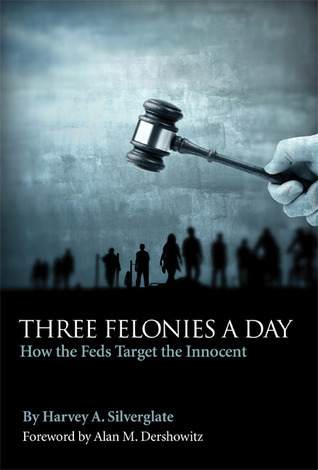
The average professional in this country wakes up in the morning, goes to work, comes home, eats dinner, and then goes to sleep, unaware that he or she has likely committed several federal crimes that day. Why? The answer lies in the very nature of modern federal criminal laws, which have exploded in number but also become impossibly broad and vague. In Three Felonies a Day, Harvey A. Silverglate reveals how federal criminal laws have become dangerously disconnected from the English common law tradition and how prosecutors can pin arguable federal crimes on any one of us, for even the most seemingly innocuous behavior. The volume of federal crimes in recent decades has increased well beyond the statute books and into the morass of the Code of Federal Regulations, handing federal prosecutors an additional trove of vague and exceedingly complex and technical prohibitions to stick on their hapless targets. The dangers spelled out in Three Felonies a Day do not apply solely to “white collar criminals,” state and local politicians, and professionals. No social class or profession is safe from this troubling form of social control by the executive branch, and nothing less than the integrity of our constitutional democracy hangs in the balance.

A tiny, ebullient Jew who started as America's leading liberal and ended as its most famous judicial conservative. A Klansman who became an absolutist advocate of free speech and civil rights. A backcountry lawyer who started off trying cases about cows and went on to conduct the most important international trial ever. A self-invented, tall-tale Westerner who narrowly missed the presidency but expanded individual freedom beyond what anyone before had dreamed. Four more different men could hardly be imagined. Yet they had certain things in common. Each was a self-made man who came from humble beginnings on the edge of poverty. Each had driving ambition and a will to succeed. Each was, in his own way, a genius. They began as close allies and friends of FDR, but the quest to shape a new Constitution led them to competition and sometimes outright warfare. SCORPIONS tells the story of these four great justices: their relationship with Roosevelt, with each other, and with the turbulent world of the Great Depression, World War II, and the Cold War. It also serves as a history of the modern Constitution itself.

"Astringent and absorbing. . . . Iphigenia in Forest Hills casts, from its first pages, a genuine spell — the kind of spell to which Ms. Malcolm’s admirers (and I am one) have become addicted." —Dwight Garner, New York Times "She couldn't have done it and she must have done it." This is the enigma at the heart of Janet Malcolm's riveting new book about a murder trial in the insular Bukharan-Jewish community of Forest Hills, Queens, that captured national attention. The defendant, Mazoltuv Borukhova, a beautiful young physician, is accused of hiring an assassin to kill her estranged husband, Daniel Malakov, a respected orthodontist, in the presence of their four-year old child. The prosecutor calls it an act of just weeks before Malakov was killed in cold blood, he was given custody of Michelle for inexplicable reasons. It is the "Dickensian ordeal" of Borukhova's innocent child that drives Malcolm's inquiry. With the intellectual and emotional precision for which she is known, Malcolm looks at the trial—"a contest between competing narratives"—from every conceivable angle. It is the chasm between our ideals of justice and the human factors that influence every trial—from divergent lawyering abilities to the nature of jury selection, the malleability of evidence, and the disposition of the judge—that is perhaps most striking. Surely one of the most keenly observed trial books ever written, Iphigenia in Forest Hills is ultimately about character and "reasonable doubt." As Jeffrey Rosen writes, it is "as suspenseful and exciting as a detective story, with all the moral and intellectual interest of a great novel." " Iphigenia in Forest Hills is another dazzling triumph from Janet Malcolm. Here, as always, Malcolm’s work inspires the best kind of disquiet in a reader—the obligation to think." —Jeffrey Toobin, author of The Inside the Secret World of the Supreme Court "A remarkable achievement that ranks with Malcolm's greatest books. Her scrupulous reporting and interviews with protagonists on both sides of the trial make her own narrative as suspenseful and exciting as a detective story, with all the moral and intellectual interest of a great novel." —Jeffrey Rosen, author of The Supreme The Personalities and Rivalries that Defined America

When the first volume of Morton Horwitz's monumental history of American law appeared in 1977, it was universally acclaimed as one of the most significant works ever published in American legal history. The New Republic called it an "extremely valuable book." Library Journal praised it as "brilliant" and "convincing." And Eric Foner, in The New York Review of Books , wrote that "the issues it raises are indispensable for understanding nineteenth-century America." It won the coveted Bancroft Prize in American History and has since become the standard source on American law for the period between 1780 and 1860. Now, Horwitz presents The Transformation of American Law, 1870 to 1960 , the long-awaited sequel that brings his sweeping history to completion.In his pathbreaking first volume, Horwitz showed how economic conflicts helped transform law in antebellum America. Here, Horwitz picks up where he left off, tracing the struggle in American law between the entrenched legal orthodoxy and the Progressive movement, which arose in response to ever-increasing social and economic inequality. Horwitz introduces us to the people and events that fueled this contest between the Old Order and the New. We sit in on Lochner v. New York in 1905--where the new thinkers sought to undermine orthodox claims for the autonomy of law--and watch as Progressive thought first crystallized. We meet Oliver Wendell Holmes, Jr. and recognize the influence of his incisive ideas on the transformation of law in America. We witness the culmination of the Progressive challenge to orthodoxy with the emergence of Legal Realism in the 1920s and '30s, a movement closely allied with other intellectual trends of the day. And as postwar events unfold--the rise oftotalitarianism abroad, the McCarthyism rampant in our own country, the astonishingly hostile academic reaction to Brown v. Board of Education --we come to understand that, rather than self-destructing as some historians have asserted, the Progressive movement was alive and well and forming the roots of the legal debates that still confront us today.The Progressive legacy that this volume brings to life is an enduring one, one which continues to speak to us eloquently across nearly a century of American life. In telling its story, Horwitz strikes a balance between a traditional interpretation of history on the one hand, and an approach informed by the latest historical theory on the other. Indeed, Horwitz's rich view of American history--as seen from a variety of perspectives--is undertaken in the same spirit as the Progressive attacks on an orthodoxy that believed law an objective, neutral entity.The Transformation of American Law is a book certain to revise past thinking on the origins and evolution of law in our country. For anyone hoping to understand the structure of American law--or of America itself--this volume is indispensable.

This is a surreal time for freedom of speech. While the legal protections of the First Amendment remain strong, the culture is obsessed with punishing individuals for allegedly offensive utterances. And academia – already an institution in which free speech is in decline – has grown still more intolerant, with high-profile “disinvitation” efforts against well-known speakers and demands for professors to provide “trigger warnings” in class.In this Broadside, Greg Lukianoff argues that the threats to free speech go well beyond political correctness or liberal groupthink. As global populations increasingly expect not just physical comfort but also intellectual comfort, threats to freedom of speech are only going to become more intense. To fight back, we must understand this trend and see how students and average citizens alike are increasingly demanding freedom from speech.

A sharp and illuminating history of one of capitalism’s longest running tensions—the conflicts of interest among public company directors, managers, and shareholders—told through entertaining case studies and original letters from some of our most legendary and controversial investors and activists. Recent disputes between shareholders and major corporations, including Apple and DuPont, have made headlines. But the struggle between management and those who own stock has been going on for nearly a century. Mixing never-before-published and rare, original letters from Wall Street icons—including Benjamin Graham, Warren Buffett, Ross Perot, Carl Icahn, and Daniel Loeb—with masterful scholarship and professional insight, Dear Chairman traces the rise in shareholder activism from the 1920s to today, and provides an invaluable and unprecedented perspective on what it means to be a public company, including how they work and who is really in control. Jeff Gramm analyzes different eras and pivotal boardroom battles from the last century to understand the factors that have caused shareholders and management to collide. Throughout, he uses the letters to show how investors interact with directors and managers, how they think about their target companies, and how they plan to profit. Each is a fascinating example of capitalism at work told through the voices of its most colorful, influential participants. A hedge fund manager and an adjunct professor at Columbia Business School, Gramm has spent as much time evaluating CEOs and directors as he has trying to understand and value businesses. He has seen public companies that are poorly run, and some that willfully disenfranchise their shareholders. While he pays tribute to the ingenuity of public company investors, Gramm also exposes examples of shareholder activism at its very worst, when hedge funds engineer stealthy land-grabs at the expense of a company’s long term prospects. Ultimately, he provides a thorough, much-needed understanding of the public company/shareholder relationship for investors, managers, and everyone concerned with the future of capitalism.

Violent crime has been rising sharply in many American cities after two decades of decline. Homicides jumped nearly 17 percent in 2015 in the largest 50 cities, the biggest one-year increase since 1993. The reason is what Heather Mac Donald first identified nationally as the “Ferguson effect”: Since the 2014 police shooting death of Michael Brown in Ferguson, Missouri, officers have been backing off of proactive policing, and criminals are becoming emboldened. This book expands on Mac Donald’s groundbreaking and controversial reporting on the Ferguson effect and the criminal-justice system. It deconstructs the central narrative of the Black Lives Matter that racist cops are the greatest threat to young black males. On the contrary, it is criminals and gangbangers who are responsible for the high black homicide death rate. The War on Cops exposes the truth about officer use of force and explodes the conceit of “mass incarceration.” A rigorous analysis of data shows that crime, not race, drives police actions and prison rates. The growth of proactive policing in the 1990s, along with lengthened sentences for violent crime, saved thousands of minority lives. In fact, Mac Donald argues, no government agency is more dedicated to the proposition that “black lives matter” than today’s data-driven, accountable police department. Mac Donald gives voice to the many residents of high-crime neighborhoods who want proactive policing. She warns that race-based attacks on the criminal-justice system, from the White House on down, are eroding the authority of law and putting lives at risk. This book is a call for a more honest and informed debate about policing, crime, and race.

An original and consequential argument about race, crime, and the lawToday, Americans are debating our criminal justice system with new urgency. Mass incarceration and aggressive police tactics—and their impact on people of color—are feeding outrage and a consensus that something must be done.But what if we only know half the story? In Locking Up Our Own, the Yale legal scholar and former public defender James Forman Jr. weighs the tragic role that some African Americans themselves played in escalating the war on crime. As Forman shows, the first substantial cohort of black mayors, judges, and police chiefs took office around the country amid a surge in crime. Many came to believe that tough measures—such as stringent drug and gun laws and “pretext traffic stops” in poor African American neighborhoods—were needed to secure a stable future for black communities. Some politicians and activists saw criminals as a “cancer” that had to be cut away from the rest of black America. Others supported harsh measures more reluctantly, believing they had no other choice in the face of a public safety emergency.Drawing on his experience as a public defender and focusing on Washington, D.C., Forman writes with compassion for individuals trapped in terrible dilemmas—from the young men and women he defended to officials struggling to cope with an impossible situation. The result is an original view of our justice system as well as a moving portrait of the human beings caught in its coils.

Fox News legal analyst Gregg Jarrett reveals the real story behind Hillary Clinton’s deep state collaborators in government and exposes their nefarious actions during and after the 2016 election.The Russia Hoax reveals how persons within the FBI and Barack Obama’s Justice Department worked improperly to help elect Hillary Clinton and defeat Donald Trump in the 2016 presidential election.When this suspected effort failed, those same people appear to have pursued a contrived investigation of President Trump in an attempt to undo the election results and remove him as president.The evidence suggests that partisans within the FBI and the Department of Justice, driven by personal animus and a misplaced sense of political righteousness, surreptitiously acted to subvert electoral democracy in our country.The book will examine: How did Hillary Clinton manage to escape prosecution despite compelling evidence she violated the law? Did Peter Strzok, James Comey, Andrew McCabe, Loretta Lynch, and others obstruct justice by protecting Clinton? Why was there never a legitimate criminal investigation of Clinton in the Uranium One case? Are the text messages exchanged between Strzok and FBI lawyer Lisa Page evidence of a concerted effort to undermine the electoral process? Was there ever any real evidence of "collusion" between Trump and the Russians? Did Trump obstruct justice in the firing of Comey or was he legally exercising his constitutional authority? Did the FBI and DOJ improperly use a discredited "dossier" about Trump to obtain a FISA warrant to spy on Trump associates? Should Muller have disqualified himself under the special counsel law based on glaring conflicts of interest? Was fired National Security Adviser Michael Flynn unfairly charged with making a false statement? With insightful analysis and a fact-filled narrative, The Russia Hoax delves deeply into Democrat wrongdoing.

NEW YORK TIMES BESTSELLER • A renowned journalist and legal commentator exposes the unchecked power of the prosecutor as a driving force in America’s mass incarceration crisis—and charts a way out.“An important, thoughtful, and thorough examination of criminal justice in America that speaks directly to how we reduce mass incarceration.”—Bryan Stevenson, author of Just Mercy“This harrowing, often enraging book is a hopeful one, as well, profiling innovative new approaches and the frontline advocates who champion them.”—Matthew Desmond, author of EvictedFINALIST FOR THE LOS ANGELES TIMES BOOK PRIZE • SHORTLISTED FOR THE J. ANTHONY LUKAS BOOK PRIZE • NAMED ONE OF THE BEST BOOKS OF THE YEAR BY NPR • The New York Public Library • Library Journal • Publishers Weekly • Kirkus ReviewsThe American criminal justice system is supposed to be a contest between two equal adversaries, the prosecution and the defense, with judges ensuring a fair fight. That image of the law does not match the reality in the courtroom, however. Much of the time, it is prosecutors more than judges who control the outcome of a case, from choosing the charge to setting bail to determining the plea bargain. They often decide who goes free and who goes to prison, even who lives and who dies. In Charged, Emily Bazelon reveals how this kind of unchecked power is the underreported cause of enormous injustice—and the missing piece in the mass incarceration puzzle.Charged follows the story of two young people caught up in the criminal justice Kevin, a twenty-year-old in Brooklyn who picked up his friend’s gun as the cops burst in and was charged with a serious violent felony, and Noura, a teenage girl in Memphis indicted for the murder of her mother. Bazelon tracks both cases—from arrest and charging to trial and sentencing—and, with her trademark blend of deeply reported narrative, legal analysis, and investigative journalism, illustrates just how criminal prosecutions can go wrong and, more important, why they don’t have to.Bazelon also details the second chances they prosecutors can extend, if they choose, to Kevin and Noura and so many others. She follows a wave of reform-minded D.A.s who have been elected in some of our biggest cities, as well as in rural areas in every region of the country, put in office to do nothing less than reinvent how their job is done. If they succeed, they can point the country toward a different and profoundly better future.

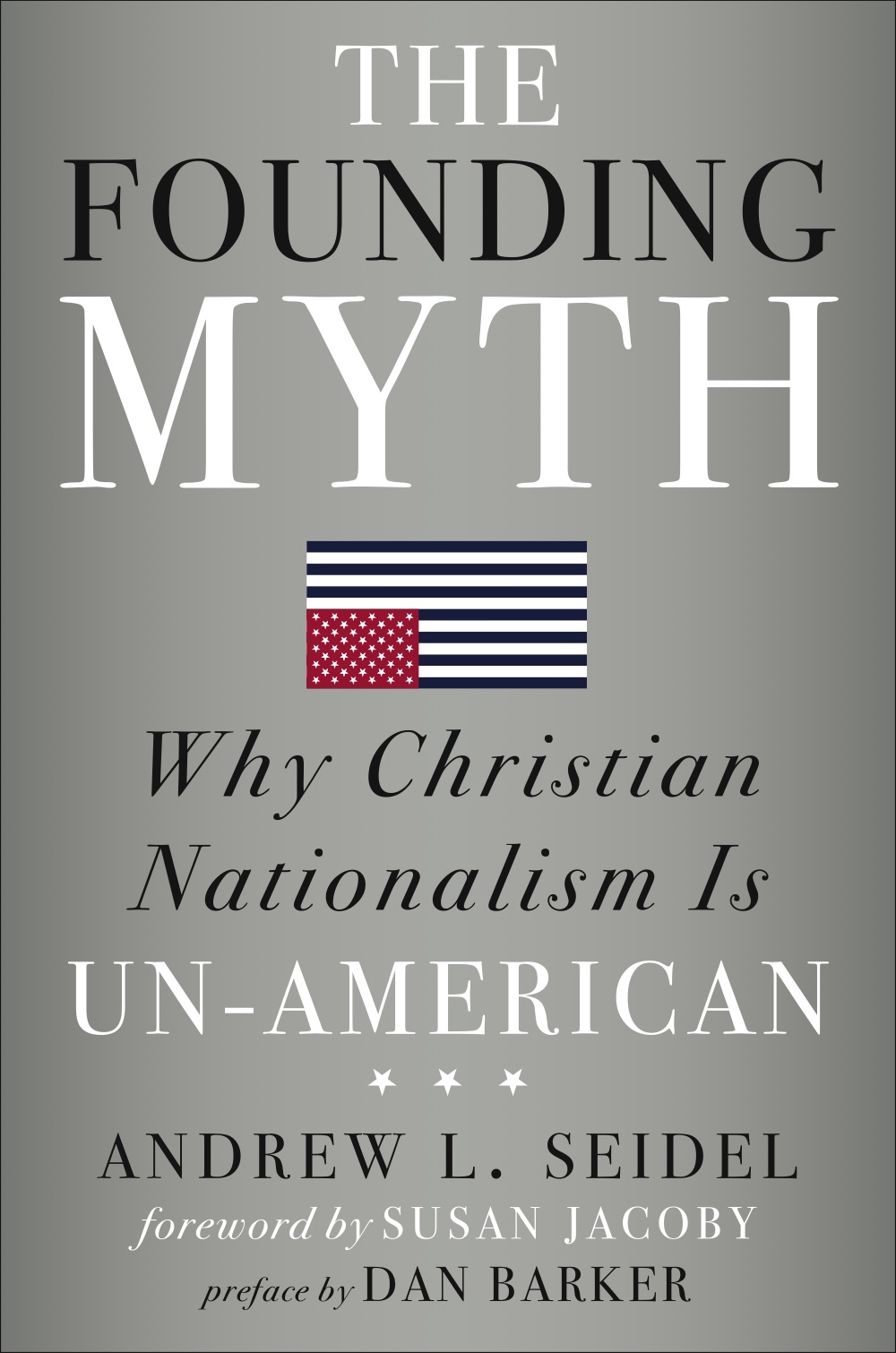
Do “In God We Trust,” the Declaration of Independence, and other historical “evidence” prove that America was founded on Judeo-Christian principles? Are the Ten Commandments the basis for American law? A constitutional attorney dives into the debate about religion’s role in America’s founding. In today’s contentious political climate, understanding religion’s role in American government is more important than ever. Christian nationalists assert that our nation was founded on Judeo-Christian principles, and advocate an agenda based on this popular historical claim. But is this belief true? The Founding Myth answers the question once and for all. Andrew L. Seidel, a constitutional attorney at the Freedom from Religion Foundation, builds his case point by point, comparing the Ten Commandments to the Constitution and contrasting biblical doctrine with America’s founding philosophy, showing that the Bible contradicts the Declaration of Independence’s central tenets. Thoroughly researched, this persuasively argued and fascinating book proves that America was not built on the Bible and that Christian nationalism is, in fact, un-American.Trim x 9 Inches

In 2009, Harvey A. Silverglate, a prominent criminal defense and civil liberties lawyer, published his landmark critique of the federal criminal justice system, Three Felonies a Day: How the Feds Target the Innocent. In 2014, Sidney Powell, a former federal prosecutor in three districts under nine United States Attorneys from both political parties and who has been lead counsel in 500 federal appeals, published her landmark indictment of the system, Licensed To Lie: Exposing Corruption in the Department of Justice, after she witnessed appalling abuses by prosecutors—more than a decade after she entered private practice. Now these two leading authorities have combined their knowledge, experiences, and talents to produce a much-needed and long-awaited blueprint for reforming the way business is conducted within the Department of Justice and in the federal criminal courts. Both Powell and Silverglate decided to join forces to write this essential and long-awaited book in order to answer the questions and the challenges that each of them has faced over the past several years: “OK,” they’ve been told. “We understand your criticisms. Now how about telling us what has to be done to restore justice to federal criminal justice.” This collaboration is their response.

"The Electoral College is a disaster for a democracy." —Donald TrumpThe framers of the Constitution battled over it. Lawmakers have tried to amend or abolish it more than 700 times. To this day, millions of voters, and even members of Congress, misunderstand how it works. It deepens our national divide and distorts the core democratic principles of political equality and majority rule. How can we tolerate the Electoral College when every vote does not count the same, and the candidate who gets the most votes can lose?Twice in the last five elections, the Electoral College has overridden the popular vote, calling the integrity of the entire system into question—and creating a false picture of a country divided into bright red and blue blocks when in fact we are purple from coast to coast. Even when the popular-vote winner becomes president, tens of millions of Americans—Republicans and Democrats alike—find that their votes didn't matter. And, with statewide winner-take-all rules, only a handful of battleground states ultimately decide who will become president.Now, as political passions reach a boiling point at the dawn of the 2020 race, the message from the American people is clear: The way we vote for the only official whose job it is to represent all Americans is neither fair nor just. Major reform is needed—now. Isn't it time to let the people pick the president?In this thoroughly researched and engaging call to arms, Supreme Court journalist and New York Times editorial board member Jesse Wegman draws upon the history of the founding era, as well as information gleaned from campaign managers, field directors, and other officials from twenty-first-century Democratic and Republican presidential campaigns, to make a powerful case for abolishing the antiquated and antidemocratic Electoral College. In Let the People Pick the President he shows how we can at long last make every vote in the United States count—and restore belief in our democratic system.

In Defender in Chief, celebrated constitutional scholar John Yoo makes an airtight case against Donald Trump's supposed disdain for constitutional rules and norms.Donald Trump isn't shredding the Constitution--he's its greatest protector.Ask any liberal--and many moderate conservatives--and they'll tell you that Donald Trump is a threat to the rule of law as delineated by the U.S. Constitution. Mainstream media outlets have reported fresh examples of alleged executive overreach or authoritarian rhetoric nearly every day of his presidency. In the 2020 primaries, the candidates seem to be competing to paint the most frightening picture of how the president is destroying our democracy and jeopardizing our nation's very existence.Far from considering Trump an inherent threat to our nation's founding principles, Yoo convincingly argues that Jefferson, Madison, Hamilton, Adams, and Franklin would have seen the president as more in line with their vision of the executive branch than his recent predecessors, even at his most controversial.This authoritative and engaging work is a compelling, intellectually-sound defense of an embattled president's ideas and actions.

"[We need] a grassroots, bottom-up movement that understands the challenge in front of us, and then organizes against monopoly power in communities across this country. This book is a blueprint for that organizing. In these pages, you will learn how monopolies and oligopolies have taken over almost every aspect of American life, and you will also learn about what can be done to stop that trend before it is too late." —From the foreword by Bernie Sanders.A passionate attack on the monopolies that are throttling American democracy.Every facet of American life is being overtaken by big platform monopolists like Facebook, Google, and Bayer (which has merged with the former agricultural giant Monsanto), resulting in a greater concentration of wealth and power than we've seen since the Gilded Age. They are evolving into political entities that often have more influence than the actual government, bending state and federal legislatures to their will and even creating arbitration courts that circumvent the US justice system. How can we recover our freedom from these giants? Anti-corruption scholar and activist Zephyr Teachout has the answer: Break 'Em Up.This book is a clarion call for liberals and leftists looking to find a common cause. Teachout makes a compelling case that monopolies are the root cause of many of the issues that today's progressives care about; they drive economic inequality, harm the planet, limit the political power of average citizens, and historically-disenfranchised groups bear the brunt of their shameful and irresponsible business practices. In order to build a better future, we must eradicate monopolies from the private sector and create new safeguards that prevent new ones from seizing power.Through her expert analysis of monopolies in several sectors and their impact on courts, journalism, inequality, and politics, Teachout offers a concrete path toward thwarting these enemies of working Americans and reclaiming our democracy before it’s too late.

Why President Trump has left us with no choice but to remove him from office, as explained by celebrated Supreme Court lawyer and former Acting Solicitor General Neal Katyal.No one is above the law. This belief is as American as freedom of speech and turkey on Thanksgiving—held sacred by Democrats and Republicans alike. But as celebrated Supreme Court lawyer and former Acting Solicitor General Neal Katyal argues in Impeach, if President Trump is not held accountable for repeatedly asking foreign powers to interfere in the 2020 presidential election, this could very well mark the end of our democracy. To quote President George Washington’s Farewell Address: “Foreign influence is one of the most baneful foes of republican government.” Impeachment should always be our last resort, explains Katyal, but our founders, our principles, and our Constitution leave us with no choice but to impeach President Trump—before it’s too late.

Ballot box voting is often considered the essence of political freedom. But it has two major shortcomings: individual voters have little chance of making a difference, and they also face strong incentives to remain ignorant about the issues at stake. Voting with your feet, however, avoids both of these pitfalls and offers a wider range of choices. In Free to Move, Ilya Somin explains how broadening opportunities for foot voting can greatly enhance political liberty for millions of people around the world. People can vote with their feet through international migration, by choosing where to live within a federal system, and by making decisions in the private sector. These three types of foot voting are rarely considered together, but Somin explains how they have important common virtues and can be mutually reinforcing. He contends that all forms of foot voting should be expanded and shows how both domestic constitutions and international law can be structured to increase opportunities for foot voting while mitigating possible downsides.

Supreme Court Justice Antonin Scalia in his own words: the definitive collection of his opinions, speeches, and articles on the most essential and vexing legal questions, with an intimate foreword by Justice Elena KaganA justice on the United States Supreme Court for three decades, Antonin Scalia transformed the way that judges, lawyers, and citizens think about the law. The Essential Scalia presents Justice Scalia on his own terms, allowing readers to understand the reasoning and insights that made him one of the most consequential jurists in American history. Known for his forceful intellect and remarkable wit, Scalia mastered the art of writing in a way that both educated and entertained. This comprehensive collection draws from the best of Scalia’s opinions, essays, speeches, and testimony to paint a complete and nuanced portrait of his jurisprudence. This compendium addresses the hot-button issues of the times, from abortion and the right to bear arms to marriage, free speech, religious liberty, and so much more. It also presents the justice’s wise insights on perennial debates over the structure of government created by our Constitution and the proper methods for interpreting our laws. Brilliant and passionately argued, The Essential Scalia is an indispensable resource for anyone who wants to understand our Constitution, the American legal system, and one of our nation’s most influential and highly regarded jurists and thinkers.

A New York Times Book Review Editors' ChoiceAn innovative account of Abraham Lincoln, constitutional thinker and doer Abraham Lincoln is justly revered for his brilliance, compassion, humor, and rededication of the United States to achieving liberty and justice for all. He led the nation into a bloody civil war to uphold the system of government established by the US Constitution--a system he regarded as the "last best hope of mankind." But how did Lincoln understand the Constitution?In this groundbreaking study, Noah Feldman argues that Lincoln deliberately and recurrently violated the United States' founding arrangements. When he came to power, it was widely believed that the federal government could not use armed force to prevent a state from seceding. It was also assumed that basic civil liberties could be suspended in a rebellion by Congress but not by the president, and that the federal government had no authority over slavery in states where it existed. As president, Lincoln broke decisively with all these precedents, and effectively rewrote the Constitution's place in the American system. Before the Civil War, the Constitution was best understood as a compromise pact--a rough and ready deal between states that allowed the Union to form and function. After Lincoln, the Constitution came to be seen as a sacred text--a transcendent statement of the nation's highest ideals.The Broken Constitution is the first book to tell the story of how Lincoln broke the Constitution in order to remake it. To do so, it offers a riveting narrative of his constitutional choices and how he made them--and places Lincoln in the rich context of thinking of the time, from African American abolitionists to Lincoln's Republican rivals and Secessionist ideologues.Includes 8 Pages of Black-and-White Illustrations

The definitive account of the 1995 Oklahoma City bombing and the enduring legacy of Timothy McVeigh, leading to the January 6 insurrection—from acclaimed journalist Jeffrey Toobin.Timothy McVeigh wanted to start a movement.Speaking to his lawyers days after the Oklahoma City bombing, the Gulf War veteran expressed no regrets: killing 168 people was his patriotic duty. He cited the Declaration of Independence from “Whenever any Form of Government becomes destructive of these ends, it is the Right of the People to alter or to abolish it.” He had obsessively followed the siege of Waco and seethed at the imposition of President Bill Clinton’s assault weapons ban. A self-proclaimed white separatist, he abhorred immigration and wanted women to return to traditional roles. As he watched the industrial decline of his native Buffalo, McVeigh longed for when America was great.New York Times bestselling author Jeffrey Toobin traces the dramatic history and profound legacy of Timothy McVeigh, who once declared, “I believe there is an army out there, ready to rise up, even though I never found it.” But that doesn’t mean his army wasn’t there. With news-breaking reportage, Toobin details how McVeigh’s principles and tactics have flourished in the decades since his death in 2001, reaching an apotheosis on January 6 when hundreds of rioters stormed the Capitol. Based on nearly a million previously unreleased tapes, photographs, and documents, including detailed communications between McVeigh and his lawyers, as well as interviews with such key figures as Bill Clinton, Homegrown reveals how the story of Timothy McVeigh and the Oklahoma City bombing is not only a powerful retelling of one of the great outrages of our time, but a warning for our future.

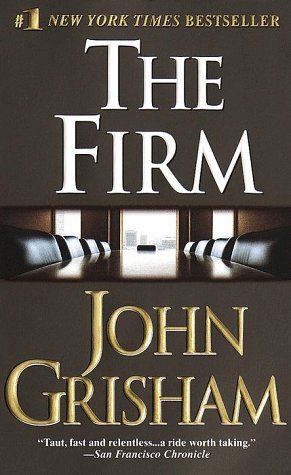
At the top of his class at Harvard Law, Mitch McDeere had his choice of the best firms in America. He made a deadly mistake. For a young lawyer on the make, it was an offer Mitch McDeere couldn’t a position at a law firm where the bucks, billable hours, and benefits are over the top. It’s a dream job for an up-and-comer—if he can overlook the uneasy feeling he gets at the office. Then an FBI investigation into the firm’s connections to the Mafia plunges the straight and narrow attorney into a nightmare of terror and intrigue. With no choice but to pit his wits, ethics, and legal skills against the firm’s deadly secrets—if he hopes to stay alive…