
Ronald Dworkin
Ronald Dworkin, QC, FBA was an American philosopher of law. He was a Jeremy Bentham Professor of Law and Philosophy at University College London, Frank Henry Sommer Professor of Law at New York University, and has taught previously at Yale Law School and the University of Oxford. An influential contributor to both philosophy of law and political philosophy, Dworkin received the 2007 Holberg International Memorial Prize in the Humanities for "his pioneering scholarly work" of "worldwide impact." His theory of law as integrity is amongst the most influential contemporary theories about the nature of law.
28 Books Written
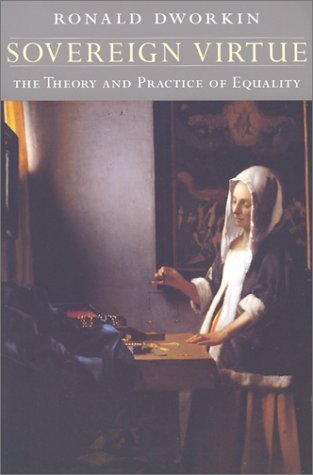
Sovereign Virtue: The Theory and Practice of Equality
by Ronald Dworkin
Rating: 3.8 ⭐
• 2 recommendations ❤️
Equality is the endangered species of political ideals. Even left-of-center politicians reject equality as an ideal: government must combat poverty, they say, but need not strive that its citizens be equal in any dimension. In his new book Ronald Dworkin insists, to the contrary, that equality is the indispensable virtue of democratic sovereignty. A legitimate government must treat all its citizens as equals, that is, with equal respect and concern, and, since the economic distribution that any society achieves is mainly the consequence of its system of law and policy, that requirement imposes serious egalitarian constraints on that distribution.What distribution of a nation's wealth is demanded by equal concern for all? Dworkin draws upon two fundamental humanist principles--first, it is of equal objective importance that all human lives flourish, and second, each person is responsible for defining and achieving the flourishing of his or her own life--to ground his well-known thesis that true equality means equality in the value of the resources that each person commands, not in the success he or she achieves. Equality, freedom, and individual responsibility are therefore not in conflict, but flow from and into one another as facets of the same humanist conception of life and politics. Since no abstract political theory can be understood except in the context of actual and complex political issues, Dworkin develops his thesis by applying it to heated contemporary controversies about the distribution of health care, unemployment benefits, campaign finance reform, affirmative action, assisted suicide, and genetic engineering.

With the incisiveness and lucid style for which he is renowned, Ronald Dworkin has written a masterful explanation of how the Anglo-American legal system works and on what principles it is grounded. Law’s Empire is a full-length presentation of his theory of law that will be studied and debated―by scholars and theorists, by lawyers and judges, by students and political activists―for years to come.Dworkin begins with the question that is at the heart of the whole legal in difficult cases how do (and how should) judges decide what the law is? He shows that judges must decide hard cases by interpreting rather than simply applying past legal decisions, and he produces a general theory of what interpretation is―in literature as well as in law―and of when one interpretation is better than others. Every legal interpretation reflects an underlying theory about the general character of Dworkin assesses three such theories. One, which has been very influential, takes the law of a community to be only what the established conventions of that community say it is. Another, currently in vogue, assumes that legal practice is best understood as an instrument of society to achieve its goals. Dworkin argues forcefully and persuasively against both these he insists that the most fundamental point of law is not to report consensus or provide efficient means to social goals, but to answer the requirement that a political community act in a coherent and principled manner toward all its members. He discusses, in the light of that view, cases at common law, cases arising under statutes, and great constitutional cases in the Supreme Court, and he systematically demonstrates that his concept of political and legal integrity is the key to Anglo-American legal theory and practice.

What is law? What is it for? How should judges decide novel cases when the statutes and earlier decisions provide no clear answer? Do judges make up new law in such cases, or is there some higher law in which they discover the correct answer? Must everyone always obey the law? If not, when is a citizen morally free to disobey?A renowned philosopher enters the debate surrounding these questions. Clearly and forcefully, Ronald Dworkin argues against the "ruling" theory in Anglo-American law--legal positivism and economic utilitarianism--and asserts that individuals have legal rights beyond those explicitly laid down and that they have political and moral rights against the state that are prior to the welfare of the majority.Mr. Dworkin criticizes in detail the legal positivists' theory of legal rights, particularly H. L. A. Hart's well-known version of it. He then develops a new theory of adjudication, and applies it to the central and politically important issue of cases in which the Supreme Court interprets and applies the Constitution. Through an analysis of John Rawls's theory of justice, he argues that fundamental among political rights is the right of each individual to the equal respect and concern of those who govern him. He offers a theory of compliance with the law designed not simply to answer theoretical questions about civil disobedience, but to function as a guide for citizens and officials. Finally, Professor Dworkin considers the right to liberty, often thought to rival and even preempt the fundamental right to equality. He argues that distinct individual liberties do exist, but that they derive, not from some abstract right to liberty as such, but from the right to equal concern and respect itself. He thus denies that liberty and equality are conflicting ideals.Ronald Dworkin's theory of law and the moral conception of individual rights that underlies it have already made him one of the most influential philosophers working in this area. This is the first publication of these ideas in book form.

The fox knows many things, the Greeks said, but the hedgehog knows one big thing. In his most comprehensive work, Ronald Dworkin argues that value in all its forms is one big that what truth is, life means, morality requires, and justice demands are different aspects of the same large question. He develops original theories on a great variety of issues very rarely considered in the same moral skepticism, literary, artistic, and historical interpretation, free will, ancient moral theory, being good and living well, liberty, equality, and law among many other topics. What we think about any one of these must stand up, eventually, to any argument we find compelling about the rest.Skepticism in all its forms—philosophical, cynical, or post-modern—threatens that unity. The Galilean revolution once made the theological world of value safe for science. But the new republic gradually became a new the modern philosophers inflated the methods of physics into a totalitarian theory of everything. They invaded and occupied all the honorifics—reality, truth, fact, ground, meaning, knowledge, and being—and dictated the terms on which other bodies of thought might aspire to them, and skepticism has been the inevitable result. We need a new revolution. We must make the world of science safe for value.

Originally delivered as the Einstein lectures at Bern University on 12–14 December 2011.The text of a draft of the lectures, presented on 8 December 2011 in the Colloquium in Legal, Political and Social Philosophy at NYU School of Law coordinated by Ronald Dworkin and Thomas Nagel, is available here: http://www.law.nyu.edu/academics/coll... Videos from the three lectures are available here: https://cast.switch.ch/vod/channels/1...An excerpt from the published version of the first chapter is available here: http://www.nybooks.com/articles/archi...

Internationally renowned lawyer and philosopher Ronald Dworkin addresses the crucially related acts of abortion and euthanasia in a brilliantly original book that examines their meaning in a nation that prizes both life and individual liberty. From Roe v. Wade to the legal battle over the death of Nancy Cruzan, no issues have opened greater rifts in American society than those of abortion and euthanasia. At the heart of Life's Dominion is Dworkin's inquest into why abortion and euthanasia provoke such controversy. Do these acts violate some fundamental "right to life"? Or are the objections against them based on the belief that human life is sacred? Combining incisive moral reasoning and close readings of indicidual court decisions with a majestic interpretation of the U.S. Constitution itself, Dworkin gives us a work that is absolutely essential for anyone who cares about the legal status of human life.

Politics in America are polarized and trivialized, perhaps as never before. In Congress, the media, and academic debate, opponents from right and left, the Red and the Blue, struggle against one another as if politics were contact sports played to the shouts of cheerleaders. The result, Ronald Dworkin writes, is a deeply depressing political culture, as ill equipped for the perennial challenge of achieving social justice as for the emerging threats of terrorism. Can the hope for change be realized? Dworkin, one the world's leading legal and political philosophers, identifies and defends core principles of personal and political morality that all citizens can share. He shows that recognizing such shared principles can make substantial political argument possible and help replace contempt with mutual respect. Only then can the full promise of democracy be realized in America and elsewhere.Dworkin lays out two core principles that citizens should first, that each human life is intrinsically and equally valuable and, second, that each person has an inalienable personal responsibility for identifying and realizing value in his or her own life. He then shows what fidelity to these principles would mean for human rights, the place of religion in public life, economic justice, and the character and value of democracy. Dworkin argues that liberal conclusions flow most naturally from these principles. Properly understood, they collide with the ambitions of religious conservatives, contemporary American tax and social policy, and much of the War on Terror. But his more basic aim is to convince Americans of all political stripes--as well as citizens of other nations with similar cultures--that they can and must defend their own convictions through their own interpretations of these shared values.

This is a book about the interplay of urgent political issues and hotly debated questions of moral philosophy. The controversies it joins are old; but history has given them fresh shape. For example, whether judges should and do make law is now of more practical importance than ever before, as recent presidents have appointed enough justices to the Supreme Court to set its character for a generation.With forceful style, Ronald Dworkin addresses questions about the Anglo-American legal system as protector of individual rights and as machinery for furthering the common good. He discusses whether judges should make political decisions in hard cases; the balancing of individual rights versus the good of the community; whether a person has the right to do what society views as wrong; and the meaning of equality in any framework of social justice. Dworkin strongly opposes the idea that judges should aim at maximizing social wealth. It is his conviction that the area of discretion for judges is severely limited, that in a mature legal system one can always find in existing law a “right answer” for hard cases.Dworkin helps us thread our way through many timely issues such as the rights and privileges of the press under the First Amendment. He reviews the Bakke case, which tested affirmative action programs. These essays also examine civil disobedience, especially in nuclear protests, and bring new perspective to the debate over support of the arts.Above all, this is a book about the interplay between two levels of our political practical problems and philosophical theory, matters of urgency and matters of principle. The concluding essay on press freedom expands the discussion of conflict between principle and policy into a warning. Though some defenders of the press blend the two in order to expand freedom of speech, the confusion they create does disservice to their aim and jeopardizes the genuine and fragile right of free speech. We stand in greater danger of compromising that right than of losing the most obvious policy benefits of powerful investigative reporting and should therefore beware the danger to liberty of confusing the two. The caution is general. If we care so little for principle that we dress policy in its colors when this suits our purpose, we cheapen principle and diminish its authority.

Ronald Dworkin argues that Americans have been systematically misled about what their Constitution is, and how judges decide what it means. The Constitution, he observes, grants individual rights in extremely abstract terms. The First Amendment prohibits the passing of laws that “abridge the freedom of speech”; the Fifth Amendment insists on “due process of law”; and the Fourteenth Amendment demands “equal protection of the laws” for all persons. What does that abstract language mean when it is applied to the political controversies that divide Americans―about affirmative action and racial justice, abortion, euthanasia, capital punishment, censorship, pornography, and homosexuality, for example? Judges, and ultimately the justices of the Supreme Court, must decide for everyone, and that gives them great power. How should they decide? Dworkin defends a particular answer to that question, which he calls the “moral reading” of the Constitution. He argues that the Bill of Rights must be understood as setting out general moral principles about liberty and equality and dignity, and that private citizens, lawyers, and finally judges must interpret and apply those general principles by posing and trying to answer more concrete moral questions. Is freedom to choose abortion really a basic moral right and would curtailing that right be a deep injustice, for example? Why? In the detailed discussions of individual constitutional issues that form the bulk of the book, Dworkin shows that our judges do decide hard constitutional cases by posing and answering such concrete moral questions. Indeed he shows that that is the only way they can decide those cases. But most judges―and most politicians and most law professors―pretend otherwise. They say that judges must never treat constitutional issues as moral issues because that would be “undemocratic”―it would mean that judges were substituting their own moral convictions for those of Congressmen and state legislators who had been elected by the people. So they insist that judges can, and should, decide in some more mechanical way which involves no fresh moral judgment on their part. The result, Dworkin shows, has been great constitutional confusion. Is the premise at the core of this confusion really sound? Is the moral reading―the only reading of the American Constitution that makes sense―really undemocratic? In spirited and illuminating discussions both of the great constitutional cases of recent years, and of general constitutional principles, Dworkin argues, to the contrary, that the distinctly American version of government under principle, based on the moral reading of the Constitution, is in fact the best account of what democracy really is.

How should a judge’s moral convictions bear on his judgments about what the law is? Lawyers, sociologists, philosophers, politicians, and judges all have answers to that these range from “nothing” to “everything.” In Justice in Robes , Ronald Dworkin argues that the question is much more complex than it has often been taken to be and charts a variety of dimensions—semantic, jurisprudential, and doctrinal—in which law and morals are undoubtedly interwoven. He restates and summarizes his own widely discussed account of these connections, which emphasizes the sovereign importance of moral principle in legal and constitutional interpretation, and then reviews and criticizes the most influential rival theories to his own. He argues that pragmatism is empty as a theory of law, that value pluralism misunderstands the nature of moral concepts, that constitutional originalism reflects an impoverished view of the role of a constitution in a democratic society, and that contemporary legal positivism is based on a mistaken semantic theory and an erroneous account of the nature of authority. In the course of that critical study he discusses the work of many of the most influential lawyers and philosophers of the era, including Isaiah Berlin, Richard Posner, Cass Sunstein, Antonin Scalia, and Joseph Raz. Dworkin’s new collection of essays and original chapters is a model of lucid, logical, and impassioned reasoning that will advance the crucially important debate about the roles of justice in law.

George W. Bush’s nominations of John Roberts and Samuel Alito to the Supreme Court in 2005 were widely expected to turn it sharply to the right. But no one foresaw the rapidity or the revolutionary zeal with which, as Ronald Dworkin writes, the Court would begin “overruling, most often by stealth, the central constitutional doctrines that generations of past justices, conservative as well as liberal, had constructed.” Dworkin examines the key decisions of the Court’s 2006-–2007 term and argues that these two new justices, along with Antonin Scalia and Clarence Thomas, have created an “unbreakable phalanx bent on remaking constitutional law.” They are guided not by political ideology or conservative judicial principle but rather by “partisan, cultural, and perhaps religious allegiance,” and disdain tradition, precedent, even careful legal reasoning.In his analyses of the prior records of Roberts and Alito, Dworkin finds ample evidence that both have long held strong conservative convictions. But during their confirmation hearings, they gave little hint of their judicial philosophy, hiding behind vague promises to make decisions “according to the rule of law.” If senators fail to press nominees for candid answers to the controversial questions of principle underlying the Constitution, Dworkin contends, then the confirmation process is irrelevant. As a result, the Court may be dominated for a generation by justices whose views are far from those of most Americans. Its past decisions on issues such as abortion, affirmative action, and executive power, Dworkin fears, are “vulnerable to reversal in the next several years as the fiercely conservative justices set out to rewrite American constitutional law without much caring about the logic of the arguments they use to do so. Bush’s appointment of Roberts and Alito may prove to be among the worst of the many disasters of his miserable administration.”



El derecho de las libertades: La lectura moral de la Constitución Norteamericana
by Ronald Dworkin
Rating: 3.0 ⭐
Las constituciones más contemporáneas declaran derechos individuales en un lenguaje bastante amplio y "debido proceso", "igualdad ante la ley", "libertad de expresión". ¿Qué significa este lenguaje abstracto bajo las controversias políticas que dividen a la ciudadanía? ¿Cómo deberían decidir los jueces?Dworkin propone la lectura moral de la Constitución, bajo el entendimiento de que ésta invoca principios morales sobre libertad, igualdad y dignidad. Aun cuando muchos académicos pretenden que las cuestiones constitucionales nunca deben tratarse como cuestiones morales, en cada una de las discusiones abordadas en este libro —aborto, pornografía, eutanasia, homosexualidad, etc.—, Dworkin muestra que los jueces deciden casos difíciles respondiendo a cuestiones morales concretas. Esa es, según él, la única forma en la que pueden decidir tales casos.

Ronald Dworkin, uno de los principales representantes de la filosofía política y de la filosofía del derecho contemporáneas, se desempeña como profesor en las Universidades de Nueva York y Oxford. Su teoría se convirtió en las últimas décadas en un punto de partida ineludible a la hora de reflexionar sobre las relaciones del derecho con la ética y la política. En ese sentido, Dworkin ha desarrollado una concepción liberal, igualitaria, democrática y progresista, que permite enfrentar tanto al positivismo jurídico como al neoliberalismo. El presente volumen reúne dos trabajos de Dworkin que por su agudeza y claridad se han convertido en clásicos en la discusión filosófica actual. En el primero de ellos –“El liberalismo”– Dworkin intenta encontrar el núcleo teórico constitutivo del pensamiento liberal. De acuerdo con él, lo que permite distinguir al liberalismo de otras concepciones políticas y, fundamentalmente, del conservadurismo es su énfasis en la idea de que el gobierno debe ser neutral frente a las distintas concepciones del bien sostenidas por los ciudadanos. En el segundo de los trabajos que aquí presentamos –“Igualdad, democracia y constitución: nosotros, el pueblo, en los estrados”– Dworkin explora las tensiones que existen entre el constitucionalismo liberal y la soberanía popular, para proponer su propia concepción de la democracia.
Dworkin shows how liberty has been eroded steadily in Britain over the last ten years - through a more restrictive Official Secrets Act, through political censorship of broadcasting, through the intolerance of public demonstrations and protest, through a Prevention of Terrorism Act which allows suspects to be detained incommunicado for two days, and then for a further five days without being allowed to see a lawyer in private. He also shows how the government have imposed moral restrictions which result in outrages such as Clause 28. He argues that Britain needs a written constitution, on line with the European Charter of Human Rights. This is a polemic against the British record on civil rights, and a powerful argument for legal intergration with Europe. The author also wrote "Taking Rights Seriously" and "The Philosophy of Law".


Secondo l'autore, oggi si assiste a un irrigidimento del confronto politico, a uno scontro frontale tra schieramenti contrapposti che non lascia spazio a un autentico dibattito, negli Stati Uniti come in molte democrazie occidentali. In questo piccolo libro, animato da sano realismo e da una punta di scetticismo, Ronald Dworkin propone un passo indietro ai principi fondamentali che ogni democrazia e ogni cittadino del mondo non possono che il valore di ogni singola vita umana e la responsabilità personale nel realizzarla. Principi molto generali da cui è però possibile partire per discutere problemi molto il matrimonio tra gay, la presenza della religione nell'educazione, le tasse. Obiettivo della trattazione è la ricostruzione del dibattito politico negli Stati Uniti, o piuttosto della sua assenza, anche se gli argomenti esposti sono molto più durevoli e molto meno legati alla cultura politica di uno specifico paese.


Virtud soberana: La teoría y la práctica de la igualdad
by Ronald Dworkin
La igualdad es la especie en peligro de extinción de los ideales políticos. Incluso los políticos de centroizquierda rechazan la igualdad como el gobierno tiene que combatir la pobreza, afirman, pero no tiene que esforzarse para que los ciudadanos sean iguales en medida alguna. En su nuevo libro, Ronald Dworkin insiste, por el contrario, en que la igualdad es la virtud indispensable de la soberanía democrática. Un gobierno legítimo tiene que tratar a todos los ciudadanos como a iguales, esto es, con igual respeto y consideración. Y puesto que la distribución económica que consigue una sociedad es consecuencia, sobre todo, de su sistema legal y político, ese requisito impone a la distribución constricciones igualitarias muy severas. ¿Por qué la distribución de la riqueza de un país demanda la igualdad de consideración? Dworkin se apoya en dos principios humanistas fundamentales (primero, la necesidadobjetiva de que prospere la vida de todo ser humano, sea cual fuere su condición; y segundo, la responsabilidad que debe tener toda persona de definir su propia vida y conseguir que prospere) como base de su bien conocida tesis de que la verdadera igualdad es la igualdad en el valor de los recursos que cada persona tiene a su disposición, y no de los éxitos que logra. La igualdad, la libertad y la responsabilidad individual no están, pues, en conflicto, sino que fluyen y refluyen las unas de las otras, como facetas de la misma concepción humanista de la vida y la política. Puesto que no se puede entender ninguna teoría política abstracta si no es en el contexto de las cuestiones políticas reales y complejas, Dworkin desarrolla sus tesis aplicándolas a las acaloradas controversias contemporáneas sobre la distribución de recursos sanitarios, los subsidios de desempleo, la reforma de la financiación de las campañas electorales, la acción afirmativa, el suicidio asistido y la ingeniería genética.

Bürgerrechte ernstgenommen. Sonderausgabe.
by Ronald Dworkin

Ética privada e igualitarismo político: Introducción de Fernando Vallespín (Pensamiento Contemporaneo/ Contemporary Thinking)
by Ronald Dworkin
En el presente libro, Dworkin se separa de su ya tradicional ocupación con la filosofía del derecho para abordar específicamente una propuesta de "moralidad política": la defensa de lo que el autor califica como liberalismo igualitario, que nos presenta como alternativa al liberalismo político de John Rawls. Para ello construye una compleja teoría ético-filosófica, que tendría la virtud de unir los valores de la libertad, la igualdad y comunidad dentro de una visión humanitaria. La introducción a este libro corre a cargo de Fernando Vallespín, catedrático de Ciencia Política en la Universidad Autónoma de Madrid, autor de Nuevas teorías del contrato social y editor de Historia de la nueva política, en 6 volúmenes, así como de nuemrosos trabajos de ciencia y teoría política.

Η Επικράτεια της Ζωής
by Ronald Dworkin

自由の法―米国憲法の道徳的解釈
by Ronald Dworkin

権利論〈2〉
by Ronald Dworkin

法の帝国
by Ronald Dworkin

La vertu souveraine
by Ronald Dworkin
L'égalité comme fondement d'une théorie politique et juridique juste, par un célèbre théoricien du droit Ronald Dworkin affirme haut et fort le primat de l'égalité dont il fait la vertu souveraine et démontre que le principe d'égalité bien compris, qui inclut la liberté, constitue le fondement solide d'une théorie politique et juridique juste.