
John Micklethwait
Richard John Micklethwait CBE (born 11 August 1962) is editor-in-chief of Bloomberg News, a position he has held since February 2015. A British journalist, he was previously the editor-in-chief of The Economist from 2006 to 2015. Micklethwait was born in 1962, in London, and was educated at Ampleforth College (an independent school) and Magdalen College, Oxford, where he studied history. He worked for Chase Manhattan Bank for two years and joined The Economist in 1987. Prior to becoming editor-in-chief, he was United States editor of the publication and ran the New York Bureau for two years. Before that, he edited the Business Section of the newspaper for four years. His other roles have included setting up an office in Los Angeles for The Economist, where he worked from 1990 to 1993. He has covered business and politics from the United States, Latin America, Continental Europe, Southern Africa and most of Asia. Appointed as editor-in-chief on 23 March 2006, the first issue of The Economist published under his editorship was released on 7 April 2006. He was named Editors' Editor by the British Society of Magazine Editors in 2010. Micklethwait has frequently appeared on CNN, ABC News, BBC, C-SPAN, PBS and NPR. In 2015 he was appointed as a Trustee of the British Museum. He was also a delegate, along with two colleagues, at the 2010 Bilderberg Conference held in Spain. This group consists of an assembly of notable politicians, industrialists and financiers who meet annually to discuss issues on a non-disclosure basis. Micklethwait was appointed Commander of the Order of the British Empire (CBE) in the 2016 Birthday Honours for services to journalism and economics.
13 Books Written

The Company: A Short History of a Revolutionary Idea
by John Micklethwait
Rating: 3.6 ⭐
• 3 recommendations ❤️
Chosen by BusinessWeek as One of the Top Ten Business Books of the YearWith apologies to Hegel, Marx, and Lenin, the basic unit of modern society is neither the state, nor the commune, nor the party; it is the company. From this bold premise, John Micklethwait and Adrian Wooldridge chart the rise of one of history’s great catalysts for good and evil.In a “fast-paced and well-written” work ( Forbes ), the authors reveal how innovations such as limitations on liability have permitted companies to rival religions and even states in importance, governing the flow of wealth and controlling human affairs–all while being largely exempt from the rules that govern our lives.The Company is that rare, remarkable book that fills a major gap we scarcely knew existed. With it, we are better able to make sense of the past four centuries, as well as the events of today.

The Fourth Revolution: The Global Race to Reinvent the State
by John Micklethwait
Rating: 3.7 ⭐
• 2 recommendations ❤️
From the bestselling authors of The Right Nation , a visionary argument that our current crisis in government is nothing less than the fourth radical transition in the history of the nation-stateDysfunctional It’s become a cliché, and most of us are resigned to the fact that nothing is ever going to change. As John Micklethwait and Adrian Wooldridge show us, that is a seriously limited view of things. In fact, there have been three great revolutions in government in the history of the modern world. The West has led these revolutions, but now we are in the midst of a fourth revolution, and it is Western government that is in danger of being left behind.Now, things really are different. The West’s debt load is unsustainable. The developing world has harvested the low-hanging fruits. Industrialization has transformed all the peasant economies it had left to transform, and the toxic side effects of rapid developing world growth are adding to the bill. From Washington to Detroit, from Brasilia to New Delhi, there is a dual crisis of political legitimacy and political effectiveness.The Fourth Revolution crystallizes the scope of the crisis and points forward to our future. The authors enjoy extraordinary access to influential figures and forces the world over, and the book is a global tour of the innovators in how power is to be wielded. The age of big government is over; the age of smart government has begun. Many of the ideas the authors discuss seem outlandish now, but the center of gravity is moving quickly.This tour drives home a powerful that countries’ success depends overwhelmingly on their ability to reinvent the state. And that much of the West—and particularly the United States—is failing badly in its task. China is making rapid progress with government reform at the same time as America is falling badly behind. Washington is gridlocked, and America is in danger of squandering its huge advantages from its powerful economy because of failing government. And flailing democracies like India look enviously at China’s state-of-the-art airports and expanding universities.The race to get government right is not just a race of efficiency. It is a race to see which political values will triumph in the twenty-first century—the liberal values of democracy and liberty or the authoritarian values of command and control. The stakes could not be higher.

The Right Nation is not "for" liberals, and it's not "for" conservatives. It's for any of us who want to understand one of the most important forces shaping American life. How did America's government become so much more conservative in just a generation? Compared to Europe-or to America under Richard Nixon-even President Howard Dean would preside over a distinctly more conservative nation in many crucial welfare is gone; the death penalty is deeply rooted; abortion is under siege; regulations are being rolled back; the pillars of New Deal liberalism are turning to sand. Conservative positions have not prevailed everywhere, of course, but this book shows us why they've been so successfully advanced over such a broad because the battle has been waged by well-organized, shrewd, and committed troops who to some extent have been lucky in their enemies. John Micklethwait and Adrian Wooldridge, like modern-day Tocquevilles, have the perspective to see this vast subject in the round, unbeholden to forces on either side. They steer The Economist 's coverage of the United States and have unrivaled access to resources and-because of the magazine's renown for iconoclasm and analytical rigor-have had open-door access wherever the book's research has led them. And it has led them To reckon with the American right, you have to get out there where its centers are and understand the power flow among the brain trusts, the mouthpieces, the organizers, and the foot soldiers. The authors write with wit and skewer whole herds of sacred cows, but they also bring empathy to bear on a subject that sees all too little of it. You won't recognize this America from the far-left's or the far-right's caricatures. Divided into three parts-history, anatomy, and prophecy- The Right Nation comes neither to bury the American conservative movement nor to praise it blindly but to understand it, in all its dimensions, as the most powerful and effective political movement of our age.Chapter OneFROM KENNEBUNKPORT TO CRAWFORD Sir Lewis Namier, the great historian of English politics in the age of George III, once remarked that "English history, and especially English parliamentary history, is made by families rather than individuals." The same could be said of American political history, especially in the age of George I and George II. There is no better introduction to the radical transformation of Republicanism in the past generation-from patrician to populist, from Northeastern to Southwestern, from pragmatic to ideological-than the radical transformation of Republicanism's current leading family, the Bushes. Grandfather Prescott The Bushes began political life as classic establishment WASPs who summered in Kennebunkport, educated their children at boarding schools and the Ivy League and claimed family ties to the British royal family (Queen Elizabeth II is the thirteenth cousin of the first President Bush). George W.'s paternal great-grandfather, Samuel P. Bush, was a steel and railroad executive who became the first president of the National Association of Manufacturers and a founding member of the United States Chamber of Commerce. His maternal great-grandfather, George Herbert Walker, was even grander. The cofounder of W. A. Harriman, Wall Street's oldest private investment bank, Walker's stature was summed up by his twin Manhattan his office at One Wall Street and his home at One Sutton Place. There was certainly muck beneath this both Walker and Bush had their share of Wall Street shenanigans and cozy government deals, but in the age...
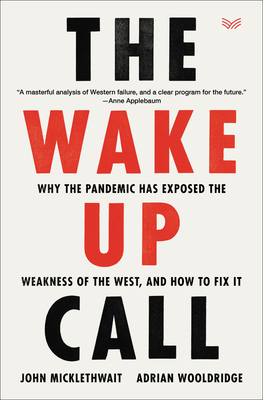
The Wake-Up Call: Why the Pandemic Has Exposed the Weakness of the West, and How to Fix It
by John Micklethwait
Rating: 3.6 ⭐
"[An] executive summary of modern political history studded with sweeping assertions and telling anecdotes." -- The New York Times Book Review"Thought-provoking." -- Kirkus Reviews“A shot in the arm...powerful.” -- The Financial Times"The Wake-Up Call, refreshingly concise and eminently readable, highlights how the modern crisis of governance compounded the challenges of the pandemic." -- Bloomberg"The Wake-Up Call argues that Covid-19 has exposed not just one president's shortcomings but a much more profound degeneration of governance dating back long before 2016...You will read no more interesting book on the political consequences of the pandemic than this." -- Niall Ferguson, author of The West and the Rest NAMED ONE OF THE BEST BOOKS OF 2020 (BLOOMBERG)An urgent and informed look at the challenges America and world governments will face in a post Covid-19 world.The Covid-19 pandemic has revealed that governments matter again, that competent leadership is the difference between living and dying. A few governments proved adept at handling the crisis while many others failed. Are Western governments healthy and strong enough to keep their citizens safe from another virulent virus—and protect their economies from collapse? Is global leadership passing from the United States to Asia—and particularly China? The Wake-Up Call addresses these urgent questions. Journalists and longtime collaborators John Micklethwait and Adrian Wooldridge identify the problems Western leaders face, and outline a detailed plan to help them become more vigilant, better prepared, and responsive to disruptive future events. The problems that face us are enormous; as The Wake-Up Call makes clear, governments around the world must re-engineer the way they operate to successfully meet the challenges ahead.

Two Economist writers show how and why religion is booming around the world and reveal its vast effects on the global economy, politics, and moreOn the street and in the corridors of power, religion is surging worldwide. From Russia to Turkey to India, nations that swore off faith in the last century—or even tried to stamp it out—are now run by avowedly religious leaders. Formerly secular conflicts like the one in Palestine have taken on an overtly religious cast. God Is Back shines a bright light on this hidden world of faith, from exorcisms in São Paulo to religious skirmishing in Nigeria, to televangelism in California and house churches in China. Since the Enlightenment, intellectuals have assumed that modernization would kill religion—and that religious America is an oddity. As God Is Back argues, religion and modernity can thrive together, and America is becoming the norm. Many things helped spark the global revival of religion, including the failure of communism and the rise of globalism. But, above all, twenty-first century religion is being fueled by a very American emphasis on competition and a customer- driven approach to salvation. These qualities have characterized this country’s faith ever since the Founders separated church and state, creating a religious free market defined by entrepreneurship, choice, and personal revelation. As market forces reshape the world, the tools and ideals of American evangelism are now spreading everywhere. The global rise of faith will have a dramatic and far- reaching impact on our century. Indeed, its destabilizing effects can already be seen far from Iraq or the World Trade Center. Religion plays a role in civil wars from Sri Lanka to Sudan. Along the tenth parallel, from West Africa to the Philippines, religious fervor and political unrest are reinforcing each other. God Is Back concludes by showing how the same American ideas that created our unique religious style can be applied around the globe to channel the rising tide of faith away from volatility and violence.

The Witch Doctors is a one-stop guide to management theories, fads, and the gurus who promote them that will spark controversy, debate, and a dialogue for change. Funny, entertaining and outspoken, this is a book no American worker can afford to miss.From the Hardcover edition.

A Future Perfect: The Challenge and Hidden Promise of Globalization
by John Micklethwait
Rating: 3.5 ⭐
A Future Perfect is the first comprehensive examination of the most important revolution of our time--globalization--and how it will continue to change our lives. The authors, John Micklethwait and Adrian Wooldridge, correspondents for The Economist , won the Financial Times/Booz Allen Hamilton Global Business Book Award on Strategy and Leadership for their previous collaboration, The Witch Doctors . In A Future Perfect , Micklethwait and Wooldridge expand their field of vision in order to analyze, demystify, and expose the global forces reshaping our world, and they detail both the challenge and the hidden promise those forces hold for individuals, businesses, and governments.Do businesses benefit from going global? Are we creating winner-take-all societies? Will globalization seal the triumph of junk culture? What will happen to individual careers? Gathering evidence from the shantytowns of São Paolo to the boardroom of General Electric, from the troubled Russia-Estonia border to the booming San Fernando Valley sex industry, Micklethwait and Wooldridge mount a powerful, witty, levelheaded defense of globalization.Along the way, the authors introduce us to the cosmocrats--the members of the elite business, information, and diplomatic class who are creating the new world order. They also identify the three engines of globalization and describe how people are managing and governing in an increasingly global era. As they did in The Witch Doctors , the authors also brilliantly puncture myths and conventional wisdom, separating false hopes from emerging realities.Incisive, expansive, and optimistic, A Future Perfect is an illuminating tour of the global economy and a fascinating assessment of its potential impact.From the Hardcover edition.

COVID-19 trauksmes zvans: kā pandēmija atsedza Rietumu pasaules trūkumus, un kā tos novērst
by John Micklethwait
Rating: 3.5 ⭐
Covid-19 pandēmija parādījusi, ka valdības lomai atkal ir izšķiroša nozīme. Krīzes apstākļos gudra un uzņēmīga vai nekompetenta un neizlēmīga valdība patiesībā ir starpība starp tās valsts pilsoņu dzīvību un nāvi. Šī grāmata ir gan kā atsvaidzinošs un provokatīvs mūsdienu politiskās vēstures rezumējums, gan kā modinātājzvans rietumvalstu līderiem un valdībām apzināties pandēmijas atsegto problēmu dziļumu un vēl lielākos izaicinājumus, ar ko Rietumu pasaule saskarsies, ja šīs problēmas netiks risinātas
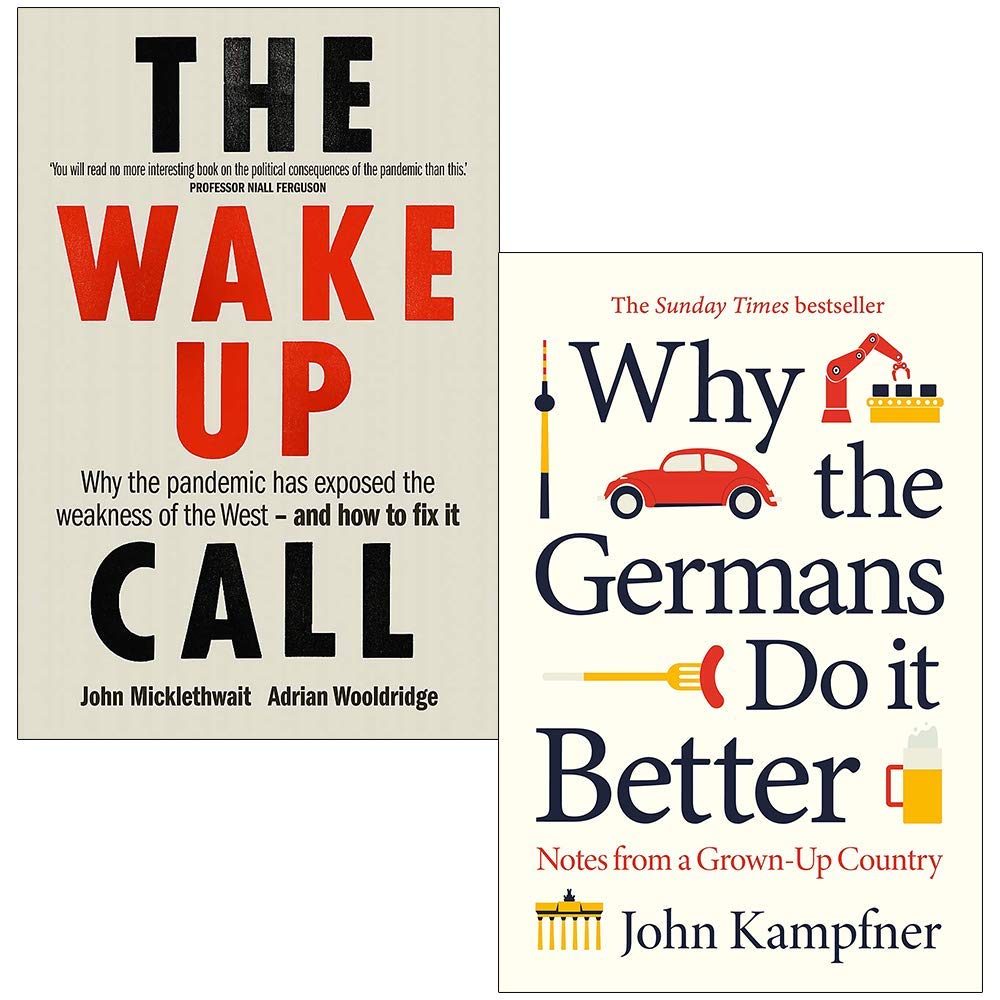
The Wake-Up Call By John Micklethwait & Why the Germans Do it Better By John Kampfner 2 Books Collection Set
by John Micklethwait

Die Gesundbeter. Was die Rezepte der Unternehmensberater wirklich nützen.
by John Micklethwait

The Economist. Intelligent Life. New Trends for smart living. Summer 2006
by John Micklethwait
Special edition from The Economist on Intelligent Life - Summer 2006
From Sarajevo to September 11: The future of globalization.: An article from: Policy Review
by John Micklethwait
This digital document is an article from Policy Review, published by Thomson Gale on February 1, 2003. The length of the article is 7007 words. The page length shown above is based on a typical 300-word page. The article is delivered in HTML format and is available in your Amazon.com Digital Locker immediately after purchase. You can view it with any web browser.Citation Details From Sarajevo to September 11: The future of globalization. John Micklethwait Policy Review (Magazine/Journal) February 1, 2003 Thomson Gale 49(15)Distributed by Thomson Gale
Right Nation : Conservative Power In America
by John Micklethwait