Loading themes...
Explore the best books about Zen theme.


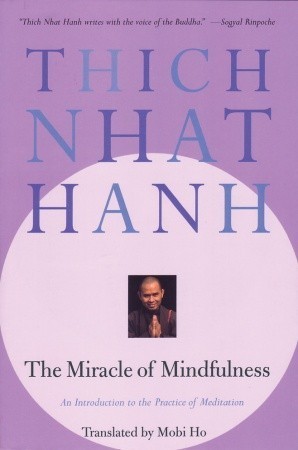
Mindfulness - ögonblickens under är en av den vietnamesiske zenmästaren Thich Nhat Hanhs mest populära böcker. I centrum står konsten att ta makten över sina tankar och vara närvarande i nuet, oavsett om man leker med sina barn, diskar eller bara äter en apelsin.Thich Nhat Hanhs enkla, rättframma stil går rakt in i hjärtat och förmedlar en stark känsla av sinnesnärvaro. Han vet hur man gör för att släppa taget om alla tankar som driver oss hit och dit och hindrar oss från att vara närvarande i stunden.Praktiska övningar varvas med enkla berättelser ur vardagen som visar att vi alltid kan välja att fokusera på det väsentliga och därmed fånga nuet. Thich Nhat Hanh lär oss att diska varje kopp och tallrik varsamt, som om de vore heliga ting. På köpet lär vi oss att se värdet i vardagliga göromål och finna ro i oss själva.Han delar också med sig av meditationsövningar som leder oss inåt mot vårt autentiska jag. Vi är större än vad vi tror och genom att iaktta och släppa taget om negativa tankar och föreställningar kan vi så småningom leva ett mer medvetet och glädjefyllt liv.

Headlessness, the experience of "no-self" that mystics of all times have aspired to, is an instantaneous way of "waking up" and becoming fully aware of one's real and abiding nature. Douglas Harding, the highly respected mystic-philosopher, describes his first experience of headlessness in "On Having No Head," the classic work first published in 1961. In this book, he conveys the immediacy, simplicity, and practicality of the "headless way," placing it within a Zen context, while also drawing parallels to practices in other spiritual traditions. If you wish to experience the freedom and clarity that results from firsthand experience of true Being, then this book will serve as a practical guide to the rediscovery of what has always been present.

In this long-awaited book of inspiring and practical teachings, Buddhist teacher Joan Halifax offers the fruits of her many years of work with dying people. Inspired by traditional Buddhist teachings, her work is a source of wisdom for all those who are charged with a dying person's care, who are facing their own death, or who are wishing to explore and contemplate the transformative power of the dying process.Halifax offers lessons from dying people and caregivers, as well as guided meditations to help readers contemplate death without fear, develop a commitment to helping others, and transform suffering and resistance into courage. She says, "Why wait until we are actualy dying to explore what it may mean to die with awareness?"A world-renowned pioneer in care of the dying, Joan Halifax founded the Project on Being with Dying, which helps dying people to face death with courage and trains professional and family caregivers in compassionate and ethical end-of-life care.

An thorough introduction to Zen Buddhist practice—in a reader-friendly question-and-answer format—by two highly regarded teacher-writersThis unique introduction to Zen teaching and practice is structured as a Q&A, making it a most useful reference for new and seasoned practitioners to look things up. The questioner (Susan Moon) and the answerer (Norman Fischer) are Buddhist teachers and old friends, each with a unique gift for articulation. Their friendly conversation covers not only the basics of Zen Buddhism but a range of issues unique to Zen in America in the twenty-first century, • What is zazen and how do you do it?• Where did Zen start and where did it come from?• Will I have an enlightenment experience?• What is the law of karma in a nutshell?• What do Zen Buddhists say about rebirth?• How do you recognize a good, solid Zen teacher? Moon and Fischer’s conversations are both humorous and informative, providing a good basic education in Zen—not only the history, theory, and practice but also contemporary issues such as gender inequality, sexual ethics, and the tension between Asian traditions and the modern American reality.

This guide to self-discovery through intimate relationships offers a spiritual perspective on healing childhood wounds and destructive patterns that are learned early on and later cause relationship dysfunction in adulthood.

"A wonderful introduction the Japanese tradition of jisei , this volume is crammed with exquisite, spontaneous verse and pithy, often hilarious, descriptions of the eccentric and committed monastics who wrote the poems." — The Buddhist ReviewAlthough the consciousness of death is, in most cultures, very much a part of life, this is perhaps nowhere more true than in Japan, where the approach of death has given rise to a centuries-old tradition of writing jisei , or the "death poem." Such a poem is often written in the very last moments of the poet's life.Hundreds of Japanese death poems, many with a commentary describing the circumstances of the poet's death, have been translated into English here, the vast majority of them for the first time. Compiler Yoel Hoffmann explores the attitudes and customs surrounding death in historical and present-day Japan and gives examples of how these have been reflected in the nation's literature in general. The development of writing jisei is then examined—from the longing poems of the early nobility and the more "masculine" verses of the samurai to the satirical death poems of later centuries.Zen Buddhist ideas about death are also described as a preface to the collection of Chinese death poems by Zen monks that are also included. Finally, the last section contains three hundred twenty haiku, some of which have never been assembled before, in translated English and romanized Japanese.

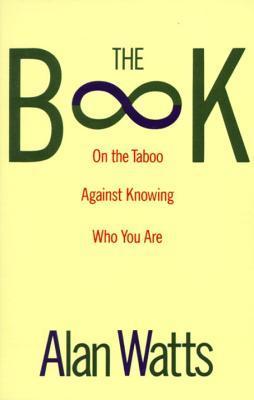
At the root of human conflict is our fundamental misunderstanding of who we are. The illusion that we are isolated beings, unconnected to the rest of the universe, has led us to view the “outside” world with hostility, and has fueled our misuse of technology and our violent and hostile subjugation of the natural world. To help us understand that the self is in fact the root and ground of the universe, Watts has crafted a revelatory primer on what it means to be human—and a mind-opening manual of initiation into the central mystery of existence.In The Book, Alan Watts provides us with a much-needed answer to the problem of personal identity, distilling and adapting the Hindu philosophy of Vedanta. A revelatory primer on what it means to be human, from "the perfect guide for a course correction in life" (Deepak Chopra)—and a mind-opening manual of initiation into the central mystery of existence.

A highly original and groundbreaking book from a noted PGA coach and Buddhist instructor • “The lessons in Zen Golf make the mental game seem so simple. Dr. Parent has given me very effective methods for working with thoughts and emotions, and for taking the negatives out of the picture.” —Vijay Singh, Masters and PGA ChampionBy combining classic insights and stories from Zen tradition, Zen Golf helps eliminate the mental distractions that routinely cause poor shots and loss of concentration, allowing golfers to feel in “the zone” that professionals have learned to master.The best players know that golf is a game of confidence, and most important, concentration–the ability to focus and block out distraction. The goal of achieving clear thought is also at the heart of Buddhist teachings. PGA coach and Buddhist instructor Dr. Joseph Parent draws on this natural connection and teaches golfers how to clear their minds, achieve ultimate focus, and play in the moment for each shot.Zen Golf presents a simple system for building “mental game mastery.” Dr Parent’s unique PAR Approach (focusing on Preparation, Action, and Response to Results) guides golfers with specific techniques for each aspect of their games. In chapters such as “How to Get From the Practice Tee to the First Tee”, “You Produce What You Fear”, and “How to Enjoy a Bad Round of Golf”, the author shares a personal teaching regimen that has helped improve the games of professionals and amateurs alike.Clear, concise, and enlightening, Zen Golf shows golfers how to prepare for, execute, and equally important, respond the results of any golf shot. A different approach to golf instruction, this book shapes ancient philosophies into new teachings.

“Somebody comes into the Zen center with a lighted cigarette, walks up to the Buddha statue, blows smoke in its face, and drops ashes on its lap. You are standing there. What can you do?” This is a problem that Zen Master Seung Sahn is fond of posing to his American students who attend his Zen centers. Dropping Ashes on the Buddha is a delightful, irreverent, and often hilariously funny living record of the dialogue between Korean Zen Master Seung Sahn and his American students. Consisting of dialogues, stories, formal Zen interviews, Dharma speeches, and letters using the Zen Master’s actual words in spontaneous, living interaction with his students, this book is a fresh presentation of the Zen teaching method of “instant dialogue” between Master and student which, through the use of astonishment and paradox, leads to an understanding of ultimate reality.

Rather than explaining typical strategies for overcoming fear, this book focuses on examining how fear is experience, how to recognize that experience as nothing more than conditioned reaction to circumstance, and how to mentor oneself into letting go of beliefs about "appropriate" responses to fear. The notion is debunked that fear is anything other than a label we have learned to put on a set of physical and emotional responses, which is a Buddhist view of emotion in general.

"[Thich Nhat Hanh] shows us the connection between personal, inner peace and peace on earth." --His Holiness The Dalai LamaNominated by Martin Luther King, Jr. for a Nobel Peace Prize, Thich Nhat Hanh is one of today’s leading sources of wisdom, peace, compassion and comfort.With hard-won wisdom and refreshing insight, Thich Nhat Hanh confronts a subject that has been contemplated by Buddhist monks and nuns for twenty-five-hundred years— and a question that has been pondered by almost anyone who has ever What is death?In No Death, No Fear , the acclaimed teacher and poet examines our concepts of death, fear, and the very nature of existence. Through Zen parables, guided meditations, and personal stories, he explodes traditional myths of how we live and die. Thich Nhat Hanh shows us a way to live a life unfettered by fear.

Renowned for the beauty and simplicity of his teachings, Ajahn Chah was Thailand's best-known meditation teacher. His charisma and wisdom influenced many American and European seekers, and helped shape the American Vipassana community. This collection brings together for the first time Ajahn Chah's most powerful teachings, including those on meditation, liberation from suffering, calming the mind, enlightenment and the 'living dhamma'. Most of these talks have previously only been available in limited, private editions and the publication of Food for the Heart therefore represents a momentous occasion: the hugely increased accessibility of his words and wisdom. Western teachers such as Ram Dass and Jack Kornfield have extolled Chah's teachings for years and now readers can experience them directly in this book.

Matthieu Ricard trained as a molecular biologist, working in the lab of a Nobel prize—winning scientist, but when he read some Buddhist philosophy, he became drawn to Buddhism. Eventually he left his life in science to study with Tibetan teachers, and he is now a Buddhist monk and translator for the Dalai Lama, living in the Shechen monastery near Kathmandu in Nepal. Trinh Thuan was born into a Buddhist family in Vietnam but became intrigued by the explosion of discoveries in astronomy during the 1960s. He made his way to the prestigious California Institute of Technology to study with some of the biggest names in the field and is now an acclaimed astrophysicist and specialist on how the galaxies formed.When Matthieu Ricard and Trinh Thuan met at an academic conference in the summer of 1997, they began discussing the many remarkable connections between the teachings of Buddhism and the findings of recent science. That conversation grew into an astonishing correspondence exploring a series of fascinating questions. Did the universe have a beginning? Or is our universe one in a series of infinite universes with no end and no beginning? Is the concept of a beginning of time fundamentally flawed? Might our perception of time in fact be an illusion, a phenomenon created in our brains that has no ultimate reality? Is the stunning fine-tuning of the universe, which has produced just the right conditions for life to evolve, a sign that a “principle of creation” is at work in our world? If such a principle of creation undergirds the workings of the universe, what does that tell us about whether or not there is a divine Creator? How does the radical interpretation of reality offered by quantum physics conform to and yet differ from the Buddhist conception of reality? What is consciousness and how did it evolve? Can consciousness exist apart from a brain generating it?The stimulating journey of discovery the authors traveled in their discussions is re-created beautifully in The Quantum and the Lotus , written in the style of a lively dialogue between friends. Both the fundamental teachings of Buddhism and the discoveries of contemporary science are introduced with great clarity, and the reader will be profoundly impressed by the many correspondences between the two streams of thought and revelation. Through the course of their dialogue, the authors reach a remarkable meeting of minds, ultimately offering a vital new understanding of the many ways in which science and Buddhism confirm and complement each other and of the ways in which, as Matthieu Ricard writes, “knowledge of our spirits and knowledge of the world are mutually enlightening and empowering.”“ The Quantum and the Lotus is a mind-expanding, eye-opening exploration of the exciting parallels between cutting-edge thinking in physics and Buddhism–a scintillating conversation any thinking person would delight in overhearing.” —Daniel Goleman, author of Emotional Intelligence“ The Quantum and the Lotus is the rich and inspiring result of a deeply interesting dialogue between Western science and Buddhist philosophy. This remarkable book will contribute greatly to a better understanding of the true nature of our world and the way we live our lives.” —His Holiness the Dalai Lama

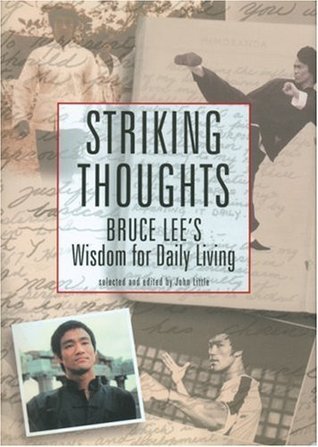
Bruce Lee was more than just a man of action-he was a man of words. A voracious reader, Lee studied text after text, taking meticulous notes to devise his theories-in fighting and in life strategy. Here, for the first time, John Little, who was granted exclusive access to Lee's notebooks, presents Lee's writings on his philosophies of daily living including acting, fatherhood, and the martial arts. As the 60th anniversary of his birth approaches, Bruce Lee is an ever-popular icon of the 20th century-a man truly ahead of his time not just in his mastery of martial arts, but in his forward thinking and his timeless wisdom.

The hermit-monk Ryokan, long beloved in Japan both for his poetry and for his character, belongs in the tradition of the great Zen eccentrics of China and Japan. His reclusive life and celebration of nature and the natural life also bring to mind his younger American contemporary, Thoreau. Ryokan's poetry is that of the mature Zen master, its deceptive simplicity revealing an art that surpasses artifice. Although Ryokan was born in eighteenth-century Japan, his extraordinary poems, capturing in a few luminous phrases both the beauty and the pathos of human life, reach far beyond time and place to touch the springs of humanity.

This treasury of essential Buddhist writings draws from the most popular Indian, Tibetan, Chinese, and Japanese sources. Among the selections are some of the earliest recorded sayings of the Buddha on the practice of freedom, passages from later Indian scriptures on the perfection of wisdom, verses from Tibetan masters on the enlightened mind, and songs in praise of meditation by Zen teachers. The book also includes traditional instruction on how to practice sitting meditation, cultivate calm awareness, and live with compassion. Jack Kornfield, one of the most respected American Buddhist teachers, has compiled these teachings to impart the essence and inspiration of Buddhism to readers of all spiritual traditions.

The Blue Cliff Record is a translation of the Pi Yen Lu , a collection of one hundred famous Zen koans accompanied by commentaries and verses from the teachings of Chinese Zen masters. Compiled in the twelfth century, it is considered one of the great treasures of Zen literature and an essential study manual for students of Zen.

In this fascinating book, Alan Watts explores man's quest for psychological security, examining our efforts to find spiritual and intellectual certainty in the realms of religion and philosophy. The Wisdom of Insecurity underlines the importance of our search for stability in an age where human life seems particularly vulnerable and uncertain. Watts argues our insecurity is the consequence of trying to be secure and that, ironically, salvation and sanity lie in the recognition that we have no way of saving ourselves.

A thorough presentation of Tibetan esoteric principles, Foundations of Tibetan Mysticism is one of the most valuable books ever written on the subject. Lama Angarika Govinda spent over 20 years of his life as a member of the Kargyutpa Order. Studying at the feet of masters in Tibetan hermitages and monasteries, his direct experience has given him a clear insight into much that has remained totally obscure to the world. This work, regarded as a classic of Tibetan mysticism, explains the esoteric principles of Mantra and clarifies the differences between Hindu and Tibetan yoga, and is our direct link to the spiritual achievements of the past and their relationship to a future higher civilization of humanity.

In The Gateless Gate, one of modern Zen Buddhism's uniquely influential masters offers classic commentaries on the Mumonkan, one of Zen's greatest collections of teaching stories. This translation was compiled with the Western reader in mind, and includes Koan Yamada's clear and penetrating comments on each case. Yamada played a seminal role in bringing Zen Buddhism to the West from Japan, going on to be the head of the Sanbo Kyodan Zen Community.The Gateless Gate would be invaluable if only for the translation and commentary alone, yet it's loaded with extra material and is a fantastic resource to keep close by:An in-depth Introduction to the History of Zen PracticeLineage chartsJapanese-to-Chinese and Chinese-to-Japanese conversion charts for personal names, place names, and names of writingsPlus front- and back-matter from ancient and modern figures: Mumon, Shuan, Kubota Ji'un, Taizan Maezumi, Hugo Enomiya-Lasalle, and Yamada Roshi's son, Masamichi Yamada.A wonderful inspiration for the koan practitioner, and for those with a general interest in Zen Buddhism.


Through explorations of the three pillars of Zen—teaching, practice, and enlightenment—Roshi Philip Kapleau presents a comprehensive overview of the history and discipline of Zen Buddhism. An established classic, this 35th anniversary edition features new illustrations and photographs, as well as a new afterword by Sensei Bodhin Kjolhede, who has succeeded Philip Kapleau as spiritual director of the Rochester Zen Center, one of the oldest and most influential Zen centers in the United States.

This book presents the major teachings of Mah y na Buddhism in a precise, dramatic, and even humorous form. For two millennia this S tra, called the jewel of the Mah y na S tras, has enjoyed immense popularity among Mah y na Buddhists in India, central and southeast Asia, Japan, and especially China, where its incidents were the basis for a style in art and literature prevalent during several centuries.Robert Thurman s translation makes available in relatively nontechnical English the Tibetan version of this key Buddhist scripture, previously known to the English-speaking world only through translations from Chinese texts. The Tibetan version is generally conceded to be more faithful to the original Sanskrit than are the Chinese texts. The Tibetan version also is clearer, richer, and more precise in its philosophical and psychological expression. The twelve books of the S tra are accompanied by an introduction and an epilogue by Dr. Thurman and by three glossaries: Sanskrit terms, numerical categories, and technical terms."

Here is the inimitable Zen Master Seung Sahn up close and personal—in selections from the correspondence that was one of his primary modes of teaching. Seung Sahn received hundreds of letters per month, each of which he answered personally, and some of the best of which are included here. His frank and funny style, familiar to readers of Dropping Ashes on the Buddha, is seen here in a most intimate form. The beloved Zen master not only answers questions on Zen teaching and practice, but applies an enlightened approach to problems with work, relationships, suffering, and the teacher-student relationship.

Originally published by the author in 1972, the underground classic Lazy Man's Guide to Enlightenment teaches how to improve the quality of life, to feel good, and to determine what's real. Golas leads the reader down the path toward enlightenment with simple steps, like memorizing key phrases and incorporating them into daily life and thought. Think of how much better your life might be if you reminded yourself to "love as much as you can from wherever you are" or "love it the way it is." This classic book is full of useful tips on how to live a more conscious life and to be an engaged and aware member of the universal community. "While we have humility and pride enough to act on the knowledge that we exist in an infinite harmony, that we are neither greater nor lesser than any others, we can enjoy exquisite spiritual wealth and pleasures. When you love yourself, you are in truth expanding in love into many other things. And the more loving you are, the more loving the beings within and around you. On all levels we are mutually dependent vibrations. Play a happy tune and happy dancers will join your trip." - From The Lazy Man's Guide to Enlightenment After serving in World War II, author Thaddeus Golas graduated from Columbia College in New York. He later moved to San Francisco, where he became involved in the activism and spiritual quests of the 1960s. He was an editor of Redbook magazine and a book representative for publisher Harper and Row.

The Diamond Sutra, composed in India in the 4th century CE, is one of the most treasured works of Buddhist literature & is the oldest existing printed book in the world. It's known as the Diamond Sutra because its teachings are said to be like diamonds that cut away all dualistic thought, releasing one from the attachment to objects & bringing one to the further shore of enlightenment. The format of this important sutra is presented as a conversation between the Buddha & one of his disciples. The Sutra of Hui-neng, also known as the Platform Sutra, contains the autobiography of a pivotal figure in Zen history & some of the most profound passages of Zen literature. Hui-neng was the 6th patriarch of Zen in China, but is often regarded as the true father of the Zen tradition. He was a poor, illiterate woodcutter who is said to have attained enlightenment upon hearing a recitation of the Diamond Sutra. Together, these two scriptures present the central teaching of the Zen Buddhist tradition & are essential reading for all students of Buddhism.

The Way of Zen begins as a succinct guide through the histories of Buddhism and Taoism leading up to the development of Zen Buddhism, which drew deeply from both traditions. It then goes on to paint a broad but insightful picture of Zen as it was and is practiced, both as a religion and as an element of diverse East Asian arts and disciplines. Watts's narrative clears away the mystery while enhancing the mystique of Zen. Since the first publication of this book in 1957, Zen Buddhism has become firmly established in the West. As Zen has taken root in Western soil, it has incorporated much of the attitude and approach set forth by Watts in The Way of Zen, which remains one of the most important introductory books in Western Zen.

“Enlightenment does exist,” internationally renowned author and meditation master Jack Kornfield assures us. “Unbounded freedom and joy, oneness with the divine ... these experiences are more common than you know, and not far away.” But even after achieving such realization — after the ecstasy — we are faced with the day-to-day task of translating that freedom into our imperfect lives. We are faced with the laundry.Drawing on the experiences and insights of leaders and practitioners within the Buddhist, Christian, Jewish, Hindu, and Sufi traditions, this book offers a uniquely intimate and honest understanding of how the modern spiritual journey unfolds — and how we can prepare our hearts for awakening.Through moving personal stories and traditional tales, we learn how the enlightened heart navigates the real world of family relationships, emotional pain, earning a living, sickness, loss, and death.

In this modern spiritual classic, the Tibetan meditation master Chögyam Trungpa highlights the commonest pitfall to which every aspirant on the spiritual path falls prey: what he calls spiritual materialism. The universal tendency, he shows, is to see spirituality as a process of self-improvement—the impulse to develop and refine the ego when the ego is, by nature, essentially empty. "The problem is that ego can convert anything to its own use," he said, "even spirituality." His incisive, compassionate teachings serve to wake us up from this trick we all play on ourselves, and to offer us a far brighter reality: the true and joyous liberation that inevitably involves letting go of the self rather than working to improve it. It is a message that has resonated with students for nearly thirty years, and remains fresh as ever today. This new edition includes a foreword by Chögyam Trungpa's son and lineage holder, Sakyong Mipham.

The very idea that Buddhist teachings can be mastered will arouse controversy within Buddhist circles. Even so, Daniel Ingram insists that enlightenment is an attainable goal, once our fanciful notions of it are stripped away, and we have learned to use meditation as a method for examining reality rather than an opportunity to wallow in self-absorbed mind-noise.This book sets out concisely the difference between concentration-based and insight meditation. This is a revised and much expanded edition. (Replaces ISBN 9781904658405)

Enhanced by Stephen Mitchell’s illuminating commentary, the next volume of the classic manual on the art of living The most widely translated book in world literature after the Bible, Lao-tzu’s Tao Te Ching, or Book of the Way, is the classic manual on the art of living. Following the phenomenal success of his own version of the Tao Te Ching, renowned scholar and translator Stephen Mitchell has composed the innovative The Second Book of the Tao. Drawn from the work of Lao-tzu’s disciple Chuang-tzu and Confucius’s grandson Tzussu, The Second Book of the Tao offers Western readers a path into reality that has nothing to do with Taoism or Buddhism or old or new alone, but everything to do with truth. Mitchell has selected the freshest, clearest teachings from these two great students of the Tao and adapted them into versions that reveal the poetry, depth, and humor of the original texts with a thrilling new power. Alongside each adaptation, Mitchell includes his own commentary, at once explicating and complementing the text. This book is a twenty-first-century form of ancient wisdom, bringing a new, homemade sequel to the Tao Te Ching into the modern world. Mitchell’s renditions are radiantly lucid; they dig out the vision that’s hiding beneath the words; they grab the text by the scruff of the neck—by its heart, really—and let its essential meanings fall out. The book introduces us to a cast of vivid characters, most of them humble artisans or servants, who show us what it means to be in harmony with the way things are. Its wisdom provides a psychological and moral acuity as deep as the Tao Te Ching itself.The Second Book of the Tao is a gift to contemporary readers, granting us access to our own fundamental wisdom. Mitchell’s meditations and risky reimagining of the original texts are brilliant and liberating, not least because they keep catching us off-guard, opening up the heavens where before we saw a roof. He makes the ancient teachings at once modern, relevant, and timeless.Listen to a special podcast with Stephen Mitchell:

In the same way that we fall into the arms of a loved one or drop our heads on the pillow before sleep, we can let go into the beauty and truth of who and what we really are. Falling Into Grace presents Adyashanti's response to anyone looking for a way out of suffering and into the freedom of spiritual awakening. With his first introductory book, he offers what he considers the fundamental teachings on "seeing life with clear eyes" to transcend the illusions that lead to unhappiness. Readers join this sought-after teacher to • The concept of a separate self as the root of all suffering-and how to stop believing the thoughts that perpetuate our self-image • How to take "the backward step" into the pure potential of the present moment • Giving up the control we only think we have • The essential invitation of wake up from the dream to embrace what is "When we realize that there is grace in every moment, our minds will open, our hearts will expand, and we'll be able to express the peace And The love that all beings aspire to," teaches Adyashanti. Here is an opportunity to welcome a revolution in the way that we perceive life through Falling into Grace.

Whether a beginner or at the highest level of practice, learn Zen from one of the greatest masters of the twentieth century.Why practice Zen? What sets Zen apart from religion? What are its different practices? These questions, and more, are examined and answered by Zen Master Koun Yamada, whose Dharma heirs include Robert Aitken, Ruben Habito, and David Loy. Through compelling stories and a systematic approach, he guides the reader through creating and sustaining a lifelong practice. Warm and ecumenical in tone, Koun uses the insights of Zen to bring a deeper understanding of faith. The Authentic Gate is an easy-to-follow guide to creating an effortless and natural practice regardless of background, tradition, or religion.

"Followers and newcomers to Nhat Hanh’s teaching alike will find this collection inspiring for everyday practice and for social engagement in the world."— Publishers WeeklyThis collection of autobiographical and teaching stories from peace activist and Zen Master Thich Nhat Hanh is thought provoking, inspiring, and enjoyable to read. Collected here for the first time, these stories span the author’s life. There are stories from Thich Nhat Hanh’s childhood and the traditions of rural Vietnam. There are stories from his years as a teenaged novice, as a young teacher and writer in war torn Vietnam, and of his travels around the world to teach mindfulness, make pilgrimages to sacred sites, and influence world leaders.The tradition of teaching the Dharma through stories goes back at least to the time of the Buddha. Like the Buddha, Thich Nhat Hanh uses story–telling to engage people’s interest so he can share important teachings, insights, and life lessons.

Here is the most complete single-volume collection of the writings of one of the great luminaries of Asian literature. Basho (1644–1694)—who elevated the haiku to an art form of utter simplicity and intense spiritual beauty—is best known in the West as the author of Narrow Road to the Interior, a travel diary of linked prose and haiku that recounts his journey through the far northern provinces of Japan. This volume includes a masterful translation of this celebrated work along with three other less well-known but important works by Basho: Travelogue of Weather-Beaten Bones, The Knapsack Notebook, and Sarashina Travelogue. There is also a selection of over two hundred fifty of Basho's finest haiku. In addition, the translator has provided an introduction detailing Basho's life and work and an essay on the art of haiku.

The essential meditation guide for the twenty-first renowned mindfulness teacher Henry Shukman replaces the concept of original sin with original love, teaching us to tap into the love that shapes our world and can transform who we are.An increasing number of people today feel disconnected, disengaged, and lonely. Many of us are seeking solace, beginning with ourselves. Original Love is the secular spiritual handbook we need to ease our troubles and find the highest possible happiness.Henry Shukman, spiritual director of Mountain Cloud Zen Center in Santa Fe, New Mexico, provides a way forward based on four paths—Mindfulness, Support, Absorption, and Awakening—that promote growth and healing through meditation for practitioners of any level. And it works! Shukman includes inspiring stories from the students of his Original Love program that reveal how it has transformed their lives.Urgently needed, Original Love helps us create peace for ourselves and our times byreducing stress, anxiety, and depression; relaxing the mind and body; easing feelings of worry, regret, anger, and irritation; and improving decision-making and executive functioning. Finding a sense of love is a critical purpose of meditation. Finding your way back to the loving peace that lives at the center of things is Original Love.