Loading themes...
Explore the best books about United States theme.

“A California classic . . . California, it should be remembered, was very much the wild west, having to wait until 1850 before it could force its way into statehood. so what tamed it? Mr. Starr’s answer is a combination of great men, great ideas and great projects.”— The EconomistFrom the age of exploration to the age of Arnold, the Golden State’s premier historian distills the entire sweep of California’s history into one splendid volume. Kevin Starr covers it Spain’s conquest of the native peoples of California in the early sixteenth century and the chain of missions that helped that country exert control over the upper part of the territory; the discovery of gold in January 1848; the incredible wealth of the Big Four railroad tycoons; the devastating San Francisco earthquake of 1906; the emergence of Hollywood as the world’s entertainment capital and of Silicon Valley as the center of high-tech research and development; the role of labor, both organized and migrant, in key industries from agriculture to aerospace. In a rapid-fire epic of discovery, innovation, catastrophe, and triumph, Starr gathers together everything that is most important, most fascinating, and most revealing about our greatest state.Praise for California“[A] fast-paced and wide-ranging history . . . [Starr] accomplishes the feat with skill, grace and verve.” — Los Angeles Times Book Review“Kevin Starr is one of california’s greatest historians, and California is an invaluable contribution to our state’s record and lore.” —MarIa ShrIver, journalist and former First Lady of California“A breeze to read.” — San Francisco

From one of the great political journalists of our time comes a boldly argued reinterpretation of the central event in our collective past--a book that portrays the American Revolution not as a clash of ideologies but as a Machiavellian struggle for power.

This book explains the history of US/Central American relations, explaining why these countries have remained so overpopulated, illiterate and violent; and why US government notions of economic and military security combine to keep in place a system of Central American dependency. This second edition is updated to include new material covering the Reagan and Bush years, and the Iran/Contra affair.

Uses recently declassified documents to survey the American use of covert warfare against terrorists and adversarial states

The first major biography of the Carter Family, the musical pioneers who almost single-handedly created the sounds and traditions that grew into modern folk, country, and bluegrass music.Meticulously researched and lovingly written, it is a look at a world and a culture that, rather than passing, has continued to exist in the music that is the legacy of the Carters—songs that have shaped and influenced generations of artists who have followed them.Brilliant in insight and execution, Will You Miss Me When I'm Gone? is also an in-depth study of A.P., Sara, and Maybelle Carter, and their bittersweet story of love and fulfillment, sadness and loss. The result is more than just a biography of a family; it is also a journey into another time, almost another world, and theirs is a story that resonates today and lives on in the timeless music they created.

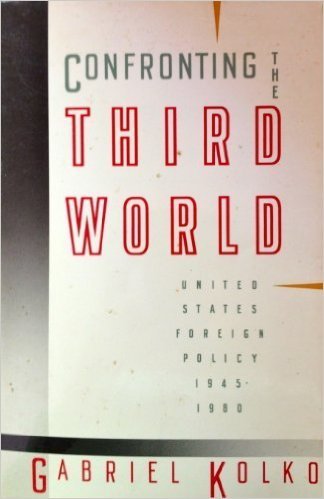
Analyzes U.S. foreign policy towards the Middle East and Latin America, and argues that the U.S. has often created political instability

In the United States the Cold War shaped our political culture, our institutions, and our national priorities. Abroad, it influenced the destinies of people everywhere. It divided Europe, split Germany, and engulfed the Third World. It led to a feverish arms race and massive sales of military equipment to poor nations. For at least four decades it left the world in a chronic state of tension where a miscalculation could trigger nuclear holocaust. Documents, oral histories, and memoirs illuminating the goals, motives, and fears of contemporary U.S. officials were already widely circulated and studied during the Cold War, but in the 1970s a massive declassification of documents from the Army, Navy, Air Force, the Joint Chiefs of Staff, the Department of Defense, and some intelligence agencies reinvigorated historical study of this war which became the definitive conflict of its time. While many historians used these records to explore specialized topics, this author marshals the considerable available evidence on behalf of an overall analysis of national security policy during the Truman years. To date, it is the most comprehensive history of that administration's progressive embroilment in the Cold War.

When the New York Times finally apologized for its coverage of Iraq’s weapons of mass destruction in 2004, it was too late. The newspaper had already supported the invasion. The Bush administration was not only violating international law, it was lying to the public, using major media like the Times to spread its message.In this meticulously researched study—the first part of a two-volume work—Howard Friel and Richard Falk demonstrate how the newspaper of record in the United States has consistently, over the last 50 years, misreported the facts related to the wars waged by the United States. From Vietnam in the 1960s to Nicaragua in the 1980s and Iraq today, the authors accuse the New York Times of serial distortions. They claim that such coverage now threatens not only world legal order but constitutional democracy in the United States.Falk and Friel show, for example, that, despite numerous US threats to invade Iraq, and despite the fact that an invasion of one country by another implicates fundamental aspects of the UN Charter and international law, the New York Times editorial page never mentioned the words “UN Charter” or “international law” in any of its 70 editorials on Iraq from September 11, 2001, to March 20, 2003. The authors also show that the editorial page supported the Bush administration’s WMD claims against Iraq, and that its magazine, op-ed and news pages performed just as poorly.In conclusion the authors suggest an alternative editorial policy of “strict scrutiny” that incorporates the UN Charter and the US Constitution in the Times coverage of the use and threat of force by the United States and the protection of civil and human rights at home and abroad.

October 1962: the United States and the Soviet Union stood eyeball to eyeball, each brandishing enough nuclear weapons to obliterate civilization in the Northern Hemisphere. It was one of the most dangerous moments in world history. Day by day, for two weeks, the inner circle of President Kennedy's National Security Council debated what to do, twice coming to the brink of attacking Soviet military units in Cuba--units equipped for nuclear retaliation. And through it all, unbeknownst to any of the participants except the President himself, tape was rolling, capturing for posterity the deliberations that might have ended the world as we know it. These are the full and authenticated transcripts of those audio recordings. Arguably the most important document in the history of the Cuban missile crisis, these transcripts are also a unique window on a drama rarely if ever witnessed by those outside the halls of the moment-by-moment decisionmaking of those with the fate of the West in their hands in a constantly changing, world-threatening situation. At the center of it all is President Kennedy, wary of experts after the debacle of the Bay of Pigs, puzzled and distrustful after confrontations with Khrushchev in Vienna and Berlin, and ever mindful of the responsibility symbolized by the satchel his military aides hold nearby, containing the codes to unleash nuclear warfare. In one brief segment, midway through the crisis, the President, alone, speaks his thoughts into the machine. In others, he copes with hawks from Capitol Hill and the Pentagon. And in the last meeting, we hear him explaining and defending the formula that finally defused the crisis. With him throughout are his team from the State Department, including Secretary Dean Rusk, Under Secretary George Ball, and Llewellyn Thompson; his Defense team, especially Robert McNamara; his key assistants, Theodore Sorenson and McGeorge Bundy; Secretary of the Treasury Douglas Dillon; Vice President Lyndon Johnson; and, of course, his brother Robert, the Attorney General. All are identified and put into their proper context by the editors, whose introduction makes sense of this singular drama within the history of the Cold War and the Kennedy administration and whose conclusions will shape our understanding of the Cold War.

From one of America's most distinguished historians comes this classic analysis of Richard Nixon. By considering some of the president's opinions, Wills comes to the controversial conclusion that Nixon was actually a liberal. Both entertaining and essential, Nixon Agonistes captures a troubled leader and a struggling nation mired in a foolish Asian war, forfeiting the loyalty of its youth, puzzled by its own power, and looking to its cautious president for confidence. In the end, Nixon Agonistes reaches far beyond its assessment of the thirty-seventh president to become an incisive and provocative analysis of the American political machine.

Since the end of the Cold War so-called experts have been predicting the eclipse of America's "special relationship" with Britain. But as events have shown, especially in the wake of 9/11, the political and cultural ties between America and Britain have grown stronger. Blood, Class and Empire examines the dynamics of this relationship, its many cultural manifestations -- the James Bond series, PBS "brit Kitsch," Rudyard Kipling -- and explains why it still persists. Contrarian, essayist and polemicist Christopher Hitchens notes that while the relationship is usually presented as a matter of tradition, manners, and common culture, sanctified by wartime alliance, the special ingredient is empire; transmitted from an ancien regime that has tried to preserve and renew itself thereby. England has attempted to play Greece to the American Rome, but ironically having encouraged the United States to become an equal partner in the business of empire, Britain found itself supplanted.

In 2009, the Good News Club came to the public elementary school where journalist Katherine Stewart sent her children. The Club, which is sponsored by the Child Evangelism Fellowship, bills itself as an after-school program of "Bible study." But Stewart soon discovered that the Club's real mission is to convert children to fundamentalist Christianity and encourage them to proselytize to their "unchurched" peers, all the while promoting the natural but false impression among the children that its activities are endorsed by the school.Astonished to discover that the U.S. Supreme Court has deemed this -- and other forms of religious activity in public schools -- legal, Stewart set off on an investigative journey to dozens of cities and towns across the nation to document the impact. In this book she demonstrates that there is more religion in America's public schools today than there has been for the past 100 years. The movement driving this agenda is stealthy. It is aggressive. It has our children in its sights. And its ultimate aim is to destroy the system of public education as we know it.

"Let us once again transform the American continent into a vast crucible of revolutionary ideas and efforts" urged President John F. Kennedy on March 13, 1961. "Let us once again awaken our American revolution until it guides the struggle of people everywhere, not with an imperialism of force or fear, but the rule of courage and freedom and hope for the future of man." Similar calls stirred Latin America. In Brazil, it came from left-wing politicians, intellectuals, labor leaders, and students. The revolution on April Fool's Day, 1964 was not exactly the one the Brazilian Left had sought. Nor was the uncontested military coup the victory of courage and freedom and hope that Kennedy had called for. Still, it did bear an American and notably anticommunist imprint. Kennedy had pressed his aides to define a new doctrine called for covert operations to get conservative anticommunists elected to the Brazilian Congress, to arm and train anticommunist guerrillas, and to mobilize businessmen, military officers, housewives, priests, and students in an anticommunist crusade. Simultaneously there was to be overt pressure on the Brazilian government by State Department officials and by special White House emissaries. When the suspect Brazilian president was overthrown by the military, Washington hastily embraced the new regime. Generous support for the dictatorship continued for the remainder of the 1960s, despite the regime's use of torture and terrorist death squads and its systematic deprivation of the civil and political rights of its citizens. The pattern did not have to be reinvented for Central American in the 1980s.

During the final fifteen years of the Cold War, southern Africa underwent a period of upheaval, with dramatic twists and turns in relations between the superpowers. Americans, Cubans, Soviets, and Africans fought over the future of Angola, where tens of thousands of Cuban soldiers were stationed, and over the decolonization of Namibia, Africa's last colony. Beyond lay the great South Africa. Piero Gleijeses uses archival sources, particularly from the United States, South Africa, and the closed Cuban archives, to provide an unprecedented international history of this important theater of the late Cold War.These sources all point to one by humiliating the United States and defying the Soviet Union, Fidel Castro changed the course of history in southern Africa. It was Cuba's victory in Angola in 1988 that forced Pretoria to set Namibia free and helped break the back of apartheid South Africa. In the words of Nelson Mandela, the Cubans "destroyed the myth of the invincibility of the white oppressor . . . [and] inspired the fighting masses of South Africa."

From the bestselling author of Public Enemies & The Big Rich , an account of the battle between the FBI & revolutionary movements of the '70s: Weathermen, The Symbionese Liberation Army, The FALN, The Black Liberation Army. The names seem quaint now, but then bombings by domestic underground groups were daily occurrences. The FBI combated these & other groups as nodes of a single revolutionary underground dedicated to the violent overthrow of the USA. Burrough's Days of Rage recreates an atmosphere almost unbelievable decades later, conjuring a time of native-born radicals, often nice middle-class kids, smuggling bombs into skyscrapers & detonating them inside the Pentagon & the Capitol, at a Boston courthouse & a Wall Street restaurant. The FBI’s response included the formation of a secret task force, Squad 47, dedicated to hunting the groups down. But Squad 47 itself broke laws in its attempts to bring the revolutionaries to justice. Its efforts ended in fiasco. Drawing on interviews about their experiences with members of the underground & the FBI, Days of Rage is a look into the hearts & minds of homegrown terrorists & federal agents alike, weaving their stories into a secret history of the '70s.

New York Times bestselling author of Satchel: The Life and Times of an American Legend Larry Tye was given unprecedented access by the Kennedy family to write this in-depth, vibrant and editorially independent biography.History remembers Robert F. Kennedy as a racial healer, a tribune for the poor, and the last progressive knight. But Kennedy—nurtured on the rightist orthodoxies of his dynasty-building father—started his public life as counsel to the left-baiting, table-thumping Senator Joseph McCarthy.A bare-knuckled political operative who masterminded his brother’s whatever-it-takes bids for senator and president, Kennedy okayed FBI wiretaps of Martin Luther King Jr. and cloak-and-dagger operations against communist Cuba that included blowing up railroad bridges, sabotaging crops, and plotting the elimination of President Fidel Castro.Remembered now as a rare optimist in an age of political cynicism, RFK’s profoundly moving journey from cold warrior to hot-blooded liberal also offers a lens into two of the most chaotic and confounding decades of twentieth century America.

"Belew's book helps explain how we got to today's alt right."―Terry Gross, Fresh AirThe white power movement in America wants a revolution. Its soldiers are not lone wolves but highly organized cadres motivated by a coherent and deeply troubling worldview made up of white supremacy, virulent anticommunism, and apocalyptic faith. In Bring the War Home, Kathleen Belew gives us the history of a movement that consolidated in the 1970s and 1980s around a potent sense of betrayal in the Vietnam War and made tragic headlines in Waco and Ruby Ridge and with the Oklahoma City bombing and is resurgent under President Trump.Returning to an America ripped apart by a war they felt they were not allowed to win, a small group of veterans and active-duty military personnel and civilian supporters concluded that waging war on their own country was justified. They unified people from a variety of militant groups, including Klansmen, neo-Nazis, skinheads, radical tax protestors, and white separatists to form a new movement of loosely affiliated independent cells to avoid detection. The white power movement operated with discipline and clarity, undertaking assassinations, armed robbery, counterfeiting, and weapons trafficking. Its command structure gave women a prominent place and put them in charge of brokering alliances and birthing future recruits.Belew's disturbing and timely history reminds us that war cannot be contained in time and space: grievances intensify and violence becomes a logical course of action. Based on years of deep immersion in previously classified FBI files and on extensive interviews, Bring the War Home tells the story of American paramilitarism and the birth of the alt-right.

Widely hailed for its “sweeping, sobering account of the American past” (New York Times Book Review), Jill Lepore’s one-volume history of America places truth itself—a devotion to facts, proof, and evidence—at the center of the nation’s history. The American experiment rests on three ideas—“these truths,” Jefferson called them—political equality, natural rights, and the sovereignty of the people. But has the nation, and democracy itself, delivered on that promise?These Truths tells this uniquely American story, beginning in 1492, asking whether the course of events over more than five centuries has proven the nation’s truths, or belied them. To answer that question, Lepore wrestles with the state of American politics, the legacy of slavery, the persistence of inequality, and the nature of technological change. “A nation born in contradiction… will fight, forever, over the meaning of its history,” Lepore writes, but engaging in that struggle by studying the past is part of the work of citizenship. With These Truths, Lepore has produced a book that will shape our view of American history for decades to come.

From the author the classic The Wizards of Armageddon and Pulitzer Prize finalist comes the definitive history of American policy on nuclear war—and Presidents’ actions in nuclear crises—from Truman to Trump.Fred Kaplan, hailed by The New York Times as “a rare combination of defense intellectual and pugnacious reporter,” takes us into the White House Situation Room, the Joint Chiefs of Staff’s “Tank” in the Pentagon, and the vast chambers of Strategic Command to bring us the untold stories—based on exclusive interviews and previously classified documents—of how America’s presidents and generals have thought about, threatened, broached, and just barely avoided nuclear war from the dawn of the atomic age until today. Kaplan’s historical research and deep reporting will stand as the permanent record of politics. Discussing theories that have dominated nightmare scenarios from Hiroshima and Nagasaki, Kaplan presents the unthinkable in terms of mass destruction and demonstrates how the nuclear war reality will not go away, regardless of the dire consequences.