Loading themes...
Explore the best books about Islam theme.

In No god but God, internationally acclaimed scholar Reza Aslan explains Islam—the origins and evolution of the faith—in all its beauty and complexity. This updated edition addresses the events of the past decade, analyzing how they have influenced Islam’s position in modern culture. Aslan explores what the popular demonstrations pushing for democracy in the Middle East mean for the future of Islam in the region, how the Internet and social media have affected Islam’s evolution, and how the war on terror has altered the geopolitical balance of power in the Middle East. He also provides an update on the contemporary Muslim women’s movement, a discussion of the controversy over veiling in Europe, an in-depth history of Jihadism, and a look at how Muslims living in North America and Europe are changing the face of Islam. Timely and persuasive, No god but God is an elegantly written account that explains this magnificent yet misunderstood faith.
This is the first systematic critique of Edward Said's influential work, Orientalism, a book that for almost three decades has received wide acclaim, voluminous commentary, and translation into more than fifteen languages. Said's main thesis was that the Western image of the East was heavily biased by colonialist attitudes, racism, and more than two centuries of political exploitation. Although Said's critique was controversial, the impact of his ideas has been a pervasive rethinking of Western perceptions of Eastern cultures, plus a tendency to view all scholarship in Oriental Studies as tainted by considerations of power and prejudice. In this thorough reconsideration of Said's famous work, Ibn Warraq argues that Said's case against the West is seriously flawed. Warraq accuses Said of not only willfully misinterpreting the work of many scholars, but also of systematically misrepresenting Western civilization as a whole. With example after example, he shows that ever since the Greeks Western civilization has always had a strand in its very makeup that has accepted non-Westerners with open arms and has ever been open to foreign ideas. The author also criticizes Said for inadequate methodology, incoherent arguments, and a faulty historical understanding. He points out, not only Said's tendentious interpretations, but historical howlers that would make a sophomore blush. Warraq further looks at the destructive influence of Said's study on the history of Western painting, especially of the 19th century, and shows how, once again, the epigones of Said have succeeded in relegating thousands of first-class paintings to the lofts and storage rooms of major museums. An extended appendix reconsiders the value of 18th- and 19th-century Orientalist scholars and artists, whose work fell into disrepute as a result of Said's work.

Originally titled The Religions of Man, this completely revised and updated edition of Smith′s masterpiece, now with an engaging new foreword, explores the essential elements and teachings of the world′s predominant faiths, including:Hinduism,Buddhism,Confucianism,Taoism,Islam,Judaism,Christianity,and the native traditions of the Americas, Australia, Africa, and Oceania.Emphasising the inner -- rather than institutional -- dimensions of these religions, Smith devotes special attention to Zen and Tibetan Buddhism, Sufism, and the teachings of Jesus. He convincingly conveys the unique appeal and gifts of each of the traditions and reveals their hold on the human heart and imagination.

It's the end of the world as we know it...Someday soon, you might wake up to the call to prayer from a muezzin. Europeans already are. And liberals will still tell you that "diversity is our strength"--while Talibanic enforcers cruise Greenwich Village burning books and barber shops, the Supreme Court decides sharia law doesn't violate the "separation of church and state," and the Hollywood Left decides to give up on gay rights in favor of the much safer charms of polygamy. If you think this can't happen, you haven't been paying attention, as the hilarious, provocative, and brilliant Mark Steyn--the most popular conservative columnist in the English-speaking world--shows to devastating effect. The future, as Steyn shows, belongs to the fecund and the confident. And the Islamists are both, while the West is looking ever more like the ruins of a civilization. But America can survive, prosper, and defend its freedom only if it continues to believe in itself, in the sturdier virtues of self-reliance (not government), in the centrality of family, and in the conviction that our country really is the world's last best hope. Mark Steyn's America Alone is laugh-out-loud funny--but it will also change the way you look at the world.

In his first book since What Went Wrong? Bernard Lewis examines the historical roots of the resentments that dominate the Islamic world today and that are increasingly being expressed in acts of terrorism. He looks at the theological origins of political Islam and takes us through the rise of militant Islam in Iran, Egypt, and Saudi Arabia, examining the impact of radical Wahhabi proselytizing, and Saudi oil money, on the rest of the Islamic world.The Crisis of Islam ranges widely through thirteen centuries of history, but in particular it charts the key events of the twentieth century leading up to the violent confrontations of today: the creation of the state of Israel, the Cold War, the Iranian Revolution, the Soviet defeat in Afghanistan, the Gulf War, and the September 11th attacks on the United States.While hostility toward the West has a long and varied history in the lands of Islam, its current concentration on America is new. So too is the cult of the suicide bomber. Brilliantly disentangling the crosscurrents of Middle Eastern history from the rhetoric of its manipulators, Bernard Lewis helps us understand the reasons for the increasingly dogmatic rejection of modernity by many in the Muslim world in favor of a return to a sacred past. Based on his George Polk Award–winning article for The New Yorker , The Crisis of Islam is essential reading for anyone who wants to know what Usama bin Ladin represents and why his murderous message resonates so widely in the Islamic world.

Coleman Barks has played a central role in making the Sufi mystic Rumi the most popular poet in the world. A Year with Rumi brings together 365 of Barks's elegant and beautiful translations of Rumi's greatest poems, including fifteen never-before-published poems.Barks includes an Introduction that sets Rumi in his context and an Afterword musing on poetry of the mysterious and the sacred. Join Coleman Barks and Rumi for a year-long journey into the mystical and sacred within and without. Join them in recognizing and embracing the divine in the sublime, in the ordinary, and in us all.

This selection of the sayings of the Prophet Muhammad was made by the internationally respected British Muslim scholar, Charles le Gai Eaton. The Book of Hadith captures not only the practical and profound wisdom of the Prophet, but his human side as well. Contains Arabic text as well.

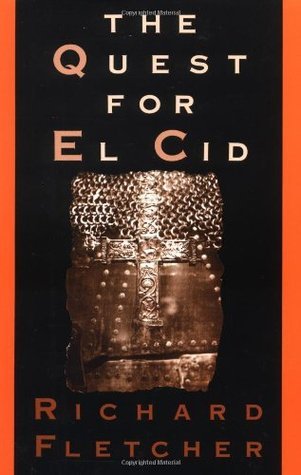
Rodrigo Diaz, the legendary warrior-knight of eleventh-century Castile known as El Cid, is remembered today as the Christian hero of the Spanish crusade who waged wars of re-conquest for the triumph of the Cross over the Crescent. He is still honored in Spain as a national hero for liberating the fatherland from the occupying Moors. Yet, as Richard Fletcher shows in this award-winning book, there are many contradictions between eleventh-century reality and the mythology that developed with the passing years.By placing El Cid in a fresh, historical context, Fletcher shows us an adventurous soldier of fortune who was of a type, one of a number of "cids," or "bosses," who flourished in eleventh-century Spain. But the El Cid of legend--the national hero--was unique in stature even in his lifetime. Before his death El Cid was already celebrated in a poem written in tribute of the conquest of Almería; posthumously he was immortalized in the great epic Poema de Mio Cid and became the centerpiece for countless other works of literature. When he died in Valencia in 1099, he was ruler of an independent principality he had carved for himself in Eastern Spain. Rather than the zealous Christian leader many believe him to have been, Rodrigo emerges in Fletcher's study as a mercenary equally at home in the feudal kingdoms of northern Spain and the exotic Moorish lands of the south, selling his martial skills to Christian and Muslim alike. Indeed, his very title derives from the Arabic word sayyidmeaning "lord" or "master." And as there was little if any sense of Spanish nationhood in the eleventh century, he can hardly be credited for uniting a medieval Spanish nation.In this ground-breaking inquiry into the life and times of El Cid, Fletcher disentangles fact from myth to create a striking portrait of an extraordinary man, clearly showing how and why legend transformed him into something he was not during his life. A fascinating journey through a turbulent epoch, The Quest for El Cid is filled with the excitement of discovery, and will delight readers interested not only in Spanish history and literature, but those who want to understand how myth can shape our perception of history.

Dervish tales are more than fable, legend, or folklore. For centuries dervish masters have instructed their disciples by means of these teaching stories, which are said to increase perception and knowledge and provide a better understanding of man and the world. In wit, construction, and piquancy, they compare with the finest tales of any culture. Idries Shah spent many years traveling through three continents to collect and compare oral versions of these remarkable stories. This anthology, presented in the dervish manner, contains stories drawn from the repertories of dervish masters over a period of more than a thousand years.

"This book is the liveliest account of African history ever written, covering over [one] thousand years of trans-Saharan trade. "Finely written and researched. ... This edition will no doubt whet the appetites of a fresh generation of scholars and students for greater knowledge of parts of Africa still surprisingly little-known to the outside world." -- Journal of Islamic Studies "A unique source book." - The New York Times "Utterly enthralling ... splendidly romantic." -- The New Yorker

"One of the most important books ever written on the state of the modern Middle East." ―Geraldine Brooks, Wall Street Journal The Iraqi dissident Kanan Makiya brought the attention of the world to the brutality of Saddam Hussein's regime in his powerful 1989 bestseller Republic of Fear . Now, writing for the first time under his own name, Makiya confronts the broad realities of tyranny in the Middle East and the moral failure of Arab and pro-Arab intellectuals to repudiate it.Makiya first gives us the stories of Khalil, Abu Haydar, Omar, Mustafa, and Taimour―the Arab and Kurdish heroes of this book. Their testimony, revealing the true extent of occupation, prejudice, revolution, and routinized violence, is a compelling example of the literature of witness. He then links these tales of survival to an examination of the Arab intelligentsia's response to Saddam Hussein and the Gulf War, comparing the flood of condemnation of the West with the trickle of protest over Saddam's mass murder campaign against the Kurds.In his exploration of these "landscapes of cruelty and silence," Kanan Makiya lays out the nationalist mythologies that underlie them. He calls for a new politics in the Arab world―a politics that puts absolute respect for human life above all else.

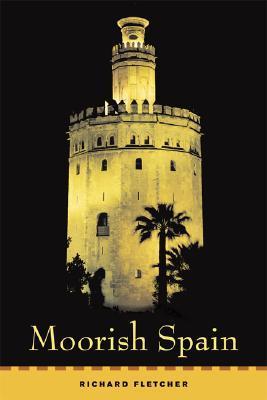
Beginning in the year 711 and continuing for nearly a thousand years, the Islamic presence survived in Spain, at times flourishing, and at other times dwindling into warring fiefdoms. But the culture and science thereby brought to Spain, including long-buried knowledge from Greece, largely forgotten during Europe’s Dark Ages, was to have an enduring impact on the country as it emerged into the modern era. In this gracefully written history, Richard Fletcher reveals the Moorish culture in all its fascinating disparity and gives us history at its best: here is vivid storytelling by a renowned scholar.

Ibn Battutah was just 21 when he set out in 1325 from his native Tangier on a pilgrimage to Mecca. He did not return to Morocco for another 29 years, traveling instead through more than 40 countries on the modern map, covering 75,000 miles and getting as far north as the Volga, as far east as China, and as far south as Tanzania. He wrote of his travels, and comes across as a superb ethnographer, biographer, anecdotal historian, and occasional botanist and gastronome. With this edition by Mackintosh-Smith, Battuta's Travels takes its place alongside other indestructible masterpieces of the travel-writing genre.

A lucid and compelling case for a new American stance toward the Islamic world.What comes after jihad? Outside the headlines, believing Muslims are increasingly calling for democratic politics in their undemocratic countries. But can Islam and democracy successfully be combined? Surveying the intellectual and geopolitical terrain of the contemporary Muslim world, Noah Feldman proposes that Islamic democracy is indeed viable and desirable, and that the West, particularly the United States, should work to bring it about, not suppress it.Encouraging democracy among Muslims threatens America's autocratic Muslim allies, and raises the specter of a new security threat to the West if fundamentalists are elected. But in the long term, the greater threat lies in continuing to support repressive regimes that have lost the confidence of their citizens. By siding with Islamic democrats rather than the regimes that repress them, the United States can bind them to the democratic principles they say they support, reducing anti-Americanism and promoting a durable peace in the Middle East.After Jihad gives the context for understanding how the many Muslims who reject religious violence see the world after the globalization of democracy. It is also an argument about how American self-interest can be understood to include a foreign policy consistent with the deeply held democratic values that make America what it is. At a time when the encounter with Islam has become the dominant issue of U.S. foreign policy, After Jihad provides a road map for making democracy work in a region where the need for it is especially urgent.

Forty-four of the Ecstatic Poems of Kabir"Kabir's poems give off a marvelous radiant intensity. . . . Bly's versions . . . have exactly the luminous depth that permits and invites many rereadings, many studyings-even then they remain as fresh as ever."-The New York Times Book Review

Those who practice the Muslim faith have resisted examinations of their religion. They are extremely guarded about their religion, and what they consider blasphemous acts by skeptical Muslims and non-Muslims alike has only served to pique the world's curiosity. This critical examination reveals an unflattering picture of the faith and its practitioners. Nevertheless, it is the truth, something that has either been deliberately concealed by modern scholars or buried in obscure journals accessible only to a select few.

Muslims who explore sources of morality other than Islam are threatened with death, and Muslim women who escape the virgins' cage are branded whores. So asserts Ayaan Hirsi Ali's profound meditation on Islam and the role of women, the rights of the individual, the roots of fanaticism, and Western policies toward Islamic countries and immigrant communities. Hard-hitting, outspoken, and controversial, "The Caged Virgin" is a call to arms for the emancipation of women from a brutal religious and cultural oppression and from an outdated cult of virginity. It is a defiant call for clear thinking and for an Islamic Enlightenment. But it is also the courageous story of how Hirsi Ali herself fought back against everyone who tried to force her to submit to a traditional Muslim woman's life and how she became a voice of reform. Born in Somalia and raised Muslim, but outraged by her religion's hostility toward women, Hirsi Ali escaped an arranged marriage to a distant relative and fled to the Netherlands. There, she learned Dutch, worked as an interpreter in abortion clinics and shelters for battered women, earned a college degree, and started a career in politics as a Dutch parliamentarian. In November 2004, the violent murder on an Amsterdam street of Dutch filmmaker Theo van Gogh, with whom Hirsi Ali had written a film about women and Islam called "Submission," changed her life. Threatened by the same group that slew van Gogh, Hirsi Ali now has round-the-clock protection, but has not allowed these circumstances to compromise her fierce criticism of the treatment of Muslim women, of Islamic governments' attempts to silence any questioning of their traditions, and of Western governments' blind tolerance of practices such as genital mutilation and forced marriages of female minors occurring in their countries.Hirsi Ali relates her experiences as a Muslim woman so that oppressed Muslim women can take heart and seek their own liberation. Drawing on her love of reason and the Enlightenment philosophers on whose principles democracy was founded, she presents her firsthand knowledge of the Islamic worldview and advises Westerners how best to address the great divide that currently exists between the West and Islamic nations and between Muslim immigrants and their adopted countries.An international bestseller -- with updated information for American readers and two new essays added for this edition -- "The Caged Virgin" is a compelling, courageous, eye-opening work.

Jason Burke has produced the definitive account of Islamic militancy - revolutionising our understanding of Al-Qaeda, retelling its history from scratch and critically exploding the myths that form the very foundations of the 'War on Terror'. Fully updated with new material on Iraq and Afghanistan.

The critically acclaimed New York Times bestselling account of how the modern Middle East came into being after World War I, and why it is in upheaval todayIn our time the Middle East has proven a battleground of rival religions, ideologies, nationalisms, and dynasties. All of these conflicts, including the hostilities between Arabs and Israelis that have flared yet again, come down, in a sense, to the extent to which the Middle East will continue to live with its political inheritance: the arrangements, unities, and divisions imposed upon the region by the Allies after the First World War.In A Peace to End All Peace , David Fromkin reveals how and why the Allies came to remake the geography and politics of the Middle East, drawing lines on an empty map that eventually became the new countries of Iraq, Israel, Jordan, and Lebanon. Focusing on the formative years of 1914 to 1922, when all-even an alliance between Arab nationalism and Zionism-seemed possible he raises questions about what might have been done differently, and answers questions about why things were done as they were. The current battle for a Palestinian homeland has its roots in these events of 85 years ago.

In this classic work, now updated, the author of Culture and Imperialism reveals the hidden agendas and distortions of fact that underlie even the most "objective" coverage of the Islamic world.From the Iranian hostage crisis through the Gulf War and the bombing of the World Trade Center, the American news media have portrayed "Islam" as a monolithic entity, synonymous with terrorism and religious hysteria. At the same time, Islamic countries use "Islam" to justify unrepresentative and often repressive regimes. Combining political commentary with literary criticism, Covering Islam continues Edward Said's lifelong investigation of the ways in which language not only describes but also defines political reality.

Since its formation in 1932, Saudi Arabia has been ruled by two interdependent families. The Al Sa’uds control politics and the descendants of Ibn Abd al-Wahhab impose Wahhabism—a violent, fanatical perversion of the pluralistic Islam practiced by most Muslims. Stephen Schwartz argues that Wahhabism, vigorously exported with the help of Saudi oil money, is what incites Palestinian suicide bombers, Osama bin Laden, and other Islamic terrorists throughout the world.Schwartz reveals the hypocrisy of the Saudi regime, whose moderate facade conceals state-sponsored repression and terrorism. He also raises troubling questions about Wahhabi infiltration of America’s Islamic community and about U.S. oil companies sanitizing Saudi Arabia’s image for the West. This sharp analysis and eye-opening expose illuminates the background to the September 11th terrorist attacks and offers new approaches for U.S. policy toward its closest ally in the Middle East.

The most comprehensive narrative history of Bosnia available in EnglishThis updated edition of Noel Malcolm's highly-acclaimed A Short History provides the reader with the most comprehensive narrative history of Bosnia in the English language. Malcolm examines the different religious and ethnic inhabitants of Bosnia, a land of vast cultural upheaval where the empires of Rome, Charlemagne, the Ottomans, and the Austro-Hungarians overlapped. Clarifying the various myths that have clouded the modern understanding of Bosnia's past, Malcolm brings to light the true causes of the country's destruction. This expanded edition of Bosnia includes a new epilogue by the author examining the failed Vance-Owen peace plan, the tenuous resolution of the Dayton Accords, and the efforts of the United Nations to keep the uneasy peace.What went wrong in the country where Christians and Muslims mingled and tolerated each other for over five centuries? It was a land with a vibrant political and cultural history, unlike any other in Europe, where great powers and religions-the empires of Rome, Charlemagne, the Ottomans; the faiths of Roman Catholicism, Eastern Orthodoxy, Judaism, and Islam overlapped and combined. In this first English-language history of Bosnia, Noel Malcolm provides a narrative chronicle of the country from its beginnings to its tragic end. Clarifying the various myths that have clouded the modern understanding of Bosnia's past, Malcolm brings to light the true causes of the country's the political strategy of the Serbian leadership, the conflict between the city and the countryside, the fatal inaction and miscalculations of Western politicians.Putting the Bosnia war into perspective, this volume celebrates the complex history of a country whose past, as well as its future, has been all but erased. At last, here is the guide for the general reader seeking a comprehensive and accessible account of the war in the former Yugoslavia.

Access a Comprehensive BibliographyThough U.S. leaders try to convince the world of their success in fighting al Qaeda, one member of the U.S. intelligence community would like to inform the public that we are, in fact, losing the war on terror. Further, until U.S. leaders recognize the errant path they have irresponsibly chosen, he says, our enemies will only grow stronger.According to the author Michael Scheuer, the greatest danger for Americans confronting the Islamist threat is to believe—at the urging of U.S. leaders—that Muslims attack us for what we are and what we think rather than for what we do. Blustering political rhetoric “informs” the public that the Islamists are offended by the Western world’s democratic freedoms, civil liberties, inter-mingling of genders, and separation of church and state. However, although aspects of the modern world may offend conservative Muslims, no Islamist leader has fomented jihad to destroy participatory democracy, for example, the national association of credit unions, or coed universities. Instead, a growing segment of the Islamic world strenuously disapproves of specific U.S. policies and their attendant military, political, and economic implications.Capitalizing on growing anti-U.S. animosity, Osama bin Laden’s genius lies not simply in calling for jihad, but in articulating a consistent and convincing case that Islam is under attack by America. Al Qaeda’s public statements condemn America’s protection of corrupt Muslim regimes, unqualified support for Israel, the occupation of Iraq and Afghanistan, and a further litany of real-world grievances. Bin Laden’s supporters thus identify their problem and believe their solution lies in war. Scheuer contends they will go to any length, not to destroy our secular, democratic way of life, but to deter what they view as specific attacks on their lands, their communities, and their religion. Unless U.S. leaders recognize this fact and adjust their policies abroad accordingly, even moderate Muslims will join the bin Laden camp.

This classic account shows how the fall of Constantinople in May 1453, after a siege of several weeks, came as a bitter shock to Western Christendom. The city's plight had been neglected, and negligible help was sent in this crisis. To the Turks, victory not only brought a new imperial capital, but guaranteed that their empire would last. To the Greeks, the conquest meant the end of the civilisation of Byzantium, and led to the exodus of scholars stimulating the tremendous expansion of Greek studies in the European Renaissance."... an excellent tale, full of suspense and pathos... He [Sir Steven Runciman] tells the story and, as always, tells it very elegantly."- History"This is a marvel of learning lightly worn..."- The Guardian

Written by the Arab historian Ibn Khaldun in 1377 which records an early view of universal history. Some modern thinkers view it as the first work dealing with the social sciences of sociology, demography, and cultural history. The Muqaddimah also deals with Islamic theology, historiography, the philosophy of history, economics, political theory, and ecology. It has also been described as an early representative of social Darwinism.

To American observers, the Arab world often seems little more than a distant battleground characterized by religious zealotry and political chaos. Years of tone-deaf US policies have left the region powerless to control its own destiny—playing into a longstanding sense of shame and impotence for a once-mighty people. In this definitive account, preeminent historian Eugene Rogan traces five centuries of Arab history, from the Ottoman conquests through the British and French colonial periods and up to the present age of unipolar American hegemony. The Arab world is now more acutely aware than ever of its own vulnerability, and this sense of subjection carries with it vast geopolitical consequences.Drawing from Arab sources little known to Western readers, Rogan's The Arabs will transform our understanding of the past, present, and future of one of the world's most tumultuous regions.

Since he was a small boy, Mosab Hassan Yousef has had an inside view of the deadly terrorist group Hamas. The oldest son of Sheikh Hassan Yousef, a founding member of Hamas and its most popular leader, young Mosab assisted his father for years in his political activities while being groomed to assume his legacy, politics, status . . . and power. But everything changed when Mosab turned away from terror and violence, and embraced instead the teachings of another famous Middle East leader. In Son of Hamas , Mosab Yousef―now called “Joseph”―reveals new information about the world’s most dangerous terrorist organization and unveils the truth about his own role, his agonizing separation from family and homeland, the dangerous decision to make his newfound faith public, and his belief that the Christian mandate to “love your enemies” is the only way to peace in the Middle East.

Dans une France assez proche de la nôtre, un homme s’engage dans la carrière universitaire. Peu motivé par l’enseignement, il s’attend à une vie ennuyeuse mais calme, protégée des grands drames historiques. Cependant les forces en jeu dans le pays ont fissuré le système politique jusqu’à provoquer son effondrement. Cette implosion sans soubresauts, sans vraie révolution, se développe comme un mauvais rêve.Le talent de l’auteur, sa force visionnaire nous entraînent sur un terrain ambigu et glissant ; son regard sur notre civilisation vieillissante fait coexister dans ce roman les intuitions poétiques, les effets comiques, une mélancolie fataliste.Ce livre est une saisissante fable politique et morale.

“A civil but honest dialogue…As illuminating as it is fascinating.”—Ayaan Hirsi AliIs Islam a religion of peace or war? Is it amenable to reform? Why do so many Muslims seem to be drawn to extremism? And what do words like jihadism and fundamentalism really mean? In a world riven by misunderstanding and violence, Sam Harris—a famous atheist—and Maajid Nawaz—a former radical—demonstrate how two people with very different religious views can find common ground and invite you to join in an urgently needed conversation.“How refreshing to read an honest yet affectionate exchange between the Islamist-turned-liberal-Muslim Maajid Nawaz and the neuroscientist who advocates mindful atheism, Sam Harris…Their back-and-forth clarifies multiple confusions that plague the public conversation about Islam.”—Irshad Manji, New York Times Book Review“It is sadly uncommon, in any era, to find dialogue based on facts and reason—but even more rarely are Muslim and non-Muslim intellectuals able to maintain critical distance on broad questions about Islam. Which makes Islam and the Future of Tolerance something of a unicorn…Most conversations about religion are marked by the inability of either side to listen, but here, at last, is a proper debate.”—New Statesman

WINNER OF THE 2016 PULITZER PRIZE FOR GENERAL NONFICTION A Best Book of 2015 "The New York Times," "The Washington Post," "People" Magazine, "San Francisco Chronicle," "Kansas City Star," and "Kirkus Reviews" ""In a thrilling dramatic narrative, awarded the 2016 Pulitzer Prize for General Nonfiction, Joby Warrick"traces how the strain of militant Islam behind ISIS first arose in a remote Jordanian prison and spread with the unwitting aid of two American presidents." When the government of Jordan granted amnesty to a group of political prisoners in 1999, it little realized that among them was Abu Musab al-Zarqawi, a terrorist mastermind and soon the architect of an Islamist movement bent on dominating the Middle East. In "Black Flags, " an unprecedented character-driven account of the rise of ISIS, Pulitzer Prize-winning reporter Joby Warrickshows how the zeal of this one man and the strategic mistakes of Presidents Bush and Obama led to the banner of ISIS being raised over huge swaths of Syria and Iraq.Zarqawi began by directing terror attacks from a base in northern Iraq, but it was the American invasion in 2003 that catapulted him to the head of a vast insurgency. By falsely identifying him as the link between Saddam and bin Laden, U.S. officials inadvertently spurred like-minded radicals to rally to his cause. Their wave of brutal beheadings and suicide bombings persisted until American and Jordanian intelligence discovered clues that led to a lethal airstrike on Zarqawi s hideout in 2006.His movement, however, endured. First calling themselves al-Qaeda in Iraq, then Islamic State of Iraq and Syria, or ISIS, his followers sought refuge in unstable, ungoverned pockets on the Iraq-Syria border. When the Syrian civil war broke out in 2011, and as the U.S. largely stood by, ISIS seized its chance to pursue Zarqawi s dream of an ultra-conservative Islamic caliphate.Drawing on unique high-level access to CIA and Jordanian sources, Warrick weaves gripping, moment-by-moment operational details with the perspectives of diplomats and spies, generals and heads of state, many of whom foresaw a menace worse than al Qaeda and tried desperately to stop it. "Black Flags" is a brilliant and definitive history that reveals the long arc of today s most dangerous extremist threat. "From the Hardcover edition.""

There is a quiet revolution that is radically reshaping the Muslim 50 million women have entered the workforce and are upending their countries' economies and societies.Across the Muslim world, ever greater numbers of women are going to work. In the span of just over a decade, millions have joined the workforce, giving them more earning and purchasing power and greater autonomy.In Fifty Million Rising , award-winning economist Saadia Zahidi illuminates this discreet but momentous revolution through the stories of the remarkable women who are at the forefront of this shift -- a McDonald's worker in Pakistan who has climbed the ranks to manager; the founder of an online modest fashion startup in Indonesia; a widow in Cairo who runs a catering business with her daughter, against her son's wishes; and an executive in a Saudi corporation who is altering the culture of her workplace; among many others. These women are challenging familial and social conventions, as well as compelling businesses to cater to women as both workers and consumers. More importantly, they are gaining the economic power that will upend entrenched cultural norms, re-shape how women are viewed in the Muslim world and elsewhere, and change the mindset of the next generation.Inspiring and deeply reported, Fifty Million Rising is a uniquely insightful portrait of a seismic shift with global significance, as Muslim women worldwide claim a seat at the table.

A controversial and devastatingly honest depiction of the demise of Europe.The Strange Death of Europe is the internationally bestselling account of a continent and culture caught in the act of suicide. Douglas Murray takes a step back and explores the deeper issues behind the continent's possible demise, from an atmosphere of mass terror attacks and a global refugee crisis to the steady erosion of our freedoms. He addresses the disappointing failure of multiculturalism, Angela Merkel's U-turn on migration, and the Western fixation on guilt. Murray travels to Berlin, Paris, Scandinavia, and Greece to uncover the malaise at the very heart of the European culture, and to hear the stories of those who have arrived in Europe from far away.Declining birth rates, mass immigration, and cultivated self-distrust and self-hatred have come together to make Europeans unable to argue for themselves and incapable of resisting their own comprehensive alteration as a society and an eventual end. This sharp and incisive book ends up with two visions for a new Europe--one hopeful, one pessimistic--which paint a picture of Europe in crisis and offer a choice as to what, if anything, we can do next. But perhaps Spengler was "civilizations like humans are born, briefly flourish, decay, and die."

The New York Times bestselling author of Infidel, Nomad, and Heretic argues that waves of Muslim immigration are transforming sexual politics in Europe in ways that threaten to undermine the hard-won rights of Western women.Ayaan Hirsi Ali has been speaking against Islamic extremism for decades. In the age of #MeToo, she asks: Why is no one talking about the explosion of sexual violence and harassment in Europe’s cities? No one wants to admit that the problem is linked to the arrival of more than a million migrants from Muslim-majority countries.Hirsi Ali knows the pain of sexual violence firsthand. Growing up in Somalia and Saudi Arabia, she suffered female genital mutilation and the frustration of being treated as a second-class citizen. When she fled to the Netherlands, she thought she had escaped to a paradise of gender equality, but now new waves of Muslim migration imperil women’s freedom.In Prey, Hirsi Ali explains the systemic causes of sexual violence in the Muslim world, from the barring of women from public life to the lack of legal and cultural bulwarks against sexual abuse. She also brings up uncomfortable questions for the West. Why, she asks, have the European authorities and media sought to hush up the wave of violence against women? Why do Western feminists prefer to complain about glass ceilings in the workplace when women are facing severe threats to their most basic rights?A refugee herself, Hirsi Ali is not against immigration. She wants Europeans to reform their broken system—and for Americans to learn from European mistakes. Immigration implies integration and assimilation. If that is not made clear, the call to exclude new Muslim migrants from Western countries will only grow louder.For two decades, Hirsi Ali has faced death threats and harassment for daring to speak her mind. But she refuses to be silenced. In Prey, she argues passionately against allowing the clock of women’s right to be turned back.

A concise and illuminating portrait of Allah from one of the world’s leading Qur’anic scholars The central figure of the Qur’an is not Muhammad but Allah. The Qur’an, Islam’s sacred scripture, is marked above all by its call to worship Allah, and Allah alone. Yet who is the God of the Qur’an? What distinguishes the qur’anic presentation of God from that of the Bible? In this illuminating study, Gabriel Said Reynolds depicts a god of both mercy and vengeance, one who transcends simple classification. He is personal and mysterious; no limits can be placed on his mercy. Remarkably, the Qur’an is open to God’s salvation of both sinners and unbelievers. At the same time, Allah can lead humans astray, so all are called to a disposition of piety and fear. Allah, in other words, is a dynamic and personal God. This eye-opening book provides a unique portrait of the God of the Qur’an.

A compelling history of the ancient schism that continues to divide the Islamic worldWhen Muhammad died in 632 without a male heir, Sunnis contended that the choice of a successor should fall to his closest companions, but Shi'a believed that God had inspired the Prophet to appoint his cousin and son-in-law, Ali, as leader. So began a schism that is nearly as old as Islam itself. Laurence Lou�r tells the story of this ancient rivalry, taking readers from the last days of Muhammad to the political and doctrinal clashes of Sunnis and Shi'a today.In a sweeping historical narrative spanning the Islamic world, Lou�r shows how the Sunni-Shi'a divide was never just a dispute over succession--at issue are questions about the very nature of Islamic political authority. She challenges the widespread perception of Sunnis and Shi'a as bitter enemies who are perpetually at war with each other, demonstrating how they have coexisted peacefully at various periods throughout the history of Islam. Lou�r traces how sectarian tensions have been inflamed or calmed depending on the political contingencies of the moment, whether to consolidate the rule of elites, assert clerical control over the state, or defy the powers that be.Timely and provocative, Sunnis and Shi'a provides needed perspective on the historical roots of today's conflicts and reveals how both branches of Islam have influenced and emulated each other in unexpected ways. This compelling and accessible book also examines the diverse regional contexts of the Sunni-Shi'a divide, examining how it has shaped societies and politics in countries such as Iraq, Pakistan, Saudi Arabia, Iran, Yemen, and Lebanon.

A vibrant selection of poems by the great Persian mystic with groundbreaking translations by an American poet of Persian descent.Rumi’s poems were meant to induce a sense of ecstatic illumination and liberation in his audience, bringing its members to a condition of serenity, compassion, and oneness with the divine. They remain masterpieces of world literature to which readers in many languages continually return for inspiration and succor, as wellas aesthetic delight. This new translation by Haleh Liza Gafori preserves the intelligence and the drama of the poems, which are as full of individual character as they are of visionary wisdom.