
Kabir
Kabīr was a mystic poet and saint of India, whose writings have greatly influenced the Bhakti movement. The name Kabir comes from Arabic al-Kabīr which means "The Great" – the 37th name of God in Islam. Kabir's legacy is today carried forward by the Kabir panth ("Path of Kabir"), a religious community that recognises him as its founder and is one of the Sant Mat sects. Its members, known as Kabir panthis, are estimated to be around 9.6 million. They are spread over north and central India, as well as dispersed with the Indian diaspora across the world, up from 843,171 in the 1901 census.[5] His writings include Bijak, Sakhi Granth, Kabir Granthawali and Anurag Sagar. Kabir's early life is not firmly established. In Indian tradition, he is commonly supposed to have lived for 120 years from 1398 to 1518, which "permits him to be associated with other famous figures such as Guru Nanak and Sikander Lodi" Historians are uncertain about his dates of birth and death. Some state 1398 as a date of birth,5 whereas others favour later dates, such as 1440Some assign his death date to the middle of the 15th century – for example, 1440 or 1448whereas others place it in 1518Lifespans commonly suggested by scholars include from 1398 to 1448, and from 1440 to 1518. According to one traditional version of his parentage, Kabir was born to a Brahmin widow at Lahartara near Kashi (modern day Varanasi). The widow abandoned Kabir to escape dishonour associated with births outside marriage. He was brought up in a family of poor Muslim weavers Niru and Nima. They could not afford formal education for Kabir and initiated him into their trade of weaving.According to American Indologist Wendy Doniger, Kabir was born into a Muslim family and "all these stories attempt to drag Kabir back over the line from Muslim to Hindu".[Kabir's family is believed to have lived in the locality of Kabir Chaura in Varanasi. Kabīr maṭha (कबीरमठ), a maṭha located in the back alleys of Kabir Chaura, celebrates his life and times.
30 Books Written

The Kabir Book: Forty-Four of the Ecstatic Poems of Kabir
by Kabir
Rating: 4.3 ⭐
• 3 recommendations ❤️
Forty-four of the Ecstatic Poems of Kabir"Kabir's poems give off a marvelous radiant intensity. . . . Bly's versions . . . have exactly the luminous depth that permits and invites many rereadings, many studyings-even then they remain as fresh as ever."-The New York Times Book Review

This is a reproduction of the original artefact. Generally these books are created from careful scans of the original. This allows us to preserve the book accurately and present it in the way the author intended. Since the original versions are generally quite old, there may occasionally be certain imperfections within these reproductions. We're happy to make these classics available again for future generations to enjoy!

This Elibron Classics edition is a facsimile reprint of a 1915 edition by Macmillan and Co., Ltd., London.

Kabir was an extraordinary oral poet whose works have been sung and recited by millions throughout North India for half a millennium. He may have been illiterate and he preached an abrasive, sometimes shocking, always uncompromising message that exhorted his audience to shed their delusions, pretentions, and empty orthodoxies in favor of an intense, direct, and personal confrontation with the truth. Thousands of poems are popularly attributed to Kabir, but only a few written collections have survived over the centuries. The Bijak is one of the most important, and is the sacred book of those who follow Kabir.


Knowledge ahead, knowledge behind,knowledge to the left and right. The knowledge that knows what knowledge that's the knowledge that's mine. -Bijak, sakhi 188 One of India's greatest mystics, Kabir (1398-1448) was also a satirist and philosopher, a poet of timeless wit and wisdom. Equally immersed in theology and social thought, music and politics, his songs have won devoted followers from every walk of life through the past five centuries. He was a Muslim by name, but his ideas stand at the intersection of Hinduism and Islam, Bhakti and Yoga, religion and secularism. And his words were always marked by rhetorical boldness and conceptual subtlety. This book offers Vinay Dharwadker's sparkling new translations of one hundred poems, drawing for the first time on major sources in half a dozen literary languages. They closely mimic the structure, voice and style of the originals, revealing Kabir's multiple facets in historical and cultural contexts. Finely balancing simplicity and complexity, this selection opens up new forms of imagination and experience for discerning readers around the world.

Pouco se sabe sobre a vida de Kabir, para além do que deixam adivinhar os seus poemas, as hagiografias e as lendas. Terá vivido em Varanasi (Benares), o mais sagrado dos lugares sagrados hindus e simultaneamente um centro de comércio e peregrinação, na primeira metade do século XV. Nascido de uma viúva brâmane e adoptado por uma família da casta dos tecelões, convertida à fé islâmica, Kabir revela nos seus poemas um profundo conhecimento quer do hinduísmo quer do islamismo (e dentro deste do sufismo). De Varanasi, uma cidade que prometia a salvação a todos os que nela morressem, ter-se-á retirado no fim da vida para uma obscura cidade chamada Magahar.A vida de Kabir confunde-se com a lenda. Desses episódios lendários da vida de Kabir há especialmente dois que gostaria que tivessem sido reais: o primeiro é o do encontro entre Kabir e Mirabai. O segundo tem a ver com a sua morte: hindus e muçulmanos teriam disputado o seu corpo, uns para cremá-lo, outros para enterrá-lo. Quando abriram o caixão, o que restava de Kabir era uma coroa de flores, que hindus e muçulmanos dividiram entre si.


Kabīr (also Kabīra) ( कबीर, ਕਬੀਰ) (c. 1440 – c. 1518)was a mystic poet and saint of India, whose writings have greatly influenced the Bhakti movement. The name Kabir comes from Arabic al-Kabīr which means "The Great" – the 37th name of God in Islam .Kabir's legacy is today carried forward by the Kabir panth ("Path of Kabir"), a religious community that recognises him as its founder and is one of the Sant Mat sects. Its members, known as Kabir panthis, are estimated to be around 9.6 million. They are spread over north and central India, as well as dispersed with the Indian diaspora across the world, up from 843,171 in the 1901 census. His writings include Bijak, Sakhi Granth, Kabir Granthawali and Anurag Sagar


In India, it is understood that anyone can achieve profound spiritual transformation and ecstasy through prayer sung from the heart. With voice alone, they reach the divine and merge -- "drowning in the sea of God's love". It is in this timeless tradition that Divine Singing is offered -- an intensive training course in the devotional music of India. Drawing from 30 years of experience, Chaitanya Kabir teaches a simple, easy-to-follow system for experiencing the love, longing, and ecstasy hidden within one's own voice.Divine Singing is not about religious belief. Rather, it draws from the rich musical world of the Hindus, Sufis, Buddhists, and others to vividly demonstrate how the voice can serve as a direct bridge to the divine. Twelve step-by-step sessions reveal: the joy of chanting as a spiritual practice; principles of tonal resonance in body and spirit; the "sacred silence" within sound; the passion and beauty of raga melody; how to attune to the creative power in sound; 20 authentic chants and hymns of devotion for the listener to sing along with; and much more.Here, for the first time, is an innovative synthesis of music and spiritual practices, waiting to open Western seekers to the realm where chant is an exalted vehicle for cosmic consciousness; a realm where the voice is the bringer of mysteries; a realm where voice and divine sound are one; the realm of Divine Singing.

the thirsty fish . . . . . lift the veil . . . . . full of bliss . . . . . our real home . . . . . i come from a land where . . . . . build your house . . . . . find your treasure . . . . . the tragedy of not knowing . . . . . this world is diseased . . . . . heaven now . . . . . the world is blind . . . . . Master’s realm . . . . . wake up, friend . . . . . one’s own experience . . . . . this is the hour . . . . . it’s not fair . . . . . the truth . . . . . become free . . . . . you can’t fight darkness . . . . . how shall i explain . . . . . river of love . . . . . how will you reach . . . . . be conscious . . . . . i bring back lost ones . . . . . the empty cage . . . . . expectations . . . . . you and i . . . . . soap of Knowledge . . . . . the path of love . . . . . commitment . . . . . without commitment . . . . . next-door neighbors . . . . . what i want . . . . . where is that flute . . . . . awareness, my beloved . . . . . the swing . . . . . drink nectar . . . . . the internal focus . . . . . in every heart . . . . . beloved’s realm . . . . . downpour . . . . . the inaudible instrument . . . . . the harmony inside . . . . . dust from his feet . . . . . the thing about love . . . . . the ache . . . . . palace of stillness . . . . . the greatest giver . . . . . how to recognize . . . . . today is the day

><>SEVEN HUNDRED SAYINGS<Translation & Introduction Paul Smith‘Here are wonderful words of wisdom (sakhis/poems) from one of the wisest of the wise. Here are lines of love from a Master of Divine Love, and a human being who has lived as all human beings should live, with compassion, honesty and courage. If you want the Truth, no holds barred, it is here, but as we’re told; truth is dangerous! These poems change people. You will not be the same! As Kabir says. “Wake up sleepy head!” ’ From the Introduction that includes a Glossary and a Selected Bibliography. 190 pages in paperback edition.COMMENTS ON PAUL SMITH’S TRANSLATION OF HAFIZ’S ‘DIVAN’.“It is not a joke... the English version of ALL the ghazals of Hafiz is a great feat and of paramount importance. I am astonished. If he comes to Iran I will kiss the fingertips that wrote such a masterpiece inspired by the Creator of all.” Dr. Mir Mohammad Taghavi (Dr. of Literature) Tehran.“Superb translations. 99% Hafiz 1% Paul Smith.” Ali Akbar Shapurzman, translator and knower of Hafiz’s Divan off by heart.“Smith has probably put together the greatest collection of literary facts and history concerning Hafiz.” Daniel Ladinsky (Penguin Books author).“I was very impressed with the beauty of these books.” Dr. R.K. Barz. Faculty of Asian Studies, Australian National University.Paul Smith is a poet, author and translator of over 80 books of Sufi poets of the Persian, Arabic, Urdu, Turkish, Pashtu and other languages including Hafiz, Sadi, Nizami, Rumi, ‘Attar, Sana’i, Jahan Khatun, Obeyd Zakani, Mu’in, Amir Khusrau, Nesimi, Kabir, Anvari, Ansari, Jami, Khayyam, Rudaki, Yunus Emre, Shah Latif, Bulleh Shah, Khushal Khan Khattak, Mahsati, Lalla Ded and others, and his own poetry, fiction, plays, biographies, children’s books and screenplays.
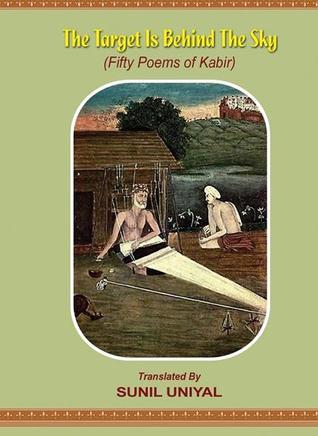
The Target is Behind the Sky offers the reader a slim but representative selection of Kabir's poetry in English translation.


The Poetry Of Kabir: “All know that the drop merges into the ocean, but few know that the ocean merges into the drop.”
by Kabir
Rating: 3.2 ⭐
Kabir, (meaning Great and one of the 99 names of God in Arabic), was a mystic and poet, born around 1440 whose work continues to be revered today by Muslims, Sufis, Sikhs and Hindus and is the founder of the Kabir Panth (Path of Kabir), a religious community mainly in India with approximately 10 million members. He was born in Varanasi to poor Muslim parents, although some say he was the child of a Brahmin widow and said of himself that he was "at once the child of Allah and Ram." He grew up learning his father's craft of weaving and very unusually for a Muslim, overcame obstacles to become a disciple of Saint or Swami Ramananda, the leading pioneer of the Bhakti movement, which promoted salvation for all. We cannot be sure of what religious teaching he received in Ramananda's ashram as Ramananda died when Kabir was 13 but we do know that he did not renounce his worldly life, as he married and had children, and was disdainful of professional piety which led to later persecution by religious authorities. This was further amplified by his progressive philosophy of social equality and his spiritual synthesis of Hindu ideas of karma and reincarnation and Muslim beliefs of one god and no idolatry or caste system. We do know that he had no formal education and remained almost entirely illiterate and expressed his poems as 'banis' meaning utterances in Hindi although he borrowed from various dialects. His songs and couplets were part of a strong oral tradition in the region and although spread across northern India orally were also written down by two of his disciples, namely Bhagodas and Dharmadas. Kabir's style was inventive and imaginative and able to capture the attention of a wide range of Indians and provide a path to spiritual awakening which for Kabir was mainly about love and brotherhood and not to be divorced from daily life. "All our actions performed anywhere are our duties, and work is worship." His work is understood and accessible to generations of Indians, more so than any other Saint and in India remains one of the most quoted mystic poets of all time. His ability to simplify and use examples of our universal daily life to enhance our spiritual well being and acceptance of our own self make his work very relevant today as is apparent in this volume. Kabir is thought to have lived an exceptionally long life and probably died in 1518. It is said that his Hindu followers wanted his body cremated and his Muslim followers wanted his body buried and a fight therefore ensued. When they finally lifted the cloth that covered his dead body they found flowers and took half each for his last rites.


human beingyour flesh is no good as foodyour bones don’t make good beadsyour skin is useless for drumsbut you have one amazing quality !-there is an entireanother dimension to lifewaiting to be discoveredand that dimension is you-hiding in this cageof visible matteris the invisible lifebirdlisten to her voiceshe is singing your song-lift the veilthat obscures the heartand there you will findwhat you are looking for-friends, unless you findthe river of loveyou will leaveas thirsty as you came


Muestra de la poesía religiosa de tres santos y místicos de la India del siglo XV y XVI. Kabir y su discípulo Guru Nanak buscaron la experiencia suprema de Dios en la práctica de las religiones; finalmente la encontraron por medio de sus respectivos maestros: Kabir en Ramanda y Guru Nanak en el mismo Kabir. Mira Bái fue una mujer que expresó por medio de la poesía el sentimiento de amor y grandeza que la experiencia de Dios le proporcionaba.

"Pour rompre avec les habituels intitulés "chansons", "poèmes" ou "paroles", nous proposons au lecteur français, sous le beau titre La Flûte de l'Infini, les traductions, totalement inédites, par André Gide, de vingt-deux poèmes de Kabîr, plus un tercet non identifié. En regard, leur version anglaise par Rabindranath Tagore. À la suite, nous donnons l'intégralité du recueil des Poèmes de Kabîr, dans l'édition de 1922 et la traduction d'Henriette Mirabaud-Thorens." Jean-Claude Perrier.

கபீர் பாடல்கள் வாய்மொழிப்பாடல்களாகவே பிரபலமடைந்தன. பேச்சு மொழியில் அமைந்த அவரது ஈரடிப் பாடல்களைச் சாதாரண மக்கள் பரவலாக பாடினர். இடைக்காலப் பக்தி இயக்கத்திலிருந்து இன்றைய காலகட்டம் வரை எளிய மக்களின் அன்றாட வாழ்க்கையில் கபீர் நீக்கமர நிறைந்திருக்கிறார். இயற்றி ஐந்நூறு ஆண்டுகள் கழித்தும் இத்தகைய பேரு மிகச் சிலருக்கே வாய்க்கும். சித்தர் பாடல்களில் காணப்படும் விமர்சனம், வரட்டுத்தனமான மரபைப் கேள்விக்குள்ளாக்கும் பாங்கு, பிராமணியத்துக்கு எதிரான போக்கு, எளிய மொழிப் பிரயோகம், எல்லாரும் பாடக்கூடிய சாதாரணத்துவம் போன்ற பண்புகள் கபீரிலும் வீரியத்துடன் அமைந்திருக்கின்றன. அபாரமான படிமங்கள், உவமைகள், பொது புழக்கத்திலிருக்கும் வழக்குகளின் கச்சிதமான பிரயோகம் வாய்பாட்டுத்தன்மைக்குள் அடைபடாத பாடல்கள் என கபீர் எந்த ஒரு மொழியிலும் புதிதாகவும் வீரியத்துடனும் செறிவோடும் வந்து சேர்கிறார்.

Kabîr naquit vers 1440 et mourut en 1518 après avoir vécu l'humble vie de tisserand. Ses Paroles sont à l'origine du mouvement religieux des Kabîr-Panthi (4 millions d'adhérents) ; les Sîkh eux aussi le tiennent pour un de leurs maîtres. Musulman d'ascendance - car Kebir, en arabe, signifie "grand" -, Kabîr s'était pourtant assimilé à l'hindouisme. Il subit l'influence de Râmânanda et du Hatha-Yoga, puis, à la suite d'une "illumination", prêcha les petites gens. Pandits, mollahs, yogis, tous ceux qui vivent en parasites des religions, il les condamnait. Il veillait à se garder "du Véda comme du Coran". Ainsi que Toukârâm, le mystique marathe, il aspirait à l'union directe avec Râm, l'Absolu, qui transcende toutes les sectes. On l'accusa donc de vouloir se diviniser, ainsi qu'à Bagdad un peu plus tôt Mansûr Hallâj. Plus chanceux, il échappa de peu au supplice. Aujourd'hui, musulmans et hindous se reprochent mutuellement de l'avoir persécuté. La belle traduction de Mlle Vaudeville colle à ce chant si simple et fulgurant, très modeste et plus ambitieux encore, celui d'un homme qui répudie à la fois le syncrétisme banal et les arcanes de l'ésotérisme, et qui, prophète une fois de plus de l'Unité, à ce titre doit toucher l'agnostique aussi bien que le croyant.
Kabir je najbolj poznan klasičen Indijski poet. Kabirjevi verzi so na indijski podcelini preživeli stoletja in tam danes predstavljajo najbolj priljubljene ponarodele popevke z versko vsebino - bhajane. V angleščino jih je prevedel že nobelov nagrajenec Rabindranath Tagore, v slovenskem jeziku pa jih je zapisal Žiga Valetič.


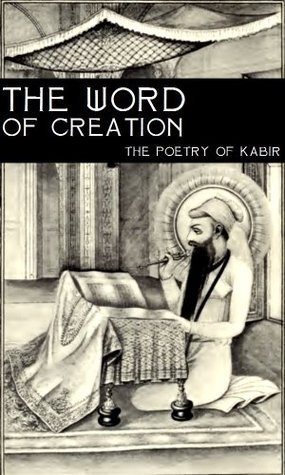
40 Song Poems of the Bhakti Saint Kabirrendered into modern Englishby Bhakti poemsfor fans of Rumi, Hafiz, and Rabindranath Tagore

A YEAR WITH KABIR Translation & Introduction by Paul Smith ‘Here are wonderful words of wisdom (sakhis/poems) from one of the wisest of the wise. Here are lines of love from a Master of Divine Love, and a human being who has lived as all human beings should live, with compassion, honesty and courage. If you want the Truth, no holds barred, it is here, but as we’re told; truth is dangerous! These poems change people. You will not be the same! As Kabir says. “Wake up sleepy head!” ’ From the Introduction that includes a Glossary and a Selected Bibliography. 366 wonderful short poems in this Daybook to inspire and enlighten. 385 pages. COMMENTS ON PAUL SMITH’S TRANSLATION OF HAFIZ’S ‘DIVAN’. “It is not a joke... the English version of ALL the ghazals of Hafiz is a great feat and of paramount importance. I am astonished.” Dr. Mir Mohammad Taghavi (Dr. of Literature) Tehran. “Superb translations. 99% Hafiz 1% Paul Smith.” Ali Akbar Shapurzman, translator and knower of Hafiz’s Divan off by heart. “I was very impressed with the beauty of these books.” Dr. R.K. Barz. Faculty of Asian Studies, Australian National University. ‘A YEAR WITH’ SERIES… Sadi, ‘Attar, Kabir, Rumi, Abu Said & Sarmad, Krishna, Buddha, Turkish Sufi Poets, Women Mystical Poets, Arabic Sufi Poetry, Nizami & Khayyam & ‘Iraqi, ‘Attar & Khaqani, Sufi Poetry, Sufis of India, Arabic & Afghan Sufi Poetry, Turkish & Urdu Sufi Poetry, Sufi & Dervish Poets & others. Paul Smith (b. 1945) is a poet, author and translator of many books of Sufi poets of the Persian, Arabic, Urdu, Turkish, Pashtu and other languages including Hafiz, Sadi, Nizami, Rumi, ‘Attar, Sana’i, Jahan Khatun, Obeyd Zakani, Mu’in, Amir Khusrau, Nesimi, Kabir, Anvari, Ansari, Jami, Khayyam, Rudaki, Yunus Emre, Shah Latif, Bulleh Shah, Khushal Khan Khattak, Mahsati, Lalla Ded and others, and his own poetry, fiction, plays, biographies, children’s books and a dozen screenplays. www.newhumanitybooks.com

Ova zbirka predstavlja stihove koji nisu ranije prevođeni na srpski jezik, a pridodat im je i tekst na hindi originalu! Budući da je Kabir svojevremeno komponovao muziku za svoje pesme, deo te muzike je moguće osetiti u ritmu i melodiji pesama koje se sada nalaze i u ovoj zbirci.