Loading themes...
Explore the best books about Gothic theme.

Novelist, poet, dramatist and author of many of the best American short stories of our time, Joyce Carol Oates shows yet another aspect of her unbounded creativity in these tales of the grotesque. Haunted, a collection of sixteen tales that range from classic ghost stories to portrayals of chilling psychological terror, raises the genre to the level of fine literature - complex, multi-layered, and gripping fiction that is very scary indeed. In the title story, "Haunted, " the pubescent Melissa and her best friend, the sexually precocious Mary Lou, ignore "no trespassing" signs to explore forbidden houses. But the deserted Minton farm is one place where they should not have gone, and years later Melissa is tormented by her memories of its malevolence...and the murder of Mary Lou. In the novella, "The Model, " a sexual threat seems to underlie the interaction between young Sybil Blake and "Mr. Starr, " who asks her to be his model, but the truth about her own identity, and his, shows that the danger is lurking in a different part of the heart. The "Accursed Inhabitants of the House of Bly, " a macabre reworking of Henry James's "The Turn of the Screw, " resurrects the evil of Miss Jessel and Quint, who are up to their old tricks with the children, Miles and Flora, but with new, perverse, and brilliant revelations. The tales in this collection plunge the reader into nightmare worlds where violence slips in unexpectedly, where reality turns into a funhouse mirror, and where American culture goes awry in shocking, provocative ways. Joyce Carol Oates is a master storyteller of the dark side. She writes with skillfully controlled prose, tightly woven plots, and deep psychological insight that m her fictional horror worthy to set alongside the stories of Edgar Allan Poe - and far above all the rest.Haunted --The doll --The bingo master --The white cat --The model --Extenuating circumstances --Don't you trust me --The guilty party --The premonition --Phase change --Poor Bibi --Thanksgiving --Blind --The radio astronomer --Accursed inhabitants of the House of Bly --Martyrdom
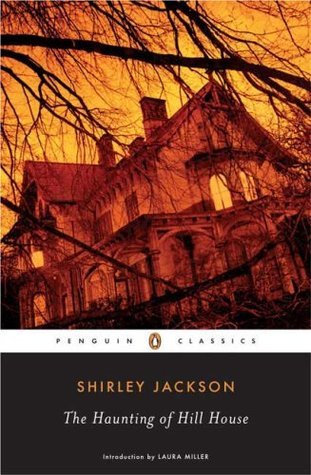
“Hill House, not sane, stood by itself against its hills, holding darkness within. . . .”Four seekers have arrived at the rambling old pile known as Hill House: Dr. Montague, an occult scholar looking for solid evidence of psychic phenomena; Theodora, his lovely and lighthearted assistant; Luke, the adventurous future inheritor of the estate; and Eleanor, a friendless, fragile young woman with a dark past. As they begin to cope with chilling, even horrifying occurrences beyond their control or understanding, they cannot possibly know what lies ahead. For Hill House is gathering its powers—and soon it will choose one of them to make its own.

A doomed lord, an emergent hero, and a dazzling array of bizarre creatures inhabit the magical world of the Gormenghast novels which, along with Tolkien's Lord of the Rings, reign as one of the undisputed fantasy classics of all time. At the center of it all is the seventy-seventh Earl, Titus Groan, who stands to inherit the miles of rambling stone and mortar that form Gormenghast Castle and its kingdom, unless the conniving Steerpike, who is determined to rise above his menial position and control the House of Groan, has his way.In these extraordinary novels, Peake has created a world where all is like a dream - lush, fantastical, and vivid. Accompanying the text are Peake's own drawings, illustrating the whole assembly of strange and marvelous creatures that inhabit Gormenghast.Also featuring:Introductory essays by Anthony Burgess and Quentin CrispTwelve critical essays, curated by Peake scholar Peter G. WinningtonFragment of the unpublished novel, Titus Awakes

Last night I dreamt I went to Manderley again...The novel begins in Monte Carlo, where our heroine is swept off her feet by the dashing widower Maxim de Winter and his sudden proposal of marriage. Orphaned and working as a lady's maid, she can barely believe her luck. It is only when they arrive at his massive country estate that she realizes how large a shadow his late wife will cast over their lives--presenting her with a lingering evil that threatens to destroy their marriage from beyond the grave.First published in 1938, this classic gothic novel is such a compelling read that it won the Anthony Award for Best Novel of the Century.

From familiar fairy tales and legends - Red Riding Hood, Bluebeard, Puss in Boots, Beauty and the Beast, vampires and werewolves - Angela Carter has created an absorbing collection of dark, sensual, fantastic stories.

The Lottery, one of the most terrifying stories written in this century, created a sensation when it was first published in The New Yorker. "Power and haunting," and "nights of unrest" were typical reader responses. This collection, the only one to appear during Shirley Jackson's lifetime, unites "The Lottery:" with twenty-four equally unusual stories. Together they demonstrate Jackson's remarkable range--from the hilarious to the truly horrible--and power as a storyteller.

From the acclaimed author of such novels as "Blood and Grits" and "Childhood" comes a wildly weird and breathtakingly original visit to the rural South that reveals the exotic subculture that erupts in all its glory at the Rattlesnake Roundup in Mystic, Georgia. "No number of adjectives in the thesaurus can do full justice to the dazzlingly bizarre nature of Crews' creations".--"Washington Post Book World".

The Turn of the Screw is an 1898 horror novella by Henry James that first appeared in serial format in Collier's Weekly magazine (January 27 - April 16, 1898). In October 1898 it appeared in The Two Magics, a book published by Macmillan in New York City and Heinemann in London. A very young woman's first job: governess for two weirdly beautiful, strangely distant, oddly silent children, Miles and Flora, at a forlorn estate... An estate haunted by a beckoning evil. Half-seen figures who glare from dark towers and dusty windows- silent, foul phantoms who, day by day, night by night, come closer, ever closer. With growing horror, the helpless governess realizes the fiendish creatures want the children, seeking to corrupt their bodies, possess their minds, own their souls. But worse-much worse- the governess discovers that Miles and Flora have no terror of the lurking evil. For they want the walking dead as badly as the dead want them.Excerpt:I remember the whole beginning as a succession of flights and drops, a little seesaw of the right throbs and the wrong. After rising, in town, to meet his appeal, I had at all events a couple of very bad days - found myself doubtful again, felt indeed sure I had made a mistake. In this state of mind I spent the long hours of bumping, swinging coach that carried me to the stopping place at which I was to be met by a vehicle from the house.

A governess in a French chateau encounters an apparent plot against her young charge's life in this unforgettably haunting and beautifully written suspense novel. When lovely Linda Martin first arrives at Château Valmy as an English governess to the nine-year-old Count Philippe de Valmy, the opulence and history surrounding her seems like a wondrous, ecstatic dream. But a palpable terror is crouching in the shadows. Philippe's uncle, Léon de Valmy, is the epitome of charm, yet dynamic and arrogant, his paralysis little hindrance as he moves noiselessly in his wheelchair from room to room. Only his son Raoul, a handsome, sardonic man who drives himself and his car with equally reckless abandon, seems able to stand up to him. To Linda, Raoul is an enigma, though irresistibly attracted to him, she senses some dark twist in his nature. When an accident deep in the woods nearly kills Linda's innocent charge, she begins to wonder if someone has deadly plans for the young count.

Psychologically astute and wonderfully poetic, Sanctuary is a powerful novel examining the nature of true evil, through the prisms of mythology, local lore, and hard-boiled detective fiction. This is the dark, at times brutal, story of the kidnapping of Mississippi debutante Temple Drake, who introduces her own form of venality into the Memphis underworld where she is being held.

Charles Baudelaire's 1857 masterwork was scandalous in its day for its portrayals of sex, same-sex love, death, the corrupting and oppressive power of the modern city and lost innocence, Les Fleurs du Mal (The Flowers of Evil) remains powerful and relevant for our time.In Spleen et idéal," Baudelaire dramatizes the erotic cycle of ecstacy and anguish--of sexual and romantic love. Tableaux Parisiens condemns the crushing effects of urban planning on a city's soul and praises the city's anti-heroes including the deranged and derelict. Le Vin centers on the search for oblivion in drink and drugs. The many kinds of love that lie outside traditional morality is the focus of Fleurs du Mal while rebellion is at the heart of Révolte.

First published in 1894, the story of the diva Trilby O'Ferrall and her mentor, Svengali, has entered the mythology of that period alongside Dracula and Sherlock Holmes. Immensely popular for years, the novel led to a hit play, a series of popular films, Trilby products from hats to ice cream, and streets in Florida named after characters in the book. The setting reflects Du Maurier's bohemian years as an art student in Paris before he went to London to make a career in journalism. A celebrated caricaturist for Punch magazine, Du Maurier's drawings for the novel formed a large part of its appeal.

You can find an alternative cover edition for this ISBN here and here.When Jonathan Harker visits Transylvania to help Count Dracula with the purchase of a London house, he makes a series of horrific discoveries about his client. Soon afterwards, various bizarre incidents unfold in England: an apparently unmanned ship is wrecked off the coast of Whitby; a young woman discovers strange puncture marks on her neck; and the inmate of a lunatic asylum raves about the 'Master' and his imminent arrival.In Dracula, Bram Stoker created one of the great masterpieces of the horror genre, brilliantly evoking a nightmare world of vampires and vampire hunters and also illuminating the dark corners of Victorian sexuality and desire.This Norton Critical Edition includes a rich selection of background and source materials in three areas: Contexts includes probable inspirations for Dracula in the earlier works of James Malcolm Rymer and Emily Gerard. Also included are a discussion of Stoker's working notes for the novel and "Dracula's Guest," the original opening chapter to Dracula. Reviews and Reactions reprints five early reviews of the novel. "Dramatic and Film Variations" focuses on theater and film adaptations of Dracula, two indications of the novel's unwavering appeal. David J. Skal, Gregory A. Waller, and Nina Auerbach offer their varied perspectives. Checklists of both dramatic and film adaptations are included.Criticism collects seven theoretical interpretations of Dracula by Phyllis A. Roth, Carol A. Senf, Franco Moretti, Christopher Craft, Bram Dijkstra, Stephen D. Arata, and Talia Schaffer.A Chronology and a Selected Bibliography are included.

From the acclaimed author of Knockemstiff (“A powerful, remarkable, exceptional book.” –Los Angeles Times): a dark and riveting vision of America that delivers literary excitement in the highest degree.Set in rural southern Ohio and West Virginia, The Devil All the Time follows a cast of compelling and bizarre characters from the end of World War II to the 1960s. There’s Willad Russell, tormented veteran of the carnage in the South Pacific, who can’t save his beautiful wife, Charlotte, from an agonizing death by cancer, no matter how much sacrificial blood he pours on his “prayer log.” There’s Carl and Sandy Henderson, a husband-and-wife team of serial killers who troll America’s highways searching for suitable models to photograph and exterminate. There’s the spider-handling preacher, Roy, and his crippled virtuoso-guitar-playing sidekick, Theodore, running from the law. And caught in the middle of all this is Arvin Eugene Russell, Willard and Charlotte’s orphaned son, who grows up to be a good but also violent man in his own right.Donald Ray Pollock braids his plotlines into a taut narrative that will leave readers astonished and deeply moved. Marrying the twisted intensity of Oliver Stone’s Natural Born Killers with the religious and gothic overtones of Flannery O’Connor at her most haunting, he proves himself a master storyteller in the grittiest and most uncompromising American grain.

Before succumbing to the insanity that ravaged his later life, Guy de Maupassant established a reputation as France's preeminent short story writer, an artist whose cynical and macabre visions paralleled those of Hoffmann and Poe, and directly influenced those of Ambrose Bierce, Mark Twain, and H.P. Lovecraft. His stories are nightmarescapes of psychopathy, corruption, and decadence, featuring a serial-killer judge, a maddening episode of cabin fever (which influenced The Shinning), a gruesome discovery during a night on the river, the inexplicable exodus of a man's walking furniture, the famous invisible vampire, the Horla, werewolves, haunted rooms, neglected ghosts, and vivid affairs of necrophilia. This unique and unrivalled edition of de Maupassant's best weird tales, fantasies, and mysteries includes critical introductions to each story, contextual information, and chilling illustrations that breathe life into his Gothic visions and bizarre fantasias.

England, 1939. Ten-year-old Virginia Wrathmell arrives at Salt Winds, a secluded house on the edge of a marsh, to meet her adoptive parents—practical, dependable Clem and glamorous, mercurial Lorna. The marsh, with its deceptive tides, is a beautiful but threatening place. Virginia’s new parents’ marriage is full of secrets and tensions she doesn’t quite understand, and their wealthy neighbor, Max Deering, drops by too often, taking an unwholesome interest in the family’s affairs. Only Clem offers a true sense of home. War feels far away among the birds and shifting sands—until the day a German fighter plane crashes into the marsh, and Clem ventures out to rescue the airman. What happens next sets into motion a crime so devastating it will haunt Virginia for the rest of her life. Seventy-five years later, she finds herself drawn back to the marsh, and to a teenage girl who appears there, nearly frozen and burdened by her own secrets. In her, Virginia might have a chance at retribution and a way to right a grave mistake she made as a child. Elizabeth Brooks’s gripping debut mirrors its marshy landscape—full of twists and turns and moored in a tangle of family secrets. A gothic, psychological mystery and atmospheric coming-of-age story, The Orphan of Salt Winds is the portrait of a woman haunted by the place she calls home.