Loading genres...
Explore the best books about Holocaust genre.

A key member of the prosecution team at the Nuremberg war crimes trials offers an eyewitness account of the tribunal, shedding new light on the accused top-echelon Nazis, the events of the trials, and the verdicts

From his illegitimate birth in a small Austrian village to his fiery death in a bunker under the Reich chancellery in Berlin, Adolf Hitler left a murky trail, strewn with contradictory tales & overgrown with self-created myths. One truth prevails: the sheer scale of the evils that he unleashed on the world has made him a demonic figure without equal in this century. Kershaw's Hitler brings us closer than ever before to the character of the bizarre misfit in his 30-year ascent from a Viennese shelter for the indigent to uncontested rule over the German nation that had tried & rejected democracy in the crippling aftermath of WWI. With extraordinary vividness, Kershaw recreates the settings that made Hitler's rise possible: the virulent anti-Semitism of prewar Vienna, the crucible of a war with immense casualties, the toxic nationalism that gripped Bavaria in the 20s, the undermining of the Weimar Republic by extremists of the Right & the Left, the hysteria that accompanied Hitler's seizure of power in 1933 & then mounted in brutal attacks by his storm troopers on Jews & others condemned as enemies of the Aryan race. In an account drawing on many previously untapped sources, Hitler metamorphoses from an obscure fantasist, a drummer sounding an insistent beat of hatred in Munich beer halls, to the instigator of an infamous failed putsch &, ultimately, to the leadership of a ragtag alliance of right-wing parties fused into a movement that enthralled the German people. This volume, 1st of two, ends with the promulgation of the infamous Nuremberg laws that pushed German Jews to the outer fringes of society, & with the march of the German army into the Rhineland, Hitler's initial move toward the abyss of war.

The publication of Victor Klemperer's secret diaries brings to light one of the most extraordinary documents of the Nazi period. I Will Bear Witness is a work of literature as well as a revelation of the day-by-day horror of the Nazi years. A Dresden Jew, a veteran of World War I, a man of letters and historian of great sophistication, Klemperer recognized the danger of Hitler as early as 1933. His diaries, written in secrecy, provide a vivid account of everyday life in Hitler's Germany. What makes this book so remarkable, aside from its literary distinction, is Klemperer's preoccupation with the thoughts and actions of ordinary Germans: Berger the greengrocer, who was given Klemperer's house ("anti-Hitlerist, but of course pleased at the good exchange"), the fishmonger, the baker, the much-visited dentist. All offer their thoughts and theories on the progress of the war: Will England hold out? Who listens to Goebbels? How much longer will it last? This symphony of voices is ordered by the brilliant, grumbling Klemperer, struggling to complete his work on eighteenth-century France while documenting the ever- tightening Nazi grip. He loses first his professorship and then his car, his phone, his house, even his typewriter, and is forced to move into a Jews' House (the last step before the camps), put his cat to death (Jews may not own pets), and suffer countless other indignities. Despite the danger his diaries would pose if discovered, Klemperer sees it as his duty to record events. "I continue to write," he notes in 1941 after a terrifying run-in with the police. "This is my heroics. I want to bear witness, precise witness, until the very end." When a neighbor remarks that, in his isolation, Klemperer will not be able to cover the main events of the war, he writes: "It's not the big things that are important, but the everyday life of tyranny, which may be forgotten. A thousand mosquito bites are worse than a blow on the head. I observe, I note, the mosquito bites."

A memorial edition of Elie Wiesel's seminal memoir of surviving the Nazi death camps, with tributes by President Obama and Samantha PowerWhen Elie Wiesel died in July 2016, the White House issued a memorial statement in which President Barack Obama called him "the conscience of the world." The whole of the president's eloquent tribute will appear as a foreword to this memorial edition of Night. "Like millions of admirers, I first came to know Elie through his account of the horror he endured during the Holocaust simply because he was Jewish," wrote the president.In 1986, when Wiesel received the Nobel Peace Prize, the Norwegian Nobel Committee wrote, "Elie Wiesel was rescued from the ashes of Auschwitz after storm and fire had ravaged his life. In time he realized that his life could have purpose: that he was to be a witness, the one who would pass on the account of what had happened so that the dead would not have died in vain and so the living could learn." Night, which has sold millions of copies around the world, is the very embodiment of that conviction. It is written in simple, understated language, yet it is emotionally devastating, never to be forgotten.Born in the town of Sighet, Transylvania, Wiesel was a teenager when he and his family were deported to Auschwitz and then Buchenwald. Night is the shattering record of his memories of the death of his mother, father, and little sister, Tsipora; the death of his own innocence; and his despair as a deeply observant Jew confronting the absolute evil of man. "Never shall I forget that night, the first night in camp, that turned my life into one long night," writes Wiesel. "Never shall I forget . . . even were I condemned to live as long as God Himself." These words are etched into the wall of the Holocaust Memorial Museum in Washington. Far more than a chronicle of the sadistic realm of the camps, Night also addresses many of the philosophical and personal questions implicit in any serious consideration of the Holocaust.The memorial edition of Night includes the unpublished text of a speech that Wiesel delivered before the United Nations General Assembly on the sixtieth anniversary of the liberation of Auschwitz entitled "Will the World Ever Know." These remarks powerfully resonate with Night and with subsequent acts of genocide.

A Jewish refugee who escaped Hitler's holocaust and is living in America with his second wife faces a dilemma when he discovers that his first wife is still alive

As it's usually told, the story of the German Jews starts at the end, with their tragic demise in Hitler's Third Reich. Now, in this important work of historical restoration, Amos Elon takes us back to the beginning, chronicling a period of achievement and integration that at its peak produced a golden age second only to the Renaissance.Writing with a novelist's eye, Elon shows how a persecuted clan of cattle dealers and wandering peddlers was transformed into a stunningly successful community of writers, philosophers, scientists, tycoons and activists. He peoples his account with dramatic figures: Moses Mendelssohn, who entered Berlin in 1743 through the gate reserved for Jews and cattle, and went on to become "the German Socrates;" Heinrich Heine, beloved lyric poet who famously referred to baptism as the admission ticket to European culture; Hannah Arendt, whose flight from Berlin signaled the end of the German-Jewish idyll. Elon traces how this minority-never more than one percent of the population-came to be perceived as a deadly threat to national integrity, and he movingly demonstrates that this devastating outcome was uncertain almost until the end.A collective biography, full of depth and compassion, The Pity of It All summons up a splendid world and a dream of integration and tolerance that, despite all, remains the essential ennobling project of modernity.(less)

When discussing the German war crimes of the Second World War, modern histories have focused on the Holocaust. While the Final Solution was a unique and unparalleled horror, German atrocities did not end there. The Nazis terrorized their own citizens, tortured and murdered POWs, and carried out countless executions throughout occupied Europe. Lord Russell of Liverpool was part of the legal team that brought Nazi war criminals to justice, and from this first-hand position, he published the sensational, bestselling The Scourge of the Swastika in 1954. Liverpool shows that the actions of the Third Reich, including the Holocaust, were illegal, not merely immoral.

The horrors of the Nazi regime and the Holocaust still present some of the most disturbing questions in modern history: Why did Hitler's party appeal to millions of Germans, and how entrenched was anti-Semitism among the population? How could anyone claim, after the war, that the genocide of Europe's Jews was a secret? Did ordinary non-Jewish Germans live in fear of the Nazi state? In this unprecedented firsthand analysis of daily life as experienced in the Third Reich, What We Knew offers answers to these most important questions. Combining the expertise of Eric A. Johnson, an American historian, and Karl-Heinz Reuband, a German sociologist, What We Knew is the most startling oral history yet of everyday life in theThird Reich.

Librarian's note: An alternate cover edition can be found hereIt is 1939. Nazi Germany. The country is holding its breath. Death has never been busier, and will be busier still.By her brother's graveside, Liesel's life is changed when she picks up a single object, partially hidden in the snow. It is The Gravedigger's Handbook, left behind there by accident, and it is her first act of book thievery. So begins a love affair with books and words, as Liesel, with the help of her accordian-playing foster father, learns to read. Soon she is stealing books from Nazi book-burnings, the mayor's wife's library, wherever there are books to be found.But these are dangerous times. When Liesel's foster family hides a Jew in their basement, Liesel's world is both opened up, and closed down.In superbly crafted writing that burns with intensity, award-winning author Markus Zusak has given us one of the most enduring stories of our time.(Note: this title was not published as YA fiction)

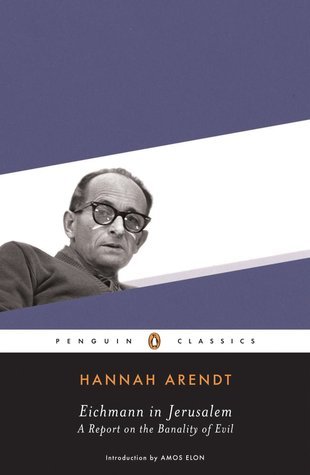
Originally appearing as a series of articles in The New Yorker, Hannah Arendt’s authoritative and stunning report on the trial of Nazi leader Adolf Eichmann sparked a flurry of debate upon its publication. This revised edition includes material that came to light after the trial, as well as Arendt’s postscript directly addressing the controversy that arose over her account. A major journalistic triumph by an intellectual of singular influence, Eichmann in Jerusalem is as shocking as it is informative—an unflinching look at one of the most unsettling and unsettled issues of the twentieth century that remains hotly debated to this day.

What has Germany made of its Nazi past? A significant new look at the legacy of the Nazi regime, this book exposes the workings of past beliefs and political interests on how--and how differently--the two Germanys have recalled the crimes of Nazism, from the anti-Nazi emigration of the 1930s through the establishment of a day of remembrance for the victims of National Socialism in 1996. Why, Jeffrey Herf asks, would German politicians raise the specter of the Holocaust at all, in view of the considerable depth and breadth of support its authors and their agenda had found in Nazi Germany? Why did the public memory of Nazi anti-Jewish persecution and the Holocaust emerge, if selectively, in West Germany, yet was repressed and marginalized in "anti-fascist" East Germany? And how do the politics of left and right come into play in this divided memory? The answers reveal the surprising relationship between how the crimes of Nazism were publicly recalled and how East and West Germany separately evolved a Communist dictatorship and a liberal democracy. This book, for the first time, points to the impact of the Cold War confrontation in both West and East Germany on the public memory of anti-Jewish persecution and the Holocaust. Konrad Adenauer, Theodor Heuss, Kurt Schumacher, Willy Brandt, Richard von Weizsacker, and Helmut Kohl in the West and Walter Ulbricht, Wilhelm Pieck, Otto Grotewohl, Paul Merker, and Erich Honnecker in the East are among the many national figures whose private and public papers and statements Herf examines. His work makes the German memory of Nazism--suppressed on the one hand and selective on the other, from Nuremberg to Bitburg--comprehensible within the historical context of the ideologies and experiences of pre-1945 German and European history as well as within the international context of shifting alliances from World War II to the Cold War. Drawing on West German and recently opened East German archives, this book is a significant contribution to the history of belief that shaped public memory of Germany's recent past.

Suhl, Yuri, Ed., They Fought The Story Of The Jewish Resistance In Nazi Europe

Translated from the original German, this final volume of Victor Klemperer’s diaries opens in 1945. After the horrors of the war, Victor and Eva’s return to their Dresden home seems like a fairytale. Victor tries to resume his distinguished academic career and joins East Germany’s Communist Party. In 1951, Eva dies; a year later, aged 70, Victor marries a student—an unlikely but successful love match. But with the growing repression of the Communist Party, and the memory of those who did not survive, Victor’s achievements ring hollow. Politics, he comes to believe, is, above all, the choice of "the lesser evil." A masterpiece both of Holocaust literature and memoir.

In the shadow of Auschwitz, a flamboyant German industrialist grew into a living legend to the Jews of Cracow. He was a womaniser and a heavy drinker who enjoyed the good life, yet to them he became a saviour.Thomas Keneally's Booker Prize-winning novel recreates the story of Oskar Schindler, an Aryan who risked his life to protect Jews in Nazi-occupied Poland, who conrinually defied and outwitted the SS, and who was transformed by the war into an angel of mercy. It is an unforgettable tale, all the more extraordinary for being true.

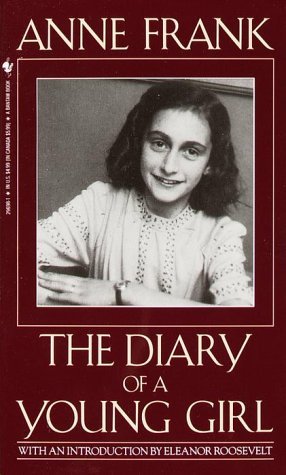
Anne Frank's extraordinary diary, written in the Amsterdam attic where she and her family hid from the Nazis for two years, has become a world classic and a timeless testament to the human spirit. Now, in a new edition enriched by many passages originally withheld by her father, we meet an Anne more real, more human, and more vital than ever. Here she is first and foremost a teenage girl—stubbornly honest, touchingly vulnerable, in love with life. She imparts her deeply secret world of soul-searching and hungering for affection, rebellious clashes with her mother, romance and newly discovered sexuality, and wry, candid observations of her companions. Facing hunger, fear of discovery and death, and the petty frustrations of such confined quarters, Anne writes with adult wisdom and views beyond her years. Her story is that of every teenager, lived out in conditions few teenagers have ever known.

Finally, the one-volume edition of Ian Kershaw's definitive and masterful biography of Hitler."The Hitler biography of the twenty-first century" (Richard J. Evans), Ian Kershaw's Hitler is a new, distilled, one-volume masterpiece that will become the standard work. From Hitler's origins as a failed artist in fin-de-siecle Vienna to the terrifying last days in his Berlin bunker, Kershaw's richly illustrated biography is a mesmerizing portrait of how Hitler attained, exercised, and retained power. Drawing on previously untapped sources, such as Goebbels's diaries, Kershaw addresses crucial questions about the unique nature of Nazi radicalism, about the Holocaust, and about the poisoned European world that allowed Hitler to operate so effectively.151 photographs; 8 maps

Never before in English, Armenian Golgotha is the most dramatic and comprehensive eyewitness account of the first modern genocide.On April 24, 1915, the priest Grigoris Balakian was arrested along with some 250 other intellectuals and leaders of Constantinople’s Armenian community. It was the beginning of the Ottoman Turkish government’s systematic attempt to eliminate the Armenian people from Turkey; it was a campaign that continued through World War I and the fall of the Ottoman Empire, by which time more than a million Armenians had been annihilated and expunged from their historic homeland. For Grigoris Balakian, himself condemned, it was also the beginning of a four-year ordeal during which he would bear witness to a seemingly endless caravan of blood.Balakian sees his countrymen sent in carts, on donkeys, or on foot to face certain death in the desert of northern Syria. Many would not even survive the journey, suffering starvation, disease, mutilation, and rape, among other tortures, before being slaughtered en route. In these pages, he brings to life the words and deeds of survivors, foreign witnesses, and Turkish officials involved in the massacre process, and also of those few brave, righteous Turks, who, with some of their German allies working for the Baghdad Railway, resisted orders calling for the death of the Armenians. Miraculously, Balakian manages to escape, and his flight—through forest and over mountain, in disguise as a railroad worker and then as a German soldier—is a suspenseful, harrowing odyssey that makes possible his singular testimony.Full of shrewd insights into the political, historical, and cultural context of the Armenian genocide—the template for the subsequent mass killings that have cast a shadow across the twentieth century and beyond—this memoir is destined to become a classic of survivor literature. Armenian Golgotha is sure to deepen our understanding of a catastrophic crime that the Turkish government, the Ottomans’ successor, denies to this day.

Americans call the Second World War “The Good War.” But before it even began, America’s wartime ally Josef Stalin had killed millions of his own citizens—and kept killing them during and after the war. Before Hitler was finally defeated, he had murdered six million Jews and nearly as many other Europeans. At war’s end, both the German and the Soviet killing sites fell behind the iron curtain, leaving the history of mass killing in darkness.Bloodlands is a new kind of European history, presenting the mass murders committed by the Nazi and Stalinist regimes as two aspects of a single history, in the time and place where they occurred: between Germany and Russia, when Hitler and Stalin both held power. Assiduously researched, deeply humane, and utterly definitive, Bloodlands will be required reading for anyone seeking to understand the central tragedy of modern history.From BooklistIf there is an explanation for the political killing perpetrated in eastern Europe in the 1930s and 1940s, historian Snyder roots it in agriculture. Stalin wanted to collectivize farmers; Hitler wanted to eliminate them so Germans could colonize the land. The dictators wielded frightening power to advance such fantasies toward reality, and the despots toted up about 14 million corpses between them, so stupefying a figure that Snyder sets himself three goals here: to break down the number into the various actions of murder that comprise it, from liquidation of the kulaks to the final solution; to restore humanity to the victims via surviving testimony to their fates; and to deny Hitler and Stalin any historical justification for their policies, which at the time had legions of supporters and have some even today. Such scope may render Snyder’s project too imposing to casual readers, but it would engage those exposed to the period’s chronology and major interpretive issues, such as the extent to which the Nazi and Soviet systems may be compared. Solid and judicious scholarship for large WWII collections.

This is a remarkable historical and psychological examination of the enigma of Adolf Hitler--who he was, how he wielded power, and why he was destined to fail.Beginning with Hitler's early life, Sebastian Haffner probes the historical, political, and emotional forces that molded his character. In examining the inhumanity of a man for whom politics became a substitute for life, he discusses Hitler's bizarre relationships with women, his arrested psychological development, his ideological misconceptions, his growing obsession with racial extermination, and the murderous rages of his distorted mind. Finally, Haffner confronts the most disturbing question of all: Could another Hitler rise to power in modern Germany?

All That I Am is a masterful and exhilarating exploration of bravery and betrayal, of the risks and sacrifices some people make for their beliefs, and of heroism hidden in the most unexpected places.When eighteen-year-old Ruth Becker visits her cousin Dora in Munich in 1923, she meets the love of her life, the dashing young journalist Hans Wesemann, and eagerly joins in the heady activities of the militant political left in Germany. Ten years later, Ruth and Hans are married and living in Weimar Berlin when Hitler is elected chancellor of Germany. Together with Dora and her lover, Ernst Toller, the celebrated poet and self-doubting revolutionary, the four become hunted outlaws overnight and are forced to flee to London. Inspired by the fearless Dora to breathtaking acts of courage, the friends risk betrayal and deceit as they dedicate themselves to a dangerous mission: to inform the British government of the very real Nazi threat to which it remains willfully blind. All That I Am is the heartbreaking story of these extraordinary people, who discover that Hitler’s reach extends much further than they had thought.Gripping, compassionate, and inspiring, this remarkable debut novel reveals an uncommon depth of humanity and wisdom. Anna Funder has given us a searing and intimate portrait of courage and its price, of desire and ambition, and of the devastating consequences when they are thwarted.

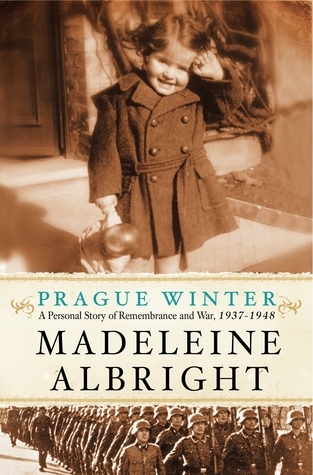
Before Madeleine Albright turned twelve, her life was shaken by the Nazi invasion of Czechoslovakia—the country where she was born—the Battle of Britain, the near total destruction of European Jewry, the Allied victory in World War II, the rise of communism, and the onset of the Cold War.Albright's experiences, and those of her family, provide a lens through which to view the most tumultuous dozen years in modern history. Drawing on her memory, her parents' written reflections, interviews with contemporaries, and newly available documents, Albright recounts a tale that is by turns harrowing and inspiring. Prague Winter is an exploration of the past with timeless dilemmas in mind and, simultaneously, a journey with universal lessons that is intensely personal.The book takes readers from the Bohemian capital's thousand-year-old castle to the bomb shelters of London, from the desolate prison ghetto of Terezín to the highest councils of European and American government. Albright reflects on her discovery of her family's Jewish heritage many decades after the war, on her Czech homeland's tangled history, and on the stark moral choices faced by her parents and their generation. Often relying on eyewitness descriptions, she tells the story of how millions of ordinary citizens were ripped from familiar surroundings and forced into new roles as exiled leaders and freedom fighters, resistance organizers and collaborators, victims and killers. These events of enormous complexity are never-theless shaped by concepts familiar to any growing child: fear, trust, adaptation, the search for identity, the pressure to conform, the quest for independence, and the difference between right and wrong."No one who lived through the years of 1937 to 1948," Albright writes, "was a stranger to profound sadness. Millions of innocents did not survive, and their deaths must never be forgotten. Today we lack the power to reclaim lost lives, but we have a duty to learn all that we can about what happened and why." At once a deeply personal memoir and an incisive work of history, Prague Winter serves as a guide to the future through the lessons of the past—as seen through the eyes of one of the international community's most respected and fascinating figures.


It’s 1944 and sixteen-year-old ballerina and gymnast Edith Eger is sent to Auschwitz. Separated from her parents on arrival, she endures unimaginable experiences, including being made to dance for the infamous Josef Mengele. When the camp is finally liberated, she is pulled from a pile of bodies, barely alive.The horrors of the Holocaust didn’t break Edith. In fact, they helped her learn to live again with a life-affirming strength and a truly remarkable resilience. The Choice is her unforgettable story.

Based on the true story of a forgotten hero, Beneath a Scarlet Sky is the triumphant, epic tale of one young man’s incredible courage and resilience during one of history’s darkest hours. Pino Lella wants nothing to do with the war or the Nazis. He’s a normal Italian teenager—obsessed with music, food, and girls—but his days of innocence are numbered. When his family home in Milan is destroyed by Allied bombs, Pino joins an underground railroad helping Jews escape over the Alps, and falls for Anna, a beautiful widow six years his senior.In an attempt to protect him, Pino’s parents force him to enlist as a German soldier—a move they think will keep him out of combat. But after Pino is injured, he is recruited at the tender age of eighteen to become the personal driver for Adolf Hitler’s left hand in Italy, General Hans Leyers, one of the Third Reich’s most mysterious and powerful commanders.Now, with the opportunity to spy for the Allies inside the German High Command, Pino endures the horrors of the war and the Nazi occupation by fighting in secret, his courage bolstered by his love for Anna and for the life he dreams they will one day share.Fans of All the Light We Cannot See, The Nightingale, and Unbroken will enjoy this riveting saga of history, suspense, and love.

A letter from a German soldier to his grandson recounts the terrors of war on the Eastern Front, and a postwar ordinary life in search of atonement, in this “raw, visceral, and propulsive” novel (New York Times Book Review).A New York Times Book Review Editors’ Choice In the throes of the Second World War, young Meissner, a college student with dreams of becoming a scientist, is drafted into the German army and sent to the Eastern Front. But soon his regiment collapses in the face of the onslaught of the Red Army, hell-bent on revenge in its race to Berlin. Many decades later, now an old man reckoning with his past, Meissner pens a letter to his grandson explaining his actions, his guilt as a Nazi participator, and the difficulty of life after war. Found among his effects after his death, the letter is at once a thrilling story of adventure and a questing rumination on the moral ambiguity of war. In his years spent fighting the Russians and attempting afterward to survive the Gulag, Meissner recounts a life lived in perseverance and atonement. Wracked with shame—both for himself and for Germany—the grandfather explains his dark rationale, exults in the courage of others, and blurs the boundaries of right and wrong. We Germans complicates our most steadfast beliefs and seeks to account for the complicity of an entire country in the perpetration of heinous acts. In this breathless and page-turning story, Alexander Starritt also presents us with a deft exploration of the moral contradictions inherent in saving one's own life at the cost of the lives of others and asks whether we can ever truly atone.

The 22nd book in the New York Times bestselling series of biographies about heroes tells the story of Anne Frank, the young Jewish girl who documented her life while hiding from the Nazis during World War II. (Cover may vary)This engaging biography series focuses on the traits that made our heroes great--the traits that kids can aspire to in order to live heroically themselves. Each book tells the story of an icon in a lively, conversational way that works well for the youngest nonfiction readers. At the back are an excellent timeline and photos. This volume features Anne Frank, whose courage and hope during a time of terror are still an inspiration for people around the world today. While Anne and her family hid in an attic during the Holocaust, she kept a journal about all her hopes and fears and observations. That journal and the story of her life are still read and told today to remember the life of a young girl and warn against the consequences of bigotry.This friendly, fun biography series inspired the PBS Kids TV show Xavier Riddle and the Secret Museum. One great role model at a time, these books encourage kids to dream big.Included in each book • A timeline of key events in the hero’s history • Photos that bring the story more fully to life • Comic-book-style illustrations that are irresistibly adorable • Childhood moments that influenced the hero • Facts that make great conversation-starters • A virtue this person Anne Frank's unwavering hope is central to this biography You’ll want to collect each book in this dynamic, informative series!

Based on an actual event that occurred during World War II, this heartbreaking narrative poem about history, immortality, and the power of song is accompanied by magnificent full-color paintings by award-winning artist Mark Podwal. It is the evening before the holiday of Purim, and the Nazis have given the ghetto's leaders twenty-four hours to turn over ten Jews to be hung to "avenge" the deaths of the ten sons of Haman, the villain of the Purim story, which celebrates the triumph of the Jews of Persia over potential genocide some 2,400 years ago. If the leaders refuse, the entire ghetto will be liquidated. Terrified, they go to the ghetto's rabbi for advice; he tells them to return the next morning. Over the course of the night the rabbi calls up the spirits of rabbis from centuries past, but no one can give him a satisfactory answer; they've never encountered anything like this. The eighteenth century mystic and founder of Hasidism, the Ba'al Shem Tov, tries to intercede with God by singing a niggun, a wordless, joyful melody with the power to break the chains of evil, but his efforts end in failure. Heartbroken, the Ba'al Shem Tov teaches the niggun to the ghetto's rabbi, and vanishes. That evening, everyone in the ghetto is herded into the synagogue courtyard. When no one steps forward, they are informed that in an hour they will all be killed. How does one prepare to die? The question is laid before the ghetto rabbi, and he teaches his assembled community the song that the Ba'al Shem Tov taught him the night before. As their voices soar upward, they are joined by those of Jews from centuries past from all over the world, all singing the Ba'al Shem Tov's niggun as the massacre begins. And as the souls of these men, women, and children rise to the heavens, their song continues, uninterrupted, to the end of time and beyond.With an introduction by Elisha Wiesel