
Isaac Bashevis Singer
Isaac Bashevis Singer was a Polish American author of Jewish descent, noted for his short stories. He was one of the leading figures in the Yiddish literary movement, and received the Nobel Prize in Literature in 1978. His memoir, "A Day Of Pleasure: Stories of a Boy Growing Up in Warsaw", won the U.S. National Book Award in Children's Literature in 1970, while his collection "A Crown of Feathers and Other Stories" won the U.S. National Book Award in Fiction in 1974.
30 Books Written

Four years after the Chmielnicki massacres of the seventeenth century, Jacob, a slave and cowherd in a Polish village high in the mountains, falls in love with Wanda, his master's daughter. Even after he is ransomed, he finds he can't live without her, and the two escape together to a distant Jewish community. Racked by his consciousness of sin in taking a Gentile wife and by the difficulties of concealing her identity, Jacob nonetheless stands firm as the violence of the era threatens to destroy the ill-fated couple.

Almost before he knows it, Herman Broder, refugee and survivor of World War II, has three Yadwiga, the Polish peasant who hid him from the Nazis; Masha , his beautiful and neurotic true love; and Tamara, his first wife, miraculously returned from the dead. Astonished by each new complication, and yet resigned to a life of evasion, Herman navigates a crowded, Yiddish New York with a sense of perpetually impending doom.

Yasha the magician - sword swallower, fire eater, acrobat and master of escape - is famed for his extraordinary Houdini-like skills. Half Jewish, half Gentile, a free thinker who slips easily between worlds, Yasha has an observant wife, a loyal assistant who travels with him and a woman in every town. Now though, his exploits are catching up with him, and he is tempted to make one final escape - from his marriage, his homeland and the last tendrils of his father's religion. Set in Warsaw and the shtetls of the 1870s, Isaac Bashevis Singer's second novel is a haunting psychological portrait of a man's flight from love.

Shosha is a hauntingly lyrical love story set in Jewish Warsaw on the eve of its annihilation. Aaron Greidinger, an aspiring Yiddish writer and the son of a distinguished Hasidic rabbi, struggles to be true to his art when faced with the chance at riches and a passport to America. But as he and the rest of the Writers' Club wait in horror for Nazi Germany to invade Poland, Aaron rediscovers Shosha, his childhood love-still living on Krochmalna Street, still mysteriously childlike herself-who has been waiting for him all these years.

Isaac Bashevis Singer’s first collection of stories, Gimpel the Fool, is a landmark work that has attracted international acclaim since it was first published in 1957. In Saul Bellow’s masterly translation, the title story follows the exploits of Gimpel, an ingenuous baker who is universally deceived but who declines to retaliate against his tormentors. Gimpel and the protagonists of the other stories in this volume all inhabit the distinctive pre–World War II ghettos of Poland and, beyond that, the larger world created by Singer’s unforgettable prose.

The forty-seven stories in this collection, selected by Singer himself out of nearly one hundred and fifty, range from the publication of his now-classic first collection, Gimpel the Fool, in 1957, until 1981. They include supernatural tales, slices of life from Warsaw and the shtetls of Eastern Europe, and stories of the Jews displaced from that world to the New World, from the East Side of New York to California and Miami.

The vanished way of life of Eastern European Jews in the early part of the twentieth century is the subject of this extraordinary novel. All the strata of this complex society were populated by powerfully individual personalities, and the whole community pulsated with life and vitality. The affairs of the patriarchal Meshulam Moskat and the unworldly Asa Heshel Bannet provide the center of the book, but its real focus is the civilization that was destroyed forever in the gas chambers of the Second World War.

Like Isaac Bashevis Singer's fiction, this poignant memoir of his childhood in the household and rabbinical court of his father is full of spirits and demons, washerwomen and rabbis, beggars and rich men. This rememberance of Singer's pious father, his rational yet adoring mother, and the never-ending parade of humanity that marched through their home is a portrait of a magnificent writer's childhood self and of the world, now gone, that formed him.

As messianic zeal sweeps through medieval Poland, the Jews of Goray divide between those who, like the Rabbi, insist that no one can "force the end" and those who follow the messianic pretender Sabbatai Zevi. But as hysteria and depravity increase, it becomes clear that it is not the Messiah who has come to Goray.

When the daughter of a very religious 1940s businessman leaves her husband to pursue a relationship with a married man, she disrupts the lives of her Manhattan community of Jewish refugees

Newbery Medal Honor Title (1967)Nobel laureate Isaac Bashevis Singer introduces readers to the village of Chelm in this Newbery Honor Book. Chelm is a village of fools. The most famous fools—the oldest and the greatest—are the seven Elders. But there are lesser fools too: a silly irresponsible bridegroom; four sisters who mix up their feed in bed one night; a young man who imagines himself dead. Here are seven magical folktales spun by a master storyteller, that speak of fools, devils, schlemiels, and even heroes—like Zlateh the goat.The New York Times called Zlateh the Goat and Other Stories, "beautiful stories for children, written by a master." The New York Book Review said, "This book is a triumph. If you have no older children on your list, buy it for yourself." Singer's extraordinary book of folklore is illustrated by Maurice Sendak, who won a Caldecott Medal for Where the Wild Things Are.Supports the Common Core State Standards

A clay giant miraculously brought to life by a saintly rabbi saves a Jewish banker who has been falsely accused in the Prague of Emperor Rudolf II.

«Capitava di rado che una femmina già passata per tre bordelli si sposasse ... Era un segno del cielo inviato a tutte le puttane di Varsavia: non dovevano perdere la speranza, l'amore avrebbe continuato a governare il mondo». Ed è proprio l'amore la sostanza incandescente di questo romanzo: l'amore-passione, quello che non lascia scampo, quello che può indurre alla follia. A Keyla la Rossa nessuno resiste: né Yarme – un seducente avanzo di galera –, né il giovane e fervido Bunem – che pure era destinato a diventare rabbino come suo padre –, né l'ambiguo Max. Se questo magnifico libro è rimasto praticamente inedito fino a oggi, è forse perché Singer esitava a mettere sotto gli occhi dei lettori goy il «lato oscuro» di quella via Krochmalna da lui resa un luogo letterariamente mitico. In Keyla la Rossa si parla infatti in modo esplicito di due argomenti tabù: la tratta, a opera di malavitosi ebrei, di ragazze giovanissime, che dagli shtetl dell'Europa orientale venivano mandate a prostituirsi in Sudamerica, e l'ignominia di un ebreo che va a letto sia con donne che con uomini. Alle turbinose vicende dei quattro protagonisti (e dei numerosi, pittoreschi comprimari) fa da sfondo, all'inizio, la vita brulicante, ardente, odorante e maleodorante del ghetto in cui era confinata, in condizioni di estrema miseria, la comunità ebraica di Varsavia, e poi quella, non meno miserabile e caotica, delle strade di New York in cui si ammassavano gli emigrati nei primi decenni del secolo scorso: affreschi possenti, che non a caso molti hanno accostato a quelli ottocenteschi di Dickens e Dostoevskij.

This novel portrays the difficulties encountered by traditionalist Jews coming to terms with the social changes that rocked Poland in the late 19th century. The central figure of the novel is Calman Jacoby, who stands between the old and the new, unable to embrace either whole-heartedly.

A Crown of Feathers and Other Stories is a 1973 book of short stories written by Isaac Bashevis Singer. It shared the 1974 National Book Award for Fiction with Gravity's Rainbow by Thomas Pynchon.The twenty-four (24) stories in this collection were translated from Yiddish (Singer's language of choice for writing) by himself, Laurie Colwin, and others.The stories appear in the following sequence:"A Crown of Feathers"-"A Day in Coney Island"-"The Captive"-"The Blizzard"-"Property"-"The Lantuch"-"The Son from America"-"The Briefcase"-"The Cabalist of East Broadway"-"The Bishop's Robe"-"A Quotation from Klopstock"-"The Magazine"-"Lost"-"The Prodigy"-"The Third One"-"The Recluse"-"A Dance and a Hop"-"Her Son"-"The Egotist"-"The Beard"-"The Dance"-"On a Wagon"-"Neighbors"-"Grandfather and Grandson"___Alfred Kazin noted in his 1974 review of the book in The New York Times that: "Isaac Bashevis Singer is an extraordinary writer. And this new collection of stories, like so much that he writes, represents the most delicate imaginative splendor, wit, mischief and, not least, the now unbelievable life that Jews once lived in Poland."

English, Yiddish (translation)
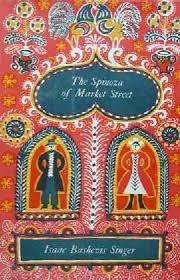
《市场街的斯宾诺莎》为诺贝尔文学奖得主辛格的代表作之一,收录了十部短篇小说和一部中篇小说。沉迷哲学的老鳏夫、畏惧婚姻的花花公子、作茧自缚的骗子、纵欲杀身的情侣……形形色色的凡人与魔鬼在地狱、尘世与天堂间游走,上演着善与恶、正与邪、灵与肉互搏的悲喜剧,现代人的命运、希望、梦魇与信仰都交织在这光怪陆离,活色生香、扣人心弦的奇谭中。

This book of twenty stories is Isaac Bashevis Singer's fifth collection and contains such classics as "The Cafeteria" and "On the Way to the Poorhouse."

The Penitent tells the story of Jospeh Shapiro, his rapid climb to prosperity, his quick plunge into promiscuity, and his subsequent flight to Israel in order to find salvation.
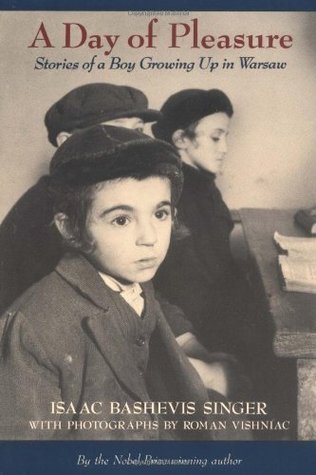
An ALA Notable Book.“Singer's memories of his youth in Poland make a powerful, brilliant children's book. The author lays out a panorama of Jewish life in the city-- the rabbis in black velvet and gabardine, the shopkeepers, the street urchins and schoolboys, the poverty, the confusion, the excitement of the prewar time. But even more, the author reveals himself; and the torments and mysteries that plagued him as a child will make his stories fascinating to other children....Reflecting a bygone world, the photographs add a further note of realism and power.” ―The Horn BookA Day of Pleasure is the winner of the 1970 National Book Award for Children's Books.

Presents a new, recently discovered, posthumously published novel by the Nobel Prize-winning author of The Certificate and The King of the Fields. 20,000 first printing.

David Bendiner, a young writer and secularized Jew, has qualified to emigrate from Warsaw to Palestine, but he's broke, and in order to make the journey, he must enter into a fictitious marriage with a prosperous woman eager to get there. Grappling with romantic, political and philosophical turmoil, David must also confront his faith when his father, an Orthodox rabbi, shows up in Warsaw.

Appena arrivati a New York, nei primi anni della guerra, gli ebrei polacchi dicono tutti la stessa cosa: «L’America non fa per me». Ma poi, a poco a poco, la maggior parte di loro in qualche modo si sistema, «e non peggio che a Varsavia». Non così il protagonista di questo romanzo, Hertz Minsker, che gira a vuoto, si barcamena, vive alle spalle degli amici ricchi, o delle donne che riesce a sedurre. Di queste ultime Minsker non può fare a meno: le avventure amorose sono «il suo oppio, le sue carte, il suo whisky», ogni giorno deve portare «nuovi giochi, nuovi drammi, nuove tragedie, nuove commedie». Minsker – che pure è un erudito, è stato in relazione con Freud, può recitare «poesie in greco e in latino», conosce il Talmud – lavora a un libro da quarant’anni, «ma non ha nemmeno finito il primo capitolo», e sembra capace solo di cacciarsi nei guai. In genere, però, le catastrofi che provoca, a se stesso e a chi gli sta intorno, si risolvono in una strepitosa commedia – una commedia alla Lubitsch, con mariti traditi, amanti imbufalite, sedute spiritiche fasulle, crisi di nervi, mercanti di quadri falsi, audaci e fumose teorie edonistico-cabalistiche... Anche qui, come sempre in Singer, il comico e il grottesco si intrecciano mirabilmente con un pathos lacerante.

Newbery Medal Honor Title (1969)Eight stories based on traditional Jewish themes from Eastern Europe Shrewd Todie & Lyzer the Miser; Tsirtsur & Peziza; Rabbi Leib & the Witch Cunegunde; The Elders of Chelm & Genendel's Key; Shlemiel, the Businessman; Utzel & His Daughter Poverty; Menaseh's Dream; When Shlemiel went to Warsaw.

Love and Exile contains the three volumes of the Nobel Prize Winner's spiritual autobiography, covering his childhood in a rabbinical household in Poland, his young manhood in Warsaw and his beginning as a writer, and his emigration to New York before the outbreak of war, with the concomitant displacement of a Yiddish writer in a strange land.

Thirty-six stories by the Nobel Prize winner, including some of his most famous such as "Zlateh the Goat," "Mazel and Shlimazel," and "The Fools of Chelm and the Stupid Carp." Stories for Children is a 1984 New York Times Book Review Notable Children's Book of the Year.

A collection of short stories by a miraculous writer who can chill the spine, gorge the senses, and enlighten the heart as he describes a people and a way of life.

This is the sequel to and the conclusion of The Manor. It continues the portrayal of a period the author describes as 'the epoch between the Polish insurrection of 1863 and the end of the nineteenth century...The Jews now began to play an important role in Polish industry, commerce, the arts and sciences. All the spiritual and intellectual ideas that triumphed in the modern era had their roots in the world of that time.

"The town of Chelm is just like every place else, only worse, as numerous shortages, foolish citizens, and inept leaders combine to make life thoroughly miserable. In this whimsical satire, Singer mocks the 'advantages'-such as war, crime, and revolution-that civilization brings to Chelm."-Booklist

Twenty stories from the Nobel Prizewinner, including "Disguised," a transvestite tale of the yeshiva student whose deserted wife finds him dressed as a woman and married to a man, and the title story, which portrays Methuselah at the age of 969 -- "and when you pass your nine hundredth birthday, you are not what you used to be."