Loading themes...
Explore the best books about Southern theme.

From the acclaimed author of such novels as "Blood and Grits" and "Childhood" comes a wildly weird and breathtakingly original visit to the rural South that reveals the exotic subculture that erupts in all its glory at the Rattlesnake Roundup in Mystic, Georgia. "No number of adjectives in the thesaurus can do full justice to the dazzlingly bizarre nature of Crews' creations".--"Washington Post Book World".
The first major biography of the Carter Family, the musical pioneers who almost single-handedly created the sounds and traditions that grew into modern folk, country, and bluegrass music.Meticulously researched and lovingly written, it is a look at a world and a culture that, rather than passing, has continued to exist in the music that is the legacy of the Carters—songs that have shaped and influenced generations of artists who have followed them.Brilliant in insight and execution, Will You Miss Me When I'm Gone? is also an in-depth study of A.P., Sara, and Maybelle Carter, and their bittersweet story of love and fulfillment, sadness and loss. The result is more than just a biography of a family; it is also a journey into another time, almost another world, and theirs is a story that resonates today and lives on in the timeless music they created.

Here is the story of the inimitable twelve-year-old Frankie, who is utterly, hopelessly bored with life until she hears about her older brother's wedding. Bolstered by lively conversations with her house servant, Berenice, and her six-year-old male cousin—not to mention her own unbridled imagination—Frankie takes on an overly active role in the wedding, hoping even to go, uninvited, on the honeymoon, so deep is her desire to be the member of something larger, more accepting than herself. The novel that became an award-winning play and a major motion picture and that has charmed generations of readers, Carson McCullers's classic The Member of the Wedding is now available in small-format trade paperback for the first time. "A marvelous study of the agony of adolescence" (Detroit Free Press), The Member of the Wedding showcases Carson McCullers at her most sensitive, astute, and lasting best.An alternate-cover edition for this ISBN can be found here.

Qui n'éprouve, un jour ou l'autre, la tentation de s'approprier complètement ce qu'il aime, non seulement par désir de possession intime, mais par besoin de communier et de s'identifier avec l'objet aimé ? Tel est le cas d'Hermann Mack, fils du propriétaire d'un cimetière de voitures. Son originalité, toutefois, c'est d'être amoureux d'une automobile, une Ford dernier modèle. Aussi est-il à peine paradoxal de dire que Car est avant tout un roman d'amour. Herman, pour se l'approprier, se mettra à manger sa Ford, morceau par morceau, il ne se nourrira plus d'autre chose que de métal fondu, de bouts de moteurs et de pneus. Mais la mort plane sur ce roman, comme elle plane sur les routes : le dieu-voiture ne cesse de prélever sa dîme parmi les adorateurs. C'est donc une parabole, une fable cruelle que nous livre Harry Crews. Sa verve truculente, son humour noir et sarcastique, son refus des tabous contribuent à faire de Car à la fois un pamphlet virulent et un plaidoyer pour le retour de l'homme au bon sens et à la nature.

Carson McCullers’ prodigious first novel was published to instant acclaim when she was just twenty-three. Set in a small town in the middle of the deep South, it is the story of John Singer, a lonely deaf-mute, and a disparate group of people who are drawn towards his kind, sympathetic nature. The owner of the café where Singer eats every day, a young girl desperate to grow up, an angry drunkard, a frustrated black doctor: each pours their heart out to Singer, their silent confidant, and he in turn changes their disenchanted lives in ways they could never imagine.

An award-winning author makes her fiction debut with this coming-of-age story of three young black children set against the backdrop of the Atlanta child murders of 1979.

George Webber has written a successful novel about his family and hometown. When he returns to that town he is shaken by the force of the outrage and hatred that greets him. Family and friends feel naked and exposed by the truths they have seen in his book, and their fury drives him from his home. He begins a search for his own identity that takes him to New York and a hectic social whirl; to Paris with an uninhibited group of expatriates; to Berlin, lying cold and sinister under Hitler's shadow. At last Webber returns to America and rediscovers it with love, sorrow, and hope.

Laurel Hand, long absent from the South, comes from Chicago to New Orleans, where her father dies after surgery. With Fay, the stupid new young wife of her father, Laurel returns to her former Mississippi home and stays a few days after the funeral for reunions with old friends. In a night alone in the house she grew up in, she confronts elements of the past and comes to a better understanding of it and of herself and her parents.

Look Homeward, Angel: A Story of the Buried Life is a 1929 novel by Thomas Wolfe. It is Wolfe's first novel, and is considered a highly autobiographical American Bildungsroman. The character of Eugene Gant is generally believed to be a depiction of Wolfe himself. The novel covers the span of time from Gant's birth to the age of 19. The setting is the fictional town and state of Altamont, Catawba, a fictionalization of his home town, Asheville, North Carolina. Playwright Ketti Frings wrote a theatrical adaptation of Wolfe's work in a 1957 play of the same title.

The Hamlet, the first novel of Faulkner's Snopes trilogy, is both an ironic take on classical tragedy and a mordant commentary on the grand pretensions of the antebellum South and the depths of its decay in the aftermath of war and Reconstruction. It tells of the advent and the rise of the Snopes family in Frenchman's Bend, a small town built on the ruins of a once-stately plantation. Flem Snopes -- wily, energetic, a man of shady origins -- quickly comes to dominate the town and its people with his cunning and guile.

"When I was little I would think of ways to kill my daddy. I would figure out this or that way and run it down through my head until it got easy." So begins the tale of Ellen Foster, the brave and engaging heroine of Kay Gibbons's first novel, which won the Sue Kaufman Prize from the American Academy of Institute of Arts and Letters. Wise, funny, affectionate, and true, Ellen Foster is, as Walker Percy called it, "The real thing. Which is to say, a lovely, sometimes heartwrenching novel. . . . [Ellen Foster] is as much a part of the backwoods South as a Faulkner character—and a good deal more endearing."

At his death in 1990, Walker Percy left a considerable legacy of uncollected nonfiction. Assembled in Signposts in a Strange Land, these essays on language, literature, philosophy, religion, psychiatry, morality, and life and letters in the South display the imaginative versatility of an author considered by many to be one the greatest modern American writers.

Set in Mississippi during the Civil War and Reconstruction, THE UNVANQUISHED focuses on the Sartoris family, who, with their code of personal responsibility and courage, stand for the best of the Old South's traditions.

The novel that marked John Gregory’s Brown’s much-heralded debut, Decorations in a Ruined Cemetery is a “finely wrought tale . . . that unlocks its secrets like a Chinese box, each hidden compartment opening to reveal yet another, until at the end we stand aghast at the complexity that lies before us” (Richmond Times-Dispatch). This is the heartbreaking story of the Eagen's, an New Orleans family of “mixed blood,” as recalled by three unforgettable narrators, each intimately entangled in the family’s small tragedies and betrayals.Years ago, when his daughter Meredith was young, Dr. Thomas Eagen abruptly left his wife and children in an incident that still haunts Meredith well into adulthood. She longs to discover the truth behind her father's disappearance, as well as the reasons why Thomas's mother, a proud black woman, abandoned his devout Catholic father.

Capturing all the rueful irony and racial ambivalence of small-town Mississippi in the late 1950s, Melinda Haynes' celebrated novel is a wholly unforgettable exploration of family, identity, and redemption. Mother of Pearl revolves around twenty-eight-year-old Even Grade, a black man who grew up an orphan, and Valuable Korner, the fifteen-year-old white daughter of the town whore and an unknown father. Both are passionately determined to discover the precious things neither experienced as children: human connection, enduring commitment, and, above all, unconditional love. A startlingly accomplished mixture of beauty, mystery, and tragedy, Mother of Pearl marks the debut of an extraordinary literary talent. (Oprah's Book Club)

Psychologically astute and wonderfully poetic, Sanctuary is a powerful novel examining the nature of true evil, through the prisms of mythology, local lore, and hard-boiled detective fiction. This is the dark, at times brutal, story of the kidnapping of Mississippi debutante Temple Drake, who introduces her own form of venality into the Memphis underworld where she is being held.

The extraordinary gifts for evocation and insight and the stunning talent for storytelling that earned Rick Bragg a Pulitzer Prize for feature writing in 1996 are here brought to bear on the wrenching story of his own family's life. It is the story of a violent, war-haunted, alcoholic father and a strong-willed, loving mother who struggled to protect her three sons from the effects of poverty and ignorance that had tainted her own life. It is the story of the life Bragg was able to carve out for himself on the strength of his mother's encouragement and belief.

The setting is Atlanta, Georgia — a racially mixed, late-century boomtown full of fresh wealth and wily politicians. The protagonist is Charles Croker, once a college football star, now a late-middle-aged Atlanta conglomerate king whose outsize ego has at last hit up against reality. Charlie has a 29,000 acre quail-shooting plantation, a young and demanding second wife, and a half-empty office complex with a staggering load of debt.Meanwhile, Conrad Hensley, idealistic young father of two, is laid off from his job at the Croker Global Foods warehouse near Oakland and finds himself spiraling into the lower depths of the American legal system.And back in Atlanta, when star Georgia Tech running back Fareek “the Canon” Fanon, a homegrown product of the city’s slums, is accused of date-raping the daughter of a pillar of the white establishment, upscale black lawyer Roger White II is asked to represent Fanon and help keep the city’s delicate racial balance from blowing sky-high.Networks of illegal Asian immigrants crisscrossing the continent, daily life behind bars, shady real estate syndicates — Wolfe shows us contemporary America with all the verve, wit, and insight that have made him our most admired novelist. Charlie Croker’s deliverance from his tribulations provides an unforgettable denouement to the most widely awaited, hilarious and telling novel America has seen in ages — Tom Wolfe’s most outstanding achievement to date.

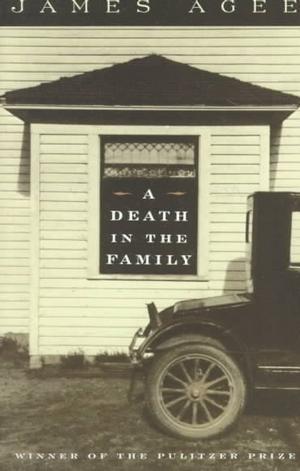
The classic American novel, re-published for the 100th anniversary of James Agee's birthPublished in 1957, two years after its author's death at the age of forty-five, A Death in the Family remains a near-perfect work of art, an autobiographical novel that contains one of the most evocative depictions of loss and grief ever written. As Jay Follet hurries back to his home in Knoxville, Tennessee, he is killed in a car accident--a tragedy that destroys not only a life but also the domestic happiness and contentment of a young family. A novel of great courage, lyric force, and powerful emotion, A Death in the Family is a masterpiece of American literature.

(Oprah's Book Club) Jewel and her husband, Leston, have been blessed by a fifth child, a girl they name Brenda Kay. But Brenda Kay, who was born with Down's syndrome, is also a challenge. In this inspirational and deeply moving audiobook, Jewel realizes that Brenda Kay is her special gift from God.

The personal credo of one Lem Putt, a specialist, this book presents the philosophy of a man who loves his trade and has considered every aspect of it.

William Faulkner was the greatest American novelist of the twentieth century, yet he lived a life marked by a pervasive sense of failure. Throughout his career, he remained haunted by his inability to master a series of personal and professional his less-than-heroic military career; the loss of his brother in an airplane crash; a disappointing stint as a Hollywood screenwriter; and a destructive bout with alcoholism. In this imaginative biography, Philip Weinstein--a leading authority on the great novelist--targets Faulkner's embattled sense of self as central to both his life and his work. Weinstein shows how Faulkner's troubled interactions with time, place, and history--with antebellum practices and racial division--take on their fullest meanings in his fiction. Exploring the resonance of his own unpreparedness, Faulkner invented a singular language that captured human consciousness under stress as never before. Becoming Faulkner joins Faulkner's life and art in a bold new way, giving readers a full vantage from which to better understand this twentieth-century literary genius.Weinstein shows how Faulkner's troubled interactions with time, place, and history--with antebellum practices and southern heritage--form a pattern that played out over the course of his entire life. At the same time, these incidents take on their fullest meanings in his fiction. It was in meditating on his failures, his own unreadiness, Weinstein argues, that Faulkner came up with his singular language, one that captured human consciousness under stress as never before. His fruitless striving catapulted American literature to a new level of sophistication.Narrating the events that comprised Faulkner's life, biographers have long struggled to depict his personal complexity, the paradoxes that shaped his decisions and dogged his relationships. But without a consideration of the writing as well, the troubles in the life fail to reveal their deeper resonance. By skillfully analyzing the work while tracing the events, Weinstein achieves a full portrait, revealing struggles that animate his life and shadows that complicate his work. Becoming Faulkner thus conjoins Faulkner's life and art in a bold new way, giving readers a full vantage from which to better understand this twentieth-century literary genius.

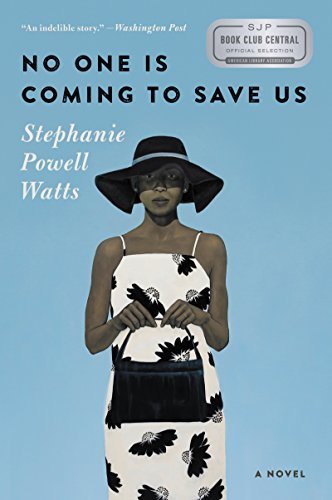
The Great Gatsby brilliantly recast in the contemporary South: a powerful first novel about an extended African-American family and their colliding visions of the American Dream.JJ Ferguson has returned home to Pinewood, North Carolina to build his dream home and to woo his high school sweetheart, Ava. But he finds that the people he once knew and loved have changed, just as he has. Ava is now married, and wants a baby more than anything. The decline of the town’s once-thriving furniture industry has made Ava’s husband Henry grow distant and frustrated. Ava’s mother Sylvia has put her own life on hold as she caters to and meddles with those around her, trying to fill the void left by her absent son. And Don, Sylvia’s undeserving but charming husband, just won’t stop hanging around.JJ’s newfound wealth forces everyone to consider what more they want and deserve from life than what they already have—and how they might go about getting it. Can they shape their lives to align with their wishes rather than their realities? Or are they resigned to the rhythms of the particular lives they lead? No One Is Coming to Save Us is a revelatory debut from an insightful voice that combines a universally resonant story with an intimate glimpse into the hearts of one family.

Edna Lewis (1916-2006) wrote some of America's most resonant, lyrical, and significant cookbooks, including the now classic The Taste of Country Cooking . Lewis cooked and wrote as a means to explore her memories of childhood on a farm in Freetown, Virginia, a community first founded by black families freed from slavery. With such observations as "we would gather wild honey from the hollow of oak trees to go with the hot biscuits and pick wild strawberries to go with the heavy cream," she commemorated the seasonal richness of southern food. After living many years in New York City, where she became a chef and a political activist, she returned to the South and continued to write. Her reputation as a trailblazer in the revival of regional cooking and as a progenitor of the farm-to-table movement continues to grow. In this first-ever critical appreciation of Lewis's work, food-world stars gather to reveal their own encounters with Edna Lewis. Together they penetrate the mythology around Lewis and illuminate her legacy for a new generation.The essayists are Annemarie Ahearn, Mashama Bailey, Scott Alves Barton, Patricia E. Clark, Nathalie Dupree, John T. Edge, Megan Elias, John T. Hill (who provides iconic photographs of Lewis), Vivian Howard, Lily Kelting, Francis Lam, Jane Lear, Deborah Madison, Kim Severson, Ruth Lewis Smith, Toni Tipton-Martin, Michael W. Twitty, Alice Waters, Kevin West, Susan Rebecca White, Caroline Randall Williams, and Joe Yonan. Editor Sara B. Franklin provides an illuminating introduction to Lewis, and the volume closes graciously with afterwords by Lewis's sister, Ruth Lewis Smith, and niece, Nina Williams-Mbengue.

Marshall McEwan is one of the most successful journalists in Washington, DC. But his father is terminally ill, and he must return to his childhood home - a place he vowed he would never go back to.Bienville, Mississippi, is no longer the city Marshall remembers. His family's 150-year-old newspaper is failing, and Jet Talal, the love of his youth, has married into the family of Max Matheson, one of a dozen powerful patriarchs who rule the town through the exclusive Bienville Poker Club. The city's only hope of economic salvation is a new, billion-dollar Chinese paper mill. But on the verge of the deal's consummation, two deaths rock Bienville to its core.Joining forces with his former lover, Marshall begins digging for the truth. But he and Jet soon discover that the soil of Mississippi is a minefield where explosive secrets can be far more destructive than injustice.

Winner of the 2022 Southern Book PrizeWinner of the PEN/Diamonstein-Spielvogel Award for the Art of the EssayAn Indie Next Selection for September 2021A Book Marks Best Reviewed Essay Collection of 2021A Literary Hub Most Anticipated Book of 2021A Country Living Best Book of Fall 2022A Garden & Gun Recommended Read for Fall 2021A Book Marks Best Reviewed Book of September 2021 From the author of the bestselling #ReadWithJenna/ TODAY Show book club pick Late A Natural History of Love and Loss For the past four years, Margaret Renkl’s columns have offered readers of The New York Times a weekly dose of natural beauty, human decency, and persistent hope from her home in Nashville. Now more than sixty of those pieces have been brought together in this sparkling new collection. “People have often asked me how it feels to be the ‘voice of the South,’” writes Renkl in her introduction. “But I’m not the voice of the South, and no one else is, either.” There are many Souths—red and blue, rural and urban, mountain and coast, Black and white and brown—and no one writer could possibly represent all of them. In Graceland, At Last , Renkl writes instead from her own experience about the complexities of her homeland, demonstrating along the way how much more there is to this tangled region than many people understand. In a patchwork quilt of personal and reported essays, Renkl also highlights some other voices of the South, people who are fighting for a better future for the region. A group of teenagers who organized a youth march for Black Lives Matter. An urban shepherd whose sheep remove invasive vegetation. Church parishioners sheltering the homeless. Throughout, readers will find the generosity of spirit and deep attention to the world, human and nonhuman, that keep readers returning to her columns each Monday morning. From a writer who “makes one of all the world’s beings” (NPR), Graceland, At Last is a book full of gifts for Southerners and non-Southerners alike.