
Rick Bragg
Rick Bragg is the Pulitzer Prize winning writer of best-selling and critically acclaimed books on the people of the foothills of the Appalachians, All Over but the Shoutin, Ava's Man, and The Prince of Frogtown. Bragg, a native of Calhoun County, Alabama, calls these books the proudest examples of his writing life, what historians and critics have described as heart-breaking anthems of people usually written about only in fiction or cliches. They chronicle the lives of his family cotton pickers, mill workers, whiskey makers, long sufferers, and fist fighters. Bragg, who has written for the numerous magazines, ranging from Sports Illustrated to Food & Wine, was a newspaper writer for two decades, covering high school football for the Jacksonville News, and militant Islamic fundamentalism for The New York Times. He has won more than 50 significant writing awards, in books and journalism, including, twice, the American Society of Newspaper Editors Distinguished Writing Award. He was a Nieman Fellow at Harvard University in 1993, and is, truthfully, still a freshman at Jacksonville State University. Bragg is currently Professor of Writing in the Journalism Department at the University of Alabama, and lives in Tuscaloosa with his wife, Dianne, a doctoral student there, and his stepson, Jake. His only real hobby is fishing, but he is the worst fisherman in his family line.
25 Books Written

The extraordinary gifts for evocation and insight and the stunning talent for storytelling that earned Rick Bragg a Pulitzer Prize for feature writing in 1996 are here brought to bear on the wrenching story of his own family's life. It is the story of a violent, war-haunted, alcoholic father and a strong-willed, loving mother who struggled to protect her three sons from the effects of poverty and ignorance that had tainted her own life. It is the story of the life Bragg was able to carve out for himself on the strength of his mother's encouragement and belief.

The Pulitzer Prize–winning author of All Over but the Shoutin’ continues his personal history of the Deep South with an evocation of his mother’s childhood in the Appalachian foothills during the Great Depression, and the magnificent story of the man who raised her.Charlie Bundrum was a roofer, a carpenter, a whiskey-maker, a fisherman who knew every inch of the Coosa River, made boats out of car hoods and knew how to pack a wound with brown sugar to stop the blood. He could not read, but he asked his wife, Ava, to read him the paper every day so he would not be ignorant. He was a man who took giant steps in rundown boots, a true hero whom history would otherwise have beem overlooked.In the decade of the Great Depression, Charlie moved his family twenty-one times, keeping seven children one step ahead of the poverty and starvation that threatened them from every side. He worked at the steel mill when the steel was rolling, or for a side of bacon or a bushel of peaches when it wasn’t. He paid the doctor who delivered his fourth daughter, Margaret -- Bragg’s mother -- with a jar of whiskey. He understood the finer points of the law as it applied to poor people and drinking men; he was a banjo player and a buck dancer who worked off fines when life got a little sideways, and he sang when he was drunk, where other men fought or cussed. He had a talent for living.His children revered him. When he died, cars lined the blacktop for more than a mile.Rick Bragg has built a soaring monument to the grandfather he never knew -- a father who stood by his family in hard times and left a backwoods legend behind -- in a book that blazes with his love for his family, and for a particular stretch of dirt road along the Alabama-Georgia border. A powerfully intimate piece of American history as it was experienced by the working people of the Deep South, a glorious record of a life of character, tenacity and indomitable joy and an unforgettable tribute to a vanishing culture, Ava’s Man is Rick Bragg at his stunning best.

NEW YORK TIMES BEST SELLER - From the best-selling, Pulitzer Prize-winning author of All Over but the Shoutin', the warmhearted and hilarious story of how his life was transformed by his love for a poorly behaved, half-blind stray dog.Speck is not a good boy. He is a terrible boy, a defiant, self-destructive, often malodorous boy, a grave robber and screen door moocher who spends his days playing chicken with the Fed Ex man, picking fights with thousand-pound livestock, and rolling in donkey manure, and his nights howling at the moon. He has been that way since the moment he appeared on the ridgeline behind Rick Bragg's house, a starved and half-dead creature, seventy-six pounds of wet hair and poor decisions.Speck arrived in Rick's life at a moment of looming uncertainty. A cancer diagnosis, chemo, kidney failure, and recurring pneumonia had left Rick lethargic and melancholy. Speck helped, and he is helping, still, when he is not peeing on the rose of Sharon. Written with Bragg's inimitable blend of tenderness and sorrow, humor and grit, The Speckled Beauty captures the extraordinary, sustaining devotion between two damaged creatures who need each other to heal.

From celebrated New York Times bestselling author and winner of the Pulitzer Prize, Rick Bragg, comes a poignant and wryly funny collection of essays on life in the south. Keenly observed and written with his insightful and deadpan sense of humor, he explores enduring Southern truths about home, place, spirit, table, and the regions' varied geographies, including his native Alabama, Cajun country, and the Gulf Coast. Everything is explored, from regional obsessions from college football and fishing, to mayonnaise and spoonbread, to the simple beauty of a fish on the hook.Collected from over a decade of his writing, with many never-before-published essays written specifically for this edition, My Southern Journey is an entertaining and engaging read, especially for Southerners (or feel Southern at heart) and anyone who appreciates great writing.
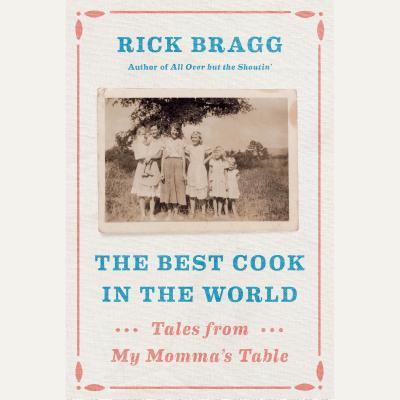
Margaret Bragg does not own a single cookbook. She measures in "dabs" and "smidgens" and "tads" and "you know, hon, just some." She cannot be pinned down on how long to bake corn bread ("about 15 to 20 minutes, depending on the mysteries of your oven"). Her notion of farm-to-table is a flatbed truck. But she can tell you the secrets to perfect mashed potatoes, corn pudding, redeye gravy, pinto beans and hambone, stewed cabbage, short ribs, chicken and dressing, biscuits and butter rolls. The irresistible stories in this audiobook are of long memory -- many of them pre-date the Civil War, handed down skillet by skillet, from one generation of Braggs to the next. In The Best Cook in the World, Rick Bragg finally preserves his heritage by telling the stories that framed his mother's cooking and education, from childhood into old age.

The final volume of Rick Bragg's bestselling and beloved American saga documents a mesmerizing journey back in time to the lush Alabama landscape of Rick's youth, to Jacksonville's one-hundred-year-old mill and to Rick's father, the troubled, charismatic hustler coming of age in its shadow.Inspired by Rick Bragg's love for his stepson, The Prince of Frogtown also chronicles his own journey into fatherhood, as he learns to avoid the pitfalls of his forebearers. With candor, insight, and tremendous humor, Bragg seamlessly weaves these luminous narrative threads together and delivers an unforgettable rumination about fathers and sons.
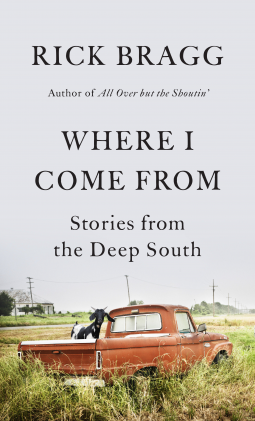
From the best-selling, Pulitzer Prize-winning author of All Over but the Shoutin' and The Best Cook in the World, a collection of irresistible columns from Southern Living and Garden & GunCelebrated author and newspaper columnist Rick Bragg brings us an ode to the stories and history of the Deep South, filled with “eclectic nuggets about places and people he knows well” ( USA Today ) and written with honesty, wit, and deep affection. A collection of wide-ranging and endearingly personal columns—from Bragg’s love of Tupperware (his mother preferred margarine tubs and thought Tupperware was “just showing off”) to the decline of country music, from the legacy of Harper Lee to the metamorphosis of the pickup truck to the best way to kill fire ants —Where I Come From is a book that will be treasured by fans old and new.

In spring of 2001, a community of people in the Appalachian foothills came to the edge of all they had ever been. Across the South, padlocks and logging chains bound the doors of silent mills, and it seemed a miracle to blue-collar people in Jacksonville, Alabama, that their mill survived. The century-old hardwood floors still trembled under whirling steel, and people worked on in a mist of white air. The mill had become almost a living thing, rewarding the hard-working and careful with the best payday they ever had, but punishing the careless and clumsy, taking a finger, a hand, more. The mill preceded the automobile, the airplane, and they served it even as it filled their lungs with lint and shortened their lives. In return, it let them live in stiff-necked dignity in the hills of their fathers. In these real-life stories, Rick Bragg brilliantly evokes the hardscrabble lives of those who lived and died by an American cotton mill.

Jerry Lee Lewis has lived an extraordinary life. He gave rock and roll its devil's edge with hit records like 'Great Balls of Fire'. His incendiary shows caused riots and boycotts. He ran a decade-long marathon of drugs, drinking, and women, and married his thirteen-year-old second cousin, the third of seven wives. He also nearly met his maker, at least twice. He survived it all to be hailed as one of the greatest music icons. For the very first time, he reveals the truth behind the Last Man Standing of the rock-and-roll era.

With his bestselling All Over but the Shoutin' , Rick Bragg gave us memorable stories of his own childhood. Here he offers the best of his work as a Pulitzer-Prize winning journalist writing the remarkable stories of others.For twenty years, Bragg has focused his efforts on the common man. So while some of these stories are about people whose names we know—such as Susan Smith, the South Carolina mother who drowned her two sons—most are people whose names we've never heard, people who have survived tornadoes and swamps, racism and bombs. In incisive, unadorned prose that is nonetheless strikingly beautiful, these pieces rise above journalism to become literature and show the triumph of the human spirit.
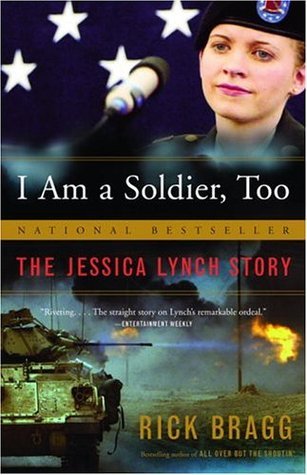
NATIONAL BESTSELLER • The Pulitzer Prize-winning journalist and bestselling author lends his remarkable narrative skills to the story of the most famous POW this country has known.In I Am a Soldier, Too , Bragg lets Jessica Lynch tell the story of her capture in the Iraq War in her own words--not the sensationalized ones of the media's initial reports. Here we see how a humble rural upbringing leads to a stint in the military, one of the most exciting job options for a young person in Palestine, West Virginia. We see the real story behind the ambush in the Iraqi Desert that led to Lynch's capture. And we gain new perspective on her rescue from an Iraqi hospital where she had been receiving care. Here Lynch’s true heroism and above all, modesty, is allowed to emerge, as we're shown how she managed her physical recovery from her debilitating wounds and contended with the misinformation--both deliberate and unintended--surrounding her highly publicized rescue. In the end, what we see is a uniquely American story of courage and true heroism.

This autobiography recounts how Bragg, brought up in poverty in the deep South, ended up a Pulitzer Prize-winning report for the "New York Times". The book is an account of growing up in an impoverished, ragged white Alabama family - poor to the point that even "nigras" would bring them food. He writes of his deprived yet hilarious childhood in the 1960s, of his uncomplaining mother's back-breaking labour, and of his father's poisonous behaviour towards her and how he himself managed to escape the treadmill of hopelessness that his two brothers walk today.

The Junior League of Birmingham invites you back to the table using local landmark settings to spotlight a collection of more than 350 home-tested recipes. In Tables of Content, well-known chefs, local celebrities, and seasoned cooks share their best-kept recipes to support causes in the Birmingham community.

Avas Man by Bragg, Rick. Published by Vintage,2002, Paperback

The Best Cook in the World: Tales from My Momma's Southern Table: A Memoir and Cookbook
by Rick Bragg
Rating: 3.0 ⭐
From the beloved, best-selling author of All Over but the Shoutin', a delectable, rollicking food memoir, cookbook, and loving tribute to a region, a vanishing history, a family, and, especially, to his mother.Margaret Bragg does not own a single cookbook. She measures in "dabs" and "smidgens" and "tads" and "you know, hon, just some." She cannot be pinned down on how long to bake corn bread ("about 15 to 20 minutes, depending on the mysteries of your oven"). Her notion of farm-to-table is a flatbed truck. But she can tell you the secrets to perfect mashed potatoes, corn pudding, redeye gravy, pinto beans and hambone, stewed cabbage, short ribs, chicken and dressing, biscuits and butter rolls. The irresistible stories in this audiobook are of long memory -- many of them pre-date the Civil War, handed down skillet by skillet, from one generation of Braggs to the next. In The Best Cook in the World, Rick Bragg finally preserves his heritage by telling the stories that framed his mother's cooking and education, from childhood into old age. Because good food always has a good story, and a recipe, writes Bragg, is a story like anything else.

All Over But the Shoutin;the Man Who Listens to Horses;Saint of Circumstance;an Empty Lap
by Rick Bragg
Ava
by Rick Bragg

The Holiday I'll Never Forget
by Rick Bragg
A few days after Christmas and still disappointed, the nine-year-old boy saw a box with his name on it under his aunt's tree. His spirits improved almost immediately, and his excitement was difficult to contain. The gift had been wrapped in thin paper, thin enough to see through.
(Somebody Told ME) [By: Bragg, Rick] [Oct, 2001]
by Rick Bragg
[Ava's Man] [By: Bragg, Rick] [August, 2002]
by Rick Bragg
All Over But The Shoutin'
by Rick Bragg
Jerry Lee Lewis: His Own Story by Rick Bragg
by Rick Bragg