Loading themes...
Explore the best books about Asian Literature theme.

The Poons, according to gossip in post-war Hong Kong, have plenty of money. But when Wallace Nolasco marries May Ling, daughter of the house of Poon, he finds he has been sold short. Wallace is relegated to the bottom of the household pecking order. By the author of "Sour Sweet".

The author of the acclaimed Sour Sweet presents a sweeping historical novel about corruption and greed, class, race, love and treachery set in Macao and Canton before and during the Opium Wars of the 19th century. Nominated for England's prestigious Booker Prize.

Shortlisted for the 1982 Booker Prize, this novel explores the clans and conflicts of Soho's Chinatown, where the Chen family arrive and want to succeed as restaurateurs in the 1960s. No family can survive for long without encountering the Triads. By the author of "The Redundancy of Courage".

This is an alternate cover edition of ISBN 9780679750154The Sailor Who Fell from Grace with the Sea tells the tale of a band of savage thirteen-year-old boys who reject the adult world as illusory, hypocritical and sentimental, and train themselves in a brutal callousness they call "objectivity." When the mother of one of them begins an affair with a ship's officer, he and his friends idealize the man at first; but it is not long before they conclude that he is in fact soft and romantic. They regard their disappointment in him as an act of betrayal on his part, and react violently.

In The Temple of the Golden Pavilion, celebrated Japanese novelist Yukio Mishima creates a haunting and vivid portrait of a young man’s obsession with idealized beauty and his destructive quest to possess it fully.Mizoguchi, an ostracized stutterer, develops a childhood fascination with Kyoto’s famous Golden Temple. While an acolyte at the temple, he fixates on the structure’s aesthetic perfection and it becomes the one and only object of his desire. But as Mizoguchi begins to perceive flaws in the temple, he determines that the only true path to beauty lies in an act of horrendous violence. Based on a real incident that occurred in 1950, The Temple of the Golden Pavilion brilliantly portrays the passions and agonies of a young man in postwar Japan, bringing to the subject the erotic imagination and instinct for the dramatic moment that marked Mishima as one of the towering makers of modern fiction. With an introduction by Donald Keene; Translated from the Japanese by Ivan Morris.(Book Jacket Status: Jacketed)

This extraordinary cookbook, Classic Indian Cooking , amounts to a complete course in Indian cuisine. Elucidated by over 100 line drawings, it systematically introduces the properties of all the basic spices and special ingredients of Indian food, then explains the techniques employed in using them, always with the help of comparisons to familiar Western methods. It is immediately obvious that Indian food is rich and varied, yet not difficult to prepare. The cooking principles are basic and wellknown. The utensils needed are few and simple. As Julie Sahni says, "If you know how to fry, there are few tricks to Indian food." Every recipe has been especially designed for the American kitchen -- practically all the ingredients can be found in any American supermarket and there are scores of time-saving shortcuts with the food processor and handy directions for ahead-of-time preparation. Following a lively and absorbing introduction to the history of India's classic Moghul cuisine, Julie guides the cook through the individual components that make up an Indian meal. She begins with delicious appetizers like Crab Malabar and Hyderabad lime soup; continues through main courses, both nonvegetarian and vegetarian (this book is a treasure trove for the non-meat eater); goes on to all the side dishes and traditional accompaniments, from spinach raita and lentils with garlic butter to saffron pilaf and whole wheat flaky bread; and ends with the glorious desserts, like Ras Malai , sweetmeats, and beverages. Clear, illustrated, step-by-step instructions accompany the cook through every stage, even for making the many wondrous Indian breads, both by hand and with the food processor. And at the end of each recipe are balanced serving suggestions for every kind of meal, Among the many special features are ideas for appropriate wines, a useful spice chart, a complete glossary (which might also come in handy when ordering in Indian restaurants), and a mailorder shopping guide that will make Indian spices accessible anywhere. Most important, Julie Sahni imparts the secrets to mastering the art of Indian cooking. Even the beginner will quickly learn to move within the classic tradition and improvise with sureness and ease. Julie Sahni has written a masterpiece of culinary instruction, as readable as it is usable, a joy to cook from, a fascination to read.

In the heart of China's Sichuan province lies the small city of Fuling. Surrounded by the terraced hills of the Yangtze River valley, Fuling has long been a place of continuity, far from the bustling political centers of Beijing and Shanghai. But now Fuling is heading down a new path, and gradually, along with scores of other towns in this vast and ever-evolving country, it is becoming a place of change and vitality, tension and reform, disruption and growth. As the people of Fuling hold on to the China they know, they are also opening up and struggling to adapt to a world in which their fate is uncertain.Fuling's position at the crossroads came into remarkably sharp focus when Peter Hessler arrived as a Peace Corps volunteer in 1996, marking the first time in more than half a century that the city had an American resident. He found himself teaching English and American literature at the local college, discovering how Shakespeare and other classics look when seen through the eyes of students who have been raised in the Sichuan countryside and educated in Communist Party doctrine. His students, though, are the ones who taught him about the ways of Fuling — and about the complex process of understanding that takes place when one is immersed in a radically different society.As he learns the language and comes to know the people, Hessler begins to see that it is indeed a unique moment for Fuling. In its past is Communist China's troubled history — the struggles of land reform, the decades of misguided economic policies, and the unthinkable damage of the Cultural Revolution — and in the future is the Three Gorges Dam, which upon completion will partly flood thecity and force the resettlement of more than a million people. Making his way in the city and traveling by boat and train throughout Sichuan province and beyond, Hessler offers vivid descriptions of the people he meets, from priests to prostitutes and peasants to professors, and gives voice to their views. This is both an intimate personal story of his life in Fuling and a colorful, beautifully written account of the surrounding landscape and its history. Imaginative, poignant, funny, and utterly compelling, River Town is an unforgettable portrait of a city that, much like China itself, is seeking to understand both what it was and what it someday will be.

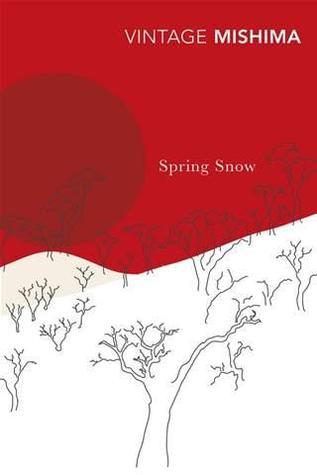
Alternate cover edition of ISBN 9780099282990Tokyo, 1912. The closed world of the ancient aristocracy is being breached for the first time by outsiders - rich provincial familes, a new and powerful political and social elite. Kiyoaki has been raised among the elegant Ayakura family - members of the waning aristocracy - but he is not one of them. Coming of age, he is caught up in the tensions between old and new, and his feelings for the exquisite, spirited Satoko, observed from the sidelines by his devoted friend Honda. When Satoko is engaged to a royal prince, Kiyoaki realises the magnitude of his passion.

An IRA-CBC Children's Choice.An American Bookseller "Pick of the Lists."When Ping admits that he is the only child in China unable to grow a flower from the seeds distributed by the Emperor, he is rewarded for his honesty.

In this rare insider's view into contemporary North Korea, a high-ranking counterintelligence agent describes his life as a former poet laureate to Kim Jong-il and his breathtaking escape to freedom."The General will now enter the room."Everyone turns to stone. Not moving my head, I direct my eyes to a point halfway up the archway where Kim Jong-il's face will soon appear.As North Korea's State Poet Laureate, Jang Jin-sung led a charmed life. With food provisions (even as the country suffered through its great famine), a travel pass, access to strictly censored information, and audiences with Kim Jong-il himself, his life in Pyongyang seemed safe and secure. But this privileged existence was about to be shattered. When a strictly forbidden magazine he lent to a friend goes missing, Jang Jin-sung must flee for his life.Never before has a member of the elite described the inner workings of this totalitarian state and its propaganda machine. An astonishing expose told through the heart-stopping story of Jang Jin-sung's escape to South Korea, Dear Leader is a rare and unprecedented insight into the world's most secretive and repressive regime.

A dazzling new collection of short stories—the first major new work of fiction from the beloved, internationally acclaimed, Haruki Murakami since his #1 best-selling Colorless Tsukuru Tazaki and His Years of Pilgrimage.Across seven tales, Haruki Murakami brings his powers of observation to bear on the lives of men who, in their own ways, find themselves alone. Here are vanishing cats and smoky bars, lonely hearts and mysterious women, baseball and the Beatles, woven together to tell stories that speak to us all.Marked by the same wry humor that has defined his entire body of work, in this collection Murakami has crafted another contemporary classic.

Is race only about the color of your skin? In The Latinos of Asia, Anthony Christian Ocampo shows that what "color" you are depends largely on your social context. Filipino Americans, for example, helped establish the Asian American movement and are classified by the U.S. Census as Asian. But the legacy of Spanish colonialism in the Philippines means that they share many cultural characteristics with Latinos, such as last names, religion, and language. Thus, Filipinos' "color"―their sense of connection with other racial groups―changes depending on their social context. The Filipino story demonstrates how immigration is changing the way people negotiate race, particularly in cities like Los Angeles where Latinos and Asians now constitute a collective majority. Amplifying their voices, Ocampo illustrates how second-generation Filipino Americans' racial identities change depending on the communities they grow up in, the schools they attend, and the people they befriend. Ultimately, The Latinos of Asia offers a window into both the racial consciousness of everyday people and the changing racial landscape of American society.

The English-language debut of one of Japan's most talented contemporary writers, selling over 650,000 copies there, Convenience Store Woman is the heartwarming and surprising story of thirty-six-year-old Tokyo resident Keiko Furukura. Keiko has never fit in, neither in her family, nor in school, but when at the age of eighteen she begins working at the Hiiromachi branch of “Smile Mart,” she finds peace and purpose in her life. In the store, unlike anywhere else, she understands the rules of social interaction―many are laid out line by line in the store’s manual―and she does her best to copy the dress, mannerisms, and speech of her colleagues, playing the part of a “normal” person excellently, more or less. Keiko is very happy, but the people close to her, from her family to her coworkers, increasingly pressure her to find a husband, and to start a proper career, prompting her to take desperate action…A brilliant depiction of a world hidden from view, Convenience Store Woman is an ironic and sharp-eyed look at contemporary work culture and the pressures we all feel to conform, as well as a charming and completely fresh portrait of an unforgettable heroine.

Yang Jisheng’s The World Turned Upside Down is the definitive history of the Cultural Revolution, in withering and heartbreaking detail.As a major political event and a crucial turning point in the history of the People’s Republic of China, the Great Proletarian Cultural Revolution (1966–1976) marked the zenith as well as the nadir of Mao Zedong’s ultra-leftist politics. Reacting in part to the Soviet Union’s "revisionism" that he regarded as a threat to the future of socialism, Mao mobilized the masses in a battle against what he called "bourgeois" forces within the Chinese Communist Party (CCP). This ten-year-long class struggle on a massive scale devastated traditional Chinese culture as well as the nation’s economy.Following his groundbreaking and award-winning history of the Great Famine, Tombstone, Yang Jisheng here presents the only history of the Cultural Revolution by an independent scholar based in mainland China, and makes a crucial contribution to understanding those years' lasting influence today.The World Turned Upside Down puts every political incident, major and minor, of those ten years under extraordinary and withering scrutiny, and arrives in English at a moment when contemporary Chinese governance is leaning once more toward a highly centralized power structure and Mao-style cult of personality.

If I Had Your Face plunges us into the mesmerising world of contemporary Seoul - a place where extreme plastic surgery is as routine as getting a haircut, where women compete for spots in secret 'room salons' to entertain wealthy businessmen after hours, where K-Pop stars are the object of all-consuming obsession and ruthless social hierarchies dictate your every move.Navigating this cutthroat city are four young women balancing on the razor edge of survival: Kyuri, an exquisitely beautiful woman whose hard-won status at an exclusive 'room salon' is threatened by an impulsive mistake with a client; her flatmate, Miho, an orphan who wins a scholarship to a prestigious art school in New York, where her life becomes tragically enmeshed with the super-wealthy offspring of the Korean elite; Wonna, their neighbour, pregnant with a child that she and her husband have no idea how they will afford to raise in a fiercely competitive economy; and Ara, a hair stylist living down the hall, whose infatuation with a fresh-faced K-Pop star drives her to violent extremes.

This book is a collection of the various Philippine deities, pantheons, myths and tales of wonder grouped under a few large headings and strung together with a minimum of unobtrusive commentary by an outstanding Filipino scholar, Dr. F. Landa Jocano. This book is designed as an introduction to give a general understanding of this expansive and often confusing topic.The stories are drawn both from previously published materials and from Dr. Jocano’s own field research.

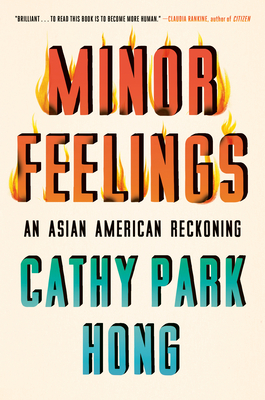
Poet and essayist Cathy Park Hong blends memoir, cultural criticism, and history to expose the truth of racialized consciousness in America. Binding these essays together is Hong's theory of "minor feelings." As the daughter of Korean immigrants, Cathy Park Hong grew up steeped in shame, suspicion, and melancholy. She would later understand that these "minor feelings" occur when American optimism contradicts your own reality—when you believe the lies you're told about your own racial identity.Hong uses her own story as a portal into a deeper examination of racial consciousness in America today. This book traces her relationship to the English language, to shame and depression, to poetry and artmaking, and to family and female friendship in a search to both uncover and speak the truth.

Challenging every preconception about storytelling and prose style, mixing wry humor and riveting emotional depth, Kawakami is today one of Japan’s most important and best-selling writers. She exploded onto the cultural scene first as a musician, then as a poet and popular blogger, and is now an award-winning novelist.Breasts and Eggs paints a portrait of contemporary womanhood in Japan and recounts the intimate journeys of three women as they confront oppressive mores and their own uncertainties on the road to finding peace and futures they can truly call their own.It tells the story of three women: the thirty-year-old Natsu, her older sister, Makiko, and Makiko’s daughter, Midoriko. Makiko has traveled to Tokyo in search of an affordable breast enhancement procedure. She is accompanied by Midoriko, who has recently grown silent, finding herself unable to voice the vague yet overwhelming pressures associated with growing up. Her silence proves a catalyst for each woman to confront her fears and frustrations.On another hot summer’s day ten years later, Natsu, on a journey back to her native city, struggles with her own indeterminate identity as she confronts anxieties about growing old alone and childless.

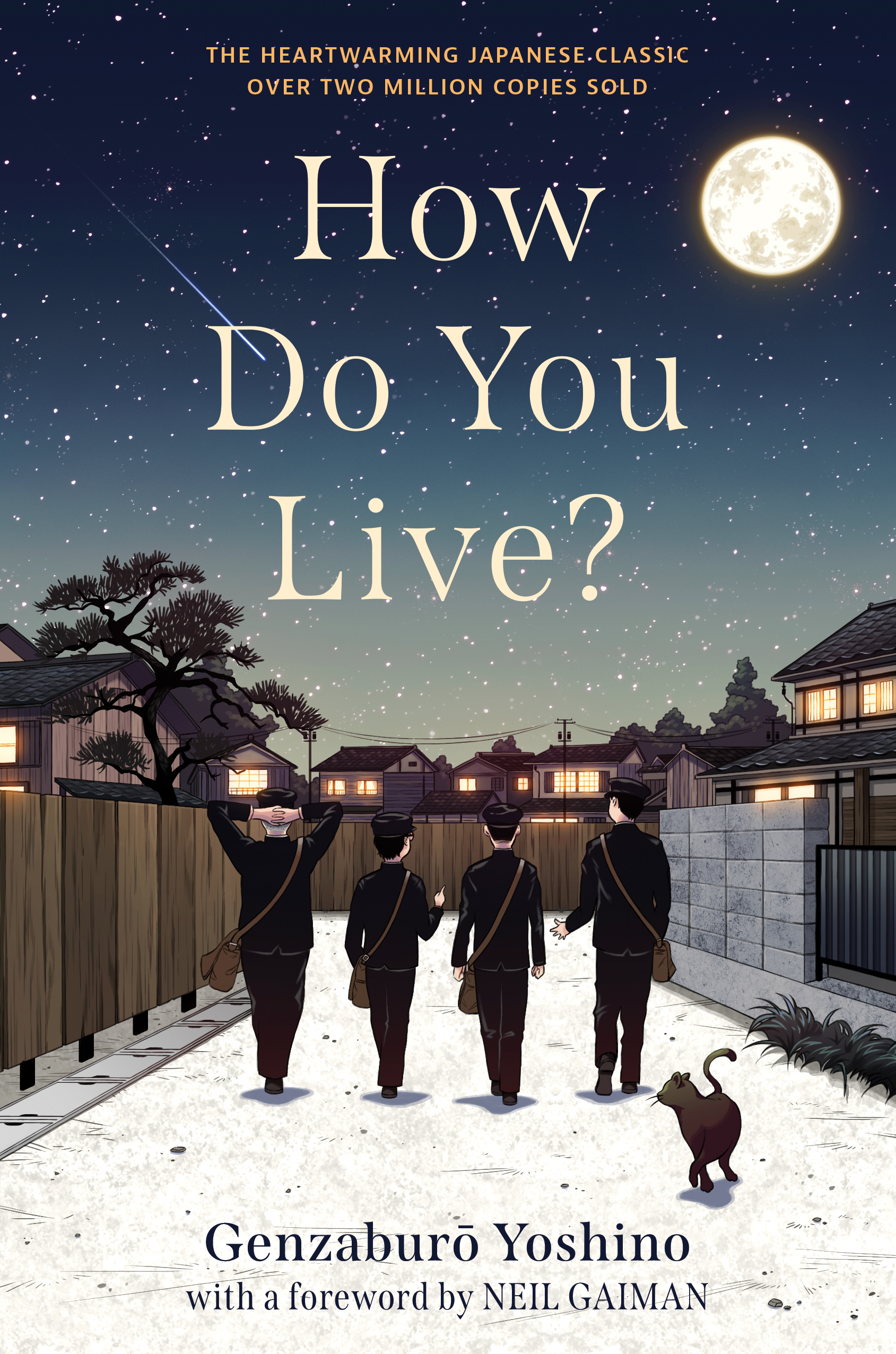
Anime master Hayao Miyazaki’s favorite childhood book, in English for the first time. First published in 1937, Genzaburō Yoshino’s How Do You Live? has long been acknowledged in Japan as a crossover classic for young readers. Academy Award–winning animator Hayao Miyazaki (Spirited Away, My Neighbor Totoro, Howl’s Moving Castle) has called it his favorite childhood book and announced plans to emerge from retirement to make it the basis of a final film. How Do You Live? is narrated in two voices. The first belongs to Copper, fifteen, who after the death of his father must confront inevitable and enormous change, including his own betrayal of his best friend. In between episodes of Copper’s emerging story, his uncle writes to him in a journal, sharing knowledge and offering advice on life’s big questions as Copper begins to encounter them. Over the course of the story, Copper, like his namesake Copernicus, looks to the stars, and uses his discoveries about the heavens, earth, and human nature to answer the question of how he will live. This first-ever English-language translation of a Japanese classic about finding one’s place in a world both infinitely large and unimaginably small is perfect for readers of philosophical fiction like The Alchemist and The Little Prince, as well as Miyazaki fans eager to understand one of his most important influences.

From the award-winning author of Native Speaker and On Such a Full Sea, an exuberant, provocative story about a young American life transformed by an unusual Asian adventure - and about the human capacities for pleasure, pain, and connection.Tiller is an average American college student with a good heart but minimal aspirations. Pong Lou is a larger-than-life, wildly creative Chinese American entrepreneur who sees something intriguing in Tiller beyond his bored exterior and takes him under his wing. When Pong brings him along on a boisterous trip across Asia, Tiller is catapulted from ordinary young man to talented protégé, and pulled into a series of ever more extreme and eye-opening experiences that transform his view of the world, of Pong, and of himself.In the breathtaking, "precise, elliptical prose" that Chang-rae Lee is known for (The New York Times), the narrative alternates between Tiller's outlandish, mind-boggling year with Pong and the strange, riveting, emotionally complex domestic life that follows it, as Tiller processes what happened to him abroad and what it means for his future. Rich with commentary on Western attitudes, Eastern stereotypes, capitalism, global trade, mental health, parenthood, mentorship, and more, My Year Abroad is also an exploration of the surprising effects of cultural immersion—on a young American in Asia, on a Chinese man in America, and on an unlikely couple hiding out in the suburbs. Tinged at once with humor and darkness, electric with its accumulating surprises and suspense, My Year Abroad is a novel that only Chang-rae Lee could have written, and one that will be read and discussed for years to come.