Loading genres...
Explore the best books about Teaching genre.

Computers have completely changed the way we teach children. We have Mindstorms to thank for that. In this book, pioneering computer scientist Seymour Papert uses the invention of LOGO, the first child-friendly programming language, to make the case for the value of teaching children with computers. Papert argues that children are more than capable of mastering computers, and that teaching computational processes like de-bugging in the classroom can change the way we learn everything else. He also shows that schools saturated with technology can actually improve socialization and interaction among students and between students and teachers.

The basic strategy we use for raising children, teaching students, and managing workers can be summarized in six words: Do this and you'll get that. We dangle goodies (from candy bars to sales commissions) in front of people in much the same way we train the family pet. Drawing on a wealth of psychological research, Alfie Kohn points the way to a more successful strategy based on working with people instead of doing things to them. "Do rewards motivate people?" asks Kohn. "Yes. They motivate people to get rewards." Seasoned with humor and familiar examples, Punished By Rewards presents an argument unsettling to hear but impossible to dismiss.

"Children are not the only ones that need to learn how to be truly happy. It's all in the bucket, that invisible bucket that follows you everywhere. . . teaches young readers valuable lessons about giving, sharing, and caring. This guide to daily happiness, though, is not just for kids. We all need reminders of the benefits of positive thinking and positive behavior. It's an important lesson to teach and remind us all . . . that showing kindness and appreciation of others goes along way to making this world a happier place for everyone, including ourselves. A classic tale, beautifully told and beautifully shared." -Emily-Jane Hills Orford, Readers' Favorite Book Reviews While using a simple metaphor of a bucket and a dipper, author Carol McCloud illustrates that when we choose to be kind, we not only fill the buckets of those around us, but also fill our OWN bucket! Conversely,when we choose to say or do mean things, we are dipping into buckets. All day long, we are either filling up or dipping into each other's buckets by what we say and what we do. When you're a bucket filler, you make the world a better place to be! This 32-page picture book is perfect for children,parents, grandparents, teachers and people that want to teach empathy, nurture kindness and create a positive environment in their home, classroom, workplace and community. Winner of 16 awards. For more information on bucket filling or free downloadables and resources, please visit bucketfillers101.com.Publications by Bucket ·Have You Filled a Bucket Today?·Fill a Bucket·Growing Up with a Bucket Full of Happiness·My Bucketfilling Journal·Will You Fill My Bucket?·Bucket Filling from A to Z·Bucket Filling from A to Z Poster Set·My Very Own Bucket Filling from A to Z Coloring Book·BABY'S BUCKET Book·Halle and Tiger with their Bucketfilling Family·Buckets, Dippers, and Lids

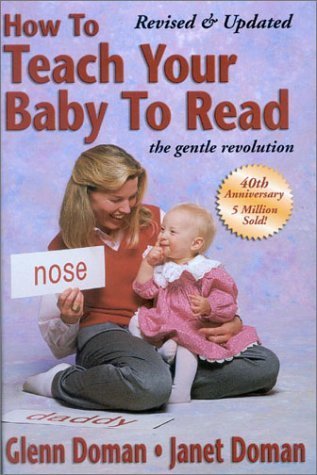
*** OVER 13 MILLION COPIES SOLD ***Time and again, the work performed at The Institutes for the Achievement of Human Potential has demonstrated that children from birth to age six are capable of learning better and faster than older children. How To Teach Your Baby To Read shows just how easy it is to teach a young child to read, while How To Teach Your Baby Math presents the simple steps for teaching mathematics through the development of thinking and reasoning skills. Both books explain how to begin and expand each program, how to make and organize necessary materials, and how to more fully develop your child’s reading and math potential.How to Give Your Baby Encyclopedic Knowledge shows how simple it is to develop a program that cultivates a young child’s awareness and understanding of the arts, science, and nature―to recognize the insects in the garden, to learn about the countries of the world, to discover the beauty of a Van Gogh painting, and much more. How To Multiply Your Baby’s Intelligence provides a comprehensive program for teaching your young child how to read, to understand mathematics, and to literally multiply his or her overall learning potential in preparation for a lifetime of success.The Gentle Revolution Series :The Institutes for the Achievement of Human Potential has been successfully serving children and teaching parents for five decades. Its goal has been to significantly improve the intellectual, physical, and social development of all children. The groundbreaking methods and techniques of The Institutes have set the standards in early childhood education. As a result, the books written by Glenn Doman, founder of this organization, have become the all-time best-selling parenting series in the United States and the world.

A revolutionary challenge to the widely held notion that intelligence is a single general capacity possessed by every individual to a greater or lesser extent. Gardner's trailblazing book revolutionized the worlds of education and psychology by positing that rather than a single type of intelligence, we have several--most of which are neglected by standard testing and educational methods.More than 200,00 copies of earlier editions have been sold; this reissue includes a new introduction by the author to mark the twenty-first birthday of this remarkable book.

This book presents four Tiny children can learn to

Here is the bestselling book that will give you the know-how you need to be effective with your children. Enthusiastically praised by parents and professionals around the world, the down--to--earth, respectful approach of Faber and Mazlish makes relationships with children of all ages less stressful and more rewarding.Recently revised and updated with fresh insights and suggestions, How to Talk so Kids Will Listen & Listen so Kids Will Talk is full of practical, innovative ways to solve common problems and build foundations for lasting relationships.

Kids are naturally curious, but when it comes to school it seems like their minds are turned off. Why is it that they can remember the smallest details from their favorite television program, yet miss the most obvious questions on their history test?Cognitive scientist Dan Willingham has focused his acclaimed research on the biological and cognitive basis of learning and has a deep understanding of the daily challenges faced by classroom teachers. this book will help teachers improve their practice by explaining how they and their students think and learn—revealing the importance of story, emotion, memory, context, and routine in building knowledge and creating lasting learning experiences.In this breakthrough book, Willingham has distilled his knowledge of cognitive science into a set of nine principles that are easy to understand and have clear applications for the classroom. Some of examples of his surprising findings are:“Learning styles” don't exist The processes by which different children think and learn are more similar than different.Intelligence is malleable Intelligence contributes to school performance and children do differ, but intelligence can be increased through sustained hard work.You cannot develop “thinking skills” in the absence of facts We encourage students to think critically, not just memorize facts. However thinking skills depend on factual knowledge for their operation.Why Don't Students Like School is a basic primer for every teacher who wants to know how their brains and their students’ brains work and how that knowledge can help them hone their teaching skills.

When Mike Feinberg and Dave Levin signed up for Teach for America right after college and found themselves utter failures in the classroom, they vowed to remake themselves into superior educators. They did that—and more. In their early twenties, by sheer force of talent and determination never to take no for an answer, they created a wildly successful fifth-grade experience that would grow into the Knowledge Is Power Program (KIPP), which today includes sixty-six schools in nineteen states and the District of Columbia.KIPP schools incorporate what Feinberg and Levin learned from America's best, most charismatic lessons need to be lively; school days need to be longer (the KIPP day is nine and a half hours); the completion of homework has to be sacrosanct (KIPP teachers are available by telephone day and night). Chants, songs, and slogans such as "Work hard, be nice" energize the program. Illuminating the ups and downs of the KIPP founders and their students, Mathews gives us something quite a hopeful book about education.

A brilliant research mathematician who has devoted his career to teaching kids reveals math to be creative and beautiful and rejects standard anxiety-producing teaching methods. Witty and accessible, Paul Lockhart’s controversial approach will provoke spirited debate among educators and parents alike and it will alter the way we think about math forever.

In spite of soaring tuition costs, more and more students go to college every year. A bachelor’s degree is now required for entry into a growing number of professions. And some parents begin planning for the expense of sending their kids to college when they’re born. Almost everyone strives to go, but almost no one asks the fundamental question posed by Academically Adrift: are undergraduates really learning anything once they get there?For a large proportion of students, Richard Arum and Josipa Roksa’s answer to that question is a definitive no. Their extensive research draws on survey responses, transcript data, and, for the first time, the state-of-the-art Collegiate Learning Assessment, a standardized test administered to students in their first semester and then again at the end of their second year. According to their analysis of more than 2,300 undergraduates at twenty-four institutions, 45 percent of these students demonstrate no significant improvement in a range of skills—including critical thinking, complex reasoning, and writing—during their first two years of college. As troubling as their findings are, Arum and Roksa argue that for many faculty and administrators they will come as no surprise—instead, they are the expected result of a student body distracted by socializing or working and an institutional culture that puts undergraduate learning close to the bottom of the priority list.Academically Adrift holds sobering lessons for students, faculty, administrators, policy makers, and parents—all of whom are implicated in promoting or at least ignoring contemporary campus culture. Higher education faces crises on a number of fronts, but Arum and Roksa’s report that colleges are failing at their most basic mission will demand the attention of us all.

In a reporting tour de force that made national headlines and The New York Times bestseller list, award-winning journalist Steven Brill takes an uncompromising look at the adults who are fighting over America’s failure to educate its children—and points the way to reversing that failure. In a reporting tour de force, award-winning journalist Steven Brill takes an uncompromising look at the adults who are fighting over America’s failure to educate its children—and points the way to reversing that failure. Brill not only takes us inside their roller-coaster battles, he also concludes with a surprising prescription for what it will take from both sides to put the American dream back in America’s schools.

Most of what you think you know about writing is useless. It’s the harmful debris of your education—a mixture of half-truths, myths, and false assumptions that prevents you from writing well. Drawing on years of experience as a writer and teacher of writing, Verlyn Klinkenborg offers an approach to writing that will change the way you work and think. There is no gospel, no orthodoxy, no dogma in this book. What you’ll find here isn’t the way to write. Instead, you’ll find a way to clear your mind of illusions about writing and discover how you write. Several Short Sentences About Writing is a book of first steps and experiments. They will revolutionize the way you think and perceive, and they will change forever the sense of your own authority as a writer. This is a book full of learning, but it’s also a book full of unlearning—a way to recover the vivid, rhythmic, poetic sense of language you once possessed. An indispensable and unique book that will give you a clear understanding of how to think about what you do when you write and how to improve the quality of your writing.

A new educational paradigm for youth mindfulness. “If you are a teacher, or an educator, or involved in school administration and curriculum development, the book you hold in your hands has the potential to transform your life, the lives of your students, and the life of the school itself, as well as education in America.”―Jon Kabat-Zinn, PhD, from the ForewordWith attention spans waning and stress on the rise, many teachers are looking for new ways to help students concentrate, learn, and thrive. The Way of Mindful Education is a practical guide for cultivating attention, compassion, and well-being not only in these students, but also in teachers themselves. Packed with lesson plans, exercises, and considerations for specific age groups and students with special needs, this working manual demonstrates the real world application of mindfulness practices in K-12 classrooms. Part I, Why Mindful Education Matters, explains what mindfulness is, the science behind its benefits for students and educators, and the inspiring work that is already underway in the Mindful Education movement. In Part II, Begin with Yourself, we are reminded that in order to teach mindfully, we need to be mindful. Here teachers will learn the when, where, and how of mindfulness so they can effectively embody its practices with their students. Mindfulness practices offer teachers self-care and attention skills that prepare them to teach with greater energy and mastery. Discover how simple exercises can help manage stress, focus attention, develop compassion, and savor positive experiences in everyday life. Part III, Cultivating a Mindful Classroom, explores the qualities of a mindful teacher, the ingredients of a mindful learning environment, and helpful skills for appropriate, supportive work with cultural diversity, student stress and trauma, and varying age groups and developmental stages. Finally, in Part IV, Mindful Education Curriculum, we learn eighteen ready-to-use mindfulness lessons for use in schools. These practical exercises, designed to foster skills like embodiment, attention, heartfulness, and interconnectedness, can be readily adapted for any age group and population, and the author draws from his extensive personal experience to offer a wealth of tips for introducing them to students in real-time. Decades of research indicate the impressive benefits of mindfulness in social, emotional, and cognitive development, and as an antidote to emotional dysregulation, attention deficits, and social difficulties. This book invites teachers, administrators, and anyone else involved in education to take advantage of this vital tool and become purveyors of a mindful, compassionate, ethical, and effective way of teaching. 30 illustrations

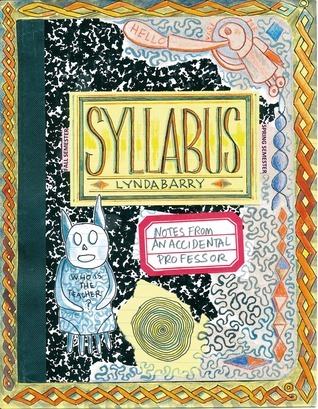
"I began keeping a notebook in a serious way when I met my teacher Marilyn Frasca in 1975 at The Evergreen State College in Olympia, Washington.She showed me ways of using these simple things — our hands, a pen, and some paper — as both a navigation and expedition device, one that could reliably carry me into my past, deeper into my present, or farther into a place I have come to call "the image world" — a place we all know, even if we don't notice this knowing until someone reminds us of its ever-present existence.I wasn't quite 20 years old when I started my first notebook. I had no idea that nearly 40 years later, I would not only still be using it as the most reliable route to the thing I've come to call my work, but I'd also be showing others how to use it too, as a place to practice a physical activity — in this case writing and drawing by hand — with a certain state of mind.This practice can result in what I've come to consider a wonderful side effect: a visual or written image we can call 'a work of art,' although a work of art is not what I'm after when I'm practicing this activity.What am I after? I'm after what Marilyn Frasca called "being present and seeing what's there."This book is a collection of bits and pieces from the many notebooks I kept during my first three years of trying to figure out how to teach this practice to my students at the University of Wisconsin-Madison."

CNN host and best-selling author Fareed Zakaria argues for a renewed commitment to the world’s most valuable educational tradition. The liberal arts are under attack. The governors of Florida, Texas, and North Carolina have all pledged that they will not spend taxpayer money subsidizing the liberal arts, and they seem to have an unlikely ally in President Obama. While at a General Electric plant in early 2014, Obama remarked, "I promise you, folks can make a lot more, potentially, with skilled manufacturing or the trades than they might with an art history degree." These messages are hitting home: majors like English and history, once very popular and highly respected, are in steep decline. "I get it," writes Fareed Zakaria, recalling the atmosphere in India where he grew up, which was even more obsessed with getting a skills-based education. However, the CNN host and best-selling author explains why this widely held view is mistaken and shortsighted. Zakaria eloquently expounds on the virtues of a liberal arts education―how to write clearly, how to express yourself convincingly, and how to think analytically. He turns our leaders' vocational argument on its head. American routine manufacturing jobs continue to get automated or outsourced, and specific vocational knowledge is often outdated within a few years. Engineering is a great profession, but key value-added skills you will also need are creativity, lateral thinking, design, communication, storytelling, and, more than anything, the ability to continually learn and enjoy learning―precisely the gifts of a liberal education. Zakaria argues that technology is transforming education, opening up access to the best courses and classes in a vast variety of subjects for millions around the world. We are at the dawn of the greatest expansion of the idea of a liberal education in human history.

When it comes to readers who need the most support, teachers can’t afford to waste time using fragmented, skill-and-drill interventions that don’t work. Literacy specialists Stephanie Harvey and Annie Ward demonstrate how to “table the labels” and use detailed formative assessments to craft targeted, personalized instruction that enable striving readers to do what they need above all - to find books they love and engage in voluminous reading. Loaded with ready-to-go lessons, routines, and “actions,” as well as the latest research, this book is a must for any teacher who strives to make every reader a thriving reader.

The author of the acclaimed Proust and the Squid follows up with a lively, ambitious, and deeply informative book that considers the future of the reading brain and our capacity for critical thinking, empathy, and reflection as we become increasingly dependent on digital technologies.A decade ago, Maryanne Wolf’s Proust and the Squid revealed what we know about how the brain learns to read and how reading changes the way we think and feel. Since then, the ways we process written language have changed dramatically with many concerned about both their own changes and that of children. New research on the reading brain chronicles these changes in the brains of children and adults as they learn to read while immersed in a digitally dominated medium.Drawing deeply on this research, this book comprises a series of letters Wolf writes to us—her beloved readers—to describe her concerns and her hopes about what is happening to the reading brain as it unavoidably changes to adapt to digital mediums. Wolf raises difficult questions, including:Will children learn to incorporate the full range of "deep reading" processes that are at the core of the expert reading brain?Will the mix of a seemingly infinite set of distractions for children’s attention and their quick access to immediate, voluminous information alter their ability to think for themselves?With information at their fingertips, will the next generation learn to build their own storehouse of knowledge, which could impede the ability to make analogies and draw inferences from what they know?Will all these influences, in turn, change the formation in children and the use in adults of "slower" cognitive processes like critical thinking, personal reflection, imagination, and empathy that comprise deep reading and that influence both how we think and how we live our lives?Will the chain of digital influences ultimately influence the use of the critical analytical and empathic capacities necessary for a democratic society?How can we preserve deep reading processes in future iterations of the reading brain?Who are the "good readers" of every epoch?Concerns about attention span, critical reasoning, and over-reliance on technology are never just about children—Wolf herself has found that, though she is a reading expert, her ability to read deeply has been impacted as she has become, inevitably, increasingly dependent on screens.Wolf draws on neuroscience, literature, education, technology, and philosophy and blends historical, literary, and scientific facts with down-to-earth examples and warm anecdotes to illuminate complex ideas that culminate in a proposal for a biliterate reading brain. Provocative and intriguing, Reader, Come Home is a roadmap that provides a cautionary but hopeful perspective on the impact of technology on our brains and our most essential intellectual capacities—and what this could mean for our future.

An inspiring account of ordinary teachers who are doing extraordinary things that could transform educationWhat School Could Be offers an inspiring vision of what our teachers and students can accomplish if trusted with the challenge of developing the skills and ways of thinking needed to thrive in a world of dizzying technological change.Innovation expert Ted Dintersmith took an unprecedented trip across America, visiting all fifty states in a single school year. He originally set out to raise awareness about the urgent need to reimagine education to prepare students for a world marked by innovation--but America's teachers one-upped him. All across the country, he met teachers in ordinary settings doing extraordinary things, creating innovative classrooms where children learn deeply and joyously as they gain purpose, agency, essential skillsets and mindsets, and real knowledge. Together, these new ways of teaching and learning offer a vision of what school could be—and a model for transforming schools throughout the United States and beyond. Better yet, teachers and parents don't have to wait for the revolution to come from above. They can readily implement small changes that can make a big difference.America's clock is ticking. Our archaic model of education trains our kids for a world that no longer exists, and accelerating advances in technology are eliminating millions of jobs. But the trailblazing of many American educators gives us reasons for hope.Capturing bold ideas from teachers and classrooms across America, What School Could Be provides a realistic and profoundly optimistic roadmap for creating cultures of innovation and real learning in all our schools.

Black students' minds and bodies are under attack. We're fighting back."Again the folks at Rethinking Schools have stepped out to produce a timely volume that should become a central staple in how we understand race and the radical imaginary in K-12 classrooms. The heft and depth of Teaching for Black Lives stands as a revolutionary tool in the resistance against racist, fascist, white nationalist ideology in education." - David Stovall, Professor of African American Studies and Educational Policy Studies, University of Illinois Chicago.CONTENTSSection 1 — Making Black Lives Matter in Our SchoolsSection 2 — Enslavement, Civil Rights, and Black LiberationSection 3 — Gentrification, Displacement, and Anti-BlacknessSection 4 — Discipline, the Schools-to-Prison Pipeline, and Mass IncarcerationSection 5 — Teaching Blackness, Loving Blackness, and Exploring Identity

Once upon a time, Joshua Gibbs was a disinterested slacker who, despite attending a classical Christian school, learned little and cared even less for his studies. He was more interested in pop culture than Great Books and performed only the bare minimum to pass. By age 27, however, he began work at a different classical institution, teaching the same literature he merely skimmed as a student. Ten years later, Gibbs has become a popular blogger and frequent speaker at education conferences. In this series of frank reflections on an unlikely career, Gibbs contemplates what it means to be a good teacher, how Great Books can change lives (and how one particular book, The Consolation of Philosophy by Boethius, changed his), and why effective education is primarily concerned with the acquisition of virtue. One part literary guidebook, one part personal memoir, and one part teacher s manual, How to Be Unlucky presents a one-of-a-kind case for ancient ways of thinking about teaching in our contemporary world.

"As a mother of three, this book's practical road map for helping our kids learn independently is invaluable. This should be a must-read for all parents." --Jenna Bush HagerDrawing on extensive experience as classroom teachers and the directors of their highly regarded tutoring business, Abby and Brian address a range of common frustrations caused by homework. They answer the most pressing questions on every parent's How much should I get involved, what does constructive help look like, and how can I help my child work independently?Taking the Stress out of Homework breaks down for parents exactly when and how to offer homework support. Whether your child's stress point is executive functioning--the ability to plan or organize--or a subject-specific struggle in math, reading, writing, or standardized test-preparation, Abby and Brian use real-life stories to provide individualized, actionable advice.At the center of Abby and Brian's philosophy is encouraging students to break free of the "let's get to the answer already so that we can be done with the assignment" mindset; they focus instead on a process-oriented approach that fosters engagement and self-sufficiency both in and out of school.Filled with expert tips about how to build executive functioning and content skills, Abby and Brian share stress-reducing best practices so homework not only supports what kids are learning, but also helps build confidence and skills that last a lifetime.

A groundbreaking resource for fiction writers, teachers, and students, this manifesto and practical guide challenges current models of craft and the writing workshop by showing how they fail marginalized writers, and how cultural expectations inform storytelling. The traditional writing workshop was established with white male writers in mind; what we call craft is informed by their cultural values. In this bold and original examination of elements of writing—including plot, character, conflict, structure, and believability—and aspects of workshop—including the silenced writer and the imagined reader—Matthew Salesses asks questions to invigorate these familiar concepts. He upends Western notions of how a story must progress. How can we rethink craft, and the teaching of it, to better reach writers with diverse backgrounds? How can we invite diverse storytelling traditions into literary spaces?Drawing from examples including One Thousand and One Nights, Curious George, Ursula K. Le Guin's A Wizard of Earthsea, and the Asian American classic No-No Boy, Salesses asks us to reimagine craft and the workshop. In the pages of exercises included here, teachers will find suggestions for building syllabi, grading, and introducing new methods to the classroom; students will find revision and editing guidance, as well as a new lens for reading their work. Salesses shows that we need to interrogate the lack of diversity at the core of published fiction: how we teach and write it. After all, as he reminds us, "When we write fiction, we write the world."