Loading genres...
Explore the best books about Spain genre.

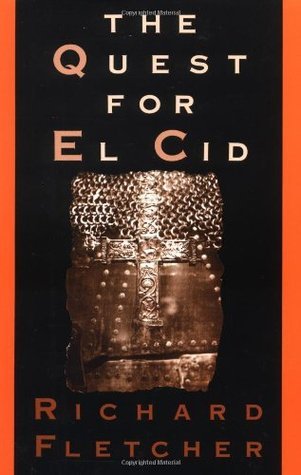
Rodrigo Diaz, the legendary warrior-knight of eleventh-century Castile known as El Cid, is remembered today as the Christian hero of the Spanish crusade who waged wars of re-conquest for the triumph of the Cross over the Crescent. He is still honored in Spain as a national hero for liberating the fatherland from the occupying Moors. Yet, as Richard Fletcher shows in this award-winning book, there are many contradictions between eleventh-century reality and the mythology that developed with the passing years.By placing El Cid in a fresh, historical context, Fletcher shows us an adventurous soldier of fortune who was of a type, one of a number of "cids," or "bosses," who flourished in eleventh-century Spain. But the El Cid of legend--the national hero--was unique in stature even in his lifetime. Before his death El Cid was already celebrated in a poem written in tribute of the conquest of Almería; posthumously he was immortalized in the great epic Poema de Mio Cid and became the centerpiece for countless other works of literature. When he died in Valencia in 1099, he was ruler of an independent principality he had carved for himself in Eastern Spain. Rather than the zealous Christian leader many believe him to have been, Rodrigo emerges in Fletcher's study as a mercenary equally at home in the feudal kingdoms of northern Spain and the exotic Moorish lands of the south, selling his martial skills to Christian and Muslim alike. Indeed, his very title derives from the Arabic word sayyidmeaning "lord" or "master." And as there was little if any sense of Spanish nationhood in the eleventh century, he can hardly be credited for uniting a medieval Spanish nation.In this ground-breaking inquiry into the life and times of El Cid, Fletcher disentangles fact from myth to create a striking portrait of an extraordinary man, clearly showing how and why legend transformed him into something he was not during his life. A fascinating journey through a turbulent epoch, The Quest for El Cid is filled with the excitement of discovery, and will delight readers interested not only in Spanish history and literature, but those who want to understand how myth can shape our perception of history.

"This book is the liveliest account of African history ever written, covering over [one] thousand years of trans-Saharan trade. "Finely written and researched. ... This edition will no doubt whet the appetites of a fresh generation of scholars and students for greater knowledge of parts of Africa still surprisingly little-known to the outside world." -- Journal of Islamic Studies "A unique source book." - The New York Times "Utterly enthralling ... splendidly romantic." -- The New Yorker

"My work is like a diary," Picasso once told John Richardson. "To understand it, you have to see how it mirrors my life." Richardson, who lived near the artist in Provence for ten years and became a trusted friend, was able to observe and record this phenomenon at first hand. Later, Picasso's widow continued to give Richardson access to the artist's studios and storerooms. This close personal friendship and the privilege of working in hitherto inaccessible archives make Richardson uniquely qualified to write the artist's life, rescuing his renown from sensationalist legend and specialist pleading and analyzing anew the traumas and obsessions that triggered his explosive genius.Richardson is the first biographer to make sense of the myriad contradictions that leave so many statements about Picasso's nature equally true in reverse. The artist's ambivalence is one of the author's central themes. At last we are able to see how his courage and terror misogyny and tenderness, generosity and thrift, superstition and skepticism, cynicism and sentiment, are reflected in the conflicts and paradoxes in his work.Richardson's eye is finely attuned to the complexities of Picasso's art, and his extensive knowledge of cultural history enables him to show how Picasso plundered the art of the past, the imaginations of his poet friends, the beliefs of mystics and magi, to create a revolutionary new synthesis. The author's evocation of Picasso's ferocious ego, demonic loves and hates and black fears is the more absorbing for its terse and lively prose and freedom from jargon.This first volume of Richardson's prodigiously detailed and documented four-volume study takes Picasso to the age of twenty-five. It reveals how the adolescent Picasso struggled, through determination and study, to escape the shadow of his father's artistic failures. It describes his precocious success in Barcelona and Paris and the period of rejection and despair that followed. We watch Picasso transform the prostitutes of the Saint-Lazare prison into Blue period madonnas and, later, the performers of the Montmartre circuses into Rose period harlequins. Volume I culminates in Picasso's dawning perception of himself as the messiah of the modern movement.Some nine hundred illustrations, many of them unfamiliar, enable the reader to follow Picasso's mesmerizing development in images as well as words.

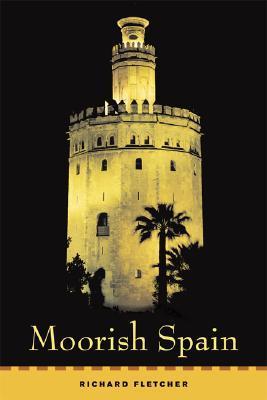
Beginning in the year 711 and continuing for nearly a thousand years, the Islamic presence survived in Spain, at times flourishing, and at other times dwindling into warring fiefdoms. But the culture and science thereby brought to Spain, including long-buried knowledge from Greece, largely forgotten during Europe’s Dark Ages, was to have an enduring impact on the country as it emerged into the modern era. In this gracefully written history, Richard Fletcher reveals the Moorish culture in all its fascinating disparity and gives us history at its best: here is vivid storytelling by a renowned scholar.

Art, Surrealism, autobiography all of Dali by Dali. Salvador Dali in his own words. With many, many numerous photographs and illustrations throughout. A beautifully designed book.

"It is a magnificent epic," said William H. Prescott after the publication of History of the Conquest of Mexico in 1843. Since then, his sweeping account of Cortés's subjugation of the Aztec people has endured as a landmark work of scholarship and dramatic storytelling. This pioneering study presents a compelling view of the clash of civilizations that reverberates in Latin America to this day. "Regarded simply from the standpoint of literary criticism, the Conquest of Mexico is Prescott's masterpiece," judged his biographer Harry Thurston Peck. "More than that, it is one of the most brilliant examples which the English language possesses of literary art applied to historical narration. . . . Here, as nowhere else, has Prescott succeeded in delineating character. All the chief actors of his great historic drama not only live and breathe, but they are as distinctly differentiated as they must have been in life. Cortés and his lieutenants are persons whom we actually come to know in the pages of Pres-cott. . . . Over against these brilliant figures stands the melancholy form of Montezuma, around whom, even from the first, one feels gathering the darkness of his coming fate. He reminds one of some hero of Greek tragedy, doomed to destruction and intensely conscious of it, yet striving in vain against the decree of an inexorable destiny. . . . [Prescott] transmuted the acquisitions of laborious research into an enduring monument of pure literature."From the eBook edition.

John Richardson draws on the same combination of lively writing, critical astuteness, exhaustive research, and personal experience which made a bestseller out of the first volume and vividly recreates the artist's life and work during the crucial decade of 1907-17 - a period during which Pablo Picasso and Georges Braque invented Cubism and to that extent engendered modernism. Richardson has had unique access to untapped sources and unpublished material. By harnessing biography to art history, he has managed to crack the code of cubism more successfully than any of his predecessors. And by bringing a fresh light to bear on the artist's often too sensationalised private life, he has succeeded in coming up with a totally new view of this paradoxical man of his paradoxical work. Never before has Picasso's prodigious technique, his incisive vision and not least his sardonic humour been analysed with such clarity.

A fresh and acclaimed account of the Spanish Civil War by the bestselling author of Stalingrad and The Battle of ArnhemTo mark the 70th anniversary of the Spanish Civil War's outbreak, Antony Beevor has written a completely updated and revised account of one of the most bitter and hard-fought wars of the twentieth century. With new material gleaned from the Russian archives and numerous other sources, this brisk and accessible book (Spain's #1 bestseller for twelve weeks), provides a balanced and penetrating perspective, explaining the tensions that led to this terrible overture to World War II and affording new insights into the war-its causes, course, and consequences.

Winner of the Prix Goncourt for biography in 1987 A study of the life of Cervantes, the author of Don Quixote . It traces his life as a soldier, as a tax collector, his time as a prisoner of war of the Turks, and finally the publication of Don Quixote in 1605.

Si la botiga d'antiguitats de la família és tot un univers per al petit Adrià, el despatx del seu pare és el centre d'aquest univers, i el tresor més preuat de tots és un magnífic violí del segle XVIII al voltant del qual giren moltes històries d'aquesta novel·la de novel·les. Jo confesso és una llarga carta d'amor d'algú que ha hagut de jugar sol durant molts anys, entre llibres vells i secrets inconfessats; d'algú que ha estimat de manera incondicional; d'algú que se sent culpable d'una mort violenta, i d'algú que no entén el mal que recorre la història d'Occident.

«Éste es un libro sobre la vida... apasionado y alegre, sentimental y burlón.» ROSA MONTERO. Una narración a medio camino entre el recuerdo personal y la memoria de todos, entre el análisis de nuestra época y la evocación íntima. Son páginas que hablan de la superación del dolor, de las relaciones entre hombres y mujeres, del esplendor del sexo, de la buena muerte y de la bella vida, de la ciencia y de la ignorancia, de la fuerza salvadora de la literatura y de la sabiduría de quienes aprenden a disfrutar de la existencia con plenitud y con ligereza. Vivo y original, este libro inclasificable incluye fotos, remembranzas, amistades y anécdotas que transmiten el primitivo placer de escuchar buenas historias. Sentirás que ha sido escrito sólo para ti.