Loading genres...
Explore the best books about Pop Culture genre.


Dylan Jones's engrossing, magisterial biography of David Bowie is unlike any Bowie story ever written. Drawn from over 180 interviews with friends, rivals, lovers, and collaborators, some of whom have never before spoken about their relationship with Bowie, this oral history weaves a hypnotic spell as it unfolds the story of a remarkable rise to stardom and an unparalleled artistic path. Tracing Bowie's life from the English suburbs to London to New York to Los Angeles, Berlin, and beyond, its collective voices describe a man profoundly shaped by his relationship with his schizophrenic half-brother Terry; an intuitive artist who could absorb influences through intense relationships and yet drop people cold when they were no longer of use; and a social creature equally comfortable partying with John Lennon and dining with Frank Sinatra. By turns insightful and deliciously gossipy, DAVID BOWIE is as intimate a portrait as may ever be drawn. It sparks with admiration and grievances, lust and envy, as the speakers bring you into studios and bedrooms they shared with Bowie, and onto stages and film sets, opening corners of his mind and experience that transform our understanding of both artist and art. Including illuminating, never-before-seen material from Bowie himself, drawn from a series of Jones's interviews with him across two decades, DAVID BOWIE is an epic, unforgettable cocktail-party conversation about a man whose enigmatic shapeshifting and irrepressible creativity produced one of the most sprawling, fascinating lives of our time.
The first book in twenty-five years from “one of our great comic minds” ( The Washington Post ) features Seinfeld’s best work across five decades in comedy.Since his first performance at the legendary New York nightclub “Catch a Rising Star” as a twenty-one-year-old college student in fall of 1975, Jerry Seinfeld has written his own material and saved everything. “Whenever I came up with a funny bit, whether it happened on a stage, in a conversation, or working it out on my preferred canvas, the big yellow legal pad, I kept it in one of those old school accordion folders,” Seinfeld writes. “So I have everything I thought was worth saving from forty-five years of hacking away at this for all I was worth.”For this book, Jerry Seinfeld has selected his favorite material, organized decade by decade. In this “trove of laugh-out-loud one-liners” (Associated Press), you will witness the evolution of one of the great comedians of our time and gain new insights into the thrilling but unforgiving art of writing stand-up comedy.

“Melissa Maerz’s brilliant oral history is the definitive account of a cult-classic movie that took a slow ride into the Seventies and defined the Nineties.” –Rob Sheffield, Rolling StoneThe definitive oral history of the cult classic Dazed and Confused , featuring behind-the-scenes stories from the cast, crew, and Oscar-nominated director Richard Linklater.Dazed and Confused not only heralded the arrival of filmmaker Richard Linklater, it introduced a cast of unknowns who would become the next generation of movie stars. Embraced as a cultural touchstone, the 1993 film would also make Matthew McConaughey’s famous phrase—alright, alright, alright—ubiquitous. But it started with a simple idea: Linklater thought people might like to watch a movie about high school kids just hanging out and listening to music on the last day of school in 1976. To some, that might not even sound like a movie. But to a few studio executives, it sounded enough like the next American Graffiti to justify the risk. Dazed and Confused underperformed at the box office and seemed destined to disappear. Then something weird happened: Linklater turned out to be right. This wasn’t the kind of movie everybody liked, but it was the kind of movie certain people loved, with an intensity that felt personal. No matter what their high school experience was like, they thought Dazed and Confused was about them.Alright, Alright, Alright is the story of how this iconic film came together and why it worked. Combining behind-the-scenes photos and insights from nearly the entire cast, including Matthew McConaughey, Parker Posey, Ben Affleck, Joey Lauren Adams, and many others, and with full access to Linklater’s Dazed archives, it offers an inside look at how a budding filmmaker and a cast of newcomers made a period piece that would feel timeless for decades to come.

For the first time, the full story of what happened when Frank brought his best pals to party in a land called VegasJanuary 1960. Las Vegas is at its smooth, cool peak. The Strip is a jet-age theme park, and the greatest singer in the history of American popular music summons a group of friends there to make a movie. One is an insouciant singer of Italian songs, ex-partner to the most popular film comedian of the day. One is a short, black, Jewish, one-eyed, singing, dancing wonder. One is an upper-crust British pretty boy turned degenerate B-movie star actor, brother-in-law to an ascendant politician. And one is a stiff-shouldered comic with the quintessential Borscht Belt emcee’s knack for needling one-liners. The architectonically sleek marquee of the Sands Hotel announces their presence simply by listing their FRANK SINATRA. DEAN MARTIN. SAMMY DAVIS, JR. PETER LAWFORD. JOEY BISHOP. Around them an entire cast actors, comics, singers, songwriters, gangsters, politicians, and women, as well as thousands of starstruck everyday folks who fork over pocketfuls of money for the privilege of basking in their presence. They call themselves The Clan. But to an awed world, they are known as The Rat Pack.They had it all. Fame. Gorgeous women. A fabulouse playground of a city and all the money in the world. The backing of fearsome crime lords and the blessing of the President of the United States. But the dark side–over the thin line between pleasure and debauchery, between swinging self-confidence and brutal arrogance–took its toll. In four years, their great ride was over, and showbiz was never the same.Acclaimed Jerry Lewis biographer Shawn Levy has written a dazzling portrait of a time when neon brightness cast sordid shadows. It was Frank’s World, and we just lived in it.

Copiously researched and documented, Hit Men is the highly controversial portrait of the pop music industry in all its wild, ruthless glory: the insatiable greed and ambition; the enormous egos; the fierce struggles for profits and power; the vendettas, rivalries, shakedowns, and payoffs. Chronicling the evolution of America's largest music labels from the Tin Pan Alley days to the present day, Fredric Dannen examines in depth the often venal, sometimes illegal dealings among the assorted hustlers and kingpins who rule over this multi-billion-dollar business.

From the moment that he first shook up the world in the mid 1950s, Elvis Presley has been one of the most vivid and enduring myths of American culture.Last Train to Memphis: The Rise of Elvis Presley is the first biography to go past that myth and present an Elvis beyond the legend. Based on hundreds of interviews and nearly a decade of research, it traces the evolution not just of the man but of the music and of the culture he left utterly transformed, creating a completely fresh portrait of Elvis and his world.This volume tracks the first twenty-four years of Elvis' life, covering his childhood, the stunning first recordings at Sun Records ("That's All Right," "Mystery Train"), and the early RCA hits ("Heartbreak Hotel," "Hound Dog," "Don't Be Cruel"). These were the years of his improbable self-invention and unprecedented triumphs, when it seemed that everything that Elvis tried succeeded wildly. There was scarcely a cloud in sight through this period until, in 1958, he was drafted into the army and his mother died shortly thereafter. The book closes on that somber and poignant note.Last Train to Memphis takes us deep inside Elvis' life, exploring his lifelong passion for music of every sort (from blues and gospel to Bing Crosby and Mario Lanza), his compelling affection for his family, and his intimate relationships with girlfriends, mentors, band members, professional associates, and friends. It shows us the loneliness, the trustfulness, the voracious appetite for experience, and above all the unshakable, almost mystical faith that Elvis had in himself and his music. Drawing frequently on Elvis' own words and on the recollections of those closest to him, the book offers an emotional, complex portrait of young Elvis Presley with a depth and dimension that for the first time allow his extraordinary accomplishments to ring true.Peter Guralnick has given us a previously unseen world, a rich panoply of people and events that illuminate an achievement, a place, and a time as never revealed before. Written with grace, humor, and affection, Last Train to Memphis has been hailed as the definitive biography of Elvis Presley. It is the first to set aside the myths and focus on Elvis' humanity in a way that has yet to be duplicated.

Charles Schulz, the most widely syndicated and beloved cartoonist of all time, is also one of the most misunderstood figures in American culture. Now, acclaimed biographer David Michaelis gives us the first full-length biography of Schulz: at once a creation story, a portrait of a hidden American genius, and a chronicle contrasting the private man with the central role he played in shaping the national imagination. The son of a barber, Schulz was born in Minnesota to modest, working class roots. In 1943, just three days after his mother′s tragic death from cancer, Schulz, a private in the army, shipped out for boot camp and the war in Europe. The sense of shock and separation never left him. And these early experiences would shape his entire life. With Peanuts, Schulz embedded adult ideas in a world of small children to remind the reader that character flaws and childhood wounds are with us always. It was the central truth of his own life, that as the adults we′ve become and as the children we always will be, we can free ourselves, if only we can see the humour in the predicaments of funny-looking kids. Schulz′s Peanuts profoundly influenced the country in the second half of the 20th century. But the strip was anchored in the collective experience and hardships of Schulz′s generation-the generation that survived the Great Depression and liberated Europe and the Pacific and came home to build the post-war world.

An international bestseller, Klaus Kinski's memoir has become a cult classic, telling the story of his fascinating life, from his tortured, poverty-stricken childhood in prewar Berlin to his rise to international stardom as a film actor. "Probably the most outrageous autobiography ever--less a memoir than a hyperbolically pornographic performance piece."--Newsweek.

"A definitive portrait of the madness of big-time moviemaking" ( Newsweek ), now the basis for the new season of TCM's hit podcast, "The Plot Thickens"When Brian De Palma agreed to allow Julie Salamon unlimited access to the film production of Tom Wolfe's best-selling book The Bonfire of the Vanities , both director and journalist must have felt like they were on to something big. How could it lose? But instead Salamon got a front-row seat at the Hollywood disaster of the decade. She shadowed the film from its early stages through the last of the eviscerating reviews, and met everyone from the actors to the technicians to the studio executives. They'd all signed on for a blockbuster, but there was a sense of impending doom from the start--heart-of-gold characters replaced Wolfe's satiric creations; affable Tom Hanks was cast as the patrician heel; Melanie Griffith appeared mid-shoot with new, bigger breasts. With a keen eye and ear, Salamon shows us how the best of intentions turned into a legendary Hollywood debacle.The Devil's Candy joins John Gregory Dunne's The Studio, Steven Bach's Final Cut, and William Goldman's Adventures in the Screen Trade as a classic for anyone interested in the workings of Hollywood. With a new afterword profiling De Palma ten years after the movie's devastating flop (and this book's best-selling publication), Julie Salamon has created a riveting insider's portrait of an industry where art, talent, ego, and money combine and clash on a monumental scale.

From the New York Times bestselling author of How We Got To Now and FarsightedForget everything you’ve ever read about the age of dumbed-down, instant-gratification culture. In this provocative, unfailingly intelligent, thoroughly researched, and surprisingly convincing big idea book, Steven Johnson draws from fields as diverse as neuroscience, economics, and media theory to argue that the pop culture we soak in every day—from Lord of the Rings to Grand Theft Auto to The Simpsons —has been growing more sophisticated with each passing year, and, far from rotting our brains, is actually posing new cognitive challenges that are actually making our minds measurably sharper. After reading Everything Bad is Good for You , you will never regard the glow of the video game or television screen the same way again. With a new afterword by the author.

Originally published in Paris, this is a collection of Hollywood's darkest and best kept secrets from the pen of Kenneth Anger, a former child movie actor who grew up to become one of America's leading underground film-makers.

A Time Out and Daily News Top Ten Book of the Year upon its initial release, Please Kill Me is the first oral history of the most nihilist of all pop movements. Iggy Pop, Danny Fields, Dee Dee and Joey Ramone, Malcom McLaren, Jim Carroll, and scores of other famous and infamous punk figures lend their voices to this definitive account of that outrageous, explosive era. From its origins in the twilight years of Andy Warhol's New York reign to its last gasps as eighties corporate rock, the phenomenon known as punk is scrutinized, eulogized, and idealized by the people who were there and who made it happen.

Peter Bogdanovich, known primarily as a director, film historian and critic, has been working with professional actors all his life. He started out as an actor (he debuted on the stage in his sixth-grade production of Finian’s Rainbow ); he watched actors work (he went to the theater every week from the age of thirteen and saw every important show on, or off, Broadway for the next decade); he studied acting, starting at sixteen, with Stella Adler (his work with her became the foundation for all he would ever do as an actor and a director).Now, in his new book, Who the Hell’s in It, Bogdanovich draws upon a lifetime of experience, observation and understanding of the art to write about the actors he came to know along the way; actors he admired from afar; actors he worked with, directed, befriended. Among Lauren Bacall, Humphrey Bogart, James Cagney, John Cassavetes, Charlie Chaplin, Montgomery Clift, Marlene Dietrich, Henry Fonda, Ben Gazzara, Audrey Hepburn, Boris Karloff, Dean Martin, Marilyn Monroe, River Phoenix, Sidney Poitier, Frank Sinatra, and James Stewart.Bogdanovich captures—in their words and his—their work, their individual styles, what made them who they were, what gave them their appeal and why they’ve continued to be America’s iconic actors.On Lillian “the first virgin hearth goddess of the screen . . . a valiant and courageous symbol of fortitude and love through all distress.”On Marlon “He challenged himself never to be the same from picture to picture, refusing to become the kind of film star the studio system had invented and thrived upon—the recognizable human commodity each new film was built around . . . The funny thing is that Brando’s charismatic screen persona was vividly apparent despite the multiplicity of his guises . . . Brando always remains recognizable, a star-actor in spite of himself. ”Jerry Lewis to Bogdanovich on the first laugh Lewis ever got “I was five years old. My mom and dad had a tux made—I worked in the borscht circuit with them—and I came out and I sang, ‘Brother, Can You Spare a Dime?’ the big hit at the time . . . It was 1931, and I stopped the show—naturally—a five-year-old in a tuxedo is not going to stop the show? And I took a bow and my foot slipped and hit one of the floodlights and it exploded and the smoke and the sound scared me so I started to cry. The audience laughed—they were hysterical . . . So I knew I had to get the rest of my laughs the rest of my life, breaking, sitting, falling, spinning.”John Wayne to Bogdanovich, on the early years of Wayne’s career when he was working as a prop “Well, I’ve naturally studied John Ford professionally as well as loving the man. Ever since the first time I walked down his set as a goose-herder in 1927. They needed somebody from the prop department to keep the geese from getting under a fake hill they had for Mother Machree at Fox. I’d been hired because Tom Mix wanted a box seat for the USC football games, and so they promised jobs to Don Williams and myself and a couple of the players. They buried us over in the properties department, and Mr. Ford’s need for a goose-herder just seemed to fit my pistol.”These twenty-six portraits and conversations are unsurpassed in their evocation of a certain kind of great movie star that has vanished. Bogdanovich’s book is a celebration and a farewell.

“An excellent read.” — St. Petersburg Times “An often hilarious, always candid and astutely observed memoir chronicling a life observed, largely, from the vantage point of a drum throne.” — Buffalo News Rock legend Stewart Copeland, drummer for seminal pop trio The Police, shares his stories from before, during, and after his days with Sting and Andy Summers, in one of the most popular and influential bands of the eighties. Strange Things Happen indeed.

In Tinsel, Hank Stuever turns his unerring eye for the idiosyncrasies of modern life to Frisco, Texas—a suburb at once all-American and completely itself—to tell the story of the nation's most over-the-top Christmas. Stuever's tale begins on the blissful easy-credit dawn of Black Friday, as he jostles for bargains among the crowds at the big-box stores. From there he follows Frisco's true believers as they navigate through three years of holiday drama. Tammie Parnell is the proprietor of “Two Elves with a Twist," a company that decks the halls of other people's McMansions. Jeff and Bridgette Trykoski spend eleven months preparing the visible-from-space, awe-inspiring light display they stage on their lawn each December. And single mother Caroll Cavazos, a devout churchgoer, hopes that the life-affirming moments of the season can transcend her everyday struggles. Amid home foreclosures and a retail economy in decline, Stuever discovers the people of Frisco holding fast to the seasonal spirit. His portraits of this happy, megachurchy, shoparific world are at once very funny, revealing and deeply humane. Tinsel is a compelling tale of our half-trillion-dollar holiday, measuring what we've become against the ancient rituals of what we've always been.

Much has been written about the storied New Hollywood of the 1970s, but at the same time that Steven Spielberg and Martin Scorcese were producing their first classic movies, a parallel universe of directors gave birth to the modern horror film. Shock Value tells the unlikely story of how directors like Wes Craven, Roman Polanski, and John Carpenter revolutionized the genre in the 1970s, plumbing their deepest anxieties to bring a gritty realism and political edge to their craft. From Rosemary’s Baby to Halloween, the films they unleashed on the world created a template for horror that has been relentlessly imitated but rarely matched. Based on unprecedented access to the genre’s major players, this is an enormously entertaining account of a hugely influential golden age in American film.

No, this isn't a book about joining some fringe cult. It's a book by LEGO® fans, for LEGO fans, and you and your kids will love it.In The Cult of LEGO, Wired's GeekDad blogger John Baichtal and BrickJournal founder Joe Meno take you on a magnificent, illustrated tour of the LEGO community, its people, and their creations.The Cult of LEGO introduces us to fans and builders from all walks of life. People like professional LEGO artist Nathan Sawaya; enigmatic Dutch painter Ego Leonard (who maintains that he is, in fact, a LEGO minifig); Angus MacLane, a Pixar animator who builds CubeDudes, instantly recognizable likenesses of fictional characters; Brick Testament creator Brendan Powell Smith, who uses LEGO to illustrate biblical stories; and Henry Lim, whose work includes a series of models recreating M.C. Escher lithographs and a full-scale, functioning LEGO harpsichord.Marvel at spectacular LEGO creations like: A life-sized Stegosaurus and an 80,000-brick T. Rex skeleton Detailed microscale versions of landmarks like the Acropolis and Yankee Stadium A 22-foot long, 350-pound re-creation of the World War II battleship Yamato A robotic, giant chess set that can replay historical matches or take on an opponent A three-level, remote-controlled Jawa Sandcrawler, complete with moving conveyor belt Whether you're a card-carrying LEGO fanatic or just thinking fondly about that dusty box of LEGO in storage, The Cult of LEGO will inspire you to take out your bricks and build something amazing.Praise for The Cult of LEGO"I defy you to read and admire this book and not want to doodle with some bricks by the time you're done." —Gareth Branwyn, online editor-in-chief, MAKE Magazine"This fascinating look at the world of devoted LEGO fans deserves a place on the bookshelf of anyone who's ever played with LEGO bricks." —Chris Anderson, editor-in-chief, Wired"A crazy fun read, from cover to cover, this book deserves a special spot on the bookshelf of any self-respecting nerd." —Jake McKee, former global community manager, the LEGO Group"An excellent book and a must have for any LEGO enthusiast out there. The pictures are awesome!" —Ulrik Pilegaard, author of Forbidden LEGO"We're all members of the Cult of LEGO—the only membership requirement is clicking two pieces of plastic together and wanting to click more. Now we have a book that justifies our obsession." —James Floyd Kelly, blogger for GeekDad.com and TheNXTStep.com

In this book of original, behind-the-scenes photographs, acclaimed photographer Terry Richardson follows superstar Lady Gaga during one year of her life, from Lollapalooza through the final show of her Monster Ball tour. During the time period he followed Gaga, Richardson took over 100,000 images and attended more than 30 Monster Ball dates around the world. From the 2010 MTV Video Music Awards to the Don't Ask, Don't Tell repeal rally in Portland, Maine, to the Thierry Mugler show at Maxime, Paris, Richardson captures Lady Gaga as you've never seen her before. A year-long global odyssey- -all access, nothing off limits--this is the book Lady Gaga fans have been waiting for.

WITH 8 PAGES OF BLACK-AND-WHITE PHOTOGRAPHSHow—and why—do we obsess over movie stars? How does fame both reflect and mask the person behind it? How have the image of stardom and our stars’ images altered over a century of cultural and technological change? Do we create celebrities, or do they create us? Ty Burr, film critic for The Boston Globe , answers these questions in this lively and fascinating anecdotal history of stardom, with all its blessings and curses for star and stargazer alike. From Mary Pickford and Charlie Chaplin to Archie Leach (a.k.a. Cary Grant) and Marion Morrison (a.k.a. John Wayne), Tom Cruise and Julia Roberts, and such no-cal stars of today as the Kardashians and the new online celebrity (i.e., you and me), Burr takes us on an insightful and entertaining journey through the modern fame game at its flashiest, most indulgent, occasionally most tragic, and ultimately, its most revealing.

The man behind the Real Housewives writes about his lifelong love affair with pop culture that brought him from the suburbs of St. Louis to his own television showFrom a young age, Andy Cohen knew one He loved television. Not in the way that most kids do, but in an irrepressible, all-consuming, I-want-to-climb-inside-the-tube kind of way. And climb inside he did. Now presiding over Bravo's reality TV empire, he started out as an overly talkative pop culture obsessive, devoted to Charlie's Angels and All My Children and to his mother, who received daily letters from Andy at summer camp, usually reminding her to tape the soaps. In retrospect, it's hard to believe that everyone didn't know that Andy was gay; still, he remained in the closet until college. Finally out, he embarked on making a career out of his passion for television. The journey begins with Andy interviewing his all-time idol Susan Lucci for his college newspaper and ends with him in a job where he has a hand in creating today's celebrity icons. In the witty, no-holds-barred style of his show Watch What Happens Live , Andy tells tales of absurd mishaps during his ten years at CBS News, hilarious encounters with the heroes and heroines of his youth, and the real stories behind The Real Housewives . Dishy, funny, and full of heart, Most Talkative provides a one-of-a-kind glimpse into the world of television, from a fan who grew up watching the screen and is now inside it, both making shows and hosting his own.

Crab Monsters, Teenage Cavemen, and Candy Stripe Nurses is an outrageously rollicking account of the life and career of Roger Corman―one of the most prolific and successful independent producers, directors, and writers of all time, and self-proclaimed king of the B movie. As told by Corman himself and graduates of 'The Corman Film School', including Peter Bogdanovich, James Cameron, Francis Ford Coppola, Robert De Niro, and Martin Scorsese, this comprehensive oral history takes readers behind the scenes of more than six decades of American cinema, as now-legendary directors and actors candidly unspool recollections of working with Corman, continually one-upping one another with tales of the years before their big breaks.Crab Monsters... is supplemented with dozens of full-color reproductions of classic Corman movie posters; behind-the-scenes photographs and ephemera (many taken from Corman’s personal archive); and critical essays on Corman’s most daring films―including The Intruder, Little Shop of Horrors, and The Big Doll House―that make the case for Corman as an artist like no other.

Following the success of The Accidental Billionaires and Moneyball comes Console Wars—a mesmerizing, behind-the-scenes business thriller that chronicles how Sega, a small, scrappy gaming company led by an unlikely visionary and a team of rebels, took on the juggernaut Nintendo and revolutionized the video game industry.In 1990, Nintendo had a virtual monopoly on the video game industry. Sega, on the other hand, was just a faltering arcade company with big aspirations and even bigger personalities. But that would all change with the arrival of Tom Kalinske, a man who knew nothing about videogames and everything about fighting uphill battles. His unconventional tactics, combined with the blood, sweat and bold ideas of his renegade employees, transformed Sega and eventually led to a ruthless David-and-Goliath showdown with rival Nintendo.The battle was vicious, relentless, and highly profitable, eventually sparking a global corporate war that would be fought on several fronts: from living rooms and schoolyards to boardrooms and Congress. It was a once-in-a-lifetime, no-holds-barred conflict that pitted brother against brother, kid against adult, Sonic against Mario, and the US against Japan.Based on over two hundred interviews with former Sega and Nintendo employees, Console Wars is the underdog tale of how Kalinske miraculously turned an industry punchline into a market leader. It's the story of how a humble family man, with an extraordinary imagination and a gift for turning problems into competitive advantages, inspired a team of underdogs to slay a giant and, as a result, birth a $60 billion dollar industry.

"The Gang" from It’s Always Sunny in Philadelphia attempts their most ill-conceived, get-rich quick scheme yet: publishing a “self-help book” to hilarious, sometimes dangerous, and often revolting, results.The Gang may have finally found their golden ticket. Left alone to close down Paddy’s Pub one night, Charlie Kelly inadvertently scored himself, and his friends, the opportunity of a lifetime—a book deal with a real publishing company, real advance money, and a real(ly confused) editor. While his actual ability to read and write remains unclear, Charlie sealed the deal with some off-the-cuff commentary on bird law and the nuances of killing rats (and maybe with the help of some glue fumes in the basement with an unstable editor on a bender). While The Gang is stunned by the news, and the legally binding, irrevocable contract left on the bar, they are also ready to rise to the task and become millionaires—and of course, help Charlie actually write the book.In their own inimitable voices, Charlie, Mac, Dennis, Sweet Dee, and Frank weigh in on important topics like Relationships, Financial Success and Career, Fashion and Personal Grooming, Health and Diet, and Survival Skills, providing insane advice, tips, tricks, and recipes (Rum Ham anyone?) as only they can.Fans of It’s Always Sunny in Philadelphia rejoice and welcome the most influential work in the history of the written word (or at least since the script for The Nightman Cometh): The 7 Secrets of Awakening the Highly Effective Four-Hour Giant, Today.

“Fascinating, strange, sad, funny, and entirely engrossing, The Great Beanie Baby Bubble is a smart, engaging book that’s as much about the odd saga of these plush toys as it is about the nature of obsession and desire.”—SUSAN ORLEAN, author of Rin Tin Tin New York Times bestselling author Zac Bissonnette explores what happened when a $5 stuffed animal took over America and turned a college dropout into a billionaire. Now a major motion picture starring Elizabeth Banks and Zach Galifianakis, The Great Beanie Baby Bubble tells the story of the most extraordinary craze of the 1990s. In the history of consumer crazes, nothing compares to Beanie Babies. With no advertising or big-box distribution, creator Ty Warner – an eccentric college dropout – became a billionaire in just three years. But the end of the fad was just as swift and extremely devastating, with "rare" Beanie Babies deemed worthless as quickly as they'd once been deemed priceless. Bissonnette explains how and why the Beanie Baby craze rose and fell, and explores the rise of ecommerce and eBay. Through first-ever interviews with former Ty Inc. employees, Warner's sister, and the two ex-girlfriends who were by his side as he became the richest man in the history of toys, The Great Beanie Baby Bubble tells the inspiring yet tragic story of one of America's most enigmatic self-made tycoons. Perfect for collectors, investors, and fans of marketing and business books, The Great Beanie Baby Bubble explores the mass hysteria that captivated America.

Soon to be a Paramount+ documentary series, narrated by Method Man and produced by Marshall Mathers, LeBron James, and moreOne of Billboard’s 100 Greatest Music Books of All TimeFinalist for the Los Angeles Times Book Prize, the J. Anthony Lukas Book Prize, and the Financial Times and McKinsey Business Book of the YearA New York Times Editors’ ChoiceONE OF THE YEAR'S BEST The Washington Post • The Financial Times • Slate • The Atlantic • Time • Forbes“[How Music Got Free] has the clear writing and brisk reportorial acumen of a Michael Lewis book.”—Dwight Garner, The New York TimesWhat happens when an entire generation commits the same crime?How Music Got Free is a riveting story of obsession, music, crime, and money, featuring visionaries and criminals, moguls and tech-savvy teenagers. It’s about the greatest pirate in history, the most powerful executive in the music business, a revolutionary invention and an illegal website four times the size of the iTunes Music Store. Journalist Stephen Witt traces the secret history of digital music piracy, from the German audio engineers who invented the mp3, to a North Carolina compact-disc manufacturing plant where factory worker Dell Glover leaked nearly two thousand albums over the course of a decade, to the high-rises of midtown Manhattan where music executive Doug Morris cornered the global market on rap, and, finally, into the darkest recesses of the Internet.Through these interwoven narratives, Witt has written a thrilling book that depicts the moment in history when ordinary life became forever entwined with the world online—when, suddenly, all the music ever recorded was available for free. In the page-turning tradition of writers like Michael Lewis and Lawrence Wright, Witt’s deeply reported first book introduces the unforgettable characters—inventors, executives, factory workers, and smugglers—who revolutionized an entire artform, and reveals for the first time the secret underworld of media pirates that transformed our digital lives.An irresistible never-before-told story of greed, cunning, genius, and deceit, How Music Got Free isn’t just a story of the music industry—it’s a must-read history of the Internet itself.

"An utterly satisfying examination of the business of popular music." ―Nathaniel Rich, The Atlantic There’s a reason today’s ubiquitous pop hits are so hard to ignore―they’re designed that way. The Song Machine goes behind the scenes to offer an insider’s look at the global hit factories manufacturing the songs that have everyone hooked. Full of vivid, unexpected characters―alongside industry heavy-hitters like Katy Perry, Rihanna, Max Martin, and Ester Dean―this fascinating journey into the strange world of pop music reveals how a new approach to crafting smash hits is transforming marketing, technology, and even listeners’ brains. You’ll never think about music the same way again. A Wall Street Journal Best Business Book

An intriguing oral history of the post-9/11 decline of the old-guard music industry and rebirth of the New York rock scene, led by a group of iconoclastic rock bands.In the second half of the twentieth-century New York was the source of new sounds, including the Greenwich Village folk scene, punk and new wave, and hip-hop. But as the end of the millennium neared, cutting-edge bands began emerging from Seattle, Austin, and London, pushing New York further from the epicenter. The behemoth music industry, too, found itself in free fall, under siege from technology. Then 9/11/2001 plunged the country into a state of uncertainty and war—and a dozen New York City bands that had been honing their sound and style in relative obscurity suddenly became symbols of glamour for a young, web-savvy, forward-looking generation in need of an anthem.Meet Me in the Bathroom charts the transformation of the New York music scene in the first decade of the 2000s, the bands behind it—including The Strokes, The Yeah Yeah Yeahs, LCD Soundsystem, Interpol, and Vampire Weekend—and the cultural forces that shaped it, from the Internet to a booming real estate market that forced artists out of the Lower East Side to Williamsburg. Drawing on 200 original interviews with James Murphy, Julian Casablancas, Karen O, Ezra Koenig, and many others musicians, artists, journalists, bloggers, photographers, managers, music executives, groupies, models, movie stars, and DJs who lived through this explosive time, journalist Lizzy Goodman offers a fascinating portrait of a time and a place that gave birth to a new era in modern rock-and-roll.

**One of Amazon's Best Books of 2016: Top 100 Editors' Picks**A rollicking look at 1971, rock’s golden year, the year that saw the release of the indelible recordings of Led Zeppelin, David Bowie, the Who, Rod Stewart, Carole King, the Rolling Stones, and others and produced more classics than any other year in rock historyThe Sixties ended a year late. On New Year’s Eve 1970 Paul McCartney instructed his lawyers to issue the writ at the High Court in London that effectively ended the Beatles. You might say this was the last day of the pop era.1971 started the following day and with it the rock era. The new releases of that hectic year―Don McLean’s “American Pie,” Sly Stone’s “Family Affair,” Marvin Gaye’s “What’s Going On,” Joni Mitchell’s “Blue,” Led Zeppelin’s “Stairway To Heaven,” the Who’s “Baba O’Riley,” and many others―are the standards of today.David Hepworth was twenty-one in 1971, and has been writing and broadcasting about music ever since. In this entertaining and provocative book, he argues that 1971 saw an unrepeatable surge of musical creativity, technological innovation, naked ambition and outrageous good fortune that combined to produce music that still crackles with relevance today. There’s a story behind every note of that music. From the electric blue fur coat David Bowie wore when he first arrived in America in February to Bianca’s neckline when she married Mick Jagger in Saint-Tropez in May, from the death of Jim Morrison in Paris in July to the re-emergence of Bob Dylan at Madison Square Garden in August, from the soft launch of Carole King’s “Tapestry” in California in February to the sensational arrival of Led Zeppelin’s “Stairway To Heaven” in London in November, Hepworth’s forensic sweep takes in all the people, places and events that helped make 1971 rock’s unrepeatable year.

“A brisk, frothy narrative . . . informative and fun.” ―The Wall Street Journal In the dizzying wake of World War II, Rome skyrocketed to prominence as an epicenter of film, fashion, photography, and boldfaced libertinism. Artists, exiles, and a dazzling array of movie talent rushed to Rome for a chance to thrive in this hotbed of excitement. From the photographers who tailed the stars to the legends who secured their place in cinematic fame, Dolce Vita Confidential resurrects the drama that permeated the streets and screens of Rome. 8 pages of photographs

The Show That Never Ends is the definitive story of the extraordinary rise and fall of progressive (“prog”) rock. Epitomized by such classic, chart-topping bands as Yes, Genesis, Pink Floyd, Jethro Tull, and Emerson Lake Palmer, along with such successors as Rush, Marillion, Asia, Styx, and Porcupine Tree, prog sold hundreds of millions of records. It brought into the mainstream concept albums, spaced-out cover art, crazy time signatures, multitrack recording, and stagecraft so bombastic it was spoofed in the classic movie This Is Spinal Tap.With a vast knowledge of what Rolling Stone has called “the deliciously decadent genre that the punks failed to kill,” access to key people who made the music, and the passion of a true enthusiast, Washington Post national reporter David Weigel tells the story of prog in all its pomp, creativity, and excess.Weigel explains exactly what was “progressive” about prog rock and how its complexity and experimentalism arose from such precursors as the Beach Boys’ Pet Sounds and the Beatles’ Sgt. Pepper. He traces prog’s popularity from the massive success of Procol Harum’s “Whiter Shade of Pale” and the Moody Blues’ “Nights in White Satin” in 1967. He reveals how prog’s best-selling, epochal albums were made, including The Dark Side of the Moon, Thick as a Brick, and Tubular Bells. And he explores the rise of new instruments into the prog mix, such as the synthesizer, flute, mellotron, and—famously—the double-neck guitar.The Show That Never Ends is filled with the candid reminiscences of prog’s celebrated musicians. It also features memorable portraits of the vital contributions of producers, empresarios, and technicians such as Richard Branson, Brian Eno, Ahmet Ertegun, and Bob Moog.Ultimately, Weigel defends prog from the enormous derision it has received for a generation, and he reveals the new critical respect and popularity it has achieved in its contemporary resurgence.

The first definitive, unauthorized, behind-the-scenes cultural history of the Bachelor franchise, America's favorite guilty pleasureFor fifteen years and thirty-five seasons, the Bachelor franchise has been a mainstay in American TV viewers' lives. Since it premiered in 2002, the show's popularity and relevance has only grown--more than eight million viewers tuned in to see the conclusion of the most recent season of The Bachelor.The iconic reality television show's reach and influence into the cultural zeitgeist is undeniable. Bestselling writers and famous actors live tweet about it. Die-hard fans--dubbed "Bachelor Nation"--come together every week during each season to participate in fantasy leagues and viewing parties. Bachelor Nation is the first behind-the-scenes, unauthorized look into the reality television phenomenon. Los Angeles Times journalist Amy Kaufman is a proud member of Bachelor Nation and has a long history with the franchise--ABC even banned her from attending show events after her coverage of the program got a little too real for its liking. She has interviewed dozens of producers, contestants, and celebrity fans to give readers never-before-told details of the show's inner workings: what it's like to be trapped in the mansion "bubble"; dark, juicy tales of producer manipulation; and revelations about the alcohol-fueled debauchery that occurs long before the fantasy suite. Kaufman also explores what our fascination means, culturally: what the show says about the way we view so-called ideal suitors, our subconscious yearning for fairy-tale romance, and how this enduring television show has shaped society's feelings about love, marriage, and feminism by appealing to a marriage plot that's as old as Jane Austen.

The most bruising battle in the superhero world isn't between spandex-clad characters; it's between the publishers themselves. For more than 50 years, Marvel and DC have been locked in an epic war, tirelessly trading punches and trying to do to each other what Batman regularly does to the Joker's face. Slugfest, the first book to tell the history of this epic rivalry into a single, juicy narrative, is the story of the greatest corporate rivalry never told. It is also an alternate history of the superhero, told through the lens of these two publishers.Slugfest will combine primary-source reporting with in-depth research to create a more fun Barbarians at the Gate for the comic book industry. Complete with interviews with the major names in the industry, Slugfest reveals the arsenal of schemes the two companies have employed in their attempts to outmaneuver the competition, whether it be stealing ideas, poaching employees, planting spies, ripping off characters or launching price wars. Sometimes the feud has been vicious, at other times, more cordial. But it has never completely disappeared, and it simmers on a low boil to this day. The competition has spilled over to the even the casual fans, bisecting the world into two opposing tribes. You are either a Marvel or a DC fan, and allegiance is hardly a trivial matter. Perhaps the most telling question one can ask of a superhero fan is, Marvel or DC? The answer often reveals something deeper about personality, and the reason is wrapped up in the history of both companies."A smart, blow-by-blow narrative of the sometimes-friendly, often bitter rivalry between corporate comic-book behemoths...A wild haymaker for the masses, perhaps, but a knockout read for capes-and-cowls aficionados."―Kirkus "Reed Tucker masterfully dissects the REAL issue dividing us as a nation."―Seth Meyers, host of NBC's Late Night with Seth Meyers "This is a book for 'Fans.' I consider myself a 'Fan.' I love this book. I guess you could say I am a 'Fan' of this book. If you are not a 'Fan' of 'Things' then this is not a book for you. It is a book for me. GIVE ME BACK MY BOOK!"―Bobby Moynihan, comedian and former Saturday Night Live cast member "Slugfest is the ringside commentator for the clash of the comic book titans. A must-read for all comic fans."―Scott Sigler, author of the #1 New York Times bestselling novel Alive

SELECTED BY PRESIDENT BARACK OBAMA AS ONE OF THE BEST BOOKS HE READ IN 2017 . ***No. 1 New York Times Bestseller*** ***Best Nonfiction Books of 2017 selection by Barnes & Noble*** ***Best Humor and Entertainment Books of 2017 selection by Amazon*** .Michael Jordan is the acknowledged greatest basketball player of all-time, but what season was Michael Jordan the best version of Michael Jordan? Who's in The Disrespectful Dunk Hall of Fame? What's allowed and absolutely not allowed in a game of pickup basketball? BASKETBALL (AND OTHER THINGS) presents readers with a set of pivotal and ridiculous questions from basketball history, providing arguments and answers, explained with the wit and wisdom that is unique to Shea Serrano. Serrano breaks down debates that NBA fans didn't even know they needed, from the authoritative (Which NBA championship was the most important to the league?) to the fantastical (If you could assign different values to different shots throughout basketball history, what would they be and why?), with tangents and footnotes laser-ing out in all different directions, because that's how talking about basketball works, because that's how basketball works. .With incredible art from Arturo Torres, this book is a must-have for anyone who has ever stayed up late into the night debating basketball's greatest moments, what-ifs, stories, and legends, or for those who are discovering the mythology of basketball for the first time.
“This is a tough, sharp history of comedy and competitiveness, of rising stars and brilliant upstarts. Of difficult egos, awful behavior, fragile friendships, bursts of inspiration, and blizzards of cocaine―told by the survivors and shaped by Chris Nashawaty's welcome insight and perspective.”― Mark Harris, New York Times bestselling author of Pictures at a Revolution and Five Came BackCaddyshack is one of the most beloved comedies of all time, a classic snobs vs. slobs story of working class kids and the white collar buffoons that make them haul their golf bags in the hot summer sun. It has sex, drugs and one very memorable candy bar, but the movie we all know and love didn’t start out that way, and everyone who made it certainly didn’t have the word “classic” in mind as the cameras were rolling.In Caddyshack:The Making of a Hollywood Cinderella Story film critic for Entertainment Weekly Chris Nashawaty goes behind the scenes of the iconic film, chronicling the rise of comedy’s greatest deranged minds as they form The National Lampoon, turn the entertainment industry on its head, and ultimately blow up both a golf course and popular culture as we know it. Caddyshack is at once an eye-opening narrative about one of the most interesting, surreal, and dramatic film productions there’s ever been, and a rich portrait of the biggest, and most revolutionary names in Hollywood. So, it’s got that going for it…which is nice.

In this riveting popular history, the creator of You Must Remember This probes the inner workings of Hollywood’s glamorous golden age through the stories of some of the dozens of actresses pursued by Howard Hughes, to reveal how the millionaire mogul’s obsessions with sex, power, and publicity trapped, abused or benefitted women who dreamt of screen stardom.In recent months, the media has reported on scores of entertainment figures who used their power and money in Hollywood to sexually harass and coerce some of the most talented women in cinema and television. But as Karina Longworth reminds us, long before the Harvey Weinsteins there was Howard Hughes—the Texas millionaire, pilot, and filmmaker whose reputation as a cinematic provocateur was matched only by that as a prolific womanizer.His supposed conquests between his first divorce in the late 1920s and his marriage to actress Jean Peters in 1957 included many of Hollywood’s most famous actresses, among them Billie Dove, Katharine Hepburn, Ava Gardner, and Lana Turner. From promoting bombshells like Jean Harlow and Jane Russell to his contentious battles with the censors, Hughes—perhaps more than any other filmmaker of his era—commoditized male desire as he objectified and sexualized women. Yet there were also numerous women pulled into Hughes’s grasp who never made it to the screen, sometimes virtually imprisoned by an increasingly paranoid and disturbed Hughes, who retained multitudes of private investigators, security personnel, and informers to make certain these actresses would not escape his clutches.Vivid, perceptive, timely, and ridiculously entertaining, Seduction is a landmark work that examines women, sex, and male power in Hollywood during its golden age—a legacy that endures nearly a century later.

Listening Length 12 hours and 42 minutesFormed as a New York City hardcore band in 1981, Beastie Boys struck an unlikely path to global hip-hop superstardom. Here is their story, told for the first time in the words of the band. Adam "AD-ROCK" Horovitz and Michael "Mike D" Diamond offer revealing and very funny accounts of their transition from teenage punks to budding rappers; their early collaboration with Russell Simmons and Rick Rubin; the almost impossible to fathom overnight success of their debut studio album, Licensed to Ill; that album's messy fallout; and their break with Def Jam, move to Los Angeles and rebirth as musicians and social activists, with the genre-defying masterpiece Paul's Boutique. For more than 20 years, this band has had a wide-ranging and lasting influence on popular culture.With a style as distinctive and eclectic as a Beastie Boys album, Beastie Boys Book upends the typical music memoir. Alongside the band narrative you will find pieces by guest contributors and many more surprises.

Since 1929, Hollywood’s brightest stars have flocked to the Chateau Marmont as if it were a second home. An apartment building-turned-hotel, the Chateau has been the backdrop for generations of gossip and folklore: where director Nicholas Ray slept with his sixteen-year-old Rebel Without a Cause star Natalie Wood; Jim Morrison swung from the balconies; John Belushi suffered a fatal overdose; and Lindsay Lohan got the boot after racking up nearly $50,000 in charges in less than two months.But despite its mythic reputation, much of what has happened inside the Chateau’s walls has eluded the public eye—until now. With wit and insight, Shawn Levy recounts the wild revelries and scandalous liaisons, the creative breakthroughs and marital breakdowns, the births and deaths to which the hotel has been a party. Vivid, salacious, and richly informed, The Castle on Sunset is a glittering tribute to Hollywood as seen from inside the walls of its most hallowed hotel.

The behind-the-scenes story of the iconic funnymen who ruled '80s Hollywood—Bill Murray, Steve Martin, Chevy Chase, John Belushi, Dan Aykroyd, and Eddie Murphy—and the beloved films that made them stars, including Animal House, Caddyshack, and Ghostbusters. NAMED ONE OF THE BEST BOOKS OF THE YEAR BY NEW YORK. "An enjoyable romp that vividly captures the manic ups and downs of the remarkable group of funny folk who gave us a golden age of small and big screen comedy, from SNL to Groundhog Day." —Peter Biskind, author of Easy Riders, Raging Bulls. Wild and Crazy Guys opens in 1978 with Chevy Chase and Bill Murray taking bad-tempered swings at each other backstage at Saturday Night Live, and closes 21 years later with the two doing a skit in the same venue, poking fun at each other, their illustrious careers, triumphs and prat falls. In between, Nick de Semlyen takes us on a trip through the tumultuous '80s, delving behind the scenes of movies such as National Lampoon's Vacation, Beverly Hills Cop, The Blues Brothers, Dirty Rotten Scoundrels, and dozens more. Chronicling the off-screen, larger-than-life antics of Bill Murray, Chevy Chase, Steve Martin, Dan Aykroyd, Eddie Murphy, John Belushi, John Candy, and Rick Moranis, it's got drugs, sex, punch-ups, webbed toes, and Bill Murray being pushed into a swimming pool by Hunter S. Thompson while tied to a lawn chair. What's not to like? Based on candid interviews from many of the stars themselves, as well as those in their immediate orbit, including directors John Landis, Carl Reiner, and Amy Heckerling, Wild and Crazy Guys is a fantastic insider account of the friendships, feuds, triumphs, and disasters experienced by these beloved comedians. Hilarious and revealing, it is both a hidden history of the most fertile period ever for screen comedy and a celebration of some of the most popular films of all time. Praise for Wild and Crazy Guys: "Eminently readable . . . Children of the 1980s, take note: this is a fond, engrossing look back at the making of movies that became cultural touchstones." —Booklist (starred review). "Nick de Semlyen smartly charts the pinballing career paths of the stars of this new comic wave. . . . His punchy, nonstop narrative . . . tells a [story] where art and commerce smash hard against each other, sometimes causing destruction, but sometimes making sparks fly." —The Sunday Times (UK)
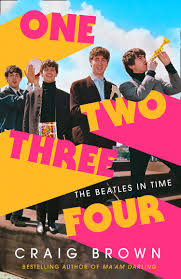
From the award-winning author of Ma’am Darling: 99 Glimpses of Princess Margaret comes a fascinating, hilarious, kaleidoscopic biography of the Fab Four.On April 10th 2020, it will be exactly 50 years since Paul McCartney announced the break-up of the Beatles. At that point, we will be at the same distance in time from 1970 as 1970 was from 1920, the year Al Jolson's ‘Swanee’ was the bestselling record and Gustav Holst composed The Planets.The Beatles continue to occupy a position unique in popular culture. They have entered people's minds in a way that did not occur before, and has not occurred since. Their influence extended way beyond the realm of music to fashion, politics, class, religion and ethics. Countless books have doggedly catalogued the minutiae of The Beatles. If you want to know the make of George Harrison's first car you will always be able to find the answer (a second hand, two-door, blue Ford Anglia 105E Deluxe, purchased from Brian Epstein's friend Terry Doran, who worked at a dealership in Warrington). Before she met John Lennon, who was the only Beatle Yoko Ono could name, and why? Ringo. Because ‘ringo’ means ‘apple’ in Japanese. All very interesting, but there is, as yet, no book about The Beatles that combines the intriguing minutiae of their day-to-day lives with broader questions about their effect – complicated and fascinating – on the world around them, their contemporaries, and generations to come.Until now. Craig Brown's 1-2-3-4: The Beatles in Time is a unique, kaleidoscopic examination of The Beatles phenomenon – part biography, part anthropology, part memoir, by turns humorous and serious, elegiac and speculative. It follows the unique “exploded biography” form of his internationally bestselling, Ma'am Darling: 99 Glimpses of Princess Margaret.

What explains the massive worldwide success of video games such as Fortnite , Minecraft , and Pokémon Go ? Game companies and their popularity are poorly understood and often ignored from the standpoint of traditional business strategy. Yet this industry generates billions in revenue by thinking creatively about digital distribution, free-to-play content, and phenomena like e-sports and live streaming. What lessons can we draw from its major successes and failures about the future of entertainment?One Up offers a pioneering empirical analysis of innovation and strategy in the video game industry to explain how it has evolved from a fringe activity to become a mainstream form of entertainment. Joost van Dreunen, a widely recognized industry expert with over twenty years of experience, analyzes how game makers, publishers, and platform holders have tackled strategic challenges to make the video game industry what it is today. Using more than three decades of rigorously compiled industry data, he demonstrates that video game companies flourish when they bring the same level of creativity to business strategy that they bring to game design. Filled with case studies of companies such as Activision Blizzard, Apple, Electronic Arts, Epic Games, Microsoft, Nexon, Sony, Take-Two Interactive, Tencent, and Valve, this book forces us to rethink common misconceptions around the emergence of digital and mobile gaming. One Up is required reading for investors, creatives, managers, and anyone looking to learn about the major drivers of change and growth in contemporary entertainment.

From the bestselling author of Just Like You, High Fidelity, and Fever Pitch, a short, warm, and entertaining book about art, creativity, and the unlikely similarities between Victorian novelist Charles Dickens and modern American rock star Prince Every so often, a pairing comes along that seems completely unlikely—until it's not. Peanut butter and jelly, Dennis Rodman and Kim Jong Un, ducks and puppies, and now: Dickens and Prince.Equipped with a fan's admiration and his trademark humor and wit, Nick Hornby invites us into his latest obsession: the cosmic link between two unlikely artists, geniuses in their own rights, spanning race, class, and centuries—each of whom electrified their different disciplines and whose legacy resounded far beyond their own time.When Prince's 1987 record Sign o' the Times was rereleased in 2020, the iconic album now came with dozens of songs that weren't on the original— Prince was endlessly prolific, recording 102 songs in 1986 alone. In awe, Hornby began to wonder, Who else ever produced this much? Who else ever worked that way? He soon found his answer in Victorian novelist and social critic Charles Dickens, who died more than a hundred years before Prince began making music.Examining the two artists' personal tragedies, social statuses, boundless productivity, and other parallels, both humorous and haunting, Hornby shows how these two unlikely men from different centuries "lit up the world." In the process, he creates a lively, stimulating rumination on the creativity, flamboyance, discipline, and soul it takes to produce great art.

INSTANT NEW YORK TIMES BESTSELLER "A superb chronicle of how Marvel Studios conquered Hollywood…. This definitive account of the Hollywood juggernaut thrills." ― Publishers Weekly , starred reviewThe unauthorized, behind-the-scenes story of the stunning rise―and suddenly uncertain reign―of the most transformative cultural phenomenon of our the Marvel Cinematic Universe. Marvel Entertainment was a moribund toymaker not even twenty years ago. Today, Marvel Studios is the dominant player both in Hollywood and in global pop culture. How did an upstart studio conquer the world? In MCU , beloved culture writers Joanna Robinson, Dave Gonzales, and Gavin Edwards draw on more than a hundred interviews with actors, producers, directors, and writers to present the definitive chronicle of Marvel Studios and its sole, ongoing production, the Marvel Cinematic Universe. For all its outward success, the studio was forged by near-constant conflict, from the contentious hiring of Robert Downey Jr. for its 2008 debut, Iron Man , all the way up to the disappointment of Ant-Man and the Quantumania and shocking departures of multiple Marvel executives in 2023. Throughout, the authors demonstrate that the original genius of Marvel was its resurrection and modification of Hollywood’s old studio system. But will it survive its own spectacular achievements? Dishy and authoritative, MCU is the first book to tell the Marvel Studios story in full―and an essential, effervescent account of American mass culture.