Loading genres...
Explore the best books about New York genre.

In a vase in a closet, a couple of years after his father died in 9/11, nine-year-old Oskar discovers a key...The key belonged to his father, he's sure of that. But which of New York's 162 million locks does it open?So begins a quest that takes Oskar - inventor, letter-writer and amateur detective - across New York's five boroughs and into the jumbled lives of friends, relatives, and complete strangers. He gets heavy boots, he gives himself little bruises and he inches ever nearer to the heart of a family mystery that stretches back fifty years. But will it take him any closer to, or further from, his lost father?
When Pulitzer Prize–winning journalist Bill Dedman noticed in 2009 a grand home for sale, unoccupied for nearly sixty years, he stumbled through a surprising portal into American history. Empty Mansions is a rich mystery of wealth and loss, connecting the Gilded Age opulence of the nineteenth century with a twenty-first-century battle over a $300 million inheritance. At its heart is a reclusive heiress named Huguette Clark, a woman so secretive that, at the time of her death at age 104, no new photograph of her had been seen in decades. Though she owned palatial homes in California, New York, and Connecticut, why had she lived for twenty years in a simple hospital room, despite being in excellent health? Why were her valuables being sold off? Was she in control of her fortune, or controlled by those managing her money? Dedman has collaborated with Huguette Clark’s cousin, Paul Clark Newell, Jr., one of the few relatives to have frequent conversations with her. Dedman and Newell tell a fairy tale in reverse: the bright, talented daughter, born into a family of extreme wealth and privilege, who secrets herself away from the outside world. Huguette was the daughter of self-made copper industrialist W. A. Clark, nearly as rich as Rockefeller in his day, a controversial senator, railroad builder, and founder of Las Vegas. She grew up in the largest house in New York City, a remarkable dwelling with 121 rooms for a family of four. She owned paintings by Degas and Renoir, a world-renowned Stradivarius violin, a vast collection of antique dolls. But wanting more than treasures, she devoted her wealth to buying gifts for friends and strangers alike, to quietly pursuing her own work as an artist, and to guarding the privacy she valued above all else. The Clark family story spans nearly all of American history in three generations, from a log cabin in Pennsylvania to mining camps in the Montana gold rush, from backdoor politics in Washington to a distress call from an elegant Fifth Avenue apartment. The same Huguette who was touched by the terror attacks of 9/11 held a ticket nine decades earlier for a first-class stateroom on the second voyage of the Titanic. Empty Mansions reveals a complex portrait of the mysterious Huguette and her intimate circle. We meet her extravagant father, her publicity-shy mother, her star-crossed sister, her French boyfriend, her nurse who received more than $30 million in gifts, and the relatives fighting to inherit Huguette’s copper fortune. Richly illustrated with more than seventy photographs, Empty Mansions is an enthralling story of an eccentric of the highest order, a last jewel of the Gilded Age who lived life on her own terms.The No. 1 New York Times bestseller. Best nonfiction books of the year at Goodreads, Amazon.com, and Barnes & Noble. One of the New York Times critic Janet Maslin's 10 favorite books of 2013.

One of the most influential, admired, and innovative women of our time: fashion designer, philanthropist, wife, mother, and grandmother, Diane von Furstenberg offers a book about becoming the woman she wanted to be.Diane von Furstenberg started out with a suitcase full of jersey dresses and an idea of who she wanted to be- "in her words, the kind of woman who is independent and who doesn't rely on a man to pay her bills." She has since become that woman, establishing herself as a global brand and a major force in the fashion industry, all the while raising a family and maintaining "my children are my greatest creation."In The Woman I Wanted to Be, von Furstenberg reflects on her extraordinary life from childhood in Brussels to her days as a young, jet-set princess, to creating the dress that came to symbolize independence and power for an entire generation of women. With remarkable honesty and wisdom, von Furstenberg mines the rich territory of what it means to be a woman. She opens up about her family and career, overcoming cancer, building a global brand, and devoting herself to empowering other women, writing, "I want every woman to know that she can be the woman she wants to be."

Jende Jonga, a Cameroonian immigrant living in Harlem, has come to the United States to provide a better life for himself, his wife, Neni, and their six-year-old son. In the fall of 2007, Jende can hardly believe his luck when he lands a job as a chauffeur for Clark Edwards, a senior executive at Lehman Brothers. Clark demands punctuality, discretion, and loyalty—and Jende is eager to please. Clark’s wife, Cindy, even offers Neni temporary work at the Edwardses’ summer home in the Hamptons. With these opportunities, Jende and Neni can at last gain a foothold in America and imagine a brighter future. However, the world of great power and privilege conceals troubling secrets, and soon Jende and Neni notice cracks in their employers’ façades. When the financial world is rocked by the collapse of Lehman Brothers, the Jongas are desperate to keep Jende’s job—even as their marriage threatens to fall apart. As all four lives are dramatically upended, Jende and Neni are forced to make an impossible choice.

Perceptive, funny, and nostalgic, E.B. White's stroll around Manhattan remains the quintessential love letter to the city, written by one of America's foremost literary figures. The New York Times has named Here is New York one of the ten best books ever written about the metropolis, and The New Yorker calls it "the wittiest essay, and one of the most perceptive, ever done on the city.

In an L.A. delicatessen, a group of Brooklyn natives gets together to discuss basketball, boxing, the weather back east, and the Jewish gangsters of yesteryear. Meyer Lansky. Bugsy Siegel. Louis Lepke, the self-effacing mastermind of Murder, Inc. Red Levine, the Orthodox hit man who refused to kill on the Sabbath. Abe "Kid Twist" Reles, who looked like a mama's boy but once buried a rival alive. These are just some of the vibrant, vicious characters Rich Cohen's father reminisced about and the author evokes so pungently in Tough Jews.Tracing a generation of Jewish gangsters from the candy stores of Brownsville to the clubhouses of the Lower East Side--and, occasionally, to suites at the Waldorf--Cohen creates a densely anecdotal and gruesomely funny history of muscle, moxie, and money. Filled with fixers and schlammers, the squeal of tires and the rattle of gunfire, his book shatters stereotypes as deftly as its subjects once shattered kneecaps.

Marjorie Morningstar is a love story. It presents one of the greatest characters in modern Marjorie, the pretty 17-year-old who left the respectability of New York's Central Park West to join the theater, live in the teeming streets of Greenwich Village, and seek love in the arms of a brilliant, enigmatic writer.28 hours and 26 minutes

With the publication of Bright Lights, Big City in 1984, Jay McInerney became a literary sensation, heralded as the voice of a generation. The novel follows a young man, living in Manhattan as if he owned it, through nightclubs, fashion shows, editorial offices, and loft parties as he attempts to outstrip mortality and the recurring approach of dawn. With nothing but goodwill, controlled substances, and wit to sustain him in this anti-quest, he runs until he reaches his reckoning point, where he is forced to acknowledge loss and, possibly, to rediscover his better instincts. This remarkable novel of youth and New York remains one of the most beloved, imitated, and iconic novels in America.

Since its publication in 1984, Chants Democratic has endured as a classic narrative on labor and the rise of American democracy. In it, Sean Wilentz explores the dramatic social and intellectual changes that accompanied early industrialization in New York. He provides a panoramic chronicle of New York City's labor strife, social movements, and political turmoil in the eras of Thomas Jefferson and Andrew Jackson. Twenty years after its initial publication, Wilentz has added a new preface that takes stock of his own thinking, then and now, about New York City and the rise of the American working class.

A flop house, a pumping station, a maid's room, a homeless center, a former brothel, a Richard Meier building, a circus trailer, a sail boat, a skyscraper, buildings named Esther and Loraine--just a few of the places New Yorkers call home. For the past eight years writer Toni Schlesinger has been bringing us these "conversation places" in her weekly column in the Village Voice. Through her incisive questioning, original writing, and comic parallel reveries, Schlesinger creates miniature documentaries on the lives, passions, hopes, and heartbreaks of many of New York City's millions.Five Flights Up chronicles people living in New York's extremes, occupying 150-square-foot spaces, paying over half their income for rent, living eight in an apartment, and taking showers in twos to save time. These are people who make movies in their living room and then sleep in it later. They surround themselves with their baby teeth, with 500 volumes of Moby Dick, plaster rabbis, birds' nests, 30 modernist chairs, 50 loaves of Wonder Bread, and more. In Schlesinger's hands,their stories are much more than novelties.Artists, actors, dancers, librarians, social workers, bus boys, bankers, porn stars, au pairs, urban planners, bakers, shamans, masseuses, web designers, and students come alive when they discuss where they came from and where they're going. Each interview is a vivid and insightful portrait, revealing the creative energy, camaraderie, desperation, and hope that fuel the daily lives of people in New York and everywhere.

Few novels have caused as much debate as Hubert Selby Jr.'s notorious masterpiece, Last Exit to Brooklyn, and this Penguin Modern Classics edition includes an introduction by Irvine Welsh, author of Trainspotting.Described by various reviewers as hellish and obscene, Last Exit to Brooklyn tells the stories of New Yorkers who at every turn confront the worst excesses in human nature. Yet there are moments of exquisite tenderness in these troubled lives. Georgette, the transvestite who falls in love with a callous hoodlum; Tralala, the conniving prostitute who plumbs the depths of sexual degradation; and Harry, the strike leader who hides his true desires behind a boorish masculinity, are unforgettable creations. Last Exit to Brooklyn was banned by British courts in 1967, a decision that was reversed the following year with the help of a number of writers and critics including Anthony Burgess and Frank Kermode.Hubert Selby, Jr. (1928-2004) was born in Brooklyn, New York. At the age of 15, he dropped out of school and went to sea with the merchant marines. While at sea he was diagnosed with lung disease. With no other way to make a living, he decided to try writing: 'I knew the alphabet. Maybe I could be a writer.' In 1964 he completed his first book, Last Exit to Brooklyn, which has since become a cult classic. In 1966, it was the subject of an obscenity trial in the UK. His other books include The Room, The Demon, Requiem for a Dream, The Willow Tree and Waiting Period. In 2000, Requiem for a Dream was adapted into a film starring Jared Leto and Ellen Burstyn, and directed by Darren Aronofsky.'Last Exit to Brooklyn will explode like a rusty hellish bombshell over America, and still be eagerly read in 100 years'Allen Ginsberg'An urgent tickertape from hell'Spectator

Eighteen-year-old Stony De Coco is trapped in a working-class world that offers him only one way of proving his loyalty, and no way out.

Eloise has been delighting readers for more than sixty years —though she’s still not a day over six!Eloise is a very special little girl who lives at The Plaza Hotel in New York City. She may not be pretty yet, but she’s definitely already a real person. She loves learning about people who aren’t boring. Take Eloise home with you and she’ll introduce you to life at The Plaza. You’ll be glad you did!

The beloved American classic about a young girl's coming-of-age at the turn of the century, Betty Smith's A Tree Grows in Brooklyn is a poignant and moving tale filled with compassion and cruelty, laughter and heartache, crowded with life and people and incident. The story of young, sensitive, and idealistic Francie Nolan and her bittersweet formative years in the slums of Williamsburg has enchanted and inspired millions of readers for more than sixty years. By turns overwhelming, sublime, heartbreaking, and uplifting, the daily experiences of the unforgettable Nolans are raw with honesty and tenderly threaded with family connectedness -- in a work of literary art that brilliantly captures a unique time and place as well as incredibly rich moments of universal experience.

“Outstanding… social history at its best.” –The New York Times Book Review“An amazing, long-forgotten tale. A riveting history written with flair and precision.”—Bob WoodwardIn one of the most honored books of the year, David Von Drehle transports us to a beautiful spring day in March 1911 when 146 workers—most of them young immigrant women—lost their lives. Employees had just begun preparing to leave the Triangle shirtwaist factory in New York’s Greenwich Village when a fire broke out and within minutes consumed the building’s upper three stories. It was the worst workplace disaster in New York City history until 9/11. “Animated by vigorous, descriptive prose, Triangle carries the reader deep into a portrait of early-twentieth-century New York . . . when colorful machine politicians battled socialists, suffragists and upright progressive reformers for the soul of an increasingly immigrant city.” —Chicago Tribune “Von Drehle’s spellbinding and detailed reconstruction of the disaster is complemented by an equally gripping account of the factory owners’ subsequent manslaughter trial (they got off scot-free), drawing on court records he helped unearth.” —The New York Times“Behind the fire lay the extraordinary history of sweatshop labor and the fledgling beginnings of union organizing. The heart of Von Drehle’s book is its detailed, nuanced, mesmerizing description of the fire. The descriptions . . .leave a reader staring into space.” —Los Angeles Times Book Review Praise for David Von Drehle's Triangle: New York Times Extended List Best Seller • New York Times Book Review Notable Book •Washington Post Book World Rave of the Year • New York Public Library Book of the Year • New York Society Library Book of the Year • Fresh Air Critic’s Top Book of 2003 • Hadassah Top Ten Jewish Best Seller • ALA Notable Book of the Year • Winner of the 2004 Christopher Award • Winner of the 2004 Sidney Hillman Foundation Award •Amazon Top 50 Books of the Year • San Jose Mercury News Best Book • Rocky Mountain News Best Book • Providence Journal Critic’s ChoiceCover design by Marcia Salo and Charles Rue WoodsCover photograph courtesy of Culver PicturesPhoto imaging by Michael TedescoGrove Press books are distributed by Publishers Group West

There is September 11 and then there are the days after, and finally the years.Falling Man is a magnificent, essential novel about the event that defines turn-of-the-century America. It begins in the smoke and ash of the burning towers and tracks the aftermath of this global tremor in the intimate lives of a few people.First there is Keith, walking out of the rubble into a life that he'd always imagined belonged to everyone but him. Then Lianne, his estranged wife, memory-haunted, trying to reconcile two versions of the same shadowy man. And their small son Justin, standing at the window, scanning the sky for more planes.These are lives choreographed by loss, grief and the enormous force of history.

Commissioned by the Circle Repertory Company, Burn This first appeared at the Mark Taper Forum in Los angeles in 1987 to near-universal praise. Set in the bohemian art world of downtown New York, this vivid and challenging drama explores the spiritual and emotional isolation of Anna and Pale, two outcasts who meet in the wake of the accidental death by drowning of a mutual friend. Their determined struggle toward emotional honesty and liberation--by no means guaranteed at the play's ambiguous end--exemplifies the strength, humor, and complexity of all of Lanford Wilson's work and confirms his standing as one of America's greatest living playwrights.Lanford Wilson was born in Lebanon, Missouri, in 1938 and attended the University of Chicago. A founding member of the Circle Repertory Company in New York, he has seen many of his plays produced in theaters all over the United States and abroad. He is the recipient of many awards, including a Drama Desk Vernon Rice Award, the Pulitzer Prize, and two Obies.

One rainy morning in 1871 in lower Manhattan, Martin Pemberton a freelance writer, sees in a passing stagecoach several elderly men, one of whom he recognizes as his supposedly dead and buried father. While trying to unravel the mystery, Pemberton disappears, sending McIlvaine, his employer, the editor of an evening paper, in pursuit of the truth behind his freelancer’s fate. Layer by layer, McIlvaine reveals a modern metropolis surging with primordial urges and sins, where the Tweed Ring operates the city for its own profit and a conspicuously self-satisfied nouveau-riche ignores the poverty and squalor that surrounds them.

When Henry Roth published Call It Sleep, his first novel, in 1934, it was greeted with critical acclaim. But in that dark Depression year, books were hard to sell, and the novel quickly dropped out of sight, as did its twenty-eight-year-old author. Only with its paperback publication in 1964 did the novel receive the recognition it deserves. Call It Sleep was the first paperback ever to be reviewed on the front page of The New York Times Book Review, and it proceeded to sell millions of copies both in the United States and around the world. Call It Sleep is the magnificent story of David Schearl, the “dangerously imaginative” child coming of age in the slums of New York.

A troubling satire of the romantic myth of stardom and the empty heart of rock and roll, more relevant than ever in our celebrity-obsessed times.Bucky Wunderlick is a rock and roll star. Dissatisfied with a life that has brought fame and fortune, he suddenly decides he no longer wants to be a commodity. He leaves his band mid-tour and holes up in a dingy, unfurnished apartment in Great Jones Street. Unfortunately, his disappearing act only succeeds in inflaming interest. As faithful fans await messages, Bucky encounters every sort of roiling force he is trying to escape.DeLillo’s third novel is more than a musical satire: it probes the rights of the individual, foreshadows the struggle of the artist within a capitalist world and delivers a scathing portrait of our culture’s obsession with the lives of the few.

A Time Out and Daily News Top Ten Book of the Year upon its initial release, Please Kill Me is the first oral history of the most nihilist of all pop movements. Iggy Pop, Danny Fields, Dee Dee and Joey Ramone, Malcom McLaren, Jim Carroll, and scores of other famous and infamous punk figures lend their voices to this definitive account of that outrageous, explosive era. From its origins in the twilight years of Andy Warhol's New York reign to its last gasps as eighties corporate rock, the phenomenon known as punk is scrutinized, eulogized, and idealized by the people who were there and who made it happen.

New York City is subsumed in arctic winds, dark nights, and white lights, its life unfolds, for it is an extraordinary hive of the imagination, the greatest house ever built, and nothing exists that can check its vitality. One night in winter, Peter Lake, orphan and master-mechanic, attempts to rob a fortress-like mansion on the Upper West Side.Though he thinks the house is empty, the daughter of the house is home. Thus begins the love between Peter Lake, a middle-aged Irish burglar, and Beverly Penn, a young girl, who is dying.Peter Lake, a simple, uneducated man, because of a love that, at first he does not fully understand, is driven to stop time and bring back the dead. His great struggle, in a city ever alight with its own energy and besieged by unprecedented winters, is one of the most beautiful and extraordinary stories of American literature.

From the prize-winning author of Motherless Brooklyn, a daring, riotous, sweeping novel that spins the tale of two friends and their adventures in late 20th-century America. This is the story of two boys, Dylan Ebdus and Mingus Rude. They live in Brooklyn and are friends and neighbours; but since Dylan is white and Mingus is black, their friendship is not simple. This is the story of 1970s America, a time when the simplest decisions—what music you listen to, whether to speak to the kid in the seat next to you, whether to give up your lunch money—are laden with potential political, social and racial disaster. This is also the story of 1990s America, when nobody cared anymore. This is the story of what would happen if two teenaged boys obsessed with comic book heroes actually had superpowers: they would screw up their lives.

New York Public Library Book for the TeenagerNew York Public Library Book to RememberPSLA Young Adult Top 40 Nonfiction Titles of the Year"Engaging...a lively, informative compendium of facts, theories, and musings."-Michiko Kakutani, New York TimesBehold the rat, dirty and disgusting! Robert Sullivan turns the lowly rat into the star of this most perversely intriguing, remarkable, and unexpectedly elegant New York Times bestseller.Love them or loathe them, rats are here to stay-they are city dwellers as much as (or more than) we are, surviving on the effluvia of our society. In Rats , the critically acclaimed bestseller, Robert Sullivan spends a year investigating a rat-infested alley just a few blocks away from Wall Street. Sullivan gets to know not just the beast but its friends and foes: the exterminators, the sanitation workers, the agitators and activists who have played their part in the centuries-old war between human city dweller and wild city rat.Sullivan looks deep into the largely unrecorded history of the city and its masses-its herds-of-rats-like mob. Funny, wise, sometimes disgusting but always compulsively readable, Rats earns its unlikely place alongside the great classics of nature writing.With an all-new Afterword by the author

Vanderbilt: The very name is synonymous with the Gilded Age. The family patriarch, "the Commodore," built a fortune that made him the world's richest man by 1877. Yet less than fifty years after his death, no Vanderbilt was counted among the world's richest people. Written by descendant Arthur T. Vanderbilt II, Fortune's Children traces the dramatic and amazingly colorful history of this great American family, from the rise of industrialist and philanthropist Cornelius Vanderbilt to the fall of his progeny--wild spendthrifts whose profligacy bankrupted a vast inheritance.

A National BestsellerA New York Times Notable Book of the YearLush Life is a tale of two Lower East Sides: one a high-priced bohemia, the other a home to hardship, its residents pushed to the edges of their time-honored turf. When a cocky young hipster is shot to death by a street kid from the other lower east side, the crime ripples through every stratum of the city in this brilliant and kaleidoscopic portrait of the new New York.

"Astringent and absorbing. . . . Iphigenia in Forest Hills casts, from its first pages, a genuine spell — the kind of spell to which Ms. Malcolm’s admirers (and I am one) have become addicted." —Dwight Garner, New York Times "She couldn't have done it and she must have done it." This is the enigma at the heart of Janet Malcolm's riveting new book about a murder trial in the insular Bukharan-Jewish community of Forest Hills, Queens, that captured national attention. The defendant, Mazoltuv Borukhova, a beautiful young physician, is accused of hiring an assassin to kill her estranged husband, Daniel Malakov, a respected orthodontist, in the presence of their four-year old child. The prosecutor calls it an act of just weeks before Malakov was killed in cold blood, he was given custody of Michelle for inexplicable reasons. It is the "Dickensian ordeal" of Borukhova's innocent child that drives Malcolm's inquiry. With the intellectual and emotional precision for which she is known, Malcolm looks at the trial—"a contest between competing narratives"—from every conceivable angle. It is the chasm between our ideals of justice and the human factors that influence every trial—from divergent lawyering abilities to the nature of jury selection, the malleability of evidence, and the disposition of the judge—that is perhaps most striking. Surely one of the most keenly observed trial books ever written, Iphigenia in Forest Hills is ultimately about character and "reasonable doubt." As Jeffrey Rosen writes, it is "as suspenseful and exciting as a detective story, with all the moral and intellectual interest of a great novel." " Iphigenia in Forest Hills is another dazzling triumph from Janet Malcolm. Here, as always, Malcolm’s work inspires the best kind of disquiet in a reader—the obligation to think." —Jeffrey Toobin, author of The Inside the Secret World of the Supreme Court "A remarkable achievement that ranks with Malcolm's greatest books. Her scrupulous reporting and interviews with protagonists on both sides of the trial make her own narrative as suspenseful and exciting as a detective story, with all the moral and intellectual interest of a great novel." —Jeffrey Rosen, author of The Supreme The Personalities and Rivalries that Defined America

The forty-percent drop in crime that occurred across the U.S. from 1991 to 2000 remains largely an unsolved mystery. Even more puzzling is the eighty-percent drop over nineteen years in New York City. Twice as long and twice as large, it is the largest crime decline on record.In The City That Became Safe , Franklin E. Zimring seeks out the New York difference through a comprehensive investigation into the city's falling crime rates. The usual understanding is that aggressive police created a zero-tolerance law enforcement regime that drove crime rates down. Is this political sound bite true-are the official statistics generated by the police accurate? Though zero-tolerance policing and quality-of-life were never a consistent part of the NYPD's strategy, Zimring shows the numbers are correct and argues that some combination of more cops, new tactics, and new management can take some credit for the decline. That the police can make a difference at all in preventing crime overturns decades of conventional wisdom from criminologists, but Zimring also points out what most experts have the New York experience challenges the basic assumptions driving American crime- and drug-control policies.New York has shown that crime rates can be greatly reduced without increasing prison populations. New York teaches that targeted harm reduction strategies can drastically cut down on drug related violence even if illegal drug use remains high. And New York has proven that epidemic levels of violent crime are not hard-wired into the populations or cultures of urban America. This careful and penetrating analysis of how the nation's largest city became safe rewrites the playbook on crime and its control for all big cities.

Entrancing in its lyricism, In Sunlight and in Shadow so powerfully draws you into New York at the dawn of the modern age that, as in a vivid dream, you will not want to leave. In 1946, Harry Copeland has returned after fighting in the 82nd Airborne from North Africa all the way to the Elbe. Reluctantly assuming the direction of the family fine leather goods manufacture, he finds his life unsatisfactory and on hold – until he is “accidentally” united with Catherine Thomas Hale, the woman for whom he has been waiting all his life, although the forces behind his patience have never been revealed to him. A young actress, singer, and heiress, she has been waiting for him, even if she has known this only in flashes that do not come clear to her until the end of the narrative, and that have not prevented her engagement to a much older man who has been taking advantage of her since childhood.The meeting of Catherine and Harry, their courtship, and their intense love, play out on the stage of New York awakening at mid-century – in the deep worlds of the theater, industry, and high finance, and during the collision of aristocratic New York society with the formidable wave of second-generation, fully assimilated Jews. Though after being broken in the war Harry wants nothing but peace, family, and love, organized crime carries on its extortions as always, even in a city now full of the kind of men who stormed the Point du Hoc and the Siegfried Line. This becomes his moral and physical struggle. While Catherine’s is of a different nature, it is just as consequential, and the courage required of her is perhaps even greater.Of the widest scope – from the air over Sicily to the heat-and-color-saturated Sacramento Valley; the Bay of Biscay to the sea off Maine; the steel mills of Gary, Indiana to the beaches of Amagansett; London in the blitz; the invasion of Normandy; and a single shell gliding across an American lake in August; from the luminous houses of the wealthy to the pounding of the boards beneath a Broadway chorus line – this is yet, first, and foremost a love story, but also a hymn to New York of the period when one great age elided into the other that we call our own. Rich in language and classical allusion, it is true to the mottoes at its outset: the Dantean “Amor mi mosse, che me fa parlare,” “Love moved me, and made me speak,” and to the lines of Lucretius that describe Catherine’s extraordinary representation of the powers, beauties, and graces of womanhood – “Nothing comes forth into the shores of light, or is glad or lovely without you.”

In just over three years, real estate giant Tishman Speyer and its partner, BlackRock, lost billions of investors’ dollars on a single deal. The New York Times reporter who first broke the story of the sale of Stuyvesant Town-Peter Cooper Village takes readers inside the most spectacular failure in real estate history, using this single deal as a lens to see how and why the real estate crisis happened.How did the smartest people in real estate lose billions in one single deal? How did the Church of England, the California public employees’ pension fund, and the Singapore government lose more than one billion dollars combined investing in a middle-class housing complex in New York City? How did MetLife make three billion dollars on the deal without any repercussions from a historically racist policy of housing segregation? And how did nine residents of a sleepy enclave in New York City win one of the most unlikely lawsuits in the history of real estate law?Not only does Other People’s Money answer those questions, it also explains the current recession in stark, clear detail while providing riveting first-person accounts of the titanic failure of the real estate industry to see that a recession was coming. It’s the definitive book on real estate during the bubble years—and what happened when that enormous bubble exploded.

A beautiful, heartfelt, funny and inspiring collection of photographs capturing the spirit of a city In the summer of 2010, photographer Brandon Stanton set out on an ambitious project: to single-handedly create a photographic census of New York City. Armed with his camera, he began crisscrossing the city, covering thousands of miles on foot, all in an attempt to capture New Yorkers and their stories. The result of these efforts was a vibrant blog he called "Humans of New York," in which his photos were featured alongside quotes and anecdotes. Humans of New York is the book inspired by the Internet sensation. With four hundred color photos, including exclusive portraits and all-new stories, Humans of New York is a stunning collection of images that showcases the outsized personalities of New York.Surprising and moving, Humans of New York is a celebration of individuality and a tribute to the spirit of the city.

Little humans are helpful and playful, friendly and loving, flexible and resourceful.They love their brothers and sisters, their moms and dads, and their friends.Little humans are growing each day. They won't be little for long. Soon they will be... BIG!Street photographer and storyteller extraordinaire Brandon Stanton is the creator of the #1 New York Times bestselling book Humans of New York as well as the wildly popular Humans of New York blog. To create Little Humans he combined some of his favorite children's photos with a heartwarming ode to little humans everywhere.

The definitive biography of one of baseball’s most celebrated, mercurial, and misunderstood figures Billy Martin is a story of contrasts. He was the clutch second baseman for the dominant New York Yankees of the 1950s. He then spent sixteen seasons managing in the big leagues, and is considered by anyone who knows baseball to have been a true baseball genius, a field manager without peer. Yet he’s remembered more for his habit of kicking dirt on umpires, for being hired and fired by George Steinbrenner five times, and for his rabble rousing and public brawls. He was combative, fiery, intimidating, and controversial, yet beloved by the everyday fan. He was hard on his players and even harder on himself. He knew how to turn around a losing team like no one else—and how to entertain us every step of the way. Now, with his definitive biography Billy Martin , Pennington finally erases the caricature of Martin. Drawing on exhaustive interviews with friends, family, teammates, and countless adversaries, Pennington paints an indelible portrait of a man who never backed down for the game he loved. From his shantytown upbringing in a broken home; to his days playing for the Yankees when he almost always helped his team find a way to win; through sixteen years of managing, including his tenure in New York in the crosshairs of Steinbrenner and Reggie Jackson, Billy Martin made sure no one ever ignored him. And indeed no one could. He was the hero, the antihero, and the alter ego—or some combination of all three—for his short sixty-one years among us.

The electrifying debut of a new master of American crime fiction, Harry Brandt—the pen name of novelist Richard Price.Back in the run-and-gun days of the mid-90s, when Billy Graves worked in the South Bronx as part of an anti-crime unit known as the Wild Geese, he made headlines by accidentally shooting a 10-year-old boy while stopping an angel-dusted berserker in the street. Branded as a cowboy by his higher-ups, for the next eighteen years Billy endured one dead-end posting after another. Now in his early forties, he has somehow survived and become a sergeant in Manhattan Night Watch, a small team of detectives charged with responding to all night-time felonies from Wall Street to Harlem.Night Watch usually acts a set-up crew for the day shift, but when Billy is called to a 4:00 a.m. fatal slashing of a man in Penn Station, his investigation of the crime moves beyond the usual handoff. And when he discovers that the victim was once a suspect in the unsolved murder of a 12-year-old boy—a brutal case with connections to the former members of the Wild Geese—the bad old days are back in Billy's life with a vengeance, tearing apart enduring friendships forged in the urban trenches and even threatening the safety of his family.Richard Price, one of America’s most gifted novelists, has always written brilliantly about cops, criminals, and New York City. Now, writing as Harry Brandt, he is poised to win a huge following among all those who hunger for first-rate crime fiction.

Newly arrived in New York City, twenty-two-year-old Tess lands a job as a "backwaiter" at a celebrated downtown Manhattan restaurant. What follows is the story of her education: in champagne and cocaine, love and lust, dive bars and fine dining rooms, as she learns to navigate the chaotic, enchanting, punishing life she has chosen. As her appetites awaken—for food and wine, but also for knowledge, experience, and belonging—Tess finds herself helplessly drawn into a darkly alluring love triangle. In Sweetbitter, Stephanie Danler deftly conjures with heart-stopping accuracy the nonstop and high-adrenaline world of the restaurant industry and evokes the infinite possibilities, the unbearable beauty, and the fragility and brutality of being young in New York.

In the summer of 2010, photographer Brandon Stanton began an ambitious project -to single-handedly create a photographic census of New York City. The photos he took and the accompanying interviews became the blog Humans of New York. In the first three years, his audience steadily grew from a few hundred to over one million. In 2013, his book Humans of New York, based on that blog, was published and immediately catapulted to the top of the NY Times Bestseller List. It has appeared on that list for over twenty-five weeks to date. The appeal of HONY has been so great that in the course of the next year Brandon's following increased tenfold to, now, over 12 million followers on Facebook. In the summer of 2014, the UN chose him to travel around the world on a goodwill mission that had followers meeting people from Iraq to Ukraine to Mexico City via the photos he took.Now, Brandon is back with the follow up to Humans of New York that his loyal followers have been waiting for: Humans of New York: Stories. Ever since Brandon began interviewing people on the streets of NY, the dialogue he's had with them has increasingly become as in-depth, intriguing, and moving as the photos themselves. Humans of New York: Stories presents a whole new group of humans, complete with stories that delve deeper and surprise with greater candour.

An intriguing oral history of the post-9/11 decline of the old-guard music industry and rebirth of the New York rock scene, led by a group of iconoclastic rock bands.In the second half of the twentieth-century New York was the source of new sounds, including the Greenwich Village folk scene, punk and new wave, and hip-hop. But as the end of the millennium neared, cutting-edge bands began emerging from Seattle, Austin, and London, pushing New York further from the epicenter. The behemoth music industry, too, found itself in free fall, under siege from technology. Then 9/11/2001 plunged the country into a state of uncertainty and war—and a dozen New York City bands that had been honing their sound and style in relative obscurity suddenly became symbols of glamour for a young, web-savvy, forward-looking generation in need of an anthem.Meet Me in the Bathroom charts the transformation of the New York music scene in the first decade of the 2000s, the bands behind it—including The Strokes, The Yeah Yeah Yeahs, LCD Soundsystem, Interpol, and Vampire Weekend—and the cultural forces that shaped it, from the Internet to a booming real estate market that forced artists out of the Lower East Side to Williamsburg. Drawing on 200 original interviews with James Murphy, Julian Casablancas, Karen O, Ezra Koenig, and many others musicians, artists, journalists, bloggers, photographers, managers, music executives, groupies, models, movie stars, and DJs who lived through this explosive time, journalist Lizzy Goodman offers a fascinating portrait of a time and a place that gave birth to a new era in modern rock-and-roll.

Anna Kerrigan, nearly twelve years old, accompanies her father to visit Dexter Styles, a man who, she gleans, is crucial to the survival of her father and her family. She is mesmerized by the sea beyond the house and by some charged mystery between the two men.Years later, her father has disappeared and the country is at war. Anna works at the Brooklyn Naval Yard, where women are allowed to hold jobs that once belonged to men, now soldiers abroad. She becomes the first female diver, the most dangerous and exclusive of occupations, repairing the ships that will help America win the war. One evening at a nightclub, she meets Dexter Styles again, and begins to understand the complexity of her father’s life, the reasons he might have vanished.With the atmosphere of a noir thriller, Egan’s first historical novel follows Anna and Styles into a world populated by gangsters, sailors, divers, bankers, and union men. Manhattan Beach is a deft, dazzling, propulsive exploration of a transformative moment in the lives and identities of women and men, of America and the world.

A singularly inventive and unforgettable debut novel about love, luck, and the inextricability of life and art, from 2017 Whiting Award winner Lisa Halliday.Told in three distinct and uniquely compelling sections, Asymmetry explores the imbalances that spark and sustain many of our most dramatic human relations: inequities in age, power, talent, wealth, fame, geography, and justice. The first section, Folly tells the story of Alice, a young American editor, and her relationship with the famous and much older writer Ezra Blazer. A tender and exquisite account of an unexpected romance that takes place in New York during the early years of the Iraq War, Folly also suggests an aspiring novelist’s coming-of-age. By contrast, Madness is narrated by Amar, an Iraqi-American man who, on his way to visit his brother in Kurdistan, is detained by immigration officers and spends the last weekend of 2008 in a holding room in Heathrow. These two seemingly disparate stories gain resonance as their perspectives interact and overlap, with yet new implications for their relationship revealed in an unexpected coda.A stunning debut from a rising literary star, Asymmetry is an urgent, important, and truly original work that will captivate any reader while also posing arresting questions about the very nature of fiction itself.

Listening Length 12 hours and 42 minutesFormed as a New York City hardcore band in 1981, Beastie Boys struck an unlikely path to global hip-hop superstardom. Here is their story, told for the first time in the words of the band. Adam "AD-ROCK" Horovitz and Michael "Mike D" Diamond offer revealing and very funny accounts of their transition from teenage punks to budding rappers; their early collaboration with Russell Simmons and Rick Rubin; the almost impossible to fathom overnight success of their debut studio album, Licensed to Ill; that album's messy fallout; and their break with Def Jam, move to Los Angeles and rebirth as musicians and social activists, with the genre-defying masterpiece Paul's Boutique. For more than 20 years, this band has had a wide-ranging and lasting influence on popular culture.With a style as distinctive and eclectic as a Beastie Boys album, Beastie Boys Book upends the typical music memoir. Alongside the band narrative you will find pieces by guest contributors and many more surprises.

In 1940, nineteen-year-old Vivian Morris has just been kicked out of Vassar College, owing to her lackluster freshman-year performance. Her affluent parents send her to Manhattan to live with her Aunt Peg, who owns a flamboyant, crumbling midtown theater called the Lily Playhouse. There Vivian is introduced to an entire cosmos of unconventional and charismatic characters, from the fun-chasing showgirls to a sexy male actor, a grand-dame actress, a lady-killer writer, and no-nonsense stage manager. But when Vivian makes a personal mistake that results in professional scandal, it turns her new world upside down in ways that it will take her years to fully understand. Ultimately, though, it leads her to a new understanding of the kind of life she craves-and the kind of freedom it takes to pursue it. It will also lead to the love of her life, a love that stands out from all the rest.Now ninety-five years old and telling her story at last, Vivian recalls how the events of those years altered the course of her life - and the gusto and autonomy with which she approached it. Beloved author Elizabeth Gilbert returns to fiction with a unique love story set in the New York City theater world during the 1940s. Told from the perspective of an older woman as she looks back on her youth with both pleasure and regret (but mostly pleasure), City of Girls explores themes of female sexuality and promiscuity, as well as the idiosyncrasies of true love. Written with a powerful wisdom about human desire and connection, City of Girls is a love story like no other.

A behind-the-scenes look at the egomaniacs, geniuses, and canny promoters who shaped the world of modern art and created the largest unregulated financial market in the world. Before Damien Hirst stuffed a shark, before Basquiat picked up a spray can, before Andy Warhol started The Factory, a pile of unwanted Jackson Pollocks changed everything. From them emerged the first major modern art dealer. It was 1947, and the art world would never be the same. From the early days on 57th Street, to the rise of SoHo in the 60s, to the emergence of Chelsea as the hotbed of art galleries, we see the meteoric rise and the devastating falls of the most renowned dealers: Larry Gagosian, David Zwirner, Arne Glimcher, and Iwan Wirth. With unparalleled access, the longtime Vanity Fair reporter tells us the story of contemporary art through the people who coddled, supported, and funded the likes of Jeff Koons, and Cy Twombly.It's a story of backstabbing, betrayals, fruitful partnerships, genius, and ever larger sums of money. The world of contemporary art is inextricable from the wild wealth and naked financial opportunism that surrounds it.

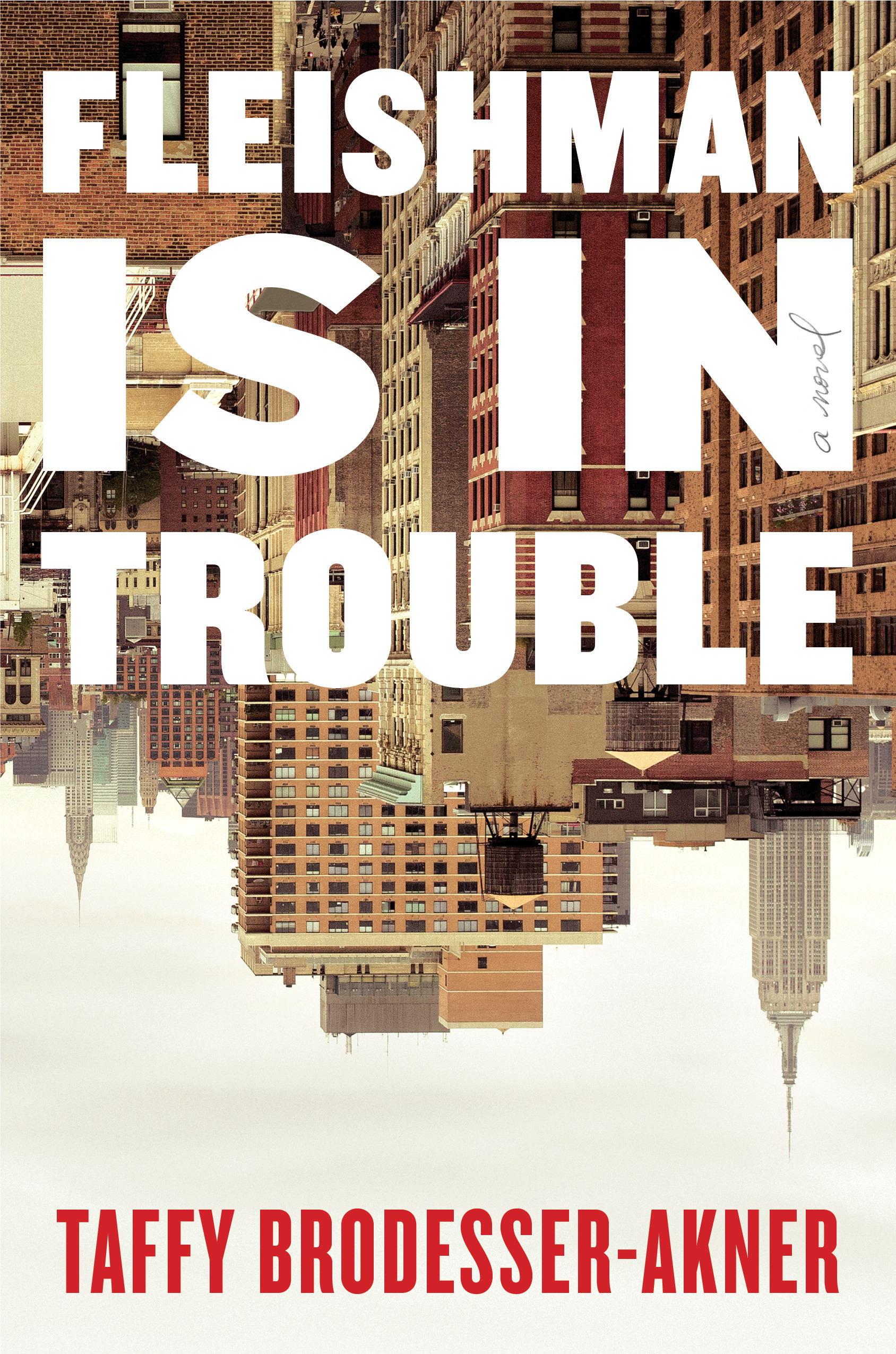
Recently separated Toby Fleishman is suddenly, somehow – and at age forty-one, short as ever – surrounded by women who want him: women who are self-actualized, women who are smart and interesting, women who don't mind his height, women who are eager to take him for a test drive with just the swipe of an app. Toby doesn't mind being used in this way; it's a welcome change from the thirteen years he spent as a married man, the thirteen years of emotional neglect and contempt he's just endured. Anthropologically speaking, it's like nothing he ever experienced before, particularly back in the 1990s, when he first began dating and became used to swimming in the murky waters of rejection.But Toby's new life – liver specialist by day, kids every other weekend, rabid somewhat anonymous sex at night – is interrupted when his ex-wife suddenly disappears. Either on a vision quest or a nervous breakdown, Toby doesn't know – she won't answer his texts or calls.Is Toby's ex just angry, like always? Is she punishing him, yet again, for not being the bread winner she was? As he desperately searches for her while juggling his job and parenting their two unraveling children, Toby is forced to reckon with the real reasons his marriage fell apart, and to ask if the story he has been telling himself all this time is true.

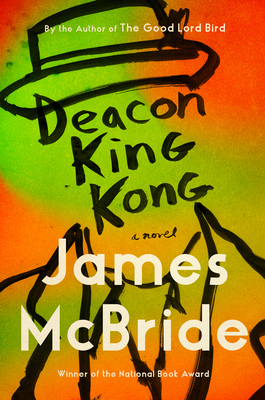
The funny, sharp, and surprising story of the shooting of a Brooklyn drug dealer and the people who witnessed it—from James McBride, author of the National Book Award-winning The Good Lord BirdIn September 1969, a fumbling, cranky old church deacon known in the neighborhood as Sportcoat shuffles into the courtyard of the Causeway Housing project in south Brooklyn, pulls a .38 from his pocket, and in front of everybody shoots the project's drug dealer at point-blank range.The reasons for this desperate burst of violence and the consequences that spring from it lie at the heart of Deacon King Kong, James McBride's novel and his first since his National Book Award-winning The Good Lord Bird. In McBride brings to vivid life the people affected by the shooting: the victim, the African-American and Latinx residents who witnessed it, the white neighbors, the local NYPD cops assigned to investigate what happened, the members of the Five Ends Baptist Church where Sportcoat was deacon, the neighborhood's Italian mobsters, and Sportcoat himself.As the story deepens, it becomes clear that the lives of the characters—caught in the tumultuous swirl of New York in the late 1960s—overlap in unexpected ways. When the truth finally emerges, McBride shows us that not all secrets can be hidden, that the best way to grow is to face change without fear, and that the seeds of love lie in compassion and hope.

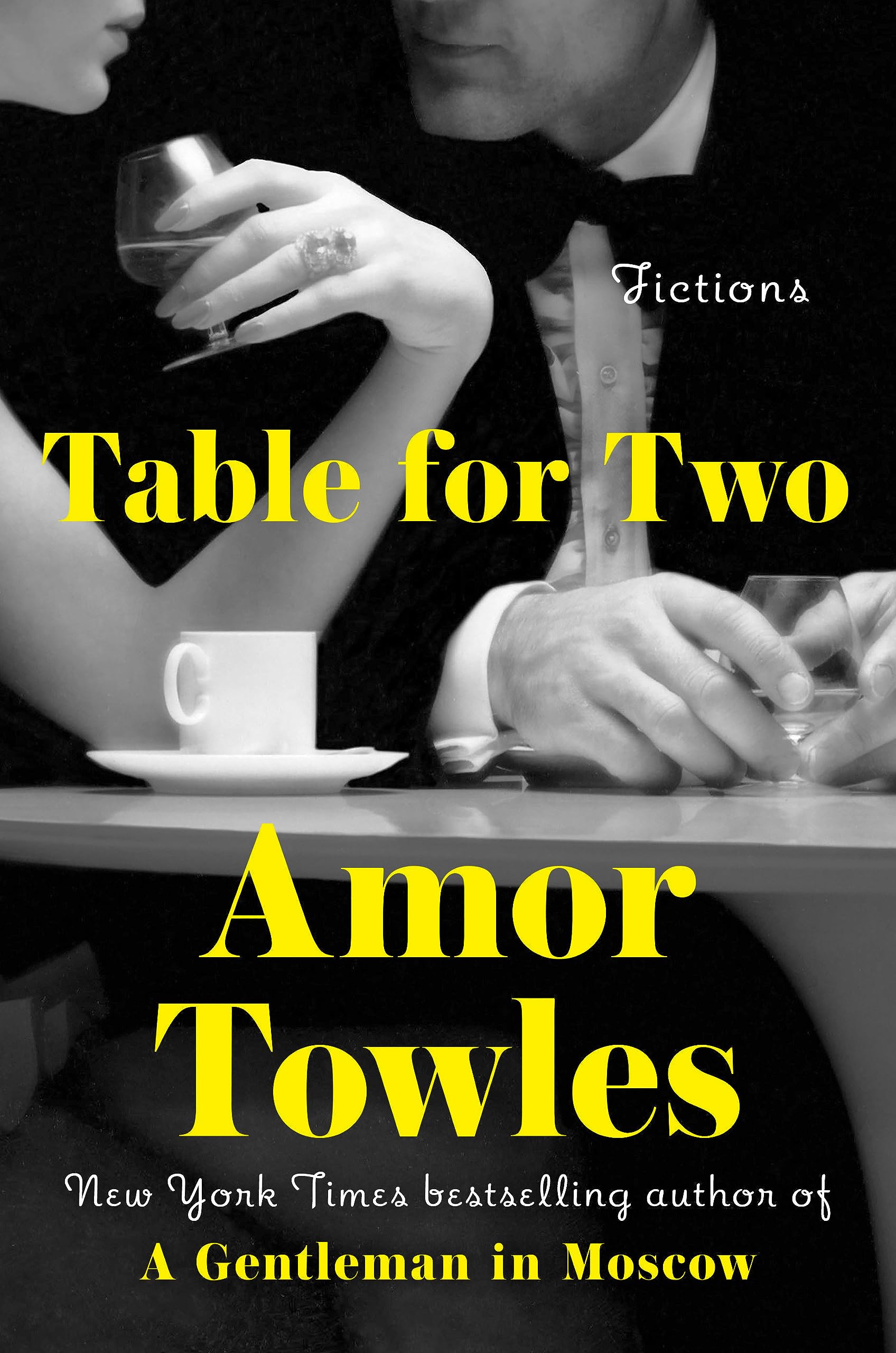
From the bestselling author of The Lincoln Highway, A Gentleman in Moscow, and Rules of Civility, a richly detailed and sharply drawn collection of stories set in New York and Los Angeles. The millions of readers of Amor Towles are in for a treat as he shares some of his shorter six stories set in New York City and a novella in Los Angeles. The New York stories, most of which are set around the turn of the millennium, take up everything from the death-defying acrobatics of the male ego, to the fateful consequences of brief encounters, and the delicate mechanics of compromise which operate at the heart of modern marriages. In Towles’s novel, Rules of Civility, the indomitable Evelyn Ross leaves New York City in September, 1938, with the intention of returning home to Indiana. But as her train pulls into Chicago, where her parents are waiting, she instead extends her ticket to Los Angeles. Told from seven points of view, “Eve in Hollywood” describes how Eve crafts a new future for herself—and others—in the midst of Hollywood’s golden age. Throughout the stories, two characters often find themselves sitting across a table for two where the direction of their futures may hinge upon what they say to each other next.Written with his signature wit, humor, and sophistication, Table for Two is another glittering addition to Towles’s canon of stylish and transporting historical fiction.