
Herman Wouk
Herman Wouk was a bestselling, Pulitzer Prize-winning Jewish American author with a number of notable novels to his credit, including The Caine Mutiny, The Winds of War, and War and Remembrance. Herman Wouk was born in New York City into a Jewish family that had emigrated from Russia. After a childhood and adolescence in the Bronx and a high school diploma from Townsend Harris High School, he earned a B.A. from Columbia University in 1934, where he was a member of the Pi Lambda Phi fraternity and studied under philosopher Irwin Edman. Soon thereafter, he became a radio dramatist, working in David Freedman's "Joke Factory" and later with Fred Allen for five years and then, in 1941, for the United States government, writing radio spots to sell war bonds. He lived a fairly secular lifestyle in his early 20s before deciding to return to a more traditional Jewish way of life, modeled after that of his grandfather, in his mid-20s. Wouk joined the United States Navy and served in the Pacific Theater, an experience he later characterized as educational; "I learned about machinery, I learned how men behaved under pressure, and I learned about Americans." Wouk served as an officer aboard two destroyer minesweepers (DMS), the USS Zane and USS Southard, becoming executive officer of the latter. He started writing a novel, Aurora Dawn, during off-duty hours aboard ship. Wouk sent a copy of the opening chapters to Irwin Edman who quoted a few pages verbatim to a New York editor. The result was a publisher's contract sent to Wouk's ship, then off the coast of Okinawa. The novel was published in 1947 and became a Book of the Month Club main selection. His second novel, City Boy, proved to be a commercial disappointment at the time of its initial publication in 1948. While writing his next novel, Wouk read each chapter as it was completed to his wife, who remarked at one point that if they didn't like this one, he'd better take up another line of work (a line he would give to the character of the editor Jeannie Fry in his 1962 novel Youngblood Hawke). The novel, The Caine Mutiny (1951), went on to win the Pulitzer Prize. A huge best-seller, drawing from his wartime experiences aboard minesweepers during World War II, The Caine Mutiny was adapted by the author into a Broadway play called The Caine Mutiny Court Martial, and was later made into a film, with Humphrey Bogart portraying Lt. Commander Philip Francis Queeg, captain of the fictional USS Caine. Some Navy personnel complained at the time that Wouk had taken every twitch of every commanding officer in the Navy and put them all into one character, but Captain Queeg has endured as one of the great characters in American fiction. He married Betty Sarah Brown in 1945, with whom he had three sons: Abraham, Nathanial, and Joseph. He became a fulltime writer in 1946 to support his growing family. His first-born son, Abraham Isaac Wouk, died in a tragic accident as a child; Wouk later dedicated War and Remembrance (1978) to him with the Biblical words, "He will destroy death forever." In 1998, Wouk received the Guardian of Zion Award. Herman Wouk died in his sleep in his home in Palm Springs, California, on May 17, 2019, at the age of 103, ten days before his 104th birthday.
30 Books Written

Marjorie Morningstar is a love story. It presents one of the greatest characters in modern Marjorie, the pretty 17-year-old who left the respectability of New York's Central Park West to join the theater, live in the teeming streets of Greenwich Village, and seek love in the arms of a brilliant, enigmatic writer.28 hours and 26 minutes

Like no other masterpiece of historical fiction, Herman Wouk's sweeping epic of World War II is the great novel of America's Greatest Generation.Wouk's spellbinding narrative captures the tide of global events, as well as all the drama, romance, heroism, and tragedy of World War II, as it immerses us in the lives of a single American family drawn into the very center of the war's maelstrom.The Winds of War and its sequel War and Remembrance stand as the crowning achievement of one of America's most celebrated storytellers.

War and Remembrance is a historical romance. The subject is World War II, the viewpoint American. A prologue, The Winds of War, published in 1971, set the historical frame for this work by picturing the events leading up to Pearl Harbor. This is a novel of America at war, from Pearl Harbor to Hiroshima.

The novel that inspired the now-classic film The Caine Mutiny and the hit Broadway play The Caine Mutiny Court-Martial, Herman Wouk's boldly dramatic, brilliantly entertaining novel of life-and mutiny-on a Navy warship in the Pacific theater was immediately embraced, upon its original publication in 1951, as one of the first serious works of American fiction to grapple with the moral complexities and the human consequences of World War II. In the intervening half century, The Caine Mutiny has become a perennial favorite of readers young and old, has sold millions of copies throughout the world, and has achieved the status of a modern classic.

Herman Wouk is one of this century's great historical novelists, whose peerless talent for capturing the human drama of landmark world events has earned him worldwide acclaim. In The Hope, his long-awaited return to historical fiction, he turns to one of the most thrilling stories of our time - the saga of Israel. In the grand, epic style of The Winds of War and War and Remembrance, The Hope plunges the reader into the major battles, the disasters and victories, and the fragile periods of peace from the 1948 War of Independence to the astounding triumph of the Six-Day War in 1967. And since Israelis have seen their share of comic mishaps as well as heroism, this novel offers some of Herman Wouk's most amusing scenes since the famed "strawberry business" in The Caine Mutiny. First to last The Hope is a tale of four Israeli army officers and the women they love: Zev Barak, Viennese-born cultured military man; Benny Luria, ace fighter pilot with religious stirrings; Sam Pasternak, sardonic and mysterious Mossad man; and an antic dashing warrior they call Kishote, Hebrew for Quixote, who arrives at Israel's first pitched battle a refugee boy on a mule and over the years rises to high rank. In the love stories of these four men, the author of Marjorie Morningstar has created a gallery of three memorable Israeli women and one quirky fascinating American, daughter of a high CIA official and headmistress of a Washington girls school. With the authenticity, authority, and narrative force of Wouk's finest fiction, The Hope portrays not so much the victory of one people over another, as the gallantry of the human spirit, surviving and triumphing against crushing odds. In that sense it can be called a tale of hope for all mankind; a note that Herman Wouk has struck in all his writings, against the prevailing pessimism of our turbulent century.

It's every parrothead's dream: to leave behind the rat race of the workaday world and start life all over again amidst the cool breezes, sun-drenched colors, and rum-laced drinks of a tropical paradise.It's the story of Norman Paperman, a New York City press agent who, facing the onset of middle age, runs away to a Caribbean island to reinvent himself as a hotel keeper. (Hilarity and disaster -- of a sort peculiar to the tropics -- ensue.)It's the novel in which the Pulitzer Prize-winning author of such acclaimed and bestselling novels as The Caine Mutiny and War and Remembrance draws on his own experience (Wouk and his family lived for seven years on an island in the sun) to tell a story at once brilliantly comic and deeply moving.

Like no other novelist at work today, Herman Wouk has managed to capture the sweep of history in novels rich in character and alive with drama. In "The Hope," which opens in 1948 and culminates in the miraculous triumph of 1967's Six-Day War, Wouk plunges the reader into the story of a nation struggling for its birth and then its survival. As the tale resumes in "The Glory," Wouk portrays the young nation once again pushed to the brink of annihilation -- and sets the stage for today's ongoing struggle for peace.Taking us from the Sinai to Jerusalem, from dust-choking battles to the Entebbe raid, from Camp David to the inner lives of such historical figures as Golda Meir, Moshe Dayan, and Anwar Sadat, these extraordinary novels have the authenticity and authority of Wouk's finest fiction -- and together strike a resounding chord of hope for all humanity.

In this huge novel of nearly 600 pages (from the author of The Caine Mutiny, Marjorie Morningstar, War and Remembrance, etc)about an aspiring young author's assault on the citadel of New York publishing, Wouk's hero Youngblood Hawke launches his career with an oversized manuscript that becomes an instant success. Toasted by critics and swept along on a tide of popularity, he gives himself over to the lush life that gilds artistic success. It is a story of a young writer caught up in the glamour and intrigue of "life at the top" in New York, and suggests the life and career of Thomas Wolfe.The 1992 paperback was re-issued in April 2004, and became widely available again in Britain, where it had enjoyed success in the early 1960s.

From the world of faith to the world of show business, the theater of war to the theater of presidential politics, a novel traces one Jewish family's dramatic, often hilarious adventures on the way to the American dream. Reprint.

An "enormously entertaining" portrait of "a Bronx Tom Sawyer" ( San Francisco Chronicle ), City Boy is a sharp and moving novel of boyhood from Pulitzer Prize winner Herman Wouk.A hilarious and often touching tale of an urban kid's adventures and misadventures on the street, in school, in the countryside, always in pursuit of Lucille, a heartless redhead personifying all the girls who torment and fascinate pubescent lads of eleven.

The contemporary novelist illuminates the history, doctrines, traditions, rituals, and future of Judaism

With this rollicking novel hailed equally for its satiric bite, its lightly borne scientific savvy, and its tender compassion for foible-prone humanity, one of America's preeminent storytellers returns to fiction.Guy Carpenter is a regular guy, a family man, an obscure NASA scientist, when he is jolted out of his quiet life and summoned to the corridors of power in Washington, D.C. Through a turn of events as unlikely as it is inevitable, Guy finds himself compromised by scandal and romance, hounded by Hollywood, and agonizingly alone at the white-hot center of a firestorm ignited as three potent forces of American culture -- politics, big science, and the media -- spectacularly collide.

For more than fifty years, legendary author Herman Wouk has dreamed of writing a novel about the life of Moses. Finally, at age ninety-seven, he has found an ingeniously witty way to tell the tale in The Lawgiver, a romantic and suspenseful epistolary novel about a group of people trying to make a movie about Moses in the present day. The story emerges from letters, memos, e-mails, journals, news articles, recorded talk, Skype transcripts, and text messages.At the center of The Lawgiver is Margo Solovei, a brilliant young writer-director who has rejected her rabbinical father’s strict Jewish upbringing to pursue a career in the arts. When an Australian multibillionaire promises to finance a movie about Moses if the script meets certain standards, Margo does everything she can to land the job, including a reunion with her estranged first love, an influential lawyer with whom she still has unfinished business.Two other key characters in the novel are Herman Wouk himself and his wife of more than sixty years, Betty Sarah, who, almost against their will, find themselves entangled in the Moses movie when the Australian billionaire insists on Wouk’s stamp of approval.As Wouk and his characters contend with Moses and marriage, and the force of tradition, rebellion, and reunion, The Lawgiver reflects the wisdom of a lifetime. Inspired by the great nineteenth-century novelists, one of America’s most beloved twentieth-century authors has now written a remarkable twenty-first-century work of fiction.
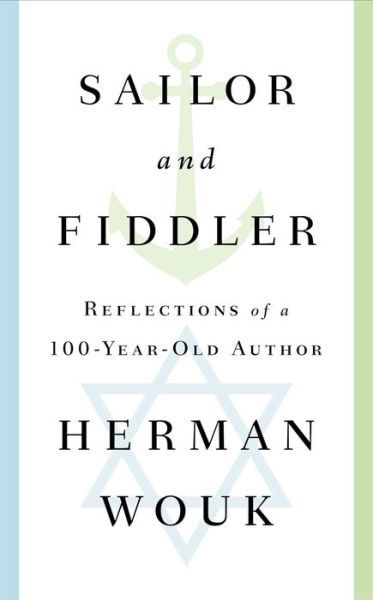
In an unprecedented literary accomplishment, Herman Wouk, one of America’s most beloved and enduring authors, reflects on his life and times from the remarkable vantage point of 100 years old.Many years ago, the great British philosopher Sir Isaiah Berlin urged Herman Wouk to write his autobiography. Wouk responded, “Why me? I’m nobody.” Berlin answered, “No, no. You’ve traveled. You’ve known many people. You have interesting ideas. It would do a lot of good.” Now, in the same year he has celebrated his hundredth birthday, Herman Wouk finally reflects on the life experiences that inspired his most beloved novels. Among those experiences are his days writing for comedian Fred Allen’s radio show, one of the most popular shows in the history of the medium; enlisting in the US Navy during World War II; falling in love with Betty Sarah Brown, the woman who would become his wife (and literary agent) for sixty-six years; writing his Pulitzer Prize-winning novel, The Caine Mutiny; as well as a big hit Broadway play The Caine Mutiny Court Martial; and the surprising inspirations and people behind such masterpieces as The Winds of War, War and Remembrance, Marjorie Morningstar, and Youngblood Hawke. Written with the wisdom of a man who has lived through two centuries and the wit of someone who began his career as professional comedy writer, the first part of Wouk’s memoir (“Sailor”) refers to his Navy experience and writing career, the second (“Fiddler”) to what he’s learned from living a life of faith. Ultimately, Sailor and Fiddler is an unprecedented reflection from a vantage point few people have lived to experience.

When the commanding officer of the U.S.S. Caine is transferred, a new captain, strict disciplinarian Philip Francis Queeg, replaces him. But Queeg's actions go beyond strictness into psychopathology as he brings the ship and its crew to the brink of destruction. This necessitates a brutal shipboard court-martial that threatens by turns to clear or condemn him. In adapting his novel for the theater, Herman Wouk focused on the heart of the story: the trial and the man at its center. The result is a grimly effective picture of Queeg's disintegration from perfectionist to paranoid that acts as an indictment not only of an individual but of a society that produces such men.

The publication of 'Aurora Dawn' in 1947 immediately established Herman Wouk as a novelist of exceptional literary and historical significance. Today, Aurora Dawn's themes have grown still more relevant and, in the manner of all great fiction, its characters and ironies have only been sharpened by the passage of time. Wouk's raucous satire of Manhattan's high-power elite recounts the adventures of one Andrew Reale as he struggles toward fame and fortune in the early days of radio. On the quest for wealth and prestige, ambitious young Andrew finds himself face-to-face with his own devil's forced to choose between soul and salary, true love and a strategic romance, Wouk's riotous, endearing hero learns a timeless lesson about the high cost of success in America's most extravagant metropolis.

"More years ago than I care to reckon up, I met Richard Feynman." So begins The Language God Talks, Herman Wouk's gem on navigating the divide between science and religion. In one rich, compact volume, Wouk draws on stories from his life as well as on key events from the 20th century to address the eternal questions of why we are here, what purpose faith serves, and how scientific fact fits into the picture. He relates wonderful conversations he's had with scientists such as Feynman, Murray Gell-Mann, Freeman Dyson, and Steven Weinberg, and brings to life such pivotal moments as the 1969 moon landing and the Challenger disaster.Brilliantly written, The Language God Talks is a scintillating and lively investigation and a worthy addition to the literature.


Tormentas De Guerra 2 Byron Y Natalie de Wouk Herman. Círculo de Lectores, 1980.

Herman Wouk has ranged in his novels from the mighty narrative of The Caine Mutiny and the warm, intimate humor of Marjorie Morningstar to the global panorama of The Winds of War and War and Remembrance. All these powers merge in this major new work of nonfiction, The Will to Live On, an illuminating account of the worldwide revolution that has been sweeping over Jewry, set against a swiftly reviewed background of history, tradition, and sacred literature. Forty years ago, in his modern classic This Is My God, Herman Wouk stated the case for his religious beliefs and conduct. His aim in that work and in The Will to Live On has been to break through the crust of prejudice, to reawaken clearheaded thought about the magnificent Jewish patrimony, and to convey a message of hope for Jewish survival. Although the Torah and the Talmud are timeless, the twentieth century has brought earthquake shocks to the the apocalyptic experience of the Holocaust, the reborn Jewish state, the precarious American diaspora, and deepening religious schisms. After a lifetime of study, Herman Wouk examines the changes affecting the Jewish world, especially the troubled wonder of Israel, and the remarkable, though dwindling, American Jewry. The book is peppered with wonderful stories of the author's encounters with such luminaries as Ben Gurion, Isidor Rabi, Yitzhak Rabin, Saul Bellow, and Richard Feynan. Learned in general culture, warmly tolerant of other beliefs, this noted author expresses his own other beliefs, this noted author expresses his own faith with a passion that gives the book its fire and does so in the clear, engaging style tha-as in all Wouk's fiction -- makes the reader want to know what the next page will bring. Herman Wouk writes, in The Will to Live On : "And so the Melting Pot is beginning to work on Jewry. Its effect was deferred in the passing century by the shock of the Holocaust and the rise of Israel, but today the Holocaust is an academic subject, and Israel is no longer a beleaguered underdog. Amkha in America is not dying, it is slowly melting, and those are very different fates. Dying is a terror, an agony, a strangling finish, to be fought off by sheer instinct, by the will to live on, to the last breath. Melting is a mere diffusion into an ambient welcoming warmth in which one is dissolved and disappears, as a teaspoon of sugar vanishes into hot tea.... Yet here in the United States, for all the scary attrition I have pictured, we are still a community of over five million strong....At a far stretch of my hopes, our descendants could one day be a diaspora comparable to Babylonia. At the moment, of course, that is beyond rational expectation. We have to concentrate on lasting at all...."

As in the Caine Mutiny, which won him the Pulitzer Prize, Herman Wouk again writes of the Navy--but in a startling new wayHere is the eerily realistic account of a naval lieutenant's expedition to the moon -- and his strange encounter with its inhabitants.But more than a "log" of life on the moon, this fantastic tale of space travel reads today like a dramatic prophecy of things about to happen -- not only out in space, but also here on Earth!(back cover March 1968 edition)


In French. Texte Intérgral. Le Souffle de la guerre (titre original : The Winds of War) est le second roman sur la Seconde Guerre mondiale du romancier Herman Wouk après Ouragan sur le Caine (1951). L'histoire tourne autour d'un mélange de personnages réels et fictifs, tous connectés par divers moyens à la famille de Victor « Pug » Henry, un officier de l'US Navy d'une cinquantaine d'années et confident du président Franklin Delano Roosevelt. Elle commence six mois avant l'invasion de la Pologne par l'Allemagne, qui lançait la portion européenne de la guerre, et prend fin juste après l'attaque de Pearl Harbor, lorsque les États-Unis et, par extension, la famille Henry, entrent dans la guerre.

Sodan muisto kertoo aidosti ja mukaansatempaavasti amerikkalaisen Henryn ja amerikanjuutalaisen Jastrowin perheen toisiinsa kietoutuvista vaiheista Toisen Maailmansodan aikana.
Part One Of Two Parts In this powerful novel about an aspiring young author's assault on the citadel of New York publishing, Hawke launches his career with an oversized manuscript that becomes an instant success. Toasted by critics and swept along on a tide of popularity, he gives himself over to the lush life that gilds artistic success. This story makes us the companion of a young writer caught up in the glamour and intrigue of "life at the top" in New York. It suggests the life and career of Thomas Wolfe.

By the author of "The Caine Mutiny" and "Marjorie Morningstar". "A novel of the men who chart the big winds and of their women who wait." - from the front cover.

המשכו של "רוחות מלחמה". בספר זה מגיעים כל הגיבורים לשיא המלחמה וסופה דרך אושוויץ ודרך הפלישה לנורמנדי. כרך ב מתוך ב.